• Lessons From Sukkot

    My family and I just got back on Thursday evening from a wonderful Sukkot (Feast of Tabernacles) gathering in eastern Pennsylvania. While it was packed full of spiritual lessons, there wasn’t much time for the sort of personal Bible studies that typically end up becoming blog posts on Saturdays. So today I’m just going to share a few lessons I learned this past week:

    • I can organize people. If I’d known agreeing to plan a singles/young adult activity would have ended up involving 30+ people doing 5 different activities I would have probably wanted to hide under a desk. But it all went really well and I had lots of help from people who volunteered (or had someone volunteer them) to lead some of the activities.
    • The only ancient text with anywhere near as many copies still around as there are for the Bible is Homer’s Iliad and Odyssey. Stacked together, the existing copies for both those works would only be a few feet tall. In contrast, a stack of all the surviving Biblical manuscripts would be so tall it’s nearly outside earth’s atmosphere. Wow! (One of the speakers shared this fact in a Bible study about the reliability of the Bible.)
    • Spending a week with my boyfriend (who joined my family and our church group for the Feast) does not make living an 8-hour drive apart any easier. I suppose it’s a good thing that I miss him so much, though, since otherwise I’d have to re-think whether or not we should be dating. In related news, my new favorite love song is “Over And Over Again.” They played it at the dance our church group hosted and not only is my boyfriend a really good dancer but he also sings ❤
    • The “fear not” reminders just keep coming at me. On the second day of Sukkot someone gave a message about why those who are “fearful” are lumped in with murderers, sorcerers, etc. as people who won’t be in God’s kingdom (Rev. 21:8). The Greek word means “timid” or “cowardly” and carries the implication of faithlessness, as in a Christian who is too scared to act in faith doesn’t trust God enough. Thankfully, we serve a God who embodies the kind of love that casts out fear and who has the strength to help us overcome fears. That’s a reminder I need as I prep for giving my second seminar (I’m actually speaking in front of people again!) in a few months.
    • It’s always interesting to look back on sermons, Bible studies, and conversations at the Feast and find common themes. This year, I noticed an emphasis on shifting our focus as we move toward God’s kingdom. Instead of just focusing on, “How can I get into God’s kingdom?” we should be thinking about, “How can I be the kind of person God wants to bring into His family?” Those thoughts are related of course, but one’s focused on what we get out of our Christian walk and the other is focused on becoming like God in how we live our lives and interact with other people.

    I’ve got a few other thoughts on things I learned and heard this Feast/Sukkot, but they’d be better served by each having a blog post all to themselves so we’ll wait on that. I hope you’ve all been having a wonderful week and have a fantastic weekend! I should be back to more of my usual posting routine by Monday, so I’ll “see” you then 🙂
  • What You May Not Know About Your INFJ Mind But Really Should

    A few weeks ago a fellow INFJ named Bo Miller contacted me and asked if he could interview me on his new podcast. After picking my jaw up off the floor and texting my boyfriend to share that I was equal parts terrified and excited, Bo and I started a conversation that led to this interview. Our conversation focused on how INFJs can understand and learn to use their Extroverted Feeling and Introverted Thinking functions.

    Click Here To Listen To The Podcast

    What You May Not Know About Your INFJ Mind But Really Should | marissabaker.wordpress.comI already shared this link on my Facebook page, but in addition to the podcast I have a special treat for you all today as well. Bo is a Certified Myers-Briggs practitioner and the creator of iSpeakPeople.com as well as The INFJ Personality Show. He recently published The INFJ Personality Guide and would love to give you a free copy. I haven’t read it yet myself, but from my conversations with him I’m pretty well convinced it’s going to be really good. I hope you’ll grab a copy and check out his website. Here’s more info:

    In The INFJ Personality guide, you’ll discover…
    • Your greatest strengths
    • Your weaknesses
    • Why the rest of the world thinks differently than you
    • Why you’re so good at discerning people’s thoughts, motivations, and feelings
    • How to set better boundaries
    • How to cultivate healthy relationships
    • What to do when you get down or depressed
    • Career advice
    • How to manage your thoughts
    • How to make your creative ideas, insights, and visions a reality
    • How to communicate more effectively with other personality types
    • How to handle criticism without getting your feelings hurt

    The guide is divided into three sections:
    • INFJ preferences
    • INFJ functions
    • How to develop your personality and reach your potential

    Click To Download A Free Copy Of The Guide

  • Approaching The King: Keys To Entering God’s Presence

    Suppose you’ve been invited to meet the Queen of England. You don’t just walk in, wave, and say, “Hey there Elizabeth.” There are rules, protocol, and etiquette. You should bring a gift, remember to use the right form of address (“Your Majesty” first, then “ma’am”), and not turn reach out and touch her. These days, you won’t get in too much trouble for a slip in convention. But there have been many countries and many times throughout history that approaching royalty in the wrong way could get you killed.

    Traditionally, people have recognized something special about royalty. Part of this was religious — rulers were seen as gods, or representatives of the gods, or appointed by God. It’s also a matter of recognizing and respecting an authority role.  Even in countries without a monarchy, we’ll still tend to recognize that some social positions command a certain amount of respect (i.e. you won’t talk with your boss the same way as a close friend and you’d probably show the President even more respect).

    Approaching The King: Keys To Entering God's Presence | marissabaker.wordpress.com
    Photo Credit: “Romania-1603,” by Dennis Jarvis, CC BY-SA via Flickr

    A Question From God

    The Bible applies several titles to God that demand respect, including Father, Master, Lord, and King. But do we take them seriously? Historically, God’s people have fallen short in this regard.

    A son honors his father, and a servant his master. If I am a father, then where is my honor? And if I am a master, where is the respect due me? Says Yahweh of Armies to you, priests, who despise my name. (Mal. 1:6, WEB)

    Yes, God loves you and He wants to be your friend. But we’re not to forget who He is and the respect due Him. “‘For I am a great King,’ says Yahweh of Armies, ‘and my name is awesome among the nations’.” (Mal. 1″14, WEB). God deserves more respect than worldly authority figures, but do we even give Him that much? (more…)

  • What Are The Books That Have Influenced You The Most?

    One of my Facebook friends shared a post about the ten books that have most influenced his life, which I thought was a great idea. But it took me two weeks to figure out which books I wanted to write about and by the time I hit 500+ words I thought, why not just make it a blog post? So if you are reading this and care to share your most influential books consider yourself “tagged.” I’d love to see what books have had the biggest impact on your lives either in the comments or on your own blog (there’s an article topic you don’t have to come up with on your own!). The original list was 10 but I ended up with 8, so post however many you like.What Are The Books That Have Influenced You The Most? | marissabaker.wordpress.com

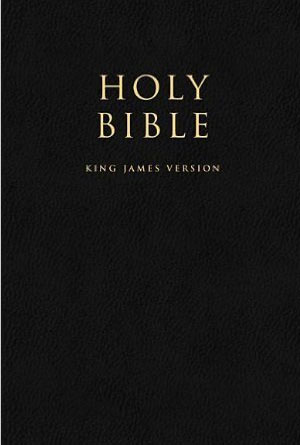
    The Bible

    What Are The Books That Have Influenced You The Most? | marissabaker.wordpress.comA rather obvious first choice for a Christian blogger, but this book definitely deserves the top spot when talking about books that influenced my life. It’s still influencing everything I do and I fall more in love with this book and it’s Author every time I read it. It’s the greatest love story every told, the best handbook you’ll ever find for life, and an incredible source of hope and purpose. Since more than 50% of this blog is devoted to talking about this book I’ll stop now. You know I could (and have!) keep going on about it for several books worth of text.

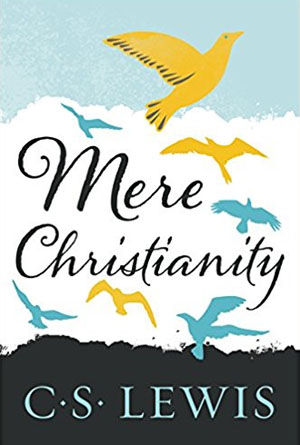
    Mere Christianity by C.S. Lewis

    What Are The Books That Have Influenced You The Most? | marissabaker.wordpress.comI could have put several books by C.S. Lewis on this list, but this is the first of his non-fiction I read and it’s the one that’s been most influential (with Screwtape Letters a close second). I just love the way he writes about his faith. Not only is he firmly grounded in scripture, but he’s also a persuasive speaker to those who don’t already put their faith in the Bible. In the words of Anthony Burgess, “C.S. Lewis is the ideal persuader for the half convinced, for the good man who would like to be a Christian but finds his intellect getting in the way.”

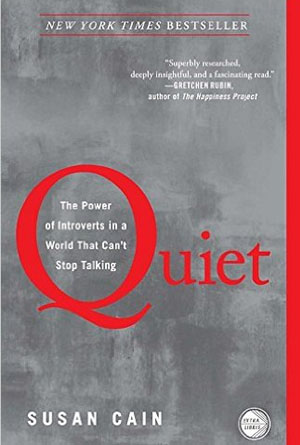
    Quiet: The Power of Introverts In a World That Can’t Stop Talking by Susan Cain

    What Are The Books That Have Influenced You The Most? | marissabaker.wordpress.comI started researching my personality after starting college and realizing I was even more different from “normal” people than I’d previously thought. This is one of the first books I read on the subject and it literally changed my life. Like many introverts, particularly INFJs, I always felt there was something off about the fact that I couldn’t seem to socialize the way so many other people did. This book pointed out how introvert brains are wired differently and that there are strengths in that personality. In other words, it shows that we’re not broken extroverts and introversion isn’t something to “fix.” (more…)

  • Clean Temples For Yom Kippur

    Back in the Old Testament when there was a tabernacle or temple standing, it included a room called “the most holy place” or “the holy of holies.” This was where the ark of the covenant was and a heavy veil separated it from the rest of the inner temple. It wasn’t a place that people, even the priests, could just walk into.

    and Yahweh said to Moses, “Tell Aaron your brother, not to come at all times into the Most Holy Place within the veil, before the mercy seat which is on the ark; lest he die: for I will appear in the cloud on the mercy seat. (Lev. 16:2, WEB)

    The only time someone could enter this most holy place was on the Day of Atonement, or Yom Kippur. Even then only the high priest could go in and only if he followed the proper rules for entering a place God had sanctified.

    Clean Temples For Yom Kippur | marissabaker.wordpress.com
    Photo credit: “Clean” by Sara Laval, CC BY via Flickr

    But why bring this up now? We don’t have a temple or a priesthood or sacrifices anymore. And many Christians will say all that Old Testament stuff belong in the past. Or does it? There actually is a temple today, for “you are a temple of God” (1 Cor. 3:16, WEB). There’s a priesthood, too, because Jesus Christ is the High Priest and He has “an unchangeable priesthood” (Heb. 7:24, KJV). We’re even included in that because we’re meant “to be a holy priesthood, to offer up spiritual sacrifices” (1 Pet. 2:5, WEB). So given these facts, what can we learn from Yom Kippur today?

    Temples Defiled By Association

    When I was re-reading Leviticus 16, I was surprised to notice that the high priest was told to “make atonement for the Holy Place, because of the uncleanness of the children of Israel, and because of their transgressions, even all their sins” (Lev. 16:16, 33 WEB). I knew he was to make atonement for himself and “all the assembly of Israel,” but hadn’t noticed the holy place needed atoned for as well (Lev. 16:17, 30). There was something about being in the midst of an unclean, sinful people that defiled even the part of the temple where God’s presence appeared.

    Today, the church body is described as a temple of God (there’s also a temple talked about in heaven, which we’ll get to later). The Greek word used in those passages is always naos (G3485), which refers to the inner sanctuary rather than the entire temple complex (which would be hieron, G2411). We are now God’s most holy place. And like the other holy of holies, we can become defiled by choice (see 1 Cor. 3:16-17) or by the sinful world around us. (more…)

  • Giving Yourself Permission to Take Up Space

    I’m 5 feet 6 inches tall (about 168 cm for my readers on the metric system). When I was a teenager I decided that was about 3 inches too tall for some reason ostensibly connected with Joe Hardy (yes, the fictional character. I know — I needed more real friends). That’s not the only reason I do things to make myself look smaller, but it’s one of the stranger ones. In general, though, being taller than other people simply makes me feel awkward. And even though I’ve explored that feeling before in a creative non-fiction class in college, I really wasn’t sure why.

    Recently, I’ve been asked why I use body language that makes me look small. That question made me  take another look at why I’m doing what I do. I hunch my shoulders. I sit in corners of sofas. I cross my arms and legs or ankles. Or I have my hands together nervously fiddling with my fingers. Part of this is unconscious but I’m often aware of it as well. I know I make myself smaller and sometimes I do it on purpose, especially if I feel nervous or threatened. I suppose I’m saying with my body language, “Don’t notice me. Don’t hurt me.” And this sort of thing has become instinctive for me.

    Giving Yourself Permission to Take Up Space | marissabaker.wordpress.com
    Photo credit: “Shy” by Karel Macalik, CC BY via Flickr

    One of my more vivid childhood memories is of being enrolled in a summer school program and hiding under the playground equipment from the other kids. My experiences there played a large role in why my parents chose to homeschool. In some ways, that scared little girl is still part of me and hiding is still my default move. But, as someone recently reminded me, fear isn’t a good way to live your life. I feel like it’s time for a change. (more…)