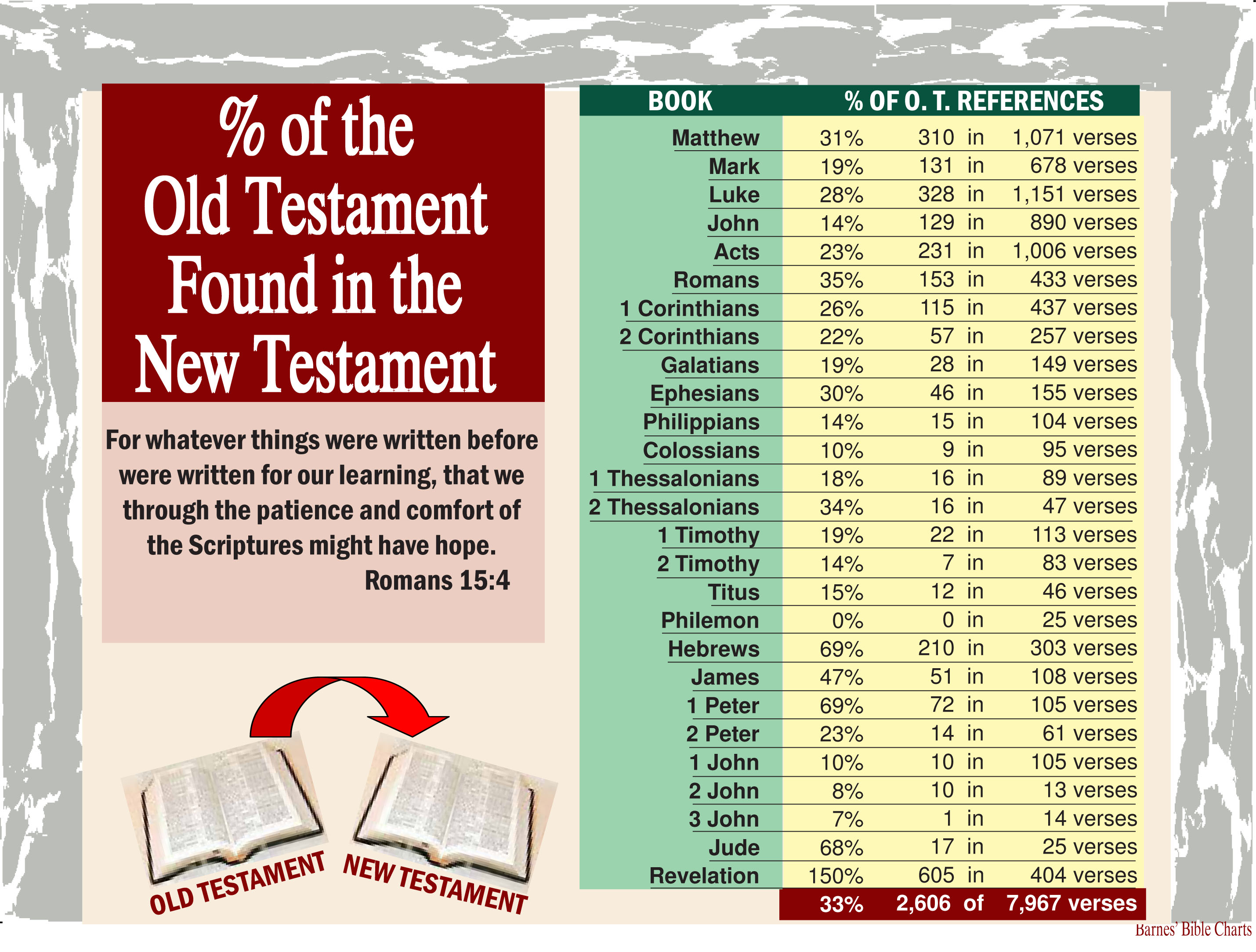
As a Christian, it is sometimes tempting to spend more reading and study time in the New Testament (NT) than in the Old Testament (OT). The NT seems both more relevant and more straightforward, while the OT includes many customs and laws that seem foreign or obsolete. And yet, the OT is the Bible that Jesus and his first-century followers read and they cited it extensively in the NT.
If we want to understand the NT more fully, studying the OT provides much needed context and background information. Today, I want to take a closer look at two sections of the New Testament that would be very difficult to understand without knowing what the authors are referencing from the Old Testament.
1 Corinthians and Exodus
In Paul’s first letter to the Corinthian church, he addressed a flagrant sexual sin committed by one of the church members. It was a shocking, scandalous thing that ought to have made the others in the church grieve over the sin and encourage the man involved to repent. But they did something else instead.
It is actually reported that sexual immorality exists among you, the kind of immorality that is not permitted even among the Gentiles, so that someone is cohabiting with his father’s wife. And you are proud! Shouldn’t you have been deeply sorrowful instead and removed the one who did this from among you? For even though I am absent physically, I am present in spirit. And I have already judged the one who did this, just as though I were present. When you gather together in the name of our Lord Jesus, and I am with you in spirit along with the power of our Lord Jesus, hand this man over to Satan for the destruction of the flesh, so that his spirit may be saved in the day of the Lord.
1 Corinthians 5:1-5, NET
This sounds harsh, but Paul is adamant that a congregation can’t let sin run rampant in the church and they especially can’t celebrate the sinner’s actions. From his next letter, it seems that putting this individual out of the church had the desired effect, and then Paul encouraged the Corinthians to welcome him back with forgiveness, comfort, and love (2 Cor. 2:1-11). Putting this man out was good for him, since it inspired godly repentance, but it was also good for the church.
Your boasting is not good. Don’t you know that a little yeast affects the whole batch of dough? Clean out the old yeast so that you may be a new batch of dough—you are, in fact, without yeast. For Christ, our Passover lamb, has been sacrificed. So then, let us celebrate the festival, not with the old yeast, the yeast of vice and evil, but with the bread without yeast, the bread of sincerity and truth.
1 Corinthians 5:6-8, NET
To illustrate the importance of mourning and removing sin rather than celebrating or tolerating it, Paul turns to Passover and the Festival of Unleavened Bread. He references this festival throughout the letter both directly and indirectly (see “Exodus To Corinthians: A Passover Message For The New Testament Church“). Modern Christian readers should have at least some familiarity with Passover since it played a big role in the timing of Jesus’s sacrifice, but to fully understand what Paul is talking about we need to understand something about the Feast of Unleavened Bread (Ex. 12:8-20; Lev 23:5-6).
Seven days you shall eat unleavened bread; even the first day you shall put away yeast out of your houses, for whoever eats leavened bread from the first day until the seventh day, that soul shall be cut off from Israel. You shall eat nothing leavened. In all your habitations you shall eat unleavened bread.’
Exodus 12:19 WEB
Before you can keep the Feast of Unleavened Bread, you need to remove all forms of leavening from your home. Out goes the yeast, sourdough starter, and anything else you’d use to ferment/raise/leaven bready foods. In the context of this Festival, leaven is a picture of sin. The ancient Israelites came out of Egypt and ate unleavened bread, and so we need to come out of the world, put sin our of our lives and church congregations, and fill ourselves instead “with the unleavened bread of sincerity and truth” (1 Cor. 5:8, WEB). Knowing the OT commands and backstory deepens our understanding of Paul’s instruction to the Corinthians.
Hebrews and Leviticus
The book of Hebrews is another NT book that heavily references OT customs. When discussing Jesus as our High Priest, the author of Hebrews assumes that their readers have an understanding of what role priests played in tabernacle and temple worship. When we get to the part of this discussion recorded in Hebrews 9, the author references the high priest’s duties on a specific holy day.
And above the ark were the cherubim of glory overshadowing the mercy seat. Now is not the time to speak of these things in detail. So with these things prepared like this, the priests enter continually into the outer tent as they perform their duties. But only the high priest enters once a year into the inner tent, and not without blood that he offers for himself and for the sins of the people committed in ignorance. …
But now Christ has come as the high priest of the good things to come. He passed through the greater and more perfect tent not made with hands, that is, not of this creation, and he entered once for all into the Most Holy Place not by the blood of goats and calves but by his own blood, and so he himself secured eternal redemption. For if the blood of goats and bulls and the ashes of a young cow sprinkled on those who are defiled consecrated them and provided ritual purity, how much more will the blood of Christ, who through the eternal Spirit offered himself without blemish to God, purify our consciences from dead works to worship the living God. …
And he did not enter to offer himself again and again, the way the high priest enters the sanctuary year after year with blood that is not his own, for then he would have had to suffer again and again since the foundation of the world. But now he has appeared once for all at the consummation of the ages to put away sin by his sacrifice.
Hebrews 9:5-7, 11-14, 25-26, NET
The author of Hebrews does not mention the Day of Atonement (Yom Kippur) by name, but that is what they’re talking about here. Readers are expected to be familiar with the rituals described in Leviticus 16 so they can fully understand this passage of the letter.
and the Lord said to Moses: “Tell Aaron your brother that he must not enter at any time into the Holy Place inside the special curtain in front of the atonement lid that is on the ark so that he may not die, for I will appear in the cloud over the atonement lid. In this way Aaron is to enter into the sanctuary—with a young bull for a sin offering and a ram for a burnt offering. …
“Aaron is to present the sin-offering bull which is for himself, and he is to make atonement on behalf of himself and his household. …
“Aaron must then slaughter the sin-offering goat which is for the people. He is to bring its blood inside the curtain, and he is to do with its blood just as he did to the blood of the bull: He is to sprinkle it on the atonement lid and in front of the atonement lid. So he is to make atonement for the Holy Place from the impurities of the Israelites and from their transgressions with regard to all their sins, and thus he is to do for the Meeting Tent which resides with them in the midst of their impurities. …
“This is to be a perpetual statute for you. In the seventh month, on the tenth day of the month, you must humble yourselves and do no work of any kind, both the native citizen and the resident foreigner who lives in your midst, for on this day atonement is to be made for you to cleanse you from all your sins; you must be clean before the Lord. It is to be a Sabbath of complete rest for you, and you must humble yourselves. It is a perpetual statute.”
Leviticus 16:2-3, 11, 15-16, 29-30 NET
Without understanding the Day of Atonement, we can still read Hebrews and know that Jesus’s atoning work on the cross did something amazing. But when we know the background and understand the rituals that pointed to Jesus for thousands of years, we gain a deeper appreciation of His role as our atoning sacrifice and the High Priest who secured eternal–not temporary–redemption from our sins.

Hebrews and 1 Corinthians are just two examples of how understanding the Old Testament can deepen our understanding of the New Testament. In these two examples, it specifically helps to understand the days God ordained as holy and which Jesus and His disciples continued to observe. Things many Christians now think of as “just stuff from the Old Testament” were core parts of New Testament Christians’ faith and we can still learn from them today.
Featured image by Inbetween from Lightstock

Song Recommendation: “They Word” by Amy Grant


Leave a Reply