
Today we celebrate Yom Teruah, also called Feast of Trumpets and Rosh Hashanah. But why? After all, I’m Christian and most people think of this as a Jewish holiday. Same goes for Yom Kippur/Day of Atonement, which we’ll observe 10 days from now, and Sukkot/Feast of Tabernacles that starts in two weeks.
I believe these festival observances, along with others already completed this year, are for Christians today. When Jesus came to this world, it wasn’t to set up a new religion. He was the next step in God’s plan for the world and these days are part of the covenant He makes with His family. He’s still inviting us to gather for “reunions” at certain times of the year.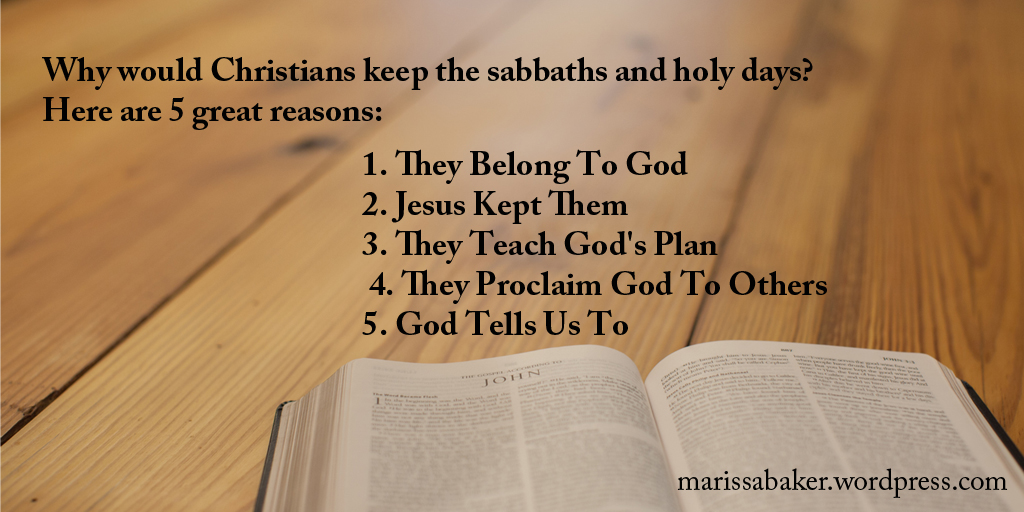
1. They Belong To God
And the Lord spoke to Moses, saying, “Speak to the children of Israel, and say to them: ‘The feasts of the Lord, which you shall proclaim to be holy convocations, these are My feasts.” (Lev. 23:1-2)
The holy days aren’t Jewish or exclusively Old Testament. They belong to God Himself. We talk about Leviticus 23 as the chapter where God gives Israel the Feasts, but that’s not quite accurate. God doesn’t say, “Here are your holy days, Israel.” He says, “These are the feasts of the Lord, holy convocations which you shall proclaim at their appointed times” (Lev. 23:4).
God called Israel to His feasts and told them how He wanted these days observed. He never relinquished ownership of thee festivals. While some things, like the animal sacrifices, have been fulfilled in Christ, the days still hold significance to God and for spiritual Israel.
2. Jesus Kept Them
While He walked on this earth, Jesus Christ kept God’s holy days. One might say this was just because He was a Jew living pre-new Covenant, but He did challenge certain Jewish traditions and the festivals were not among them. That’s because they aren’t just traditions — they’re holy to His Father.
The gospels specifically reference Passover, the Days of Unleavened Bread, and the Feast of Tabernacles. John’s gospel records Jesus keeping 3 Passovers (1st: John 2:13, 23; 2nd: John 6:4; 3rd: John 11:55; 12:1; 13:2). Other gospels talk about Jesus keeping and up-dating Passover for the New Covenant before His crucifixion (Matt. 26:17-30; Mark 14:1-2, 12-26; Luke 22:1-39; 1 Cor. 11:23-26). These are also the verses that mention Unleavened bread because the two observances are so closely connected.
John 4:45 and 5:1 mention Feasts as well. The one in chapter 4 probably hearkens back to Passover, but in chapter 5 it could refer to any one of the Feast days. John also mentions Feast of Tabernacles by name in chapter 7 and another Feast not found in the Old Testament: “the feast of dedication,” or Hanukkah (John 10:22).
3. They Teach God’s Plan
God’s holy days are rich in meaning. The spring festivals speak of redemption and Messiah’s first coming to pass-over our sins and de-leaven us from iniquity. Pentecost, the Feast of Firstfruits, is when the NT church received the Holy Spirit. The fall holy days point toward Messiah’s second coming and God’s plan for the future.
I’ve covered these rhythms of worship and what they teach us in more detail elsewhere (click to read post). For God’s people, these days are yearly reminders and rehearsals of the gospel we’ve received and God is inviting each of us to participate. He wants us to spend time with Him on His days and learn about what He’s doing with us and the world.
4. They Proclaim God To Others
When we keep God’s holy days, we let everyone around us know where our allegiance lies. Every time you turn-down an invitation that conflicts with Sabbath observance, take time off work for a holy day, or explain to friends and family why you’re taking a week’s vacation for Sukkot (for those of us who travel in this season), you’re saying God’s way is your #1 priority.
Keeping the holy days also means you’re pointing toward Messiah. Colossians 2:16-17 tell us Christ is the substance/reality of these days, “which are a shadow of things to come.” You’re not going to find salvation in a shadow, but you don’t disregard it either. You let it point you, and others, toward the One casting the shadow.
When we keep Passover, we “proclaim the Lord’s death till He comes” (1 Cor. 11:26). Keeping Unleavened Bread reminds us to walk as a new, cleansed person in Christ (1 Cor. 5:6-8). Pentecost aligns us with the firstfruits of God. Trumpets wakes us up with a shout, proclaiming “The Bridegroom Cometh!” Atonement speaks of a time when we’re not only washed clean by Jesus (Rom. 5:11) but the cause of sin is also put away (Lev. 16:10, 21-22; Rev. 20:1-3). Tabernacles points toward a joyous time when Christ will rule here on earth (Ezk. 37:26-28; Rev. 20 and 21).
5. God Tells Us To
 This could have been the first and only point. It’s really all we need to know. When God says to do something that’s important to Him, we should want to joyfully complete His request. And we can’t fall into the trap of thinking this is “just an Old Covenant thing.” He is not a god of the Jews only — He is everyone’s God and His commands are for all of us who choose to follow Him.
Speak thou also unto the children of Israel, saying, Verily my sabbaths ye shall keep: for it is a sign between me and you throughout your generations; that ye may know that I am the Lord that doth sanctify you. (Ex. 31:13)
Leviticus 23 is the chapter that outlines God’s feast days, and it includes 39 “you shall …” commands related to proclaiming and keeping God’s feasts. If that wasn’t enough, we’re told how serious it was when Israel departed from keeping God’s sabbaths (Ezk. 20:11-13) and that His people will keep these Festivals when they’re worshiping Him correctly (Lev. 19:30; Ezekiel 44:23-24). In the New Testament, we have Christ saying “this do in remembrance of me” about the Passover (Luke 22:19; 1 Cor. 11:24-25) and Colossians saying all the sabbaths and holy days point to Christ.
We are the children of God. We’re being transformed into the likeness of Jesus Christ. Like Him, we’re meant to value the things our heavenly Father values. These include the holy days which belong to Him, teach us of His plan, and proclaim His way of life to the world. “Therefore let us keep the feast,” as Paul says about Unleavened Bread (1 Cor. 5:8), not only the Feast of Trumpets today but all the other festivals of God as well.


Leave a Reply