We’ve all gotten lost in thought and stubbed our toes or run into something because we weren’t paying attention (or is that just me and my friends?). But for some of us, keeping track of what’s going on in the outer world is actually quite a challenge. People who are Sensing types in the Myers-Briggs system are naturally “wired” to interact with the real world of sensory information, but Intuitives are more concerned with abstract thought and possibility. It can be quite a strength, but it has its downsides as well (perhaps there’s a reason only 30% of the population is Intuitive).
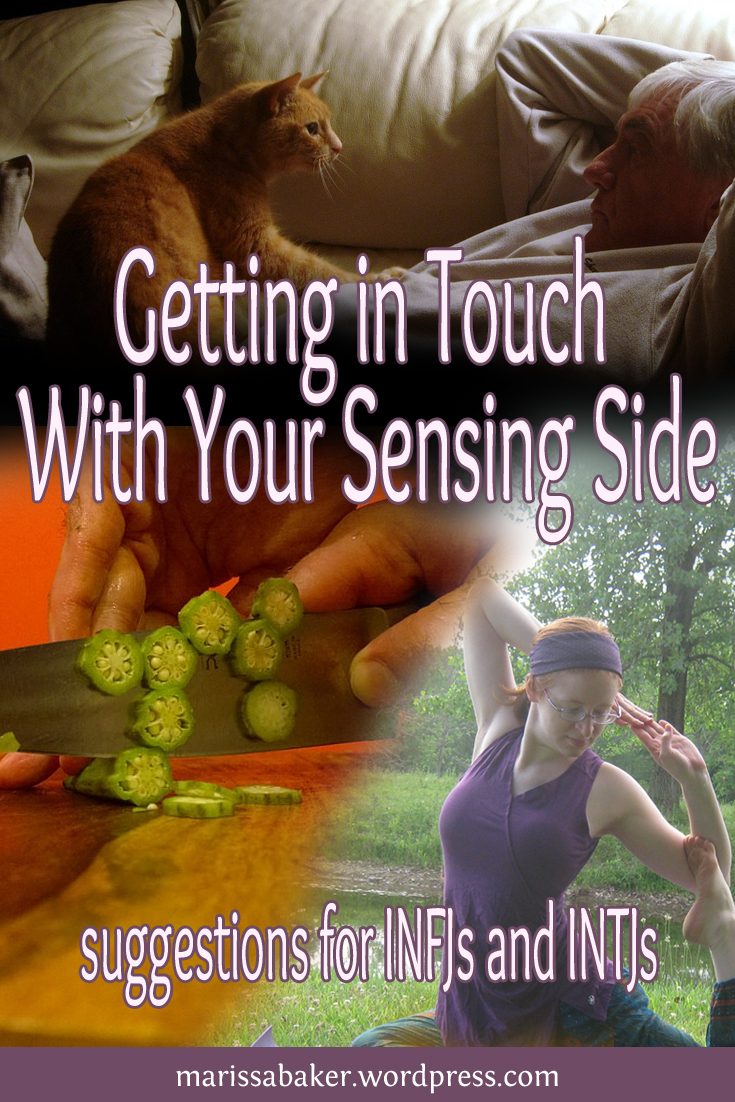
When Sensing isn’t your preferred function (or, in the case of INxJs and ENxPs, isn’t even your second or third function), it can be easy to loose touch with the outer world. Dominant Intuitives may forget to eat or exercise when they’re distracted by non-sensory concerns. We might zone-out and miss important things going on in the outer world. Sometimes we even get hurt and can’t remember how (if I had a dollar for the bruises, cuts, and bumps I notice and wonder “How’d that get there?” …). Yet as challenging as it is, getting in touch with our inferior function, and even befriending it in some way, offers rich opportunities for growth and stability.
Sensing Blind-Spot
My post today is going to focus on INFJs and INTJs — the two types that lead with Introverted Intuition. In Myers-Briggs theory, each type is described as having access to four mental processes arranged in the order they prefer to use them.
- INFJ: Introverted Intuition, Extroverted Feeling, Introverted Thinking, Extroverted Sensing
- INTJ: Introverted Intuition, Extroverted Thinking, Introverted Feeling, Extroverted Sensing
Your inferior function is the most underdeveloped function and it’s the opposite of your primary function. For INxJs, the aspect of their psyche that they use least effectively is their Extroverted Sensing inferior function. ENTPs and ENFPs also have Sensing as an inferior function (and may find this article helpful), but I have more direct experience with inferior Extroverted Sensing than Introverted Sensing, so we’ll focus on that right now.
Most resources that talk about Myers-Briggs types and personal growth will tell you that you don’t normally start to develop your inferior function until midlife (if ever). Be that as it may, I think Intuitives in all walks of life can benefit from getting in touch with the real, sensory world sometimes. You’ll probably never be as comfortable there as you are in your own heads or in exploring abstract possibilities, but it can become less intimidating/boring.
Exercise
I can hear a collective groan from my fellow INxJs. We know you should take care of your body, but … do we have to? Reading a book, solving a suduko puzzle, inventing a fictional language, winning a debate — those are the kind of exercises we enjoy. While mental calisthenics are all well and good, they’re not going to help you become more aware of your sensing side and they’re not going to improve your physical health. By themselves, they might not even improve your mental health as well as you might like.
Exercise isn’t just about having a great-looking body. Regular exercise fights depression, increases blood flow to the brain, boosts your memory, helps build new brain cells, and slows down or prevents cognitive decay associated with age and disease. When you’re exercising your body, you’re helping your mind as well. You just need to find the right-fit physical activity for you.
For me, it’s yoga. I tried walking, I did tae kwon do for a year, I thought about and rejected other exercises — nothing “stuck.” I’d been doing yoga for about two years when I realized I hadn’t quit and didn’t even want to. Now I’m six or seven years into my yoga journey and it’s been fantastic. I love that it’s an exercise that I can do alone at my own pace and take anywhere, and the mind-body connection appeals to me as well. It’s helped with my anxiety, too, which is fabulous.
Here are a few links to get you started on finding an exercise that fits well with your personality:
- Vibrant Life – Take The Quiz: Find the Right Exercise to Match Your Personality
- Experience Life – Your Fitness Personality
- Huffington Post – How To Find The Best Workout For Your Personality
- Nerd Fitness – Real-Life Role Playing: What is Your Profession?
Hobbies
You might already be using your inferior function in hobbies. It’s one of the more common ways for different types to use that part of their minds in a healthy way. In her book Was That Really Me? Naomi Quenk talks about Introverted Intuitive types “relaxing their dominant and auxiliary functions … through such sensual pleasures as eating, exercising and gardening.” The other hobbies she talks about specifically are reading escapist literature, bird-watching, photograpphy, woodworking, furniture refinishing, cooking, and going for walks and drives to observe the world (p. 194).
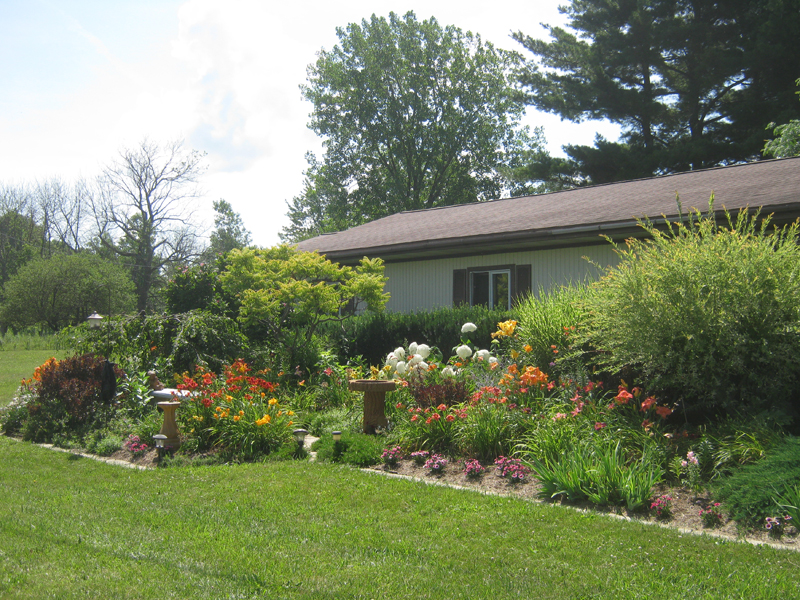
Basically, when you want to engage your Sensing side through hobbies you’re looking for something that involves a focus on the physical world in the present moment. That doesn’t mean it can’t be creative or engage your intuition as well. Making non-digital art involves working with your hands and a physical medium, and it can also be an expression of your personality. Cooking requires working with tangible ingredients and once you have a feel for it you can start experimenting like I do with cheesecakes. Gardening involves working with your hands, but planing the gardens can be as much intuition as sensing.
Pets
I think that dominant intuitives, perhaps especially the introverted ones, benefit from having something other than themselves to take care of. There’s nothing like knowing something needs you to thrive to get you out of your own head and focused on reality. Pets aren’t for everyone, of course, but especially if you live alone they can help give you a reason to engage with the real world every day.
I’m caretaker and best friend to an elderly cat, I have three freshwater fish tanks, and I feed wild birds in my flower garden. If you don’t have time to take care of most pets, or an apartment that’s pet-friendly, a small fish tank might work (just, please, don’t get one of those tiny betta vases. Click here and read this article and put the poor thing in a 2-5 gallon tank). In a pinch even something non-living can fit the bill — my INTJ sister is currently without pets and she has told me that she views her water filter as a “pet” because it’s something she has to care for by refilling it everyday.
I’d love to hear from my intuitive readers (whatever your personality type) about ways you enjoy engaging with the sensory world. What type of exercise works for you? Which hobbies do you enjoy? Are you a pet owner?


Leave a Reply