This next foundation is one of the main reasons I started this study. I didn’t feel like I had a good understanding of the “laying on of hands” as a doctrinal principle, and if you’re going to study that doctrine might as well learn more about them all, right?
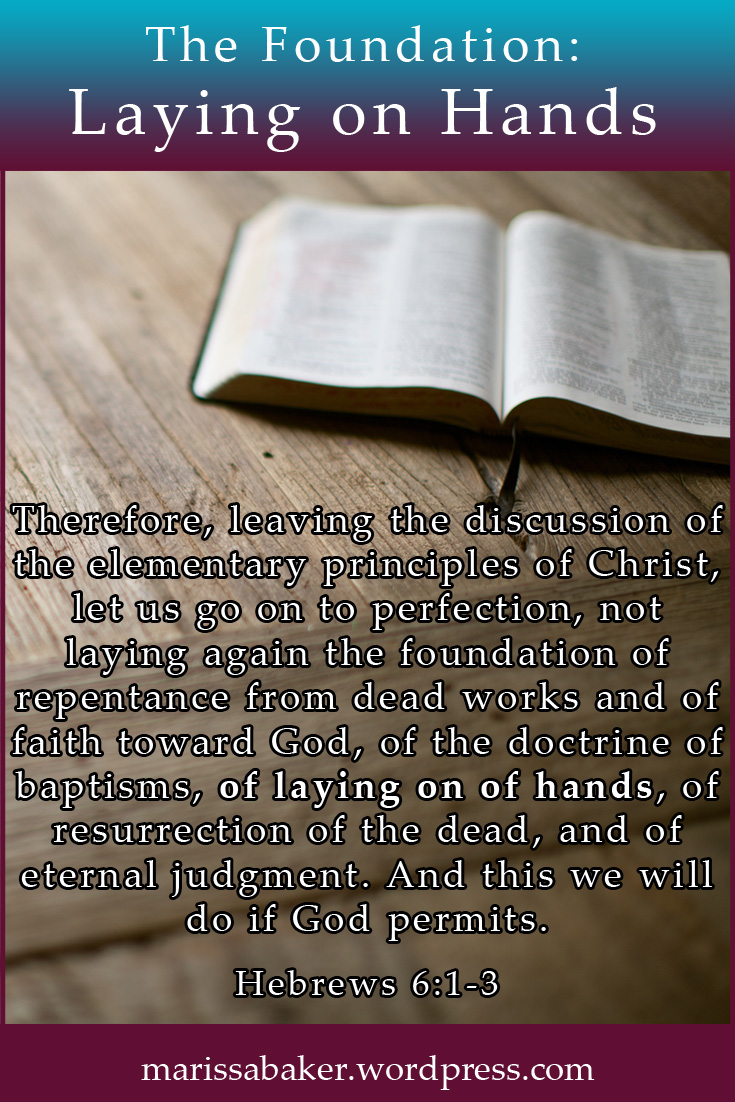
Therefore, leaving the discussion of the elementary principles of Christ, let us go on to perfection, not laying again the foundation of repentance from dead works and of faith toward God, of the doctrine of baptisms, of laying on of hands, of resurrection of the dead, and of eternal judgment. And this we will do if God permits. (Heb. 6:1-3)
The first three principles built on each other, so I would expect laying on of hands to be closely connected with baptism. And indeed, we do see it following baptism several times. Read more →
It seems like everyone is offended about something today. Wherever someone voices a decided opinion, there’s someone else reacting to it defensively. In an effort not to offend anyone, we’re turning into a society where we talk around issues rather than addressing them directly. We couch our opinions in careful language like, “From my own personal view …” and “I don’t want to force an opinion on you, it’s just my thoughts that …”.
Why are we so quick to see offense as a bad thing in today’s culture? If it’s just because we don’t like to be made uncomfortable, then we’re missing valuable opportunities for personal growth. Being offended offers a challenge to how we think. For people who are open to questioning, growth, and refinement, being challenged is a good thing. For people who just want to float through life without wondering “why?”, offense is scary.
The next time you feel offended, don’t look at it as a bad thing. See it as an opportunity for self-examination. It’s a chance to look inside yourself and find out why you’re having such a strong, defensive emotional reaction to what you just saw or heard. Ask yourself things like,
Is this important enough to be offended about?
If no, why am I so defensive?
If yes, how do I turn my offense into something more productive?
Am I offended by this because it makes me feel guilty about something I’m doing wrong? (plank in your own eye, speck in your brother’s …)
Does anyone else care that I care about this?
Would sharing my thoughts on this just stir up unproductive strife? (If yes, don’t do it!)
Is the thing I feel offended about something that’s hurting other people?
If yes, what can I do to stop it? (For example, being offended that human trafficking exists doesn’t help; you’d need to fight against it or support those who do.)
Is the idea/statement that offends me actually true, regardless of how I feel?
Offense is unproductive by itself, but when we feel offended we have a chance to transcend knee-jerk reactions and use it as a tool for self-examination, growth and motivation. We can look inside ourselves and see if our offended reaction points to something we need to change, and we can look outside ourselves for opportunities to actively make the world a better place.
The next “principle of the doctrines of Christ” listed in Hebrews 6 is “the doctrine of baptisms.” It builds on the previous two, but we already have a post on this blog talking about how repentance and belief are a prerequisite for baptism, so that’s not what we’ll focus on today.
Therefore, leaving the discussion of the elementary principles of Christ, let us go on to perfection, not laying again the foundation of repentance from dead works and of faith toward God, of the doctrine of baptisms, of laying on of hands, of resurrection of the dead, and of eternal judgment. And this we will do if God permits. (Heb. 6:1-3)
Notice it says “baptisms,” plural. Why is that the case, especially in light of the “there is one body, and one spirit … one faith, one baptism” passage in Ephesians 4:4-5? Read more →


 Like An Anchor