A lot of introvert-themed posts that you see around this time of year are things like “An Introverts Guide To Surviving the Holidays” or “How Not to Run In Terror From Your Extrovert Relatives.” That last one’s not an actual article, but it’s pretty close to some I’ve seen.
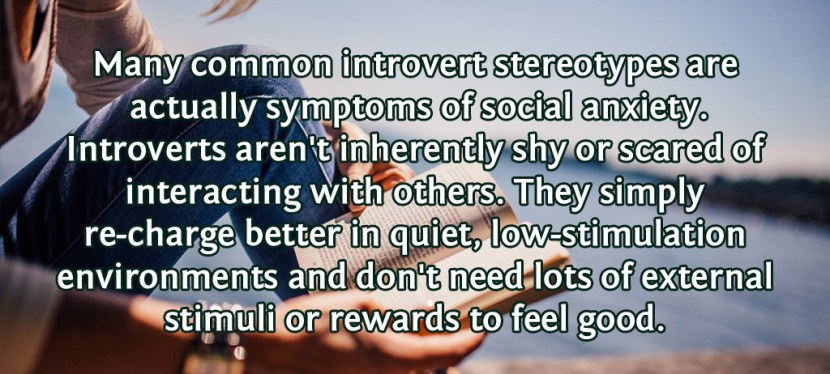
Often, writers of articles like this assume introverts don’t like people, that they’re always overwhelmed in social situations, and that they hate parties. But being on-edge in social situations, panicking when you have to interact with people, and going out of your way to avoid places where people gather aren’t actually signs of introversion. Those things are more a part of social anxiety.
Definition Conundrums
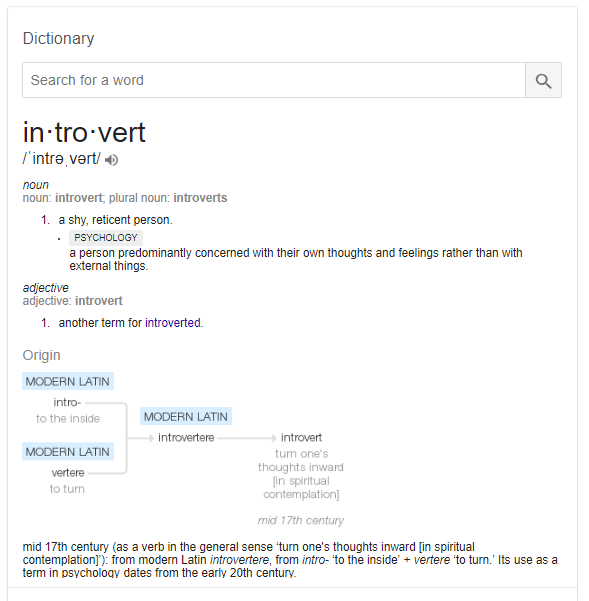
Part of the reason for this confusion is that people don’t understand what being an introvert actually means. For example, (despite numerous complaints and petitions) if you Google “introvert definition” the first thing that comes up is “a shy, reticent person.” Only if you expand the Google result to see translations, word origin, and other definitions do you finally get something a little closer to the correct result: “a person predominantly concerned with their own thoughts and feelings rather than with external things.”
Being an introvert doesn’t make you socially awkward. It doesn’t mean you hate people. Being an introvert means that you’re born with a trait that gives you a preference for the internal world. It also means you re-charge better in quiet, low-stimulation environments (usually alone, but not always). Introverts might avoid parties, but if so they do it because they’d rather be somewhere else (like at home reading or hanging our with a small group of friends), not because they’re inherently shy or scared of interacting with others. Read more
 Like An Anchor