Low Self-Esteem vs. Esteeming Self Less

One of the foundational things we have to recognize when coming to Christ is that we’re not worthy. The Bible makes it clear that the human “heart is deceitful above all things, and desperately wicked” (Jer. 17:9). We can’t earn salvation, and we have not done anything to deserve God’s love. This should fill us with humility as we enter a relationship with God, knowing He loves us even through we are nothing without Him.

But I know far too many people who get stuck on the “I am undeserving” part of this truth. Instead of finding our identity in Jesus Christ  and defining ourselves by our relationship with Him (“I’m a Christian”), we can be tempted to find our identity in the fact that we don’t deserve His forgiveness and love (“I’m worthless”). Maybe you’ve been told your whole life that “you’re not good enough,” and you’ve carried that into your relationship with God. Maybe you’re a perfectionist who’s stopped using your attention to detail to get things done right and started letting it rule your life so you feel useless unless you’re constantly giving 110%. Or maybe your self-lies are more like mine — that I’m not brave, strong, or clever enough to be of use to God.

Is this what God wants when He asks for humility? Do His instructions to think less of ourselves than of others mean He wants us to have low self-esteem? What does the Bible say about our value?

Marvelous Love

But God demonstrates His own love toward us, in that while we were still sinners, Christ died for us. (Rom. 5:8)
Low Self-Esteem vs. Esteeming Self Less | marissabaker.wordpress.comEven when we were sinners — working at cross-purposes to God — He loved us enough to die for us. God is love, and there is no greater example of this than the sacrifice of Jesus Christ to transform broken people who had done nothing to deserve His attention into something special.

Greater love has no one than this, than to lay down one’s life for his friends. You are My friends if you do whatever I command you. No longer do I call you servants, for a servant does not know what his master is doing; but I have called you friends, for all things that I heard from My Father I have made known to you. (John 15:13-15)

Look how Jesus describes His followers, as friends so valued He was willing to die for and share His thoughts with them. And those who follow Christ are not only His friends, but His family as well, and “He is not ashamed to call them brethren” (Heb. 2:11). Think of that. The One who knows you best — all your sins, weakness, foibles, and most secret thoughts — is not ashamed to say you are His family.

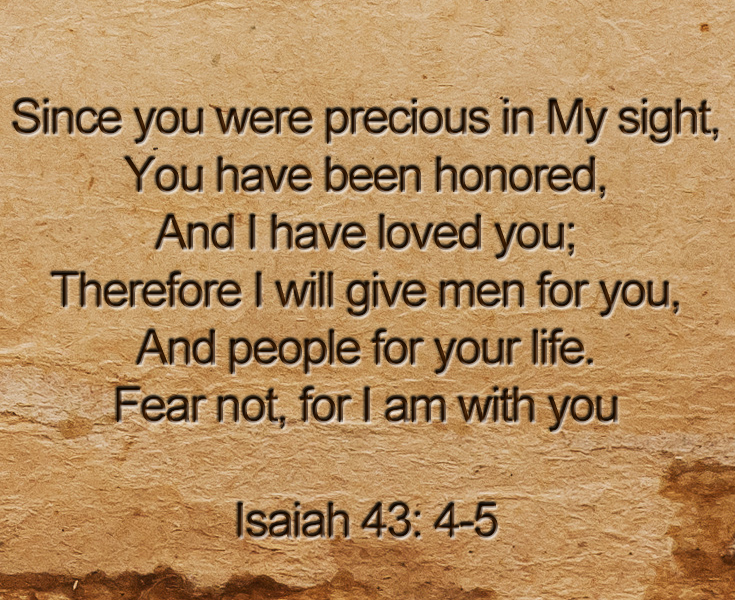
But now, thus says the Lord, who created you, O Jacob, and He who formed you, O Israel: “Fear not, for I have redeemed you; I have called you by your name; you are Mine.  … For I am the Lord your God, the Holy One of Israel, your Savior … since you were precious in My sight, you have been honored, and I have loved you; therefore I will give men for you, and people for your life. (Is. 43:1, 3, 4)

These early verses of Isaiah 43 are some of my favorite scriptures. I read them when I’m feeling lonely or doubtful of my worth in God’s eyes. Isn’t it a lovely reassurance of how highly God values His people? When God looks at you, He doesn’t think, “that person is worthless,” He thinks, “that person belongs to Me, and I love them.”

What We Are

So far, we’ve seen God call us precious, beloved, family, and friends. When we look a bit deeper into how He interacts with the church for today, we see even more evidence of how highly He values us.

Do you not know that you are the temple of God and that the Spirit of God dwells in you? If anyone defiles the temple of God, God will destroy him. For the temple of God is holy, which temple you are. (1 Cor. 3:16-17)

God must value us highly to call us “holy,” dwell inside us, and to destroy those who “defile” us. This part of the verse can be read as a warning to individual parts of the temple that we not become corrupt, and also as a warning to those who would set out to “subvert or corrupt” us as God’s temple. In that sense, it’s similar to God’s Isaiah 43 promise to protect and defend us. God is saying, “They are mine. I prize them highly, and I will fight for them.”

Or do you not know that your body is the temple of the Holy Spirit who is in you, whom you have from God, and you are not your own? For you were bought at a price; therefore glorify God in your body and in your spirit, which are God’s. (1 Cor. 6:19-20)

Jesus Christ thought we were worth paying the price of His life to redeem. In the words of Matthew Henry, “A spouse so dearly bought and paid for could not but be dearly loved. Such a price being given for her, a high value must needs be put upon her accordingly” (commentary on Song 4:8-14). Jesus did not redeem us so we could be worthless, weak, uninteresting, or whatever it is we call ourselves. He redeemed us to adopt as His siblings (Rom. 8:15-17), marry as His bride (2 Cor. 11:2), and give us a share in His glory (John 17:22; 1 John 3:2).

A Proper Attitude

So, what attitude are we supposed to have about ourselves? One thing we absolutely cannot do is allow the knowledge of how much God loves us lead to an idea that we’re something amazing in and of ourselves. God hates pride, arrogance, and vanity. When He says He values us highly, that’s not the reaction He’s looking for in return. Rather, the Lord requires us “to do justly, to love mercy, and to walk humbly with your God” (Mic. 6:8)
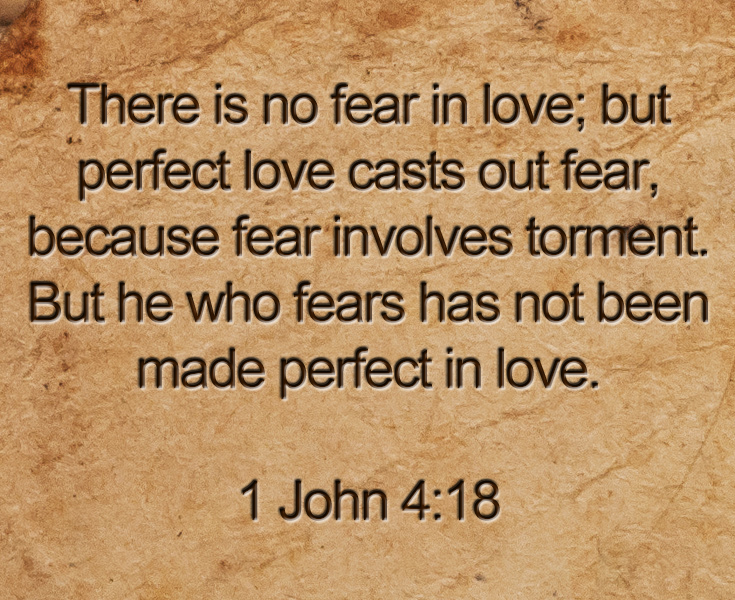
Low Self-Esteem vs. Esteeming Self Less | marissabaker.wordpress.comBut we can’t go to the opposite extreme either. If we tell ourselves we have no value, there’s a danger of becoming paralyzed by fear of doing something wrong and attracting attention to our own worthlessness. But that kind of fear has no place in a person where God’s love dwells (1 John 4:18).

Let nothing be done through selfish ambition or conceit, but in lowliness of mind let each esteem others better than himself. Let each of you look out not only for his own interests, but also for the interests of others. Let this mind be in you which was also in Christ Jesus (Phil. 2:3-5)

This is the key — having the mind of Christ. His was the most valuable human life ever, and yet He chose to use His greatness to serve others, first by giving up the glory He had before the world existed, then in how He lived His life, then by dying for us, and now by living as our High Priest and the Head over all things to the church. His every act on this earth was one of love and service and esteeming the needs of others as more important than His own. That’s the example we should be following.

When we find our identity in Christ and believe we are precious in God’s sight, we can be bold, courageous, and strong in Him (Heb. 4:16; John 16:33; Eph. 6:10). We are also humble, knowing the things that make us valuable come from our relationship with God and not from ourselves. And we esteem our brethren higher than ourselves, because they are also temples of God and we are called to serve and love them as Christ serves and loves us.

Does God Allow Trials We Can’t Endure?

I recently read two separate articles that said this verse is inaccurate or at least grossly misinterpreted: “God will not allow you to be tempted beyond what you are can endure.” The example used was that Christians who commit suicide were obviously given a trial they couldn’t bear on their own, and they needed outside help. But does needing help from other people really invalidate this scripture, or is there something else going on?

Faithful to Help

The phrase quoted above is just a piece of a sentence in 1 Corinthians. Let’s look at the whole verse to get some context.

No temptation has overtaken you except such as is common to man; but God is faithful, who will not allow you to be tempted beyond what you are able, but with the temptation will also make the way of escape, that you may be able to bear it. (1 Cor. 10:13)

First we see the idea that no matter how alone or oppressed we feel, we’re not being given trials greater than that which is common to man — someone else, somewhere, has gone through something similar. This includes other human beings, of course, but it also includes Jesus Christ.

For we do not have a High Priest who cannot sympathize with our weaknesses, but was in all points tempted as we are, yet without sin. Let us therefore come boldly to the throne of grace, that we may obtain mercy and find grace to help in time of need. (Heb. 4:15-16)

Not only are trials like ours held in common with other people, but our Lord and Savior went through similar temptation and sufferings. One of the main reasons He did that was so that He could understand what we’re going through and offer His aid. As it says in 1 Cor. 10:13, “God is faithful,” and He will do that for us.

Secondly, we see that the promise which says God won’t let us be tempted beyond our endurance comes with an explanation for how He will do that. It’s not just that God protects us from trials unless we can get through them by gritting out teeth and pushing forward on our own. He “will also make the way of escape, that you may be able to bear it.”

Needing Others

This “way of escape” is intriguing. The wording implies intervention by God to create “escapes” for us in our trials, and action necessary on our part to take the offered escape. I imagine this sort of thing will look very different depending on the type of trial and who is going through the trial. Sometimes it may be what we think of as a literal escape, with the trial or temptation coming to an end. Or it could be that something changes to make the trial bearable. I’m sure we’ve all known someone with a long standing trial (like illness or chronic pain) who still has peace and joy in their lives.

and the peace of God, which surpasses all understanding, will guard your hearts and minds through Christ Jesus. …And my God shall supply all your need according to His riches in glory by Christ Jesus. (Phil. 4:7, 19)

Do we trust God to truly do this, to give us every thing we need in every circumstance? People will say something like, “well, that’s not true. You can’t just go through life with an ‘I don’t need anything but God” attitude. We need other people.” True to a certain extent, but where do you think those other people come from?

Does God Allow Trials We Can't Endure? marissabaker.wordpress.comGood friends — the people you can really talk with about anything and go to when you need help — are rare. We call them a blessing. So when we have people like this in our lives, I’d say that comes under God supplying all our needs, including our need for companionship. Perhaps sometimes the “way of escape” so we’re able to bear a trial comes in the form of another person. It could be a friend, or someone you barely know. Maybe it’s a therapist or a minister to offer counsel. Perhaps it’s a brutally honest sibling to knock some sense into you (hopefully not literally).

I’ve been on the receiving end of this from someone I’d only just met. I was at a church-sponsored weekend and feeling particularly vulnerable emotionally. I thought I was doing a pretty good job of hiding my heartache, but apparently not, because  a girl I’d been introduced to barley two days ago sought me out the last evening to ask what was wrong. The story spilled out and I started crying. Then she prayed aloud for me. It was incredible — I felt God’s Spirit present in a way unlike I’d ever felt before. That wasn’t the conclusion of that trial, but it did mark the escape for climbing out of it and back towards God.

When God sends us someone to help us through a trial, we should be careful not to push them away. But this works from both sides. We can also be the person who is provided by God to offer help.

Being a Blessing

Have you ever considered that? When we’re talking about trials, I think we’re more often inclined to think of how someone else can help us than how we can help other people. But if we expect that we’re going to benefit from the comfort and help of other believers, we should also expect that God wants to use us to help them.

Let nothing be done through selfish ambition or conceit, but in lowliness of mind let each esteem others better than himself. Let each of you look out not only for his own interests, but also for the interests of others. (Phil. 2:3-4)

We’re supposed to be looking after our brethren, building them up, making sure they’re okay, and being sure to offer real encouragement and help rather than empty platitudes when they need aid.

If a brother or sister is naked and destitute of daily food, and one of you says to them, “Depart in peace, be warmed and filled,” but you do not give them the things which are needed for the body, what does it profit? (James 2:15-16)

It is similarly un-helpful (and can even be harmful) to just slap a scripture on someone’s emotional wounds and walk away. Saying, “God will supply all your needs”  or “don’t worry, He won’t give you anything you can’t endure” isn’t any help unless we’re willing to be used by God to supply those needs by listening to them, praying with and for them, and keeping in touch with them.

Example of Love

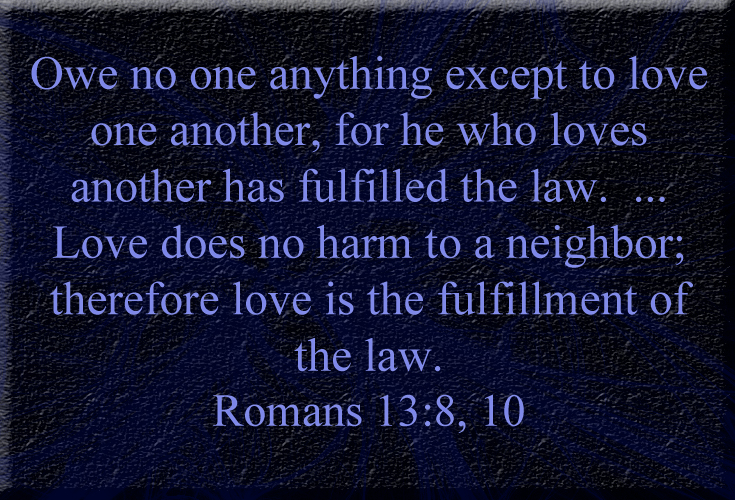
A new commandment I give to you, that you love one another; as I have loved you, that you also love one another. By this all will know that you are My disciples, if you have love for one another.” (John 13:34-35)

Love – agape – within the church is the sign that we are followers of Christ. That’s how important it is to have self-sacrificing love that seeks the good of others. Romans 12:1 talks of us presenting ourselves as “a living sacrifice.” We can look at the life of Jesus Christ to see a perfect example of what it means to live as a sacrifice in service to God. Have you ever noticed how much of His ministry involved helping other people? Pretty much all of it. And now He tells us that we and every one of our fellow believers are highly valued as His own temple and body “which He purchased with His own blood” (Acts 20:28).

Does God Allow Trials We Can't Endure? marissabaker.wordpress.comIf we’re going to claim that level of importance in God’s eyes, we must see others in the same light. Do we treat other people as if Christ is living in them? and we have to do this for our brethren whether or not we think it looks like Christ is in them. If we’re being honest, we know that we’ve also been seen doing things that are not Christ-like. We must be forgiving toward others if we want to be forgiven (Matt 6:12, 14-15). Really, we’re left without any good excuses for not helping others when we see them in need. If we’re following Jesus Christ, we will be loving and serving other people as much as possible. It’s as simple (and as complicated) as that.

So to answer the question that is the title of this post, I believe God does not let us go through trials or temptations that it is impossible for us to bear. They might not turn out the way we expect them to, but if we stay close to God we will turn out the way He expects us to. He will send us escapes and aid, and will open our eyes to recognize His help. And sometimes we’ll have the chance to follow Jesus’ example and be used by God to help another person.

Save

Why I Still Believe In Soul Mates

There seems to be a movement in some of the Christian relationship blogs I read to debunk the “myth” of soul mates. The argument can be summed up in this quote from Boundless.org’s article Myths About Soul Mates: “Believing that ‘the one’ is out there, waiting to ‘complete you,’ inevitably leads to discontentment and maybe even divorce.” Another of their articles, Hoping for a Soul Mate, quotes Atlanta psychiatrist Frank Pittman as saying, “Nothing has produced more unhappiness than the concept of a soul mate.” If you’re not familiar with these arguments, I encourage you to glance at one or both links before reading on.

click to read article, "Why I Still Believe In Soul Mates" | marissabaker.wordpress.com
Photo Credit: Anne Edgar via StockSnap

Defining “Soul Mate”

Just so we’re all starting out on the same page, here’s a composite definition of what the articles I referenced above seem to mean when they use the term “soul mate”:

A soul mate is your perfect match, who complements all your weaknesses and strengths and loves you unreservedly for who you are. There is only one soul mate for each person, and you’re on a search to find them so they can “complete you.”

These articles say this is an impossible ideal and it becomes dangerous when we start holding the person we’re in a relationship with to impossible and unrealistic expectations. And I do acknowledge this is a danger if we’re focused on the idea of finding one perfect mate (see this scene in Ever After for a humorous example of a few problems which can result).

Given these compelling arguments about the dangers of having an expectation like this in dating, you might be wondering why I’m writing a post about believing in soul mates. I have a slightly different take on the idea of soul mates, though.

My Idea of a Soul Mate

I imagine there are several people out there who have the potential to be our “soul mates.” For me, I think this would look like a relationship where I feel safe sharing my inner thoughts, feelings, and emotions. Someone who can understand, relate to, or at least appreciate the parts of my mind which I so rarely share, and with whom I can connect on a “kindred spirits” level. It almost goes without staying that this kind of connection must have a spiritual/religious component as well — I doubt I could be in this kind of relationship with someone who does not share my faith. I think there’s also a bit of truth in the idea of finding a mate who “completes” you, not in the way that most people might think of it but in the way that God meant when He created a husband and wife to be two parts of a whole.

As I mentioned, in this theory there are multiple people with whom the potential exists for forming a soul mate connection. You might meet several, but your goal should be that your relationships only reach a “soul mate level” with one of these people. I suspect that there’s a point in a good relationship where the other potential soul mates no longer matter because a “sole soul mate” relationship has been forged.

This is where the idea of commitment comes in. Once you choose to marry someone, you’re also choosing to cultivate  a soul mate relationship only with them (the first article I linked to actually touches on this point). This is also why can be dangerous to form deep emotional intimacies with someone of the opposite sex who you don’t intend to marry (or whom you’re not sure yet if you will marry) — sharing your heart without the promise of commitment to a sole soul mate relationship seems like a good way to get your heart broken.

click to read article, "Why I Still Believe In Soul Mates" | marissabaker.wordpress.com
Photo Credit: Andrew Welch via StockSnap

Personality Theory

I’m sure not everyone will agree with this idea, and really I don’t expect them to. There’s so much variation in our individual personalities, tastes and ideas that it seems ridiculous to expect everyone to want and expect the same thing from a romantic relationship.

Jane Eyre (INFJ) and Edward Rochester (ENTP or ENTJ)

When David Keirsey wrote his personality theories based on Myers-Briggs, he suggested that each of his four personality groups would be looking for, and be, a different kind of romantic partner. He describes the Artisans (Myers’ SP types) as Playmates, who are “exciting and fun” and usually end up married to Guardians (SJ types), who are looking to fill a Helpmate role. Rationals (NT types) want a Mindmate with whom they can have intellectual discussions and explore “abstract rather than concrete” ideas. They often marry the Idealists (NF types, like my INFJ personality), who are searching for Soulmates.

What Idealists wish for in their spouse is a Soulmate, a spouse who knows their feelings without being told of them, and who spontaneously expresses words of endearment, words that acknowledge their mate’s unique identity. Idealists want the marital relationship to be, as they put it, “deep and meaningful,” Other types will settle for much less than this.  … suffice it to say that Idealists are asking their spouses for something most of them do no understand and do not know how to give. (Please Understand Me II, p.146)

Well, that sounds depressingly unattainable. Honestly, when I was reading this book the first time the beginning of this paragraph had me nodding and thinking it sounded exactly just right, but that final sentence is really discouraging. Still, I don’t think I have such unrealistic expectations as Keirsey describes Idealists as having in other parts of his book (though it does sound idyllic). Maybe he’s right and 80-85% of the population will tell me I’m crazy to hope for a “soul mate.” But hopefully someday I’ll be able to say, like the bride in Song of Songs, “I found him whom my soul loves” (Song. 3:4, WEB).


Click here to check out my e-book, The INFJ Handbook, for more information and insight into the INFJ personality type
Available in the Amazon Kindle Store

Save

Save

Save

Comfort and Peace

It’s Sabbath number 2 out of 7 in our count to Pentecost (Lev. 23:15-16). As we get closer to Pentecost, I wanted to focus more of my studies on the Holy Spirit. I’ve already written about the Holy Spirit in the book of Acts, but there is so much more to cover.

This week, while reading through John 14, 15, and 16, what stood out to me was the word “comforter” (KJV) to refer to the Holy Spirit, particularly in connection with this verse:

Peace I leave with you, My peace I give to you; not as the world gives do I give to you. Let not your heart be troubled, neither let it be afraid. (John 14:26)

I have a troubled heart. By myself, I’m worried, fearful, distracted, anxious, and would rarely leave the house. But the better my relationship with God is, the more at peace I am. This is a subject close to my heart, because I know first-hand how much worse my anxiety gets if I drift away from God and the comfort of His presence.

Comfort

The word “comforter,” or “helper” in the NKJV, is used in John 14:16, 14:26, 15:26; and 16:7. It’s from the Greek word parakletos (G3875), which is the same word used to describe Jesus Christ as our “advocate” in 1 John 2:1. According to the Complete Word Study Dictionary of the New Testament by Dr. Spiros Zodhiates, it refers “to an aid of any kind. … one who comes forward on behalf of and as the representative of another.” It is translated “comforter” or “helper” because the root word, parakaleo (G3870), means “to aid, help, comfort, encourage.”

"Comfort and Peace" marissabaker.wordpress.com

The use of this word here in John seems to tie the work of the Holy Spirit directly to Christ’s role as our Comforter. He said the Spirit “will testify of Me” and that it was good for the disciples that He leave them so that He could send the Holy Spirit (John 15:26; 16:7). Again quoting Zodhiates’s dictionary, it says the Spirit “undertakes Christ’s office in the world while Christ is not in the world as the God-man in bodily form,” acting as “Christ’s substitute on earth.”  Perhaps this is why we are told “if anyone does not have the Spirit of Christ, he is not His” (Rom. 8:9).

On Our Behalf

One of the themes in the book of Hebrews is what Christ does on our behalf. He was made like us and suffered in our place so that He could be our “merciful and faithful High Priest” who makes “propitiation for the sins of the people” and “is able to aid those who are tempted” (Heb. 2:176-18).

For we do not have a High Priest who cannot sympathize with our weaknesses, but was in all points tempted as we are, yet without sin. Let us therefore come boldly to the throne of grace, that we may obtain mercy and find grace to help in time of need. (Heb. 4:15-16)

Because of what Christ did, and does, for us, we have assurance that we can obtain help from God. Our High Priest “is also able to save to the uttermost those who come to God through Him, since He always lives to make intercession for them” (Heb. 7:25). He died to obtain our “eternal redemption,” and now appears “in the presence of God for us” (Heb. 9:12, 24).

These roles Christ is filling for us should be a great comfort. Read Hebrews 10:19-25 — it is not a description of someone who is fearful or discomfited. We have boldness in Jesus, a “full assurance of faith,” and know that we can receive abundant comfort from Him and the Father through the Holy Spirit.

Blessed be the God and Father of our Lord Jesus Christ, the Father of mercies and God of all comfort, who comforts us in all our tribulation, that we may be able to comfort those who are in any trouble, with the comfort with which we ourselves are comforted by God. For as the sufferings of Christ abound in us, so our consolation also abounds through Christ. (2 Cor. 1:3-5)

Peace

The assurance of having Jesus present through the Holy Spirit as our Comforter, Advocate, and Helper should work a change in the state of our hearts. In John 14, He said that He gives His peace to us. This word “peace” is from the Greek eirene (G1515), and it means “a state of untroubled, undisturbed, well-being.” It can mean an “absence or end of strife,” but that is not necessary for the inner peace which Christ is referring to here, and which is a fruit of the Spirit (Gal. 5:22).

Be anxious for nothing, but in everything by prayer and supplication, with thanksgiving, let your requests be made known to God; and the peace of God, which surpasses all understanding, will guard your hearts and minds through Christ Jesus. (Phil. 4:6-7)

In Ephesians, Jesus Christ is called “our peace” because He brought us into covenant with God and gave us “access by one Spirit to the Father”  (Eph. 2:13-18). He made peace between us and God by removing the sin which separated us from Him, and gives us inner peace as a result of this new relationship.

For God has not given us a spirit of fear, but of power and of love and of a sound mind. (2 Tim. 1:7)

Look at what we are given. Power that makes us able and capable (G1411 dunamis). Love which actively and benevolently does good (G26 agape). Discipline, self-control and sound judgement (G4995 sophronismos). That is just part of the comfort and peace that God makes available to us through His Spirit if we remain in fellowship with Him.


A Relationship Questionnaire

A Relationship "Questionnaire" by marissabaker.wordpress.com

I was talking with a friend some weekends ago about items we have on our “future husband” and “potential boyfriend” lists. We were saying how it would be nice if we could find out more easily whether or not a guy was someone we would like to date before we agreed to go out with him, and I suggested (half-jokingly) “I say we prepare a detailed questionnaire for potential boyfriends and ask for at least 3 character references.” The more we talked about it, the better the idea sounded. After all, when you apply for a job, you have to answer a whole series of questions and you’re expected to provide references that can attest to your good character. Relationships are more important, and hopefully more permanent, so why wouldn’t we give as much consideration to finding out whether or not someone is right for you and you are right for them?

On the other hand, I’ve talked to more than one girl who was approached by a guy who was clearly working his way through a list of questions as they talked. They felt like they could see him putting mental check-marks down as he covered each topic. Ew … that’s creepy! We certainly don’t want to end up like that.

Non-creepy Questions

As I continued to think about this idea, I realized it would be less helpful to run people through a “prefect person checklist” than to have some kind of guideline for clarifying what we need in a relationship. There are certain things I think of as non-negotiable, such as a having a relationship with God. If I don’t clarify what that means to me before I meet someone, though, I might find myself making excuses for a guy because I like him, even if his beliefs differ from mine on significant points.

Before our conversation about surveying boyfriends, I came across something titled “My Little Book of Whether Or Not He’s Worth It” by Brittany Baily. There is much to like about her points, particularly her emphasis on not settling for a guy who treats you with disrespect. But I feel this kind of guide misses two very important things: 1) it ignores the importance faith plays in a relationship, and 2) it focuses entirely on what I need/want in a relationship. For my list, I wanted to address the need to have God as the center of your relationship, as well as the fact that a relationship can’t be all about what you want — you also have to think of the other person’s needs and be the kind of person they are looking for.

I’ve presented my list in a questionnaire form, mostly because of the conversation which prompted this post. I would advise against actually passing them out to potential boyfriends or girlfriends (but if you do, be sure to let me know how it goes!). Think of it as a guide to learning important things about the person you are considering, or in, a relationship with. You might want to fill one out with the answers you think you would like a potential dating partner to fill-in, and then answer one for yourself. Would your ideal match like the way you filled out your survey? If you meet someone who would answer one of these questions differently than you think you would like, will you be irritated by that or learn to live with it?

Relationship Questionnaire

Spiritual

  • How would you describe your relationship with God? (you can’t expect someone to love you the way you deserve/need/want to be loved if they do not love God even more than they love you)
  • What do you consider a good amount of time to spend in prayer and study on a daily basis? (how much time they give to God is an indication of whether or not they are worth your time)
  • How important is fellowship with other believers to you? What influences your decisions about which church group(s) to attend?

Relational

  • What kind of boundaries (physical and emotional) would you want to set in a dating relationship?
  • How much time do you envision spending together in person, online, or on the phone while dating? Will you write letters and/or emails?
  • What would make you mistrust someone you were dating?
  • Why didn’t your previous relationships work out?
  • How do you handle money? Are you a spender? a saver? some other money personality?

Personal

  • Are you typically introverted or extroverted? would you be comfortable spending time with someone who is more introverted/extroverted than you are?
  • How do you express anger?
  • How do you handle conflict?
  • Do you know what your primary love language is?
  • Is there anything in your past that you wouldn’t want to tell someone you just started dating, but probably should before you get married?
  • What do you consider your positive characteristics?
  • What do you consider your negative characteristics?

Family

  • Do you want kids? How many? Would you consider adoption, and if so under what circumstances?
  • If you want kids, how would you like to educate them? Home school? Public school? Private school?
  • Would kids be encouraged to pursue higher education, if that’s what they want?
  • What do you consider appropriate discipline for young children? for teenagers?
  • Is it important to live near the extended family? Why or why not?
  • What kind of influence, if any, should our parents and family have over our relationship?
  • Are you closer to your mother or to your father? Why?

One Last Note

I hope you find these helpful. Feel free to add suggestions — I can continue to edit this based on feedback.

I also want to add that I talked about these questions with the friend who first gave me the idea, and requested feedback from a couple who has been happily married for almost 27 years — my parents. I’ve also been reading  about psychology, love, and relationships for years, and drew upon that information for some of these points.

Another 5 Favorite Proverbs

Another Five Favorite Proverbs by marissabaker.wordpress.comI’ve finished making my way through a study of Proverbs, in preparation for my church’s women’s group discussion about favorite proverbs that is taking place this afternoon. My first post covered five proverbs from chapters 1-10, the second covered five from chapters 11-20, and this last post is for chapters 21-31. I still haven’t decided which of these 15 is my favorite, but at least I’ve narrowed it down to 15.

11: Reputation

A good name is to be chosen rather than great riches, loving favor rather than silver and gold. (Prov. 22:1)

I just heard a sermonette last week about God giving people names with meanings that fit the roles He designated them for — Jesus = savior; Paul = small; Peter = a little stone; Abraham = father of a multitude. From what I understand, names in Hebrew thought are inseparable from the essence, character, and reputation of a person. Therefore, it is better to have a good reputation, a name worthy of respect, than to have great riches.  The word for “favor,” which is described as better than silver and gold, is from the word chen (H2580), and it means “favor, kindness, grace, loveliness, charm, preciousness.”

12: Deliverance

For a righteous man may fall seven times and rise again, but the wicked shall fall by calamity. (Prov. 24:16)

It doesn’t promise that if you are a just person you will never fall — it says you will be able to get back up rather than fall deeper into mischief. “Many are the afflictions of the righteous,” David said, “but the Lord delivers him out of them all” (Ps. 34:19). If — when — we fall, we  can be assured that God is holding our hand and will help pick us back up (Ps. 37:24).

13: Friends

Faithful are the wounds of a friend, but the kisses of an enemy are deceitful. (Prov. 27:6)

King Lear would have been a very different play had the titular character been heeding this advice. When a friend wounds you, it is generally 1) an accident, or 2) with a view to your good. David wrote, “Let the righteous strike me; it shall be a kindness. And let him rebuke me; it shall be as excellent oil; let my head not refuse it” (Ps. 141.5). It might make us angry at first, but if we are honest with ourselves, we can often see that we were reproved out of love, and that we become better people with a stronger friendship as a result. In contrast, listening to the flattering words of those who secretly seek our hurt can only lead to grief.

14: Guardrail

Every word of God is pure; He is a shield to those who put their trust in Him. (Prov. 30:5)

“The Guardrail,” from joyfultoons.com

Here we leave Solomon’s proverbs and read “the words of Agur the son of Jakeh” (Prov. 30:1). This is a two-fold promise. Firstly, that God’s words are free of imperfections. As such, it is all profitable and no part should be ignored or neglected (2 Tim. 3:16). Secondly, that the Lord shields those who trust in Him. This was a frequent subject in Psalms, such as “For the Lord God is a sun and shield; the Lord will give grace and glory; no good thing will He withhold from those who walk uprightly” (Ps. 84:11). Connecting these two points is the fact that God’s commands are designed to protect us, as illustrated by this comic I saw on Facebook the other day.

15: Beauty

Charm is deceitful and beauty is passing, but a woman who fears the Lord, she shall be praised. (Prov. 31:30)

This is from the end of the virtuous woman passage contained in “words of King Lemuel, the utterance which his mother taught him” (Prov. 31:1). When I was younger, I latched on to this verse as a substitute for my perceived lack of beauty — if I couldn’t be pretty, I could at least fear God and earn praise that way. As I’ve become more comfortable with myself and more mature as a Christian, my views on this verse have changed. I concentrate more on the last half of the verse, asking “How can I be a woman who fears the Lord?”

Do not let your adornment be merely outward—arranging the hair, wearing gold, or putting on fine apparel — rather let it be the hidden person of the heart, with the incorruptible beauty of a gentle and quiet spirit, which is very precious in the sight of God. (! Pet. 3:3-4)