Thoughts on the Physicality of Christianity

I was in Michigan over the weekend for Last Day of Unleavened Bread and the Sabbath, heard some thought-provoking messages, and had some interesting discussions. One of these messages (and related discussion) touched on the role physical actions play in our Christian walk.

By itself the message I heard  would have prompted many thoughts on the subject, but taken together with a book I’ve been reading it’s quite a chunk of spiritual meat to chew on. I’ll probably write more about this topic when I’m not functioning on ~5 hours sleep and a chocolate hangover, but those are my thoughts right now.

Blocking the Light?

In the message I’m referencing, the speaker talked about Passover symbols (foot washing, bread, and wine) and said “the physical acts are irrelevant” but we keep them because they’re good reminders. That wrinkled my eyebrows a bit, but I thought I’d keep an open mind and hang in there to see where this went.

It went to Colossians 2:16-17: “So let no one judge you in food or in drink, or regarding a festival or a new moon or sabbaths, which are a shadow of things to come, but the substance is of Christ.” He took this and defined shadow as the absence of light, and then called the holy days that we were gathered to keep “blocked light.” The next place he took the analogy was back to the Passover, asking, “Why would Jesus partake of a shadow that’s blocking the light?” The message then jumped to saying that since “He wouldn’t do something like that” the words must function on another level, as in Luke 22:18 referring to our communion with the kingdom of God inside us today rather than an actual event in the future.

“Shadows” by pwjamro, CC BY via Flickr

Obviously I’ve oversimplified his points, but you get the basics of what I want to cover. The crux of his message rested on the idea that “the physical acts are irrelevant.” That led to talking the implication that because holy days, sabbaths, etc. are described as “shadows” they may distract us from living in the Light. But the word for “shadow” in the Greek can mean two different things, much like it can in English. You have the physical absence of light in the sense of “darkness and gloom,” and you have the metaphorical sense. For the Greek word skia (G4639), that means a foreshadowing of a full and perfect image not yet seen clearly. You have to infer the meaning from context. And when the context is discussing Sabbaths that are a key part of God’s covenants and saying that they point to Christ, I have to go with the metaphorical meaning as most likely.

Embodied Liturgy

Then on the other side of the spectrum we have the book I’ve been reading called Desiring the Kingdom: Worship, Worldview, and Cultural Formation by James K. A. Smith (between this and Fill These Hearts, I’ve been reading a surprising amount of truly fascinating Catholic theological works lately). I haven’t yet finished this book and it’s a deeply academic text that defies easy summary. One of his main points, however, is that humans are primarily lovers (“I love, therefore I am” rather than “I think/believe, therefore I am) and that we require embodied liturgies to aim our desires in a correct direction.

“MercyMe” by Susan Lloyd, CC BY via Flickr

While my church does have many physical things we do as part of worshiping God (like resting on the Sabbath day, the Passover symbols, and water baptism) this particular view of physicality in worship was new to me. He seems to be prioritizing physical acts of worship over learning theology and understanding doctrines, which makes me uncomfortable, but the idea of doing what God tells us to just because He says so before we understand why does make sense. I also find the argument that we should engage with God on every level — including emotional — very compelling, especially in light of the many scriptures talking about the role of our hearts in our walk with God.

Balance

I’m thinking something between these views is probably closest to right. Yes, the physical isn’t the main point because it’s largely there to teach us more important spiritual lessons. Focusing too much on physical is one of the things that got the pharisees in trouble — you need to have a right relationship with God or it doesn’t matter how good you look on the outside or how closely you keep the letter of the law.

Still, the physical is vitally important. God created us as physical beings full of desires that He tells us to direct toward Him. If the physical didn’t matter, God wouldn’t spend so much time telling us what to do and what not to do. The state of our hearts is of paramount importance and we’re supposed to control our thoughts, but that results in physical actions. And if we’re in a right relationship with God, we’ll be walking in Jesus’s footsteps (including the physical things He did, like Passover) and keeping His commandments.

What about you? any thoughts on the role physical actions should (or shouldn’t) play in our Christian walk?

Covenants 101

I thought I had a pretty good grasp of covenants. Studying this subject for the past three weeks, though, has taught me the truth of Paul’s words: “if anyone thinks that he knows anything, he knows nothing yet as he ought to know” (1 Cor. 8:2). Covenants are so much deeper, so much more entwined with the plan of God than I’d previously realized. And so I went back to the beginning to review covenants (today’s post) before diving deeper into the subject (next weeks’ posts).

The relationships God establishes are consistently described through scripture as covenants, so to understand how God relates to people we have to study the principles of godly covenants. Hebraic understanding of covenants in the Old Testament forms the basis for understanding what a covenant between God and man involves. We need to understand that before we can even begin to get into the New Testament because Christ’s covenanting work (and the NT writers’ discussions of that) grew out of the covenants recorded in the Old Testament.Covenants 101 | marissabaker.wordpress.com

Signs of Covenant

If you read anything on covenant history in Biblical times, you’ll learn that covenant agreements involved the establishment of a relationship between two parties, an agreement on terms/promises, and sealing the covenant with some sort of sign. For the covenant with Noah, this sign was a rainbow (Gen 9:13). For most major covenants, though, the sign involved blood. Read more

Books That Tell Truth Through Lies

As I was going through blog posts in my inbox yesterday,  I noticed two of my fellow bloggers were writing about reading recommendations and lists. Juni Desireé was posting about the top 10 books on her reading list for this year, and Socratic MBTI offered three quick recommendations for “enriching” books to read. In the past, I’ve shared a couple lists of my own, including my favorite fantasy books, but that was way back in 2013 (I’ve been blogging that long!?!). Sounds like it’s time for another recommended books post! Fiction That Tells The Truth

Books That Tell A Truth Through Lies | marissabaker.wordpress.com

I’m taking the title of this post from one of my favorite ideas — that even though “fiction” is defined as imaginary or untrue it is, in fact, a vehicle for telling the truth.

“That’s what fiction is for. It’s for getting at the truth when the truth isn’t sufficient for the truth.” ― Tim O’Brien

“Fiction reveals truth that reality obscures.” ― Ralph Waldo Emerson

“Fiction is the lie through which we tell the truth.” ― Albert Camus

“A fiction writer weaves a fabric of lies in hopes of revealing deeper human truths.” ― Wally Lamb

That’s my favorite kind of fiction. Any good story can teach you something true about yourself or other people, but truly great stories are going to get at a “deeper human truth” than is often isn’t possible in any other form. Child-labor laws would have passed in Britain without Dickens, but would it have happened as quickly if people hadn’t read Oliver Twist? Would the phrase “Catch-22” have entered our vocabulary if Joseph Heller wrote an essay instead of a novel?

Many books exist to share truths or make us think about something we’d otherwise overlook. One of the more famous is 1984 by George Orwell, which I’ve never actually finished reading (I know, I know — I’ll go hide in the corner now). Many others teach us truths seemingly by accident while telling a story. Here are just a few examples :

*note: there will be spoilers for all these books.

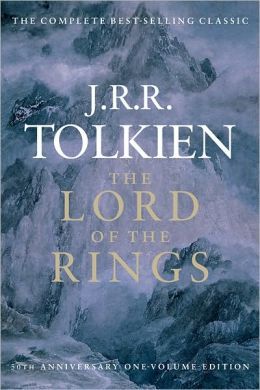
The Lord of the Rings

Tolkien insisted his The Lord of the Rings trilogy was not allegorical or inspired by his personal life, but I think we can at least say that his faith (Catholic) and his history (serving in both World Wars) influenced his writings. It’s a classic battle of good verses evil that set the stage for every epic fantasy adventure written since.

Just in case you’ve escaped reading or watching LOTR, the formerly-vanquished dark lord Sauron has come back into power in Middle Earth and is attempting to regain control of a magic ring that will let him subdue all lands and people under his power.  Though there are great warriors involved in the fight, the final victory hinges on two little hobbits from the middle of nowhere who hiked a very, very long way to destroy the ring.

By taking us outside of our own world, Tolkien shares universal truths about what makes a real friendship, the sacrifices required to do the right thing, and the importance of resisting evil even when it seems hopeless. One of the truths that hits me the hardest when reading or watching Lord of the Rings is how helpless we are to resist evil on our own. Frodo was incredibly strong on an emotional and psychological level and he carried the ring longer than any other character could have, but he still couldn’t make it up to Mount Doom by himself. Sam carried him the rest of the way and Frodo still wouldn’t have destroyed the ring if Gollum hadn’t fought him for it and carried it into the fires when he fell. Even heroes are susceptible to evil’s pull and they can’t overcome alone.

Mockingjay

I’ve read the whole Hunger Games book series and just watched Mockingjay Part II this past weekend. Suzanne Collins grew up learning about military history from her father — a Vietnam veteran and history professor. She didn’t go the history professor route herself, though, instead majoring in theater and telecommunications, then earning a master’s degree in dramatic writing.

The Hunger Games, Catching Fire, and Mockingjay all take a good, hard look at what the article linked above describes as “necessary and unnecessary wars.” They quote Collins saying, “If we introduce kids to these ideas earlier, we could get a dialogue about war going earlier and possibly it would lead to more solutions.” In this case, the writer approached her storytelling hoping to convey truths about and get a dialogue started on ideas relate to war.

My mother, brother and I were talking yesterday about how Mockingjay is a story that sticks with you. It’s not something you can just read/watch and move on from. This is largely owing to what is probably Collins’ least popular authorial choice — killing Finnick Odair. In the book I actually read right over his death the first time and then had to go back and figure out what happens to him. His death isn’t the driving force in a major plot point (like Prim’s death) and he doesn’t have a dying scene all of his own (like Rue does in the first book). He just dies senselessly and tragically while the action moves on without him. And that’s the point. In real life, death doesn’t always make sense or serve a specific purpose.

Ender’s Game

This book could have so easily been nothing more than a story about a futuristic society that trains children to kill aliens. But Ender’s Game was written by Orson Scott Card (one of my all-time favorite writers) and there’s much more to it than that. The real story isn’t about the alien threat — it’s about human nature.

Ender’s Game wrestles with the question of how far it’s “okay” to go when you’re at war, and it does so from the perspective of a child who’s been immersed in a militaristic system for the bulk of his formative years. Just in case the military training isn’t enough to make him comfortable with genocide, though, he’s taught the entire thing is a game — that none of the aliens will actually die if he wins.

As the story unwinds, we’re forced to confront ideas that can spill over into our own world. How violent can games become before they start affecting reality? When, if ever, are large-scale preemptive strikes an acceptable form of self-defense? What is an adult’s responsibility toward children?

Somewhat less obvious is the question of an individual’s responsibility within society. Ender was raised from a young age to think of the Buggers (this name was changed to Formics in later Enderverse writings) as enemies you must destroy at all costs. He should have been thoroughly brainwashed into believing this, and yet learning he’d succeeded in wiping out his enemy in real life rather than just in-game nearly destroyed him. He devoted the rest of his life to making others understand the Hive Queen’s perspective and trying to set things right by bringing back the Formics species. Perhaps that’s the real take-away truth from Ender’s Game — there are at least two sides (and often more) to every story and it’s not always easy to see who’s right.

Your Turn: What are some of the truths you’ve discovered in and through fiction?

Jesus Christ’s First Words

My parents tell me my first words were “Dada” and “duck.” I’m sure many of your parents also shared with your how excited they were when you first started talking, or perhaps you have kids of your own and eagerly waited for the first words to come from their mouths. We view first words as important, even on into adulthood when we meet someone for the first time. Based on the words people speak, we form ideas about their priorities, character, and motives.

Christ's First Words | marissabaker.wordpress.com

We don’t know what baby Jesus’s first words were, but we do have four gospels that contain many words He spoke while walking on this earth. Looking at the first words each writer records Christ speaking gives us key insight into His character and priorities.
Read more

Remembering Our Passover

“This do in remembrance of me,” Jesus told His disciples at His last Passover. We obeyed that instruction last night in a holy, meaningful Passover ceremony. Let’s not forget, though, that Christ’s work as our Passover didn’t end with that service on the beginning of the Passover day.

I woke up this morning after our Passover service in a warm, comfy bed. The morning after His last Passover, my Savior was taken into the judgement hall where He would be condemned and tortured. I’ll be cooking and blogging this afternoon; Jesus spent His Passover afternoon hanging on the cross.

For the past couple years, I’ve been making a conscious effort to remind myself of how Jesus spent the day after His final Passover ceremony on this earth. I’d like to invite you to join me in taking a few moment out of your day to meditate on the weight of His sacrifice. Have a blessed Passover day, my friends!

The Single INFJ

It’s strange that a personality type for which “homemaker” is one of the top recommended career options has such a difficult time finding love. While not true of all INFJs, many of us are romantics in every sense of the word. We’re idealists who still believe in soul-mates. We’re eager to dive deep into relationships and prioritize the people closest to us. We’re among the MBTI types least likely to cheat in a romantic relationship.

But we also shy away from any type of deep relationship if we don’t feel completely safe. Our idealism means we often have unrealistic expectations for our (potential) romantic partners. The soul-mate type of understanding we crave is hard to find. And so here I am, turning 27 this year having been on 4 dates since I was 19 (all with guys I chose not to go out with a second time) and yet still wanting to be in a relationships (almost) just as much as ever.

So what’s a single INFJ to do? It sounds cliche, but I agree with Amelia Brown on Introvert, Dear that it’s important  to focus  on “the relationship you have with yourself.” If you’re not comfortable with yourself, you’re never going to be happy, regardless of whether or not you’re in a relationship with someone else. Also, if you haven’t taken ownership of your life, your choices, and your struggles then you’re going to have a harder time cultivating the sort of strong, lasting relationship INFJs crave. Read more