
Hands of Praise

How do you use your hands to praise God? Maybe you lift your hands in worship, or use them to minister to God’s people. Or maybe you haven’t really thought about there being a connection between hands and praise, so this seems like an odd question.

Idioms involving hands abound in the Hebrew language. Being in someone’s hands is to be in their power. Putting one’s hand to something means you’re working on it. Raising your hand against someone is rebellion. Open hands express giving, and closed hands withholding, something.

Hands were lifted when making an oath to God, as Abraham did (Gen. 14:22-23). God lifts His hand when He delivers His people (Ps. 10:12). Priests stretch their hands out when they bless the people and people lift their hands when they bless God (Lev. 9:22; Neh. 8:6). Hands, and specifically lifted hands, can mean different things depending on the context.

Last week, we talked about the Hebrew word yadah (H3034), which means to confess or acknowledge as well as to praise and thank. There’s one other meaning we didn’t touch on, though. Yadah also means to throw or cast (Zodhiates’ dictionary). It’s connected with the Hebrew word for hand, yad (H3027), and as such yadah is considered the Hebrew word which “means to worship with extended hands” (see “8 Hebrew Words for ‘Praise’ Every Christian Needs to Know”).

We can think of yadah as a type of praise we “throw” to God with lifted hands as we declare how wonderful He is and confess that we follow Him. Today, we’re going to look at the ways we petition, pray to, and praise God with our hands. Read more
Introverts Need People Too: A Closer Look At Introversion and Social Anxiety

A lot of introvert-themed posts that you see around this time of year are things like “An Introverts Guide To Surviving the Holidays” or “How Not to Run In Terror From Your Extrovert Relatives.” That last one’s not an actual article, but it’s pretty close to some I’ve seen.

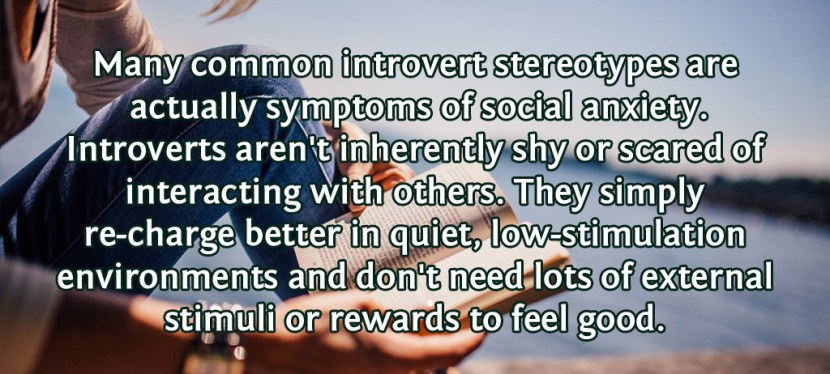
Often, writers of articles like this assume introverts don’t like people, that they’re always overwhelmed in social situations, and that they hate parties. But being on-edge in social situations, panicking when you have to interact with people, and going out of your way to avoid places where people gather aren’t actually signs of introversion. Those things are more a part of social anxiety.

Definition Conundrums

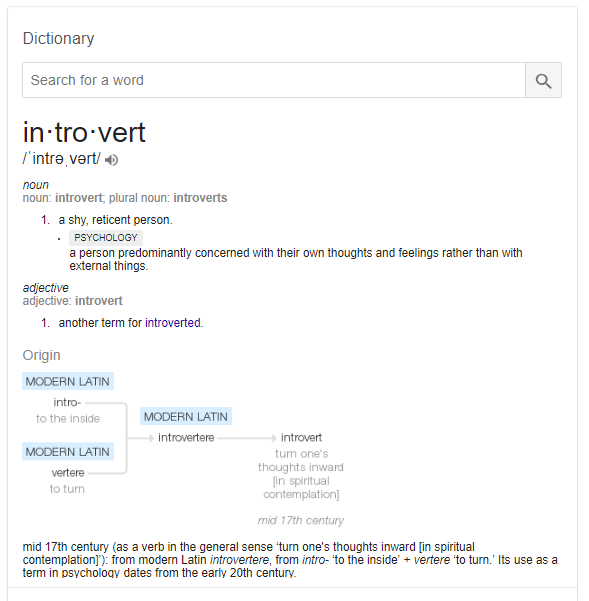
Part of the reason for this confusion is that people don’t understand what being an introvert actually means. For example, (despite numerous complaints and petitions) if you Google “introvert definition” the first thing that comes up is “a shy, reticent person.” Only if you expand the Google result to see translations, word origin, and other definitions do you finally get something a little closer to the correct result: “a person predominantly concerned with their own thoughts and feelings rather than with external things.”

Introverts Need People Too: A Closer Look At Introversion and Social Anxiety | LikeAnAnchor.com

Being an introvert doesn’t make you socially awkward. It doesn’t mean you hate people. Being an introvert means that you’re born with a trait that gives you a preference for the internal world. It also means you re-charge better in quiet, low-stimulation environments (usually alone, but not always). Introverts might avoid parties, but if so they do it because they’d rather be somewhere else (like at home reading or hanging our with a small group of friends), not because they’re inherently shy or scared of interacting with others. Read more

Thanksgiving and Praise

There really isn’t a word for “thank” in the Old Testament. When worlds like “thanks” or “thanksgiving” appear in English versions of Hebrew scripture, they’re translated from words with the primary meaning of praise and/or confession. It’s a different thing than what we mean when we say “thank you” in English.

Much like we saw last week in the New Testament connection between thanksgiving and grace, the concept of thanks in the Old Testament is inextricably linked to confession, praise, and sacrifice. There’s something more/different going on in these words than we might think just reading it in translation.

Confession, Praise, Sacrifice

The Hebrew word yadah (H3034) is a root with the primary meaning of “to acknowledge or confess.” It is used in three main ways: to confess individual or national sins, to proclaim or declare God’s attributes and works, and to convey man’s praise of men. Its derivative todah (H 8426) has a similar meaning and it is also used of the sacrifices connected to praise and thanksgiving.

Enter his gates with thanksgiving (todah), his courts with praise. Give thanks (yadah) to him; bless his name. (Ps. 100:4, LEB)

Yadah and todah in relation to God are about confessing or acknowledging something that is true. We can confess that we are sinful before God, as all are (Rom. 3:23). We can also confess that God is worthy of all praise, exhalation, and thanks (2 Sam. 22:50). In fact, yadah “is one of the key words for ‘praise'” in the Hebrew scriptures. It’s rendered thanks only because “praise leads regularly to thanksgiving” (Theological Wordbook of the Old Testament, entry 847). Read more

What Does Each Myers-Briggs® Type Look Like If They Get Stuck In A “Loop”?

When someone interested in Myers-Briggs®talks about loops, they’re referring to what happens when a person bypasses their co-pilot function and starts relying on their dominant and tertiary process instead. This can be a temporary situation, or it can last for quite a long time depending on the individual and their circumstances.

Some people teach that the Dominant-Tertiary Loop leads to personality disorders, but I have not found any good research to back up this claim. We can slip into a loop pattern without developing a disorder, and specific mental illnesses aren’t tied to any one personality type. It seems more likely to me that, as a general rule, loops are part of a reaction to stress or an attempt to avoid discomfort.

If you need a refresher on how cognitive functions work, click here to read “The Simplest Guide to Myers-Briggs® Functions Ever.”

We all need a balance between inner and outer world feedback, a way to learn new information, and a way to process information and make decisions. We’re got all that covered in our dominant and co-pilot functions because one is introverted and one is extroverted, and one’s a perceiving/learning function (Sending or Intuition) and one’s a judging/decision-making function (Feeling or Thinking).

When we skip our co-pilot function and go for the tertiary instead, we’re replacing the co-pilot with a function that fills a similar role because the tertiary and co-pilot are both either Perceiving or Judging functions. However, the tertiary has the same orientation (Introverted or Extroverted) as the dominant function. Going into a “loop” means we’re ignoring the world that is most uncomfortable for us and we’re opting to use a function that’s less mature than our co-pilot. This “loop” is going to look different for each type, but in all cases it means we’re not balanced. It also usually means that we’re avoiding personal growth. Read more

Thanksgiving And Grace

There’s a deep scriptural connection between thankfulness and grace. While it’s obvious that we should be thankful for God’s grace, what’s not so obvious in English is how closely the two concepts are linked by the Greek language that God picked for writing the New Testament. Here’s an example:

the service of this ministry is not only supplying the needs of the saints, but also is overflowing through many expressions of thanksgiving (eucharistia) to God. Through the proven character of this service they will glorify God because of the submission of your confession to the gospel of Christ and the generosity of your participation toward them and toward everyone, and they are longing for you in their prayers for you, because of the surpassing grace (charis) of God to you. Thanks (charis) be to God for his indescribable gift! (2 Cor. 9:12-15, LEB)

The Greek word charis (G5485) is typically translated “grace.” We usually define it as “unmerited favor.” It can also indicate what grace causes – joy, favor, gratification, acceptance, benefits, thanks, and gratitude. It’s etymological relatives eucharistos (G2170), eucharisteo (G2168), and eucharistia (G2169) are the words for thanks, thankfulness, and thanksgiving.

Direction of Grace

As I read through the Bible verses where charis appears, a pattern emerges in the translations. If charis is shown by God to man we call it grace (e.g. John 1:16-17). If charis is shown by man toward God we call it thanks (e.g. 1 Cor. 15:57). If charis is shown between men it’s a favor or credit (Luke 6:32-34; Acts 24:27), thanks (Luke 17:9), or occasionally a chance to minister grace (Eph. 4:29).

Receiving the grace of God should make us respond with something so similar, so closely connected, it can be called by the same word, charis. More commonly, though, “thanks” is translated from a word made by combining “eu” and “charis.” The word eu (G2095) means “good” or “well.” Literally, the combined word means “well favored,” though we usually take the implied meaning “to be grateful” or “thankful” (Strong’s on G2170, eucharistos). Read more

What Role Does The Tertiary Function Play In Myers-Briggs® Personality Types?

When we talk about psychological functions in Myers-Briggs® types, the tertiary function often gets over looked. Usually, we talk about the two that we use most often or about the inferior function that usually shows up under stress. These three functions are hugely important. Our dominant and co-pilot processes need to work together for us to have healthy, balanced personalities. And we need to understand the inferior function so we’re better equipped to recognize and deal with how we react to stressful situations. But the tertiary function is also important.

To learn more about how your inferior function works, check out my article “What Does Each Myers-Briggs® Type Look Like When They Get Stressed-Out?” And if you need a refresher on cognitive functions, or if this part of Myers-Briggs® is new to you, read “The Simplest Guide to Myers-Briggs® Functions Ever

The tertiary function is also called the “relief function.” In Personality Hacker’s car model (affiliate link), they call it the 10-year-old because that’s the level of maturity this function typically has. Psychologist John Beebe named it the “Eternal Child” after one of Carl Jung’s archetypes. Though we don’t talk about this function nearly as much as some of the others, it’s also a key part of our personality. Understanding the tertiary function, and how it relates to the other functions, can really help us understand ourselves.

Growth And The Functions

In terms of typology, personal growth happens when we’re using both our introverted and our extroverted sides, as well as our judging and perceiving sides. Working to find a balance between our dominant and co-pilot processes leads to growth and change because we’re exercising all these aspects of our personality. Read more