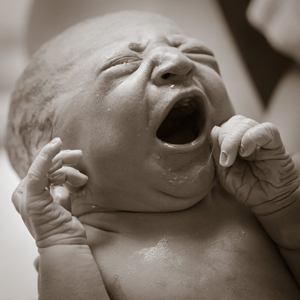
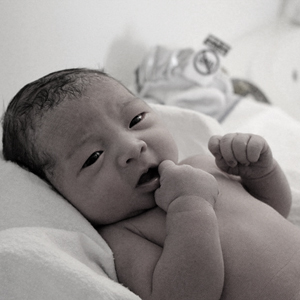
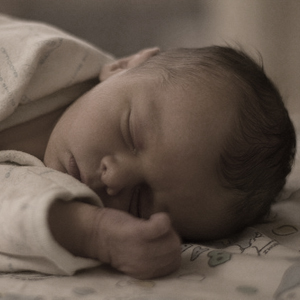
When Should We Value Human Life?

In the abortion debate, one of the things people like to argue is at what point the fetus qualifies as a living human being. Is it when the heart starts beating around 3 weeks? Is it when we can detect higher brain functions at at 22–24 weeks? Is it when the fetus is “viable” without the mother? Or after the baby has been born?

There’s plenty of science to indicate that a unique human entity is created either at the moment of conception or at cellar division about 24 hours later. The zygot, and then the fetus, is alive when a genetically unique cell forms that can grow, metabolize, and respond to stimuli. You can click here to read an excellent white paper on the subject written by Maureen L. Condic, Ph.D, Associate Professor of Neurobiology and Anatomy at the University of Utah School of Medicine. She concludes,

This view of the embryo is objective, based on the universally accepted scientific method of distinguishing different cell types from each other, and it is consistent with the factual evidence. It is entirely independent of any specific ethical, moral, political, or religious view of human life or of human embryos. Indeed, this definition does not directly address the central ethical questions surrounding the embryo: What value ought society to place on human life at the earliest stages of development?

I was on a pro-choice action network website, and they’re perfectly willing to admit that the fetus is alive and that it’s human (click here for the article I was reading). What they contend is that the fetus isn’t a human being yet (they distinguish “human being” from “human”). They also contend that a fetus does not have the right to live parasitically at the expense of its mother if she doesn’t want to carry to term because her person-hood and right to choose is not in dispute. They’ll then turn the argument to the “rights of the woman,” asking why we’re so ready to sacrifice her right to decide whether or not to have a baby on the altar of a fetus’s “hypothetical” right to be born.

Even at this point in the argument, you can see it really isn’t about science or objective fact. The facts are that the fetus is genetically unique, human, and alive from the moment of conception. That’s not in dispute. In reality, the question we should be asking is not, “When does the fetus become human?” but rather, “At what point do we value human life?”
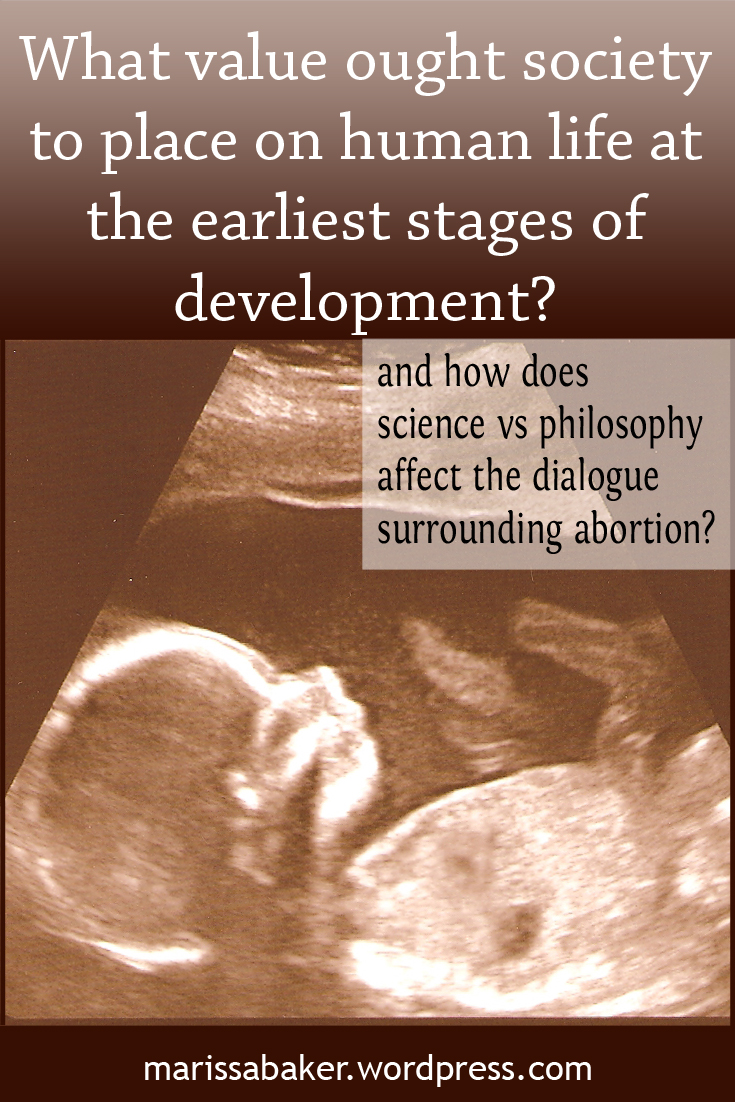
When Should We Value Human Life? | marissabaker.wordpress.com
Photo Credit: “hello in there!” by Adrienne Bassett, CC BY via Flickr

The main leg the pro-life movement has to stand on is convincing society that we should value the life of unborn people so much that killing them is legally considered murder. We can use the science, but ultimately that’s not going to convince people to fight against abortion. People who support the legal right to terminate pregnancies know fetuses are alive — they just don’t think it matters. Our battle needs to be fought on philosophical and moral grounds.

Recent polls show that while more American’s describe themselves as pro-choice than pro-life right now, 51% think abortion should only be legal “under certain circumstances” verses 19% saying legal “under any circumstances (Gallup Polls). Getting into more detail about exactly what this means, we see 84% of Americans want tight restrictions on abortion: 25% say it should be legal in the first 3 months, and the others are divided between only in cases of rape or incest, to save the life of the mother, and not legal at all. (Marist Poll).

The Marist Poll also reports that even though only 13% of respondents favored banning abortion under every circumstance, 60% believe abortion is morally wrong. In today’s America we hate the idea of imposing our morality on other people, but we still do that every day we continue to (rightly!) maintain that murder, rape and pedophilia are wrong. Why is it so hard for us to extend that moral stand to protecting unborn life? And how far are we going to let this go? When we as a society set arbitrary limits on what makes a human life qualify as a human being, we’re on a very slippery slope. In 2011, two researchers in Australia published a paper titled “After-birth abortion: why should the baby live?” I’ve not read the whole paper, but this is the researcher’s own succulent abstract statement of what their work is about:

Abortion is largely accepted even for reasons that do not have anything to do with the fetus’ health. By showing that (1) both fetuses and newborns do not have the same moral status as actual persons, (2) the fact that both are potential persons is morally irrelevant and (3) adoption is not always in the best interest of actual people, the authors argue that what we call ‘after-birth abortion’ (killing a newborn) should be permissible in all the cases where abortion is, including cases where the newborn is not disabled.

While these researchers were not widely supported and later claimed their argument was taken out of context, it was a step in a disturbing trend. Informal evidence suggests college students are increasingly in favor of “after-birth abortions” up to 4 or 5 years old because they believe children that age aren’t “self-aware” yet (never mind that psychologists say children become “self-aware” between 1 to 3 years, usually 18 months).

It’s ridiculous to suggest that a fetus suddenly becomes a human being at 3 months, or at birth, or whatever age you decide to go with, but that he or she isn’t a human being a few minutes, hours, or days earlier. When you take such an argument to it’s farthest extent, you either have to believe human life is precious from conception or arbitrarily define a point at which humans are protected and before which they are not.

While we’re on the subject of valuing human life, I want to point out that a pro-life argument should never be anti-women. As one blogger who works with at-risk women points out, “Abortion isn’t so much about a woman having a choice — but a woman feeling like she has no choice at all.” While I want abortion to be illegal because I firmly believe no human being has the right to decide they can kill another, I also want to create a world where women don’t feel they have to or should have abortions. Where violence against pregnant women who want to keep their child stops. Where people are honest about what actually happens to both the mother and unborn child during an abortion. Where we consider the physical, emotional and psychological risks to the mother and stop pretending abortion is pro-woman.

It is our right and it is our duty to stand up to injustice, to speak out against moral wrongs and fight to correct them. And if we’re Christians, this is doubly the case. We’re called to “choose life, that both you and your descendants may live” (Deut. 30:19). God talks about knowing His people pre-birth and calling prophets and judges “from the womb”  (Judg. 13:5; Is. 49:1, 5; Jer. 1:5; Gal 1:15). Other verses talk about Him forming children inside the womb and being involved in birth (Job 31:15; Ps. 22:9; 139:13; Is 44:2), and about in-womb children reacting like and being treated as people (Gen 25:23; Luke 1:41). For Christians to say that murder is wrong but killing an unborn child is not just doesn’t add-up. There are certain areas in which we cannot be like our culture, and this is one of them.

Books That Tell Truth Through Lies

As I was going through blog posts in my inbox yesterday,  I noticed two of my fellow bloggers were writing about reading recommendations and lists. Juni Desireé was posting about the top 10 books on her reading list for this year, and Socratic MBTI offered three quick recommendations for “enriching” books to read. In the past, I’ve shared a couple lists of my own, including my favorite fantasy books, but that was way back in 2013 (I’ve been blogging that long!?!). Sounds like it’s time for another recommended books post! Fiction That Tells The Truth

Books That Tell A Truth Through Lies | marissabaker.wordpress.com

I’m taking the title of this post from one of my favorite ideas — that even though “fiction” is defined as imaginary or untrue it is, in fact, a vehicle for telling the truth.

“That’s what fiction is for. It’s for getting at the truth when the truth isn’t sufficient for the truth.” ― Tim O’Brien

“Fiction reveals truth that reality obscures.” ― Ralph Waldo Emerson

“Fiction is the lie through which we tell the truth.” ― Albert Camus

“A fiction writer weaves a fabric of lies in hopes of revealing deeper human truths.” ― Wally Lamb

That’s my favorite kind of fiction. Any good story can teach you something true about yourself or other people, but truly great stories are going to get at a “deeper human truth” than is often isn’t possible in any other form. Child-labor laws would have passed in Britain without Dickens, but would it have happened as quickly if people hadn’t read Oliver Twist? Would the phrase “Catch-22” have entered our vocabulary if Joseph Heller wrote an essay instead of a novel?

Many books exist to share truths or make us think about something we’d otherwise overlook. One of the more famous is 1984 by George Orwell, which I’ve never actually finished reading (I know, I know — I’ll go hide in the corner now). Many others teach us truths seemingly by accident while telling a story. Here are just a few examples :

*note: there will be spoilers for all these books.

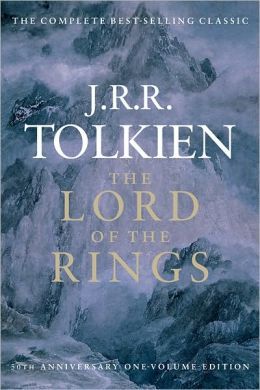
The Lord of the Rings

Tolkien insisted his The Lord of the Rings trilogy was not allegorical or inspired by his personal life, but I think we can at least say that his faith (Catholic) and his history (serving in both World Wars) influenced his writings. It’s a classic battle of good verses evil that set the stage for every epic fantasy adventure written since.

Just in case you’ve escaped reading or watching LOTR, the formerly-vanquished dark lord Sauron has come back into power in Middle Earth and is attempting to regain control of a magic ring that will let him subdue all lands and people under his power.  Though there are great warriors involved in the fight, the final victory hinges on two little hobbits from the middle of nowhere who hiked a very, very long way to destroy the ring.

By taking us outside of our own world, Tolkien shares universal truths about what makes a real friendship, the sacrifices required to do the right thing, and the importance of resisting evil even when it seems hopeless. One of the truths that hits me the hardest when reading or watching Lord of the Rings is how helpless we are to resist evil on our own. Frodo was incredibly strong on an emotional and psychological level and he carried the ring longer than any other character could have, but he still couldn’t make it up to Mount Doom by himself. Sam carried him the rest of the way and Frodo still wouldn’t have destroyed the ring if Gollum hadn’t fought him for it and carried it into the fires when he fell. Even heroes are susceptible to evil’s pull and they can’t overcome alone.

Mockingjay

I’ve read the whole Hunger Games book series and just watched Mockingjay Part II this past weekend. Suzanne Collins grew up learning about military history from her father — a Vietnam veteran and history professor. She didn’t go the history professor route herself, though, instead majoring in theater and telecommunications, then earning a master’s degree in dramatic writing.

The Hunger Games, Catching Fire, and Mockingjay all take a good, hard look at what the article linked above describes as “necessary and unnecessary wars.” They quote Collins saying, “If we introduce kids to these ideas earlier, we could get a dialogue about war going earlier and possibly it would lead to more solutions.” In this case, the writer approached her storytelling hoping to convey truths about and get a dialogue started on ideas relate to war.

My mother, brother and I were talking yesterday about how Mockingjay is a story that sticks with you. It’s not something you can just read/watch and move on from. This is largely owing to what is probably Collins’ least popular authorial choice — killing Finnick Odair. In the book I actually read right over his death the first time and then had to go back and figure out what happens to him. His death isn’t the driving force in a major plot point (like Prim’s death) and he doesn’t have a dying scene all of his own (like Rue does in the first book). He just dies senselessly and tragically while the action moves on without him. And that’s the point. In real life, death doesn’t always make sense or serve a specific purpose.

Ender’s Game

This book could have so easily been nothing more than a story about a futuristic society that trains children to kill aliens. But Ender’s Game was written by Orson Scott Card (one of my all-time favorite writers) and there’s much more to it than that. The real story isn’t about the alien threat — it’s about human nature.
Ender’s Game wrestles with the question of how far it’s “okay” to go when you’re at war, and it does so from the perspective of a child who’s been immersed in a militaristic system for the bulk of his formative years. Just in case the military training isn’t enough to make him comfortable with genocide, though, he’s taught the entire thing is a game — that none of the aliens will actually die if he wins.

As the story unwinds, we’re forced to confront ideas that can spill over into our own world. How violent can games become before they start affecting reality? When, if ever, are large-scale preemptive strikes an acceptable form of self-defense? What is an adult’s responsibility toward children?

Somewhat less obvious is the question of an individual’s responsibility within society. Ender was raised from a young age to think of the Buggers (this name was changed to Formics in later Enderverse writings) as enemies you must destroy at all costs. He should have been thoroughly brainwashed into believing this, and yet learning he’d succeeded in wiping out his enemy in real life rather than just in-game nearly destroyed him. He devoted the rest of his life to making others understand the Hive Queen’s perspective and trying to set things right by bringing back the Formics species. Perhaps that’s the real take-away truth from Ender’s Game — there are at least two sides (and often more) to every story and it’s not always easy to see who’s right.

Your Turn: What are some of the truths you’ve discovered in and through fiction?

Grimm’s Laissez-faire Attitude Toward Sexual Coercion

Anyone else still watching NBC’s Grimm? I’m only one episode behind on the current season, but I’m seriously thinking of giving it up entirely. What was once an interesting foray into the dark origins of fairy tales has become a tangle of dysfunctional relationships and plot lines so ridiculous that Rosalee just spent a whole episode voicing my own frustrations with “how/why is this happening?”

More upsetting than the devolving story line, though, is how they writers have been handling the question of rape. Even if you’re not watching Grimm, this discussion matters because the way our entertainment presents issues like sexual violence both reflects and influences prevailing culture.

Love In The Time Of Cookies

It all started way back in season one with the character Adalind. She’s a Hexenbeist (basically a witch). She’s a main antagonist in this first season, and uses her powers to force Hank to see her as a romantic option. He’s basically roofied via magical chocolate chip cookie, but it wasn’t addressed in the show as rape and I doubt the writers even thought of it that way.

This brings us to the first disturbing idea that Grimm keeps coming back to, perpetuating the myth that adult men can’t be victims of rape. Hank wasn’t a victim — he was just a guy who accidentally had sex with someone he didn’t want to. No big deal (never mind that she drugged him and nearly killed him). We wouldn’t overlook this if the characters’ genders were reversed, so why the double-standard?

English and Welsh law didn’t recognize male rape as a crime until 1994. The United States was even farther behind — the FBI’s definition of rape didn’t include male victims until early 2012. I suppose it’s not surprising, then, that the statistics I could find related to male rape were UK-based. Crime reports for 2014 in England & Wales record 3,580 sexual assaults against men. Survivors UK (a male-only support group) estimates that only 2-3% of assaults are actually reported (compared to 10-12% for women). And yet society doesn’t treat it as a problem — Survivors UK had their funding cut completely last year, and most rape hotlines won’t even talk to men. No wonder Hank didn’t want to claim his coerced relationship with Adalind was rape.

It’s Okay If She’s A Witch

Adalind’s actions with Hank are played-off as unwanted sexual aggression rather than an attack, but apparently it’s enough to justify writing her comeuppance as an assault scene. Since the blood of a Grimm can strip a Hexenbeist of her powers, Nick attacks her, pins her to the ground, climbs on top of her, and kisses her so she’ll bite his lip. There’s really no way not to interpret this imagery as sexual. Charity has written an excellent article titled “A Grimm Look at Writers’ Impact on Rape Culture” that addresses this scene in-depth, as well as the after-math that continues comparing Adalind to a rape victim.

The disturbing part about this scene isn’t so much that it’s played as a sexual assault, but rather that no one has a problem with that. This perpetuates the myth that sexually aggressive women are asking for (or even deserve) sexual assault. Nick is the good guy, the hero, and that didn’t change for most viewers after he attacked Adalind. But other people’s bad actions shouldn’t justify “good” people committing unconscionable acts.

Baby Makes It Better

Skip ahead to the end of season three. Adalind has her Hexenbeist powers back, and she hatches a plan to take Nick’s powers away. Much like ingesting a Grimm’s blood can take away Hexenbeist powers, sleeping with a Hexenbeist takes away a Grimm’s abilities to detect Wessen. Adalind uses magic to disguise herself as Nick’s love interest, Juliette, and he sleeps with her. While Adalind doesn’t violently assault him, here’s no denying Nick was coerced into having sex with someone he would have turned down if given a choice. Doesn’t that make it rape?

Now in season 5, Nick is living with Adalind and the child she conceived as a result of her impersonating Juliette. Can you imagine this in reverse? No one asks a woman to move in with a man she wouldn’t have consented to have sex with just because the resulting child needs a father. If someone did write that situation, you can bet there’d be other characters in the show discouraging her from living with her rapist. In Nick and Adalind’s case, however, the farthest any character will go is describing it as “weird.” The writers don’t see their past relationship as rape (see first myth) and, if the number of Nick/Adalind shippers online is any indication, neither do most fans.

I was going to have a “myth” listed for each section, but it doesn’t really work here — no one actually thinks you should move-in with your rapist if there’s a child! It’s insane. And yet, I saw someone online arguing that Nick and Adalind’s relationship is a relatable and realistic portrayal of modern adults in a co-parenting situation after an unexpected pregnancy. I suppose this is what happens when you live in a culture that’s adopted an anything goes (except abstinence) attitude toward sex. The more taboos we tear down, the easier it is to skirt around the ones that remain.


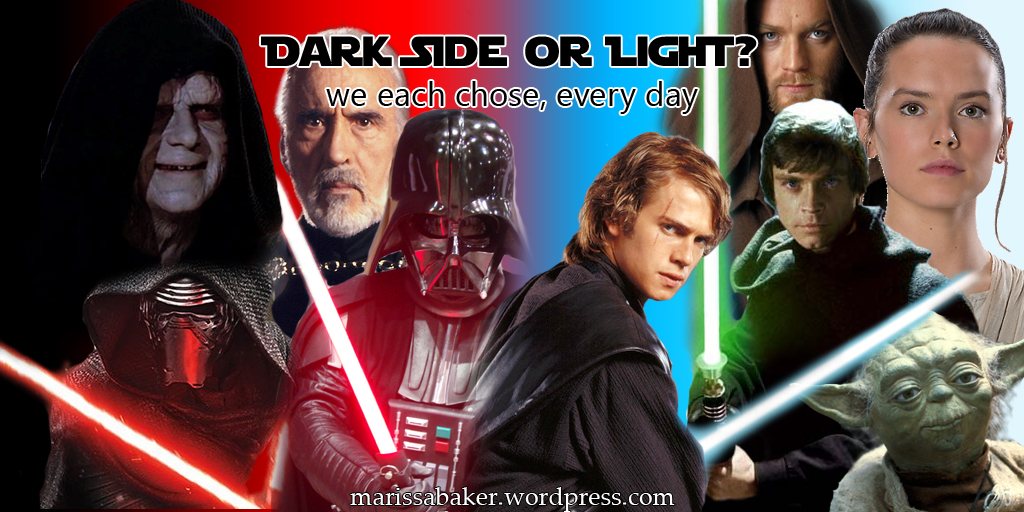
Dark Side or Light?

The dark side is quick, easy and powerful. The light side requires commitment, bravery and peace. They are always at odds, always battling in the galaxy as a whole, between groups of people, and even within individual hearts and minds.

Star Wars has always been about the classic battle between good and evil. This same battle rages in our world as well, which is one of the reasons this franchise is so popular. We can all relate to the humanity and struggles of the people in this “galaxy far, far away.” It’s a sort of myth or fairy tale for the modern age. And, like many iconic stories, it can prompt discussions about a variety of topics important today, including faith and religion.

Do you walk on the dark side or the light? | marissabaker.wordpress.com

In Star Wars, the Dark Side is the “quick and easy” path, just as in the Bible the path toward destruction is wide and easy to find. Darkness has a strong, seductive pull which actually mirrors an analogy in Proverbs where evil is compared to a crafty harlot while wisdom is a gentle, godly woman. Like the Bible, Star Wars teaches the Dark Side isn’t better – the good characters resist it and win, the bad characters find that it ruins their lives and the lives of those around them. Read more

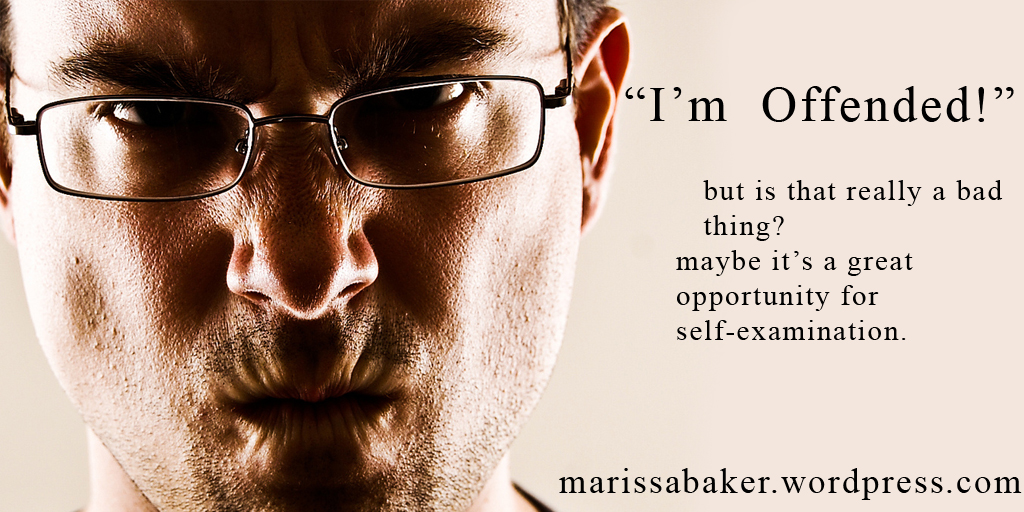
Turning Offense Into Something Useful

It seems like everyone is offended about something today. Wherever someone voices a decided opinion, there’s someone else reacting to it defensively. In an effort not to offend anyone, we’re turning into a society where we talk around issues rather than addressing them directly. We couch our opinions in careful language like, “From my own personal view …” and “I don’t want to force an opinion on you, it’s just my thoughts that …”.

Why are we so quick to see offense as a bad thing in today’s culture? If it’s just because we don’t like to be made uncomfortable, then we’re missing valuable opportunities for personal growth. Being offended offers a challenge to how we think. For people who are open to questioning, growth, and refinement, being challenged is a good thing. For people who just want to float through life without wondering “why?”, offense is scary.

Turning Offense Into Something Useful | marissabaker.wordpress.com
photo credit for portrait: “Angy Face” by Ryan Hyde, CC BY-SA

The next time you feel offended, don’t look at it as a bad thing. See it as an opportunity for self-examination. It’s a chance to look inside yourself and find out why you’re having such a strong, defensive emotional reaction to what you just saw or heard. Ask yourself things like,

  • Is this important enough to be offended about?
    • If no, why am I so defensive?
    • If yes, how do I turn my offense into something more productive?
  • Am I offended by this because it makes me feel guilty about something I’m doing wrong? (plank in your own eye, speck in your brother’s …)
  • Does anyone else care that I care about this?
  • Would sharing my thoughts on this just stir up unproductive strife? (If yes, don’t do it!)
  • Is the thing I feel offended about something that’s hurting other people?
    • If yes, what can I do to stop it? (For example, being offended that human trafficking exists doesn’t help; you’d need to fight against it or support those who do.)
  • Is the idea/statement that offends me actually true, regardless of how I feel?

Offense is unproductive by itself, but when we feel offended we have a chance to transcend knee-jerk reactions and use it as a tool for self-examination, growth and motivation. We can look inside ourselves and see if our offended reaction points to something we need to change, and we can look outside ourselves for opportunities to actively make the world a better place.

Stop Killing God’s Children

photo by Sander van der Wel, CC BY-SA via Flickr

I can’t watch the Planned Parenthood videos. I’ve been reading articles by people who have seen them, though, and that’s enough to break my heart. How could we as a society and a nation have reached the point where chopping up living infants is not a crime?

It boggles my mind that any sort of decent person can condone this, but what’s even more disturbing is that some professing Christians still support abortion. We sometimes look at the Old Testament and wonder how a loving, merciful God could be so harsh and cruel, yet we overlook passages where God talks about looking at His own people with horror. As a God of both mercy and justice, there are some things He simply cannot stand for.

And they built the high places of Baal which are in the Valley of the Son of Hinnom, to cause their sons and their daughters to pass through the fire to Molech, which I did not command them, nor did it come into My mind that they should do this abomination, to cause Judah to sin.’ (Jer. 32:35)

God found the idea of a nation murdering its children completely repulsive. It never even crossed His mind that Israel should do such a thing, and He certainly didn’t command it. But just in case it ever popped into their heads, He made sure to expressly forbid human sacrifice.

You shall not worship the Lord your God in that way; for every abomination to the Lord which He hates they have done to their gods; for they burn even their sons and daughters in the fire to their gods. (Deut. 12:31)

photo by Harald Groven, CC BY-SA via Flickr

Child sacrifice was the epitome of the sins these nations committed. It’s one of the chief reasons God decided they deserved the sort of punishment — often complete annihilation — that makes us so squeamish today. And yet here we are in the United States, doing pretty much the same thing. We’re not killing babies as part of a worship practice, but it has the same result. We’re voluntarily slaughtering infants because we’ve put other concerns before God’s laws.

In Proverbs 6, God talks about seven things that He hates. “Hands that shed innocent blood” is the one that most clearly applies to abortion. What blood could be more innocent than that of an unborn child? But other abominable things play a role as well. “A lying tongue” tells women who feel trapped that abortion is their best or only option. “A heart that devises wicked plans” came up with the modern abortion movement in the first place, killing babies for convenience, profit, and to eliminate populations seen as “undesirable”.

When a nation starts killing its own children, you know God’s judgement is just around the corner. When Israel was taken into captivity in 2 Kings 17, for example, God said one reason was that they’d instituted child sacrifice (2 Kings 17:17). He lays this sin to His people’s charge again in the prophets.

Moreover you took your sons and your daughters, whom you bore to Me, and these you sacrificed to them to be devoured. Were your acts of harlotry a small matter, that you have slain My children and offered them up to them by causing them to pass through the fire? (Ezk. 16:20-12)

photo by Bridget Coila, CC BY-SA via Flickr

God sees child murder as a personal affront against Him. Children belong to God, and He is invested in their well-being as a faithful and compassionate Creator. That’s why He’s so harsh on people who kill babies.

King Ahaz of Judah was another evil man who was sacrificing his own children around the time Israel was carried into captivity for the same sin (2 Kings 16:2). Yet Judah was not punished for one very important reason. The next king — a son who’d been allowed to live — “did what was right in the sight of the Lord” (2 Kings 18:3). Hezekiah removed idolatry, including child sacrifice, from Judah, and the country prospered (2 Kings 18:4-8).

These examples give us reason for both hope and fear — hope that we can change our culture and fear of what will happen if we don’t. Through these Planned Parenthood videos, our country has been given a wake-up call. We can either choose to remove evil from our land, as Hezekiah removed the institutionalized evils of previous generations in Judah, or we can face judgement as the unrepentant land of ancient Israel did.

Keep Reading: When Should We Value Human Life?