I’d actually forgotten this was on my Classics Club Book List and just started reading it because I saw it on the shelf. Now I have to write something. But first …
I just read some really exciting literary news that I want to share with you. There’s going to be a web-series re-telling of The Scarlet Pimpernel in a modern setting (think something like what The Lizzie Bennet Diaries did with Pride and Prejudice). You can find more about it at Yet Another Period Drama blog or The Day Dream blog. It sounds fantastic, and I’m so looking forward to seeing it next year.
Anyway, back to Mars.
*insert obligatory spoiler warning*
I really wasn’t sure what to expect from this book. All I knew was that it was written by Ray Bradbury (which pretty much guaranteed it would be intriguing) and it had something to do with Mars. The inside cover of my edition reads, “Ray Bradbury’s Mars is a place of hope dreams, and metaphor.” With that introduction, I was not expecting more than 20 people to have been killed by page 65 (and many more in the following pages). Warning: this is not a “happy” book.
If you’re not expecting a light, happy read, though, this book is fascinating. I think most of us know by now that Mars is not inhabited (as least not by aliens of this sort), but the world Bradbury creates on Mars still seems entirely possible. He has no trouble convincing his readers into a “willing suspension of disbelief,” probably because he doesn’t try. He just writes these stories as if they are real (but more in the sense of myth than history), and we’re perfectly happy to go right along with this fiction.
One of my favorite parts of the book was actually Bradbury’s introduction (You might be a writer if … you’re as intrigued by the author’s description of his writing process as you are by the book itself). He describes the stories that became The Martian Chronicles as “a series of Martian penseés, Shakespearean ‘asides,’ wandering thoughts, long night visions, predawn half-dreams.” He thought they weren’t anything special, until an editor “suggested that I might have woven an unseen tapestry.”
The Martian Chronicles was published in 1950. Since then, it has never been out of print, and my edition notes that it “has been read by more readers around the world than almost any other work of science fiction.” But Bradbury himself didn’t think of it as “science fiction.” This is what he said this book was:
It is King Tut out of the tomb when I was three, Norse Eddas when I was six, and Roman/Greek gods that romanced me when I was ten: pure myth. If it had been practical technologically efficient science fiction, it would have long since fallen to rust by the road. But since it is a self-separating fable, even the most deeply rooted physicists at Cal-Tech accept breathing the fraudulent oxygen atmosphere I have loosed on Mars. Science and machines can kill each other off or be replaced. Myth, seen in mirrors, incapable of being touched, stays on. If it is not immortal, it almost seems such.” — Ray Bradbury, introduction to The Martian Chronicles
Religion on Mars
There are so many threads that weave together The Martian Chronicles. It covers book banning, inadvertent genocide, the nature of man, implications of telepathy, ethics of murder — the list goes on and on. So I’m going to pick just one “thread” to talk about here, and that’s religion.
On Mars, science and religion are not incompatible — they are interconnected. Unfortunately, we only learn this after most of the Martians are already gone and it is too late for the knowledge to help mankind put back together what we separated.
Science is no more than an investigation of a miracle we can never explain, and art is an interpretation of that miracle.” — Ray Bradbury, The Martian Chronicles
Mankind has it all wrong, according to one character who may or may not have lost his mind. Instead of letting science, religion, and art flow into each other, as the Martians did, we tried to separate them. In the process, we lost ourselves and our faith. Then, not content with damaging one world and its people, we moved on to Mars, and killed it.
But The Martian Chronicles isn’t just about all the mistakes humanity made as a whole. It’s about the individuals who lived, loved, killed, and died for a whole host of different reasons. It’s about the priest who believes that even the glowing blue lights on Mars — the last Martians — have a soul and deserve to hear about Christ. It’s about the father who launched his family toward an abandoned Mars to save them from a dying earth. It’s about the young Martian whose telepathy turned him/her into a chameleon as he/she tried desperately to cure their loneliness by becoming a human family’s dead child. It’s about how these people respond to the unknown, and what beliefs they cling to in the end.
I read this book quickly, because I was so intrigued by it, but not so quickly as I have read other novels. It demands more than a cursory glance, and I think it warrants at least one re-reading. If you like “thinking books,” or sci-fi of any kind, I highly recommend giving The Martian Chronicles a try.
Click here to get a copy of The Martian Chronicles. Please note that this is an affiliate link. This means that, at no additional cost to you, I will receive a commission if you click on the link and make a purchase.
This study all began with perusing the “lambda” section in a Greek dictionary. I came across the word logikos (G3050), which means “pertaining to reason and therefore reasonable.” You’ve probably already guessed that it’s where we got our English word “logic.” This is the word used in Romans 12:1 for “reasonable service.”
I beseech you therefore, brethren, by the mercies of God, that you present your bodies a living sacrifice, holy, acceptable to God, which is your reasonable service. And do not be conformed to this world, but be transformed by the renewing of your mind, that you may prove what is that good and acceptable and perfect will of God. (Rom. 12:1-2)
I tend to connect my faith with a feeling more than an intellectual idea. I know “intellectually” that God exists and that the Bible makes sense, but for me personally the feeling of Him being real and present and in a relationship with me seems more important. This has frustrated some of the more rational, logical people I’ve talked to. One atheist who had been raised Christian couldn’t understand why things that seem contradictory in scripture didn’t bother me even though I couldn’t explain all of them. Another person still in the church said that my “spirituality” is almost intimidating because I talk about my feelings for God so much, and that kind of faith seems alien to her. Other people attracted by reason and logic have walked away from their faith when confronted with scientific arguments for evolution or a “big bang” explanation of how the universe came into being.
One of the things I’ve run across in my studies of type psychology is that “Feeling” types are more attracted to spirituality and religion than “Thinking” types are (in this context “Feeling” and “Thinking” refer to a preference for dealing with people or data; it’s not a measure of intelligence). That “feelers” are attracted to a place that encourages group interaction and harmony, but I worry that we may have scared off some of the “thinkers” with our talk of a touchy-feeling God who just wants to love people. It is true that God wants a relationship with everyone, but it’s not true that everyone needs to relate to Him the exact same way. He means to be accessible to all the people He created.
Order and Logic
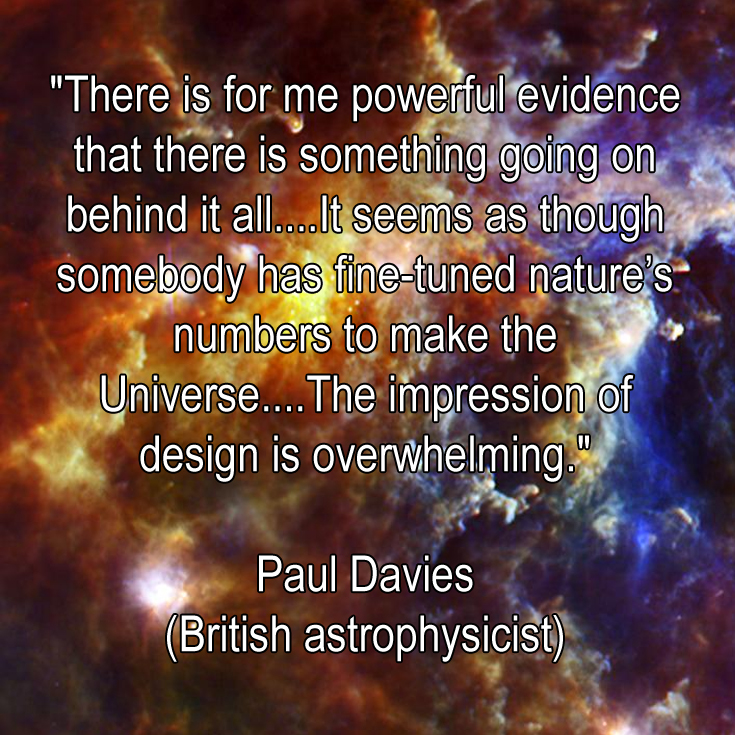
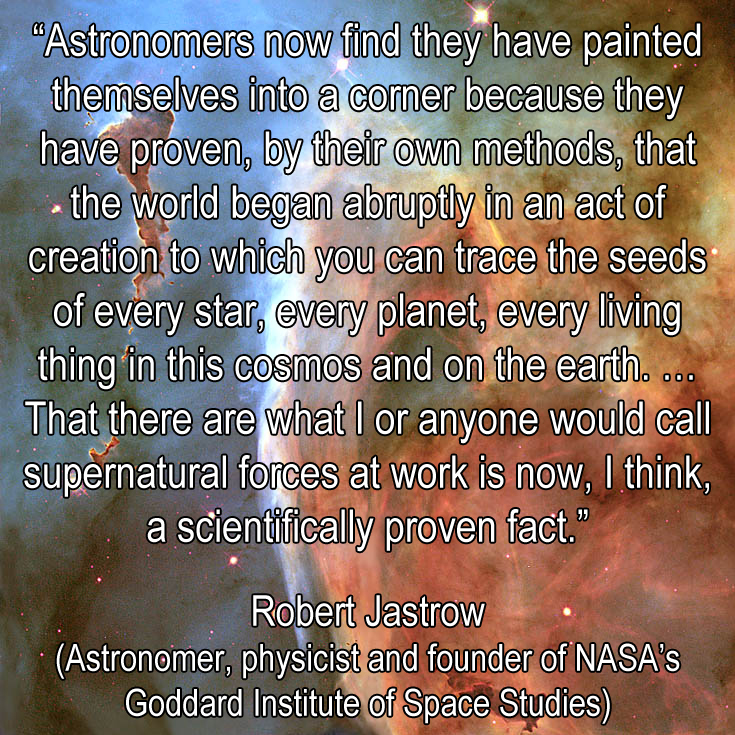
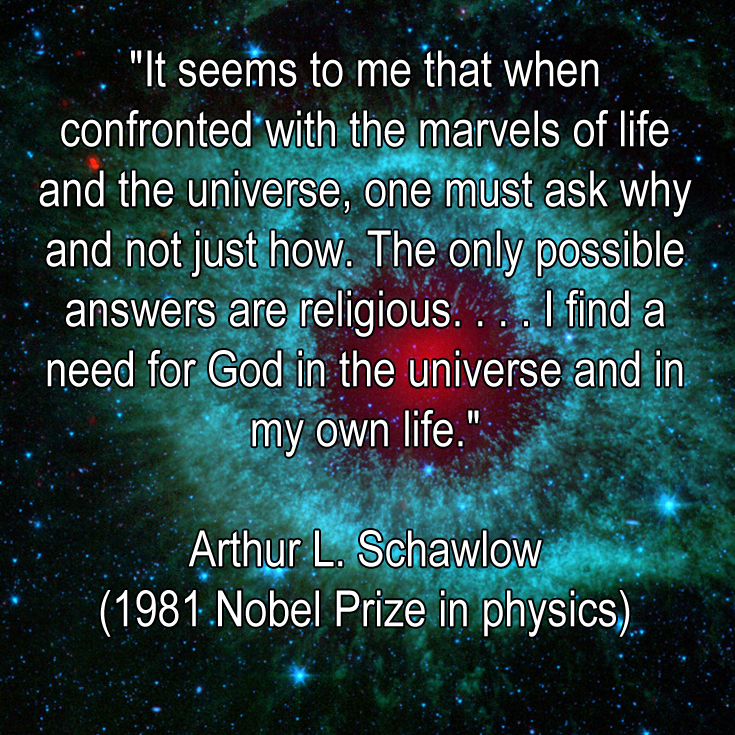
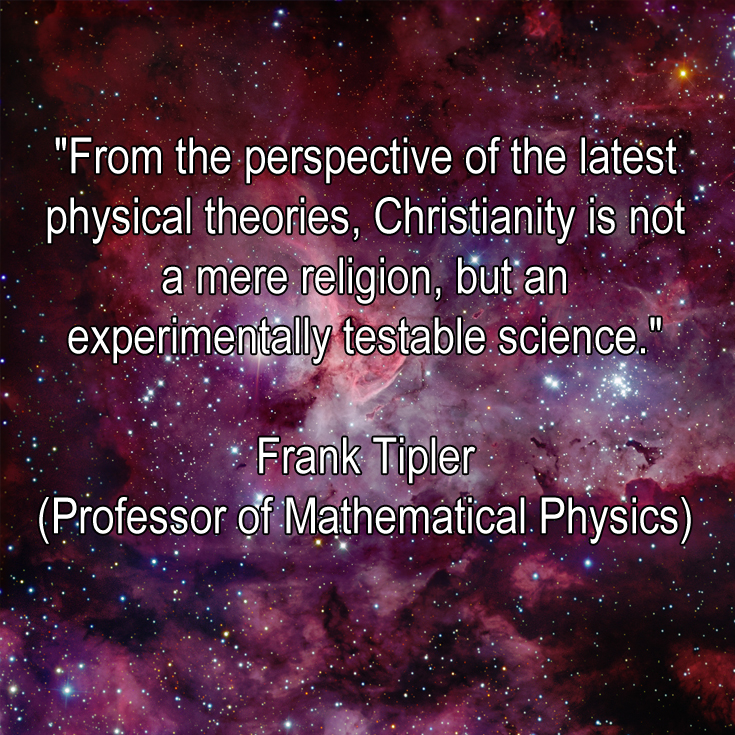
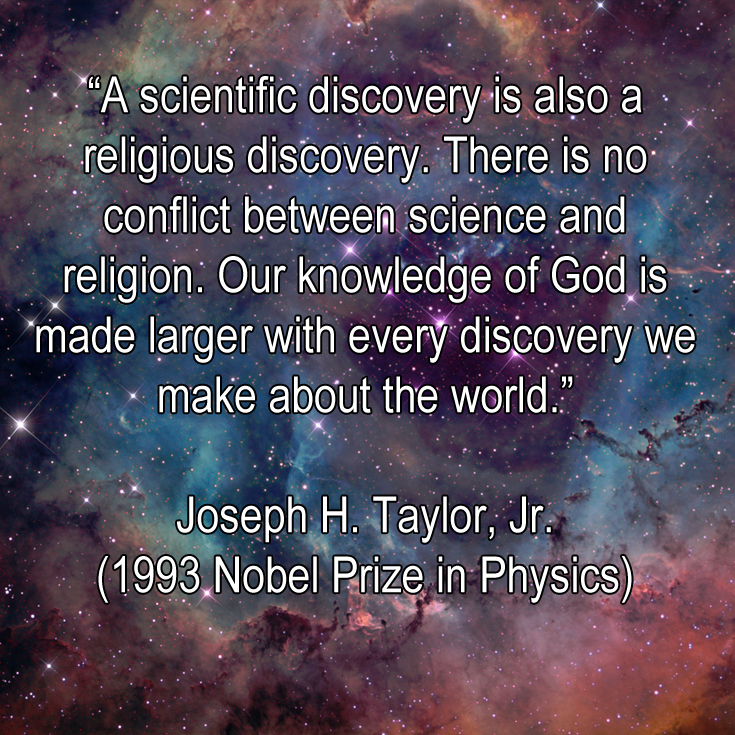
There aren’t just one or two verses that simply state “God is ordered and logical.” Rather, the entire Bible and the whole of creation is a testament to the way His mind works. We can read Genesis 1 and see the orderly step-by-step way He created the world, then look at creation and see His master-craftsman hand at work in every aspect of the universe’s design. Scientists have been doing this for years, and many come to the conclusion that God is the only explanation for how the universe is so perfectly put together.
“The more I study science, the more I believe in God.” –Albert Einstein
“There can never be any real opposition between religion and science; for the one is the complement of the other. Every serious and reflective person realizes, I think, that the religious element in his nature must be recognized and cultivated if all the powers of the human soul are to act together in perfect balance and harmony. And indeed it was not by accident that the greatest thinkers of all ages were deeply religious souls.” –Max Planck
“When confronted with the order and beauty of the universe and the strange coincidences of nature, it’s very tempting to take the leap of faith from science into religion. I am sure many physicists want to. I only wish they would admit it.” –Tony Rothman
There are a couple verses in 1 Corinthians that speak to the orderly, logical attributes of God. Paul was discussing who should speak and how meetings should be conducted in the church, and makes these statements:
God is not the author of confusion but of peace, as in all the churches of the saints. … Let all things be done decently and in order. (1 Cor. 14:33, 40)
God does not author confusion — He wants things to progress in a decent, orderly fashion. Even mildly logical, perfectionistic, or OCD people can identify with this attribute of God.
The Word of Intelligence
In the beginning was the Word, and the Word was with God, and the Word was God. He was in the beginning with God. All things were made through Him, and without Him nothing was made that was made. … And the Word became flesh and dwelt among us (John 1:1-3, 14)
In these very familiar verses, the Greek word translated “Word” is logos (G3056). It is the root word for logikos, which we’re already talked about. It means “to speak,” but it is distinct from other words that specifically refer to sound or noise (lalia, G2981) or to speaking without necessarily making sense (laleo, G2980). Logos means to express intelligence.
Logos, when it refers to discourse, is regarded as the orderly linking and knitting together in connected arrangement of words of the inward thoughts and feelings of the mind. … In the first chapter of John, Jesus Christ in His preincarnate state is called ho Logos, the Word, meaning first immaterial intelligence and then the expression of that intelligence in speech that humans could understand. (Zodhiates)
One of the most well-known names of Jesus carries with it a testament to God’s reason, intellect, and logic. It is a key role of Jesus Christ to express intelligence — to communicate the thoughts of God in a way that people can understand.
Sometimes when people come across something in relation to God that “doesn’t make sense,” they assume that there’s something wrong with the Bible. But that’s just another way of saying that we think our minds work better than the Mind of the One who designed us. It’s really rather absurd to think there’s something wrong with God because we don’t understand Him perfectly. But it’s far more unsettling for some of us to admit that the problem might be on our side.
In John 8:43, Christ was debating with some of the Jews who were following Him. They were offended and confused by some of His words, and this is what He said to them:
Why do you not understand My speech? Because you are not able to listen to My word. (John 8:43)
The word “speech” is translated from lalia — to make sounds — and “word” is from logos. Because they couldn’t grasp Christ’s intelligence speech, it was as if He was speaking nonsense (I’m indebted to Zodhiates’ Key-Word study Bible for analyzing this verse).
“For My thoughts are not your thoughts, nor are your ways My ways,” says the Lord. “For as the heavens are higher than the earth, so are My ways higher than your ways, and My thoughts than your thoughts.” (Is. 55:8-9)
Rather than assume there’s something lacking in God when we can’t understand Him and then reacting with hostility or disgust (by the end of John 8 the Jews were trying to stone Jesus), we can ask God for help in understanding. Let’s follow James’ advice:
If any of you lacks wisdom, let him ask of God, who gives to all liberally and without reproach, and it will be given to him. (James 1:5)
The Issue of Feelings
C.S. Lewis is the perfect person to bring in on this discussion. He was a very logical, rational Christian (probably an INTJ, for those of you who like Myers-Briggs). I like this description of him from The New York Times Book Reviw: “C.S. Lewis is the ideal persuader of the half-convinced, for the good man who would like to be a Christian but finds his intellect getting in the way.”
Now, the thing about Lewis is that for him, getting your intellect out of the way certainly doesn’t mean abandoning reason and just “trust your feelings” or “have faith.” On the contrary, Lewis says that our faith absolutely must have a rational basis.
Now Faith, in the sense in which I am here using the word, is the art of holding on to things your reason has once accepted, in spite of your changing moods. For moods will change, whatever view your reason takes. I know that by experience. Now that I am a Christian I do have moods in which the whole thing looks very improbable: but when I was an atheist I had moods in which Christianity looked terribly probable. This rebellion of your moods against your real self is going to come anyway. That is why Faith is such a necessary virtue: unless you teach your moods “where they get off,” you can never be either a sound Christian or even a sound atheist, but just a creature dithering to and fro, with its beliefs really dependent on the weather and the state of its digestion. (Mere Christianity; III, 11)
That’s why it’s dangerous to try and base your faith on emotions alone. Feelings for God are all well and good, but feelings can change — we might “fall out of love” or fall into a season of doubt. But we can’t afford to give up on God when we don’t feel close to Him anymore. We have to keep choosing to seek Him because we have decided He is the only way to go.
Lewis went on to say in this chapter of Mere Christianity that we need to “train the habit of faith” daily by reminding ourselves of what we believe. He says, “Neither this belief no any other will automatically remain alive in the mind. It must be fed.” And if it’s not, we’ll be one of those people who just drift away from Christianity without even coming up with a reasonable argument for God not existing.
A Logical Sacrifice
The Bible tells us to “Pray without ceasing” and “test all things; hold fast what is good” (1 Thes. 5:17, 20). It’s a succinct instruction from God to do precisely what Lewis was talking about. God wants us to constantly be seeking, questioning, learning, and asking Him to help us understand His words.
This is another reason to stay close to the Source of the Living Water that we talked about in last week’s post. We need Jesus Christ, through the Holy Spirit, involved in our lives. He is the Logos, and He is well able to shore-up our faith with reason and wisdom and good-sense.
But the Helper, the Holy Spirit, which the Father will send in My name, that one will teach you all things, and bring to your remembrance all things that I said to you. (John 14:26)
And then, having this foundation of knowing God exists, that He is more intelligent than we are , and that He sacrificed Himself for us, we can go back to Romans 12:1 and understand why it is logical for us to present ourselves in service to God. He created us, and “in Him we live and move and have our being” (Acts 17:28). He died to buy us back from sin, and we belong to Him not only as His creation, but as His to redeem (1 Cor. 6:20).
Since I just quoted Acts 17, let’s take a quick look at the apostle Paul. He was probably the most highly educated of the apostles, since he was trained as a Pharisee (Phil. 3:5). It took direct divine intervention to show Paul that Jesus is the Christ (Acts 9:1-19), but once he was convinced of this fact he turned all the energy and emotion he’d been using to persecute the church into preaching the gospel. And he did so in a manner both firmly grounded in reason and full of zeal. He preached to groups of people from every walk of life, including presenting a reasonable argument to the Athenians and quoting their own poets and thinkers (Acts 17:16-34). He wrote most of the New Testament, epistles full of deep inspired reasoning that even Peter described as “things hard to understand, which untaught and unstable people twist to their own destruction, as they do also the rest of the Scriptures” (2 Pet. 3:15-16). Paul wrote the letter which tells us it is our “reasonable service” to devote every part of ourselves to following God, which is exactly what he did.
We are all made in God’s image, but no one person or type of person is “enough” to fully reflect all of who and what God is. I’ve seen this talked about in discussions of gender — man and women embody different attributes of God. Similarly, 1 Corinthians 12 describes different spiritual gifts, and different types of people that are all necessary parts of the church. If everyone was the same, the church would be lacking essential attributes.
But now God has set the members, each one of them, in the body just as He pleased. And if they were all one member, where would the body be? But now indeed there are many members, yet one body. (1 Cor. 12:18-19)
The same, I think, can be said of personality types. Aspects of God are reflected in introverts and in extroverts, in people-oriented feeling types and in fact-oriented thinking types. And God Himself is accessible to everyone — He wants a relationship with the logical, questioning mind just as much as He wants a relationship with the more stereotypically “spiritual,” emotional people.
I was reading Hosea early this week when two phrases jumped out at me from this verse:
My people are destroyed for lack of knowledge. Because you have rejected knowledge, I also will reject you from being priest for Me; because you have forgotten the law of your God, I also will forget your children. (Hos. 4:6)
The phrases were “rejected knowledge” and “thou hast forgotten the law of God.” I also accidentally loaded an NIV translation which renders the word “forgotten” as “ignored.” I’m not sure which translation I like better — forgetting makes me think of gradually letting something slip your mind because you don’t think about it, while ignoring sounds more like a conscious choice. Either way, it is a dangerous thing to do with God’s law.
Hear the word of the Lord, you children of Israel, for the Lord brings a charge against the inhabitants of the land: “There is no truth or mercy or knowledge of God in the land.” (Hos. 4:1)
Destruction comes upon those who reject knowledge of God, and who forget God’s law. It is so very important that we continue to grow in knowledge of God and keep His commandments.
Knowledge of God
According to my study Bible, the Hebrew word translated “knowledge” is H1847 dha’ath. it refers to knowledge gained through the senses, and is the opposite of “folly.” Meanings include knowledge, insight, intelligence, understanding, and wisdom. “Knowledge of God,” Zodhiates writes, “describes the proper relationship between God and a man who truly obeys Him.”
And this is eternal life, that they may know You, the only true God, and Jesus Christ whom You have sent. (John 17:3)
Jesus answered and said to him, “If anyone loves Me, he will keep My word; and My Father will love him, and We will come to him and make Our home with him. (John 14:23)
Knowledge of God increases as we grow into a closer relationship with Him. They are inseparably connected. If we reject knowledge of God, we reject a relationship with Him. As pointed out in the definition of dha’ath, a relationship with Him is dependent on keeping His laws. God cannot be in fellowship with a person who is walking contrary to Him.
And after all this, if you do not obey Me, but walk contrary to Me,then I also will walk contrary to you in fury; and I, even I, will chastise you seven times for your sins. (Lev. 26:27-28)
Do Not Forget
Take heed to yourselves, lest you forget the covenant of the Lord your God which He made with you, and make for yourselves a carved image in the form of anything which the Lord your God has forbidden you. (Deut. 4:23)
The Israelites were commanded, multiple times, to remember all God had done for them, and to teach their children His laws “That they may set their hope in God, and not forget the works of God, but keep His commandments” (Ps. 78:7). But “they forgot God their Savior,” and did not teach His laws to their children (Ps. 106:21). This set up generational cycles of forsaking God, punishment, repentance and forgiveness, and then forgetting God again.
Can a virgin forget her ornaments, or a bride her attire? Yet My people have forgotten Me days without number. (Jer. 2:32)
Can you feel God’s heartbreak in this verse? His presence is what made His people beautiful and His grace clothed them in dignity, yet they cast Him away (Ezk. 16:8-14). It’s as unthinkable as a bride forgetting to put on her wedding dress before walking down the aisle, but it happened over and over again.
In Psalm 50, God addresses the wicked who “hate instruction” and “cast My words behind you,” asking them “What right have you to declare My statutes, or take My covenant in your mouth?” (Ps. 50:16, 17). These people were thieves, adulterers, liars, slanderers, and evil supporters of others who committed sin (Ps. 50:18-20). Though they knew God’s law, they thought He would overlook their sins — an error He corrects.
These things you have done, and I kept silent; you thought that I was altogether like you; but I will rebuke you, and set them in order before your eyes. “Now consider this, you who forget God, lest I tear you in pieces, and there be none to deliver: whoever offers praise glorifies Me; and to him who orders his conduct aright I will show the salvation of God.” (Ps. 50:21-23)
As this last verse hints, there is an antidote to forgetting God. On the night of His betrayal, Jesus promised His disciples that He would send them the Holy Spirit, which would “teach you all things, and bring to your remembrance all things that I said to you” (John 14:26). Keeping God’s commandments puts us into a right relationship with Him, and gives us access to aid through the Holy Spirit.
The Law of God
To recap (since this has become a long post), God says in Hosea 4:6, “because you have forgotten the law of your God, I also will forget your children.” Keeping God’s law close to our hearts and minds, holding it in remembrance, is key to knowing Him and maintaining a lasting relationship.
The law of the Lord is perfect, converting the soul; the testimony of the Lord is sure, making wise the simple; the statutes of the Lord are right, rejoicing the heart; the commandment of the Lord is pure, enlightening the eyes; the fear of the Lord is clean, enduring forever; the judgments of the Lord are true and righteous altogether. More to be desired are they than gold, yea, than much fine gold; sweeter also than honey and the honeycomb. Moreover by them Your servant is warned, and in keeping them there is great reward. (Ps. 19:7-11)
This is why it makes no sense to say Jesus Christ did away with the law under the New Covenant. Keeping the commandments is how we show God and Jesus that we love Them (John 14:15, 21, 23; 15:10, 14). We can’t pick-and-choose which parts of the commandments we want to obey, either: “All Scripture is given by inspiration of God, and is profitable for doctrine, for reproof, for correction, for instruction in righteousness, that the man of God may be complete, thoroughly equipped for every good work” (2 Tim. 3:16-17).
“Do not think that I came to destroy the Law or the Prophets. I did not come to destroy but to fulfill. For assuredly, I say to you, till heaven and earth pass away, one jot or one tittle will by no means pass from the law till all is fulfilled. Whoever therefore breaks one of the least of these commandments, and teaches men so, shall be called least in the kingdom of heaven; but whoever does and teaches them, he shall be called great in the kingdom of heaven.” (Matt. 5:17-19)
Jesus warns that breaking “the least of these commandments” will make us “least in the kingdom of heaven.” Other scriptures reveal that a pattern of sin will block us from the kingdom all together (Gal. 5:19-21). Forgetting and rejecting God by turning our backs on keeping His laws is like asking Him to forget about and reject us. But, thankfully for us, the flip-side of this is that showing our love for God by obeying Him puts us into a personal relationship with Him that has incredible, lasting rewards.
He who has My commandments and keeps them, it is he who loves Me. And he who loves Me will be loved by My Father, and I will love him and manifest Myself to him. … If anyone loves Me, he will keep My word; and My Father will love him, and We will come to him and make Our home with him. (John 14:21, 23)
When I started writing blog posts based on my study of Romans, I had intended each post to stand on its own. But this time, to avoid recapping half of last week’s post, I’m going to refer back to “Purpose of the Law.” As background for what I am about to write, the most important concept in that post is that keeping the letter of the law is not enough to earn eternal life. Obedience must be accompanied by faith.
But before faith came, we were kept under guard by the law, kept for the faith which would afterward be revealed. Therefore the law was our tutor to bring us to Christ, that we might be justified by faith. (Gal. 3:23-24)
Abraham’s Righteousness
In both Romans and Galatians, the life of Abraham serves as a case study to illustrate justification by faith instead of by works.
What then shall we say that Abraham our father has found according to the flesh? For if Abraham was justified by works, he has something to boast about, but not before God. For what does the Scripture say? “Abraham believed God, and it was accounted to him for righteousness.” Now to him who works, the wages are not counted as grace but as debt. But to him who does not work but believes on Him who justifies the ungodly, his faith is accounted for righteousness (Romans 4:1-5)
It is worth mentioning that true faith cannot exist without works. In Romans and Galatians, the point is that we are made righteous as a result of Jesus Christ’s sacrifice and our faith in Him. We cannot earn salvation by works, but works are a necessary part of faith. In the book of James, it is clarified that good works are an outward result of true faith, and that “faith without works is dead” (James 2:26).
Spiritual Children of Abraham
The importance of this concept is made clear in the following verses. The promises God made to Abraham and to his descendants had to be “through the righteousness of faith,” because “if those who are of the law are heirs, faith is made void and the promise made of no effect” (Rom. 4:13-14). This expands the promises to include those who follow in Abraham’s righteous footsteps, not just his physical descendants. It also shows that being a physical descendant of Abraham is not enough to give you a place in God’s family, a fact Jesus Christ pointed out to the Pharisees (John 8:31-40). Each individual must demonstrate a righteous heart and be faithful to God if they expect to inherit eternal life.
Therefore know that only those who are of faith are sons of Abraham. And the Scripture, foreseeing that God would justify the Gentiles by faith, preached the gospel to Abraham beforehand, saying, “In you all the nations shall be blessed.” So then those who are of faith are blessed with believing Abraham. (Gal. 3:7-9)
An Attitude of Faith
The people who stood out as examples of godly conduct in the Old Testament are not commended because they kept the letter of the law perfectly, but because they were faithful. Just look at David. He is described as a man after God’s own heart, yet his sins included adultery and conspiracy to commit murder. The point is that he did not continue in those sins, he repented and was forgiven, and moved forward in righteousness.
David also describes the blessedness of the man to whom God imputes righteousness apart from works: “Blessed are those whose lawless deeds are forgiven, and whose sins are covered; blessed is the man to whom the Lord shall not impute sin.” (Rom. 4:6-8)
For us, as with David, righteousness “shall be imputed to us who believe in Him who raised up Jesus our Lord from the dead” (Rom. 4:24). Jesus Christ’s sacrifice makes it possible for us to “have peace with God” and gives us “access by faith into this grace in which we stand, and rejoice in hope of the glory of God” (Rom. 5:1, 2). We are given a chance at eternal life, not because of anything we did, but because Jesus Christ’s sacrifice gives us the opportunity to be made righteous and live a life of faith and obedience.
 One of my favorite parts of the book was actually Bradbury’s introduction (You might be a writer if … you’re as intrigued by the author’s description of his writing process as you are by the book itself). He describes the stories that became The Martian Chronicles as “a series of Martian penseés, Shakespearean ‘asides,’ wandering thoughts, long night visions, predawn half-dreams.” He thought they weren’t anything special, until an editor “suggested that I might have woven an unseen tapestry.”
 There are so many threads that weave together The Martian Chronicles. It covers book banning, inadvertent genocide, the nature of man, implications of telepathy, ethics of murder — the list goes on and on. So I’m going to pick just one “thread” to talk about here, and that’s religion.


 The importance of this concept is made clear in the following verses. The promises God made to Abraham and to his descendants had to be “through the righteousness of faith,” because “if those who are of the law are heirs, faith is made void and the promise made of no effect” (Rom. 4:13-14). This expands the promises to include those who follow in Abraham’s righteous footsteps, not just his physical descendants. It also shows that being a physical descendant of Abraham is not enough to give you a place in God’s family, a fact Jesus Christ pointed out to the Pharisees (
 Like An Anchor