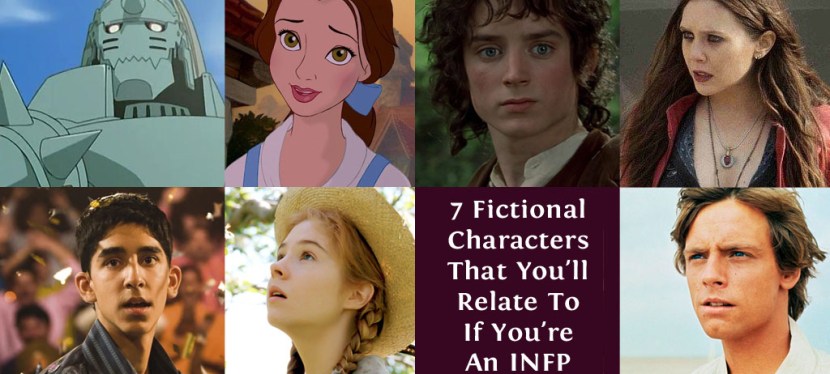
7 Fictional Characters That You’ll Relate To If You’re An INFP

What fictional characters do you relate to as an INFP?

Just as we can describe real people using the Myers-Briggs® typology system, we can also use the system to type well-written fictional characters. Some of fiction’s most iconic and intriguing characters are INFPs, and today we’re going to talk about seven of them that I think real-life INFPs will find relatable.

One great thing about looking at character personality types is that it helps us to better understand people who have different types than we do. Fictional INFPs can serve as examples for what real-life INFPs might be like, and also show how much variation can exist between individuals with the same type.

Alphonse Elric

Fullmetal Alchemist Brotherhood was the first Anime series I watched and it’s now one of my favorite TV series of all time. One of the highlights of this series (as well as the Fullmetal Alchemist series) is the character Alphonse Elric, who I’m pretty sure is either an INFP or an ISFP. Al is a sensitive, sweet young man with great strength of character. He believes deeply in doing what’s right and has a strong bond with the people he cares about, as do many real-life IFPs.

As someone who leads with Introverted Feeling (aka “Authenticity”) Al’s preferred mental process is one that’s concerned with inner harmony. As such, he makes decisions based on what feels right to him. As I’m sure many INFPs can attest, this isn’t an easy or straightforward way of figuring things out. It involves a life-long process of checking in with oneself, figuring out who you are, and finding the right way to navigate an often confusing world. Though he’s trapped in a giant suit of armor, Al is quite a young character and though the course of his story we get to see him working through a complicated process of discovering himself that I think many INFPs can relate to from their own growing-up years. Read more
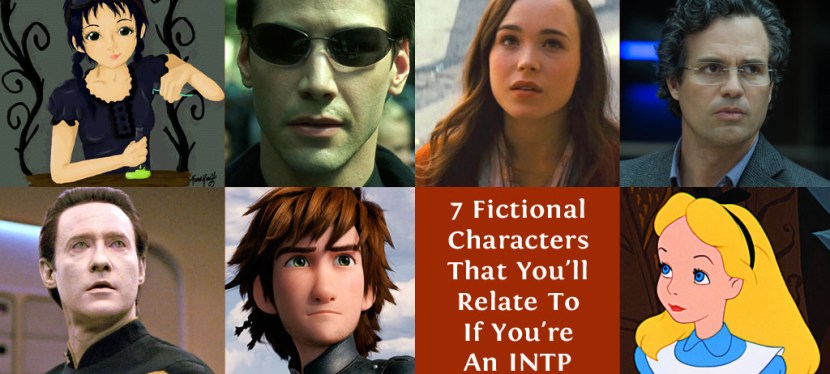
7 Fictional Characters That You’ll Relate To If You’re An INTP

What fictional characters do you relate to as an INTP?

Just as we can describe real people using the Myers-Briggs® typology system, we can also use the system to type well-written fictional characters. Some of fiction’s most iconic and intriguing characters are INTPs, and today we’re going to talk about seven of them that I think real-life INTPs will find relatable.

One great thing about looking at character personality types is that it helps us to better understand people who have different types than we do. Fictional INTPs can serve as examples for what real-life INTPs might be like, and also show how much variation can exist between individuals with the same type.

Alice

I actually typed Alice as an ENTP on my Disney Princess MBTI chart, but many people type her as an INTP. I’m fairly certain she uses Introverted Thinking and Extroverted Intuition as her two favorite functions, so both ENTPs and INTPs will probably find her a relatable character.

Extroverted Intuition is the most visible aspect of her personality. “If I had a world of my own everything would be nonsense,” seems the sort of thing a bored, curious intuitive would say as they try to explore every possibility no matter now far-fetched. As Alice goes through Wonderland, she’s constantly testing the different aspects of the world and asking questions. Read more

7 Fictional Characters That You’ll Relate To If You’re An ESFJ

What fictional characters do you relate to as an ESFJ?

Just as we can describe real people using the Myers-Briggs® typology system, we can also use the system to type well-written fictional characters. Some of fiction’s most iconic and intriguing characters are ESFJs, and today we’re going to talk about seven of them that I think real-life ESFJs will find relatable.

Another great thing about looking at character personality types is that it helps us to better understand people who have different types than we do. Fictional ESFJs can serve as examples for what real-life ESFJs might be like, and also show how much variation can exist between individuals with the same type.

Anna

Most people type Anna from Disney’s Frozen as an ESFP or ENFP, but hear me out. ESFJs lead with a function called Extroverted Feeling (Fe, or “Harmony”). Fe is a decision-making process that’s concerned with connection and meeting other peoples’ needs, and that’s what we see Anna prioritizing throughout the film. Like so many real-life ESFJs, Ann longs for harmonious connections with other people. She’s also so concerned with the needs of people around her that she asks Kristoff, “Are you going to be okay?” while she’s dying. If that’s not an FJ thing I don’t know what is.
Read more

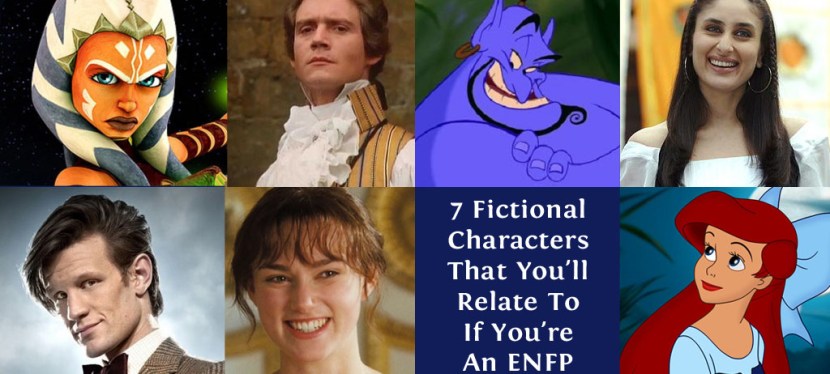
7 Fictional Characters That You’ll Relate to If You’re An ENFP

What fictional characters do you relate to as an ENFP?

Just as we can describe real people using the Myers-Briggs® typology system, we can also use the system to type well-written fictional characters. Some of fiction’s most iconic and intriguing characters are ENFPs, and today we’re going to talk about seven of them that I think real-life ENFPs will find relatable.

Another great thing about looking at character personality types is that it helps us to better understand people who have different types than we do. Fictional ENFPs can serve as examples for what real-life ENFPs might be like, and also show how much variation can exist between individuals with the same type.

Ahsoka Tano

Ahsoka is one of my favorite Star Wars characters, and she’s one of three who I type as an ENFP (Qui-Gon Jin and Ezra Bridger are the other). Like others of this type, Ahsoka leads with Extroverted Intuition, which Personality Hacker nicknames “Exploration” because for NPs “the best pattern recognition system for the outer world is to mess with everything that can be messed with, and to explore.” Read more

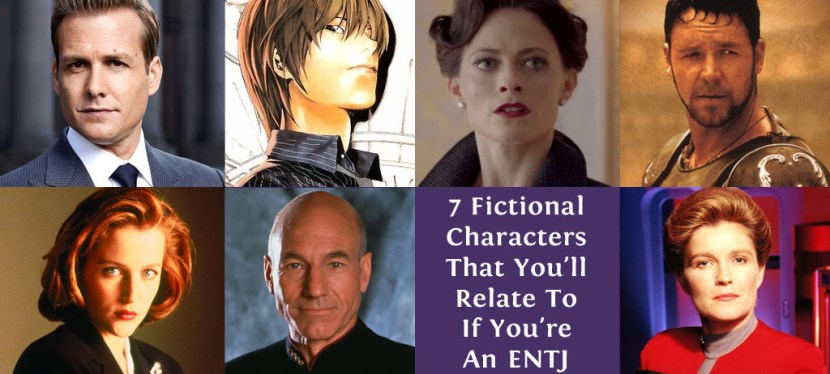
7 Fictional Characters That You’ll Relate to If You’re An ENTJ

What fictional characters do you relate to as an ENTJ?

Just as we can describe real people using the Myers-Briggs® typology system, we can also use the system to type well-written fictional characters. Some of fiction’s most iconic and intriguing characters are ENTJs, and today we’re going to talk about seven of them that I think real-life ENTJs will find relatable.

Another great thing about looking at character personality types is that it helps us to better understand people who have different types than we do. Fictional ENTJs can serve as examples for what real-life ENTJs might be like, and also show how much variation can exist between individuals with the same type.

Dana Scully

Lenore Thomson types Dana Scully from X-Files as an ENTJ in her book Personality Types: An Owner’s Manual. She talks about the “inspired” decision to pair INTJ Fox Mulder “not with an ESP action hero (which is the usual gambit in a science fiction series), but with an ENTJ pathologist.” Thomson further says, “Scullys’ by-the-book Judgement is consistently subverted by Mulder’s appeal to her secondary function” of Introverted Intuition (p. 233).

Many real-life ENTJs can relate to Dana Scullys’ desire for logical, objective truths. That’s what ENTJs, as dominant Extroverted Thinkers, prefer to rely on. But their Introverted Intuition is too good at seeing things from other perspectives to completely ignore an intriguing idea even when the evidence for it doesn’t line-up with established theories. This makes Scully a perfect choice to work on the X-Files because she questions everything while also thinking outside the box enough to dig for the truth rather than dismissing Mulder’s theories out-right. Read more

Sherlock Holmes and The Trouble With Typing Fictional Characters

Discussions about Sherlock Holmes’ Myers-Briggs® type can get pretty heated in the online community. He’s either an INTJ or INTP and whichever side you come down on (if you care about this sort of thing) is worth passionately defending. I’ve weighed-in on this myself in a blog post arguing that Sherlock as portrayed by Benedict Cumberbatch in the Sherlock BBC series, Robert Downy Jr. in the Sherlock Holmes movies, and even the Basil of Bakerstreet version from Disney’s The Great Mouse Detective are all INTPs.

I do think that’s the best-fit type for all three of those versions, but they aren’t the only portrayals of Sherlock Holmes. We ought not forget, for example, the original character in the stories penned by Sir Arthur Conan Doyle. I’ve been reading and re-reading several of those for my Classics Club book list and Sherlock doesn’t seem very much like an INTP in those stories. In fact, the only thing I can say with absolute certainty is that he’s a Thinking personality type.

Typing People Who Aren’t Real

Sherlock Holmes and The Trouble With Typing Fictional Characters | LikeAnAnchor.com
image courtesy of The Sherlock Holmes Museum

That brings us to the second part of this post’s title: the trouble with typing fictional characters. Though I love looking at fictional characters’ personality types, there are limits to how accurately you can type them. It gets especially tricky in the case of someone like Sherlock Holmes or Batman because so many writers and actors have been involved in portraying this character over quite a long period of time. There’s bound to be some inconsistencies in how each creative sees the character they’re working with. Plus, I doubt very many of them think about the character’s Myers-Briggs® type and how they can keep it consistent in every portrayal.

Going back to Sherlock Holmes as our example, Sir Arthur Conan Doyle sometimes writes him in a way that looks like ISTJ, sometimes more like one of the NTJ types, and sometimes with traits of a TP type. He also calls Dr. Watson by two different first names (John is used three times, James once), so I think it’s safe to say Doyle wasn’t all that concerned with consistency. In any case, Doyle’s Sherlock Holmes stories were written about 30 years before Jung published Psychological Types, so we know he wasn’t relying on those theories when writing the character.

So Why Type Fiction?

Since it’s difficult to type fictional characters with a high degree of accuracy, why do it? For one thing, it’s fun. It’s one of the ways to turn an interest in Myers-Briggs® into an entertaining pastime as well as a useful hobby.

Typing fictional characters can also sharpen our skills typing real people. It gives us a chance to study how characters react and puzzle out which psychological functions they’re using based on what they say and how they act. In addition, well-written characters provide familiar examples of the different types to use in every-day conversation. If someone asks me what an ENTP or ISFJ, for example, looks like in real-life then Tony Stark and Samwise Gamgee are there to help clarify things.

Do you enjoy trying to figure out fictional characters’ personality types? Tell us about your favorite characters and what you think their types are in the comments!