“Why would you write fiction? Isn’t it just a bunch of lies?”
It’s been a while since someone asked me that question, but I can re-play the scene clearly. They look smug, like they’d just discovered a great argument against writing and reading fiction. Fiction is not true, and so therefore it is not good. Why make-up stories when there are plenty of good, wholesome things, people, and events that already exist? In fact, why tell stories at all, especially fantasy stories? They just give children unrealistic expectations of the world, and adults an excuse to ignore reality.
Obviously, since I’m still writing and reading fiction, I don’t buy into these arguments. But why?
Escape
Probably the simplest reason for writing fiction is to escape. Much of fiction — both good and bad — falls into this category. Sometimes life isn’t any fun, and reading and writing fiction gives us a way to escape for a while without actually leaving our location or situation. This can be as simple as diving into Middle Earth while waiting for the clothes to finish drying at the laundromat. Would you rather stare at your t-shirts spin, or canoe down the Rauros with the Fellowship of the Ring?
Connect
In a New York Times article, ‘Why Write Novels at All?’ Garth Risk Halberg talks about the idea that “the deepest purpose of reading and writing fiction is to sustain a sense of connectedness, to resist existential loneliness.” Now we’re getting closer to the reason I write fiction. Escape is all well and good, but what are you escaping to? It’s not enough to just take off for Narnia — we have to find Aslan there or the journey means nothing.
We write to share who we are and what we think, and we read to connect with something outside us. Usually this is a new world or characters, but if we’re very lucky we’ll also sense the author as they bleed through the pages of their work. This connectedness is one of the chief arguments for reading and writing, since it carries over into “real” life: people who read fiction are more emphatic than non-readers.
Think
Let’s say you have something you want to say about a controversial topic. We’ll use abortion as an example, and say you’re on the pro-life side. If you write an article telling people that abortion is bad, only the people who already agree with you are going to like it. If you tell a true story about a baby who survived an abortion or a mother whose life was ruined by an abortion, it will affect more people but you’ll still lose a large number of your readers.
Now suppose you write a story where you climb inside the head of a character and show what they are struggling with as she decides whether or not to have an abortion. You don’t just put your words in the character’s mouth – you imagine yourself in her shoes, and realize that she has real reasons to consider both options. You sympathize with her, and whatever your readers believe they sympathize with her too. Your ideas will filter through in decisions you make about how see feels when she sees the baby on an ultrasound, or whether or not she keeps the child at the end of the story. You can let readers know what you think, but you don’t shove your ideas down their throat. You give them a chance to feel with you, and let them think for themselves.
Obviously, I think of the writer of novels and stories and plays as a moral agent. In my view, a fiction writer whose adherence is to literature is, necessarily, someone who thinks about moral problems: about what is just and unjust, what is better or worse, what is repulsive and admirable, what is lamentable and what inspires joy and approbation. This doesn’t entail moralizing in any direct or crude sense.
Serious fiction writers think about moral problems practically. They tell stories. They narrate. They evoke our common humanity in narratives with which we can identify, even though the lives may be remote from our own. They stimulate our imagination. The stories they tell enlarge and complicate—and, therefore, improve—our sympathies. They educate our capacity for moral judgment. ” – Susan Sontag, from a speech at the Los Angeles Public Library
This sort of literature may or may not be an escape for your readers, but should definitely let them connect with something or someone. It should make them think. It should give them a chance to “meet” types of people thy might never come in contact with in their real lives, to question ideas that they take for granted, to consider what is and is not moral. Fiction lets us talk about things that are uncomfortable to discuss in real life, or give a new perspective on issue too charged in reality to have a dialogue about. It lets us ask “what if?” and run with the potential answers before actually changing the world. Yet.
In the world of fictional typology, Sherlock Holmes is typically cited either as the perfect example of an INTP or as a notoriously difficult charter to type. Some writers say this difficulty is because the character displays aspects of several different types (including INTJ and ISTP) due to the writers’ ignorance of Myers-Briggs theory.
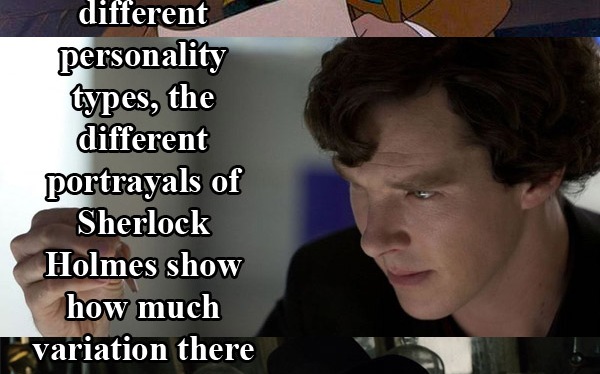
While this may be partly true, I think we can pin-down a single best-fit type for most portrayals of Sherlock Holmes in film and television (I’m not covering the original stories in this post). Rather than showing several different personality types, the different portrayals of Sherlock Holmes show how much variation there can be within a single personality type.
INTP Traits
The personality type that fits most film and movie portrayals of Sherlock best is INTP. The function stack for this type is this:
Introverted Thinking (Ti)
Extroverted Intuition (Ne)
Introverted Sensing (Si)
Extroverted Feeling (Fe)
This means that Sherlock first approaches the world with a judging attitude that is focused inward and relies on impersonal analysis. Ti prefers to internalize observations and work with abstract ideas. It “values facts chiefly as illustrative proofs of the idea,” and rejects things that seem irrelevant (Myers, Gifts Differing, p.78). This would explain why BBC’s Sherlock didn’t bother to remember that the earth goes around the sun. Read more →
This was requested in the comments on Fictional MBTI – Loki, and since I went to see Captain America: The Winter Soldier on Friday it seemed a good time to write a post about Steve Rogers/Captain America. Incidentally, I will reference Winter Soldier in this post but will try to keep it spoiler-free. If you don’t want to know anything about the plot, though, go watch the film and then come back 🙂
In support of typing Steve as an ISFJ, I’ll be citing quotes from Captain America, The Winter Soldier, Gifts Differing* by Isabel Myers, and Was That Really Me?* by Naomi L. Quenk.
Disclaimer: links marked with an * are affiliate links. This means that, at no additional cost to you, I will receive a commission if you click on the link and make a purchase on that website.
Introverted Sensing
Isabel Myers describes the Introverted Sensing (Si) types – both ISFJ and ISTJ — as “remarkably dependable … they base their ideas on a deep, solid accumulation of stored impressions, which gives them some almost unshakable ideas” (102). For Steve Rogers, this resulted in the attitude that earned him consideration in Dr. Abraham Erskine’s experiment — “I don’t want to kill anyone. I don’t like bullies; I don’t care where they’re from” (Captain America). The same deeply rooted ideas that form his character also gave Steve the conviction to stand-up to Nick Fury when asked to compromise his values to create a “safe” world — “This isn’t freedom; it’s fear” (Winter Soldier).
In the right person, the traits of Si are perfect for military command. Si types are extremely stable, not entering “into things impulsively” and, “once in, they are very hard to distract, discourage, or stop” (Myers 102). When convinced he is in the right, Captain America is an unstoppable force, whether he is performing a one-man rescue mission in WWII or leading a team against Hydra.
Since Si is an introverted function, there are aspects of their private reactions that ISFJs usually keep to themselves. Only when they feel “off duty” and are around people they trust will they share insights into their unique way of viewing the world. These impressions “may be absurd, irreverent, touching, or hilarious, but never predictable, because their way of sensing life is intensely individual” (Myers 103). Steve tends to joke before going on missions, such as his dialog with Peggy Carter before he parachutes behind enemy lines in Captain America, and that scene from the beginning of Winter Soldier (which is also in the trailer) when he says he doesn’t anything to do on Saturday night because his barbershop quartet is dead.
Extroverted Feeling
Though an auxilary function, Extroverted Feeling (Fe) is the most easily visible aspect of an ISFJ. Heavily informed by dominant Si, this manifests in ISFJs as an emphasis on “loyalty, consideration, and the common welfare” (Myers 104). Myers also says that a well-balanced ISFJ will be very hard working and more practical than a typical introvert. They also “carry responsibility well,” though they do not necessarily enjoy leadership (102).
Fe is a social function, to the point that some introverts who use Fe may be mistaken for extroverts (this explains why you’ll sometimes see Steve typed as an ESFJ). It adapts to situations and strives to act in a way that is acceptable to as many people as possible. An ISTJ probably wouldn’t have agreed to become the “star-spangled man with a plan,” but ISFJ Steve was convinced that was how he could best serve his country. He stuck with that role up until it conflicted with his deeply held Si convictions. In this aspect, ISFJs resemble INFJS, in that both will try to please others for as long as possible without compromising their ideas.
Thinking
Psychologists disagree about whether or not the tertiary function should be described as “introverted” or “extroverted” (so it’s opposite of the auxiliary function), or simply listed by itself. Whichever the case, Jung says that this third function is under conscious control to some degree as it supports the auxiliary function (Quenk 33, 51). For an ISFJ, tertiary thinking helps with clarity in crisis situations, strategy and logic, and suspending feeling to evaluate other people’s actions. We can see this any time Captain America is planning something strategic, as he sorts through sensing data and comes up with a plan.
Extroverted Intuition
All dominant sensing type are uncomfortable with intuition, and highly skeptical of unverified facts. They can’t consciously access their inferior, or shadow, function of Extroverted Intuition (Ne) and are made uneasy by it. In every day life, this comes out as a general sense of worry and a skepticism about new ideas. This can be useful for detecting flaws in new proposals and warning about negative possibilities, which Steve does quite often in The Avengers. For ISFJs to become comfortable with something new and unexpected, they need time alone to process, such as Steve hiding from the world in The Avengers until he feel needed again and has had time to come to terms with his time displacement.
Anger is a typical response for ISFJs, particularly ISFJ men, when stressed. Stress can also cause ISFJs to become more outspoken, “irritable, and pessimistic” (Quenk 220). They are likely to feel a “loss of control over facts and data,” become more impulsive, and focus on worst-case scenarios (Quenk 221).
Stress triggers for inferior Ne include people whose types use intuition as a dominant function (such as Tony Stark/Iron Man), noisy and disorganized environments, unsubstantiated statements from authority figures, “not having sufficient information to do a good job,” and delays in goal achievement (Quenk 219). These last three triggers play a major role in the opening events of Winter Soldier, when Steve becomes angry that Nick Fury didn’t give him all the information about a rescue mission.
If you enjoyed this post, check out my other MCU typings:
I realized Tuesday night when I was reading Fire by Kristin Cashore and crying into the bath water that I wasn’t crying because I felt sad a character had died. I was crying because someone in the book felt sad that this character had died. Once I thought about it, I realized that at least half of the times when fiction moves me to tears, it is in empathy with the characters rather than my own feelings being affected. In other words, I’m crying because the character is crying, not because of what moved the character to tears. Sometimes it is both (Ender’s Game, for example).
This feeling other people’s feelings (fictional and real) is something I didn’t have much of a grasp on until I discovered my Myers-Briggs type and started reading what other INFJs wrote about being overwhelmed with the emotions of others. Adding high sensitivity to the mix only heightens this (here is a wonderful article about Elaine Aaron’s research on the Highly Sensitive Person).
A Range of Empathy
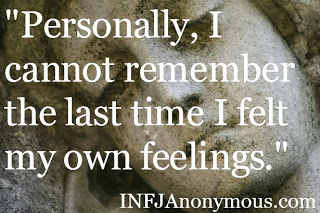
The extent to which INFJs report feeling other people’s emotions range from an awareness of how others are reacting, to not being able to remember the last time you experienced a feeling that belonged only to you. “You feel it, I feel it,” an anonymous INFJ wrote. I may not be quite ready to claim my feeling of and for others reaches that extent, but I share her decision to try and avoid encountering strong negative emotions (e.g. a news story about child molestation, a film where a family is torn apart, real-life conflict) because of how overwhelming it is — emotionally as well as physically in terms of headaches and stomach pain.
Managing Feelings
In INFJ Coach’s series of blog posts on “10 Steps to an Amazing INFJ Life,” part two is “Manage Those Pesky Emotions.” Her article is mainly about dealing with our own emotions when they surface, but the comments point out that this is only part of the problem. One commenter named Jennie wrote that she asks herself,
“Is this my emotion that I’m feeling, or is it someone else’s emotion?’ Many of us INFJs are emotional sponges for the emotions that other people are feeling. Our NF gives us a very high degree of empathy, but sometimes taking on other people’s emotions can be too much to handle.
The other side to this is what INFJ writer Cheryl Florus points out in Personality Junkie’s INFJ Strategies for Dealing with Emotions: Part I. Because an INFJ’s feeling is extroverted, we often have an easier time understanding the emotions of other people than our own emotions (for more on function stacks, see this post). We feel emotions strongly, but need to make an effort to learn how to experience and express them in a way that doesn’t seem overwhelming or uncontrolled. Often, writing down or talking about our emotions is a way to get them outside us so we can look at them more objectively (I keep a journal and talk to my closest family members). Sometimes, until I’ve done this, I’m not exactly sure what it is I’m feeling, let alone how it should be expressed and dealt with.
What about you? Are you an INFJ with experience feeling other people’s feelings (or a non-INFJ who does the same thing, because I’d love to hear from you)? Or are you someone who has never had this happen and thinks we’re crazy?
Update 6/7/2016: Since publishing this post, I’ve become increasingly unsatisfied with MBTI charts that try to find a character from a film or TV series to fit each type. Not every one of the 16 types appears in a given film or show and many charts (including mine here) include incorrect/forced typings. I leave this post here for archival purposes, and may do an up-dated LOTR chart in the future.
With the The Hobbit: Desolation of Smaug coming out this past weekend, I thought it was time to release my Lord of the Rings MBTI chart. My original idea was make this my 111th blog post so there would also be a tie-in with Bilbo’s fateful birthday party, but after missing some posts I decided just to release it now. This was inspired by the Star Wars chart by Geek in Heels that has been going around the social media sites, and I’m grateful to her for the idea.
I admit not every one of these characters fit perfectly where I put them. This is partly because typing fictional characers is always subjective, partly because I’m not an expert, and partly because there just don’t seem to be that many extroverts in Tolkein’s world. I also wanted to give everyone a good-guy character that they could relate to, which is why you don’t see people like Sauromon or Denethor on this chart (this is for you, INTJs). I do mention them in the discussion below. For the sake of convenience and consistency, I’ve grouped the 16 Myers-Briggs types into the four categories used by David Keirsey’s Temperament Sorter. You can take his test here, or try out an online test that will give you an idea of your Myers-Briggs type here or here.
What follows is an explanation of why I chose each type for these particular characters, so you can see the reasoning behind my choices and pick-apart my ideas if you disagree 🙂 Since there are so many characters in Lord of the Rings and The Hobbit, I’ve also mentioned other characters which might share each type. For the following information about cognitive functions and different Myers-Briggs types, I rely heavily on Dr. A. J. Drenth’s Personality Junkie website. For the sake of time, I’m mainly focused on the first two functions in each type’s function stack.
Tolkein’s Guardians
Supervisor (ESTJ) — Boromir
Extroverted thinking (Te) is an ESTJ’s dominant function. This makes ESTJs quick to express their ideas, usually in the form of judgements and measurable goals. Take, for example, Boromir’s eagerness to speak out at the Counsel of Elrond and his insistence that his plan for using the ring was the right one. An ESTJ’s auxiliary function is Introverted Sensing (Si). Supporting Te, this can make ESTJ’s appear stubborn because they prefer life to be predictable.They like tradition rather than change — “Gondor has no king. Gondor needs no king.”
Inspector (ISTJ) — Aragorn
Most characters seem to have fairly consistent personalities between the books and the films. Aragorn may be an exception. It’s been a while since I read Lord of the Rings, but I think if I was typing Aragorn from the books he might be an extravert. I’ve also seen the film version typed as an INTJ, an ISFx, and an ISxP.
Si is an ISTJ’s first function. Like ESTJs, this makes them interested in preserving old ways of doing things and resistant to change. For Aragorn, you can see this in his conflict about whether to take his rightful place as king or leave things the way they are. As an auxiliary function, Te manifests itself as a tendency for ISTJs to think out loud and share their ideas and plans. They like order and control, and this helps make Aragorn an efficient and effective leader.
Other ISTJs: this might be a good match for Treebeard — I would definitely describe him as an introverted Guardian type.
Provider (ESFJ) — Bilbo
Keirsey calls providers “the most sociable of all Guardians” and says they are “friendly, outgoing, [and] neighborly” to the point that they become “restless when isolated from people.” He also adds that they are careful to remember birthdays. Starting to sound like a hobbit?
An ESFJ’s primary function is Extroverted Feeling (Fe). This makes them quick to express their opinions and judgements, though they like to do this in a way that maintains peaceful social functions. Note how Bilbo responds to the arrival of all the dwarves — he is not shy about letting them know what he thinks about their unexpected arrival, yet he still plays the perfect host. Like other types with Si as an auxiliary function, ESFJs can become set in their ways and comfortable with routine (which is what makes him appear introverted when he is upset about being disturbed by company).
Protector (ISFJ) — Sam
Not many fictional characters are as easy to type as Samwise Gamge. He is the perfect ISFJ. Like the ISTJ, an ISFJ’s primary function is Si and they tend to resist change and be comfortable with traditional ways of doing things. They tend to settle down and be comfortable with routine (Sam never considered leaving The Shire until Frodo went on his quest). With Fe as an auxiliary function, ISFJs are very people-oriented and attuned to the needs of others, especially their close friends. They have a strong sense of responsibility and loyalty, and readily serve others — “Come on, Mr. Frodo. I can’t carry it for you… but I can carry you!”
Tolkein’s Artisans
Promoter (ESTP) — Gimli
Gimli might not seem an obvious choice for the ESTP character, since they are often charming, life-of-the-party types who enjoy stylish dressing and living well. But translate all that into a dwarf, and I’d say Gimli probably thinks fits the description. Extroverted Sensing (Se) is an ESTP’s primary function. This tends to make them seek out thrills, take risks, and flirt with danger (“Certainty of death, small chance of success… What are we waiting for?”). They also love food, drink, and merry making — which you can see in Gimli as he celebrates after the Battle of Helm’s Deep. Introverted Thinking (Ti) is his auxiliary function, and he can become serious and intense when called upon to make decisions or deal with feelings.
Crafter (ISTP) — Eowyn
According to Dr. A. J. Drenth, there are about three times as many ISTP men as women. Perhaps this is one reason Eowyn felt so out of place. An ISTP has the same functions as an ESTP, but reversed so Ti is first and Se is second. Keirsey calls them “crafters” because they have an impressive ability to master the use of tools. For Eowyn, the tools she chooses to focus on are weapons, and she is an accomplished fighter. ISTPs love action, crave excitement, and feel frustrated if they can’t act impulsively. They prefer to show their feelings through actions rather than words (Eowyn making soup for Aragorn and wanting to fight at his side).
Other ISTPs: Thorin — man of few words, inwardly thoughtful, physically active and skilled with weapons. Also known as one of several dwarves who make me want to cry every time they are on-screen because I know what’s going to happen to them in the next film 😦
Bonus round: My cousin and I were talking last night about what type Smaug might be. I decided on introvert, since he is so comfortable with being alone, and SP since they are the types most likely to be both concerned with physical wealth and unconcerned with what people think of how they acquire that wealth. He’s not caring or people-oriented, which rules out ISFP. So, I’m going with narcissistic ISTP in dragon-form.
Performer (ESFP) — Pippin
Pippin was the first character I added to the chart. I keep picturing him dancing on a table and singing “The only brew for the brave and true comes from the green dragon!” Performers/ESFPs are talkative, engaging, like to be around people, and become the center of attention wherever they go. Like the ESTP, they enjoy good food and drink and will rush into things without stopping to weigh the consequences (asking “Where are we going?” after joining the Fellowship). Introverted Feeling (Fi) is his auxiliary function, and that adds a seriousness to Pippin’s character which is not readily visible (because usually introverted). It shows up during the siege of Minas Tirith.
Composer (ISFP) — Arwen
Though they share functions with ESFPs (Fi and Se), ISFPs tend to look very different. They are people-oriented, caring deeply for others and having a heightened sensitivity to suffering. This can be seen in Arwen’s deep attachment to Aragorn, her willingness to risk the Ringwraiths to save Frodo’s life, and starting to waste away because of “the evil that now spreads from Mordor.” She’s not as playful as typical SP types are usually described, but I think part of that is the fact that she is an elf and that Fi (which seems emotionally mature and serious) is her dominant function.
Tolkein’s Idealists
Teacher (ENFJ) — Faramir
I had such a hard time deciding who to put on the chart for this personality type. I’m not entirely convinced Faramir fits, but he’s the closest I could up with and the more I think about it the more I think this might be right. Extroverted Feeling (Fe) as a primary function means that an ENFJ’s sense of self is largely tied-up in their relationships with others. Growing up with Denethor constantly belittling him would have been devastating for little ENFJ Faramir, and would contribute to making him less sure of himself than a typical ENFJ. However, you can still see ENFJ traits of good leadership and an intuitive understanding of people when you look at the loyalty Faramir’s men have for him and his encounter with Frodo and Sam. His Introverted Intuition (Ni) helps explain why Faramir went with his gut feeling and let Frodo and Sam go.
Other ENFJs: Watching The Hobbit: Desolation of Smaug yesterday made me think Balin might be an example of a mature ENFJ character.
Galadriel seems like a fairly standard INFJ character — otherworldly, introverted, wise, cares about others. INFJs have such a strong intuition that even some human INFJs report visions much akin to Galadriel’s and the feeling that they could almost be telepathic. As an elf in a fantasy world, Galadriel really is telepathic and can glimpse the future. She can also see right through people to discern their motives, as shown by her reaction to Boromir (or more tellingly, his reaction to her). They appear serious on the outside and are usually content to passively observe until they feel moved to speak. For more on INFJs, see this post.
Champion (ENFP) — Merry
With Extroverted Intuition (Ne) instead of sensing as his dominant function, Merry is more serious and given to reflection than Pippin. Unlike most hobbits, Merry is open-minded about the outside world and restless. He joins Frodo’s quest not just for the change of pace but because he recognizes the importance of destroying the ring. His commitment to fighting with the Rohirim and supporting Eowyn is typical of the ENFP championing causes they believe in.
Healer (INFP) — Frodo
In spite of the memes going around showing Frodo as an INFJ, he is generally considered an INFP by people who are more serious about their typology hobby. Fi is an INFP’s dominant function, and like ISFPs their emotions run deep. They are loyal to their friends and enjoy people, though at the same time can become loners who like to spend time in the outdoors. Sharing Ne (as their auxiliary function) with ENFPs, INFPs are also interested in championing causes. In the INFP’s case, they seek to heal conflicts and bring the world into a state of goodness.
Tolkein’s Rationalists
Fieldmarshal (ENTJ) — Eomer
ENTJs are natural leaders, and often find themselves in command even without seeking it. When leadership skills are encouraged, as with Eomer being trained to fight and lead, they become skilled commanders. Te as a primary function means ENTJs like order and rationality and planning is one of their strengths. They will respect authority to a point, but disobey orders if they feel the situation calls for it (Eomer standing up to Wormtongue). Ni adds a reliable gut instinct. Others might see them as hurried, wanting people to “cut to the chase,” and abrupt when making judgments (see the scene where Eomer meets and rapidly interrogates Aragorn, Gimli, and Legolas).
Other ENTJs: Possibly Theodin. I’m not sure.
Mastermind (INTJ) — Eldrond
I asked my INTJ sister who she thought might share her type in LOTR, and this is who she thought of. The primary function Ni gives them a view of the big picture and a keen insight for how the world works. Unlike INFJs, though, they use Te as an auxiliary function which makes them theorists who always have a plan or two (Plan A: send Arwen to the Undying lands. Plan B: reforge the sword and make Aragorn king). They often appear as aloof intellectuals and share a natural bent for leadership with ENTJS, but prefer to stay in the background until called upon to take charge for a short while (Counsel of Elrond).
Other INTJs: Masterminds make excellent villains, which I suppose would be why I’ve seen all the main villains typed as INTJs at one point or another. Saruman and Sauron I can see as INTJs, but I’m not convinced about Grima Wormtongue and Denethor.
Inventor (ENTP) — Gandalf
Gandalf is another character people don’t agree on how to type. I’ve seen him variously classified as an INTJ (most often), INTP, INFJ, and ENTP. I tend to lean toward this last one. He’s not focused enough to be an INTJ and instead of taking charge at a crucial moment, he steps back from leadership and says “Let the Ring-bearer decide” whether or not to go through the Mines of Moria.
As an ENTP, Ne is his primary function. He is curious, likes to collect data and use it to discover patterns, can see both sides of an issue, and uses his inventiveness to work with people as well as try to change social systems. Dr. Drenth says they “brainstorm aloud” and “may not always seem to ‘have a point,’” which Gandalf will do for page after page in the book. Auxiliary Ti gives him a respect for logic and reason. ENTPs are typically non-conformist and have many friends (enjoys Bilbo’s party, knows people all over Middle Earth).
Architect (INTP) — Legolas
An INTP’s primary function is Ti, followed by Ne as the auxiliary function. Kiersey notes that it is hard for them to listen to discussions without pointing out a speaker’s error (Legolas correcting Boromir at the Counsel of Elrond), and they would rather talk about ideas than about daily events or people. They are highly disciplined, which can help them achieve proficiency with something like archery, and also makes them appear serious.
UPDATE: Several people have pointed out (here and on other sites) that typing Legolas as an INTP is … controversial. For me, he is a hard character to type, and I’m not entirely sure about labeling him an INTP. I’m not sure what else to call him, though, or who else in LOTR might qualify as an INTP. Any thoughts?
Further Reading
There are a few other bloggers I found who did Myers-Briggs typologies for Lord of the Rings Characters. Sometimes my types agree with theirs, sometimes we interpret things a little differently. Here are their websites:
Season 4 of White Collar is now on DVD, which means it’s on Netflix, which means I’m finally catching up on episodes. White Collar is probably my favorite crime drama (the only other candidates are NCIS: LA and Castle, and I haven’t liked them as well lately), and I’m fascinated by the characters.
When I first read David Keirsey’s Please Understand Me II chapter on Artisans, I was thinking of Neal Caffrey from White Collar even before Keirsey mentioned that most con-men were extroverted SP types (though of course most SP types [about 30-35% of the population] are not con-men). A hunch like that isn’t enough to type a fictional character, but it’s a good place to start.
Why SP?
Like Loki, typing Neal is complicated by his criminal behavior and possible psychopathy. I have not seen his Myers-Briggs type discussed often, and most of the ones I have seen type him an ENTJ or an ENFP. Since my decision to place him as a sensor instead of intuitive is apparently unpopular, I’d like to address why. While he does go with his “gut feeling” sometimes and rely on intuition, he does not display classic NF qualities like valuing personal authenticity, a focus on lasting emotional connections, and preoccupation with personal journeys. I could almost see him as an NT, but his problem solving abilities seem more focused on real-world results (a Sensing attribute) than on the abstract ideas behind the problems (an Intuitive trait).
The core characteristics Keirsey uses to describe Artisans are these (quoted from his website):
Artisans tend to be fun-loving, optimistic, realistic, and focused on the here and now.
Artisans pride themselves on being unconventional, bold, and spontaneous.
Artisans make playful mates, creative parents, and troubleshooting leaders.
Artisans are excitable, trust their impulses, want to make a splash, seek stimulation, prize freedom, and dream of mastering action skills.
Extroverted Sensing
Now that I’ve narrowed Neal down to one of four types (ESFP, ISFP, ESTP, or ISTP), I want to switch from Keirsey’s approach to cognitive functions (which is too elaborate a subject to go into here. If you want background info, see this article). I’ve settled on ESTP for Neal, which gives him this function stack:
Extroverted Sensing types (ESxPs) are life-of-the-party people. They enjoy presenting themselves well (for example, Neal’s expensive taste in clothing), and are generally seen as charming (that Neal fits this description goes without saying if you’ve watched the show). Se types are easily bored by routine, and actively seek out new sensory experiences (such as fine dining, romance, and [in Neal’s case] running a con). They like to take action, accomplish tasks, and experience the world. Keirsey describes them as a risk-taking type.
Introverted Thinking
I’ve settled on Introverted Thinking instead of Feeling for Neal’s auxiliary function because of his gift for planning and how serious he becomes when he has to stop and think instead of just being free to act. It is one reason he is such a successful criminal, and why he is so valuable to the FBI. Dr. Drenth phrases it this way:
The fluid nature of their Ti, combined with the keen observational powers of their Se, contributes to ESTPs’ acumen as practical problem solvers. ESTPs can analyze a situation, diagnose the problem, and then determine how to fix it.
You can see examples of Neal’s thinking function in most episodes, as he responds to problems that arise by thinking and planning. Primarily, he approaches problem-solving from a perspective of getting things done efficiently (as opposed to worrying about how each option will affect people involved).
Relationships
Farther down the function stack, and less conciously available, is Extroverted Feeling. The typical ESTP does not like to share their judgments or true feelings. Keirsey says, “While they live in the moment and lend excitement – and unpredictability – to all their relationships, they rarely let anyone get really close to them.” Even when Neal does open up to people and form bonds with them (like his friendship with Peter), he is still able to run off to a tropical island and smoothly settle into a new life (though it only lasted for one episode in the fourth season).
So, what do you think? Does Neal fit the profile of an ESTP? Is there another type you think fits him better (maybe you have an argument for him as an iNtuitive)?



 * by Isabel Myers, and
  * by Naomi L. Quenk.

 I realized Tuesday night when I was reading
  The extent to which INFJs report feeling other people’s emotions range from an awareness of how others are reacting, to not being able to remember the last time you experienced a feeling that belonged only to you.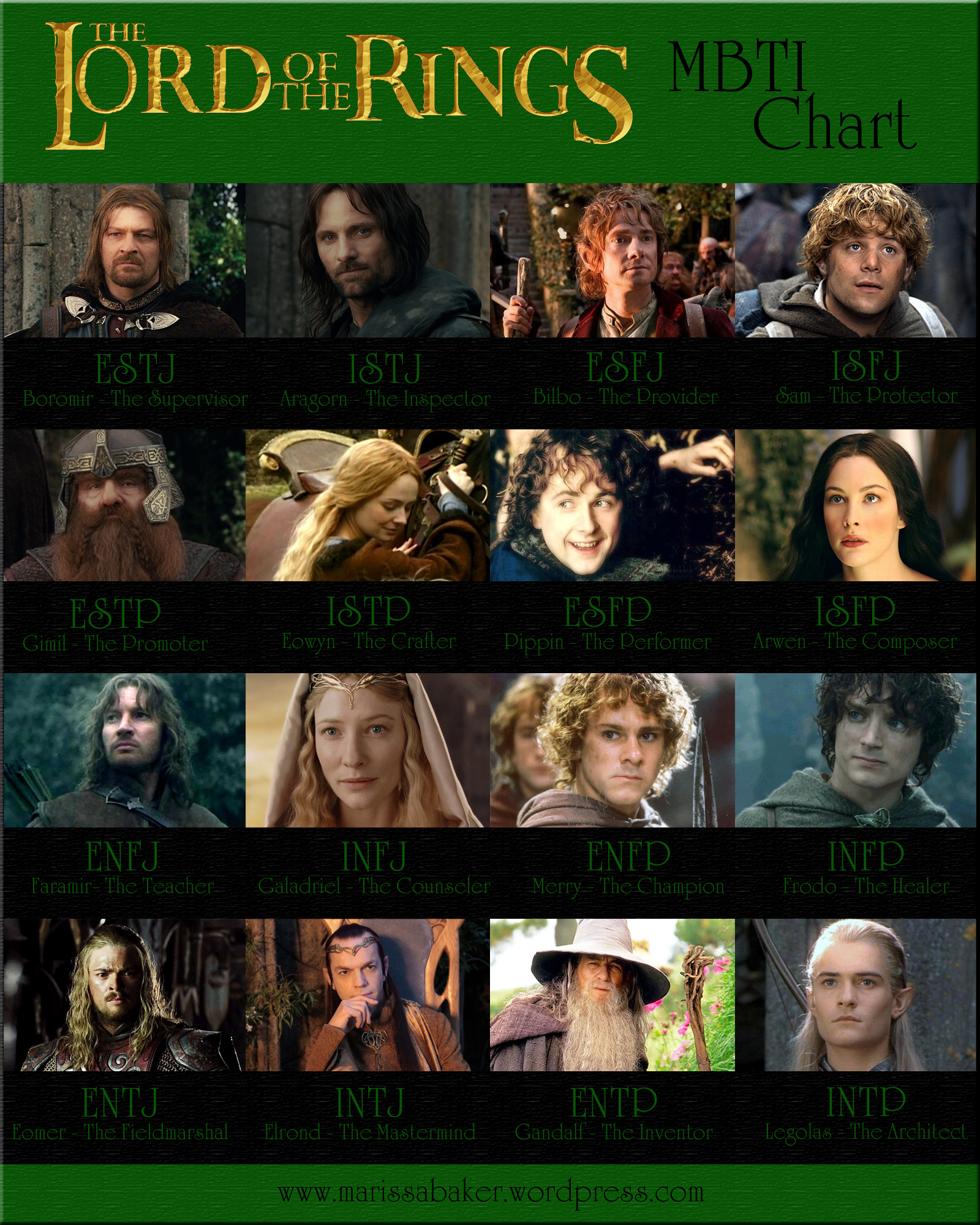
 Bonus round: My cousin and I were talking last night about what type Smaug might be. I decided on introvert, since he is so comfortable with being alone, and SP since they are the types most likely to be both concerned with physical wealth and unconcerned with what people think of how they acquire that wealth. He’s not caring or people-oriented, which rules out ISFP. So, I’m going with narcissistic ISTP in dragon-form.
 Season 4 of White Collar is now on DVD, which means it’s on Netflix, which means I’m finally catching up on episodes. White Collar is probably my favorite crime drama (the only other candidates are NCIS: LA and Castle, and I haven’t liked them as well lately), and I’m fascinated by the characters.
 Now that I’ve narrowed Neal down to one of four types (ESFP, ISFP, ESTP, or ISTP), I want to switch from Keirsey’s approach to cognitive functions (which is too elaborate a subject to go into here. If you want background info,
  I’ve settled on Introverted Thinking instead of Feeling for Neal’s auxiliary function because of his gift for planning and how serious he becomes when he has to stop and think instead of just being free to act. It is one reason he is such a successful criminal, and why he is so valuable to the FBI. Dr. Drenth
  Like An Anchor