Keep On Asking

If you read through Luke 11 in The Holy Bible in Its Original Order, there’s an interesting footnote on verse nine. In this verse, Jesus says, “ask, and it will be given to you; seek, and you will find; knock, and it will be opened to you.” The footnote I mentioned reads, “The force of the Greek means: ask, and keep on asking; seek, and keep on seeking; knock, and keep on knocking.” So there’s more to this verse than first meets the eye, particularly when taken in the context of the preceding verses.

Ask, Seek, Knock

And He said to them, “Which of you shall have a friend, and go to him at midnight and say to him, ‘Friend, lend me three loaves; for a friend of mine has come to me on his journey, and I have nothing to set before him’; and he will answer from within and say, ‘Do not trouble me; the door is now shut, and my children are with me in bed; I cannot rise and give to you’? I say to you, though he will not rise and give to him because he is his friend, yet because of his persistence he will rise and give him as many as he needs. (Luke 11:5-8)

This doesn’t seem like a very good attitude, does it? The man in the house can’t be bothered to climb out of his nice warm bed for friendship’s sake, but eventually this guy outside became too annoying not to help him. What are we supposed to learn from this in the context of praying to God (which was the subject of verses 1-4 as well)?

Before we try to answer that question, let’s look at a very similar parable a few chapters later in Luke.

Then He spoke a parable to them, that men always ought to pray and not lose heart, saying: “There was in a certain city a judge who did not fear God nor regard man. Now there was a widow in that city; and she came to him, saying, ‘Get justice for me from my adversary.’ And he would not for a while; but afterward he said within himself, ‘Though I do not fear God nor regard man, yet because this widow troubles me I will avenge her, lest by her continual coming she weary me.’” (Luke 18:1-5)

Once again, this isn’t a commendable attitude — the judge is plainly described as unjust and unrighteous — the very opposite of a God-fearing man. Yet what does Jesus say?

Then the Lord said, “Hear what the unjust judge said. And shall God not avenge His own elect who cry out day and night to Him, though He bears long with them? I tell you that He will avenge them speedily.” (Luke 18:6-8)

It always puzzled me why God was compared to an unrighteous judge. But it’s not really a comparison at all, is it? It’s a contrast, meant to reassure us. Even unjust and lazy people respond to persistent asking, seeking, and knocking. How much more will our righteous God who “neither faints nor is weary” (Is. 40:28) listen to our petitions!

Why Do We Need Persistence?

These two parables don’t just tell us that God will most assuredly respond when we ask Him something. They also teach us how to ask. In both accounts, the petitioner refuses to give up. They have to “ask, and keep on asking” for help, to “knock, and keep on knocking” before they get an answer.

Anyone who’s ever asked God for something knows that the answer doesn’t always come immediately. We shouldn’t just give up praying about or seeking something after one request. Persistence, with the assurance of knowing we’ll eventually get an answer, does three main things I can think of:

  • teaches patience through delayed gratification
  • demonstrates our faith and hope
  • keeps us in communication with God

Why are these so important? Well, Hebrews 10:36 tells us that we “have need of patience, that, after ye have done the will of God, ye might receive the promise” (KJV). And James 1:4 counsels, “let patience have its perfect work, that you may be perfect and complete, lacking nothing.” People who don’t have staying-power don’t make it into God’s kingdom.

As for faith and hope, they are two of the three things Paul said in 1 Corinthians 13:13 would “abide” (the Greek word, meno, means to stand, continue, and endure). Hope is so important that Romans 8:24 says we are saved in hope, or “by hope” if you’re reading the King James. And hope is again linked to faith in Hebrews 11:1, which defines faith as “the substance of things hoped for, the evidence of things not seen.”

We could look at several passages that point to the importance of searching the scriptures (Acts 17:11), studying God’s word (2 Tim. 2:15), and praying (1 Thes. 5:17). We have to keep in touch with God by praying and studying His communication to us — the Bible — in order to stay on track. And, unfortunately, if we didn’t have things we felt like we needed Him to supply, we probably wouldn’t spend as much time with Him.

Be anxious for nothing, but in everything by prayer and supplication, with thanksgiving, let your requests be made known to God; and the peace of God, which surpasses all understanding, will guard your hearts and minds through Christ Jesus. (Phil. 4:6-7)

Never Give Up

I do want to touch on something Luke 11:9-10 is not telling us. It doesn’t say that if we pester God enough, He’ll give us whatever we want just to keep us from bothering Him. I doubt He likes nagging much more than my Dad does (as evidenced by how well the Israelites’ constant complaining was received).

So I say to you, ask, and it will be given to you; seek, and you will find; knock, and it will be opened to you. For everyone who asks receives, and he who seeks finds, and to him who knocks it will be opened. (Luke 11:9-10)

These verses tell us that God is listening, and that He will answer. He wants us to have enough faith in Him to keep asking, seeking, and knocking until we get an answer. Sometimes it’s not the answer we wanted, but it’s always going to be the answer we needed.

Take Paul for example. He tells us that to keep him from becoming prideful, “a thorn in the flesh was given to me, a messenger of Satan to buffet me” (2 Cor. 12:7). Obviously he didn’t want that — who would? — so he brought the problem to God.

Concerning this thing I pleaded with the Lord three times that it might depart from me. And He said to me, “My grace is sufficient for you, for My strength is made perfect in weakness.” Therefore most gladly I will rather boast in my infirmities, that the power of Christ may rest upon me. (2 cor. 12:8-9)

Paul asked for his trial to be removed, and instead he received a personal promise of support from Jesus Christ Himself. Paul’s persistent asking was rewarded by an incredible response, though not the one he initially wanted. He thought he wanted something taken away, but instead he received the power of Christ inside him. Sounds like a good answer to me, and Paul said he would gladly endure trials if the result was Christ’s power dwelling in him.

There are also other promises we can look to when we need our persistence and our hope built up.

For the Lord God is a sun and shield; the Lord will give grace and glory; no good thing will He withhold from those who walk uprightly. O Lord of hosts, blessed is the man who trusts in You! (Ps. 84:11-12)

This verse promises that God will give us good things if we follow Him, even if they aren’t something we’re asking for. This is the sort of promise fulfilled for Paul. There are also other promises that are equally encouraging, where God says He does indeed give His people the specific requests they ask of Him.

Delight yourself also in the Lord, and He shall give you the desires of your heart. Commit your way to the Lord, trust also in Him, and He shall bring it to pass. (Ps. 37:4-5)

God doesn’t just ignore us. He knows our needs, and our desired as well. And He wants to give them to us, so long as they are good things that will actually be helpful instead of hurting us in the long-run. We just need to keep asking, and never give up on the One who will never give up on us.


Save

Spiritually Fruitful

At the beginning of this week, I was reading Luke 3 and trying to come up with a topic to guide this week’s study and become today’s post when I came to these verses:

“Therefore bear fruits worthy of repentance, and do not begin to say to yourselves, ‘We have Abraham as our father.’ For I say to you that God is able to raise up children to Abraham from these stones. And even now the ax is laid to the root of the trees. Therefore every tree which does not bear good fruit is cut down and thrown into the fire.” (Luke 3:8-9)

This passage was particularly striking because I’d just heard a sermon about the phrase “abide in Me” from John 15:4 that relied heavily on the vine/branch and tree/root analogies.

What Shall We Do?

blog post "Spiritually Fruitful" by marissabaker.wordpress.com
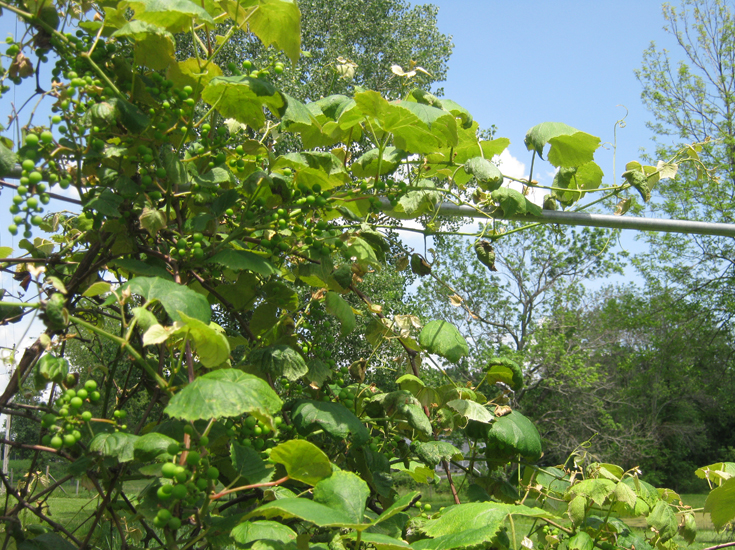
pictures of our grapevines, taken yesterday

Looking closer at the phrase ” bear fruits worthy of repentance,” I wonder if the sense it means to convey is that we should be producing fruits in our lives that show we are sincerely repentant. The word “repentance” (G3341, metanoia in Greek) means, “a change or alteration of mind .. from evil to good or from worse to better” (Zodhiates).

What John calls attention to as he continues speaking is that people who thought their physical descent from God’s chosen people automatically made them acceptable to God were mistaken. We can make the same mistake today if we think that we’re part of God’s family simply because we’re attending the “right” church group. Like the people John was addressing, we must actually being doing something to show that we 1) recognized the need for change, and 2) are sincere about changing.

So the people asked him, saying, “What shall we do then?” He answered and said to them, “He who has two tunics, let him give to him who has none; and he who has food, let him do likewise.”

Then tax collectors also came to be baptized, and said to him, “Teacher, what shall we do?” And he said to them, “Collect no more than what is appointed for you.”

Likewise the soldiers asked him, saying, “And what shall we do?” So he said to them, “Do not intimidate anyone or accuse falsely, and be content with your wages.” (Luke 3:10-14)

The specific responses here are based on principles found throughout the Bible: “Let each of you look out not only for his own interests, but also for the interests of others” (Phil 2.4); “godliness with contentment is great gain” (1 Tim. 6:6), and the two great commandments (Matt. 22:37-40; Mark 12:29-31).

For the commandments, “You shall not commit adultery,” “You shall not murder,” “You shall not steal,” “You shall not bear false witness,” “You shall not covet,” and if there is any other commandment, are all summed up in this saying, namely, “You shall love your neighbor as yourself.” Love does no harm to a neighbor; therefore love is the fulfillment of the law. (Rom. 13:9-10)

Now that we have an idea of the kind of fruits we’re supposed to be producing, lets take a short detour from the discussion in Luke 3 and focus on how we can be spiritually fruitful.

How To Bear Fruit

blog post "Spiritually Fruitful" by marissabaker.wordpress.com

Abide in Me, and I in you. As the branch cannot bear fruit of itself, unless it abides in the vine, neither can you, unless you abide in Me. I am the vine, you are the branches. He who abides in Me, and I in him, bears much fruit; for without Me you can do nothing. … By this My Father is glorified, that you bear much fruit; so you will be My disciples. (John 15:4-5, 8)

The key to being spiritually fruitful is abiding in Jesus. If you look at a healthy vine, every branch firmly connected to the rootstock and main vine will also be healthy. It can’t be healthy by itself, though. The moment it’s disconnected from the vine it starts to wither and is no longer capable of fruiting. Similarly, we can’t do anything by ourselves — all our fruit is produced because of our closeness to Jesus.

And this I pray, that your love may abound still more and more in knowledge and all discernment, that you may approve the things that are excellent, that you may be sincere and without offense till the day of Christ, being filled with the fruits of righteousness which are by Jesus Christ, to the glory and praise of God. (Phil. 1:9-11)

All the fruit that we produce in our lives is a direct result of Jesus Christ’s involvement in us, and it is all for God’s glory. We’ve talked before in the weeks leading up to Pentecost about how closely Jesus Christ’s work in us is connected with the Holy Spirit indwelling us. This is yet another example — we cannot bear the fruits of the Spirit listed in Galatians 5:22-23 unless we are abiding in Him and keeping His commandments.

Unfruitful Branches

Let’s return to our imaginary healthy vine, and suppose that there are some branches on it that don’t have a good connection to the rootstock. They may be visibly withering and dying, or they might have great showy leaves that can initially hide the fact that they have no fruit. Those kinds of branches need to be trimmed out so they do not impact the overall health of the vine.

I am the true vine, and My Father is the vinedresser. Every branch in Me that does not bear fruit He takes away; and every branch that bears fruit He prunes, that it may bear more fruit. … If anyone does not abide in Me, he is cast out as a branch and is withered; and they gather them and throw them into the fire, and they are burned. (John 15:1-2, 6)

blog post "Spiritually Fruitful" by marissabaker.wordpress.com
pictures of our grapevines, taken yesterday

Like most of God’s instructions and warnings this boils down to a very simple principle. If you do good things (abide in Jesus, obey the commands), good things will happen to you (a relationship with God, eternal life). But if you do bad things (disobey, become arrogant and distant from God), bad things happen (no relationship with Him, death). This brings us right back to John the Baptist’s words in Luke.

And even now the ax is laid to the root of the trees. Therefore every tree which does not bear good fruit is cut down and thrown into the fire.” (Luke 3:9)

This is a warning, and it was also a prophecy of what Paul addresses in Romans 11. In this letter, Paul writes to the Gentile believers who were “grafted in” after so many of the Jews, like the ones John was talking to, refused to accept Jesus as the Messiah.

And if some of the branches were broken off, and you, being a wild olive tree, were grafted in among them, and with them became a partaker of the root and fatness of the olive tree, do not boast against the branches. But if you do boast, remember that you do not support the root, but the root supports you.

You will say then, “Branches were broken off that I might be grafted in.” Well said. Because of unbelief they were broken off, and you stand by faith. Do not be haughty, but fear. For if God did not spare the natural branches, He may not spare you either. Therefore consider the goodness and severity of God: on those who fell, severity; but toward you, goodness, if you continue in His goodness. Otherwise you also will be cut off. And they also, if they do not continue in unbelief, will be grafted in, for God is able to graft them in again. For if you were cut out of the olive tree which is wild by nature, and were grafted contrary to nature into a cultivated olive tree, how much more will these, who are natural branches, be grafted into their own olive tree? (Rom. 11:17-24)

This is both a sobering and an awesome message. God grafted us into Himself when He called us out of the world! He took something which was once opposed to Him (Rom. 8:7-8) and made us part of His church by attaching us to His Son — the Vine — and making us part of Christ’s body (Eph. 1:22-23).

The sobering part is a reminder of how dangerous it is to let our awe of what God has done for and in us slip away. Arrogance takes it’s place, here in Romans 11 and in Luke 3, with the idea that we’re important in and of ourselves. In reality, any importance we have comes from God. He did not choose us because of our own merit, or because of our heritage, or because of what church group we attend. He chose us because He is in the business of redeeming insignificant people and turning them into something glorious through His boundless grace and mercy (1 Cor. 1:26-31). Our response to that should be to cling ever closer to Him, and to be producing fruits in our lives that show how drastically we have been changed by Him.

Five More Favorite Proverbs

Five More Favorite Proverbs by marissabaker.wordpress.comAs I continue my study of Proverbs, I keep finding more and more to put on my favorites list. Last week, I shared five favorites from the first 10 chapters of Proverbs. Here are my top five from chapters 11 through 20.

I’m having a hard enough time narrowing it down to five verses for every 10 chapters — I’m not sure how I’ll settle on just one favorite for our study discussion next month. Perhaps I’ll bring a list roughly organized by which one I want to talk about most, and then cross-off any that someone mentions before I do.

6: Graciousness

A gracious woman retains honor, but ruthless men retain riches. (Prov. 11:16)

It is for the first half of this verse that I have included it here. Ever since my career adviser at OSU told me I was very gracious in the way I responded when she had to take a phone call while we were meeting, I’ve paid extra attention to verses like this. I liked how it felt to be considered gracious — it was a description I’ve always thought held value, but this was the first time someone applied it to me. I want to be a grace-filled woman, and I hope to give people that impression of me.

7: Desire

Hope deferred makes the heart sick, but when the desire comes, it is a tree of life. (Prov. 13:12)

There are many hopes I have that have been deferred (marriage and a family of my own, to name one). I have to believe, though, that God does not want to make our hearts sick. Therefore, when our hopes are deferred, it must be for a good reason. Perhaps it is to teach us to trust Him long-term — if all our hopes were fulfilled instantly I doubt we would appreciate His gifts very much. Psalm 37 says if we delight in the Lord, “He shall give you the desires of your heart.” If we trust in Him and commit lives to following Him, He will bring about our desires (Ps. 37:4-5). God wants to give us good things. He wants us to be delighted.

8: Peace

Five More Favorite Proverbs by marissabaker.wordpress.comA soft answer turns away wrath, but a harsh word stirs up anger. (Prov. 15:1)

A cross reference in my study Bible gives an example of this in Judges 8:1-3. The men of Ephraim were chiding Gideon sharply for not calling them to fight with him against Midian. Instead of answering them in kind, he diplomatically diffused the situation and “their anger toward him subsided.” The flip side of this principle, of course, is that being snappish and peevish stirs up an angry response in others and leads to escalating arguments. We need to be moving toward peace instead of anger. “Blessed are the peacemakers,” Christ said, “for they shall be called sons of God” (Matt. 5:9).

9: Thoughts

Commit your works to the Lord, and your thoughts will be established. (Prov. 16:3)

I find it interesting that in this verse, it says your “thoughts will be established.” Related verses talk about God establishing our ways and caring for our wants, but this one focuses on the state of our minds. It is like Philippians 4:6-9 in a single verse.

10: Quiet

He that hath knowledge spareth his words: and a man of understanding is of an excellent spirit. Even a fool, when he holdeth his peace, is counted wise: and he that shutteth his lips is esteemed a man of understanding. (Prov. 17:27-28)

How little we value the skill and gift of quietness in today’s society. Words fitly spoken are beautiful (Prov. 25:11), but there are also many times when it is more beautiful to be “swift to hear, slow to speak” (James 1:19).