Hidden Figures and NT-type Women

Contrary to popular belief, INTJs have emotions. They also express them, though not always to the person they’re having feelings about (for example, an INTJ might tell his best friend he likes a girl, but not tell the girl. Or an INTJ might tell her husband she hates a coworker, but never give the coworker a hint). INTJs tend to compartmentalize their feelings and process them internally, and they hate expressing deep emotions casually or to people they don’t know well.
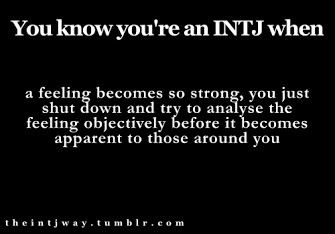
hidden_ntIf you’re very observant, though, and get to know the INTJs in your life, you’ll start to realize there’s a remarkable depth to their feelings. They’ll even do things, like cry at movies, that are typically associated with Feeling personality types. They might scorn the things that are “supposed” to make you cry (e.g. I’m sniffling at a Pixar film and my INTJ sister laughs out loud in the theater). But then I’ll look over and notice moisture leaking from the corners of her eyes at the end of Hidden Figures (I’ve been informed it was not crying).

Hidden Figures (2016) is a fantastic film about “a team of African-American women mathematicians who served a vital role in NASA during the early years of the US space program. ” They were among the first African-Americans and the first women to work in such prestigious technical roles. My sister, about to graduate with a degree in Chemical Engineering, gave me one explanation for her emotional response to the film: “these women and others like them made it possible for me to be an engineer.”

As the character Mary Jackson tells a judge, someone always has to be first. These women proved it’s possible for women to be taken seriously and make important contributions as mathematicians and engineers. But I suspect my sister’s words go deeper than referring to breaking down gender stereotypes about the kind of work women can do. It also has to do with people’s expectations for what women should be like.
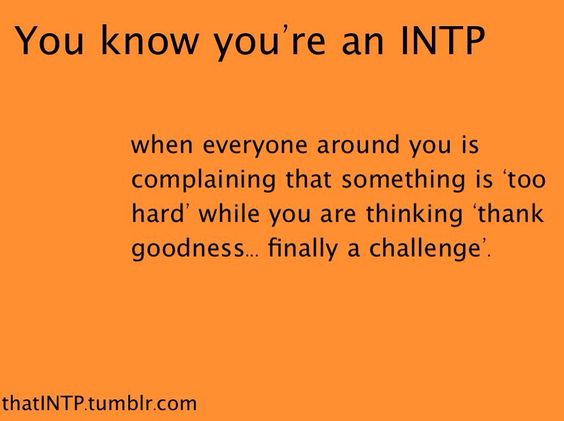
hidden_nt_2Only 24-35% of women have a personality type that relies on Thinking as their primary or secondary mental process (according to the Center for Applications of Psychological Type). INTJ and INTP women are tied for rarest at 1-3% of the female population. ENTJs come in a close third at 1-4%. ENTPs tie with ESTPs with 2-4%, just slightly more common than ISTPs at 2-3%. The STJ types aren’t nearly as rare, with ESTJs making up 6-8% and ISTJs 7-10% of the female population.

I’m not going to type the women in Hidden Figures, but having seen the film I think it’s safe to say Katherine G. Johnson, Dorothy Vaughan, and Mary Jackson are Thinking types. Their minds are naturally wired to excel at processing facts, figures, and data — a hall-mark of the fact-checking, analytical Thinking functions that use “impersonal criteria to make decisions.” I’d say Katherine at least is probably an Intuitive type as well, pairing pattern-recognition and possibility-seeking with her Thinking side.

That means she wasn’t just a rarity at NASA (an African-American woman working in a highly technical position). She’s also a rarity in society (a woman using both Intuition and Thinking as her most comfortable mental processes). Thinking traits are so strongly stereotyped as masculine that NT women often don’t fit cultural expectations for femininity. One of the many things I loved about Hidden Figures is that these three women seemed to have figured out a way to balance being wives and mothers with working as groundbreakingly successful mathematicians. They’re also portrayed as real people who are admired and respected for who they are instead of as the bitchy, controlling, or cold stereotype we often get when presented with Thinking female characters (take Sandra Bullock’s character in The Proposal as an example). And the men they’re in relationships with aren’t scared of them or trying to fit them back in boxes.

It was really wonderful to see characters that embraced femininity on their own terms. While I do believe God created the two genders to be different and complementary in the roles we fill, I also think there are stereotypes in our culture that do both genders a disservice. One of those is that women are or “should” be more emotion-driven than analytically-minded. There’s room for both. And, as Hidden Figures reminds us, we would do ourselves a terrible disservice if we tried to keep these women hidden.click to read article, "Hidden Figures and NT-type Women" | marissabaker.wordpress.com

Save

Save

Save

Save

Save

Myers-Briggs: Fad or Science?

Friends who know I blog about Myers Briggs types sometimes send me links to people critiquing the MBTI and ask what I think. The arguments in videos like “Why the Myers-Briggs test is totally meaningless” and articles such as “Goodbye to MBTI, the Fad That Won’t Die” tend to follow a similar pattern and hit the same points:

  • Kathryn Brigs and Isabel Briggs Myers had no formal training.
  • The test doesn’t allow for complex personalities or that someone can be a little bit of an extrovert and a little bit of an introvert at the same time.
  • Similarly, the judging-perceiving, thinking-feeling, and sensing-intuition “scales” don’t allow for people who use both.
  • About 50% of people who take the test twice within 5 weeks get different results.
  • Test fails to predict success in various jobs and doesn’t provide meaningful data.
  • The test remains popular because it only gives positive results. These results are vague and hard to argue with, much like astrology and pseudoscience.

Disclaimer: some of the links in this post are affiliate links. This means that, at no additional cost to you, I will receive a commission if you click on the link and make a purchase on that website.

Setting aside the first arguments for now, I think these points are a good criticism of some of the free tests going around which make people pick just between the four letter groups. None of this, however, takes into account the science behind Myers-Briggs. In fact, if the critics would bother reading Isabel Myers’ book Gifts Differing,* they would find most of their points have nothing to do with actual Myers-Briggs theory.Myers-Briggs: Fad or Science? | marissabaker.wordpress.com

The Truth About Extroverts and Introverts

The video I linked above correctly states that Jung’s theory allowed for people who didn’t fit neatly into a single category. But then they say Kathryn Briggs and Isabel Myers “took Jung’s types but slightly altered the terminology and changed it so every single person was assigned only one possibility or another. You couldn’t be a little bit of an extrovert or a little bit of an introvert.”

In fact, this a complete misrepresentation of Myers-Briggs theory. Read more

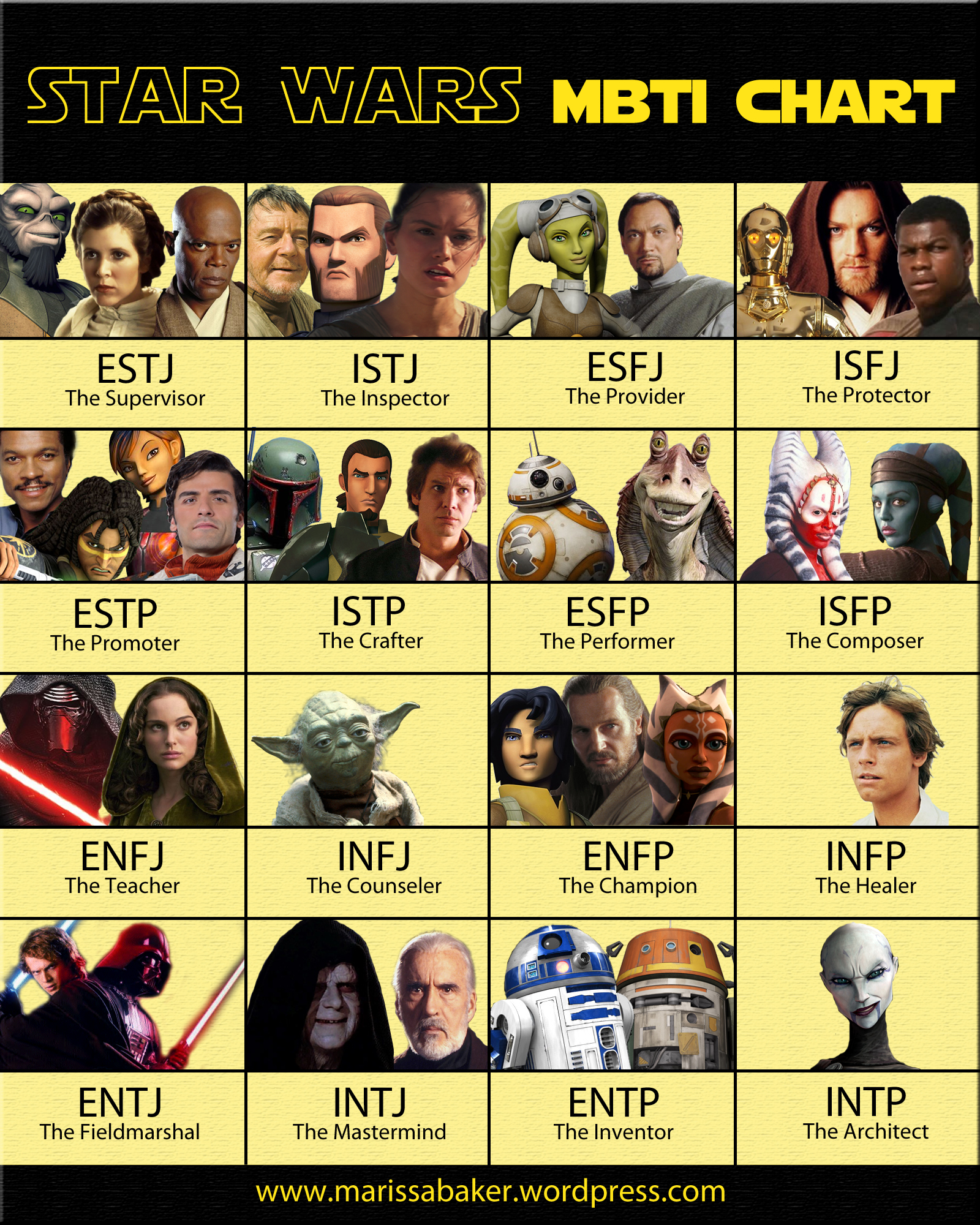
Star Wars MBTI Chart

Note: an updated version of this chart and expanded discussions about Star Wars characters’ Myers-Briggs types can now be found on my other blog Star Wars Personalities.

My Star Wars obsession has lain dormant for 10 years, buried under delta shields, gate addresses, consulting detectives, and madmen in blue boxes. As The Force Awakens, so has the part of me that used to spend hours on Star Wars message boards debating casting news and plot points for the prequels trilogy. I’ve seen it twice now — once opening night and then again yesterday.

I know the fact that most of the EU is no longer cannon has irritated/incensed some people, but at least it’s easier to catch-up on what’s in-cannon now. I’ve been watching Clone Wars (which I thoroughly enjoy) and reading some of the novels, so those will figure into this typing chart.

Readers have been so happy with my Disney princesses chart trying to sort characters by their actual type rather than shoe-horn one into each category that I decided to do something similar for Star Wars. Share it with your friends, spread it around Pinterest, comment with what you like and dislike. For interested parties, I’ve added some of my reasons for typing each character this way below the chart. Enjoy 🙂

Update January 2017: I’ve updated  the chart with characters from Star Wars Rebels. Click here to visit the post analyzing their personality types.click to read article, "Personality Types in Star Wars Rebels" | marissabaker.wordpress.com

Read more

Finding Your Real Myers-Briggs® Type

It’s so easy to take a pseudo-Myers-Briggs® test on the internet. You can click through a quick quiz, get your result and think, “Wow, I guess that does sound like me.” A few weeks later, you might stumble across another short quiz and take it again. Maybe you get a different answer and the description still sounds like you. Now you’re wondering whether this whole Myers-Briggs thing is all it’s cracked up to be, and if it is, then why were your results different?

This is one of the reasons Myers-Briggs tests have come under fire from critics who don’t really understand how the Myers-Briggs Type Indicator (MBTI®) is supposed to work. They look at the short little quizzes with generic feel-good results, and say it’s too simple and unreliable. But if you dive into the theory behind Meyers-Briggs, and especially cognitive functions (click here for an introduction to type functions), you start to realize how helpful the MBTI can be as a tool for understanding yourself and other people.

One of the principles of Myers-Briggs theory is that people only have one type, which stays consistent throughout their lives. You grow and develop within your type, but you don’t change from an INFP to an ENFJ to an ISTP or any other combination of letters. So with that in mind, how can you find your true type with so many conflicting results floating around?Finding Your Real Myers-Briggs® Type | LikeAnAnchor.com

Take A Good Test

Disclaimer: some of the links in this post are affiliate links. This means that, at no additional cost to you, I will receive a commission if you click on the link and make a purchase on that website.

If you can’t take the official MBTI, there are a few decent substitutes out there on the internet. My favorite by far is Personality Hacker’s Genius Style test.* They ask for an e-mail address, but it is free. One of my favorite bloggers, Susan Storm, also recently released a test. You can click here to take that.

Similar Mind’s Jungian test is another I’ve recommended (note from May 2017: recent changes to the test questions may skew results. You might want to try HumanMetrics instead). Some people really like the test from 16Personalities, but it’s not my favorite. These tests all give you a series of questions which are designed to learn what cognitive functions you use, then give you a four-letter test result.

I’d recommend starting with the Personality Hacker test, and then taking one or both of the other tests to compare results. Try not to read the full results of one test before you take the others — you want to take each one as unbiased as you can. If they all give you the same result, that’s a pretty good indication you’ve found your personality type. If they’re different, though, it’s time to start reading.

Compare Results

Now that you have one or more personality type results, start reading descriptions of your potential personality type(s). Here are some excellent resources:

Read the descriptions for each of your type results. Even if you only got one result, it’s a good idea to look at similar types that use some of the same cognitive functions. Here are a few guidelines for which other types to look up based on your test results.

If you test as an …

  • Introvert, read about the type which is opposite you on the J/P scale. The J/P preference describes how we interact with the outer word through our extroverted function, so an IJ type actually leads with a perceiving process and an IP type leads with a judging process. This can affect test results.
  • EJ, take a look at the type opposite you on the S/N scale. The tests found that you lead with an extroverted judging/decision making process, but might not have accurately found your introverted secondary process.
  • EP, take a look at the type opposite you on the F/T scale. The tests found that you lead with an extroverted perceiving/learning process, but might not have accurately found your introverted secondary process.
  • SFJ or NFJ, read results from ENFJ, INFJ, ISFJ, and ESFJ. These types all use Extroverted Feeling, and can often be mistaken for each other. Shy ESFJs and ENFJs can be mis-typed as introverts, and outgoing ISFJs and INFJs can be mis-typed as extroverts.
  • NT types, read the type opposite you on the E/I preference. ENT- types, especially ENTJs, are among the most “introverted extroverts” and might mis-type.

Think About Stress

Most tests look at your primary and secondary function — the driver and co-pilot processes that lead in our personality. This makes sense, since other functions are less well developed and we don’t use them as much unless we’re stressed. When we’re trying  to discover our true type is, though, how we react under stress is a good indication of which type matches us best.

Good type descriptions will also talk about the inferior function. An excellent book on this topic is Was That Really Me? How Everyday Stress Brings Out Our Hidden Personality* by Naomi Quenk.

Keep In Mind …

No personality test result is going to be a 100% perfect match. You’re looking for the one that fits you best. You will find elements of other descriptions that sound like you, but there should be one that fits better than the others. Pay close attention to descriptions of how your type uses cognitive functions. Descriptions of INFJ and INFP types, for example, sound similar but they lead with very different mental processes.

Good luck on your journey of self discovery! There’s a plethora of resources out there that can help you, including type-based Facebook groups and forums where you can talk with people of different types to see how they think. And if there’s anything I can help with, just ask!

*indicates affiliate links

Featured image credit: StockSnap via Pixabayy

Save

Learning from Our Stress Function – Inferior Feeling

Disclaimer: some of the links in this post are affiliate links. This means that, at no additional cost to you, I will receive a commission if you click on the link and make a purchase on that website.

If we’re describing someone’s personality type in the Myers-Briggs system, we usually talk about their primary and secondary “functions” (also called mental processes). An ISTP, for example, leads with a process called Introverted Thinking (a judging/decision making function), which is supported with Extroverted Sensing (a perceiving/learning function). An ENTJ, on the other hand, leads with Extroverted Thinking, supported by Introverted Intuition. Using Personality Hacker’s car model,* we can compare our primary function to an adult driving a car, and the secondary function to a second adult navigating in the passenger seat.

Each type also has a tertiary function (the opposite of their secondary function), and an inferior function (the opposite of their primary function). These are less well developed. In the car model, our tertiary function is like a 10-year-old sitting behind the co-pilot, and the inferior function is like a 3-year-old sitting behind the driver. The processes you use most readily are the ones typically visible, and they define your personality as others usually see it. Our less developed functions play a significant role as well, though. Today, we’ll be looking at types which use Feeling as an inferior function.

Learning from Our Stress Function - Inferior Feeling | marissabaker.wordpress.com

Everyday Life

As with other types, ISTPs, INTPs, ESTJs, and ENTJs do use their inferior function in everyday life.  They use Thinking for most decision-making, but Feeling still shows up in several ways. For Extroverted types, it often influences the causes they champion and/or is connected with their religion. Their Feeling function helps them connect with the human community and drives them to contribute in a way that meshes with their sense of authentic self.

Introverted Thinking types are often (unfairly, I might add) stereotyped as areligious, coldly analytical and unconcerned with other people’s feelings. They can come across that way, but they really do have a feeling side. ISTPs and INTPs can be deeply spiritual and they value their friendships just as much as dominant Feelers do (though they often have fewer close friends and aren’t as comfortable expressing emotion).

Characteristics of Inferior Feeling

ESTJs and ENTJs use dominant Extroverted Thinking, which makes Introverted Feeling their inferior function. It’s their least developed function, and has different characteristics than the Introverted Feeling used by types like ISFPs and INFPs. In her book Was That Really Me?* Naomi Quenk says inferior Introverted Feeling displays the following traits (I’ve put the traits of dominant Fi in parenthesis):

  • Hypersensitivity to inner states (Inner harmony)
  • Outbursts of emotion (Economy of emotional expression)
  • Fear of feeling (Acceptance of feeling as nonlogical)

ISTPs and INTPs also lead with a thinking function, in this case Introverted Thinking. This makes Extroverted Feeling their stress function, and it looks different than the Feeling used by ENFJ and ESFJ types. Here are the traits Quenk associates with inferior Extroverted Feeling (and their counterparts in Fe-dominant types).

  • Logic emphasized to an extreme (Comfortable inattention to logic)
  • Hypersensitivity to relationships (Sensitivity to other’s wellfare)
  • Emotionalism (Sharing of emotions)

Stress Reactions

When stressed out, both introverted and extroverted types which use inferior Feeling are hypersensitive to anything having to do with understanding their own or other people’s emotions. They often misinterpret other people’s intentions, seeing them as overly critical and judgmental. They might become distressed, anxious and annoyed, but this won’t be readily apparent from the outside (Quenk p. 130).

Because Thinking types are often uncomfortable expressing their feelings, they still struggle to maintain an appearance of control when stressed-out. To make up for being unsure how to express what they’re struggling with, stressed Thinkers may excessively focus on logic to counteract feelings of uncertainty and being overwhelmed. From the outside, they start to look short tempered and unreasonable.

When pushed far enough (either by an external stressor or something going on inside their minds), Thinkers may blurt out their own feelings in a way that seems totally out of character. ESTJs and ENTJs, especially women, often say that losing control and crying in public or lashing out in anger is typical of their “grip experiences” (Quenk p. 84). For some INTPs and ISTPs, an “intense expression of emotion” can actually help them deal with stress and be the push they need to back to normal (p. 140).

Getting Out of Stress

Both the introverted and extroverted thinkers need plenty of alone time to process their feelings when dealing with stress. This is particularly important for ISTPs, INTPs and ENTJs (one of the most “introverted extroverts”). Whether or not they want to talk about it with a friend varies from person to person. One thing that’s consistent, though, is that they don’t want someone trying to fix things for them or pressure them to open up. Other people are most helpful if they can act as a low-pressure sounding board.

Naomi Quent reports that ESTJs and ENTJs experience “very few or quite minor eruptions of their inferior function” compared to other types (p.92). Often, finding a distraction through entertainment or a change of scenery is enough to bring them out of their stress function. Physical activity, a change of scenery, and “light problem solving … such as reading a mystery novel” can also help INTPs and ISTPs (p.140).

Learning From the Inferior

For many people, the side of their personality that’s related to their inferior function stays a mystery throughout their lives. Type theorists say that most people who successfully incorporate their inferior function typically do so around middle age. However, Isabel Meyer suggested that every type exercise all their functions on a regular basis when making decisions. Dominant Thinking excels at impersonal analysis, predicting cause and effect, and considering the cost involved in any decision. Incorporating Feeling adds a people-oriented level that checks decisions against your personal values and take into consideration the good other people (Meyers, Gifts Differing*, 197).

According to Naomi Quenk, ESTJs and ENTJs who successfully use their Introverted Feeling learn to value relationships highly. They (occasionally) loosen their high standards and cut themselves and others a little slack (p. 94-95). Much the same thing can happen for INTPs and ISTPs, who become increasingly sensitive “to the nuances of important relationships” and learn to express and accept their emotions more readily (p. 141-142).

Learning from Our Stress Function - Inferior Feeling | marissabaker.wordpress.com

credits for pictures used in blog images:

*indicates affiliate links

Ficitonal MBTI – Sherlock Holmes (INTP)

In the world of fictional typology, Sherlock Holmes is typically cited either as the perfect example of an INTP or as a notoriously difficult charter to type. Some writers say this difficulty is because the character displays aspects of several different types (including INTJ and ISTP) due to the writers’ ignorance of Myers-Briggs theory.

While this may be partly true, I think we can pin-down a single best-fit type for most portrayals of Sherlock Holmes in film and television (I’m not covering the original stories in this post). Rather than showing several different personality types, the different portrayals of Sherlock Holmes show how much variation there can be within a single personality type.Ficitonal MBTI - Sherlock Holmes (INTP) | marissabaker.wordpress.com

INTP Traits

The personality type that fits most film and movie portrayals of Sherlock best is INTP. The function stack for this type is this:

  1. Introverted Thinking (Ti)
  2. Extroverted Intuition (Ne)
  3. Introverted Sensing (Si)
  4. Extroverted Feeling (Fe)

This means that Sherlock first approaches the world with a judging attitude that is focused inward and relies on impersonal analysis. Ti prefers to internalize observations and work with abstract ideas. It “values facts chiefly as illustrative proofs of the idea,” and rejects things that seem irrelevant (Myers, Gifts Differing, p.78). This would explain why BBC’s Sherlock didn’t bother to remember that the earth goes around the sun. Read more