Without going into too much detail, I’ve recently heard from more than one person who is a Christian and has sexual abuse in their pasts. They’ve reached out in response to my request for different Myers-Briggs types to talk about their faith. As heartbreaking as it is to hear about the terrible things their abusers did, it’s equally heartbreaking to hear how the church has responded.
The people who contacted me didn’t say they were hesitant to open-up to me because I was a stranger on the internet. Rather, they were worried because I’m Christian and they’ve had so many Christians react badly in the past. One, abused by “upstanding members in the church” encountered people who wouldn’t believe her or were angry she actually filed a police report. Another faced judgment so harsh she compared it to “being victimized twice.”
That sort of things should never happen in the household of God. We can’t always prevent terrible things being done by and to other people. But we are 100% responsible for how we respond when someone shares their pasts with us.
In his epistle, James tells the church not to judge others for the way they look. You should be just as welcoming and loving to the “poor man in filthy clothing” as to the “man with a gold ring, in fine clothing” (James 2:2, WEB). But do you really think this only applies to peoples’ outer appearance?
If you fulfill the royal law, according to the Scripture, “You shall love your neighbor as yourself,” you do well. But if you show partiality, you commit sin, being convicted by the law as transgressors. (James 2:8-9, WEB)
It is a sin to make snap judgments of people based on their appearance, their pasts, or aspects of their personality you just don’t like. Remember, you’ll be judged with the same type of judgment you turn on other people (Matt. 7:1-2). So “use mercy to them all” (Shakespeare, not the Bible, but still a good policy to follow). Read more →
One of the most uncomfortable aspects of modern Christianity is the idea of hell. The common notion is that those who aren’t following God (including those who reject Him and those who never knew Him) miss-out on their chance at salvation and are tormented forever in a burning place. Few want to talk about it, many have rejected it, but most don’t agree on an alternative. It’s something Christianity must address, though.
What happens after death for the people who are not followers of Jesus?
For believers, the question “What happens when we die?” has clear answers in scripture. We’re not sure exactly what life in God’s family will be like, but we know that we’ll either be resurrected from the dead (if we died before Jesus’s return) or transformed into spirit beings (if we’re still alive at His return). At that point, “we will be like him, because we will see him just as he is” (1 John 3:2, NET). For other people, things are a bit more ambiguous.
My purpose today isn’t to give a definitive answer, but rather to look at some different readings of scriptures talking about eternal judgement. There are some things we can say with a fairly high degree of certainty, but there are others that I just don’t know the answers to (and I’d rather acknowledge that than take a stance that I’m not reasonably confident lines up with God’s revealed word).
What is “hell”?
The word “hell” is used in the Bible, but not with the same connotation we have for it in English. Western ideas of hell come from Medieval imagery (think Dante’s Inferno). Most uses in the New Testament, though, are translated from the Greek word ghenna. When people of Jesus’s time heard this word they didn’t think of a burning place with a pitchfork-toting devil where eternal souls writhed in torment. They thought of Ghenna–a rubbish heap outside Jerusalem “where the filth and dead animals … were cast out and burned,” which is “a fit symbol of the wicked and their future destruction” (Thayer’s dictionary G1087).
Strong’s dictionary does describe ghenna as a place of “everlasting punishment,” but that imagery wasn’t originally in the Greek language. As we talked about last week, the Bible doesn’t teach humans have immortal souls. Immortality can only come to us as a gift of God, and unless He grants the gift of eternal life we won’t be around for everlasting anything, including torment.
Another word translated “hell” in English Bibles is hades (G86), which originally referred to the Greek god of the underworld but came to mean the grave in general. There’s also one other mention of “hell” in in the New Testament that’s translated from tartaroo (G5020), which was considered a place of eternal torment. The only time it’s used is in 2 Peter 2:4,where it talks about God casting “the angels who sinned … into hell” (NET). Other than that, when we look at what the Bible says about hell, we have to check each verse to see whether it’s talking about hades (the grave) or ghenna (a burning place of destruction).
While the Bible does speak of a burning lake of fire, it doesn’t talk about humans staying there nor going there instantly when they die. After people die, the prevailing Biblical description is that they’ve fallen asleep and are awaiting the resurrection (John 11:11-13; 1 Cor. 15:6, 18, 31; 1 Thes. 4:13-15; 5:10; 2 Pet. 3:4; Dan. 12:2; and many others). Some people — the “firstfruits” that we discussed in last week’s post– will be raised from the dead to eternal life at Jesus Christ’s second coming. The rest of the dead stay asleep until a second resurrection.
Image by MarrCreative from Lightstock
A Second Resurrection
We don’t actually get a whole lot of information about what happens after the first resurrection and the Millennial reign described in Revelation 20:1-6. We are told in the description of the first resurrection that “The rest of the dead did not come to life until the thousand years were finished” (Rev. 20:5, NET). Skipping to the end, we read this:
Then I saw a large white throne and the one who was seated on it; the earth and the heaven fled from his presence, and no place was found for them. And I saw the dead, the great and the small, standing before the throne. Then books were opened, and another book was opened—the book of life. So the dead were judged by what was written in the books, according to their deeds.The sea gave up the dead that were in it, and Death and Hades gave up the dead that were in them, and each one was judged according to his deeds. Then Death and Hades were thrown into the lake of fire. This is the second death—the lake of fire. If anyone’s name was not found written in the book of life, that person was thrown into the lake of fire.
Revelation 20:11-15, NET
At this point in the future, “the devil who deceived them” has already been “thrown into the lake of fire and sulfur, where the beast and the false prophet are too, and they will be tormented there day and night forever and ever” (Rev. 20:10, NET). That’s the only mention of eternal torment, though. The people who follow the devil die in the “second death.” They’ll be consumed, burned-up like the rubbish thrown in ghenna.
Death as the punishment for sin fits with God’s warnings to humanity from the very beginning (Gen. 2:15-17; 3:2-3). God’s message is consistent throughout scripture. If you follow His way, then you will live. If you do not, then you are choosing death.
I call heaven and earth to witness against you today that I have set before you life and death, the blessing and the curse. Therefore choose life, that you may live, you and your descendants, to love Yahweh your God, to obey his voice, and to cling to him; for he is your life, and the length of your days.
Deuteronomy 30:19-20, WEB
This message continues through the old and new testaments. Sin leads to death, but following God results in life (Rom. 6:22-23; 8:5-7; 2 Cor. 2:15-16; 1 John 3:14). God doesn’t control or manipulate us with the threat of everlasting punishment. He sets two very simple choices before us: life forever with Him, or permanent death.
Note: you could argue my reading of everlasting punishment using verses like Matthew 25:41-46 and Mark 9:42-48. For Matthew 25, I would say that just because the fire is everlasting doesn’t mean the people cast in it stay alive, and that the phrase “everlasting punishment” can just as easily be read “punishment that is irreversible” (because they die in the second death, which fits with Rev. 20:15). For Mark 9, where “hell” is translated from ghenna, I really don’t know what the phrase “worm does not die” means. The Hebrew and Greek both refer to maggots/grubs such as would eat dead flesh, which doesn’t make much sense to me with either interpretation–if the people die, why don’t the worms? and if the people don’t die, why does it say “worm does not die” instead of something like “soul does not die”?
Image by Shaun Menary from Lightstock
Readings on Judgement
Last week I spent quite a bit of time talking about N.T. Wright’s teachings on the resurrection. He has comparatively little to say about hell, though. He goes through the Medieval hell symbolism and meaning of Gehenna (p. 177-178), mentions that while final judgement was accepted as part of God’s plan it wasn’t widely discussed in the epistles (p. 177), and covers different modern views on hell (p. 178). What he does state is that “God is utterly committed to set the world right in the end,” and that means there will be no people in His future world who worship “that which is not God as if it were” and who fail “fully to reflect the image of God” (p. 179).
God will condemn evil, and Wright thinks that those who reject God will “cease to bear the divine image at all” and continue to “exist in an ex-human state” (p. 182-183). That, however, ignores his own teaching that people do not inherently have immortal souls and doesn’t address what the Bible says about the lake of fire. I do, however, like the way Wright speaks of a “final condemnation for those who, by their idolatry, dehumanize themselves and drag others down with them” (p. 180). We know God doesn’t desire that any perish (1 Tim. 2:4; 2 Peter 3:9), but there will be people who end up in the lake of fire and this seems a good way of summing up their condition.
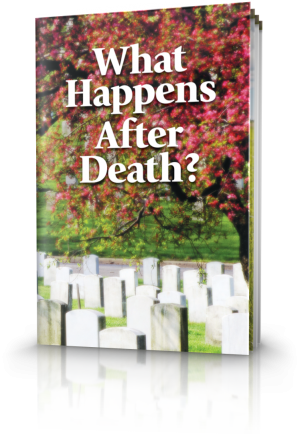
The Churches of God that I’ve attended with most of my life venture into more specifics about the final judgement. Their main teachings are well represented in United Church of God’s booklet “What Happens After Death?” In brief, it goes like this: Those who are not the firstfruits will be resurrected to physical life after the Millennium and given a chance to understand God’s word. After a period of time (some say 100 years) they’ll be judged and the ones who’ve refused to repent will die in the lake of fire. The others will live on in God’s kingdom.
This teaching holds great hope, as well as relief for our worries about people who have not yet committed their lives to Jesus. It also relieves us of a sense of urgency to convert people before they die because we believe there’s a time in the future when they’ll be given the chance to know Him. If they aren’t saved in this life, they’ll have an opportunity to escape eternal death in the second resurrection.
There are a few things that this interpretation doesn’t explain, though. One thing that has to do more with implications than accuracy is that lack of urgency to convert people. We know that God is the one who chooses whether to call someone and open their eyes, and that those who do not choose Him now will have an opportunity in the second resurrection. But we should still care about sharing His word with people today. We’re supposed to be like God, and since He “wants all people to be saved and to come to a knowledge of the truth” that should be our desire as well (1 Tim. 2:4, NET).
The time frame of this judgment is also in question. Romans 2:1-16 indicates that all will be judged based on their actions in this life. It talks of God exercising abundant mercy towards those who didn’t know Him and yet lived good lives, but there’s also the promise of “wrath and anger to those who live in selfish ambition and do not obey the truth but follow unrighteousness” (Rom. 2:8, NET). Yet if people are judged as soon as the books are opened in Rev. 20:12, what about the babies, children, and others who never had a chance to do works by which they could be judged? God’s mercy, justice, and love seems to demand they be given a chance to know Him, which implies a time-gap between resurrection and judgement but that is not explicit in the scripture.
I don’t have all the answers. What I do know is that, in the years after Jesus’s original apostle’s death, Christian religion generally adopted a terrifying version of God who tortures unbelievers in hell for all eternity. Even if we don’t understand everything about God’s final plan for those who don’t know Him now, it is time to recapture a vision of God that is more consistent with how He reveals Himself as One who is love, justice, and mercy.
His justice demands recompense for sin, but He also has no desire that anyone perish (or suffer forever) and He will be merciful to everyone. For some, this mercy involves granting salvation because they come to repentance and follow Him with a pure heart. For others, that mercy involves letting them die the final, second death because they can’t be allowed to continue in rebellion against Him. That’s a God we can trust, One Who will keep His promises to reward those who follow Him with life and those who persist in disobedient rebellion with death.
Another thing I think we can say for certain is that it’s best to follow God now if we have that option, not to wait for what seems like a second-chance in the future. The firstfruits do receive a greater reward. If you are faithful to God, He will be faithful to reward you according to His promises. That’s what the church should be teaching–not threatening people with “you’ll burn in hell” but rather encouraging them to pursue God and take hold of the “better promises” and the “better resurrection” that comes with following Him now (Heb. 8:6; 11:35, WEB).
We’re wrapping up our series on the foundational principles of Hebrews 6 today. “Eternal judgement” is the final point the writer of Hebrews lists as a “principle of the doctrine of Christ.”
Therefore, leaving the discussion of the elementary principles of Christ, let us go on to perfection, not laying again the foundation of repentance from dead works and of faith toward God, of the doctrine of baptisms, of laying on of hands, of resurrection of the dead, and of eternal judgment. And this we will do if God permits. (Heb. 6:1-3)
There’s a good reason why Christians have to live lives of obedience and service to God. We will give account of ourselves at the end, and receive a judgement whether we were good or evil.
That phrase was used in a message on the First Day of the Feast of Tabernacles this year, and it kept cropping up in conversations and sermons throughout the rest of the week where I was keeping the Feast.
In my churches, we teach that people who are not called today will get a chance at salvation after the second resurrection. The books will be opened, giving them understanding of the Bible, and then after an unspecified period of time they’ll be “judged according to their works” (Rev. 20:11-13). For those in God’s household today, though, judgement has already begun. This is our chance at eternal life.
Great Responsibility
Those of us who’ve responded to God’s call and entered a covenant with Him have been given great gifts of understanding. After we receive an invitation to become firstfruits, God teaches us “things which angels desire to look into” (1 Pet. 1:12). The kingdom of God is a mystery that isn’t shared with just anyone yet, and for a very good reason.
And that servant who knew his master’s will, and did not prepare himself or do according to his will, shall be beaten with many stripes. But he who did not know, yet committed things deserving of stripes, shall be beaten with few. For everyone to whom much is given, from him much will be required; and to whom much has been committed, of him they will ask the more. (Luke 12:47-48)
The more someone knows, the more they’re accountable for. Today, God is working with a select few — people He knows can make it if they will truly follow Him and love with all their hearts, minds, and souls. Even so, we’re warned quite clearly that there will be people in the churches who think they’re serving God but still don’t “get it.”
Not everyone who says to Me, ‘Lord, Lord,’ shall enter the kingdom of heaven, but he who does the will of My Father in heaven. Many will say to Me in that day, ‘Lord, Lord, have we not prophesied in Your name, cast out demons in Your name, and done many wonders in Your name?’ And then I will declare to them, ‘I never knew you; depart from Me, you who practice lawlessness!’ (Matt. 7:21-23)
We can’t follow God however we want, even if it looks good from the outside, and expect to make it into His kingdom. We have to follow God the way He commands, and cultivate a relationship with Jesus Christ.
Run To Obtain
As God gets to know us on our walk with Him, He’s purifying and molding us into a “new creation” in Jesus Christ (2 Cor. 5:17). At the same time, we’re being judged to see how we measure up. Are we growing? Do we desire a relationship with Him? Will we submit to His headship in our lives?
In Matthew 25, Jesus says that when He “comes in His glory” He will gather people before Him and divide them into two groups. By this time, the judgement is already made — He knows who is a sheep and who is a goat (Matt. 25:31-46). When we stand before Christ, it will be too late to try and convince Him you really were a sheep who just acted like a goat sometimes. We have to commit ourselves to His way of life now.
Do you not know that those who run in a race all run, but one receives the prize? Run in such a way that you may obtain it. And everyone who competes for the prize is temperate in all things. Now they do it to obtain a perishable crown, but we for an imperishable crown. Therefore I run thus: not with uncertainty. Thus I fight: not as one who beats the air. But I discipline my body and bring it into subjection, lest, when I have preached to others, I myself should become disqualified. (1 Cor. 9:24-27)
God isn’t going to make you or me a firstfruit just because we showed up for church. There isn’t a participation prize. Not everyone who runs a race wins, and not everyone who claims to follow Jesus will be in His kingdom. We have to discipline ourselves to run in a way that qualifies us to receive the ultimate prize.
God wants people in His family who are teachable and humble — who respond to His work in their lives and take an active role. Only God can transform us, but we can chose whether or not to let Him. We can choose to strive for “an imperishable crown.”
Judgement Today
For if we would judge ourselves, we would not be judged. But when we are judged, we are chastened by the Lord, that we may not be condemned with the world. (1 Cor. 11:31-32)
The uses of “judge” in 1 Corinthians 11:31 come from two different Greek words. “If we would judge” — diakrino, to discern (G1252) — “ourselves, we would not be judged” — krino, tried in a solemn judicial manner (G2919). If we would exercise discernment and take a good look at ourselves, we would behave in such a way that there was no need for a divine judicial ruling to correct and motivate us.
There’s still cause for hope even when we don’t exercise perfect discernment in judging ourselves. God’s first response when judging someone is to give them a chance to change, not destroy them. He judges and chastens us as a Father does His children (Heb. 12:5-11). It’s for our correction and growth.
For the time has come for judgment to begin at the house of God; and if it begins with us first, what will be the end of those who do not obey the gospel of God? Now, “If the righteous one is scarcely saved, where will the ungodly and the sinner appear?” (1 Pet. 4:17-18)
“The time has come,” Peter said, and that was almost 2,000 years ago. The house of God is still going through “a solemn judgement, a judicial trial” (Zodhiates, G2917, krima). God is looking at us right now, refining us and correcting us to make certain of our character. He wants us to fill important roles in His family, and He won’t give us those roles if we aren’t a good fit — it wouldn’t be fair to the people God’s family is serving and teaching in the Millennium.
Becoming like Christ is the key to our transformation from someone who would be judged as a goat to someone who will hear, “Well done, good and faithful servant.” We have to follow His example completely, develop a close relationship with Him, and learn to obey God’s commands. Hebrews tells us that even Jesus, “learned obedience by the things which He suffered” (Heb. 5:8). If God in the flesh had to learn and suffer, it follows that we will as well. Indeed, the context of 1 Peter 4:17-18 is suffering “according to the will of God” without being ashamed (1 Pet. 4:16, 19).
In a proper Christian context, trials are seen as a good thing because they are a tool God uses to bring us closer to Him. Suffering, chastisement, and judgement are part of the refining, discipline process of turning us into firstfruits. It’s meant as a stepping stone — not a stumbling block — on the way to eternity.
As I study the minor prophets, I’m struck by how relevant their messages are today. Habakkuk wrestled with much the same questions that trouble believers in our own culture.
O Lord, how long shall I cry, and You will not hear? Even cry out to You, “Violence!” and You will not save. Why do You show me iniquity, and cause me to see trouble? For plundering and violence are before me; there is strife, and contention arises. Therefore the law is powerless, and justice never goes forth. For the wicked surround the righteous; therefore perverse judgment proceeds. (Hab. 1:2-4)
Why would God let a country founded on His law get so bad? How can He stomach the violence and corruption and rampant sin? Why isn’t He listening to us?
Struggling With God
The entire short book of Habakkuk is a back-and-forth between God and His prophet. After Habakkuk opened with his familiar questions, God responded. It wasn’t what Habakkuk was hoping for, though.
Look among the nations and watch — be utterly astounded! For I will work a work in your days which you would not believe, though it were told you. For indeed I am raising up the Chaldeans, a bitter and hasty nation which marches through the breadth of the earth, to possess dwelling places that are not theirs. (Hab. 1:5-6)
Habakkuk was understandably confused. He wanted action from God, but not this. The Chaldeans were a cruel people and God confirmed that their invasion would be “terrible and dreadful” as they “all come for violence” (Hab. 1:7, 9). Did the punishment really have to be so bad?
Are You not from everlasting, O Lord my God, my Holy One? We shall not die. O Lord, You have appointed them for judgment; O Rock, You have marked them for correction. You are of purer eyes than to behold evil, and cannot look on wickedness. Why do You look on those who deal treacherously, and hold Your tongue when the wicked devours a person more righteous than he? (Hab. 1:12-13)
I find it encouraging to read this and other stories where men of God struggled to understand His will. God is not obligated to explain Himself to man, and yet sometimes He does. He isn’t threatened or irritated by sincere, searching questions.
God’s Answer
What follows in chapter 2 answers Habakkuk’s question about why God would use a heathen nation to punish His own people. It is also a general statement about how God responds to wickedness.
Write the vision and make it plain on tablets, that he may run who reads it. For the vision is yet for an appointed time; but at the end it will speak, and it will not lie. Though it tarries, wait for it; because it will surely come, it will not tarry. (Hab. 2:2-3)
God basically starts out by telling Habakkuk to follow His instructions and be patient. Even when we don’t understand, God expects obedience. He doesn’t just leave Habakkuk with the answer, “Because I said so,” though.
Behold the proud, his soul is not upright in him; but the just shall live by his faith. (Hab. 2:4)
The Lord gives Habakkuk a guide we’re still using today, and which Paul quotes twice (Rom. 1:17; Gal. 3:11). “The just shall live by faith,” but that is not how Israel was living. Earlier, Habakkuk asked why God would punish Israel’s sin using a nation that was even more sinful than they. God points out here that no matter what Habakkuk thought about the Chaldeans, Israel’s sin still deserved judgement.
Chapter 2 proclaims “Woe” to people who are drunken, proud and never satisfied (2:5), to the violent (2:8, 17), to the covetous and those who plan to escape God’s wrath by their own strength (2:9-12), to those who scheme and take advantage of others (2:15-16), and to the idolaters (2:18-19). These problems were not limited to Israel or to a specific time, but God could not let His chosen people continue in such sin.
All For Us
Chapter 3 records a prayer that my study Bible notes was intended for singing as a Psalm and isn’t part of the exchange between Habakkuk and God. Given the subject matter, though, I suspect Habakkuk did write it after mulling over his talk with God and the answers he was given.
O Lord, I have heard Your speech and was afraid; O Lord, revive Your work in the midst of the years! In the midst of the years make it known; in wrath remember mercy. (Hab. 3:2)
Though he accepted God’s answer and knew his nation deserved punishment, there was nothing wrong with Habakkuk asking for mercy. We can do that today as well. His mercy is abundant (1 Pet. 1:3), and He has a long history of pardoning iniquity and holding back His wrath if we come to repentance, and of protecting His people in the midst of trouble.
If you have some extra time, click here to read all of Chapter 3. It’s an interesting picture Habakkuk paints of God — one full of power to execute vengeance, as well as one of a God full of glory and worthy of praise, who always acts for the good of His people even if it’s not how they expected.
You marched through the land in indignation; You trampled the nations in anger. You went forth for the salvation of Your people, for salvation with Your Anointed. You struck the head from the house of the wicked, by laying bare from foundation to neck. (Hab. 3:12-13)
No matter how bad it gets, Habakkuk says, “Yet I will rejoice in the Lord, I will joy in the God of my salvation” (Hab. 3:18). We can do the same thing, secure in the knowledge that God is committed to saving us who stay committed to following Him.
The Lord God is my strength; He will make my feet like deer’s feet, and He will make me walk on my high hills. (Hab. 3:19)
You usually only hear about Jonah, but there’s a second book in the Bible that’s concerned with the destruction of Nineveh. Since Nineveh repented after Jonah’s warning, its destruction was held off about 150 years — until 612 B.C. According to my study Bible, Nahum probably wrote his prophecy around 620 B.C., and this time Nineveh’s destruction really was just around the corner. The city’s repentance hadn’t translated into continued faithfulness through the generations, and the people’s return to wickedness meant it was time to fulfill the prophecy of destruction made originally though Jonah.
The burden against Nineveh. The book of the vision of Nahum the Elkoshite. God is jealous, and the Lord avenges; the Lord avenges and is furious. The Lord will take vengeance on His adversaries, and He reserves wrath for His enemies; the Lord is slow to anger and great in power, and will not at all acquit the wicked. (Nah. 1:1-3)
Studying a book wholly concerned with a fulfilled prophecy might seem like time that could better be spent elsewhere, but while reading through Nahum I realized it actually has quite a bit to teach us about who God is and how He works.
When God Gets Angry
In the first verses of Nahum, God is called “slow to anger” in the midst of a passage describing His wrath and vengeance. It might seem odd, but actually God’s fury at this time is an example of His being “slow to anger.”
The Lord is merciful and gracious, slow to anger, and abounding in mercy. He will not always strive with us, nor will He keep His anger forever. He has not dealt with us according to our sins, nor punished us according to our iniquities. For as the heavens are high above the earth, so great is His mercy toward those who fear Him (Ps. 103:8-11)
David’s Psalm is talking about God’s dealings with His own special people, but this is also what happened with Nineveh. Though the city was populated with unbelievers who oppressed God’s people, He held back His judgement when the city repented. He was “slow to anger” for 150 years, but this time there was no repentance and justice demanded a reckoning for sin.
Behold, I am against you,” says the Lord of hosts, “I will burn your chariots in smoke, and the sword shall devour your young lions; I will cut off your prey from the earth, and the voice of your messengers shall be heard no more.” Woe to the bloody city! It is all full of lies and robbery. Its victim never departs. (Nah. 2:13-3:1)
In Jonah, we weren’t given a list of Nineveh’s transgressions, but we have one here in chapter three: Lies, robbery (v. 1), warfare and slaughter (v.2-3), harlotry, witchcraft, the selling of nations and families (v. 4), and general “shame” (v. 5).
Your injury has no healing, your wound is severe. All who hear news of you will clap their hands over you, for upon whom has not your wickedness passed continually? (Nah. 3:19)
It’s one thing to commit sins that hurt you, but wickedness that spreads out and injures or enslaves other people is something God will not tolerate. He is slow to anger, but this sort of thing does make Him angry and will be removed. When the wound is incurable, it must be cut out to prevent further infection.
Hope For The Repentant
Even in the midst of prophecies about destruction and the outpouring of God’s wrath there is still, as always, hope.
Who can stand before His indignation? And who can endure the fierceness of His anger? His fury is poured out like fire, and the rocks are thrown down by Him. The Lord is good, a stronghold in the day of trouble; and He knows those who trust in Him. (Nah. 1:6-7)
Even in troubles that come as part of God’s just vengeance, He is still a stronghold for those who trust in Him. In fact, getting close to God is the only safe place to be as the world draws nearer and nearer to judgement for its evils.
See that you do not refuse Him who speaks. For if they did not escape who refused Him who spoke on earth, much more shall we not escape if we turn away from Him who speaks from heaven, whose voice then shook the earth; but now He has promised, saying, “Yet once more I shake not only the earth, but also heaven.” Now this, “Yet once more,” indicates the removal of those things that are being shaken, as of things that are made, that the things which cannot be shaken may remain.
Therefore, since we are receiving a kingdom which cannot be shaken, let us have grace, by which we may serve God acceptably with reverence and godly fear. For our God is a consuming fire. (Heb. 12:25-29)
Though the events described in Nahum took place long before Christ was even born, there are parallels for Christians today. Just as Nineveh was destroyed, the world we now live in will be shaken and removed at Christ’s second coming. Whether that happens in our lifetimes or not, our responsibility now is to listen to God and actively draw near to Him as we strive to serve Him “acceptably.”
O Judah, keep your appointed feasts, perform your vows. For the wicked one shall no more pass through you; he is utterly cut off. (Nah. 1:15)







 Like An Anchor