Mercy For My People (Lessons from Hosea, part one)

Of all the minor prophets, Hosea is probably the one I spend the most time reading. But I usually just focus on the first three chapters, where God is talking about His marriage covenant with Israel. I thought it might be interesting to look at the book as a whole and see what God has to teach us in the entire prophecy. I still only had time to get to the first three chapters today, but we can save the rest for a later post.

An Unfaithful Wife

Hosea’s book begins with God telling him to marry a prostitute. This rather unusual marriage was meant as an illustration of God’s relationship with Israel.

When the Lord began to speak by Hosea, the Lord said to Hosea: “Go, take yourself a wife of harlotry and children of harlotry, for the land has committed great harlotry by departing from the Lord.” So he went and took Gomer the daughter of Diblaim, and she conceived and bore him a son (Hos. 1:2-3)

The covenant established between God and Israel was like a marriage, to which Israel was unfaithful. To further illustrate God’s message to the people through Hosea, He gave Gomer’s children meaningful, specific names. The first child, which Hosea fathered, was named Jezreel. This name means “God will sow,” and is also a place name in the land of Israel.

Then the Lord said to him: “Call his name Jezreel, for in a little while I will avenge the bloodshed of Jezreel on the house of Jehu, and bring an end to the kingdom of the house of Israel. It shall come to pass in that day that I will break the bow of Israel in the Valley of Jezreel.”

And she conceived again and bore a daughter. Then God said to him: “Call her name Lo-Ruhamah, for I will no longer have mercy on the house of Israel, but I will utterly take them away. Yet I will have mercy on the house of Judah, will save them by the Lord their God, and will not save them by bow, nor by sword or battle, by horses or horsemen.”

Now when she had weaned Lo-Ruhamah, she conceived and bore a son. Then God said: “Call his name Lo-Ammi, for you are not My people, and I will not be your God.” (Hos. 1:4-9)

It’s chilling to hear God say He will not have mercy and will no longer call someone His people. This isn’t something we picture God ever saying in the New Testament church that we’re a part of, but Paul tells us that the things which happened to physical Israel were our “examples, and they were written for our admonition” (1 Cor. 10:11). We often think we’d never do anything like Israel did, turning away to worship other gods, but evidently the New Testament writers — and God Himself — thought there was a danger or they wouldn’t have given us warnings like John’s admonition “keep yourselves from idols” (1 John 5:21).

Oh, that you would bear with me in a little folly — and indeed you do bear with me. For I am jealous for you with godly jealousy. For I have betrothed you to one husband, that I may present you as a chaste virgin to Christ. But I fear, lest somehow, as the serpent deceived Eve by his craftiness, so your minds may be corrupted from the simplicity that is in Christ. For if he who comes preaches another Jesus whom we have not preached, or if you receive a different spirit which you have not received, or a different gospel which you have not accepted—you may well put up with it! (2 Cor. 11:1-4)

Paul is worried about the Christians he’s writing to doing exactly the same thing Israel did. They went after something that was not in line with the truth which God had given them. This started at Mount Sinai, when they made a golden calf to replace God just a few weeks after promising, “All the words which the Lord has said we will do” (Ex. 24:3). They made a covenant with God Himself, and when Moses took a bit longer to come back than they expected, they “corrupted themselves” by turning away from God’s commands and trying to replace Him with something else (Ex. 32:7-8).

Justice and Love

God’s covenant with His people is consistently compared to a marriage agreement. Because of Israel’s conduct, however, when Hosea was told to model the relationship between God and Israel in his own marriage he had to marry a harlot. That’s how unfaithful Israel was to God.

Bring charges against your mother, bring charges; for she is not My wife, nor am I her Husband! Let her put away her harlotries from her sight, and her adulteries from between her breasts; lest I strip her naked and expose her, as in the day she was born, and make her like a wilderness, and set her like a dry land, and slay her with thirst. …

She will chase her lovers, but not overtake them; yes, she will seek them, but not find them. Then she will say, ‘I will go and return to my first husband, for then it was better for me than now.’ For she did not know that I gave her grain, new wine, and oil, and multiplied her silver and gold—which they prepared for Baal.” ( Hos. 2:2-3, 7-8)

You can read the full conversation in verses 2 through 13, but this gives the general idea. We might think these words sound excessively harsh coming from God. Isn’t He a God of love and mercy with loads of forgiveness to pour out on us when we do something bad? yes, but He is also justice (Ps. 89:14). And His justice involves consequences for sin. Is there any one of us who wouldn’t be upset, angry even, if our spouse used the gifts we gave them to entice other lovers? and how many of us would then die to pay the price for that unfaithful spouse’s transgression, and freely forgive them the way God already has died for and forgiven us?

Ammi and Ruhamah

Therefore, behold, I will allure her, will bring her into the wilderness, and speak comfort to her. I will give her her vineyards from there, and the Valley of Achor as a door of hope; she shall sing there, as in the days of her youth, as in the day when she came up from the land of Egypt.

And it shall be, in that day,” says the Lord, “That you will call Me ‘My Husband,’ and no longer call Me ‘My Master,’ for I will take from her mouth the names of the Baals, and they shall be remembered by their name no more. In that day I will make a covenant for them with the beasts of the field, with the birds of the air, and with the creeping things of the ground. Bow and sword of battle I will shatter from the earth, to make them lie down safely.

I will betroth you to Me forever; yes, I will betroth you to Me in righteousness and justice, in lovingkindness and mercy; I will betroth you to Me in faithfulness, and you shall know the Lord.” (Hos. 2:14-20)

Hosea acts out this redemption in chapter 3 by buying back his unfaithful wife. He says, “I bought her for myself for fifteen shekels of silver, and one and one-half homers of barley.” My study Bible notes that the price paid in verse 2 adds up to 30 shekels — the same amount Judas was paid to betray Jesus (Matt. 26:14-16). 30 pieces of silver to redeem an unfaithful wife, 30 pieces of silver to betray the One whose sacrifice made the ultimate redemption pictured by this transaction possible.

It shall come to pass in that day that I will answer,” says the Lord; “I will answer the heavens, and they shall answer the earth. The earth shall answer with grain, with new wine, and with oil; they shall answer Jezreel. Then I will sow her for Myself in the earth, and I will have mercy on her who had not obtained mercy; then I will say to those who were not My people, ‘You are My people!’ and they shall say, ‘You are my God!’” (Hos 2:21-23)

Remember the names God gave Gomar’s and Hosea’s children? This promise hearkens back to them, and reverses the decrees of “No-Mercy” and “Not-My-People” that were contained in the names Lo-Ruhamah and Lo-Ammi. This is was also addressed earlier in Hosea, in some verses we skipped over in chapter 1.

Yet the number of the children of Israel shall be as the sand of the sea, which cannot be measured or numbered. And it shall come to pass in the place where it was said to them, ‘You are not My people,’ there it shall be said to them, ‘You are sons of the living God.’ Then the children of Judah and the children of Israel shall be gathered together, and appoint for themselves one head; and they shall come up out of the land, for great will be the day of Jezreel!

Say to your brethren, ‘My people,’ and to your sisters, ‘Mercy is shown.’” (Hos. 1:10-2:1)

The King James translates this last verse, “Say ye unto your brethren, Ammi; and to your sisters, Ruhamah.” Essentially, dropping the “Lo-” prefix changes “not my people” into “my people” and “not having obtained mercy” into “having obtained mercy.” God’s plan is to bring Israel back to Himself, and reverse the judgement that separated her from Him. This process began with Christ’s sacrifice, and will be completed after His return.


Under His Wings

The Rabbi in my local Messianic congregation recently gave a series of teachings on the Lord’s “secret place” of safety where His people abide and dwell (Ps. 91). It has been excellent food for thought, and I thought it would be interesting to study one of the Hebrew words that the Rabbi didn’t focus on.

He shall cover you with His feathers, and under His wings you shall take refuge; His truth shall be your shield and buckler. (Ps. 91:4)

The word I want to look at is “wings,” from the Hebrew kanap (H3671). I knew from my Pentecost study on Ruth that this word could also mean the edge of a garment, but I hadn’t spent much time with it before.

Meaning of Kanap

Under His Wings | marissabaker.wordpress.com
feather images from LunaNYXstock

By the way … can anyone recommend a good Hebrew dictionary? I’m not entirely happy with Baker and Carpenter’s The Complete WordStudy Dictionary of the Old Testament. Nevertheless, that’s the one I have, so it’ll have to do for now. Here’s what they have to say about kanap.

A common noun for a wing, the skirt or corner of a garment. It has the basic sense of the outer edges, corners, or extremities of something … The idiom to spread (one’s) wings over means to take to wife … God is often noted as providing a shadow of protection for His people under His wings.

The book of Ruth provides examples of both the idiomatic sense, to marry, and the use of kanap in reference to God’s protection. Boaz tells Ruth,

The Lord repay your work, and a full reward be given you by the Lord God of Israel, under whose wings you have come for refuge. (Ruth 2:12)

Later, Ruth asks Boaz to be her redeemer by saying,

I am Ruth, your maidservant. Take your maidservant under your wing, for you are a close relative.(Ruth 3:9)

Protective Covering

Use of this word to describe God’s involvement with His people covers pretty much all of history, from Deuteronomy 32:11 which describes God leading Jacob as an eagle who spreads her wings over her young, to a prophecy in Malachi which reads,

But to you who fear My name the Sun of Righteousness shall arise with healing in His wings; and you shall go out and grow fat like stall-fed calves.(Mal. 4:2)

The Psalms show that this kind of active protection and help (Ex. 19:4) is available to all God’s peple who pray to Him and abide in Him.

How precious is Your lovingkindness, O God! Therefore the children of men put their trust under the shadow of Your wings. (Ps. 36:7)

Under His Wings | marissabaker.wordpress.com
feather images from LunaNYXstock

It’s a beautiful cycle: God’s loving kindness inspires trust, trust makes us stay close to God and abide under His wings, where He gives more proof of His mercy and love, which in turn makes us trust Him even more.

Be merciful to me, O God, be merciful to me! For my soul trusts in You; and in the shadow of Your wings I will make my refuge, until these calamities have passed by. (Ps. 57:1)

Trust in God is never misplaced. When He wraps His covering of protection around us, we can be assured of abundant help.

Because You have been my help, therefore in the shadow of Your wings I will rejoice. (Ps. 63:7)

We see this analogy continuing in the New Testament as well. Remember this Hebrew word can mean the edge of a garment as well as wings? In the gospels, simply touching the edge of Christ’s garment in a spirit of faith was enough to heal physical ailments (Matt. 9:20-22).

Wherever He entered, into villages, cities, or the country, they laid the sick in the marketplaces, and begged Him that they might just touch the hem of His garment. And as many as touched Him were made well. (Mark 6:56)

Under His Wings

There’s also a far more sobering New Testament continuation of this analogy with wings. It follows one of Jesus’ confrontations with the scribes and Pharisees.

O Jerusalem, Jerusalem, the one who kills the prophets and stones those who are sent to her! How often I wanted to gather your children together, as a hen gathers her chicks under her wings, but you were not willing! (Matt. 23:37)

Both “wanted” and “willing” in this verse are translated from the Greek word thelo (G2309). It “indicates not only willing something, but also pressing on to action. … Thelo, therefore, means to will as the equivalent to purpose, to be decided upon seeing one’s desire to its execution” (Zodhiates). Christ isn’t saying a ho-hum, “oh, it would have been nice to gather you, but you didn’t like that idea.” This word is much more focused. It shows Christ reaching out with a longing and an intention to help His people, and it shows them purposing in their hearts to actively reject Him. No wonder He wept over Jerusalem in Luke 19:41. This was not at all the relationship God wanted with His people.

In Ezekiel 16, we find a narrative where God is speaking to Jerusalem to reproach her for her unfaithfulness. It begins with a reminder that she was unwanted and despised until He took pity on her (verses 1-7).

 “When I passed by you again and looked upon you, indeed your time was the time of love; so I spread My wing over you and covered your nakedness. Yes, I swore an oath to you and entered into a covenant with you, and you became Mine,” says the Lord God. (Ezk 16:8)

God took notice of Jerusalem, and made a marriage covenant with her, covering her with the boarders of His garment and protecting her in the shadow of His wings. And then she chose to reject Him.

Your fame went out among the nations because of your beauty, for it was perfect through My splendor which I had bestowed on you,” says the Lord God. “But you trusted in your own beauty, played the harlot because of your fame, and poured out your harlotry on everyone passing by who would have it.” (Ezk 16:14-15)

The sobering truth is that we can also reject God’s covering protection. We can push Him away, batting aside the wings stretched out to shelter us, and run the opposite direction. I can partly understand a hesitancy to step into a close relationship with God. He wants to know us more intimately than anyone else ever can, and that can be intimidating. But to leave Him after tasting of the good fruits of being in a relationship with God boggles my mind right now. And yet that’s exactly what Israel did again and again.

Paul says the stories of Israel’s disobedience were “written for our admonition” (1 Cor. 10:11). If we need to be admonished by their example, then that must mean there’s a chance that we might do the same things they did. We need to be warned against rejecting God, and on guard against straying away from Him. Going back to Psalm 91 and reading the first few verses, it reminds us of the necessity for dwelling and abiding in close relationship with God. Only when we actively choose to walk into His outstretched arms can we take part in the wondrous relationship He offers us.

He who dwells in the secret place of the Most High shall abide under the shadow of the Almighty.  I will say of the Lord, “He is my refuge and my fortress; my God, in Him I will trust.” Surely He shall deliver you from the snare of the fowler and from the perilous pestilence. He shall cover you with His feathers, and under His wings you shall take refuge; His truth shall be your shield and buckler. (Ps. 91:1-4)


How Should We Think of Sin?

I wonder why it is that people tend to go to extremes in so many things. It’s almost impossible to be neutral or moderate on anything from politics to how you feel about a TV show without someone telling you that you have to have a decided opinion one way or another. This spills over into how we approach morality as well — we either go along with the culture and adopt an “anything goes” mentality, or we dig our heels in and don’t approve of anything.

Now, most Christians I know are actually a lot more balanced than either of these views, but there is a very real danger of going to either extreme. We can become too tolerant about something like the fact that cohabiting couples are the norm in pop culture, and just accept this trend in society  even though we know what God says about sexual immorality. People tend to go to extremes over the issue of homosexuality as well, either supporting it wholeheartedly or placing it high on their “most horrible disgusting sin ever” scale.

But is either view how God wants us to respond to sin? This is an enormous topic, and I might very well be biting off more than I can chew, as the saying goes. But it’s something I felt like I should study and share, so here it goes.

Sin in the Church

Let’s start with a very foundational principle of scripture: “all have sinned and fall short of the glory of God” (Rom. 3:23). There’s no “my sin is better than your sin,” because all of us have committed sins that could only be removed by the sacrifice of Jesus Christ. It can’t really get “worse” on the sinning scale than requiring God Himself to die to remove your death penalty.

But, again with our tendency to go to extremes, we might take this fact and become too accepting of sin in our lives and in the lives of others. After all, we’re no better or worse than anyone else, so let’s just all live and let live, right? That’s what the Corinthians did, and Paul wasn’t too happy about it.

It is actually reported that there is sexual immorality among you, and such sexual immorality as is not even named among the Gentiles—that a man has his father’s wife! And you are puffed up, and have not rather mourned, that he who has done this deed might be taken away from among you. … Your glorying is not good. Do you not know that a little leaven leavens the whole lump? (1 Cor. 5:1-2, 6)

They thought tolerance was a good thing. Paul said to get this sinful man out of the church.

I wrote to you in my epistle not to keep company with sexually immoral people. Yet I certainly did not mean with the sexually immoral people of this world, or with the covetous, or extortioners, or idolaters, since then you would need to go out of the world. But now I have written to you not to keep company with anyone named a brother, who is sexually immoral, or covetous, or an idolater, or a reviler, or a drunkard, or an extortioner—not even to eat with such a person. For what have I to do with judging those also who are outside? Do you not judge those who are inside? But those who are outside God judges. Therefore “put away from yourselves the evil person.” (1 Cor. 5:9-13)

The issue here is that we cannot approve of someone who knowingly practices sin while professing to follow Christ. The people outside the church who commit sin are still sinning, but it is not our place to make judgements about them. The people inside the church should know better, though, and so should we.

Woe to those who call evil good, and good evil; who put darkness for light, and light for darkness; who put bitter for sweet, and sweet for bitter! (Is. 5:20)

Christians are not immune to sin, but there is a difference between a Christian who sins, recognizes it, repents, and stops sinning and a Christian who knowingly practices a sinful lifestyle. The latter reflects badly on the One we profess to follow, Jesus Christ, Who said, “If you love Me, keep My commandments” (John 14:15). Paul tells us this type of person who practices sin should be put out of the church until they repent and stop sinning (which did happen in this case, as we can read in 2 Cor. 2:5-11).

A Chance to Be Good

Paul instructed us to exercise good judgement within the church, but not to judge those who are outside it. So what should our attitude be towards those who commit sin while not following Christ?

In answering any question of this sort, the first thing we should look at is the example of Jesus Christ. He was God in the flesh, and the way He responded to a situation shows us how God wants us to respond in similar situations.

And the Pharisees and scribes complained, saying, “This Man receives sinners and eats with them.”

So He spoke this parable to them, saying: “What man of you, having a hundred sheep, if he loses one of them, does not leave the ninety-nine in the wilderness, and go after the one which is lost until he finds it? And when he has found it, he lays it on his shoulders, rejoicing. And when he comes home, he calls together his friends and neighbors, saying to them, ‘Rejoice with me, for I have found my sheep which was lost!’ I say to you that likewise there will be more joy in heaven over one sinner who repents than over ninety-nine just persons who need no repentance.” (Luke 15:2-7)

How Should We Think of Sin? | marissabaker.wordpress.comThe scribes and Pharisees had a very “holier-than-thou” attitude toward sinners. They despised Jesus for eating with people who were not considered righteous and rebuked Him for letting them touch Him (Luke 7:37-39). We get the sense that if a Pharisee encountered someone they thought of as a sinner, they would have either had nothing to do with them or been harsh in their condemnation of how horribly sinful this person was. But that’s not how Christ handled things.

When “the scribes and Pharisees brought to Him a woman caught in adultery,” Christ’s response was to write on the ground and then say, “He who is without sin among you, let him throw a stone at her first.” They all left one by one, and when there was no one left to accuse her Jesus said, “Neither do I condemn you; go and sin no more” (John 8:1-11). He did not condone her sin by telling her she could go off and continue committing adultery, but neither did He condemn her as a person.

Now it happened, as Jesus sat at the table in the house, that behold, many tax collectors and sinners came and sat down with Him and His disciples. And when the Pharisees saw it, they said to His disciples, “Why does your Teacher eat with tax collectors and sinners?”

When Jesus heard that, He said to them, “Those who are well have no need of a physician, but those who are sick. But go and learn what this means: ‘I desire mercy and not sacrifice.’ For I did not come to call the righteous, but sinners, to repentance.” (Matt. 9:10-13)

We’re not supposed to be okay with sin or say that it is good, but the key to what our response should be is mercy and love. That is how Christ called people to repentance — not by telling them they were evil, but by offering them a chance to be good.

Making Judgements

The goal of Christ’s interactions with sinful people was that all should come to repentance. The goal of our interactions with sinful people (so, really everyone we come in contact with) should be to point them to Christ by modeling His attitude of love, mercy, and gentle correction when necessary.

Judge not, that you be not judged. For with what judgment you judge, you will be judged; and with the measure you use, it will be measured back to you. And why do you look at the speck in your brother’s eye, but do not consider the plank in your own eye? (Matt. 7:1-3)

We saw how harshly the Pharisees judged other people, and we can see how severely they were judged in return by reading Matthew chapter 23. It serves as a warning to us not to judge others from a self-righteous attitude. We do have to make judgements about right and wrong as relates to our own conduct and in situations like Paul was talking about in 1 Corinthians, but we need not be harsh and condemning. In fact, that attitude can be dangerous.

Therefore you are inexcusable, O man, whoever you are who judge, for in whatever you judge another you condemn yourself; for you who judge practice the same things. (Rom. 2:1)

The context of this verse (Rom. 1:18-2:16) discusses some of what we think of as the very worst sins. That might make us think this warning doesn’t apply to us, until we read James.

For whoever shall keep the whole law, and yet stumble in one point, he is guilty of all. For He who said, “Do not commit adultery,” also said, “Do not murder.” Now if you do not commit adultery, but you do murder, you have become a transgressor of the law. So speak and so do as those who will be judged by the law of liberty. For judgment is without mercy to the one who has shown no mercy. Mercy triumphs over judgment. (James 2:10-13)

I’ve heard it said that we can’t judge other people for sinning differently than us, and I think that’s true. We all have weaknesses, and we’re not supposed to decide that they are better weaknesses than someone else, even if they’re less visible (like, a tendency to lie can be less visible than a tendency towards promiscuity) or seem like they’re “not hurting anyone.”How Should We Think of Sin? | marissabaker.wordpress.com

We’ve now made a full circle in our discussion, and are back to the topic of “all have sinned.” I said earlier that all sins are equally bad, because all sins require Jesus Christ’s death to pay the penalty on our behalf. I want to add something to that, though, because I’ve never felt satisfied with such a black-and-white view of sin. It’s obvious that there’s a difference between petty theft and murder, for instance. Both are against God’s laws, both are sins, and both can only be washed clean by Christ’s blood. But one is far more damaging to society and other people.

We can see God acknowledging this in the Old Testament laws, where some sins incurred a physical death penalty and some did not. In the New Testament, we see similar distinctions. A thief is told to “steal no longer,” but rather work “with his hands what is good, that he may have something to give him who has need” (Eph. 4:28). In contrast, those who commit sexual transgressions are warned, “he who commits sexual immorality sins against his own body” and defiles the temple of God (1 Cor. 6:18-20). Both are sinful, but one causes more damage than the other.

As we consider the topic of sin inside and outside the church, let’s keep our focus on following Christ’s example of showing mercy while faithfully revealing God’s laws in our words and actions. We must not “approve of those who practice” sin (Rom. 1:32), but we also must not hate other people or follow the scribes and Pharisees’ example of harsh judgement.

Low Self-Esteem vs. Esteeming Self Less

One of the foundational things we have to recognize when coming to Christ is that we’re not worthy. The Bible makes it clear that the human “heart is deceitful above all things, and desperately wicked” (Jer. 17:9). We can’t earn salvation, and we have not done anything to deserve God’s love. This should fill us with humility as we enter a relationship with God, knowing He loves us even through we are nothing without Him.

But I know far too many people who get stuck on the “I am undeserving” part of this truth. Instead of finding our identity in Jesus Christ  and defining ourselves by our relationship with Him (“I’m a Christian”), we can be tempted to find our identity in the fact that we don’t deserve His forgiveness and love (“I’m worthless”). Maybe you’ve been told your whole life that “you’re not good enough,” and you’ve carried that into your relationship with God. Maybe you’re a perfectionist who’s stopped using your attention to detail to get things done right and started letting it rule your life so you feel useless unless you’re constantly giving 110%. Or maybe your self-lies are more like mine — that I’m not brave, strong, or clever enough to be of use to God.

Is this what God wants when He asks for humility? Do His instructions to think less of ourselves than of others mean He wants us to have low self-esteem? What does the Bible say about our value?

Marvelous Love

But God demonstrates His own love toward us, in that while we were still sinners, Christ died for us. (Rom. 5:8)

Low Self-Esteem vs. Esteeming Self Less | marissabaker.wordpress.comEven when we were sinners — working at cross-purposes to God — He loved us enough to die for us. God is love, and there is no greater example of this than the sacrifice of Jesus Christ to transform broken people who had done nothing to deserve His attention into something special.

Greater love has no one than this, than to lay down one’s life for his friends. You are My friends if you do whatever I command you. No longer do I call you servants, for a servant does not know what his master is doing; but I have called you friends, for all things that I heard from My Father I have made known to you. (John 15:13-15)

Look how Jesus describes His followers, as friends so valued He was willing to die for and share His thoughts with them. And those who follow Christ are not only His friends, but His family as well, and “He is not ashamed to call them brethren” (Heb. 2:11). Think of that. The One who knows you best — all your sins, weakness, foibles, and most secret thoughts — is not ashamed to say you are His family.

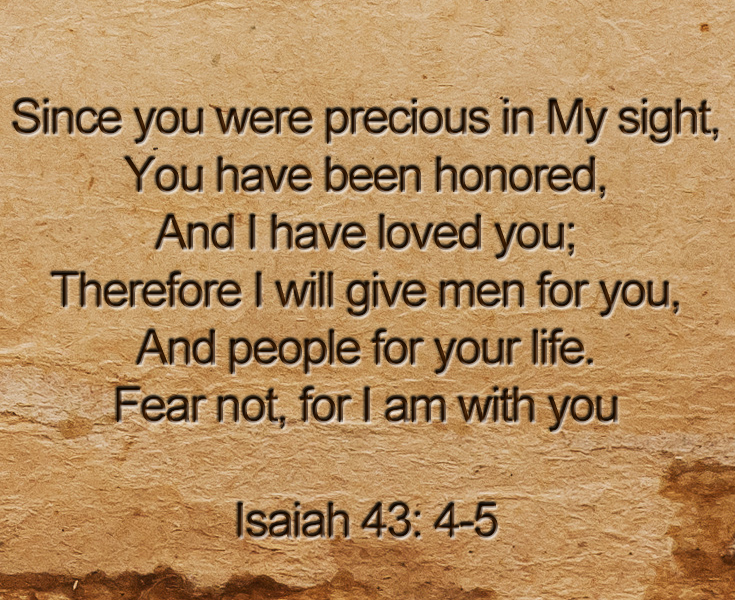
But now, thus says the Lord, who created you, O Jacob, and He who formed you, O Israel: “Fear not, for I have redeemed you; I have called you by your name; you are Mine.  … For I am the Lord your God, the Holy One of Israel, your Savior … since you were precious in My sight, you have been honored, and I have loved you; therefore I will give men for you, and people for your life. (Is. 43:1, 3, 4)

These early verses of Isaiah 43 are some of my favorite scriptures. I read them when I’m feeling lonely or doubtful of my worth in God’s eyes. Isn’t it a lovely reassurance of how highly God values His people? When God looks at you, He doesn’t think, “that person is worthless,” He thinks, “that person belongs to Me, and I love them.”

What We Are

So far, we’ve seen God call us precious, beloved, family, and friends. When we look a bit deeper into how He interacts with the church for today, we see even more evidence of how highly He values us.

Do you not know that you are the temple of God and that the Spirit of God dwells in you? If anyone defiles the temple of God, God will destroy him. For the temple of God is holy, which temple you are. (1 Cor. 3:16-17)

God must value us highly to call us “holy,” dwell inside us, and to destroy those who “defile” us. This part of the verse can be read as a warning to individual parts of the temple that we not become corrupt, and also as a warning to those who would set out to “subvert or corrupt” us as God’s temple. In that sense, it’s similar to God’s Isaiah 43 promise to protect and defend us. God is saying, “They are mine. I prize them highly, and I will fight for them.”

Or do you not know that your body is the temple of the Holy Spirit who is in you, whom you have from God, and you are not your own? For you were bought at a price; therefore glorify God in your body and in your spirit, which are God’s. (1 Cor. 6:19-20)

Jesus Christ thought we were worth paying the price of His life to redeem. In the words of Matthew Henry, “A spouse so dearly bought and paid for could not but be dearly loved. Such a price being given for her, a high value must needs be put upon her accordingly” (commentary on Song 4:8-14). Jesus did not redeem us so we could be worthless, weak, uninteresting, or whatever it is we call ourselves. He redeemed us to adopt as His siblings (Rom. 8:15-17), marry as His bride (2 Cor. 11:2), and give us a share in His glory (John 17:22; 1 John 3:2).

A Proper Attitude

So, what attitude are we supposed to have about ourselves? One thing we absolutely cannot do is allow the knowledge of how much God loves us lead to an idea that we’re something amazing in and of ourselves. God hates pride, arrogance, and vanity. When He says He values us highly, that’s not the reaction He’s looking for in return. Rather, the Lord requires us “to do justly, to love mercy, and to walk humbly with your God” (Mic. 6:8)

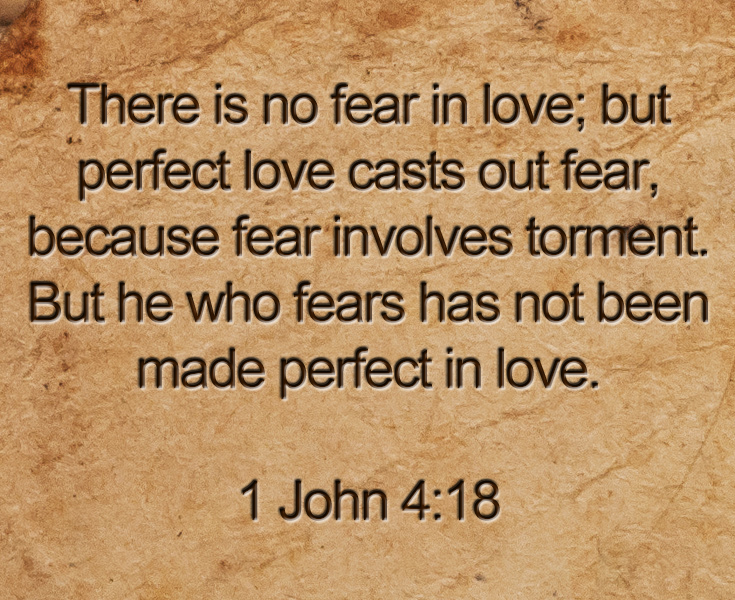
Low Self-Esteem vs. Esteeming Self Less | marissabaker.wordpress.comBut we can’t go to the opposite extreme either. If we tell ourselves we have no value, there’s a danger of becoming paralyzed by fear of doing something wrong and attracting attention to our own worthlessness. But that kind of fear has no place in a person where God’s love dwells (1 John 4:18).

Let nothing be done through selfish ambition or conceit, but in lowliness of mind let each esteem others better than himself. Let each of you look out not only for his own interests, but also for the interests of others. Let this mind be in you which was also in Christ Jesus (Phil. 2:3-5)

This is the key — having the mind of Christ. His was the most valuable human life ever, and yet He chose to use His greatness to serve others, first by giving up the glory He had before the world existed, then in how He lived His life, then by dying for us, and now by living as our High Priest and the Head over all things to the church. His every act on this earth was one of love and service and esteeming the needs of others as more important than His own. That’s the example we should be following.

When we find our identity in Christ and believe we are precious in God’s sight, we can be bold, courageous, and strong in Him (Heb. 4:16; John 16:33; Eph. 6:10). We are also humble, knowing the things that make us valuable come from our relationship with God and not from ourselves. And we esteem our brethren higher than ourselves, because they are also temples of God and we are called to serve and love them as Christ serves and loves us.

Does God Allow Trials We Can’t Endure?

I recently read two separate articles that said this verse is inaccurate or at least grossly misinterpreted: “God will not allow you to be tempted beyond what you are can endure.” The example used was that Christians who commit suicide were obviously given a trial they couldn’t bear on their own, and they needed outside help. But does needing help from other people really invalidate this scripture, or is there something else going on?

Faithful to Help

The phrase quoted above is just a piece of a sentence in 1 Corinthians. Let’s look at the whole verse to get some context.

No temptation has overtaken you except such as is common to man; but God is faithful, who will not allow you to be tempted beyond what you are able, but with the temptation will also make the way of escape, that you may be able to bear it. (1 Cor. 10:13)

First we see the idea that no matter how alone or oppressed we feel, we’re not being given trials greater than that which is common to man — someone else, somewhere, has gone through something similar. This includes other human beings, of course, but it also includes Jesus Christ.

For we do not have a High Priest who cannot sympathize with our weaknesses, but was in all points tempted as we are, yet without sin. Let us therefore come boldly to the throne of grace, that we may obtain mercy and find grace to help in time of need. (Heb. 4:15-16)

Not only are trials like ours held in common with other people, but our Lord and Savior went through similar temptation and sufferings. One of the main reasons He did that was so that He could understand what we’re going through and offer His aid. As it says in 1 Cor. 10:13, “God is faithful,” and He will do that for us.

Secondly, we see that the promise which says God won’t let us be tempted beyond our endurance comes with an explanation for how He will do that. It’s not just that God protects us from trials unless we can get through them by gritting out teeth and pushing forward on our own. He “will also make the way of escape, that you may be able to bear it.”

Needing Others

This “way of escape” is intriguing. The wording implies intervention by God to create “escapes” for us in our trials, and action necessary on our part to take the offered escape. I imagine this sort of thing will look very different depending on the type of trial and who is going through the trial. Sometimes it may be what we think of as a literal escape, with the trial or temptation coming to an end. Or it could be that something changes to make the trial bearable. I’m sure we’ve all known someone with a long standing trial (like illness or chronic pain) who still has peace and joy in their lives.

and the peace of God, which surpasses all understanding, will guard your hearts and minds through Christ Jesus. …And my God shall supply all your need according to His riches in glory by Christ Jesus. (Phil. 4:7, 19)

Do we trust God to truly do this, to give us every thing we need in every circumstance? People will say something like, “well, that’s not true. You can’t just go through life with an ‘I don’t need anything but God” attitude. We need other people.” True to a certain extent, but where do you think those other people come from?

Does God Allow Trials We Can't Endure? marissabaker.wordpress.comGood friends — the people you can really talk with about anything and go to when you need help — are rare. We call them a blessing. So when we have people like this in our lives, I’d say that comes under God supplying all our needs, including our need for companionship. Perhaps sometimes the “way of escape” so we’re able to bear a trial comes in the form of another person. It could be a friend, or someone you barely know. Maybe it’s a therapist or a minister to offer counsel. Perhaps it’s a brutally honest sibling to knock some sense into you (hopefully not literally).

I’ve been on the receiving end of this from someone I’d only just met. I was at a church-sponsored weekend and feeling particularly vulnerable emotionally. I thought I was doing a pretty good job of hiding my heartache, but apparently not, because  a girl I’d been introduced to barley two days ago sought me out the last evening to ask what was wrong. The story spilled out and I started crying. Then she prayed aloud for me. It was incredible — I felt God’s Spirit present in a way unlike I’d ever felt before. That wasn’t the conclusion of that trial, but it did mark the escape for climbing out of it and back towards God.

When God sends us someone to help us through a trial, we should be careful not to push them away. But this works from both sides. We can also be the person who is provided by God to offer help.

Being a Blessing

Have you ever considered that? When we’re talking about trials, I think we’re more often inclined to think of how someone else can help us than how we can help other people. But if we expect that we’re going to benefit from the comfort and help of other believers, we should also expect that God wants to use us to help them.

Let nothing be done through selfish ambition or conceit, but in lowliness of mind let each esteem others better than himself. Let each of you look out not only for his own interests, but also for the interests of others. (Phil. 2:3-4)

We’re supposed to be looking after our brethren, building them up, making sure they’re okay, and being sure to offer real encouragement and help rather than empty platitudes when they need aid.

If a brother or sister is naked and destitute of daily food, and one of you says to them, “Depart in peace, be warmed and filled,” but you do not give them the things which are needed for the body, what does it profit? (James 2:15-16)

It is similarly un-helpful (and can even be harmful) to just slap a scripture on someone’s emotional wounds and walk away. Saying, “God will supply all your needs”  or “don’t worry, He won’t give you anything you can’t endure” isn’t any help unless we’re willing to be used by God to supply those needs by listening to them, praying with and for them, and keeping in touch with them.

Example of Love

A new commandment I give to you, that you love one another; as I have loved you, that you also love one another. By this all will know that you are My disciples, if you have love for one another.” (John 13:34-35)

Love – agape – within the church is the sign that we are followers of Christ. That’s how important it is to have self-sacrificing love that seeks the good of others. Romans 12:1 talks of us presenting ourselves as “a living sacrifice.” We can look at the life of Jesus Christ to see a perfect example of what it means to live as a sacrifice in service to God. Have you ever noticed how much of His ministry involved helping other people? Pretty much all of it. And now He tells us that we and every one of our fellow believers are highly valued as His own temple and body “which He purchased with His own blood” (Acts 20:28).

Does God Allow Trials We Can't Endure? marissabaker.wordpress.comIf we’re going to claim that level of importance in God’s eyes, we must see others in the same light. Do we treat other people as if Christ is living in them? and we have to do this for our brethren whether or not we think it looks like Christ is in them. If we’re being honest, we know that we’ve also been seen doing things that are not Christ-like. We must be forgiving toward others if we want to be forgiven (Matt 6:12, 14-15). Really, we’re left without any good excuses for not helping others when we see them in need. If we’re following Jesus Christ, we will be loving and serving other people as much as possible. It’s as simple (and as complicated) as that.

So to answer the question that is the title of this post, I believe God does not let us go through trials or temptations that it is impossible for us to bear. They might not turn out the way we expect them to, but if we stay close to God we will turn out the way He expects us to. He will send us escapes and aid, and will open our eyes to recognize His help. And sometimes we’ll have the chance to follow Jesus’ example and be used by God to help another person.

Save

Why I Still Believe In Soul Mates

There seems to be a movement in some of the Christian relationship blogs I read to debunk the “myth” of soul mates. The argument can be summed up in this quote from Boundless.org’s article Myths About Soul Mates: “Believing that ‘the one’ is out there, waiting to ‘complete you,’ inevitably leads to discontentment and maybe even divorce.” Another of their articles, Hoping for a Soul Mate, quotes Atlanta psychiatrist Frank Pittman as saying, “Nothing has produced more unhappiness than the concept of a soul mate.” If you’re not familiar with these arguments, I encourage you to glance at one or both links before reading on.

click to read article, "Why I Still Believe In Soul Mates" | marissabaker.wordpress.com
Photo Credit: Anne Edgar via StockSnap

Defining “Soul Mate”

Just so we’re all starting out on the same page, here’s a composite definition of what the articles I referenced above seem to mean when they use the term “soul mate”:

A soul mate is your perfect match, who complements all your weaknesses and strengths and loves you unreservedly for who you are. There is only one soul mate for each person, and you’re on a search to find them so they can “complete you.”

These articles say this is an impossible ideal and it becomes dangerous when we start holding the person we’re in a relationship with to impossible and unrealistic expectations. And I do acknowledge this is a danger if we’re focused on the idea of finding one perfect mate (see this scene in Ever After for a humorous example of a few problems which can result).

Given these compelling arguments about the dangers of having an expectation like this in dating, you might be wondering why I’m writing a post about believing in soul mates. I have a slightly different take on the idea of soul mates, though.

My Idea of a Soul Mate

I imagine there are several people out there who have the potential to be our “soul mates.” For me, I think this would look like a relationship where I feel safe sharing my inner thoughts, feelings, and emotions. Someone who can understand, relate to, or at least appreciate the parts of my mind which I so rarely share, and with whom I can connect on a “kindred spirits” level. It almost goes without staying that this kind of connection must have a spiritual/religious component as well — I doubt I could be in this kind of relationship with someone who does not share my faith. I think there’s also a bit of truth in the idea of finding a mate who “completes” you, not in the way that most people might think of it but in the way that God meant when He created a husband and wife to be two parts of a whole.

As I mentioned, in this theory there are multiple people with whom the potential exists for forming a soul mate connection. You might meet several, but your goal should be that your relationships only reach a “soul mate level” with one of these people. I suspect that there’s a point in a good relationship where the other potential soul mates no longer matter because a “sole soul mate” relationship has been forged.

This is where the idea of commitment comes in. Once you choose to marry someone, you’re also choosing to cultivate  a soul mate relationship only with them (the first article I linked to actually touches on this point). This is also why can be dangerous to form deep emotional intimacies with someone of the opposite sex who you don’t intend to marry (or whom you’re not sure yet if you will marry) — sharing your heart without the promise of commitment to a sole soul mate relationship seems like a good way to get your heart broken.

click to read article, "Why I Still Believe In Soul Mates" | marissabaker.wordpress.com
Photo Credit: Andrew Welch via StockSnap

Personality Theory

I’m sure not everyone will agree with this idea, and really I don’t expect them to. There’s so much variation in our individual personalities, tastes and ideas that it seems ridiculous to expect everyone to want and expect the same thing from a romantic relationship.

Jane Eyre (INFJ) and Edward Rochester (ENTP or ENTJ)

When David Keirsey wrote his personality theories based on Myers-Briggs, he suggested that each of his four personality groups would be looking for, and be, a different kind of romantic partner. He describes the Artisans (Myers’ SP types) as Playmates, who are “exciting and fun” and usually end up married to Guardians (SJ types), who are looking to fill a Helpmate role. Rationals (NT types) want a Mindmate with whom they can have intellectual discussions and explore “abstract rather than concrete” ideas. They often marry the Idealists (NF types, like my INFJ personality), who are searching for Soulmates.

What Idealists wish for in their spouse is a Soulmate, a spouse who knows their feelings without being told of them, and who spontaneously expresses words of endearment, words that acknowledge their mate’s unique identity. Idealists want the marital relationship to be, as they put it, “deep and meaningful,” Other types will settle for much less than this.  … suffice it to say that Idealists are asking their spouses for something most of them do no understand and do not know how to give. (Please Understand Me II, p.146)

Well, that sounds depressingly unattainable. Honestly, when I was reading this book the first time the beginning of this paragraph had me nodding and thinking it sounded exactly just right, but that final sentence is really discouraging. Still, I don’t think I have such unrealistic expectations as Keirsey describes Idealists as having in other parts of his book (though it does sound idyllic). Maybe he’s right and 80-85% of the population will tell me I’m crazy to hope for a “soul mate.” But hopefully someday I’ll be able to say, like the bride in Song of Songs, “I found him whom my soul loves” (Song. 3:4, WEB).


Click here to check out my e-book, The INFJ Handbook, for more information and insight into the INFJ personality type
Available in the Amazon Kindle Store

Save

Save

Save