Replacing Worry (Lessons from Zephaniah)

We live in the midst of a dangerous, confusing world, and it’s getting worse as we move ever closer to the time of Christ’s return.

And you will hear of wars and rumors of wars. See that you are not troubled; for all these things must come to pass, but the end is not yet. For nation will rise against nation, and kingdom against kingdom. And there will be famines, pestilences, and earthquakes in various places. All these are the beginning of sorrows. (Matt. 24:6-8)

Our first instinct when things get bad is to worry and panic. This is precisely what we’re told not to do. Easier said than done, though, isn’t it? Worry’s not something you can just turn off — you have to replace it with something else.

No Reason for Fear

Zephaniah prophesied during the reign of King Josiah, so things were going pretty well at the time for the nation of Judah. Even so, he warned about a time much like our own when things would start looking pretty bleak for God’s people. In the midst of these dark prophecies, though, Zephaniah’s book gives great reason for not giving in to fear.

In that day it shall be said to Jerusalem: “Do not fear; Zion, let not your hands be weak. The Lord your God in your midst, the Mighty One, will save; He will rejoice over you with gladness, He will quiet you with His love, He will rejoice over you with singing.”(Zeph. 3:16-17)
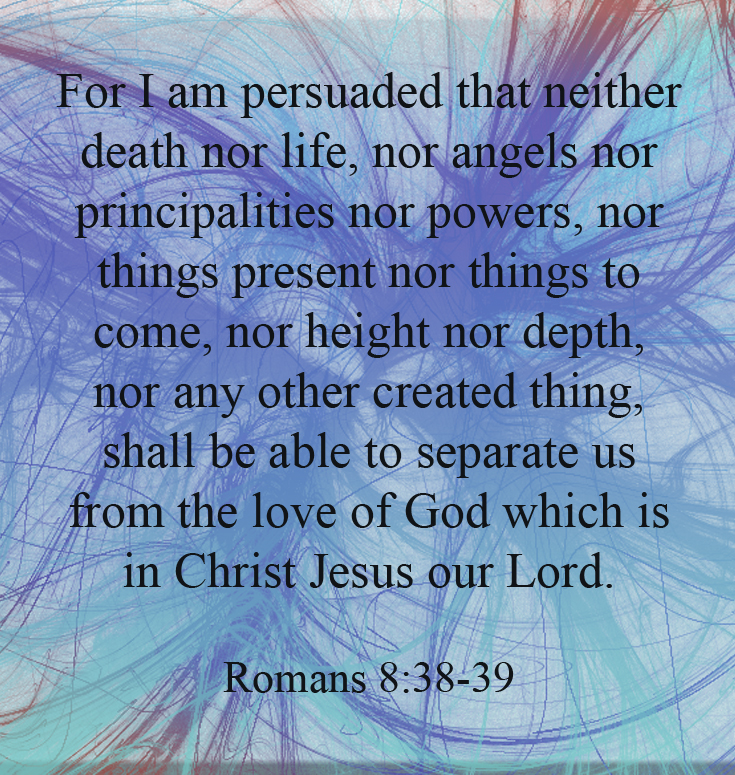
Replacing Worry | marissabaker.wordpress.comGod doesn’t just tell us not to have fear. He gives us assurances designed to make fear impossible. “Fear not” because God Himself is with you to save you. “Fear not” because of His steadfast love, which Paul says nothing can separate us from (Rom. 8:35-39). “Fear not” because the Lord delights in you (Deut. 10:15; Is. 62:4).

He Himself has said, “I will never leave you nor forsake you.” So we may boldly say: “The Lord is my helper; I will not fear. What can man do to me?” (Heb. 13:5-6)

I still struggle with removing fear on a practical level, but abstractly I know fear simply doesn’t make sense for a Christian. The God who created the universe personally guarantees that He won’t abandon you. I always find things I’m scared of less frightening if there’s a good friend beside me, and what better friend could we have to cling to for assurance and stability in times of fear than God Himself?

Live By Faith

We replace worry with faith by consistently turning to God.

Seek the Lord, all you meek of the earth, who have upheld His justice. Seek righteousness, seek humility. It may be that you will be hidden in the day of the Lord’s anger. (Zeph. 2:3)

Seeking after God and consistently following His commands is the best way to get close to Him, which is the best place to be in times of trouble. No matter what happens, our focus must stay on God as we live by faith.

Therefore you also be ready, for the Son of Man is coming at an hour you do not expect. (Matt. 24:44)

Living without fear doesn’t involve burying our heads in the sand and ignoring things that might make us afraid. Rather, it involves a watchful readiness while living in the faith and confidence of our Messiah.

Who then is a faithful and wise servant, whom his master made ruler over his household, to give them food in due season? Blessed is that servant whom his master, when he comes, will find so doing. (Matt. 24:45-46)
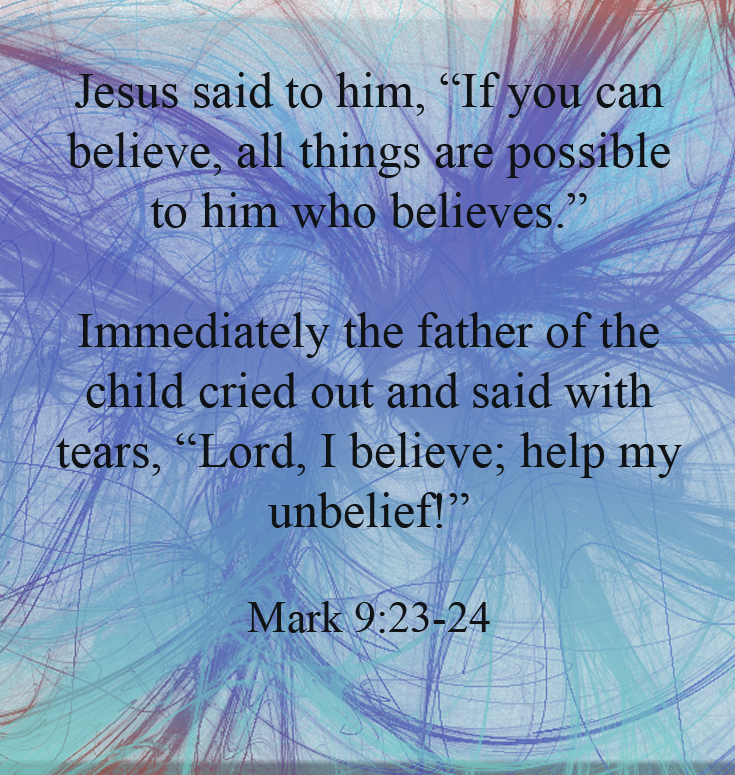
Replacing Worry | marissabaker.wordpress.comWhen we stand before Christ at the end of this earth or the end of our lives — whichever comes first — we want to be found “so doing.” Consistent growth and faithfulness will be rewarded.

But what if you’re lacking in faith, and still suffering from worry? Ask God for help. He won’t turn down a sincere plea for help, even if it’s help with our unbelief.

 But let him ask in faith, with no doubting, for he who doubts is like a wave of the sea driven and tossed by the wind. For let not that man suppose that he will receive anything from the Lord; he is a double-minded man, unstable in all his ways. (James 1:6-8)

Brethren, let us pray for stability in our walk with God — to be grounded so firmly on the Rock of Jesus Christ that we won’t be tossed about with fear. Wavering and worry go hand-in-hand, and we need God’s help to overcome that and “continue in the faith, grounded and steadfast” (Col. 1:23).

The Day of the Lord (Lessons from Amos)

The Day of the Lord | marissabaker.wordpress.comAs I was reading Amos in my quest to write about more verses I don’t often study, some verses about the Day of the Lord caught my eye. It got me thinking about two doctrines I’ve encountered related to what the church will be doing during the great tribulation that precedes Christ’s second coming.

One doctrine, the one taught in the churches where I grew up, says that some believers will be taken to a “place of safety” where God keeps them from the tribulation. The other, taught in most Evangelical and some Messianic churches, says that a “rapture” occurs where Christ catches believers up to heaven before the tribulation starts.

Both these ideas acknowledge that Jesus is coming back in the future to set up His kingdom on earth, and there will be great tribulation throughout the earth before that happens. Rapture doctrine (at least, the pre-trib version) teaches that He will come back twice — once to gather up believers pre-tribulation and once again to set up His millennial reign. The Place of Safety doctrine teaches that some, not all, believers will be taken to a physical place of safety on earth to wait-out the tribulation until Christ’s return. Today, I want to re-think the idea that believers are going to get-out of the tribulation, and what that might mean for our faith.

A Day of Darkness

If you believe that those who are faithful to God are taken out of the world before the great tribulation starts, then praying “thy kingdom come” is easy. We’ll get out of the worst of it and bypass all this judgement stuff so we can finally get to that reward we’ve been promised. But what if it doesn’t work out that way?

What if Revelation 12:13-17 really does mean the church will be taken to a safe place, but you’re part of the commandment-keeping remnant still in the earth and persecuted by the dragon? What if there is a rapture, but it’s mid- or post-tribulation instead of pre-trib?

Woe to you who desire the day of the Lord! For what good is the day of the Lord to you? It will be darkness, and not light. It will be as though a man fled from a lion, and a bear met him! Or as though he went into the house, leaned his hand on the wall, and a serpent bit him! Is not the day of the Lord darkness, and not light? Is it not very dark, with no brightness in it? (Amos 5:18-20)

There’s a note on this passage in my study Bible that says, “The people were taking for granted that the ‘Day of the Lord’ would be their day of triumph. Amos reminded them, however, that because of their unbelief and wickedness, it would be a day of judgement for them as well as the other nations.”

This made me think of us in the church, hoping for the end of the world because we know it has to come before Christ’s return, while thinking we might get out of the accompanying tribulation. Well, maybe we will, but I wouldn’t count on it. Matthew 24 clearly states Christ “will gather together His elect” “immediately after the tribulation” (Matt. 24:29-31). We have to be ready to stay faithful to God even if we go through the worst tribulation mankind has ever faced. If our faith is contingent upon being raptured away or taken to a place of safety, we could be in trouble.

Our Safe Place

I know this sounds bleak, but one thing we do know is that God’s people will suffer because our Messiah suffered (1 Pet. 2:18-25). If we really are living in the last days (as so many people think) and that includes having to go through the tribulation, I pray we’ll be those who can say “Thy will be done” rather than those who turn away because they were expecting something else.The Hiding Place by Corrie ten Boom

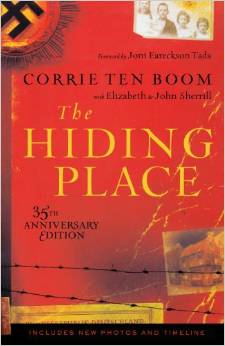
I recently read The Hiding Place by Corrie ten Boom. She was a Christian working with the Dutch underground in World War II who was caught and sent to several German concentration camps. At first, I thought the title refered to the secret room where she and her family hid Jews, but I soon found out she meant something else.

You are my hiding place and my shield; I hope in Your word. (Ps. 119:114)

Corrie quotes this verse near the beginning of the book, and again near the end.  Her sister just died, she’s trapped in the medical ward waiting for release from the third camp she’s been held in, and she writes this: “His timing is perfect. His will is our hiding place. Lord Jesus, keep me in Your will! Don’t let me go mad by poking about outside it.” We don’t need to go anywhere for God to keep us safe. We just need to stay in His will. Our safety doesn’t depend on anything other than our relationship with Him.

He who dwells in the secret place of the Most High shall abide under the shadow of the Almighty. I will say of the Lord, “He is my refuge and my fortress; My God, in Him I will trust.” (Ps. 91:1-2)

The New Living Translation has “place of safety” here instead of “fortress.” Reading on in this Psalm, we read of people living with “terror by night” and arrows by day (verse 5) in a place where pestilence and destruction are rampant (verse 6), and people fall dead all around you (verse 7). That’s not a physically safe location, but it doesn’t matter when you are dwelling in God.

Because you have made the Lord, who is my refuge, even the Most High, your dwelling place, no evil shall befall you, nor shall any plague come near your dwelling (Ps. 91:9-10)

We’ve all known Christians who’ve suffered — and we’ve probably been a suffering Christian. Clearly, this isn’t a promise for complete physical protection for every follower of God. It is a promise, though, that God won’t let anything happen to us that can’t work out for good (Rom. 8:28).

Keep Watch

We have to constantly work on developing a close relationship with God, and learning to follow Him the way He commands. That’s what’s important — not trying to figure out when He’s returning or if we’ll be raptured or where the place of safety might be. God is our focus, and if we keep our eyes on Him He will work things out.

Watch therefore, for you do not know what hour your Lord is coming. But know this, that if the master of the house had known what hour the thief would come, he would have watched and not allowed his house to be broken into. Therefore you also be ready, for the Son of Man is coming at an hour you do not expect. (Matt 24:42-44)

If we knew exactly when and how God’s plan would unfold, there’d be little need for trust or faith as the “evidence of things not seen” (Heb. 11:1). We could have everything planned out and controlled and feel assured in our own efforts. but that’s not what God wants. He wants to see what we’ll do when we have to rely on Him completely.

The Day of the Lord | marissabaker.wordpress.comWho then is a faithful and wise servant, whom his master made ruler over his household, to give them food in due season? Blessed is that servant whom his master, when he comes, will find so doing. Assuredly, I say to you that he will make him ruler over all his goods. But if that evil servant says in his heart, ‘My master is delaying his coming,’ and begins to beat his fellow servants, and to eat and drink with the drunkards, the master of that servant will come on a day when he is not looking for him and at an hour that he is not aware of, and will cut him in two and appoint him his portion with the hypocrites. There shall be weeping and gnashing of teeth. (Matt. 24:45-51)

There has been far too much smiting of fellow servants in the churches by people who don’t live like they could find themselves face-to-face with Jesus at any moment. We can’t let our faith slip because we think we have time or that we’ll get a warning. I’ve lost far too many friends to sudden, unexpected causes of death to think there are guarantees in this life.

God doesn’t call us to a life of comfort. He does promise He’ll never leave us and that, if we stay faithful, we will triumph with His son at the end. He doesn’t give us all the answers, but He gives us the only one we need. Grow closer to Him, stay vigilant, and trust Him as your place of safety.

Sins As Scarlet

Sins As Scarlet | marissabaker.wordpress.com
bg image credit: Nevil Zaveri

When we were in Joel last week, the final verse started me thinking on the subject of God’s power to cleanse sin. We know God forgives sin, but do we believe that He will really forgive us? Our sins have separated us from God (Is. 59:2) — will He really take us back? Or if we don’t think that about ourselves, maybe we think someone else’s sins are too big for God to forgive.

And Jesus answered and said to him, “Simon, I have something to say to you.”

So he said, “Teacher, say it.”

“There was a certain creditor who had two debtors. One owed five hundred denarii, and the other fifty. And when they had nothing with which to repay, he freely forgave them both. Tell Me, therefore, which of them will love him more?”

Simon answered and said, “I suppose the one whom he forgave more.”

And He said to him, “You have rightly judged.” (Luke 7:40-43)

This isn’t to say we should commit sins so we can love God more, but when we have sinned God delights in forgiving those who turn to Him. He wants to turn seemingly impossible situations and seemingly irredeemable people into something good. (As a side note, this is the verse that always pops into my head when I hear people say they doubt God could forgive someone like Hitler).

Invitation to Forgiveness

God’s goal is for all the people He created to repent and be saved. There will be some who out-right reject Him (Rev. 20), and they will be punished, but what he wants is a restored relationship with all men.

“Come now, and let us reason together,” says the Lord, “Though your sins are like scarlet, they shall be as white as snow; though they are red like crimson, they shall be as wool. If you are willing and obedient, you shall eat the good of the land; but if you refuse and rebel, you shall be devoured by the sword;” for the mouth of the Lord has spoken. (Is. 1:18-20)

This is an amazing passage. It’s like God is inviting His people to sit down and talk things over with Him. That’s one thing I love about Isaiah — the honesty and genuineness of God revealed in His messages to Israel. He really bares His heart, telling them how much He cares and how much He wants them to come back to Him so He can forgive and bless them.

I, even I, am He who blots out your transgressions for My own sake; and I will not remember your sins. Put Me in remembrance; let us contend together; state your case, that you may be acquitted.” (Is. 43:25-26)

He doesn’t cleanse us because we deserve it, but because He is love and because He’s in the business of restoration.

Asking For Purity

Probably the most famous prayer for spiritual cleansing is David’s Psalm 51. This records how David asked for forgiveness after he committed adultery and murder, and because of his truly repentant heart God continued working with him even after these horrible sins.

Purge me with hyssop, and I shall be clean; wash me, and I shall be whiter than snow. (Ps. 51:7)

Hyssop is an interesting herb in the Bible. It’s used ritualistically as a cleansing or purifying symbol (Lev. 14:1-7, 33-53; Num. 19:1-6), likely because it was literally used as a cleaning agent. Today, we’re finding out that hyssop oil has measurable antibacterial, antimicrobial, and antifungal properties. Perhaps this connection with purification is why it was used at the first Passover.

 Then Moses called for all the elders of Israel and said to them, “Pick out and take lambs for yourselves according to your families, and kill the Passover lamb. And you shall take a bunch of hyssop, dip it in the blood that is in the basin, and strike the lintel and the two doorposts with the blood that is in the basin. And none of you shall go out of the door of his house until morning. For the Lord will pass through to strike the Egyptians; and when He sees the blood on the lintel and on the two doorposts, the Lord will pass over the door and not allow the destroyer to come into your houses to strike you.” (Ex. 12:21-23)

Sins As Scarlet | marissabaker.wordpress.com
bg image credit: Nevil Zaveri

With the Passover picturing Christ’s death, the hyssop (John 19:29) and blood signify not just “passing over” sins, but also removing them completely. The means by which our “red as scarlet” sins are made “white as snow” is washing in the blood of the Lamb (Rev. 7:14).

It makes sense, then, that the only sins we’re told God will not pardon involve rejecting Christ’s sacrifice (Heb. 6:4-6) and blaspheming God’s spiritual, redemptive Power (Matt. 12:31-32). You can’t be forgiven if you reject and hate the way to forgiveness. But that’s the only thing God can’t forgive. All those things we humans think of as the “worst” sins — the kinds of things David did, for example — those God can work with if we repent and ask Him to help us change.

Thoughts on John 9

I don’t often spend most of a week studying just one chapter of the Bible, but John 9 captured my attention and didn’t let go. It is the story of Jesus healing a blind man, and unlike many miracles which are recorded in just a few short verses, this story takes up an entire 41-verse chapter.

This chapter is packed full of interesting things to learn. I focused on three main points that I noticed for this post, but I’m sure there’s more. If anyone else feels moved to study John 9, I’d love to hear your thoughts!

A Reason For Suffering

Now as Jesus passed by, He saw a man who was blind from birth. And His disciples asked Him, saying, “Rabbi, who sinned, this man or his parents, that he was born blind?”

Jesus answered, “Neither this man nor his parents sinned, but that the works of God should be revealed in him. (John 9:1-3)

The assumption the disciples made is all too common, even today — that the bad things which happen to us and others are a kind of punishment. Sometimes, however, God allows trials of various sorts to affect us because they fit into His plan for doing good. In this particular case, the man’s blindness was used to introduce him to Jesus and demonstrate to other people that Jesus is the Son of God.

It worked, too. This healing caused a huge stir in the Jewish community. This was partly because of the spectacular nature of the miracle, and partly because Jesus healed on the Sabbath. As the Word of God, Jesus was the One who told Israel about the Sabbath in the first place — He knew how to keep it holy. Doing good on the Sabbath wasn’t a sin, but it did anger the Pharisees because it violated some rules they’d added.

 Therefore some of the Pharisees said, “This Man is not from God, because He does not keep the Sabbath.” Others said, “How can a man who is a sinner do such signs?” And there was a division among them. (John 9:16)

Though they publicly condemned Jesus, they weren’t so sure behind the scenes. This miracle made them think, and I wonder if some of them eventually became believers. Nicodemus couldn’t have been the only Pharisee wondering if maybe, just maybe, Jesus really was the Christ (John 3:1-2).

A Simple Testimony

After he was healed, the man who’d been blind doesn’t leap, shout, and tell everyone what happened. He didn’t do anything to call attention to himself, and only talked about the miracle when people started asking him what happened.

He answered and said, “A Man called Jesus made clay and anointed my eyes and said to me, ‘Go to the pool of Siloam and wash.’ So I went and washed, and I received sight.” (John 9:11)

After hearing this, the people took him to the Pharisees and he repeated his story again (verse 15). Not believing him, they called in his parents, who were scared of being excommunicated and wouldn’t say anything except to affirm that he had, indeed, been blind (verse 18-23).

So they again called the man who was blind, and said to him, “Give God the glory! We know that this Man is a sinner.”

He answered and said, “Whether He is a sinner or not I do not know. One thing I know: that though I was blind, now I see.” (John 9:24-25)

I think what the Pharisees were trying to do was convince this guy to say God healed him, and leave Jesus out of it. That never works — for “whoever denies the Son does not have the Father either” (1 John 2:23). When the Pharisees kept pressuring him, this man delivered a very simple testimony that enraged the Pharisees, who prided themselves on their intellect and knowledge of God.

The man answered and said to them, “Why, this is a marvelous thing, that you do not know where He is from; yet He has opened my eyes! Now we know that God does not hear sinners; but if anyone is a worshiper of God and does His will, He hears him. Since the world began it has been unheard of that anyone opened the eyes of one who was born blind. If this Man were not from God, He could do nothing.” (J0hn 9:30-33)

There’s something to be said for paying attention to “the simplicity that is in Christ” (2 Cor. 11:3). The man who went with the simple, obvious explanation — that Jesus is a good man who performed a miracle — was much closer to God than the thoroughly educated church leaders.

A Personal Connection

After testifying to Jesus’ work in his life, the Pharisees excomunicated the formerly blind man (verse 34). This relates back to an earlier verse, which tells us “the Jews had agreed already that if anyone confessed that He was Christ, he would be put out of the synagogue” (John 9:22). This doesn’t sound so bad to us today — if we get kicked out of one church there are plenty more right down the street. In the Jewish culture of Jesus’ time, though, it meant banishment from religious life.

In his definition of aposunagogos (G656), Zodhiates notes that the highest degree of “casting out” (there were three) is “an exclusion from all the rights and privileges of the Jewish people, both civil and religious. The offender was considered as dead.” Jesus warned His followers about this possibility in John 16:2. Following Jesus was a huge, dangerous step for Jews. It meant risking isolation from other people and, if you believed the Pharisees, from God.

Jesus heard that they had cast him out; and when He had found him, He said to him, “Do you believe in the Son of God?”

He answered and said, “Who is He, Lord, that I may believe in Him?”

And Jesus said to him, “You have both seen Him and it is He who is talking with you.”

Then he said, “Lord, I believe!” And he worshiped Him. (John 9:35-38)

We don’t often see examples of Jesus making follow-up visits with people He healed, but it is clear from these verses that He was keeping track of what happened with this man. As soon as He heard about the Jews excommunicating the formerly blind man, Jesus tracked him down to encourage him and confirm his faith. This man was cast out by the Jews, but he was welcomed by the Messiah.

I’m touched by the personal attention Jesus gave this individual, and the parallels with our own calling. Jesus healed him, apparently without being asked to, and changed his whole life. In much the same way, God may call us when we’re not even looking for Him and don’t know how desperately we need His life-changing power.

This healing opened the blind man’s spiritual as well as physical eyes. Many of us today can relate the rejection he experienced when he started to share the story of how Jesus touched his life. I hope we can also relate to the comfort of having a personal connection with this great Being, who doesn’t leave people alone to navigate their new-found faith.

Ready To Be Faithful

How do you know when you’re ready for baptism?

For those in churches that teach baptism is the sign of our covenant with God, this is a weighty question. If you’re just coming into the church, how do you know when you’re ready to go through with this ceremony? If you grew up in the church, how do you know God is really calling you into covenant with Him? What should you look for, and what do you need, before you get baptized?

The answer is both simpler and more complicated than you might think. It has very little to do with how long you council with a minister or how many baptism booklets you read, and everything to do with the state of your heart. Before we get into the body of this post, though, (just so we’re starting out on the same page) here’s a bit of background. I believe baptism by full immersion in water is an outward sign of an adult Christian’s covenant with God. I grew up in a Christian community that taught this, and I was baptized shortly after my 19th birthday.

Repent

Ready To Be Faithful | marissabaker.wordpress.com
bg image credit: Kelly Hunter, CC BY

When John the baptist began his ministry, he preached “Repent, for the kingdom of heaven is at hand!” (Matt. 3:2).  Those who came to be baptized confessed their sins as part of the baptism (Matt. 3:6). To further emphasize the need for repentance, he told the Pharisees and Sadducees who came to his baptism to “bear fruits worthy of repentance” if they wanted to be saved (Matt. 3:8).

In the Bible, repentance is “regret accompanied by a true change of heart toward God” (G3340, Zodhitates). To enter covenant with God, the first requirement is that we realize we are sinners, genuinely regret the wrongs we’ve committed, and recognize our need for Jesus Christ’s atoning sacrifice.

Now when they heard this, they were cut to the heart, and said to Peter and the rest of the apostles, “Men and brethren, what shall we do?”

Then Peter said to them, “Repent, and let every one of you be baptized in the name of Jesus Christ for the remission of sins; and you shall receive the gift of the Holy Spirit. (Acts 2:37-38)

In general the steps are: 1) repentance, 2) baptism, 3) receive the Holy Spirit (there are exceptions to this order, as in Acts 10). Often, we feel like we need reach perfection, or at least be “good enough” before baptism. Really, though, we need to realize we are not perfect so we can commit and submit to God. Then, after we realize how desperately we need Him and ask Him to be part of our life, He gives us the tools we need to grow toward perfection.

Believe

Looking at another baptism recorded in Acts, we find one more requirement for baptism. Here, Philip is teaching an Ethiopian eunuch about Jesus.

 Now as they went down the road, they came to some water. And the eunuch said, “See, here is water. What hinders me from being baptized?”

Then Philip said, “If you believe with all your heart, you may.”

And he answered and said, “I believe that Jesus Christ is the Son of God.”

So he commanded the chariot to stand still. And both Philip and the eunuch went down into the water, and he baptized him. (Acts 8:36-38)

In the New Testament, “believe” is translated from the same words as “faith” — pisteuo (G4100), a mental persuasion, faith, or belief, and pistis (G4102), ” a knowledge of, assent to, and confidence in certain divine truths” (Zodniates).

But without faith it is impossible to please Him, for he who comes to God must believe that He is, and that He is a rewarder of those who diligently seek Him. (Heb. 11:6)

Your faith doesn’t have to be perfect before you get baptized, but you should believe that God exists, that Jesus is the Messiah, and that They have a plan for your future. Maybe our faith is young or small, and we’re at a place where we’re saying, “Lord, I believe; help my unbelief!” (Mark 9:24). That’s okay. God knows we’ll still have work to do after baptism. In fact, He expects us to keep growing after we commit to Him.

Commit

Ready To Be Faithful | marissabaker.wordpress.com
bg image credit: Kelly Hunter, CC BY

When you’re counseling for baptism, ministers typically have you read the “count the cost” scriptures in Luke 14:25-33. We learn we can’t cling to anyone or anything other than Christ. We’re told we must be prepared to give up everything we have. Before taking this step in our relationship with God, we must seriously evaluate our commitment level. Christianity isn’t something you can do part-time or half-way. We have to be all-in.

I’m willing to venture a guess that those of us who’ve been baptized didn’t really understand exactly what we were getting into. Our knowledge and understanding deepen so much as we grow, and the commitment I made at baptism means more to me now than it did back in 2008. We don’t need have perfect knowledge before we get baptized — we just need to know we’re willing to follow God no matter what. I’ve heard it compared to marriage. You don’t have to be perfect to get married, or even understand everything about marriage, but you do have to make a commitment that you’ll be faithful.

I will betroth you to Me forever; yes, I will betroth you to Me in righteousness and justice, in lovingkindness and mercy; I will betroth you to Me in faithfulness, and you shall know the Lord. (Hos. 2:19-20)

If our commitment to God is a marriage (2 Cor. 11:2), then baptism is when we say our vows. We promise to stay faithful to Him in sickness and in health, to follow His authority, and to work through our problems with Him instead of running away. Baptism is a promise of faithfulness to our faithful Creator. If we’re ready to be faithful, then we’re ready to be baptized.

The Second Greatest Commandment

Our relationship with God is the most important thing in our lives. How we stand in relationship with God determines whether or not we’re in His family and included as part of Christ’s church. It is not, however, the only important relationship.

Jesus said to him, “‘You shall love the Lord your God with all your heart, with all your soul, and with all your mind.’ This is the first and great commandment. And the second is like it: ‘You shall love your neighbor as yourself.’ On these two commandments hang all the Law and the Prophets.” (Matt. 22:37-40)

If we ignore the second commandment, then we’re not keeping the first one very well. Christ said, “If you love Me, keep My commandments” (John 14:15), so if we’re truly in a good relationship with God, we also have to be cultivating good relationships with other people.

From Death To Life

In the Greek, “neighbor” refers to anyone in your sphere of influence. If you know about them or are near them, they are your neighbor. For now, though, let’s focus on loving people we meet within the church. Sometimes it seems like they are the ones we have the hardest time getting along with, perhaps because we expect so much more from them than from people “out there” in the world. We’re less inclined to cut them some slack for being human.

A new commandment I give to you, that you love one another; as I have loved you, that you also love one another. By this all will know that you are My disciples, if you have love for one another.” (John 13:34-35)

If love is how people are supposed to identify Jesus’s followers, then I’m afraid there are far too may of us hiding our identities. I know many loving individuals who proclaim by their actions that they are true disciples, but loving churches seem few and far between.

The Second Greatest Commandment | marissabaker.wordpress.comChristian denominations are rife with division, disagreements, and fighting. It seems like there’s always someone with a new doctrine or a better way to run things, followed by arguments and people taking sides in a divided congregation. If we were all walking in the light, there would be love and not division (1 John 2:9-11). But we’re not always perfect, and it’s so easy to stumble right along with divisive people in an unloving reaction to their lack of love. We can’t control other people, but we are each responsible for how we respond to them, including those who really have done something wrong.

In this the children of God and the children of the devil are manifest: Whoever does not practice righteousness is not of God, nor is he who does not love his brother. For this is the message that you heard from the beginning, that we should love one another …. We know that we have passed from death to life, because we love the brethren. He who does not love his brother abides in death. Whoever hates his brother is a murderer, and you know that no murderer has eternal life abiding in him. (1 John 3:1-11, 14-15)

“We have passed from death to life because we love the brethren” — that’s how important love is. If we hate instead of love, we don’t get eternal life. Even brethren who have stumbled and fallen away from the faith still need and deserve our love, since they still come under the neighbor category or even “love your enemies” (Matt. 5:44).

Vital Friendships

We’ve talked about loving people because we have to, but there should also be people in our lives who we love because we want to — family and friends with whom we share common interests and who will be there for us as we go through life. We need other people, especially friends in the faith who will build us up and help us in our Christian walk. Jesus had 12 disciples who were closer than His other followers, as well as friends like Martha, Mary and Lazarus. When He sent people out to preach, He sent them in pairs (Luke 10:1). Paul also traveled with other believers, including Barnabus (Acts. 13:2), Silas (Acts 15:40) and Timothy (Acts 16:1-4).

And let us consider one another in order to stir up love and good works, not forsaking the assembling of ourselves together, as is the manner of some, but exhorting one another, and so much the more as you see the Day approaching. (Heb. 10:24-25)

“All you need is God” is true to a certain extent, but it is also true that God is the one who tells us it’s not good to lack human companionship. He is the source of our strength and our life, and He can sustain us through times when we have no friends or believers to fellowship with, but He also supplies our need for people around us because He knows friends and brethren are good for us.

Beloved, let us love one another, for love is of God; and everyone who loves is born of God and knows God. He who does not love does not know God, for God is love. (1 John 4:7-8)

The Second Greatest Commandment | marissabaker.wordpress.comI know people who say they don’t need friends because they have God, and people who stopped fellowshipping with brethren because no one agreed with their particular view of the sacred calendar. I am frightened for these people, because the God they say is all they need tells them in His Bible that they also need relationships with other believers.

If someone says, “I love God,” and hates his brother, he is a liar; for he who does not love his brother whom he has seen, how can he love God whom he has not seen? And this commandment we have from Him: that he who loves God must love his brother also. (1 John 4:20-21)

One of the ways we demonstrate our love for God is by loving other people, and we can’t do that if we deliberately isolate ourselves. It’s one thing to have no one else around who shares your faith, and if that’s the case I pray and believe that God will supply your need for fellowship. But it’s another thing entirely to avoid other people, no matter how tempting it might be for some of us introverts or for those of us who have been hurt by past associations with church goers. But if we aren’t around other people, then how can we keep the commandment to love our brethren? If we isolate ourselves, how will we keep the second greatest commandment?