“Do what feels right.” “Follow your heart.” That’s the sort of advice we’ve steeped in living in Western culture. Problem is, that’s not really good advice. Sometimes your heart is wrong. Sometimes what feels good isn’t right.
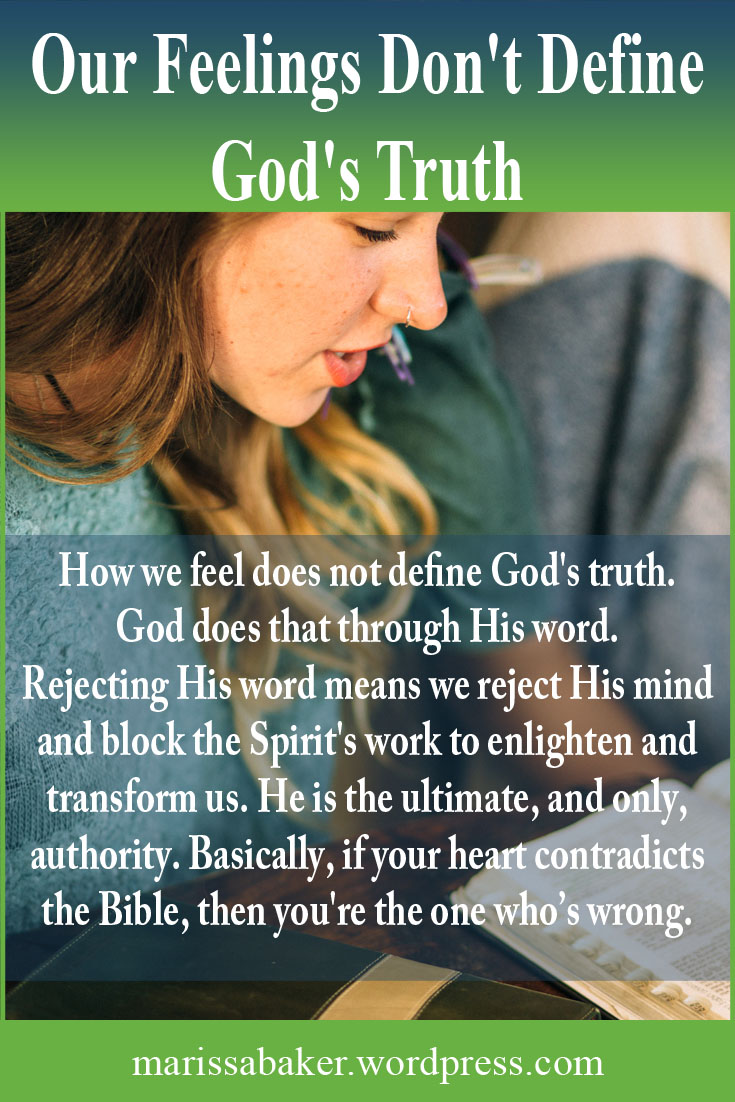
Speaking more specifically to Christians, one of the hard truths we need to learn is that something can feel okay to you yet still be a sin in God’s eyes. Just because you’re okay with something doesn’t mean God is. And, on the flip side, your dislike of something doesn’t make it a sin. In short, how we feel does not define God’s truth.
God defines truth. Those truths are contained in His word (John 17:17), His law (Ps. 119:142), and His commandments (Ps. 119:151). Either you accept His standards as the basis for truth, or you’re not a Christian. You might be a decent sort of person on the whole, but you’re certainly not a follower of Christ. The Bible is our main link with God. It’s how He has revealed Himself to us. Rejecting the standards outlined in God’s word means we reject His mind and block the Spirit’s work to enlighten and transform us.
A Simple Test
Accepting an outside source as our ultimate authority doesn’t sit well with modern society. We tend to focus on individual freedom and self expression to the exclusion of objective morality. But the Bible says “Cursed is the man who trusts in man and makes flesh his strength, whose heart departs from the Lord” (Jer. 17:5). A heart following its own desires is moving away from God.
When we think of “grace” we typically throw out definitions like “unmerited favor,” “free gift,” and “unearned salvation.” And those concepts are certainly included in the meanings of the Hebrew chen (H2580) and Greek charis (G5485). Both words translated “grace” are about good things we don’t deserve being graciously given to us by God.
But we also tend to make assumptions about God’s grace that aren’t necessarily found in scripture. For example, we assume that because the favor is unearned there aren’t any expectations laid on those who accept it. We think because the gift is free it can’t be revoked, rejected, and/or lost. We project cultural and traditional assumptions onto scripture that can cloud the meaning.
Several weeks ago, a Messianic Rabbi gave what’s probably the best message I’ve ever heard on grace (click here to listen to it). My goal in this post isn’t to share his entire message, but to narrow-in on one of the points he made that really captured my attention.
Saved By Grace
The very first time we see the word “grace” in the Bible is in reference to Noah. At this time, God looks down from heaven and sees “the wickedness of man was great in the earth, and that every intent of the thoughts of his heart was only evil continually” (Gen. 6:5). For that reason, God chose to bring judgement on the earth in the form of a flood. “But Noah found grace in the eyes of the Lord” (Gen. 6:6). Read more →
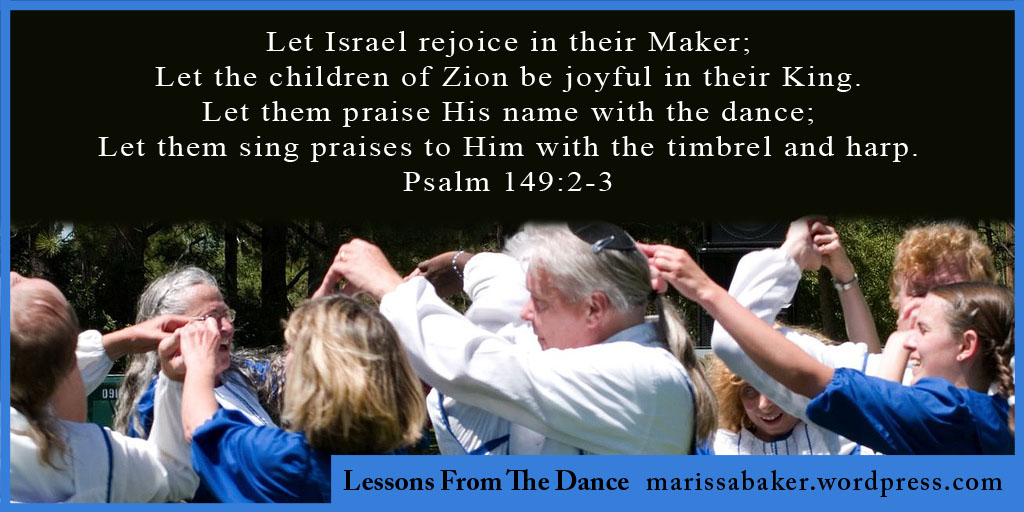
Due to wisdom tooth surgery on Thursday I’m not dancing this morning (it all went very well, praise God and thanks to a good dentist, but I’ve been advised not to risk dislodging the blood clot that’s helping it heal by any sort of vigorous exercise so soon after surgery). But I was very tempted to risk it and I’m still wishing I could have danced. (Update: 1 hour after this posted, I showed up at church and they’d changed to slower songs so I did get to dance. Hallelujah!)
For those who that last paragraph left a bit confused, I’m referring to what’s known as Davidic or Messianic dance. It’s easier to show a video than to try to describe it in words. Here’s my dance team (several years before I met them) dancing to one of our very favorite songs:
I joined a Messianic dance team early in 2015. My first introduction to the dance was about a year before that, when a dancer shared some basic lessons at a Feast of Unleavened Bread event in Michigan. I absolutely loved it, and I picked up the dances so quickly my mentors say that God has given me a gift for the dance (there’s really no other way to explain why I’m good at it — normally I’m rather clumsy).
Dancing at church, especially to open the service, seems a bit odd to many Christian denominations. But there is Biblical precedent for dance as part of worship and I’ve found the inclusion of dance (and especially being involved in the dance) is a blessing I hadn’t expected. And it has taught me some valuable lessons about dancing in unity with God on a spiritual level.
Basics First
When you’re first learning to dance, you have to start with the basic steps. We don’t just expect new students to know how to do the Hallelu dance. First, we teach them how to do the mayim, tcherkessia, coupe, and 3-point turn that make up the Hallelu step combination. As they learn the basic steps, we start putting the steps together into patterns to match the different songs. And we keep going over and over those basic steps for the first couple months after new dancers join because they’re the basis for every dance we do.
It’s much the same when we first begin our Christian journey. We start out learning about the foundations of repentance and faith. We learn that we should “love the Lord your God with all your heart, with all your soul, and with all your mind” and “love your neighbor as yourself.” Then we learn how to apply those truths in every day situations.
As we grow, God deepens our understanding and adds more foundational principles like “the doctrine of baptisms, of laying on of hands, of resurrection of the dead, and of eternal judgment” (Heb. 6:1-3). Then we learn more about His expectations for those following Him, what grace truly means, how He wants us to view His commandments, and practical ways to follow Jesus with every step we take. But it all starts with the basics.
Listen To The Music
Even if you know the basic dance steps, they’re not worth much until you set them to music. Music is so much a part of the dance that our dance leader often has trouble recollecting the steps of a dance when she’s trying to walk through and teach them slowly without music. As soon as the music plays, though, it all comes back to her.
You can’t dance without listening to the music. A waltz calls for different steps than a tune in 4/4 time. In some songs, you need to wait for pauses in the music. For others, you have to be thinking two steps ahead because the music moves so fast. Often, listening to the lyrics tells you which part of the dance you’re supposed to be doing in multi-part dances.
In the same way, we have to “tune” our Christian walks to the song God plays through His scriptures. While the Bible doesn’t use the dancing analogy much, it does talk about Jesus coming “to guide our feet into the way of peace” (Luke 1:78) and of God directing the steps of good men (Psalm 37:23, 31; 119:133). We have to study His words so we know the right steps and we need to listen for the guiding of His spirit for how to apply what we learn.
Dance Together
Davidic dance isn’t a solo endeavor. We dance in circles of unity. Every dancer is responsible for knowing the steps to a given dance and how to follow the music. But there are some songs that just don’t stick in your mind as well and there are times (even when you’re no longer a beginner) that you just can’t remember what comes next.
If you can’t remember a step, you can follow one of the other dancers. You’re already watching them to keep in unity, and you know you can count on them for reminders. In turn, they should know they can count on you to know what you’re doing for when they can’t remember a step. We help keep each other on track.
Walking as Christians is made easier by fellowship with other believers. While God will certainly work with people who are isolated from other Christians, His intention is for the body of believers to come together and grow as we build each other up and learn to use our gifts (1 Cor. 12:1-31). We’re on this walk of faith together and we have the opportunity to help each other find the right steps to stay in unity with God.
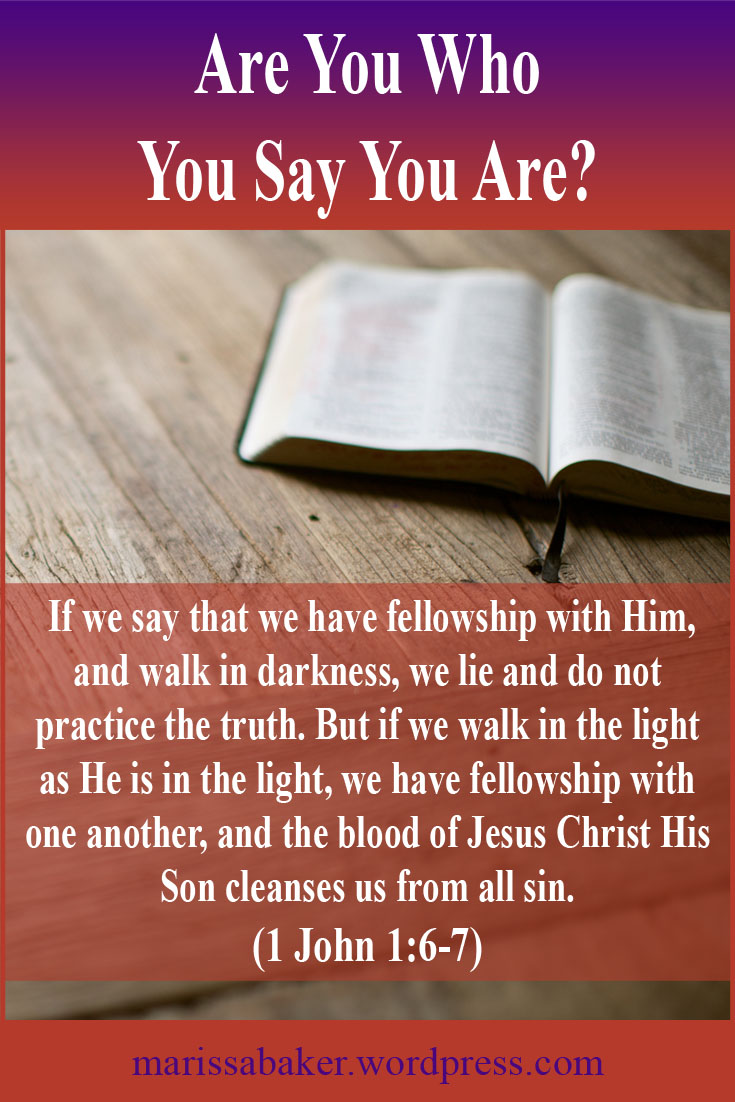
If we say we’re followers of Jesus Christ, there are certain things we should, nay, we must do. As we talked about last week, there are observable markers of being someone who follows God — things we should be able to notice when we examine ourselves. Those things are inseparably connected with Christ’s presence in us.
There is plenty of freedom within the perfect law of liberty, but there are absolutes as well. God is highly personal and He’ll work with you on a personal level. That does not, however, mean He has different requirements for how different people follow and worship Him. He’s also a just God who is not inconsistent in His commandments, laws, and expectations. We might have different understandings of what God expects, but as we grow toward God we should also be growing in unity as we understand His mind more fully. There isn’t one law for you and one law for me. There’s just God telling us all to walk in His ways.
Love + Obedience + Indwelling
John begins both his gospel and his first epistle with a focus on Jesus Christ’s role as the Word of life. Then, in the epistle, he focuses on how we can have fellowship with this great Being and His Father. We must “walk in the light as He is in the light,” “confess our sins” so He’ll forgive us, and then keep His commandments (1 John 1:5-2:3). We cannot claim to know God unless we’ve keeping His word and walking as Jesus walked (1 John 2:4-6). God wants us to be part of His family and that means becoming like Him (1 John 3:1-2). Read more →
We’re each getting closer to the time when we’ll stand face-to-face with God. At that time, “each of us shall give account of himself to God” for the way we lived our lives, including “every idle word” spoken (Rom. 14:12; Matt. 12:36-37). How we conduct ourselves now matters to God.
If we’re in His family, then our time of judgement has already begun (1 Pet. 4:17). God is determining right now who will end up in His family by calling whom He wills, choosing those who respond, and then watching to see who remains faithful (Rev. 17:14). His mercy is unfailing and God is ever ready to forgive those who repent, but the simple truth is that He won’t have the sort of people in his family who chose to reject His teachings on how to live our lives. When God tells us how to live, it actually matters to Him that we listen.
Be a Growing Person
In his second letter, Peter talks about Christ’s approaching return and the day of judgement. He asks an important question: “What manner of persons ought you to be in holy conduct and godliness”? (2 Pet. 3:11). Even in the question, we start to get an answer. The type of person we should be involves holy conduct patterned after God’s example. Peter goes on, counseling, “be diligent to be found by Him in peace, without spot and blameless” (2 Pet. 3:14). Read more →
Imagine you’ve noticed something wrong and you go to the doctor. They run their tests and scans, take their samples, and sit you down with the results. You were right — you’re sick and quite probably dying without prompt attention. But instead of offering a cure, the doctor says he can alter the test results. You’ll still be dying, but you can pretend you’re not and tell all your friends the doctor says you’re fine.
Sounds ridiculous, right? I’m not sure any of us would take that deal. But that’s what churches are doing on a spiritual level if they hold out the idea of salvation without repentance.
Our Western society is uncomfortable with objective morality. It’s unpopular to think certain actions are inherently wrong. We don’t want to acknowledge a higher power with the right to determine what is and is not sin. Yet that’s exactly what you must do when you become a Christian. My decision to follow Jesus means I’m not the ultimate authority in my life. He and Our Father are.
Repenting From What?
When Jesus began preaching, He said, “The time is fulfilled, and the kingdom of God is at hand. Repent, and believe in the gospel” (Mark 1:15). It has become popular in some Christian churches to say God’s commands aren’t relevant today. If you accept Jesus as your personal savior that’s it — you’re saved. There’s a measure of truth to this last statement, for God sent Jesus “that whoever believes in Him should not perish but have everlasting life” (John 3:16). But Jesus also commanded repentance and that begs the question, “What are we repenting of?” Read more →





 Like An Anchor