Rooted In The Lord

After finishing last week’s Bible study, I opened my Bible at random and found myself in Jeremiah 17. Usually when I’m in this section of scripture it’s to quote verse 5 — “Cursed is the man who trusts in man” — or verses 9 and 10 — “The heart is deceitful above all things, and desperately wicked.” But this time a different verse caught my eye.

Nestled in between these warnings against trusting in ourselves or other people is a lovely picture of what it looks like to trust in God.

Blessed is the man who trusts in the Lord, and whose hope is the Lord. For he shall be like a tree planted by the waters, which spreads out its roots by the river, and will not fear when heat comes; but its leaf will be green, and will not be anxious in the year of drought, nor will cease from yielding fruit. (Jer. 17:7-8)

This word translated “blessed” is baruch, the same word I wrote about in connection with the phrase “Baruch Hashem” — “bless the name [of the Lord].” In this context, it means to receive a blessing from God. The nature of this blessing is explained in verse 8, but first there are two prerequisites.

Trust and Hope

The verses we’re talking about start out by saying, “Blessed is the man who trusts in the Lord.” The Psalms also have quite a lot to say about this idea —  both the necessity of trusting in God and the fact that He doesn’t disappoint those who do trust in Him.

Those who trust in the Lord are like Mount Zion, which cannot be moved, but abides forever. As the mountains surround Jerusalem, so the Lord surrounds His people from this time forth and forever. (Ps. 125:1-2)

This verse uses the example of Jerusalem to show how God protects His people. But Jerusalem has been a war-zone off-and-on for hundreds of years — what sort of protection is this?

God does not promise to shield us from every harm. We are in a battle, and “we do not wrestle against flesh and blood, but against principalities, against powers, against the rulers of the darkness of this age, against spiritual hosts of wickedness in the heavenly places.” Trusting in God doesn’t mean we won’t have to battle. It means we have a hope of winning the battle using His strength and His armor (Eph. 6:10-18).

Speaking of hope, the next part of the verse in Jeremiah reads, “and whose hope is the Lord” (Jer. 17:7). Hope is an integral part of being a Christian. It’s listed with faith and love in 1 Corinthians 13:13. It’s connected with Christ’s indweling presence in Colossians 1:27. Hebrews 6:18-19 calls our hope “an anchor of the soul, both sure and steadfast.”

For we were saved in this hope, but hope that is seen is not hope; for why does one still hope for what he sees? But if we hope for what we do not see, we eagerly wait for it with perseverance. (Rom. 8:24-25)

Hope’s even a part of our salvation process, described here in Romans much the same way faith is described in Hebrews 11:1. “Hope” in the Greek is elpis, (G1680), and it means “desire of some good will with expectation of attaining it.” That definition brings us right back to the idea of trust. We trust in God because we believe and have hope that He will be with us, and our sure expectation of that hope increases our trust.

Planted by the Water

Even before getting to a more thorough description of this person who is blessed by God, the words “trust” and “hope” are already giving us an idea of someone being firmly attached to God. They imply a focus on God, and an act of clinging fast to Him. Fittingly, the next phrase is, “he shall be like a tree planted by the waters.”

First, note that this person is “planted,” not growing there naturally or by chance. All of us who hope and trust in God have been personally selected by Him and purposefully “planted” into His family beside “the waters.” This isn’t physical water we’re talking about, any more than it’s a literal tree. This is what Jesus described as “living water” (John 4:10).

Jesus answered and said to her, “Whoever drinks of this water will thirst again, but whoever drinks of the water that I shall give him will never thirst. But the water that I shall give him will become in him a fountain of water springing up into everlasting life.” (John 4:13-14)

God is the source of the living, life-giving water that we need to flourish where He has planted us. If we forsake “the fountain of living waters,” we end up in a state opposite that of blessedness (Jer. 2:13). But if we stay close to Him, we will grow and thrive.

For I will pour water on him who is thirsty, and floods on the dry ground; I will pour My Spirit on your descendants, and My blessing on your offspring; they will spring up among the grass like willows by the watercourses. (Is. 44:3-4)

Willow trees have strong, fast-growing root systems that love water. When planted by a water source, the roots grow so quickly and densely that they actually help hold the banks of a stream or pond in place. That’s how firmly we must be attached to the source of Living Water. That’s also the next thing mentioned in Jeremiah, as the blessed person is compared to a tree that “spreads out its roots by the river” (Jer. 17:8).

As you therefore have received Christ Jesus the Lord, so walk in Him,  rooted and built up in Him and established in the faith, as you have been taught, abounding in it with thanksgiving. (Col. 2:6-7)

When Heat Comes

This tree, firmly rooted by the Living Water, is next described as having no “fear when heat comes, but its leaf will be green.” When I think of “heat” in the Bible, my mind usually goes to the idea of fiery trials. We’re going through a refining process that involves heating us up and seeing how we react so bad things can be purged away and we can become pure.

Now if anyone builds on this foundation with gold, silver, precious stones, wood, hay, straw, each one’s work will become clear; for the Day will declare it, because it will be revealed by fire; and the fire will test each one’s work, of what sort it is. (1 Cor. 3:12-13)

Walking through metaphorical fire is an inescapable aspect of being Christian (1 Pet. 4:12-13). If we’re firmly founded — or rooted — on Jesus Christ, though, passing through fire is not disastrous for us. In fact, it can draw us closer to Him and refine us to be more like He is. He doesn’t just abandon us “when heat comes.” He says, “Fear not, for I have redeemed you … when you walk through the fire, you shall not be burned, nor shall the flame scorch you” (Is. 43:1, 2). Like the bush God spoke to Moses in, we can be in the midst of fire and still be green and flourishing because the Lord is in us (Ex. 3:2).

Yielding Fruit

The phrase “will not be anxious in the year of drought” had me a bit puzzled (Jer. 17:8). Drought means a lack of water, which in this analogy we’ve been describing as the Holy Spirit poured out through Jesus Christ. So, does the mention of “drought” mean that something is going to happen that makes God’s Spirit generally unavailable, but will not affect those who are already firmly rooted in God?

“Behold, the days are coming,” says the Lord God, “That I will send a famine on the land, not a famine of bread, nor a thirst for water, but of hearing the words of the Lord. They shall wander from sea to sea, and from north to east; they shall run to and fro, seeking the word of the Lord, but shall not find it. “In that day the fair virgins and strong young men shall faint from thirst.” (Amos 8:11-13)

This is the first scripture that finally came to mind for this idea of drought. In the United States, we’re used to living in a country where we can pick up a Bible in most stores, search translations and commentary online, and find a plethora of Christian churches to visit. But that hasn’t been the norm for most of history, or most of the world, and it might not stay that way here. And even if the words are available, they won’t make any sense unless God gives His Spirit of understanding. That’s why we need to seize every chance we have to draw closer to God, and be tapped into the source of Living Water.

The Lord will guide you continually, and satisfy your soul in drought, and strengthen your bones; you shall be like a watered garden, and like a spring of water, whose waters do not fail. (Is. 58:11)

And when this happens, we can not only be unworried by drought, but also not “cease from yielding fruit” (Jer. 17:7-8). Being fruitful is the subject of the opening verses in John 15. Here, Jesus describes Himself as “the true vine,” and tells us the only way to bear fruit is to be connected to Him.

I am the true vine, and My Father is the vinedresser. Every branch in Me that does not bear fruit He takes away; and every branch that bears fruit He prunes, that it may bear more fruit …

Abide in Me, and I in you. As the branch cannot bear fruit of itself, unless it abides in the vine, neither can you, unless you abide in Me. “I am the vine, you are the branches. He who abides in Me, and I in him, bears much fruit; for without Me you can do nothing. …

By this My Father is glorified, that you bear much fruit; so you will be My disciples. (John 15:1-2, 4-5, 7)

If we’re securely attached to Christ, our lives will yield fruit that reflects that relationship. We’ll be demonstrating the fruits of the Spirit (Gal. 5:22-23), and walking “in all goodness, righteousness, and truth” (Eph. 5:9). And then not only will we be blessed, but we’ll be a blessing to others. Not only will we have access to living water, but rivers of God’s Spirit will flow out from us as well (John 7:37-38). Blessings from God affect us wondrously, but they don’t stop with us — they’re designed to overflow us and spill out to bless others, and show that we are indeed Christ’s disciples.

 

Low Self-Esteem vs. Esteeming Self Less

One of the foundational things we have to recognize when coming to Christ is that we’re not worthy. The Bible makes it clear that the human “heart is deceitful above all things, and desperately wicked” (Jer. 17:9). We can’t earn salvation, and we have not done anything to deserve God’s love. This should fill us with humility as we enter a relationship with God, knowing He loves us even through we are nothing without Him.

But I know far too many people who get stuck on the “I am undeserving” part of this truth. Instead of finding our identity in Jesus Christ  and defining ourselves by our relationship with Him (“I’m a Christian”), we can be tempted to find our identity in the fact that we don’t deserve His forgiveness and love (“I’m worthless”). Maybe you’ve been told your whole life that “you’re not good enough,” and you’ve carried that into your relationship with God. Maybe you’re a perfectionist who’s stopped using your attention to detail to get things done right and started letting it rule your life so you feel useless unless you’re constantly giving 110%. Or maybe your self-lies are more like mine — that I’m not brave, strong, or clever enough to be of use to God.

Is this what God wants when He asks for humility? Do His instructions to think less of ourselves than of others mean He wants us to have low self-esteem? What does the Bible say about our value?

Marvelous Love

But God demonstrates His own love toward us, in that while we were still sinners, Christ died for us. (Rom. 5:8)

Low Self-Esteem vs. Esteeming Self Less | marissabaker.wordpress.comEven when we were sinners — working at cross-purposes to God — He loved us enough to die for us. God is love, and there is no greater example of this than the sacrifice of Jesus Christ to transform broken people who had done nothing to deserve His attention into something special.

Greater love has no one than this, than to lay down one’s life for his friends. You are My friends if you do whatever I command you. No longer do I call you servants, for a servant does not know what his master is doing; but I have called you friends, for all things that I heard from My Father I have made known to you. (John 15:13-15)

Look how Jesus describes His followers, as friends so valued He was willing to die for and share His thoughts with them. And those who follow Christ are not only His friends, but His family as well, and “He is not ashamed to call them brethren” (Heb. 2:11). Think of that. The One who knows you best — all your sins, weakness, foibles, and most secret thoughts — is not ashamed to say you are His family.

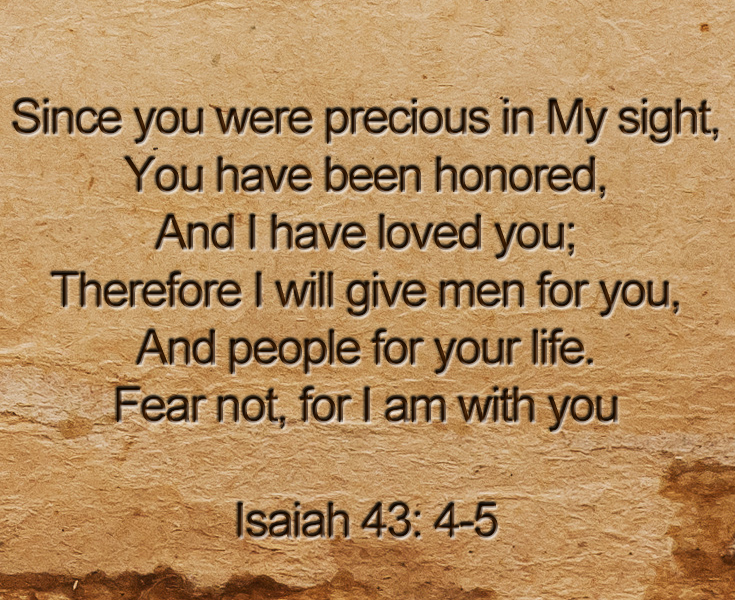
But now, thus says the Lord, who created you, O Jacob, and He who formed you, O Israel: “Fear not, for I have redeemed you; I have called you by your name; you are Mine.  … For I am the Lord your God, the Holy One of Israel, your Savior … since you were precious in My sight, you have been honored, and I have loved you; therefore I will give men for you, and people for your life. (Is. 43:1, 3, 4)

These early verses of Isaiah 43 are some of my favorite scriptures. I read them when I’m feeling lonely or doubtful of my worth in God’s eyes. Isn’t it a lovely reassurance of how highly God values His people? When God looks at you, He doesn’t think, “that person is worthless,” He thinks, “that person belongs to Me, and I love them.”

What We Are

So far, we’ve seen God call us precious, beloved, family, and friends. When we look a bit deeper into how He interacts with the church for today, we see even more evidence of how highly He values us.

Do you not know that you are the temple of God and that the Spirit of God dwells in you? If anyone defiles the temple of God, God will destroy him. For the temple of God is holy, which temple you are. (1 Cor. 3:16-17)

God must value us highly to call us “holy,” dwell inside us, and to destroy those who “defile” us. This part of the verse can be read as a warning to individual parts of the temple that we not become corrupt, and also as a warning to those who would set out to “subvert or corrupt” us as God’s temple. In that sense, it’s similar to God’s Isaiah 43 promise to protect and defend us. God is saying, “They are mine. I prize them highly, and I will fight for them.”

Or do you not know that your body is the temple of the Holy Spirit who is in you, whom you have from God, and you are not your own? For you were bought at a price; therefore glorify God in your body and in your spirit, which are God’s. (1 Cor. 6:19-20)

Jesus Christ thought we were worth paying the price of His life to redeem. In the words of Matthew Henry, “A spouse so dearly bought and paid for could not but be dearly loved. Such a price being given for her, a high value must needs be put upon her accordingly” (commentary on Song 4:8-14). Jesus did not redeem us so we could be worthless, weak, uninteresting, or whatever it is we call ourselves. He redeemed us to adopt as His siblings (Rom. 8:15-17), marry as His bride (2 Cor. 11:2), and give us a share in His glory (John 17:22; 1 John 3:2).

A Proper Attitude

So, what attitude are we supposed to have about ourselves? One thing we absolutely cannot do is allow the knowledge of how much God loves us lead to an idea that we’re something amazing in and of ourselves. God hates pride, arrogance, and vanity. When He says He values us highly, that’s not the reaction He’s looking for in return. Rather, the Lord requires us “to do justly, to love mercy, and to walk humbly with your God” (Mic. 6:8)

Low Self-Esteem vs. Esteeming Self Less | marissabaker.wordpress.comBut we can’t go to the opposite extreme either. If we tell ourselves we have no value, there’s a danger of becoming paralyzed by fear of doing something wrong and attracting attention to our own worthlessness. But that kind of fear has no place in a person where God’s love dwells (1 John 4:18).

Let nothing be done through selfish ambition or conceit, but in lowliness of mind let each esteem others better than himself. Let each of you look out not only for his own interests, but also for the interests of others. Let this mind be in you which was also in Christ Jesus (Phil. 2:3-5)

This is the key — having the mind of Christ. His was the most valuable human life ever, and yet He chose to use His greatness to serve others, first by giving up the glory He had before the world existed, then in how He lived His life, then by dying for us, and now by living as our High Priest and the Head over all things to the church. His every act on this earth was one of love and service and esteeming the needs of others as more important than His own. That’s the example we should be following.

When we find our identity in Christ and believe we are precious in God’s sight, we can be bold, courageous, and strong in Him (Heb. 4:16; John 16:33; Eph. 6:10). We are also humble, knowing the things that make us valuable come from our relationship with God and not from ourselves. And we esteem our brethren higher than ourselves, because they are also temples of God and we are called to serve and love them as Christ serves and loves us.

Glory Shared With Us

One of the oft-repeated words in Christ’s prayer recorded in John 17 is “glorify” or “glory.” The very first words He says  are, “Father, the hour has come. Glorify Your Son, that Your Son also may glorify You” (John 17:1).  A few verses later, He adds,

I have glorified You on the earth. I have finished the work which You have given Me to do. And now, O Father, glorify Me together with Yourself, with the glory which I had with You before the world was. (John 17:4-5)

The subject of glorification starts becoming more personal to us a bit later, when Jesus says of His people, “I am glorified in them” (John 17:10). If having Christ glorified in you sounds spectacular, just wait until we read verse 22:

And the glory which You gave Me I have given them, that they may be one just as We are one (John 17:22)

At this point, we’re starting to see something incredible, something glorious, is being discussed here in John 17. We see Jesus and the Father glorifying each other, and Jesus sharing His glory with us. That last part is the one which most intrigues me. What does it mean?

δόξα

The word used for “glorify” is doxazo (G1392), which is derived from the word translated “glory.” That word is doxa (G1391). Zodhiates says it “can mean appearance, reputation, glory. It basically refers to the recognition belonging to a person, honor, renown.” It can also denote the “appearance, form, aspect” of someone, as in “God’s image and character. … It comprises all that God will appear to be in His final revelation to us.”

As Zodhates shifts his discussion to a Christian’s future glory, he says that doxa does not refer only to an outwardly glorious appearance, but to a glory within that makes the outside splendid. Doxa‘s derivative, doxazo, means “to glorify, recognize, honor, praise.” Most of Zodniates’ definition for this word in my study Bible is devoted to it’s use in John’s writings.

In the writings of John, the doxa of God is the revelation and manifestation of all that He has and is. It is His revelation in which He manifests all the goodness that He is (John 12:28). Since Christ made this manifest, He is said to glorify the Father (John 17:1, 4); or the Father is glorified in Him (John 13:31; 14:13). When Christ is said to be glorified, it means simply that His innate glory is brought to light, made manifest (John 7:39; 11:4; 12:16, 23; 13:31; 17:1, 5).

This definition explains several verses we quoted in John 17. Jesus glorified His Father by teaching people about the Father’s glory and revealing His character. God the Father glorified His Son by exalting Him and making His glory manifest in roles like High Priest, Good Shepherd, and Head of All Things to the Church. Their mutual glorification is about revealing Who and what They are to people.

Glory and God’s People

John 17:10, where Christ says, “all Mine are Yours, and Yours are Mine, and I am glorified in them,” shows we are to play a role in manifesting Christ’s glory to the world. If Jesus is being glorified in us, then our lives will be testaments to the honor and praise that belong to Him.

And whatever you do in word or deed, do all in the name of the Lord Jesus, giving thanks to God the Father through Him. (Col. 3:17)

Glory Shared With Us | marissabaker.wordpress.comWe talked about this idea two weeks ago, in the context of “whatever you do, do all to the glory of God” (1 Cor. 10:31). Our inside character, which comes out in our words and actions, should be proclaiming God’s glory, and attracting honor to Him.

The most intriguing verse, however, (to me at least) is when Christ says He’s given us His glory in verse 22. Let’s read some of the verses leading up to that.

I do not pray for these alone, but also for those who will believe in Me through their word; that they all may be one, as You, Father, are in Me, and I in You; that they also may be one in Us, that the world may believe that You sent Me. (John 17:20-21)

Jesus makes it clear that He’s talking about future believers — including us — as well as His disciples then. He emphasizes unity among the believers, and between us and God.

I, therefore, the prisoner of the Lord, beseech you to walk worthy of the calling with which you were called, with all lowliness and gentleness, with longsuffering, bearing with one another in love, endeavoring to keep the unity of the Spirit in the bond of peace. (Eph. 4:1-3)

Paul connects unity with walking in way that properly fits with our calling from God, and Jesus connects it with showing the world that He was sent by the Father. Much the same way, having love shows that we’re Christ’s disciples (John 13:35). It’s starting to sound like the ideas of manifesting, recognizing and showing forth that are carried with the word “glorify” are connected to this idea as well. And now we come to verse 22:

And the glory which You gave Me I have given them, that they may be one just as We are one: I in them, and You in Me; that they may be made perfect in one, and that the world may know that You have sent Me, and have loved them as You have loved Me. Father, I desire that they also whom You gave Me may be with Me where I am, that they may behold My glory which You have given Me; for You loved Me before the foundation of the world. (John 17:22-24)

Christ’s Glory

Jesus Christ has given us His glory? It seems astonishing, but that’s what He says. based on the definition of glory, this tells us that Jesus is giving us His form and appearance, His honor, reputation and character. (Just to clarify, I mean “give” in the sense of “share” rather than passing it along).

This just boggles my mind. To quote King David, “What is man that You are mindful of him?” (Ps 8:4). We don’t deserve God’s attention, let along a share in His Son’s glory. Yet that is what He is doing in, for, and to us.

Let this mind be in you which was also in Christ Jesus (Phil. 2:5)

And He said to me, “My grace is sufficient for you, for My strength is made perfect in weakness.” (1 Cor. 12:)

My little children, for whom I labor in birth again until Christ is formed in you (Gal. 4:19)

Christ’s mind in us … His strength in our weakness … His character formed in us … could these be other ways to express the same thing that’s going on when He says, “the glory which You gave Me I have given them”?

the mystery which has been hidden from ages and from generations, but now has been revealed to His saints. To them God willed to make known what are the riches of the glory of this mystery among the Gentiles: which is Christ in you, the hope of glory. (Col. 1:26-27)

Christ in us gives us present glory by association with His glory, and He is our hope of future glory where “we shall be like Him, for we shall see Him as He is” (1 John 3:2). I said earlier that glorification in John 17 is connected with revealing Who and what the Father and Jesus Christ are to the world. Their work to glorify us is connected with this same goal.

We are called “the light of the world,” and told “Let your light so shine before men, that they may see your good works and glorify your Father in heaven” (Matt. 5:14-16). As we press on toward future glory, let’s also be mindful of the glory we’ve been given now as Christ’s own special people, to glorify Him and the Father by how we live.

Glory Shared With Us | marissabaker.wordpress.com

Does God Allow Trials We Can’t Endure?

I recently read two separate articles that said this verse is inaccurate or at least grossly misinterpreted: “God will not allow you to be tempted beyond what you are can endure.” The example used was that Christians who commit suicide were obviously given a trial they couldn’t bear on their own, and they needed outside help. But does needing help from other people really invalidate this scripture, or is there something else going on?

Faithful to Help

The phrase quoted above is just a piece of a sentence in 1 Corinthians. Let’s look at the whole verse to get some context.

No temptation has overtaken you except such as is common to man; but God is faithful, who will not allow you to be tempted beyond what you are able, but with the temptation will also make the way of escape, that you may be able to bear it. (1 Cor. 10:13)

First we see the idea that no matter how alone or oppressed we feel, we’re not being given trials greater than that which is common to man — someone else, somewhere, has gone through something similar. This includes other human beings, of course, but it also includes Jesus Christ.

For we do not have a High Priest who cannot sympathize with our weaknesses, but was in all points tempted as we are, yet without sin. Let us therefore come boldly to the throne of grace, that we may obtain mercy and find grace to help in time of need. (Heb. 4:15-16)

Not only are trials like ours held in common with other people, but our Lord and Savior went through similar temptation and sufferings. One of the main reasons He did that was so that He could understand what we’re going through and offer His aid. As it says in 1 Cor. 10:13, “God is faithful,” and He will do that for us.

Secondly, we see that the promise which says God won’t let us be tempted beyond our endurance comes with an explanation for how He will do that. It’s not just that God protects us from trials unless we can get through them by gritting out teeth and pushing forward on our own. He “will also make the way of escape, that you may be able to bear it.”

Needing Others

This “way of escape” is intriguing. The wording implies intervention by God to create “escapes” for us in our trials, and action necessary on our part to take the offered escape. I imagine this sort of thing will look very different depending on the type of trial and who is going through the trial. Sometimes it may be what we think of as a literal escape, with the trial or temptation coming to an end. Or it could be that something changes to make the trial bearable. I’m sure we’ve all known someone with a long standing trial (like illness or chronic pain) who still has peace and joy in their lives.

and the peace of God, which surpasses all understanding, will guard your hearts and minds through Christ Jesus. …And my God shall supply all your need according to His riches in glory by Christ Jesus. (Phil. 4:7, 19)

Do we trust God to truly do this, to give us every thing we need in every circumstance? People will say something like, “well, that’s not true. You can’t just go through life with an ‘I don’t need anything but God” attitude. We need other people.” True to a certain extent, but where do you think those other people come from?

Does God Allow Trials We Can't Endure? marissabaker.wordpress.comGood friends — the people you can really talk with about anything and go to when you need help — are rare. We call them a blessing. So when we have people like this in our lives, I’d say that comes under God supplying all our needs, including our need for companionship. Perhaps sometimes the “way of escape” so we’re able to bear a trial comes in the form of another person. It could be a friend, or someone you barely know. Maybe it’s a therapist or a minister to offer counsel. Perhaps it’s a brutally honest sibling to knock some sense into you (hopefully not literally).

I’ve been on the receiving end of this from someone I’d only just met. I was at a church-sponsored weekend and feeling particularly vulnerable emotionally. I thought I was doing a pretty good job of hiding my heartache, but apparently not, because  a girl I’d been introduced to barley two days ago sought me out the last evening to ask what was wrong. The story spilled out and I started crying. Then she prayed aloud for me. It was incredible — I felt God’s Spirit present in a way unlike I’d ever felt before. That wasn’t the conclusion of that trial, but it did mark the escape for climbing out of it and back towards God.

When God sends us someone to help us through a trial, we should be careful not to push them away. But this works from both sides. We can also be the person who is provided by God to offer help.

Being a Blessing

Have you ever considered that? When we’re talking about trials, I think we’re more often inclined to think of how someone else can help us than how we can help other people. But if we expect that we’re going to benefit from the comfort and help of other believers, we should also expect that God wants to use us to help them.

Let nothing be done through selfish ambition or conceit, but in lowliness of mind let each esteem others better than himself. Let each of you look out not only for his own interests, but also for the interests of others. (Phil. 2:3-4)

We’re supposed to be looking after our brethren, building them up, making sure they’re okay, and being sure to offer real encouragement and help rather than empty platitudes when they need aid.

If a brother or sister is naked and destitute of daily food, and one of you says to them, “Depart in peace, be warmed and filled,” but you do not give them the things which are needed for the body, what does it profit? (James 2:15-16)

It is similarly un-helpful (and can even be harmful) to just slap a scripture on someone’s emotional wounds and walk away. Saying, “God will supply all your needs”  or “don’t worry, He won’t give you anything you can’t endure” isn’t any help unless we’re willing to be used by God to supply those needs by listening to them, praying with and for them, and keeping in touch with them.

Example of Love

A new commandment I give to you, that you love one another; as I have loved you, that you also love one another. By this all will know that you are My disciples, if you have love for one another.” (John 13:34-35)

Love – agape – within the church is the sign that we are followers of Christ. That’s how important it is to have self-sacrificing love that seeks the good of others. Romans 12:1 talks of us presenting ourselves as “a living sacrifice.” We can look at the life of Jesus Christ to see a perfect example of what it means to live as a sacrifice in service to God. Have you ever noticed how much of His ministry involved helping other people? Pretty much all of it. And now He tells us that we and every one of our fellow believers are highly valued as His own temple and body “which He purchased with His own blood” (Acts 20:28).

Does God Allow Trials We Can't Endure? marissabaker.wordpress.comIf we’re going to claim that level of importance in God’s eyes, we must see others in the same light. Do we treat other people as if Christ is living in them? and we have to do this for our brethren whether or not we think it looks like Christ is in them. If we’re being honest, we know that we’ve also been seen doing things that are not Christ-like. We must be forgiving toward others if we want to be forgiven (Matt 6:12, 14-15). Really, we’re left without any good excuses for not helping others when we see them in need. If we’re following Jesus Christ, we will be loving and serving other people as much as possible. It’s as simple (and as complicated) as that.

So to answer the question that is the title of this post, I believe God does not let us go through trials or temptations that it is impossible for us to bear. They might not turn out the way we expect them to, but if we stay close to God we will turn out the way He expects us to. He will send us escapes and aid, and will open our eyes to recognize His help. And sometimes we’ll have the chance to follow Jesus’ example and be used by God to help another person.

Save

Choosing For His Glory

Last week, we talked about living our whole lives in the context of praising God. This study is directly related to that, and I want to begin by quoting a scripture that I almost referenced in that post but decided to save until today.

Therefore, whether you eat or drink, or whatever you do, do all to the glory of God. (1 Cor. 10:31)

I don’t know about you, but I know that right now my life isn’t at the point where I can say that every single thing I do is done with the intention of bringing God glory. But that is part of our goal while we are here on this earth. Every aspect of our lives should be contextualized by our relationships with God and Jesus.blog post "Choosing God's Glory" by marissabaker.wordpress.com

Every Single Thing

The idea of every part of our lives being lived for God’s glory can be a daunting prospect, as this level of self-control seems almost impossible to attain. That overwhelmed feeling is usually how I react to reading this verse:

Casting down arguments and every high thing that exalts itself against the knowledge of God, bringing every thought into captivity to the obedience of Christ (2 Cor. 10:5)

“Every thought”? That’s a tall order. It’s a bit less daunting, though, when we remember Jesus Christ’s words to the disciples in Matthew 19:26 — “With men this is impossible, but with God all things are possible.” Self-control is also one of the fruits of the Holy Spirit, so we know that it is attainable with God’s help (Gal. 5:22).

I also suspect that, while there may be some days when we literally have to battle every thought, that it gets easier. The closer we grow to God, the more automatic it will be to think and act like Him. Christ Himself is being formed in us (Gal. 4:19), along with His mind and thought processes (Phil. 2:5). Letting, inviting, asking Him to dwell in us is a step toward living all our lives for God’s glory (John 15:4, 8).

Let the word of Christ dwell in you richly in all wisdom, teaching and admonishing one another in psalms and hymns and spiritual songs, singing with grace in your hearts to the Lord. And whatever you do in word or deed, do all in the name of the Lord Jesus, giving thanks to God the Father through Him. (Col. 3:16-17)

You Are Dead

If we go back to the beginning of Colossians 3 to get context for the verse we just quoted, we find an interesting introduction to a passage that talks about putting to death our sins (verse 5) and putting on the new man who looks like Christ (verse 10).

If then you were raised with Christ, seek those things which are above, where Christ is, sitting at the right hand of God. Set your mind on things above, not on things on the earth. For you died, and your life is hidden with Christ in God. (Col. 3:1-3)

If we really are living as if we are dead to the world and our only life is wrapped up in Christ, of course we’ll be living for His glory.

How shall we who died to sin live any longer in it? Or do you not know that as many of us as were baptized into Christ Jesus were baptized into His death? Therefore we were buried with Him through baptism into death, that just as Christ was raised from the dead by the glory of the Father, even so we also should walk in newness of life. (Rom. 6:2-4)

Earlier, I suggested that we should be growing to the point where reacting in the same way that Christ would respond is automatic. If we struggle with anger, for example, it might still be our first impulse but we should be becoming more practiced at replacing it with love. C.S. Lewis had this to say about what first impulses can tell us about ourselves.

Surely what a man does when he is taken off his guard is the best evidence for what sort of a man he is? Surely what pops out before the man has time to put on a disguise is the truth? If there are rats in a cellar you are most likely to see them if you go in very suddenly. But the suddenness does not create the rats: it only prevents them from hiding. In the same way the suddenness of the provocation does not make me an ill-tempered man; it only shows me what an ill-tempered man I am. (C.S. Lewis, Mere Christianity)

As we mature as Christians we should be quicker to recognize our tendencies to sin, and with Christ in us we now have the power to resist temptation before it becomes sin. It is imperative that we be aware of and active in this process. We cannot passively overcome sin.

Therefore do not let sin reign in your mortal body, that you should obey it in its lusts. And do not present your members as instruments of unrighteousness to sin, but present yourselves to God as being alive from the dead, and your members as instruments of righteousness to God. (Rom. 6:12-13)

As human beings, we can’t be without a “master” — we’re either serving sin, or we’re serving God (Rom. 6:16-23). If we’re serving God in “obedience leading to righteousness,” then we’re also making conscious choices to not obey, or yield to, sin.

Bought and Redeemed

When Jesus Christ died for us, He ransomed us free from servitude to sin. We belong to Him, not to ourselves. Acts 20:28 describes the Church as “purchased with His own blood.” Peter says that false teachers who spread “destructive heresies” are “even denying the Lord who bought them” (2 Pet. 2:1). It is important that we recognize, rather than deny, this fact. blog post "Choosing God's Glory" by marissabaker.wordpress.com

Jesus’ incredible sacrifice cleansed us so that we could “serve the living God” (Heb. 9:14). He made a relationship possible between us and our creator. He established a new covenant “on better promises” that offers us eternal life as part of God’s family (Heb. 8:6). We don’t belong to this world or to Satan or to ourselves any more — we have been ransomed away from slavery to sin and to our own individual weaknesses. We now belong to the One who ransomed us, as His servants, His friends, His bride, His family, His body, His church, and His temple.

Do you not know that your bodies are members of Christ? … Or do you not know that your body is the temple of the Holy Spirit who is in you, whom you have from God, and you are not your own? For you were bought at a price; therefore glorify God in your body and in your spirit, which are God’s. (1 Cor. 6:15, 19-20)

Our physical bodies and our spirits — the intangible part of that makes me “me” and can communicate with God’s Spirit — belong to God. This fact does not, however, mean that we don’t have free will. Even within the choice to follow God (and it is a choice), there are many other choices we’ll have to make. I’ve been talking about this in relation to careers with a new friend I met through this blog. Our latest e-mails brought up the idea that God doesn’t care so much what you do to earn a living (with, you know, the obvious exceptions of earning money in a way contrary to the laws of God and man) as He cares how you conduct yourself in your work and whether or not you’re growing close to Him.

We Give You Glory

Returning to 1 Corinthians 10:31, which opened this post, the context is whether or not Christians could eat meat that was sacrificed to idols. That’s not really an issue for us today, but there’s still a lesson we can learn. Paul says it’s okay to eat or not eat this kind of meat, so long as the way you conduct yourself glorifies God.

Whatsoever is sold in the shambles, that eat, asking no question for conscience sake: for the earth is the Lord’s, and the fulness thereof. If any of them that believe not bid you to a feast, and ye be disposed to go; whatsoever is set before you, eat, asking no question for conscience sake. But if anyone says to you, “This was offered to idols,” do not eat it for the sake of the one who told you, and for conscience’ sake; for “the earth is the Lord’s, and all its fullness.” “Conscience,” I say, not your own, but that of the other. For why is my liberty judged by another man’s conscience? But if I partake with thanks, why am I evil spoken of for the food over which I give thanks? Therefore, whether you eat or drink, or whatever you do, do all to the glory of God. Give no offense, either to the Jews or to the Greeks or to the church of God, just as I also please all men in all things, not seeking my own profit, but the profit of many, that they may be saved. (1 Cor. 10:25-33)

Either choice was morally and legally acceptable before God on its own. But because we belong to God, Paul says that our choices need to be examined in the light of “will it bring God glory?” and “will it profit my brethren?” In the same way, once we answer the question, “can I, or can I not” do something legally in God’s eyes, we should then ask, “should I , or shouldn’t I?” It’s a matter of where our hearts are, and what is our motivation. This same topic is also discussed a few chapters earlier in 1 Corinthians, and that passage adds an even stronger warning.

But food does not commend us to God; for neither if we eat are we the better, nor if we do not eat are we the worse. But beware lest somehow this liberty of yours become a stumbling block to those who are weak. For if anyone sees you who have knowledge eating in an idol’s temple, will not the conscience of him who is weak be emboldened to eat those things offered to idols? And because of your knowledge shall the weak brother perish, for whom Christ died? But when you thus sin against the brethren, and wound their weak conscience, you sin against Christ. (1 Cor. 8:8-12)

That is serious. When our choices, even if they are perfectly acceptable based on our own knowledge, hurt our brethren, it is a sin against Christ. It’s the seam idea expressed in Matthew 25 — “inasmuch as you did not do it to one of the least of these, you did not do it to Me” (Matt. 25:41-46). It’s not enough to act based on knowledge of God’s laws, though that is certainly important. We must also be acting based on love, which builds up our brethren, and for the glory of god (1 Cor. 8:1-7).

In conclusion, the song “Glory” by Casting Crowns has been running through my head for two weeks, so I’m going to share it here:

God’s Thoughts

Doing a study on how God thinks might in some ways seem futile, since Romans 11:33-34 says His ways are past finding out” and implies that no human has or can know “the mind of the Lord.” But another verse that borrows this thought from Isaiah 40:13 and Jeremiah 23:18 gives a bit more hope for today’s topic.

For “who has known the mind of the Lord that he may instruct Him?” But we have the mind of Christ. (1 Cor. 2:16)

The context of this verse is explaining how God, through His Holy Spirit, gives us access to His thoughts. Because we have been called and given His Spirit, “we might know the things that have been freely given to us by God” (1 Cor. 1:12). That doesn’t mean we know, or can know, everything, but it does mean we can begin to understand the mind of God and have Christ’s mind formed in us (Phil. 2:5).

God’s Thoughts Are…

Seek the Lord while He may be found, call upon Him while He is near. Let the wicked forsake his way, and the unrighteous man his thoughts; let him return to the Lord, and He will have mercy on him; and to our God, for He will abundantly pardon. “For My thoughts are not your thoughts, nor are your ways My ways,” says the Lord. “For as the heavens are higher than the earth, so are My ways higher than your ways, and My thoughts than your thoughts.” (Is. 55:6-9)

Before these verses tell us how much higher God’s thoughts are than ours, it instructs us to change the patterns of our own thinking. Our thoughts must be in the right place before we can begin to understand how God thinks. In order to “return to the Lord,” we have to forsake unrighteous thoughts and wicked ways.

casting down arguments and every high thing that exalts itself against the knowledge of God, bringing every thought into captivity to the obedience of Christ, (2 Cor. 10:5)

Though we are created in God’s image, we can’t assume that means His thoughts are similar to ours. They are far higher, and to have a relationship with Him we need to recognize that our pattern of thinking needs to change — to become more like the One we were originally patterned after.

He Knows Our Thoughts

In sci-fi, we describe the ability to read someone else’s thoughts as telepathy. We could say God has this superpower, which is an idea I find both awe-inspiring and a bit scary. He can understand us from the perspective of sensing our innermost thoughts and driving motivations. If we feel lonely or misunderstood, this is a comfort. But when we’ve done something wrong it is impossible to hide from Him.

O Lord, You have searched me and known me. You know my sitting down and my rising up; You understand my thought afar off. You comprehend my path and my lying down, and are acquainted with all my ways. For there is not a word on my tongue, but behold, O Lord, You know it altogether. …

Where can I go from Your Spirit? Or where can I flee from Your presence? If I ascend into heaven, You are there; if I make my bed in hell, behold, You are there. If I take the wings of the morning, and dwell in the uttermost parts of the sea, even there Your hand shall lead me, and Your right hand shall hold me. (Ps. 139:1-4, 7-10)

blog post "God's Thoughts" by marissabaker.wordpress.comThis is my favorite Psalm. I usually find the idea of being known so intimately by my Lord a huge comfort. Who else can literally know every aspect of who you are, understand you perfectly, and still love you?

How precious also are Your thoughts to me, O God! How great is the sum of them! If I should count them, they would be more in number than the sand; when I awake, I am still with You. …

Search me, O God, and know my heart; try me, and know my anxieties; and see if there is any wicked way in me, and lead me in the way everlasting. (Ps. 139:17-18, 23-24)

Once we ask God for this kind of relationship, though, it’s not all about being accepted just as we are. God loves us now, exactly as He finds us, but one aspect of this Love is that He will not allow us to remain imperfect versions of ourselves. He has to be working in us and with us to change us, to make us more like Him.

For the word of God is living and powerful, and sharper than any two-edged sword, piercing even to the division of soul and spirit, and of joints and marrow, and is a discerner of the thoughts and intents of the heart. And there is no creature hidden from His sight, but all things are naked and open to the eyes of Him to whom we must give account.

Seeing then that we have a great High Priest who has passed through the heavens, Jesus the Son of God, let us hold fast our confession. For we do not have a High Priest who cannot sympathize with our weaknesses, but was in all points tempted as we are, yet without sin. Let us therefore come boldly to the throne of grace, that we may obtain mercy and find grace to help in time of need. (Heb. 4:12-16)

His Thoughts Toward Us

Though He knows every one of our thoughts, and sees all our foibles and faults (even the ones we manage to keep hidden from other people), God’s own thoughts toward us are good things. Another scripture I take great comfort in is part of a letter Jeremiah the prophet wrote when the Jews were carried away captive as a result of their disobedience to God. Even in that context, God was still planning good things for them and thinking of them kindly.

For I know the thoughts that I think toward you, says the Lord, thoughts of peace and not of evil, to give you a future and a hope.  Then you will call upon Me and go and pray to Me, and I will listen to you. And you will seek Me and find Me, when you search for Me with all your heart. I will be found by you, says the Lord, and I will bring you back from your captivity; I will gather you from all the nations and from all the places where I have driven you, says the Lord, and I will bring you to the place from which I cause you to be carried away captive. (Jer. 29:11-14)

It’s interesting that here as well as in Isaiah 55:6 there is the idea of seeking the Lord. Both times when we’re talking about God’s thoughts in relation to us, we are instructed to seek Him because He wants to be found. He wants us to love Him, to try and understand Him, and to grow in His character — to learn to think the way He thinks.