Back in the Old Testament when there was a tabernacle or temple standing, it included a room called “the most holy place” or “the holy of holies.” This was where the ark of the covenant was and a heavy veil separated it from the rest of the inner temple. It wasn’t a place that people, even the priests, could just walk into.
and Yahweh said to Moses, “Tell Aaron your brother, not to come at all times into the Most Holy Place within the veil, before the mercy seat which is on the ark; lest he die: for I will appear in the cloud on the mercy seat. (Lev. 16:2, WEB)
The only time someone could enter this most holy place was on the Day of Atonement, or Yom Kippur. Even then only the high priest could go in and only if he followed the proper rules for entering a place God had sanctified.
But why bring this up now? We don’t have a temple or a priesthood or sacrifices anymore. And many Christians will say all that Old Testament stuff belong in the past. Or does it? There actually is a temple today, for “you are a temple of God” (1 Cor. 3:16, WEB). There’s a priesthood, too, because Jesus Christ is the High Priest and He has “an unchangeable priesthood” (Heb. 7:24, KJV). We’re even included in that because we’re meant “to be a holy priesthood, to offer up spiritual sacrifices” (1 Pet. 2:5, WEB). So given these facts, what can we learn from Yom Kippur today?
Temples Defiled By Association
When I was re-reading Leviticus 16, I was surprised to notice that the high priest was told to “make atonement for the Holy Place, because of the uncleanness of the children of Israel, and because of their transgressions, even all their sins” (Lev. 16:16, 33 WEB). I knew he was to make atonement for himself and “all the assembly of Israel,” but hadn’t noticed the holy place needed atoned for as well (Lev. 16:17, 30). There was something about being in the midst of an unclean, sinful people that defiled even the part of the temple where God’s presence appeared.
Today, the church body is described as a temple of God (there’s also a temple talked about in heaven, which we’ll get to later). The Greek word used in those passages is always naos (G3485), which refers to the inner sanctuary rather than the entire temple complex (which would be hieron, G2411). We are now God’s most holy place. And like the other holy of holies, we can become defiled by choice (see 1 Cor. 3:16-17) or by the sinful world around us. Read more →
Fasting is one of the things Christians are supposed to do. And it’s something I’ve never done except on the Day of Atonement (Yom Kippur) when it’s strictly commanded. I’ve never even studied it because I didn’t want to be convicted on the subject (a rather embarrassing admission, but an honest one). But faithful followers of God fasted in the past, it’s counted right alongside prayer as a way of drawing nearer to God, and I suspect I should take it more seriously.
One of the churches I attend with recently called a church-wide fast, which had me thinking on the subject again. In this church, it’s generally accepted that “fast” means abstaining from food and drink for 24 hours (unless you have a medical reason you can’t do a full fast). In my Messianic group, though, I’ve heard people talking about different kinds of fasts using phrases like “full fast” and “Daniel fasts.” Having avoided studying the subject in the past, I had no ready answers for the questions this brought to mind about whether or not there really are different types of fasts and what sort of fasting God expects. Hence, this Bible study.
Types of Fasting
The Hebrew words for “fast” are tsum (H6684) and its derivative tsome (H6655). The Theological Wordbook of the Old Testament defines it as “depriving the body of nourishment.” In Greek, the basic word for “fast” comes from a compound of ne (not) and estho (to eat). Spiros Zodhiates says nestis (G3523) means “not having eaten” and its derivatives nesteuo (G3522) and nesteia (G3521) mean “to fast or abstain from eating.”
There are three main types of fasting that Christian groups as a whole typically recognize. They all involve not eating food for a set period of time. Some churches/writers also add a fourth kind of fast for abstaining from certain activities (such as watching TV or having sex, which they get from 1 Cor. 7:3-5).
A “full,” “absolute,” or “dry” fast means no food or drink.
A “normal,” “regular,” or “liquid” fast means no food, but you can drink water or sometimes juice (some incorrectly refer to this as a “full fast”).
A “partial” or “Daniel” fast involves abstaining from a specific meal or certain types of food.
These are also the types of fasts that secular resources discuss when they talk about fasting for health reasons. But does the Bible support these distinctions in fast types? Read more →
A blessed Yom Kippur/Day of Atonement to you all. Earlier this month, I subscribed to Bible Gateway’s newsletter Holy Land Moments with Rabbi Yechiel Eckstein. It’s described as a way to learn about the Jewish background of Scripture by exploring the High Holy Days.
I’m finding it fascinating. I grew up keeping these Holy Days, but not always with much understanding of the Jewish perspective on them. While some of the Jewish tradition doesn’t relate to Christian observance of these days, they often teach a perspective that deepens my understanding. Take the Days of Awe for example. Using the 10 days between Trumpets and Atonement for self-reflection and repentance deepens the meaning of and my engagement with this holy time. And sometimes, the Jewish perspective sparks a thought about how my Christian perspective differs, such as today’s comment in the Holy Land Moments newsletter:
The central part of the Yom Kippur service is missing today. Chapter 16 of Leviticus is dedicated to the description and instructions for the Yom Kippur service that was performed when the Tabernacle and later the Temples stood. Today, we no longer have a high priest, nor do we participate in ritual sacrifices. So how do we achieve atonement?
Those who believe Messiah has come have a different answer to this question than those who don’t. Rabbi Eckstein writes,”There are three keys that take the place of the service performed in biblical times” and they “can undo our wrongdoings and change things for the better.” These things are “repentance, prayer, and charity.”
While those things are important, I thank God through Jesus Christ my Lord that I’m not trying to atone for myself. There’s no way I could ever do enough or be good enough to undo my own sins. Today, we do have a High Priest and He has filled the ritual sacrifices with His perfect sacrifice (Heb. 7:23-28). The “central part” of Yom Kippur isn’t missing for Christians who keep this Holy Day — it’s more real than ever. Read more →
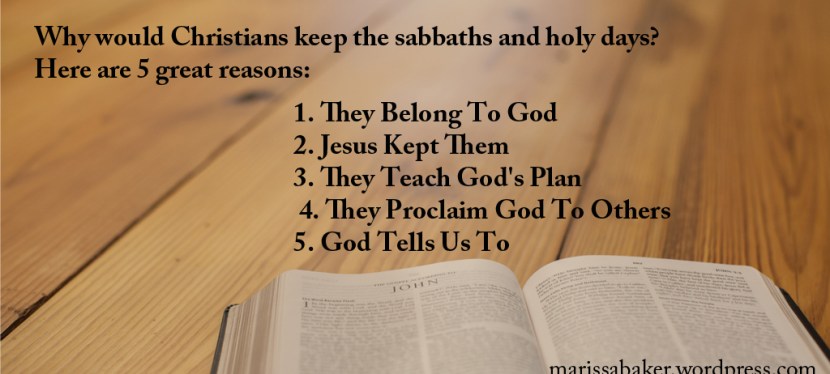
Today we celebrate Yom Teruah, also called Feast of Trumpets and Rosh Hashanah. But why? After all, I’m Christian and most people think of this as a Jewish holiday. Same goes for Yom Kippur/Day of Atonement, which we’ll observe 10 days from now, and Sukkot/Feast of Tabernacles that starts in two weeks.
I believe these festival observances, along with others already completed this year, are for Christians today. When Jesus came to this world, it wasn’t to set up a new religion. He was the next step in God’s plan for the world and these days are part of the covenant He makes with His family. He’s still inviting us to gather for “reunions” at certain times of the year.
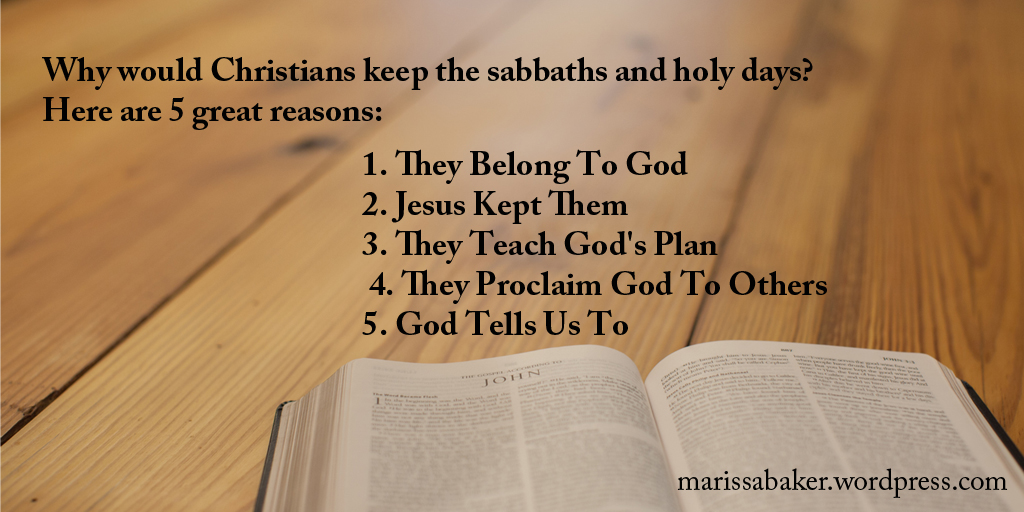
1. They Belong To God
And the Lord spoke to Moses, saying, “Speak to the children of Israel, and say to them: ‘The feasts of the Lord, which you shall proclaim to be holy convocations, these are My feasts.” (Lev. 23:1-2)
The holy days aren’t Jewish or exclusively Old Testament. They belong to God Himself. We talk about Leviticus 23 as the chapter where God gives Israel the Feasts, but that’s not quite accurate. God doesn’t say, “Here are your holy days, Israel.” He says, “These are the feasts of the Lord, holy convocations which you shall proclaim at their appointed times” (Lev. 23:4). Read more →
The people of God are set apart, with different priorities, habits, and festivals than the rest of the world. We may celebrate national holidays of our homelands, such as July 4th for Americans, but those are not the observances that shape our identities as God’s people. The kingdom we belong to under Christ’s authority has a different calendar.
A couple months ago, I read Desiring the Kingdom by James K.A. Smith. In “Chapter 5: Practicing (for) the Kingdom,” he discusses “rhythms and cadences of hope” that Christians observe in weekly and annual practices. For him, this means Sunday, Easter, Lent, Advent, Christmas and others. He connects the observances to a rich history of “a people gathered to worship the Messiah, who does not float in some esoteric, ahistorical heaven, but who made a dent in the calendar — and will again” (p. 157).
However, when you read the Bible, you won’t find the days Smith talks about on God’s calendar. Even the one mention of Easter in the KJV is a mistranslation of pascha, or Passover (Acts 12:4, Strong’s G3957). Rather, we find the church from the Torah to Revelation on a calendar even more unique than the one Smith claims for Christians. I know it puzzles many Christians that I would keep the “Jewish holidays,” but I find it equally puzzling that they would continue a tradition of co-opting pagan holidays and attaching them to Biblical events God gave no instructions to observe. When we search the scriptures looking for God’s version of liturgical rhythms, we find a worship pattern far more richly layered and deeply rooted in God’s plan than what man has invented.
The observance of time in the Bible begins at Creation. On the fourth day, God said, ““Let there be lights in the expanse of the sky to divide the day from the night; and let them be for signs to mark seasons, days, and years” (Gen 1:14, WEB). On the seventh day God rested “from all his work which he had done.God blessed the seventh day, and made it holy, because he rested in it from all his work of creation which he had done” (Gen. 2:2-3, WEB; see also Ex. 20:11; 31:17).
From the very beginning, God set up a world that allowed for marking time in weekly, monthly, and yearly rhythms. The Sabbath was established from the foundation of the world, and there’s no scriptural evidence that it was ever moved from the seventh to the first day (click here for my Sabbath post). The other holy days were set in place as God revealed His plan and established His covenants, but the Sabbath was there since the beginning and will be with us forever (Is. 56:2-7; 66:22-23; Mark 2:27-28; Heb. 4:9).
The months were marked by new moons, making the Hebrew calendar lunar (which is why the holy days “move around” on the Gregorian calendar). Exodus establishes which month begins the year (Ex. 12:2) and calls it Abib (Ex. 13:4). The new moons aren’t counted as Sabbaths and we know very little about how they were observed. We’re told there was trumpet blowing and offerings (Num. 10:10; 28:11-15), we read about people gathering together (1 Sam. 20:5, 18, 24, 27; 2 King. 4:22-23), observance is mentioned in a Millennial setting (Is. 66:23), and once they’re mentioned in the New Testament alongside holy days and Sabbaths (Col. 2:16-17). Most of us aren’t sure what to do with them today and ignore them, and I confess I’m guilty of that as well.
Image by Jantanee from Lightstock
Remembering Our Savior
The first month, Abib, begins the holy day cycle with Passover on the 14th. Originally, the Passover (Pesach in Hebrew) was kept as a memorial of God rescuing Israel from Egypt and sparing their firstborn by passing His vengeance over the houses covered by the blood of a lamb. Jesus Christ fulfilled what was pictured here when He died as our Passover lamb, and He up-dated Passover observance for His new church.
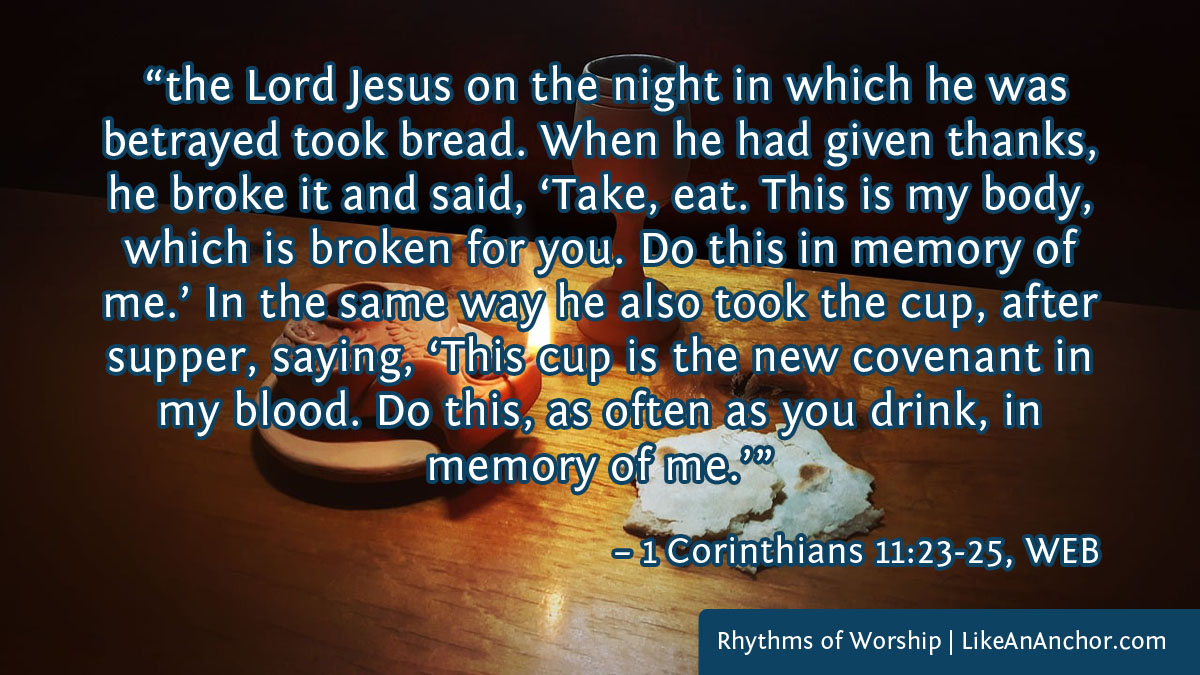
Many churches today keep the Passover, but in many Christian denominations it has been replaced with Easter and the ceremony Jesus instituted on His last Passover is done regularly as Communion. However, Jesus never tells us to mark His resurrection day with a yearly observance. Rather, He says during the Passover ceremony, “Do this in remembrance of me” (Luke 22:19, NET). Even if we did remember Him in communion throughout the year (there are some scriptures you could use to support that practice), it would not eliminate the need to observe Passover the way that Christ did. The resurrection was incredibly important, but Jesus didn’t want us to stop keeping Passover and replace it with Easter.
In his book Surprised by Hope, N.T. Wright laments how little time is spent in celebrating Easter and argues “it ought to be an eight day festival” (p. 256). If he were to step back from Easter and take another look at Passover, he would see God did indeed set up eight days of observance. Passover starts things off, then the following day begins the seven-day festival of Unleavened Bread (Chag HaMatzot). If we look at a timeline of Jesus’ death and resurrection, we find that He rose from the dead when the sun set on Saturday, ending the weekly Sabbath and starting the first day of the week. He ascended to His father the following Sunday morning (John 20:1-17), which corresponds to a special ceremony outlined in Leviticus 23:9-15 called the Wave Sheaf or First Fruits. This ceremony marked the beginning of a 50-day count to Pentecost.
Set back in the context of the Biblical holy days, our remembrance of Christ’s Passover sacrifice kicks-off a week long festival where we remember that because “Christ, our Passover, has been sacrificed in our place” we are being made into a people untainted by the yeast of sin (1 Cor. 5:6-8). It should be a time of rejoicing and appreciation for all that’s pictured in His sacrifice and in His resurrection. When we mark the Wave Sheaf as the day He ascended to His Father following His resurrection and start counting to Pentecost (Shavuot), we have a reminder built into God’s holy calendar that without the resurrection of Jesus the church wouldn’t have the holy spirit. And so we celebrate Pentecost, the day God poured His spirit out on the New Testament church (Acts 2:1-4) as a direct result of the resurrection of Jesus Christ and the work He’s currently doing in and with His church to make us firstfruits.
On the first day of the seventh Hebrew month, the Lord commanded Israel, “you must have a complete rest, a memorial announced by loud horn blasts, a holy assembly” (Lev. 23:24, NET). Many interpret this day as picturing the return of Jesus Christ because “the Lord himself will descend from heaven with a shout, with the voice of the archangel and with God’s trumpet” (1 Thes. 4:16, NET). In Jewish tradition, trumpets were blown the entire month leading up to the Feast of Trumpets (Yom Teruah). Messianic rabbis teach the trumpet calls proclaim, “The Bridegroom is coming! get ready to meet Him.” What could be more relevant for the church today as we draw ever closer to Jesus’ second coming?
Ten days after Trumpets, we cycle through to a solemn, serious holy day called the Day of Atonement (Yom Kippur). This day is marked by fasting, prayer, and a complete Sabbath rest from all work. Judging by the amount of scripture space devoted to its observance (Lev. 16:1-34; 23:26-32, and others), this day was very important to God, and it still is. Atonement was called an “everlasting statute” and Paul was still marking it in the New Testament (Acts 27:9). Unfortunately, it’s been so stereotyped as a Jewish holiday that most Christians don’t even consider the depth and meaning this day takes on following Christ’s atoning sacrifice, His resurrection, and His exaltation to the role of High Priest. Instead, they’re distracted during the fall season of the year by thoroughly pagan Halloween and non-scriptural All Saints and All Souls days.
The holy day cycle, like the plan of God, culminates in a celebration. Every weekly Sabbath looks forward to the time when Christ will reign on this earth as present, powerful, King of kings and Lord of lords, but the Feast of Tabernacles (Sukkot) takes the picture further. We dwell in temporary shelters as a reminder that we are sojourners here on this earth awaiting the return of our Lord and looking forward to a time when His kingdom will be here on earth. Sukkot also looks back, at the children of Israel who God made to live in tabernacles, or “temporary shelters,” when He “brought them out of the land of Egypt” (Lev. 23:42-43, WEB). Jesus kept this Feast (John 7:2-10, 14, 37) and it will be kept in God’s future kingdom (Zech. 14:16). We can’t argue it’s irrelevant to the church today; it hasn’t even been fulfilled yet by God’s Millennial Kingdom. Wrapping up the holy day cycle, the Feast ends with an eighth day, the Last Great Day, pointing to the final judgement day and the New Jerusalem (Revelation chapters 20-22).
Aligned With The Lord
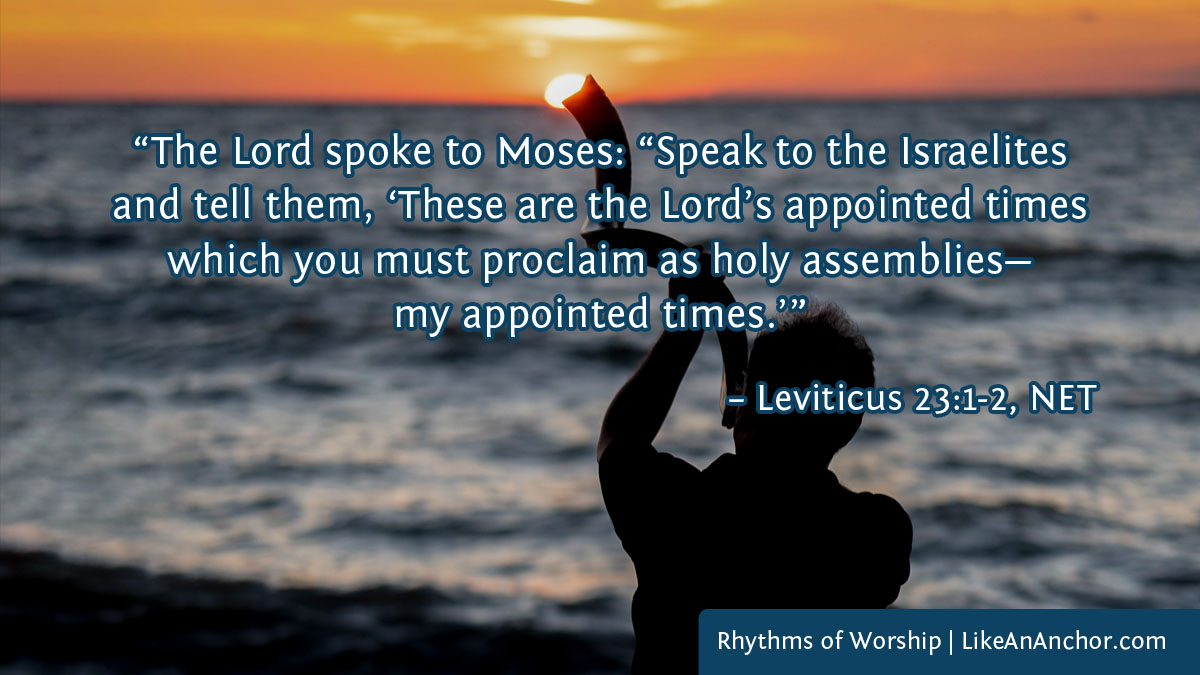
So why aren’t all the Christian churches on God’s calendar? I’ll be honest, this is something I really don’t understand. To be clear, I under stand why people who never learned about God’s holy days and who are members of churches that dismiss these days don’t keep them. Unless you study God’s holy days for yourself, you’re unlikely to hear about them in most churches. But I don’t understand how Bible teachers justify the omission. Why distance yourself from the rhythms of worship God says belong to Him? In Leviticus, before outlining all the holy days, God says, “These are the Lord’s appointed times which you must proclaim as holy assemblies—my appointed times” (Lev. 23:1-2, NET). They are days Holy to our great God, not something just for a specific group or time. So why abandon them for days with observances rooted in pagan holidays like the worship of Ishtar/Astarte (for Easter) and mid-winter Saturnalia (for Christmas)?
I’m not just talking about Christian leaders today. This substitution of man’s days for God’s days goes back centuries–so far that Easter and Christmas are called “Christian” traditions and the days Christ Himself kept are a distant memory. It’s time for the church to ask itself some tough questions. Is God pleased when we use pagan holidays to “worship” Him, even after we pretty them up and associate them with events in the Bible? Or would God be more pleased if we value the holy days He set aside for His people from the establishment of His covenants? The way we live our lives matters to God, and He’s watching to see whether we’ll cling to traditions of men or whether we’ll cling to His word, His kingdom, and His plan.
I hope no one feels like I’m attacking them or their beliefs. I’ve thought long over how to phrase this post, and even debated whether or not to share it. I truly feel, though, that the closer we align ourselves with God’s word, the more He will reveal of His plan and the closer our relationships will be with Him. May God’s blessing rest on you all, my friends.
Featured image by José Roberto Roquel from Lightstock
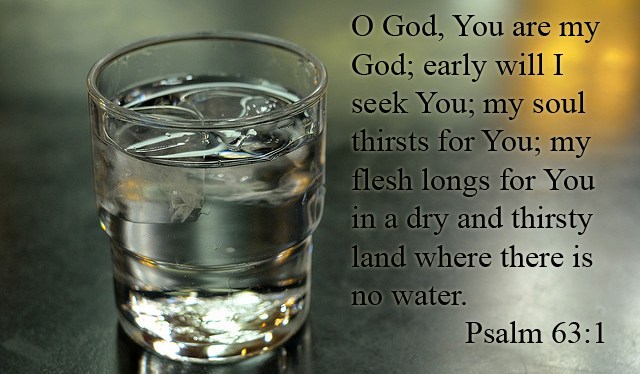
I woke up this morning and reached for my water bottle. It wasn’t there, of course, since today is Yom Kippur (Day of Atonement) and we started fasting last night as the sun set. What struck me was how automatic the gesture was — I always have a bottle of water nearby, and grabbing it when I feel thirsty is almost unconscious.
So I asked myself, “Do I long for God the way I crave water when fasting?” Jesus called Himself the “living water.” Just as we need water to survive physically, so we need Him to survive spiritually. And yet somehow, I don’t think we are as attentive about drinking Him in as we are physical water. We should keep Him even closer than I usually keep my water bottle, and turn to Him at every reminder just like we take a drink whenever our throats feel a bit dry.
photo credit: [cipher], CC BY-SA, via FlickrThe Jews consider Yom Kippur the most solemn and holy day of the entire year, and I’m inclined to agree with them. This isn’t to belittle any of the other holy days or the weekly Sabbath, but God does seem to put a special importance on this day. For one thing, it’s the only day when He strictly specifies “you shall do no work at all.” The other holy days are also days of rest, but He uses a different phrase for that: “you shall do no customary work” or “No manner of work shall be done on them; but that which everyone must eat—that only may be prepared by you.”
And the Lord spoke to Moses, saying: “Also the tenth day of this seventh month shall be the Day of Atonement. It shall be a holy convocation for you; you shall afflict your souls, and offer an offering made by fire to the Lord. And you shall do no work on that same day, for it is the Day of Atonement, to make atonement for you before the Lord your God. For any person who is not afflicted in soul on that same day shall be cut off from his people. And any person who does any work on that same day, that person I will destroy from among his people. You shall do no manner of work; it shall be a statute forever throughout your generations in all your dwellings. It shall be to you a sabbath of solemn rest, and you shall afflict your souls; on the ninth day of the month at evening, from evening to evening, you shall celebrate your sabbath.” (Lev. 23:26-32)
On the Day of Atonement, everything stops. We stop eating, we stop drinking, and we stop doing any work. Usually, my morning routine goes like this: pray, feed fish, make breakfast, read a book, Bible study, yoga, then start working. On the Sabbaths, I usually only do the first three and then head off for per-services dance practice. But today, the only thing I have to think about is thirsting after God. I took a minute to feed the aquarium fish, but that’s it. I don’t have to worry about making breakfast or scheduling my day. I can listen to Hillsong music, pray, study, and turn my thoughts into this impromptu blog post.
I wonder if my younger self would have believed she’d learn to look forward to the Day of Atonement. Fasting doesn’t make me terribly ill, but it’s not really easy for me either, and I often thought of it as something we just had to get through before the Feast of Tabernacles. But, God be praised, I’m starting to learn more about how amazing this day is and why He considers it so important.
I pray each of you has a blessed, refreshing Yom Kippur that draws you closer to God.
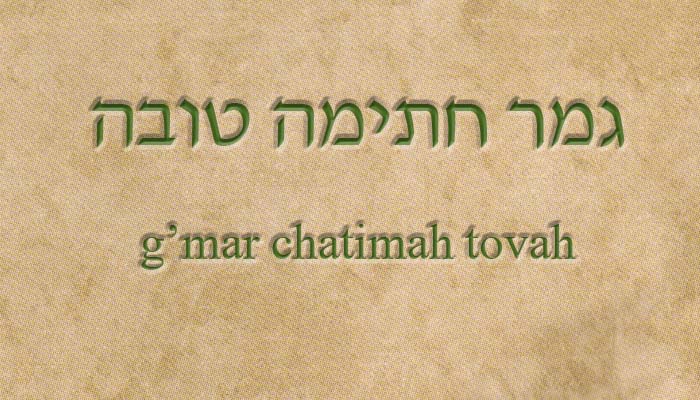
G’mar Chatimah Tovah — traditional Hebrew greeting for this season. Literally,” A good final sealing” or idiomatically, “May you be inscribed (in the Book of Life) for good”






 Like An Anchor