A Little Celtic Culture

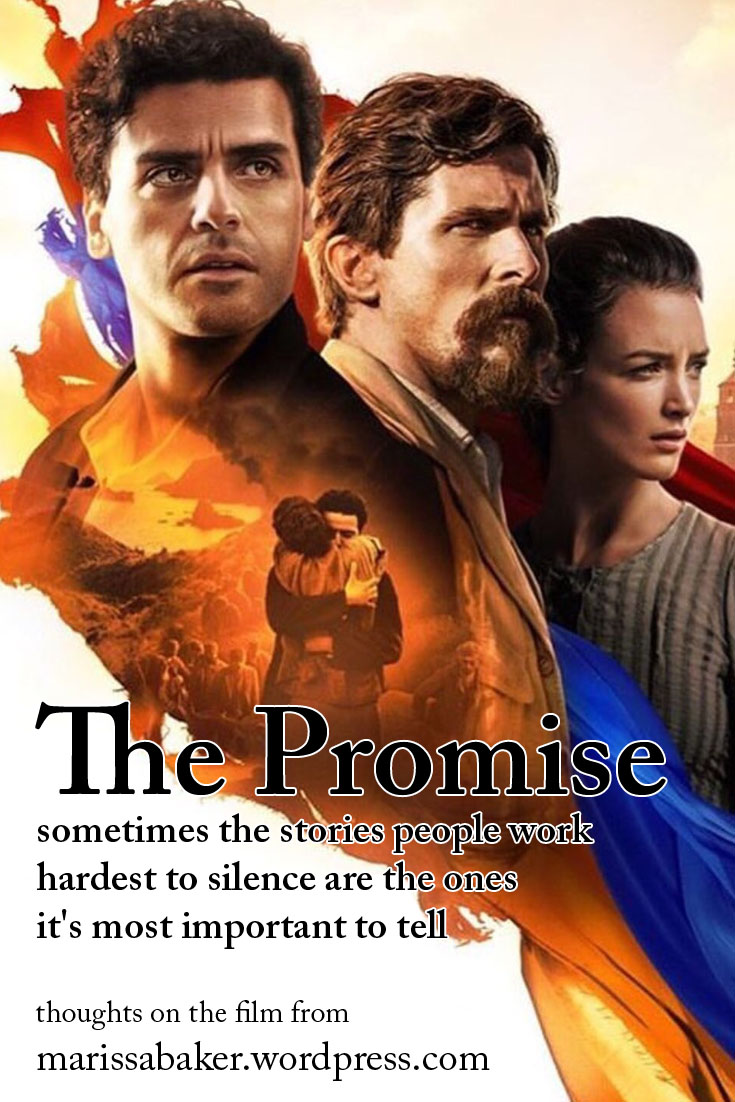
My family and I have been wanting to see Riverdance for years, so when we realized they were coming into Columbus Mother’s Day weekend we snatched up some tickets. And I’m so glad we did. Just watching the videos on YouTube is impressive, but seeing the entire show live was fantastic. I’m still in awe of how fast their feet were moving. And it’s so precise! I can’t even reliably walk down stairs without tripping over my own feet
A Little Celtic Culture | marissabaker.wordpress.com

  • Amusing side-note: since I started dancing at church, people compliment me about how graceful I am. But a couple months ago, I’m walking downstairs to where we practice before Shabbat services and managed to trip down the stairs hard enough to create an enormous, instantly purple bruise on my shin. Any gracefulness I display while dancing is a genuine miracle.

One thing I hadn’t expected from Riverdance was how much of a Celtic “feel” there was to the show. I supposed I’d expected it to be more “showy” and less cultural, if that makes any sense. The poetic voice-over played a big role in setting that tone, as well as the musicians (have I ever told you how much I adore Irish fiddlers and bodhran players?), and a singer who made me wonder if I’d wandered back into a Celtic Woman concert. The whole thing was fantastic.A Little Celtic Culture | marissabaker.wordpress.com

Riverdance is actually the second Celtic show I’ve gone to this year. Emmet Cahill was on his first solo tour with his new album (if you don’t know who he is, drop everything and click here. You’ll thank me when he’s the biggest name in Irish music a few years from now). And I’m hoping to get to Dublin, Ohio’s Irish Festival this year, too. And see Albannach (a Scottish pipes and drums band) at the Renaissance festival. One can never get too much Celtic music!

  • Random thought: none of the people currently in Riverdance have red hair. This does not fit my assumtion that there must be tons of Irish redheads out there since everyone automatically assumes I’m Irish because of my hair.
A Little Celtic Culture | marissabaker.wordpress.com
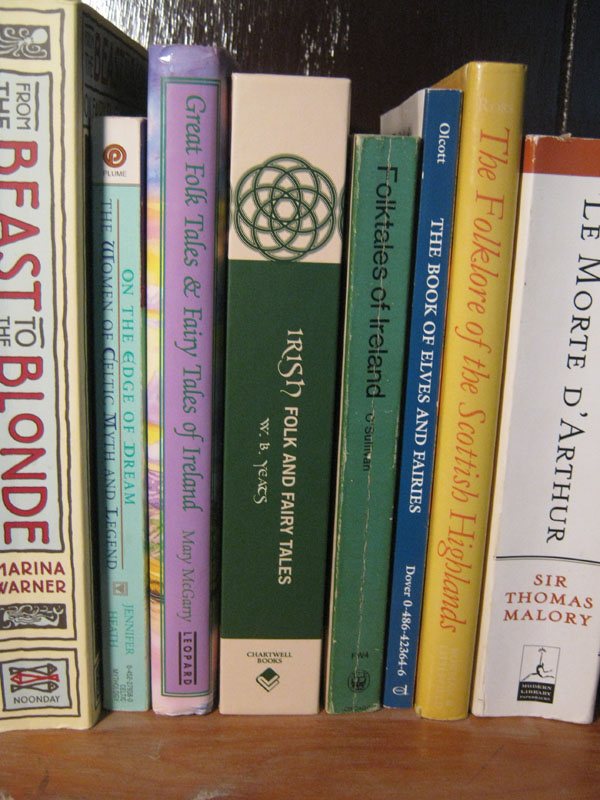
the Celtic section of my bookshelf

I can’t really pin-point a reason I love Celtic things so much. I do have some Celtic ancestors in my background (we’re English and Scottish on my dad’s side of the family and English, Scottish, and German on my mom’s side), but it’s so many generations back that I doubt we can say genetics play a role. But since my hair has been reminding me of my Scottish heritage my whole life, we’re going to say it still had some influence on how much I love Celtic culture, music, and dance.

Are any of you obsessed/in love with a culture that’s not the one you grew up in?


Save

Save

Music of the Spirit

Every once in a while, I’ll get into a discussion with someone about what sort of music is and is not appropriate as part of a church service. One of the groups I regularly attend with plays contemporary Christian and Messianic music, the other only sings songs out of their custom hymnal. And there’s quite a bit of variety in other groups as well, from a capella psalm singing to rocking worship bands.

I’m not going to say any of these musical traditions is “wrong” or “more right,” but I did notice something interesting about music when I was studying prophecy last week. One criticism that I’ve heard hymn singers level against those who sing more up-beat songs is that it’s too focused on emotion. You can’t “welcome the spirit of God” through music, they say. The music should be respectful and instructive. Worship’s not about making you feel God’s presence. Or is it?

Music of the Spirit | marissabaker.wordpress.com
Photo Credit: Elijah Henderson via StockSnap

Musical Prophecy

Early in Elisha’s ministry as a prophet, three kings came to ask him a question. They were planning to attack Moab, but ran out of water and wondered if their venture was doomed. King Jehoshaphat of Judah suggested inquiring of a prophet of the Lord. Once Elisha agreed to help, he makes what might seem like an odd request.

But now bring me a minstrel. And it came to pass, when the minstrel played, that the hand of the Lord came upon him. (2 Kings 3:15, KJV)

Read more

The Gift of Prophecy

In his letter to the Corinthians, Paul discusses a variety of spiritual gifts. But there’s one in particular that he specifically tells them to “earnestly desire.” That gift is prophecy (1 Cor. 14:1, 39, WEB).

A basic definition for this word is to “speak forth by divine inspiration” (Thayer, G4395). Usually when we think of people prophesying, we think about the prophets like Elijah, Isaiah, Jeremiah, and Ezekiel. We think of men God used to foretell future events, confront sinful Israel, and write books of the Bible. We probably don’t think about prophets in the modern age.Why did Paul tell the New Covenant church that they should earnestly desire the gift of prophecy? | marissabaker.wordpress.com

And yet, Paul wrote that the New Covenant church should earnestly desire the gift of prophecy. He said you should want it and if God gives it to you you should use it. But how do we recognize a gift of prophecy (in ourselves or others), and how should it be used? Read more

All Your Heart, Mind, and Soul: ENFP Christians

This is the second post in a series talking with Christians of different personality types. When you start discussing faith with different personality types, you notice not all the personalities feel equally valued and understood in Christian churches. If Christianity is a faith meant for all people why aren’t we doing a better job of connecting with all personality types?

Our walks with God don’t all look the same. We’re influenced by our backgrounds, variations in beliefs, and individual personalities. And even though the goal is for us all to become “like God,” that doesn’t mean we become indistinguishable from each other. God created great variety in people and I believe He did that for a reason. So let’s spend today’s post hearing from and talking about the unique perspectives of ENFP Christians.

Identifying With The Bible

While some ENFPs have a favorite Bible character, others couldn’t pick just one. Charity said, “I don’t really ‘identify’ with any of them, since we’re different people who have had different experiences, but my inner feminist always liked Mary sitting at the feet of Jesus, and Jesus telling Martha that she was where she should be (instead of preparing food in the kitchen!).” Dorien said he couldn’t choose just one and identified more with some during different seasons, “But I love the characters who experience the Love of God very deep: The woman trapped in idolatry. John – with his intimate relationship with Jesus. David – which name means The Beloved and was still chosen, even when He made mistakes.”

Personally, I’ve always found Peter very relatable and wonder if he might have been an ExFP type. I was glad to see two ENFPs list him as one of the characters they relate. Rielle elaborated on Peter the most, saying, “I can relate to him often not thinking (or seeming like it at least) before he speaks.” She also likes the way he “gets so involved in everything and is just so interested in what Jesus says.” Read more

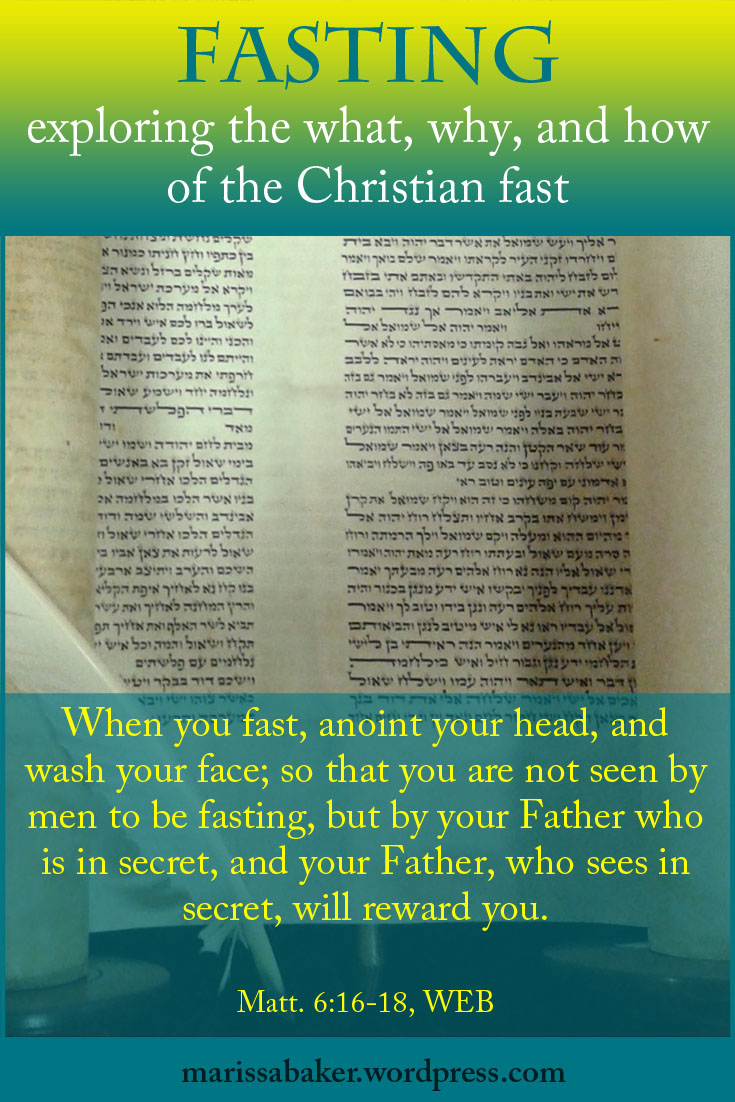
Fasting

Fasting is one of the things Christians are supposed to do. And it’s something I’ve never done except on the Day of Atonement (Yom Kippur) when it’s strictly commanded. I’ve never even studied it because I didn’t want to be convicted on the subject (a rather embarrassing admission, but an honest one). But faithful followers of God fasted in the past, it’s counted right alongside prayer as a way of drawing nearer to God, and I suspect I should take it more seriously.

One of the churches I attend with recently called a church-wide fast, which had me thinking on the subject again. In this church, it’s generally accepted that “fast” means abstaining from food and drink for 24 hours (unless you have a medical reason you can’t do a full fast). In my Messianic group, though, I’ve heard people talking about different kinds of fasts using phrases like “full fast” and “Daniel fasts.” Having avoided studying the subject in the past, I had no ready answers for the questions this brought to mind about whether or not there really are different types of fasts and what sort of fasting God expects. Hence, this Bible study.Fasting: exploring the what, why, and how of the Christian fast | marissabaker.wordpress.com

Types of Fasting

The Hebrew words for “fast” are tsum (H6684) and its derivative tsome (H6655). The Theological Wordbook of the Old Testament defines it as “depriving the body of nourishment.” In Greek, the basic word for “fast” comes from a compound of ne (not) and estho (to eat). Spiros Zodhiates says nestis (G3523) means “not having eaten” and its derivatives nesteuo (G3522) and nesteia (G3521) mean “to fast or abstain from eating.”

There are three main types of fasting that Christian groups as a whole typically recognize. They all involve not eating food for a set period of time. Some churches/writers also add a fourth kind of fast for abstaining from certain activities (such as watching TV or having sex, which they get from 1 Cor. 7:3-5).

  • A “full,” “absolute,” or “dry” fast means no food or drink.
  • A “normal,” “regular,”  or “liquid” fast means no food, but you can drink water or sometimes juice (some incorrectly refer to this as a “full fast”).
  • A “partial” or “Daniel” fast involves abstaining from a specific meal or certain types of food.

These are also the types of fasts that secular resources discuss when they talk about fasting for health reasons. But does the Bible support these distinctions in fast types? Read more

The Promise

Exactly 102 years ago today, Ottoman authorities arrested and executed several hundred Armenian intellectuals and community leaders from Constantinople. April 24, 1915 became the start date for what the relatively few people who even know about it now call the Armenian Genocide. When the massacres and deportations finally ended in the early 1920s, about 1.5 million of Turkey’s 2 million Armenians were dead. That’s 3/4 of the entire population.

I wasn’t planning on writing about The Promise. After first seeing the trailers, I hadn’t even planned on seeing it until it was out on DVD. Then I found out that there were tens of thousands of negative reviews for the film online when it hadn’t even been released yet. That caught my attention, because often the stories people work hardest to silence are the ones it’s most important to tell.sometimes the stories people work hardest to silence are the ones it's most important to tell | marissabaker.wordpress.com

Having seen the film now I’d say that’s definitely the case here. And not only is it an important story, it’s a well done film despite what critics are saying. Read more