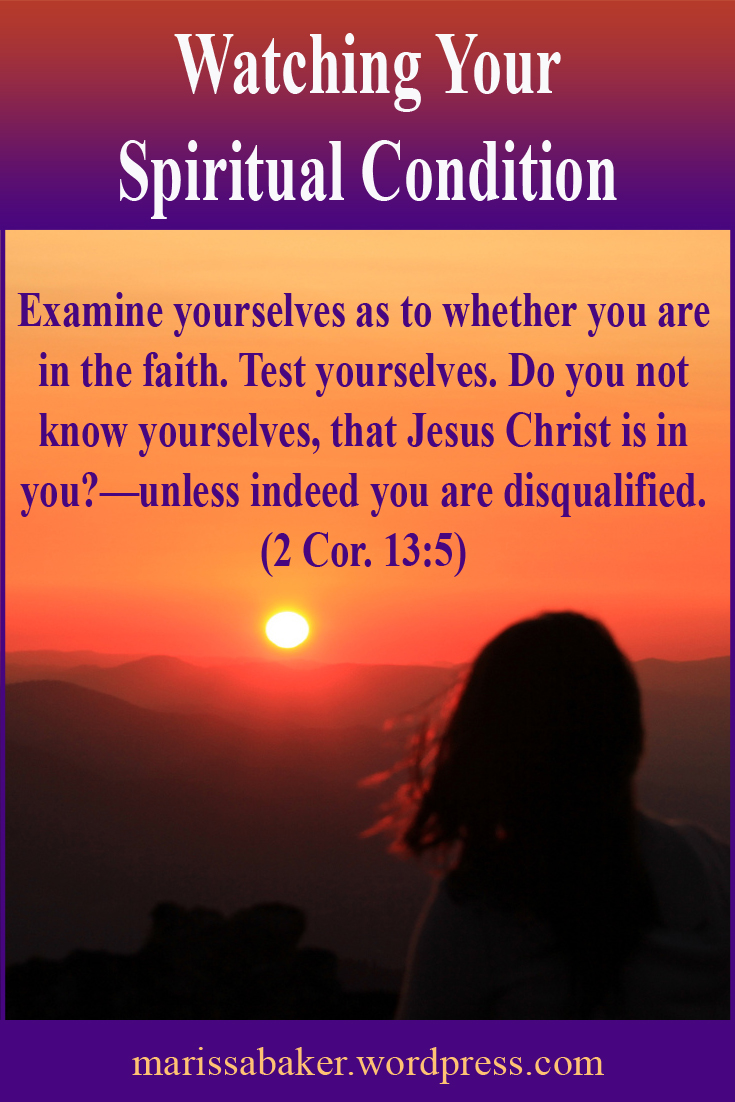
If we say we’re followers of Jesus Christ, there are certain things we should, nay, we must do. As we talked about last week, there are observable markers of being someone who follows God — things we should be able to notice when we examine ourselves. Those things are inseparably connected with Christ’s presence in us.
There is plenty of freedom within the perfect law of liberty, but there are absolutes as well. God is highly personal and He’ll work with you on a personal level. That does not, however, mean He has different requirements for how different people follow and worship Him. He’s also a just God who is not inconsistent in His commandments, laws, and expectations. We might have different understandings of what God expects, but as we grow toward God we should also be growing in unity as we understand His mind more fully. There isn’t one law for you and one law for me. There’s just God telling us all to walk in His ways.
Love + Obedience + Indwelling
John begins both his gospel and his first epistle with a focus on Jesus Christ’s role as the Word of life. Then, in the epistle, he focuses on how we can have fellowship with this great Being and His Father. We must “walk in the light as He is in the light,” “confess our sins” so He’ll forgive us, and then keep His commandments (1 John 1:5-2:3). We cannot claim to know God unless we’ve keeping His word and walking as Jesus walked (1 John 2:4-6). God wants us to be part of His family and that means becoming like Him (1 John 3:1-2). Read more →
So the election happened a couple weeks ago. Unfortunately, one of the two candidates won. We all knew it was going to happen. Most of us wouldn’t have been all that happy either way. There are plenty of people who would have been scared and upset with either outcome. And of course there are some on both sides who’d have been dancing for joy when their candidate won because they honestly thought they’d be a good president.
My title is a bit misleading, I suppose. It does matter who the president is because that impacts the future course of our nation, how other nations see us, and the policy that affects every day life for many people. But now that Donald Trump is president, we have to live with it. He won fairly according to the rules set up in our country. If Hillary Clinton had won, I’d be writing pretty much the exact same thing.
But though it does matter who’s president, it is shocking to see how many people are taking their candidate’s loss as a personal affront and the way they’re vilifying other Americans who disagreed with them. If you supported Trump, you’re therefore a racist misogynist who hates Muslims and women. If you supported Clinton, you’re therefore an air-head liberal not in touch with reality and careless of society’s moral decline. And on and on we go, painting people we don’t know with broad bush strokes according to how we view the candidate they supported.
That has to stop. We are not our political parties. We don’t always vote for someone because we agree with all their actions or every view they hold. (Just in case you’re wondering, I voted 3rd party because I couldn’t in good conscience choose either Clinton or Trump. My alternate plan was not voting at all.) Some people who voted for Trump did so because they preferred his policies even though they couldn’t stand his personal morals and don’t share the bigoted views that have been associated with his campaign. Some people who voted for Clinton did so because they thought she was the less-terrifying option or agreed with her policies, not because they wanted a female president at any cost or permission to slaughter babies.
How you and I choose to act in response to the election results has become so much more important than who won and who lost. If we want to hold our country and the new president to a higher standard, we must first start by holding ourselves to a higher standard. Don’t want to live in a country where people are harassed for how they look, think, or worship? Then don’t go around harassing people who disagree with you and stand up against such harassments whenever you can. Dislike the idea of someone being thrown out of your country for speaking their mind or living life how they choose? Don’t threaten someone else’s liberties of expression and belief.
It’s become startlingly obvious to people throughout America that there are plenty of Americans who don’t agree with us. Yet we still have to live together. We need to find a way to disagree without attacking each other. We need to figure out how to work together for a more united society while still respecting others’ differences. And we need to give our new president a chance to live up to his promises to “bind the wounds of division,” “work together and unify our great country,” and “deal fairly with everyone, with everyone — all people and all other nations” as we “seek common ground, not hostility; partnership, not conflict.”
Whether or not you believe him is moot at this point. Encourage him to actually do it instead of pretending he’s not president. And meanwhile, remember to be the change you want to see in the world. Or, to quote Gandhi more directly, “We but mirror the world. All the tendencies present in the outer world are to be found in the world of our body. If we could change ourselves, the tendencies in the world would also change.” Instead of adapting to the growing culture of hate, let’s dig deep inside ourselves and stand for goodness.
We’re each getting closer to the time when we’ll stand face-to-face with God. At that time, “each of us shall give account of himself to God” for the way we lived our lives, including “every idle word” spoken (Rom. 14:12; Matt. 12:36-37). How we conduct ourselves now matters to God.
If we’re in His family, then our time of judgement has already begun (1 Pet. 4:17). God is determining right now who will end up in His family by calling whom He wills, choosing those who respond, and then watching to see who remains faithful (Rev. 17:14). His mercy is unfailing and God is ever ready to forgive those who repent, but the simple truth is that He won’t have the sort of people in his family who chose to reject His teachings on how to live our lives. When God tells us how to live, it actually matters to Him that we listen.
Be a Growing Person
In his second letter, Peter talks about Christ’s approaching return and the day of judgement. He asks an important question: “What manner of persons ought you to be in holy conduct and godliness”? (2 Pet. 3:11). Even in the question, we start to get an answer. The type of person we should be involves holy conduct patterned after God’s example. Peter goes on, counseling, “be diligent to be found by Him in peace, without spot and blameless” (2 Pet. 3:14). Read more →
I went to my first author talk and book signing yesterday! It was so enjoyable. Can’t believe I haven’t tried something like this before, considering how much of a book nerd I am (of course, many of my favorite authors died 100+ years ago, so that might explain something …).
She talked for a while about her new book, Heartless, and invited six people up for a talent show styled after a Mad Hatter’s tea party scene in the book. I didn’t even think of volunteering (as you’ve likely guessed) since standing up in front of people terrifies me, but I really liked how she led the mini talent show. Even with the volunteers drawing random talents to show the crowd (things like spontaneously coming up with a character description or singing an operatic version of I’m A Little Tea Pot), Marissa kept things encouraging and light enough to dispel any anxiety her volunteers had. That’s the sort of talent you notice and appreciate in people when you’re a bit socially anxious yourself.
It’s always fascinating to hear other writers talk about how they create characters and what their writing process looks like. The question-and-answer part of her talk was fun and informative — definitely the part of her presentation that I enjoyed most.
Marissa signed all my Lunar Chronicles books (which are fantastic. You simply must read them if you enjoy fairy tales and/or science fiction), including personalizing Cinder. And the ticket to the author talk included a copy of Heartless, which she also signed. I really, really want to read Heartless right now but I don’t dare start it until I finish writing my NaNoWriMo novel. I know it will be too distracting. And so I’m off to finish my work writing so I can get on to my novel writing so I can start Heartless as soon as possible. Have a lovely day, dear readers.
Imagine you’ve noticed something wrong and you go to the doctor. They run their tests and scans, take their samples, and sit you down with the results. You were right — you’re sick and quite probably dying without prompt attention. But instead of offering a cure, the doctor says he can alter the test results. You’ll still be dying, but you can pretend you’re not and tell all your friends the doctor says you’re fine.
Sounds ridiculous, right? I’m not sure any of us would take that deal. But that’s what churches are doing on a spiritual level if they hold out the idea of salvation without repentance.
Our Western society is uncomfortable with objective morality. It’s unpopular to think certain actions are inherently wrong. We don’t want to acknowledge a higher power with the right to determine what is and is not sin. Yet that’s exactly what you must do when you become a Christian. My decision to follow Jesus means I’m not the ultimate authority in my life. He and Our Father are.
Repenting From What?
When Jesus began preaching, He said, “The time is fulfilled, and the kingdom of God is at hand. Repent, and believe in the gospel” (Mark 1:15). It has become popular in some Christian churches to say God’s commands aren’t relevant today. If you accept Jesus as your personal savior that’s it — you’re saved. There’s a measure of truth to this last statement, for God sent Jesus “that whoever believes in Him should not perish but have everlasting life” (John 3:16). But Jesus also commanded repentance and that begs the question, “What are we repenting of?” Read more →
I’ve been quite fond of Shakespeare since high school. Freshman year I watched Kenneth Branagh’s Henry V and then read the play for extra credit. I loved it so much I choose to read it again the year we studied British literature, along with Taming of the Shrew (my mother’s choice) and As You Like It (recommended by a teacher).
Since homeschoolers can pick their own curriculum and my mom hated reading Shakespeare’s tragedies when she was in school, I didn’t get a hold of those until college. There, I discovered Hamlet was almost as good as Henry. Almost, but not quite. When I took a Shakespeare class where the professor included Henry V on his syllabus I was in literature nerd heaven.
The only strange thing (to me at least) about this whole Henry obsession is that it took me so long to read Henry IV, Part One and Henry IV, Part Two. In these plays, the character I knew as noble King Henry V is the riotous Prince Hal. I did put them on my Classics Club book list, but I probably wouldn’t have read these plays for another year or so if I hadn’t decided on a futuristic/sci-fie re-imagining of Shakespeare’s Henriad for my NaNoWriMo novel (click here to learn more). I’d seen them, though, in BBC’s The Hollow Crown.
This brilliant adaptation is remarkably faithful to both Part One and Part Two (it leaves out more scenes and changes a few parts of Henry V, but that play’s not the topic of our post today). I enjoyed reading the Henry IV plays, in part because of associating the on-paper scenes with what I’d seen in The Hollow Crown. Here’s a small clip of Tom Hiddleston as Henry, but you should really check out the series and watch it for yourself.
For reading Part One, I picked up a copy without annotations or notes. I was rather pleased with myself that I didn’t feel like I needed them. This is also the play I enjoyed most. It feature a more straight-forward and active story line, and more scenes with Prince Hal. I tend to prefer Shakespeare’s main plots and noble characters to the sub-plots and more comedic characters, and that held true for these history plays.
Part Two follows the Henrys less and I’m glad I had a Folger edition to read for that. There were whole sections of Falstaff’s speeches that left me puzzled (the notes made me feel better, though — apparently scholars can’t figure out some of his lines either). You need this play to get from Part 1 to Henry V, but it’s my least favorite of the three.
Whether or not you already love Shakespeare, I’d recommend starting with The Hollow Crown if you’re interested in these plays. They’re really meant to be seen and heard more than read. I suspect the man who begged pardon of his 17th century audience for daring “On this unworthy scaffold to bring forth / So great an object” as Henry’s life would approve of the scope film provides for storytelling (Henry V, 1.1.11-12).







 ,
,  , and
, and  . Please note that these are affiliate links. This means that, at no additional cost to you, I will receive a commission if you click on the link and make a purchase.
 Like An Anchor