The Foundation: Repentance From Dead Works

In the book of Hebrews, the writer tells his readers they have become “dull of hearing.” They should be teachers, but they haven’t yet grasped “first principles of the oracles of God.” He wants them to move forward, while standing strong on the foundation they have developed as mature Christians (Heb. 5:11-14). We should do that as well, but we can’t go on until we’ve checked that we actually have the foundation we need.

Therefore, leaving the discussion of the elementary principles of Christ, let us go on to perfection, not laying again the foundation of repentance from dead works and of faith toward God, of the doctrine of baptisms, of laying on of hands, of resurrection of the dead, and of eternal judgment. And this we will do if God permits. (Heb. 6:1-3)

Here, the writer lists six things that are foundation principles of the Christian faith. If we don’t have these, we can’t go on to perfection. Read more

The Tenant of Wildfell Hall

I, who never wanted an electronic reading device, read all of Anne Bronte’s The Tenant of Wildfell Hall on my phone. I recently upgraded to a cellphone that actually works where I live, and it also happens to be a smartphone tempting me with free classics on Google Books. I thought it would be easier to pull out my phone and read a little than trying to carry around the printed copy of Anna Karenina I was currently reading (and which I finally finished!).

Like her sister Charlotte did with Jane Eyre, Anne Bronte captivated me with her story. I read it while waiting for a repair on my car’s exhaust system. I read it while eating breakfast. I even read in the bathtub while praying I didn’t drop my phone in the water, but I had to know what happened next.

Stylistically, what caught my eye was that the bulk of the novel is narrated by the main character Gilbert Markham. I’m trying to think of any other female authors of this time period who wrote a first-person narrative from a man’s perspective, but haven’t so far. Read more

Who Receives The Holy Spirit?

This blog post is, like my last posts, inspired by something I heard while keeping the Feast of Tabernacles (Sukkot) this year. In this case, though, it was something I disagreed with. During a Bible study, the study leader said that ordained ministers receive an “extra measure” of the Holy Spirit. That teaching is an old one, but is it correct? I wasn’t sure. Another thing that didn’t sit right with me was several speakers calling groups other than those like ours “nominal Christianity.”

I talked these two points over with several friends at our Feast site, and was relieved to find I wasn’t the only one bothered by them or suspicious that they didn’t have a solid scriptural basis. So the question is, who does God give His Spirit to, and how much do they get? and does it vary depending on the individual’s role in the church, or what church they attend?
Who Receives The Holy Spirit? | marissabaker.wordpress.com

(For a quick over-view of my beliefs about what the Holy Spirit is, click here)

Those Who Believe

God has been giving His Spirit to believers apparently from the very beginning. David prayed, “do not take Your Holy Spirit from me” (Ps. 51:11), and Peter said “the Spirit of Christ” was in the Old Testament prophets (1Pet. 1:10-11). The Spirit wasn’t readily available, though, until after Christ’s sacrifice and ascension — “the Holy Spirit was not yet given, because Jesus was not yet glorified” (John 7:39).

The disciples received the Holy Spirit dramatically at Pentecost in Acts chapter 2. As part of his sermon that day, Peter told others what they had to do in order to receive the Holy Spirit.

Then Peter said to them, “Repent, and let every one of you be baptized in the name of Jesus Christ for the remission of sins; and you shall receive the gift of the Holy Spirit. For the promise is to you and to your children, and to all who are afar off, as many as the Lord our God will call.” (Acts 2:38-39)

This simple formula gives the Holy Spirit after baptism and repentance in the name of Jesus Christ to everyone who God decides to call. There were exceptions to this order — namely the gentiles who were given the Spirit before baptism in Acts 10 — but the Holy Spirit is only given to those who 1) believe in Jesus and 2) are called by God.

The Called, Who Ask

The first requirement for receiving the Holy Spirit is being called by God since we can’t get to Jesus without that calling (John 6:44). Who receives a calling is entirely up to God. It is a gift of grace that cannot be earned (Gal. 1:15; Rom. 9:11), which is given “according to His purpose” (Rom. 8:28).

I do think, however, that someone can ask for a calling. The Father is actively seeking those who will worship “in spirit and in truth” (John 4:23), and Jesus tells us that if we ask, seek, and knock persistently, God will respond (Matt. 7:7).
Who Receives The Holy Spirit? | marissabaker.wordpress.comThen you will call upon Me and go and pray to Me, and I will listen to you. And you will seek Me and find Me, when you search for Me with all your heart. (Jer. 29:12-13)

God choses who to call, but He does respond to sincere seeking of Him. If someone hears the gospel preached and wants to learn more, God will see that. We’re not called because of our works, but God does call those who will do good works, obey Him (Acts 5:32), and commit to becoming holy (2 Thes. 1:11; 1 Thes. 2:12; 4:7).

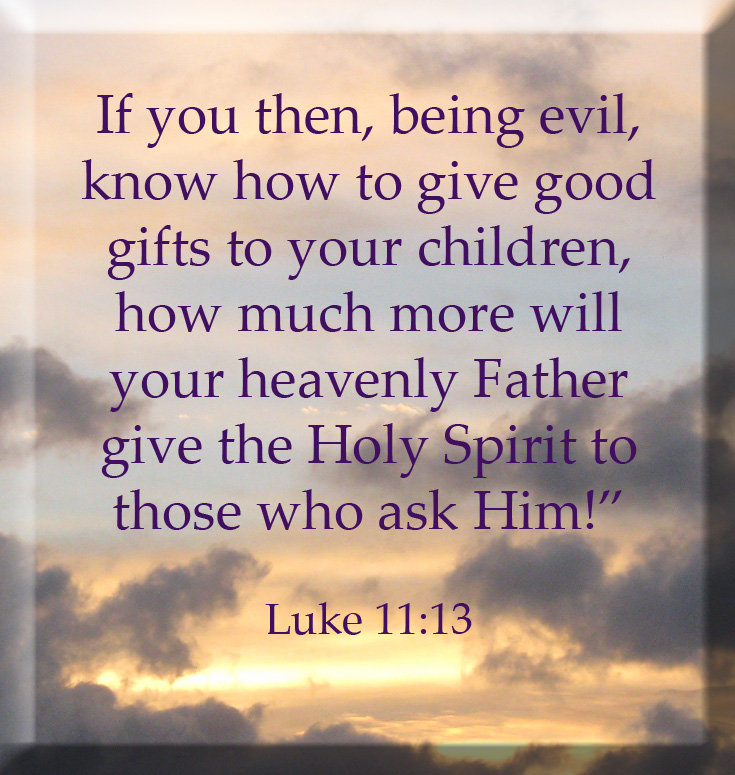
If you then, being evil, know how to give good gifts to your children, how much more will your heavenly Father give the Holy Spirit to those who ask Him!” (Luke 11:13)

Committed, Prayed-for Believers

Once God calls us, He gives us to Christ (John 6:65; 17:11). Jesus is the only one who can provide salvation (Acts 4:12), and that’s why the converts in Acts were all “baptized in the name of the Lord Jesus Christ” (Acts 8:16; 19:5). With the exception of the Gentiles mentioned earlier (who God used to show He was opening up salvation to non-Jews), the Spirit is given after baptism. We have two examples of disciples being baptized, but not receiving the Spirit until an apostle prayed and laid hands on them. This happened in Ephesus (Acts 19:1-6), and in Samaria.

Now when the apostles who were at Jerusalem heard that Samaria had received the word of God, they sent Peter and John to them, who, when they had come down, prayed for them that they might receive the Holy Spirit. For as yet it had fallen upon none of them. They had only been baptized in the name of the Lord Jesus. Then they laid hands on them, and they received the Holy Spirit. (Acts 8:14-17)

There aren’t really apostles today, but the principle, I think, stands. God typically gives the Holy Spirit to someone after they’ve made a commitment through baptism, and after a more mature believer who already has the Holy Spirit prays and lays hands on them.

Those Who Use It

On the question of whether some people get more Holy Spirit than others, I’ve only found two scriptures that talk about how much Spirit an individual is given. In 2 Kings 2, Elisha asked for, and is given, “a double portion” of “the spirit of Elijah” (2 Kings 2:9-12, 15). Then in the New Testament, John the Baptist explains that Jesus received an unlimited supply of the Holy Spirit.

 For He whom God has sent speaks the words of God, for God does not give the Spirit by measure. The Father loves the Son, and has given all things into His hand. (John 3:34-35)

You could extrapolate from this that people other than Jesus are given the Spirit “by measure” (i.e. “a limited portion,” Strong’s G3358). It makes sense that we would all have less Holy Spirit than Jesus because we are infinitely less worthy. But I can’t find scriptures that clearly support the idea you’ll find in some churches that ordained leaders are given an “extra measure” of the spirit compared to other believers.

On the contrary, we find several scriptures that remind us God is not a respecter of persons. He opened salvation to the Gentiles because “God shows no partiality” (Acts 10:34). He wants us to treat people fairly “knowing that your own Master also is in heaven, and there is no partiality with Him.” (Eph. 6:9, see also James 2:1-9). He will judge everyone righteously by looking at “each one’s work” “without partiality” (1Pet. 1:17).

God doesn’t show partiality in how He distributes the Spirit, but we can affect how much Spirit is available to us by whether or not we use it well.

Therefore I remind you to stir up the gift of God which is in you through the laying on of my hands. For God has not given us a spirit of fear, but of power and of love and of a sound mind. (2 Tim. 1:6-7)

“Stir up” is from anazopureo, and means “to kindle” or “re-enkindle,” as in reference to a fire (Strong’s G329). It’s the opposite of sbennumi, which means “to extinguish a fire” (Strongs G4570). Sbennumi is translated “quench” in 1 Thes. 5:19’s command, “Do not quench the Spirit.”

Who Receives The Holy Spirit? | marissabaker.wordpress.com

God gives the Spirit to whomever He wants. These are people who seek a relationship with Him, who ask for His Spirit, and who believe in Jesus Christ. Once given the Spirit, our actions determine how well we can use it. We can either stir up the Spirit we’re given so it burns brighter, or suppress it till it flickers and dies in us. That’s our choice. The closer we draw to God, the more powerful His presence will be in us. That’s what determines who gets the Holy Spirit and how much they can use — the individual believer’s relationship with God. It doesn’t matter whether you’re ordained, and where you go to church only matters in so far that you’re attending a church which preaches God’s truth. What matters most is that you’re following God the way He commands.

Dancing the Night Away

12233525_10153726823613234_114218666_n
me and my sister

This post will be a bit random. I’m writing on Sunday, after a few hours sleep following a dance we got back from just before 3:00 in the morning. And that was after staying up past midnight the evening before talking about Myers-Briggs with someone who just learned he’s an INFJ. Dancing and typology being two of my favorite things, I’m happy. Add the fact that many of my good friends were at the dance, and I’m delighted.

On the topic to typing people, sometimes people online ask me, “How do you find out the personality types of so many people?” It’s really not all that difficult to bring up in conversation. When people ask what are your hobbies/interests or how you spend your time, I often bring up this blog and/or mention psychology. Then I just ask people if they’re taken a Myers-Briggs test. People love to talk about themselves, so it’s not usually all that hard from there. If they’re a good enough friend and haven’t taken the test yet, just point them to Personality Hacker. If you’re really ambitious, guess their personality once they have the result but before they tell you (the reaction is great if you’re right).

Taking this in a different direction, I think I’ve hit a personal growth milestone. My shyness/social anxiety really only showed up once last night. Once! And a week ago I raised my hand and said something in church (this is accepted/encouraged at my Messianic congregation, but I haven’t done anything like that in the 3 years since I graduated college and there wasn’t mandatory class participation). I think I’m actually starting to conquer a fear that’s been a part of me for so long. For INFJs, this sort of personal growth usually involves tapping into your secondary function, Extroverted Feeling, and I feel like I’m doing that with more consistency and confidence. The dance was a a great place to realize this, since it’s a setting which could have made me intensely uncomfortable a few years ago.

What about you? have you attended any events or had any experiences lately that highlighted some area where you’ve grown as a person?

Love On Fire

Sometimes, Bible study ideas can come from an unexpected source. One of the speakers at our Feast of Tabernacles site last month was a man whose messages rarely catch my attention, but he gave an excellent sermonette about falling in “true love” with God.

Though the holy days for this year are several weeks in the past, these subjects are relevant year-round. Since the Feast, or Sukkot, pictures Christ’s millennial reign, it’s also connected with the marriage to His church, which takes place a little earlier. We will be living and reigning with Jesus as His bride, teaching and serving alongside Him (Rev. 20:4). But first, we have to get there.

Love On Fire | marissabaker.wordpress.com
photo credit: Indi Samarajiva, CC BY via Flickr

True Love

God is love. it’s not just something God has like a person can have feelings of happiness or a sense of humor. Love (and the word is agape) is God. All real love — that selfless seeking of another’s good because you care about them so much — is of God.

And we have known and believed the love that God has for us. God is love, and he who abides in love abides in God, and God in him. (1 John 4:16)

When we’re filled with love, we’re filled with God’s essential character. “If we love one another, God abides in us, and His love has been perfected in us” (1 John 4:12). The opposite is true as well: it’s impossible to love God or abide in Him while harboring an attitude of hate (1 John. 4:20).

He who has My commandments and keeps them, it is he who loves Me. And he who loves Me will be loved by My Father, and I will love him and manifest Myself to him. … If anyone loves Me, he will keep My word; and My Father will love him, and We will come to him and make Our home with him. (John 14:21, 23)

Love creates relationship with God. It’s also inseparably connected to commandment keeping — if we love God, we’ll live as He said to, thereby showing love for God. This results in a relationship Jesus described as “abiding in” Him and His Father, and Them in us.

As the Father loved Me, I also have loved you; abide in My love. If you keep My commandments, you will abide in My love, just as I have kept My Father’s commandments and abide in His love. (John 15:9-10)

Perfect love results in perfect unity — mutual indwelling like the Father and Jesus have together and want to share with us (John 17:21-23). God’s love is the only love that can build the kind of relationship that leads to eternity, and that’s why we have to keep sharing the same love we’re being given (John 13:34; 15:12).

Burning Love

We’ve spent quite a lot of time on this blog, and in my God’s Love Story ebook (which you can download free), talking about what God’s love is like. Our love for God and each other is supposed to be exactly like God’s love for us. It’s selfless, sacrificial love. it’s unabashed seeking of what is best for the beloved. It’s love shared between the best of friends. It’s the highest form of romantic love (non-sexual; we’re talking about agape, not eros).

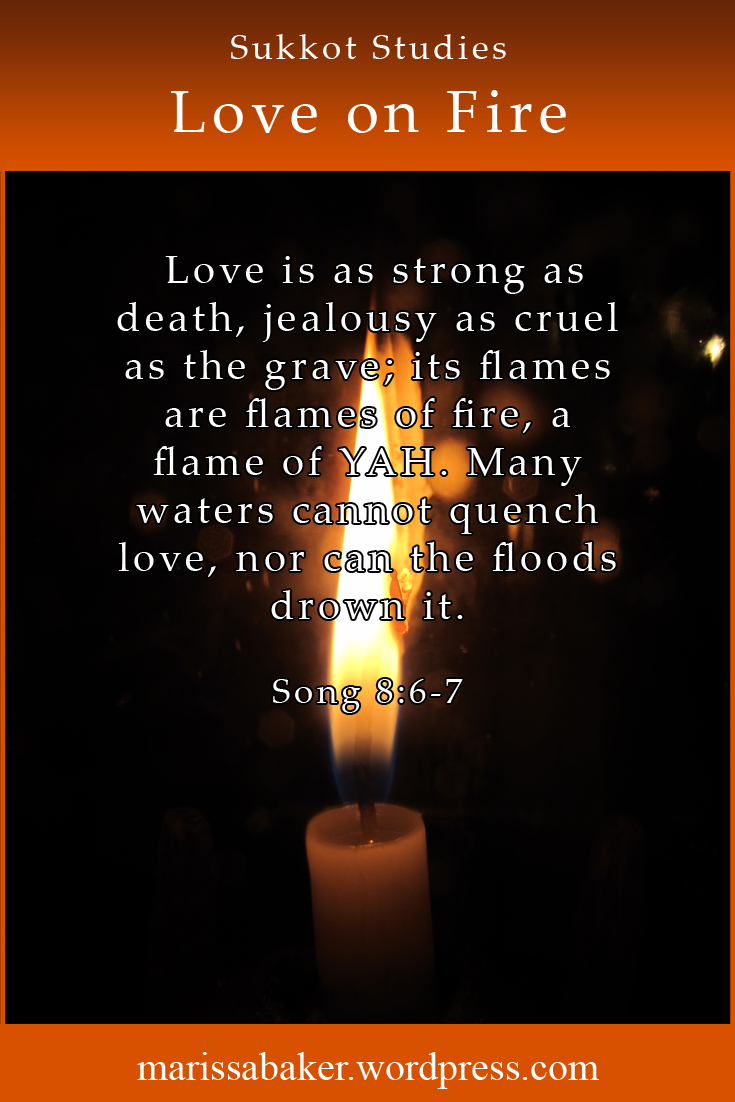
Set me as a seal upon your heart, as a seal upon your arm; for love is as strong as death, jealousy as cruel as the grave; its flames are flames of fire, a flame of YAH. Many waters cannot quench love, nor can the floods drown it. If a man would give for love all the wealth of his house, it would be utterly despised. (Song 8:6-7)

You might say these lovely verses from the Song of Songs are the Old Testament companion scripture to 1 Corinthians 13. Love is a fire fueled by YAH (which is a poetic form of YHWH usually hidden in English translations of this verse). Love like that can’t be put-out by anything the world throws at it, and it can’t be bought anymore than you can buy the holy spirit (Acts 8:18-21).

After Jesus’ resurrection, He appeared to two disciples on the road to Emmaus (Luke 24). He walked with them incognito and “expounded to them in all the Scriptures the things concerning Himself.” After they were allowed to recognize Him over dinner and He “vanished out of their sight” these disciples make an interesting observation (which I’m indebted to the aforementioned sermonette for connecting with the subject of God’s love).

And they said to one another, “Did not our heart burn within us while He talked with us on the road, and while He opened the Scriptures to us?”(Luke 24:32)

They recognized that “burning hearts” was a sign of Jesus being alongside them. When we’re abiding in Him and walking in obedience, we will be filled with the unquenchable love of God like a burning fire.

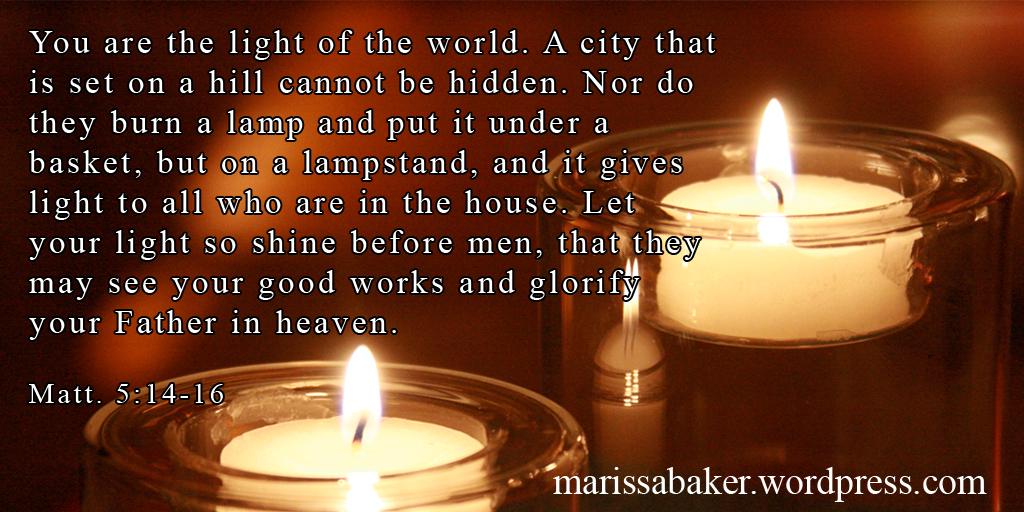
The Greek word translated “burn” in Luke 24 can refer to a literal flame, but there are several other places in scripture where it’s used to describe a condition inside people (G2545, kaio). John the baptist was described as “the burning and shining lamp” (John 5:35). We’re told to be watchful servants and ordered, “Let your waist be girded and your lamps burning (Luke 12:35). Kaio is also the word used when Jesus talks about us letting our lights shine like a burning lamp in the world (Matt. 5:14-16).

Love On Fire | marissabaker.wordpress.com
photo credit: Ashton, CC BY-SA, via Flickr

We need to let our lights, fueled by God’s love, burn so they can be seen. As we walk in the love of God, keeping His commandments and abiding in Him, unquenchable love should flow out from us to our brethren and neighbors.

Finding Your Real Myers-Briggs® Type

It’s so easy to take a pseudo-Myers-Briggs® test on the internet. You can click through a quick quiz, get your result and think, “Wow, I guess that does sound like me.” A few weeks later, you might stumble across another short quiz and take it again. Maybe you get a different answer and the description still sounds like you. Now you’re wondering whether this whole Myers-Briggs thing is all it’s cracked up to be, and if it is, then why were your results different?

This is one of the reasons Myers-Briggs tests have come under fire from critics who don’t really understand how the Myers-Briggs Type Indicator (MBTI®) is supposed to work. They look at the short little quizzes with generic feel-good results, and say it’s too simple and unreliable. But if you dive into the theory behind Meyers-Briggs, and especially cognitive functions (click here for an introduction to type functions), you start to realize how helpful the MBTI can be as a tool for understanding yourself and other people.

One of the principles of Myers-Briggs theory is that people only have one type, which stays consistent throughout their lives. You grow and develop within your type, but you don’t change from an INFP to an ENFJ to an ISTP or any other combination of letters. So with that in mind, how can you find your true type with so many conflicting results floating around?Finding Your Real Myers-Briggs® Type | LikeAnAnchor.com

Take A Good Test

Disclaimer: some of the links in this post are affiliate links. This means that, at no additional cost to you, I will receive a commission if you click on the link and make a purchase on that website.

If you can’t take the official MBTI, there are a few decent substitutes out there on the internet. My favorite by far is Personality Hacker’s Genius Style test.* They ask for an e-mail address, but it is free. One of my favorite bloggers, Susan Storm, also recently released a test. You can click here to take that.

Similar Mind’s Jungian test is another I’ve recommended (note from May 2017: recent changes to the test questions may skew results. You might want to try HumanMetrics instead). Some people really like the test from 16Personalities, but it’s not my favorite. These tests all give you a series of questions which are designed to learn what cognitive functions you use, then give you a four-letter test result.

I’d recommend starting with the Personality Hacker test, and then taking one or both of the other tests to compare results. Try not to read the full results of one test before you take the others — you want to take each one as unbiased as you can. If they all give you the same result, that’s a pretty good indication you’ve found your personality type. If they’re different, though, it’s time to start reading.

Compare Results

Now that you have one or more personality type results, start reading descriptions of your potential personality type(s). Here are some excellent resources:

Read the descriptions for each of your type results. Even if you only got one result, it’s a good idea to look at similar types that use some of the same cognitive functions. Here are a few guidelines for which other types to look up based on your test results.

If you test as an …

  • Introvert, read about the type which is opposite you on the J/P scale. The J/P preference describes how we interact with the outer word through our extroverted function, so an IJ type actually leads with a perceiving process and an IP type leads with a judging process. This can affect test results.
  • EJ, take a look at the type opposite you on the S/N scale. The tests found that you lead with an extroverted judging/decision making process, but might not have accurately found your introverted secondary process.
  • EP, take a look at the type opposite you on the F/T scale. The tests found that you lead with an extroverted perceiving/learning process, but might not have accurately found your introverted secondary process.
  • SFJ or NFJ, read results from ENFJ, INFJ, ISFJ, and ESFJ. These types all use Extroverted Feeling, and can often be mistaken for each other. Shy ESFJs and ENFJs can be mis-typed as introverts, and outgoing ISFJs and INFJs can be mis-typed as extroverts.
  • NT types, read the type opposite you on the E/I preference. ENT- types, especially ENTJs, are among the most “introverted extroverts” and might mis-type.

Think About Stress

Most tests look at your primary and secondary function — the driver and co-pilot processes that lead in our personality. This makes sense, since other functions are less well developed and we don’t use them as much unless we’re stressed. When we’re trying  to discover our true type is, though, how we react under stress is a good indication of which type matches us best.

Good type descriptions will also talk about the inferior function. An excellent book on this topic is Was That Really Me? How Everyday Stress Brings Out Our Hidden Personality* by Naomi Quenk.

Keep In Mind …

No personality test result is going to be a 100% perfect match. You’re looking for the one that fits you best. You will find elements of other descriptions that sound like you, but there should be one that fits better than the others. Pay close attention to descriptions of how your type uses cognitive functions. Descriptions of INFJ and INFP types, for example, sound similar but they lead with very different mental processes.

Good luck on your journey of self discovery! There’s a plethora of resources out there that can help you, including type-based Facebook groups and forums where you can talk with people of different types to see how they think. And if there’s anything I can help with, just ask!

*indicates affiliate links

Featured image credit: StockSnap via Pixabayy

Save