7 Fictional Characters That You’ll Relate To If You’re An INFP

What fictional characters do you relate to as an INFP?

Just as we can describe real people using the Myers-Briggs® typology system, we can also use the system to type well-written fictional characters. Some of fiction’s most iconic and intriguing characters are INFPs, and today we’re going to talk about seven of them that I think real-life INFPs will find relatable.

One great thing about looking at character personality types is that it helps us to better understand people who have different types than we do. Fictional INFPs can serve as examples for what real-life INFPs might be like, and also show how much variation can exist between individuals with the same type.

Alphonse Elric

Fullmetal Alchemist Brotherhood was the first Anime series I watched and it’s now one of my favorite TV series of all time. One of the highlights of this series (as well as the Fullmetal Alchemist series) is the character Alphonse Elric, who I’m pretty sure is either an INFP or an ISFP. Al is a sensitive, sweet young man with great strength of character. He believes deeply in doing what’s right and has a strong bond with the people he cares about, as do many real-life IFPs.

As someone who leads with Introverted Feeling (aka “Authenticity”) Al’s preferred mental process is one that’s concerned with inner harmony. As such, he makes decisions based on what feels right to him. As I’m sure many INFPs can attest, this isn’t an easy or straightforward way of figuring things out. It involves a life-long process of checking in with oneself, figuring out who you are, and finding the right way to navigate an often confusing world. Though he’s trapped in a giant suit of armor, Al is quite a young character and though the course of his story we get to see him working through a complicated process of discovering himself that I think many INFPs can relate to from their own growing-up years. Read more


When You’re Crushed Like Dust

Have you ever felt like your spirit is crushed and your heart broken? Like you’ve been pounded into dust or smashed to smithereens?

Those are the definitions for the Hebrew words shabar (H7665, broken) and dakka (H1793, crushed). I bring them up because I want to talk about this verse from Psalms:

Yahweh is near to those who have a broken heart, and saves those who have a crushed spirit. (Psalm 34:18, WEB)

When you’re ground down like dust and broken into pieces, God is there beside you. We often want Him to prevent or remove bad things but it seems that in most cases His preference is to walk with us through hardship rather than stop it from ever happening. We are promised deliverance, but in His timing, not ours.

Suffering and Deliverance

Let’s read some of the context for this verse (you can click here to read the whole Psalm).

The righteous cry, and Yahweh hears, and delivers them out of all their troubles. Yahweh is near to those who have a broken heart, and saves those who have a crushed spirit. Many are the afflictions of the righteous, but Yahweh delivers him out of them all. (Psalm 34:17-19, WEB)

It’s clear from this psalm that righteousness doesn’t exempt us from bad situations. In fact, “many are the afflictions of the righteous” and they have to cry to Yahweh for deliverance. That holds true for believers throughout the ages.

I endured those persecutions. The Lord delivered me out of them all. Yes, and all who desire to live godly in Christ Jesus will suffer persecution. (2 Tim. 3:11-12, WEB)

Here’s Paul, centuries after David, expressing the same truths. Those who follow God must expect to endure afflictions and persecutions, but they can also expect deliverance. Read more

How To Spot An INFJ

Adept at chameleon-like camouflage and the rarest of any type, spotting an INFJ out in the wild isn’t an easy thing to do. In fact, most people walk past INFJs without ever noticing them.

It’s kinda like in Peter S. Beagle’s The Last Unicorn, where most people who look at the unicorn just see a sad looking white horse instead of her true, magical nature. Except for the fact that no matter how odd/ethereal they might seem from overenthusiastic type descriptions online, INFJs are not in fact magical.

This post isn’t going to deep-dive into function stacks or walk you through how to identify someone’s Myers-Briggs type. You can click here to read a good article on that. Instead, we’ll be talking about characteristics that are often associated with INFJs and which you could spot in fairly casual interactions. Not every INFJ will have these traits, but if you spot several then there’s a good chance you might be talking with an INFJ or one of the similar types.

In Conversations …

If you’re in a conversation with someone you think might be INFJ, look for the following signs:

  • They listen intently, offering non-verbal and sometimes verbal feedback that lets you know they understand and are relating to you.
  • They respond in ways that let you continue directing the conversation where you want it to go.
  • Touching on a favorite topic makes their eyes light up and they get so excited to talk about it that they may even interrupt you.
  • They ask you questions and you feel like you’re really connecting, but you realize later they told you very little about themselves.
  • Argumentative conversations and debates make them visibly uncomfortable.
  • They may get flustered and have trouble organizing their thoughts if you ask them a question they don’t have a ready answer for.
  • Deep questions excite them, but they often need to think before responding.
  • Their conversations often include abstract and symbolic terms, and references that don’t quite make sense to most others around them.

Read more

Take Care of Yourself and Feel Everything

How much time do you spend taking care of yourself? I’m starting to realize self-care really is important. In fact, one might argue it’s vital if you want to keep functioning. Of course you don’t want to develop a self-centered attitude, but meeting your own needs isn’t selfish. In fact, it’s kind of a prerequisite for being unselfish because you can’t be there for other people if you’re worn so thin there’s nothing left to give.

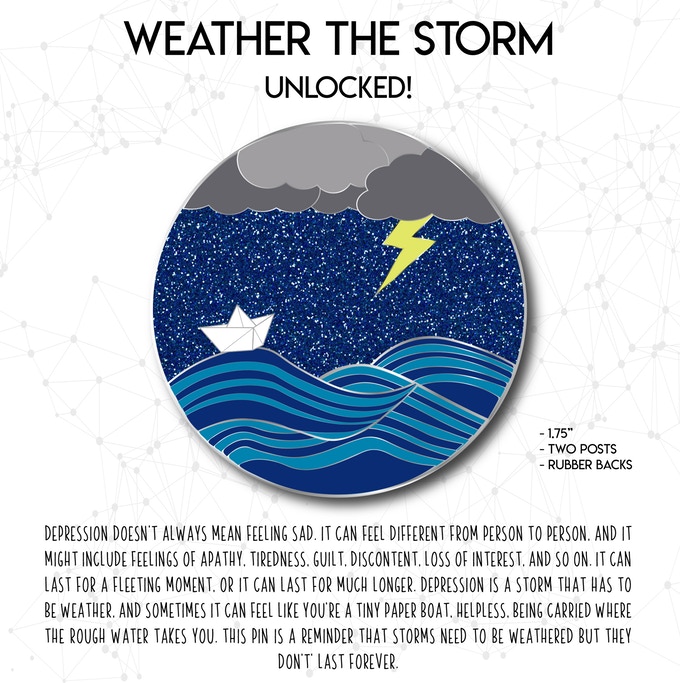
I backed a Kickstarter last week called “Own Your Stigma – A Pin Series.” The creator lives with anxiety, depression, and ADHD and wanted to make a series of enamel pins for other people with an invisible illness. The Kickstarter is closed now, but they’ll be opening up for other pre-orders within a few days if you’re interested. I’m not quite sure which ones I’m going to order yet, but I’m strongly leaning toward this one after the week I’ve had:

Snarky Co. pins

I talk about my anxiety pretty openly now. But I have a much harder time talking about my depression. For some reason, admitting I struggle with that washes me in a sense of shame that I don’t really feel anymore in connection with anxiety. So it’s not all that easy for me to write that for the past six days I’ve been barely functioning because even though nothing happened that would explain me feeling depressed I just emotionally “crashed.”

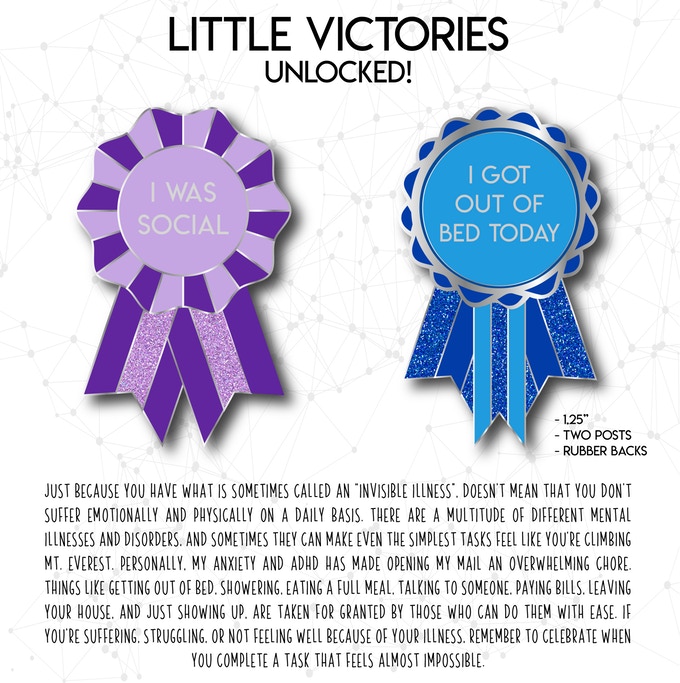
I probably won’t be ordering this particular pin style, but this past week climbing out of bed or talking with people did feel like something I might deserve a ribbon for.

Snarky Co. pins

It’s amazing how “little things” that seem so easy when you’re not walking around in an apathetic fog or feeling like you could fall asleep any moment suddenly become well-nigh impossible Writing, cooking, eating, driving, interacting with people — they’ve all felt incredibly difficult. But there are some things I’ve just had to keep doing, like meeting certain work deadlines, eating food, and going to church. I know that if I miss those things I’ll feel worse and/or it will have long-term negative effects on things that are important to me when I do care. So I made myself get them done.

Still, even though there are some things you just have to keep doing when you’re down, I don’t think it’s good to push yourself to do all things you’d be doing if you felt fine. It’s okay to crawl back in bed for a while when you feel like you can’t sit upright a moment longer. It’s okay to feel sad, guilty, confused, anxious, etc. even if it’s for no reason that you can identify. Which brings us to one pin I definitely want to get from this series:

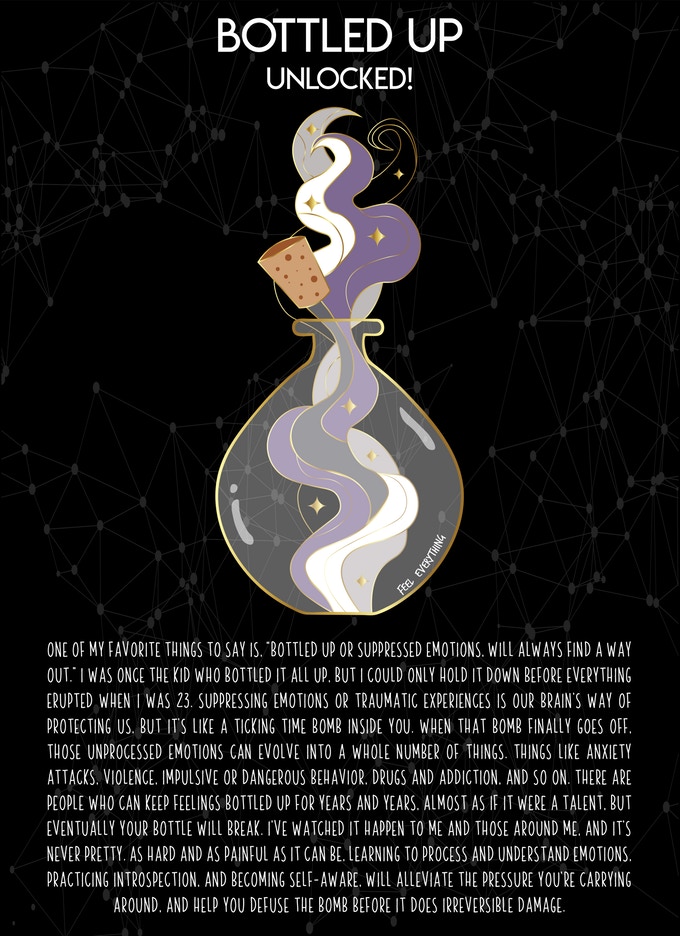
Snarky Co. pins

The text on this pin reads “feel everything.” I’m becoming a firm believer in this. I certainly don’t mean you should let your emotions control you or that your feelings are always going to tell you something that’s good for you. But I do think it’s vital that we let ourselves feel what we’re feeling and learn to process those emotions in a healthy way. Bottling things up and refusing to address them doesn’t usually make them go away. It just lets them build up until you’re forced to deal with a whole messy jumble of emotions farther down the road.

So let’s all make the time to take care of ourselves and give ourselves permission to feel everything. And maybe we can all learn together how to process the tough things and help each other when we’re struggling.


If you like the pins I’ve talked about in this post, then make sure you check out Snarky Co. Here’s a link to their Instagram.

Featured image credit: Foundry Co via Pixabay

Don’t Be Something Jesus Would Throw Out Of His Father’s Temple

Let’s take a trip back to the early 1st century. It’s a few days before Passover and the Jews are heading to Jerusalem for the Feast. As they travel, they sing the songs of ascent like they do every year. On this particular year, though, there’s an extra level of excitement. A man named Yeshua (Jesus) arrived on the scene a few years ago and many think he could be the Messiah. He’s even riding into Jerusalem on a donkey’s colt, as Zechariah said the Messiah would.

Hoshiya-na! Baruch haba B’Shem Adonai!” they call. Save us now! Blessed is He who comes in the name of the Lord!

As Yeshua rides in, the people spread their garments in the way. They also cut palm branches as if they were here for the Feast of Tabernacles instead of the Passover and the Feast of Unleavened Bread. They’re expecting the Messiah to kick the Romans out, redeem Israel, and restore the kingdom. They’re hoping for the fulfillment of Tabernacles — the Messiah, son of David, ruling in power and might.

Instead, this Yeshua turns his donkey toward the temple. Once there, he “drove out all of those who sold and bought in the temple, and overthrew the money changers’ tables and the seats of those who sold the doves.” Instead of driving the pagans out of Jerusalem, he drove corruption out of God’s house, saying, “My house shall be called a house of prayer,’ but you have made it a den of robbers!” Read more

Mental Illness and Musicals

The theater where my sister and I hold season tickets is getting the touring Broadway production of Dear Evan Hansen for its 2019/2020 season. Pretty exciting, right? Actually, I’m excited about the entire upcoming season. It’s packed full of musicals, and they’re all such good titles that I can’t say there’s one that I’m least exited to see.

I can, however, tell you that Dear Evan Hansen is one I’m most excited about. Two years ago, this musical was nominated for nine Tony Awards and won six, including Best Musical, Best Score, and Best Actor in a Musical for Ben Platt. And it more than earned those accolades with brilliant scrip, music, characters, and acting all coming together to tell a story that contributes to an important conversation about mental illness. Read more