There’s potential for meaningful friendship between two people of any personality type. However, certain types just seem to “click” more often than others. Today, I want to talk about that sort of connection happening between ENFJs and INFJs.
I’m an INFJ, and I’m blessed to have several ENFJs in my life, including my brother who is also one of my best friends. ENFJs are almost as rare as INFJs (about 2-5 percent of the population, as opposed to 1-3 percent), so meetings between them don’t happen all that often. But when they do, it’s often the start of a lasting, valuable friendship.
Understanding Each Other
I love spending time with ENFJs. With all the ones I’ve met (at least those who I know are ENFJ), there’s a sense of instant connection that comes with feeling truly understood and accepted. Plus they’re often easier to meet than other INFJs simply because they’re more extroverted. On top of that, they’re great listeners. INFJs crave understanding and connection, and since we’re usually the listeners it’s nice to meet someone who actually wants to listen to and understand you.
In Myers-Briggs circles, we say this type of connection is a result of shared learning and decision-making processes. INFJs lead with Introverted Intuition with a co-pilot of Extroverted Feeling, and ENFJs lead with Extroverted Feeling with co-pilot Introverted Intuition. We “get” each other because we see the world in extremely similar ways.
One of my favorite things about spending time with ENFJs is I never feel like we’re stuck on shallow conversation topics — they’ll dive just as deep into a subject as you want. Also, I love the fact that ENFJs actually voice the kind of random questions that pop into my head and throw them out for discussion. I suspect the ENFJs are also happy to find a conversation partner who’s willing and eager to talk about things like the origin of the universe, whether you’d rather fight a horse-sized chicken or a dozen chicken-size horses, and your own potential relationship compatibility with Disney villains.
Sometimes introverts, like INFJs, complain about feeling worn-out by their extroverted friends. We may love the fact that they help draw us out and will do the talking in situations where we don’t know anyone, but they don’t always understand our need for alone time or desire to leave the party early. This is not true of the ENFJs I know.
In general, ENFJs are friendly, gregarious and popular, but they also need down-time. They are one of the most “introverted extroverts” (along with ENTJs), and I usually find that by the time I’m ready to withdraw from a crowd, my ENFJ friends are as well. One-on-one conversations (or in small groups of 3 or 4 friends) are where I shine, and ENFJs are comfortable here as well.
ENFJs might wish their INFJ friends were a little more outgoing, but I never feel like they’re pressuring me to go past my people-limit. They want me to be the best version of myself that I can be, not to turn me into something else. Sometimes their drive toward perfection (of themselves even more than others) annoys and frustrates me, but I usually find myself admitting their advice is right.
Do you have experience with ENFJ and INFJ friendship pairings? What did you think?
Every girl who wants to be married has dreamed about what he will be like. Many of us have written lists of the traits our ideal man will have. Over the years, we’ve also heard various views on writing husband lists. Some people say you should have a list, so you know what you’re looking for. Others say that having a list makes your focus too narrow and that you’re “limiting God.”
I had a nice long list when I was in my teens, then a short list of “must haves,” and now a more specific idea that’s not written down. Recently, though, a married friend encouraged me to write a new list to pray over. She had a list, and when she was in her 30s she met a man who fit every thing she’d been praying for (right down to the kind of car he drove) and married him 2 weeks after their first meeting (yes, you read that right. They’re still happily married and have two teenage kids). I know other girls who’ve been told their standards were “too high” yet found guys who matched everything on the list they were praying for, and there are also ladies like blogger Lucinda McDowell who prayed for 24 things in a husband, and God gave her 23. Writing a list doesn’t make you “too picky” — it means you have standards, and that’s a good thing.
So I started work on my new list. And I thought perhaps other girls might find it useful to read about how I decided what to include. There are articles out there offering lists of non-negotiables for you to base your list on, but even the essential qualities are going to look a bit different for everyone. For example, if you’re Christian, some form of “He’s a practicing believer” is probably at the top of your list, but what does “practicing believer” mean to you?
Just a quick note … guys can write “wife lists” too, and I suspect that much of what I talk about here might be useful for that as well. Since I’m a girl thinking about a future husband, though, that’s what I’m going to focus on for this post.
Free Writing
I’ll be honest — I actually didn’t start with this step, but I think now I should have. You want your list to reflect the things you feel like you “should want” as well as what you truly desire, and so there’s often a feeling of not being able to ask for “little thing” or mention appearance at all. But if we’re honest, things that might seem shallow at first glance are still there in the back of our minds, which means they do matter on some level. Starting with free writing gives us a chance to put those little dreams on paper without feeling bad about them.
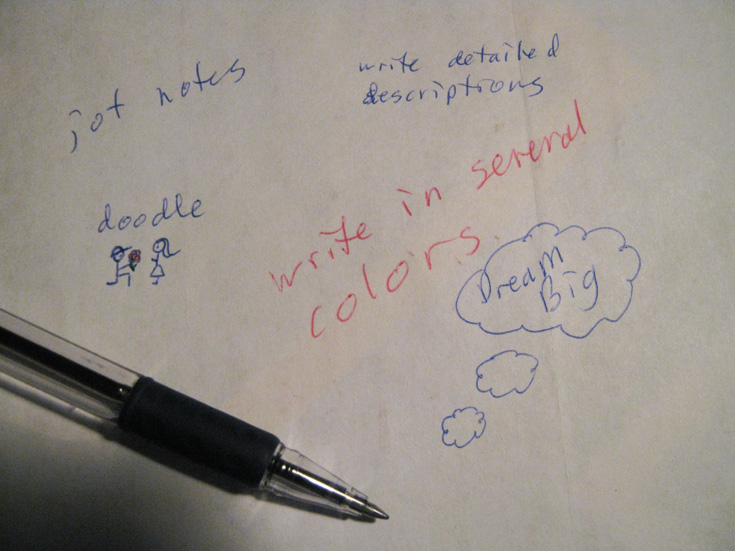
Grab a piece of paper and just start writing the first phrases and descriptions that pop into your head when you think about what kind of guy you would like to marry. Think about guys (real and fictional) you’ve had crushes on and list the things about them you found attractive. Think about guys you’ve dated and list things that you liked about them, and the opposite of the reason you broke up with him (i.e., if you’re boyfriend didn’t respect your boundaries, you might add “respects my boundaries”). Think about happily married couples you know and list things you want to see in your own marriage. Write down literally anything that you think of, no matter how unrealistic it sounds.
Now look back over your list. Circle anything that 1: doesn’t have to do with physical appearance and 2: you consider absolutely essential in a relationship. You’re looking for things that have to do with who he is as a person, like “loves God,” “good communicator,” and “we worship together.”
Next, look at the things you haven’t circled yet. Cross-out anything that you know is 1: not essential for you in a relationship (I crossed out “rich singing voice”), 2: only related to physical appearance (such as “taller than me), and/or 3: completely unrealistic. While you’re doing this, you might find that you can replace an unrealistic goal with a related realistic goal. For example, instead of “rich as Mr. Darcy” you might list, “able to provide financially for a family.” I would encourage you to pray about the things you want but know are unrealistic. Sometimes, we use unrealistic expectations to push other people away and shield ourselves from being vulnerable in relationships.
Now you have a sheet of paper with things crossed out, things circled, and a few things that are neither. For now, set this list aside.
Red, Yellow, Green
There’s a book called True Love Dates by Christian relationship counselor Debra Fileta that recommends writing three separate lists, and that’s where we’re going to start. Before you spend any more time writing down the things you want in a relationship, we’re going to write a list of things that are never okay.
“Stop” and “Slow”
The first thing you’re going to write is a Red list of traits that always mean “stop” when you notice them in a relationship. If a guy has any characteristic from your Red list, you do not pursue a relationship with him (no matter how many good traits he has). My Red list includes things like “does not believe in God/won’t respect my belief” and “refusal to communicate,” along with others like the examples Debra Fileta gives in her book:
Abusiveness (physical, verbal, emotional, or sexual)
Dangerous and uncontrolled temper or displays of aggression
Pattern of dishonesty or betrayal
The next step is writing a Yellow list. This is for things you’re not sure about and would need serious consideration and discussion before moving forward in a relationship. They give you pause, but don’t mean the relationship can’t work. A few on my list are “previously married” and “trouble handling money.” Here are more examples from True Love Dates:
Now for the fun part — the Green list or “husband list” of things you want to have in your relationship. If Red means stop and Yellow means slow down and reevaluate, Green means you can feel good about going forward with a relationship. Here’s where we get to go back to the free writing exercise.
I sorted my list into four categories: “Personal Values,” “Family and Relationships,” “Makes Me Feel …” and “Personality.” The circled phrases from my free writing exercise ended up in the first three categories, and many of the phrases that were neither circled nor crossed out ended up in one of the last two categories (you might even list a couple of the ones you crossed-out if they are still important to you). I saw the “Personality” category as representing things I want, but some of which could be negotiable. Here’s a few specific items from each list, so you can see what I’m talking about without me sharing a copy of the whole thing:
Personal Values
follows God and Christ first
uses his gifts to serve in some way
demonstrates integrity, commitment, faithfulness
Family and Relationships
respects and helps set boundaries
wants children
hospitable; welcomes guests and visitors to our home
Makes Me Feel …
protected and cherished
listened to and understood
like I’m valuable and contributing to his life
Personality
slow to anger
good communicator
enjoys discussing ideas
Looking At Yourself
Now that you have your list, turn it back on yourself and ask if you have those qualities. Would the guy you’ve written about want to date, or marry, you? Some of this should match pretty easily — you wouldn’t list a guy who wants 6 kids if you didn’t want 6 kids.
Others might be harder. If you listed a man who spends time with God every day, will he want to marry you if you regularly forget to study? Or if you ask for a guy who will never cheat on you, are you prepared to be faithful to him? If you want an Ephesians 5 husband, will you be an Ephesians 5 wife?
I hope this post was helpful to you — writing the list that inspired it has certainly helped me. While we know that God knows exactly what we need without us telling Him, I think it is helpful for us to have something more to ask Him than “please give me a good husband.” You’re putting effort into pursuing a relationship by figuring out what it is you’re looking for. God bless you, my dear readers.
Delight yourself also in the Lord, and He shall give you the desires of your heart. (Ps. 37:4)
I’ve been reading Captivating by John and Stasi Eldredge (or rather, re-reading, though it’s been 6 or 7 years and I only realized I read it once before when I recognized passages that spoke to my heart the first time). One of the main themes, and the one that left an impression on me from my first reading, is how much God wants me. He truly longs for a relationship with each of us, and it goes far beyond what we often mean when we say “God loves me.” God loves everyone. He has to, right? But when God tells us He loves us, He doesn’t mean an automatic benevolence that happens just because “God is love.” He means a real, passionate desire to be in relationship with you.
To be spiritual is to be in Romance with God. The desire to be romanced lies deep in the heart of every woman. It is for such that you were made. And you are romanced, and ever will be.” – from Captivating
This is speaking directly to women, so perhaps it won’t resonate so much with my guy readers. But God’s longing to be in relationship with us applies to both men and women in His church. Perhaps a glimpse of how being romanced by God looks to a woman will give you gentlemen some insight into what it means when Christ calls the Church His bride.
Almost 10 years ago, I started collecting favorite quotes in a notebook. One of the very first things I wrote down were the lyrics to “All I Ask Of You” from The Phantom of the Opera. On the opposite page, I lined it up with scriptures that spoke about the love between us and Jesus. Years later, I turned that into a video I never shared. For today’s post, I went back and updated that video with a few new scriptures. I think perhaps this is the best way to share what I’m trying to say today. Enjoy 🙂
People have been trying to use personality types to find their perfect romantic match since typology first became popular. In a previous posts about Myers-Briggs types and love languages, I talked about how falling in love — and staying in love — with someone is so much more complex than simply matching personality types. Sometimes when browsing personality type forums, I’ll come across posts from people asking how to find and attract a someone of a specific personality type (often it’s an ENTP asking for step-by-step instructions to win an INFJ, which I find hilarious). It’s like some of us think that if we can just find someone who is our ideal type-match, then we’ll be happy because we caught the mythical “compatibility” creature.
Disclaimer: some of the links in this post are affiliate links. This means that, at no additional cost to you, I will receive a commission if you click on the link and make a purchase on that website.
Now, I do have some personality types I find more attractive romantically than others, but it’s not always the types I’m “supposed” to like according to Myers-Briggs or Keirsey theories. Even Isabel Myers was happily married to a man who her theory said should have been incompatible. An understanding of love languages and a mutual willingness to understand and work with each other is one piece of the puzzle. Another is something I just learned this week from Personality Hacker.*
The “Genius System”
Personality Hacker was founded by Antonia Dodge and Joel Mark Witt, who use what they call the “Genius system” to divide Myers-Briggs types into four groups based on the last two letters in a person’s type. In terms of function stacks, this means they group types based on whether the type introverts or extroverts their Judging function. The groupings end up looking like this:
According to a new article on Personality Hacker, each of these groups look for and expressed love in a unique way. Most people would tell an INFJ to look for a relationship with an ENFP or an ENTP and avoid their opposite type, ESTP. This system stays that an ENFP and and ENTP express love in completely different ways, but ENTPs and ESTPs are actually very similar in how they love. That would explain why some INFJs find ENFPs really attractive, while others prefer ESTPs or ENTPs. It’s not so much about matching two specific types, as it is about finding types who express love in a way you relate to and understand. This Genius style take on the MBTI adds an intriguing aspect to the subject of personality types in relationships. You can check out the Personality Hacker podcast on how each type says “I Love You”* for a full explanation, but here’s my brief take on what this means:
Types of Love
“Harmony” types, who use Extroverted Feeling as their first or second function, feel loved when they are connected, safe, cared for, and accepted as their authentic selves. They express love in a similar way, by encouraging the people they love and keeping in touch with them. They are primarily concerned with harmonious relationships and emotional connection.
The types who use Introverted Feeling, “Authenticity” in the Genius System, highly value honesty in relationships. They feel loved when they know someone is being real with them and is supportive of their own authentic expressions. Authenticity types express love by giving people space to be themselves and being willing to work through problems in the relationship.
“Effectiveness” types, those who use Extroverted Thinking, value independence in relationship. They want to know that the person who loves them is supportive of their goals and can be trusted to function on their own. They are loyal and protective towards those they love, and give them room to be themselves.
Those who use Introverted Thinking, “Accuracy” types, feel loved when they are respected. They want to know that the person who is in love with them thinks they are impressive and that the relationship makes sense. In return, they are protective, non-judgmental, and strive to bring the best version of themselves to the relationship.
Matching Types
Ultimately, typology is simply a tool we can use to understand each other. When we understand ourselves and the people around us, we have a better idea of what we’re looking for in a romantic relationship. I think that’s really the best way to apply Myers-Briggs theory to romance. We can’t just say that all INFJs’ ideal match is an ENTP — people are far more nuanced than that, even within a type. But the better we understand how we’re wired and what makes us feel loved, the more likely we’ll be able to recognize whether a potential romantic partner would be a good or a bad match for us.
This is one of the things Debra Fileta talks about in her book and blog True Love Dates. You have to know yourself before you try to get to know other people in a romantic context, otherwise you have no idea what you’re looking for in a relationship. So maybe the first thing we should do when looking at the Genius System types is find which group we fit into. If we know who we are, we’re one step closer to knowing what we want.
The study is 20 years old, but I first became aware of it last week. In two days, I saw two different articles talking about falling in love and Dr. Arthur Aron’s “The Experimental Generation of Interpersonal Closeness.” (As an interesting side-note, this Dr. Aron is married to Dr. Elaine Aron, who we’ve talked about in connection to her research on Highly Sensitive Persons [HSPs].)
Aron’s study wasn’t actually intended to explore the science of falling in love — it was designed to study closeness and included both men-women and woman-woman pairs (because the sample group, a psychology class, was 70% women). The couples who fell in love were an unintended side-effect. Mandy Len Catron’s recent article “To Fall in Love With Anyone, Do This,” which called attention back to this study, demonstrates that the principles Aron used for studying accelerated intimacy between strangers can be applied to romantic relationships.
It’s a fascinating idea, made even more fascinating when you read his published research paper (what can I say? I’m a nerd) and find out about some of his other results. Is there a difference in closeness for introverts and extroverts? Can you truly become close to someone in less than an hour? What is it that effectively increases closeness?
Introverts and Extroverts
One thing I found fascinating about this study, which wasn’t brought out in any of the other articles I read, was Dr. Aron’s observations on the role introversion and extroversion played. In Study 3, Dr. Aron had the participants take a Myers-Briggs test, then used those results to create extrovert-extrovert, extrovert-introvert, and introvert-introvert pairs. Some of the pairs were told the experiment’s goal was to get close to the person you were paired with, and the others were told the study was about “dyadic interaction” and their job was simply to work through the questions.
Extroverts reported closeness in all cases, but introverts only reported closeness when they were told that closeness was a goal. Dr. Aron says, “these data shed doubt on the view that introverts are less social because they are less skilled at getting close. Indeed, when getting close is made an explicit task, introverts became as close as extraverts.” When introverts want to get close to someone, we’re just as capable of socializing with them as extroverts.
Is It Real?
The experiment succeeded in producing a feeling of closeness between two people, but is that closeness as real as a relationship that develops over time? Of the 58 people who completed follow-up questionnaires, 57% had a least one more conversation with their study partner, 35% got together to do something, and 37% started sitting together in class. One couple got married 6 months after the study.
So are we producing real closeness? Yes and no. We think that the closeness produced in these studies is experienced as similar in many important ways to felt closeness in naturally occurring relationships that develop over time. On the other hand, it seems unlikely that the procedure produces loyalty, dependence, commitment, or other relationship aspects that might take longer to develop.
In one of Dr. Aron’s tests, he paired individuals with shared interests, and individuals who shouldn’t have gotten along well based on their different responses to a questionnaire. He also conducted tests where pairs were assigned without filling out pre-tests to determine whether or not they were compatible. In all cases, participants reported similar levels of closeness. That indicates we can rapidly feel close with just about anyone, but on the long-term this closeness might not last because other considerations (like whether or not you share important values) will eventually come up.
Small Talk’s Not Enough
One thing Aron’s research found was that small-talk doesn’t do anything to bring people closer together (which I’m sure many of us have suspected for years). Talking about things people had done, what they liked and disliked, or other people they knew did not produce closeness between the two study participants. Here are some examples of the small-talk prompts used in his study:
If you could invent a new flavor of ice cream, what would it be?
Do you like to get up early or stay up late? Is there anything funny that has resulted from this?
What is the last concert you saw? How many of that band’s albums do you own? Had you seen them before? Where?
In contrast, the types of questions which did draw people closer together focused on how they feel about the way they live their lives, why they think the way they do, and what helps them connect with other people. Here are a few examples, and you can read the full list of closeness-generating questions at the end of his published research paper (which I linked in the intro), or by clicking this link.
What would constitute a perfect day for you?
Is there something that you’ve dreamt of doing for a long time? Why haven’t you done it?
Tell your partner what you like about them: be honest this time, saying things that you might not say to someone you’ve just met.
Maybe there is a reason people devote so much time to small talk, which we introverts find so frustrating because we crave deep conversations. If we were having deep conversations with everyone, though, we’d feel very close to a lot more people. Maybe small talk protects us in a way, though it can also hinder genuine conversation.
Some Thoughts
Now that I’ve read about this research, part of me would really like to try it out and part of me thinks it sounds scary. I always thought that love is a choice, but there’s a part of me that feels like falling in love should just happen, then once you commit to the relationship you choose to keep loving each other. But Dr. Aron’s research indicates that you can choose who you become close to in the first place, and you can reach a level of closeness in less than an hour that approaches closeness you feel for people you’ve known many years. I think I’d be rather picky about who I went through these questions with, but it might be a great way to let yourself be vulnerable and open up possibilities in a relationship.
This week, I was reading someone’s comments on a young lady’s question about her increasingly physical relationship with her boyfriend when I ran into a phrase that always makes me twitch. The commenter suggested breaking up with the boyfriend immediately, then said, “Do not get attached to any boy until you are ready to have a serious relationship.”
Now, that might be good advice in this specific case (since the girl was 16 and had only been dating the guy for 3 months). But in Christian circles, the idea of not getting attached to anyone until you’re ready to get married has been painted with a wide brush across a whole range of situations. It’s often treated as a sure solution to avoiding heartbreak and keeping yourself “pure” for God.
Concerning Conduct
I first heard this advice in courtship circles, where young people are advised to avoid developing feelings for someone of the opposite sex and just be friends until they reach a point where they want to get married. Then, in theory, you can start courting one of these friends and explore the possibility of marriage with them. If you develop feelings for someone before you’re in a position where you could get married to them, then you’re doing something wrong.
Struggle then against yourself as you would struggle against an enemy. Refuse to listen to a wish, to dwell even upon a possibility, that opens to your present idea of happiness. All that in the future may be realized probably hangs upon this conflict. … I only require from you what depends upon yourself, a steady and courageous warfare against the two dangerous undermines of your peace and of your fame, imprudence and impatience.
If not for the slightly out-dated language, you might think I quoted this from a courtship book written within in the past ten years or so. Actually, this quote is from the novel Camilla, first published in 1796 by Frances Burney. It’s part of the letter a pastor writes to his daughter, and is based on 18th century conduct books. Camilla’s father urges her not to let the man she is attracted to learn of her affection, because as a woman it is her duty to “retire to be chosen” by a man rather than seek out a man she loves. It doesn’t turn out quite like he planned, though, since Edgar is waiting for a sign that Camilla has feelings for him before he confesses his attraction to her. They spend much of the 913 pages of this novel miserable because neither one thinks they can properly and decently give the other a hint about how they feel.
On Heartbreak
There are oodles and oodles of songs and stories about heartbreak. Two people fall in love (or at least become quite attached to each other), have a relationship, then the relationship ends and one or both people end up with “broken hearts.” One thing this model presupposes is that you have to be in a relationship in order to get your heart broken. I don’t think that is the case. You can experience the feeling of heartbreak without actually having been in a relationship with someone.
This is one of the things the courtship movement got right — if you let yourself get attached to someone, there’s always the chance that they can hurt you, even if it’s simply by not returning your feelings. Courtship phrased this as “giving away pieces of your heart,” and said the reason it’s a bad idea is because then you don’t have as much heart left to give the person you actually do marry (which is really a ridiculous idea when you think about it; it’s not like we’re born with a set amount of love that we have to dole out sparingly, but problems with the courtship movement is a topic for another day).
I’ve never been in a romantic relationship, but even so I feel like my heart’s been broken a few times. It’s largely my own fault, too — I let myself get pretty close (emotionally) to a few guys I liked, and nothing came of the relationships. But would I have been better if I’d tried to keep myself from feeling anything at all, as Camilla’s father suggests? I really don’t think so.
On Vulnerability
Being open to the possibility of heartache is a prerequisite for entering any kind of relationship. The people who know us best and who we are closest to are those who are most capable of loving us, but they are also the people who could most easily hurt us. If we want to gather people around us to love and be loved by us, we have to take risks. We have to have the strength to be vulnerable.
To love someone fiercely, to believe in something with your whole heart, to celebrate a fleeting moment in time, to fully engage in a life that doesn’t come with guarantees – these are risks that involve vulnerability and often pain. But, I’m learning that recognizing and leaning into the discomfort of vulnerability teaches us how to live with joy, gratitude and grace.” ― Brené Brown, from “The Gifts of Imperfection”
Now, we should exercise a certain amount of caution when letting people get close to us. Some people simply cannot be trusted with your heart, but you usually don’t know who these people are until you start to get to know them. The key is to be vulnerable in stages. Don’t pour out all your thoughts, emotions, and self into someone you just met. You do, however, need to start connecting to people authentically if you want to develop relationships. Locking everyone out might keep them from breaking your heart, but you’ll end up lonely if you try that and loneliness can feel an awful lot like heartbreak.
Brene Brown has a great TED talk about this subject. She says that the people who have “a strong sense of love and belonging” see vulnerability as fundamental. They share a willingness “to say ‘I love you’ first, the willingness to do something where there are no guarantees … to invest in a relationship that may or may not work out.” It’s not easy, and it’s not guaranteed to keep you safe, but I think it is better to risk getting close to people than fighting your human desire for connection “as you would struggle against an enemy.”
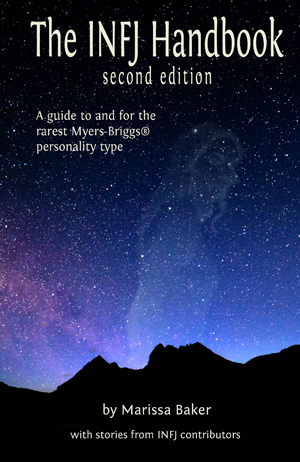 If you’d like to know more about the INFJ personality type, check out my book The INFJ Handbook. I just updated it with a ton of new information and resources. You can purchase it in ebook or paperback by clicking this link.


 If not for the slightly out-dated language, you might think I quoted this from a courtship book written within in the past ten years or so. Actually, this quote is from the novel Camilla, first published in 1796 by Frances Burney. It’s part of the letter a pastor writes to his daughter, and is based on 18th century conduct books. Camilla’s father urges her not to let the man she is attracted to learn of her affection, because as a woman it is her duty to “retire to be chosen” by a man rather than seek out a man she loves. It doesn’t turn out quite like he planned, though, since Edgar is waiting for a sign that Camilla has feelings for him before he confesses his attraction to her. They spend much of the 913 pages of this novel miserable because neither one thinks they can properly and decently give the other a hint about how they feel.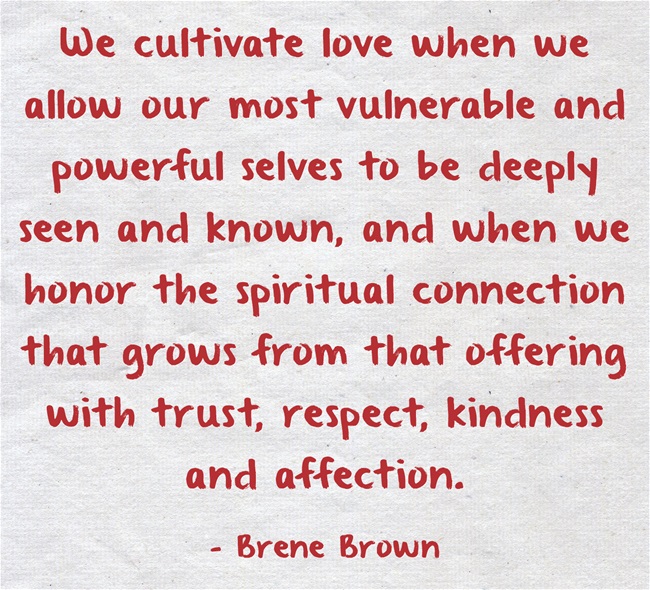
 Like An Anchor