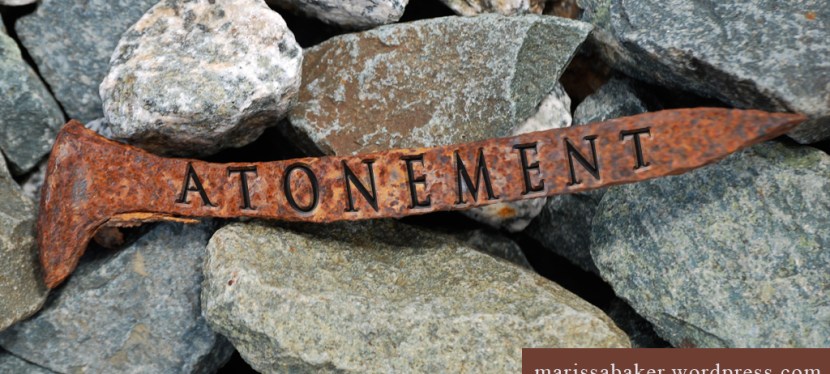
A blessed Yom Kippur/Day of Atonement to you all. Earlier this month, I subscribed to Bible Gateway’s newsletter Holy Land Moments with Rabbi Yechiel Eckstein. It’s described as a way to learn about the Jewish background of Scripture by exploring the High Holy Days.
I’m finding it fascinating. I grew up keeping these Holy Days, but not always with much understanding of the Jewish perspective on them. While some of the Jewish tradition doesn’t relate to Christian observance of these days, they often teach a perspective that deepens my understanding. Take the Days of Awe for example. Using the 10 days between Trumpets and Atonement for self-reflection and repentance deepens the meaning of and my engagement with this holy time. And sometimes, the Jewish perspective sparks a thought about how my Christian perspective differs, such as today’s comment in the Holy Land Moments newsletter:
The central part of the Yom Kippur service is missing today. Chapter 16 of Leviticus is dedicated to the description and instructions for the Yom Kippur service that was performed when the Tabernacle and later the Temples stood. Today, we no longer have a high priest, nor do we participate in ritual sacrifices. So how do we achieve atonement?
Those who believe Messiah has come have a different answer to this question than those who don’t. Rabbi Eckstein writes,”There are three keys that take the place of the service performed in biblical times” and they “can undo our wrongdoings and change things for the better.” These things are “repentance, prayer, and charity.”
While those things are important, I thank God through Jesus Christ my Lord that I’m not trying to atone for myself. There’s no way I could ever do enough or be good enough to undo my own sins. Today, we do have a High Priest and He has filled the ritual sacrifices with His perfect sacrifice (Heb. 7:23-28). The “central part” of Yom Kippur isn’t missing for Christians who keep this Holy Day — it’s more real than ever. Read more →
Today we celebrate Yom Teruah, also called Feast of Trumpets and Rosh Hashanah. But why? After all, I’m Christian and most people think of this as a Jewish holiday. Same goes for Yom Kippur/Day of Atonement, which we’ll observe 10 days from now, and Sukkot/Feast of Tabernacles that starts in two weeks.
I believe these festival observances, along with others already completed this year, are for Christians today. When Jesus came to this world, it wasn’t to set up a new religion. He was the next step in God’s plan for the world and these days are part of the covenant He makes with His family. He’s still inviting us to gather for “reunions” at certain times of the year.
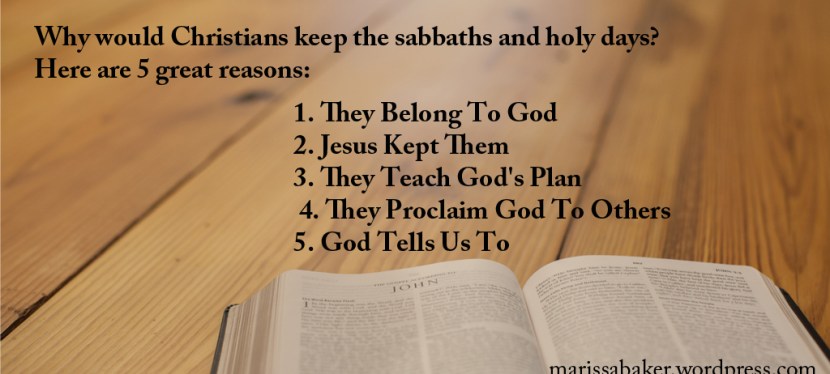
1. They Belong To God
And the Lord spoke to Moses, saying, “Speak to the children of Israel, and say to them: ‘The feasts of the Lord, which you shall proclaim to be holy convocations, these are My feasts.” (Lev. 23:1-2)
The holy days aren’t Jewish or exclusively Old Testament. They belong to God Himself. We talk about Leviticus 23 as the chapter where God gives Israel the Feasts, but that’s not quite accurate. God doesn’t say, “Here are your holy days, Israel.” He says, “These are the feasts of the Lord, holy convocations which you shall proclaim at their appointed times” (Lev. 23:4). Read more →
The people of God are set apart, with different priorities, habits, and festivals than the rest of the world. We may celebrate national holidays of our homelands, such as July 4th for Americans, but those are not the observances that shape our identities as God’s people. The kingdom we belong to under Christ’s authority has a different calendar.
A couple months ago, I read Desiring the Kingdom by James K.A. Smith. In “Chapter 5: Practicing (for) the Kingdom,” he discusses “rhythms and cadences of hope” that Christians observe in weekly and annual practices. For him, this means Sunday, Easter, Lent, Advent, Christmas and others. He connects the observances to a rich history of “a people gathered to worship the Messiah, who does not float in some esoteric, ahistorical heaven, but who made a dent in the calendar — and will again” (p. 157).
However, when you read the Bible, you won’t find the days Smith talks about on God’s calendar. Even the one mention of Easter in the KJV is a mistranslation of pascha, or Passover (Acts 12:4, Strong’s G3957). Rather, we find the church from the Torah to Revelation on a calendar even more unique than the one Smith claims for Christians. I know it puzzles many Christians that I would keep the “Jewish holidays,” but I find it equally puzzling that they would continue a tradition of co-opting pagan holidays and attaching them to Biblical events God gave no instructions to observe. When we search the scriptures looking for God’s version of liturgical rhythms, we find a worship pattern far more richly layered and deeply rooted in God’s plan than what man has invented.
The observance of time in the Bible begins at Creation. On the fourth day, God said, ““Let there be lights in the expanse of the sky to divide the day from the night; and let them be for signs to mark seasons, days, and years” (Gen 1:14, WEB). On the seventh day God rested “from all his work which he had done.God blessed the seventh day, and made it holy, because he rested in it from all his work of creation which he had done” (Gen. 2:2-3, WEB; see also Ex. 20:11; 31:17).
From the very beginning, God set up a world that allowed for marking time in weekly, monthly, and yearly rhythms. The Sabbath was established from the foundation of the world, and there’s no scriptural evidence that it was ever moved from the seventh to the first day (click here for my Sabbath post). The other holy days were set in place as God revealed His plan and established His covenants, but the Sabbath was there since the beginning and will be with us forever (Is. 56:2-7; 66:22-23; Mark 2:27-28; Heb. 4:9).
The months were marked by new moons, making the Hebrew calendar lunar (which is why the holy days “move around” on the Gregorian calendar). Exodus establishes which month begins the year (Ex. 12:2) and calls it Abib (Ex. 13:4). The new moons aren’t counted as Sabbaths and we know very little about how they were observed. We’re told there was trumpet blowing and offerings (Num. 10:10; 28:11-15), we read about people gathering together (1 Sam. 20:5, 18, 24, 27; 2 King. 4:22-23), observance is mentioned in a Millennial setting (Is. 66:23), and once they’re mentioned in the New Testament alongside holy days and Sabbaths (Col. 2:16-17). Most of us aren’t sure what to do with them today and ignore them, and I confess I’m guilty of that as well.
Image by Jantanee from Lightstock
Remembering Our Savior
The first month, Abib, begins the holy day cycle with Passover on the 14th. Originally, the Passover (Pesach in Hebrew) was kept as a memorial of God rescuing Israel from Egypt and sparing their firstborn by passing His vengeance over the houses covered by the blood of a lamb. Jesus Christ fulfilled what was pictured here when He died as our Passover lamb, and He up-dated Passover observance for His new church.
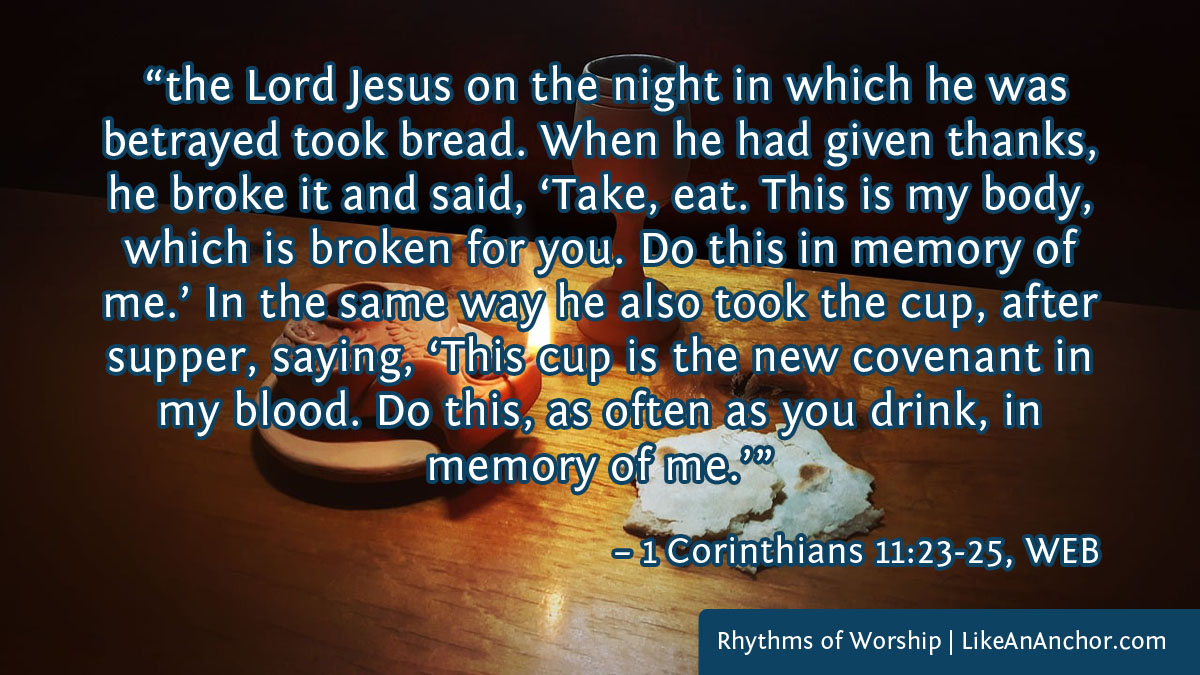
Many churches today keep the Passover, but in many Christian denominations it has been replaced with Easter and the ceremony Jesus instituted on His last Passover is done regularly as Communion. However, Jesus never tells us to mark His resurrection day with a yearly observance. Rather, He says during the Passover ceremony, “Do this in remembrance of me” (Luke 22:19, NET). Even if we did remember Him in communion throughout the year (there are some scriptures you could use to support that practice), it would not eliminate the need to observe Passover the way that Christ did. The resurrection was incredibly important, but Jesus didn’t want us to stop keeping Passover and replace it with Easter.
In his book Surprised by Hope, N.T. Wright laments how little time is spent in celebrating Easter and argues “it ought to be an eight day festival” (p. 256). If he were to step back from Easter and take another look at Passover, he would see God did indeed set up eight days of observance. Passover starts things off, then the following day begins the seven-day festival of Unleavened Bread (Chag HaMatzot). If we look at a timeline of Jesus’ death and resurrection, we find that He rose from the dead when the sun set on Saturday, ending the weekly Sabbath and starting the first day of the week. He ascended to His father the following Sunday morning (John 20:1-17), which corresponds to a special ceremony outlined in Leviticus 23:9-15 called the Wave Sheaf or First Fruits. This ceremony marked the beginning of a 50-day count to Pentecost.
Set back in the context of the Biblical holy days, our remembrance of Christ’s Passover sacrifice kicks-off a week long festival where we remember that because “Christ, our Passover, has been sacrificed in our place” we are being made into a people untainted by the yeast of sin (1 Cor. 5:6-8). It should be a time of rejoicing and appreciation for all that’s pictured in His sacrifice and in His resurrection. When we mark the Wave Sheaf as the day He ascended to His Father following His resurrection and start counting to Pentecost (Shavuot), we have a reminder built into God’s holy calendar that without the resurrection of Jesus the church wouldn’t have the holy spirit. And so we celebrate Pentecost, the day God poured His spirit out on the New Testament church (Acts 2:1-4) as a direct result of the resurrection of Jesus Christ and the work He’s currently doing in and with His church to make us firstfruits.
On the first day of the seventh Hebrew month, the Lord commanded Israel, “you must have a complete rest, a memorial announced by loud horn blasts, a holy assembly” (Lev. 23:24, NET). Many interpret this day as picturing the return of Jesus Christ because “the Lord himself will descend from heaven with a shout, with the voice of the archangel and with God’s trumpet” (1 Thes. 4:16, NET). In Jewish tradition, trumpets were blown the entire month leading up to the Feast of Trumpets (Yom Teruah). Messianic rabbis teach the trumpet calls proclaim, “The Bridegroom is coming! get ready to meet Him.” What could be more relevant for the church today as we draw ever closer to Jesus’ second coming?
Ten days after Trumpets, we cycle through to a solemn, serious holy day called the Day of Atonement (Yom Kippur). This day is marked by fasting, prayer, and a complete Sabbath rest from all work. Judging by the amount of scripture space devoted to its observance (Lev. 16:1-34; 23:26-32, and others), this day was very important to God, and it still is. Atonement was called an “everlasting statute” and Paul was still marking it in the New Testament (Acts 27:9). Unfortunately, it’s been so stereotyped as a Jewish holiday that most Christians don’t even consider the depth and meaning this day takes on following Christ’s atoning sacrifice, His resurrection, and His exaltation to the role of High Priest. Instead, they’re distracted during the fall season of the year by thoroughly pagan Halloween and non-scriptural All Saints and All Souls days.
The holy day cycle, like the plan of God, culminates in a celebration. Every weekly Sabbath looks forward to the time when Christ will reign on this earth as present, powerful, King of kings and Lord of lords, but the Feast of Tabernacles (Sukkot) takes the picture further. We dwell in temporary shelters as a reminder that we are sojourners here on this earth awaiting the return of our Lord and looking forward to a time when His kingdom will be here on earth. Sukkot also looks back, at the children of Israel who God made to live in tabernacles, or “temporary shelters,” when He “brought them out of the land of Egypt” (Lev. 23:42-43, WEB). Jesus kept this Feast (John 7:2-10, 14, 37) and it will be kept in God’s future kingdom (Zech. 14:16). We can’t argue it’s irrelevant to the church today; it hasn’t even been fulfilled yet by God’s Millennial Kingdom. Wrapping up the holy day cycle, the Feast ends with an eighth day, the Last Great Day, pointing to the final judgement day and the New Jerusalem (Revelation chapters 20-22).
Aligned With The Lord
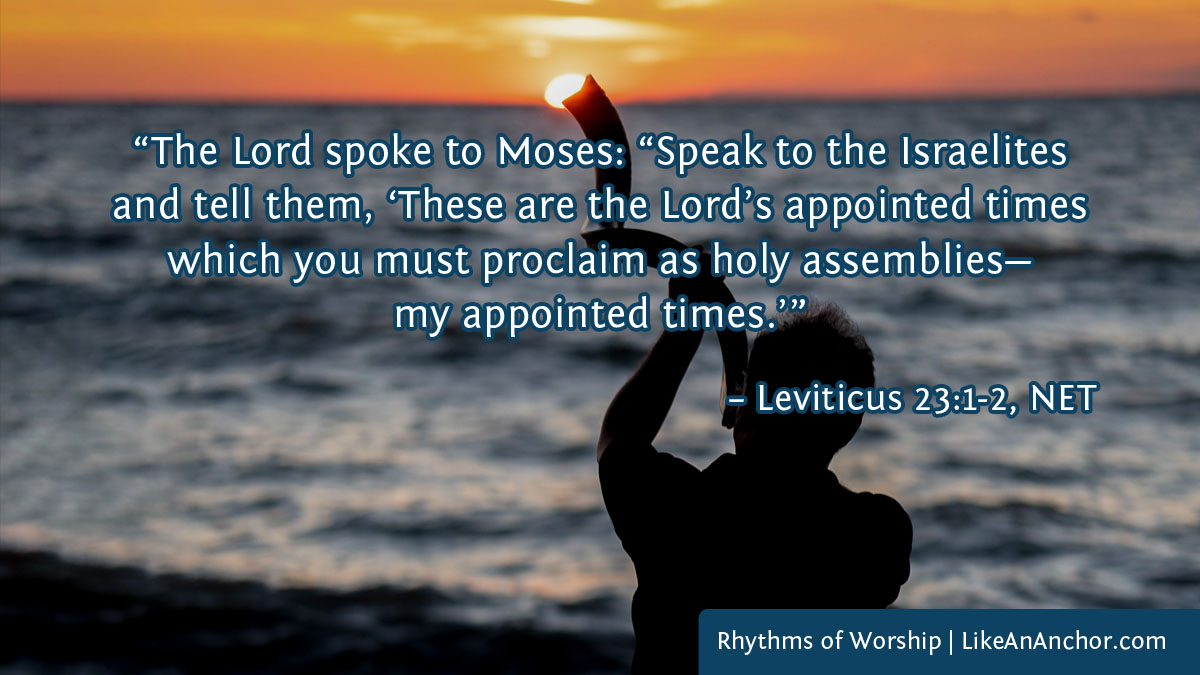
So why aren’t all the Christian churches on God’s calendar? I’ll be honest, this is something I really don’t understand. To be clear, I under stand why people who never learned about God’s holy days and who are members of churches that dismiss these days don’t keep them. Unless you study God’s holy days for yourself, you’re unlikely to hear about them in most churches. But I don’t understand how Bible teachers justify the omission. Why distance yourself from the rhythms of worship God says belong to Him? In Leviticus, before outlining all the holy days, God says, “These are the Lord’s appointed times which you must proclaim as holy assemblies—my appointed times” (Lev. 23:1-2, NET). They are days Holy to our great God, not something just for a specific group or time. So why abandon them for days with observances rooted in pagan holidays like the worship of Ishtar/Astarte (for Easter) and mid-winter Saturnalia (for Christmas)?
I’m not just talking about Christian leaders today. This substitution of man’s days for God’s days goes back centuries–so far that Easter and Christmas are called “Christian” traditions and the days Christ Himself kept are a distant memory. It’s time for the church to ask itself some tough questions. Is God pleased when we use pagan holidays to “worship” Him, even after we pretty them up and associate them with events in the Bible? Or would God be more pleased if we value the holy days He set aside for His people from the establishment of His covenants? The way we live our lives matters to God, and He’s watching to see whether we’ll cling to traditions of men or whether we’ll cling to His word, His kingdom, and His plan.
I hope no one feels like I’m attacking them or their beliefs. I’ve thought long over how to phrase this post, and even debated whether or not to share it. I truly feel, though, that the closer we align ourselves with God’s word, the more He will reveal of His plan and the closer our relationships will be with Him. May God’s blessing rest on you all, my friends.
Featured image by José Roberto Roquel from Lightstock
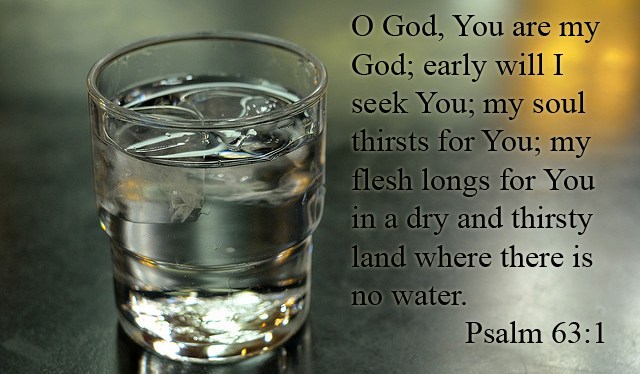
I woke up this morning and reached for my water bottle. It wasn’t there, of course, since today is Yom Kippur (Day of Atonement) and we started fasting last night as the sun set. What struck me was how automatic the gesture was — I always have a bottle of water nearby, and grabbing it when I feel thirsty is almost unconscious.
So I asked myself, “Do I long for God the way I crave water when fasting?” Jesus called Himself the “living water.” Just as we need water to survive physically, so we need Him to survive spiritually. And yet somehow, I don’t think we are as attentive about drinking Him in as we are physical water. We should keep Him even closer than I usually keep my water bottle, and turn to Him at every reminder just like we take a drink whenever our throats feel a bit dry.
photo credit: [cipher], CC BY-SA, via FlickrThe Jews consider Yom Kippur the most solemn and holy day of the entire year, and I’m inclined to agree with them. This isn’t to belittle any of the other holy days or the weekly Sabbath, but God does seem to put a special importance on this day. For one thing, it’s the only day when He strictly specifies “you shall do no work at all.” The other holy days are also days of rest, but He uses a different phrase for that: “you shall do no customary work” or “No manner of work shall be done on them; but that which everyone must eat—that only may be prepared by you.”
And the Lord spoke to Moses, saying: “Also the tenth day of this seventh month shall be the Day of Atonement. It shall be a holy convocation for you; you shall afflict your souls, and offer an offering made by fire to the Lord. And you shall do no work on that same day, for it is the Day of Atonement, to make atonement for you before the Lord your God. For any person who is not afflicted in soul on that same day shall be cut off from his people. And any person who does any work on that same day, that person I will destroy from among his people. You shall do no manner of work; it shall be a statute forever throughout your generations in all your dwellings. It shall be to you a sabbath of solemn rest, and you shall afflict your souls; on the ninth day of the month at evening, from evening to evening, you shall celebrate your sabbath.” (Lev. 23:26-32)
On the Day of Atonement, everything stops. We stop eating, we stop drinking, and we stop doing any work. Usually, my morning routine goes like this: pray, feed fish, make breakfast, read a book, Bible study, yoga, then start working. On the Sabbaths, I usually only do the first three and then head off for per-services dance practice. But today, the only thing I have to think about is thirsting after God. I took a minute to feed the aquarium fish, but that’s it. I don’t have to worry about making breakfast or scheduling my day. I can listen to Hillsong music, pray, study, and turn my thoughts into this impromptu blog post.
I wonder if my younger self would have believed she’d learn to look forward to the Day of Atonement. Fasting doesn’t make me terribly ill, but it’s not really easy for me either, and I often thought of it as something we just had to get through before the Feast of Tabernacles. But, God be praised, I’m starting to learn more about how amazing this day is and why He considers it so important.
I pray each of you has a blessed, refreshing Yom Kippur that draws you closer to God.
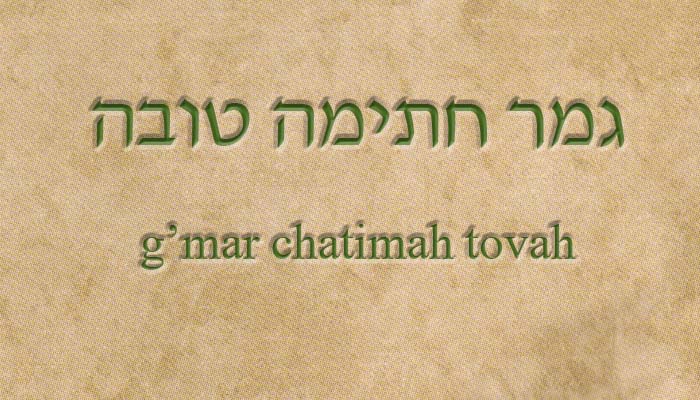
G’mar Chatimah Tovah — traditional Hebrew greeting for this season. Literally,” A good final sealing” or idiomatically, “May you be inscribed (in the Book of Life) for good”
The fall holy days are yearly reminders that this world isn’t permanent. Yom Teruah (Feast of Trumpets) pictures Jesus Christ’s return and signals preparation for His arrival. Yom Kippur (Day of Atonement) reminds us of the price paid to redeem us and points to a day in the future where Satan is finally locked away. Sukkot (Feast of Tabernacles) looks forward to the establishment of God’s kingdom on earth.
Peter talks about this day of the Lord’s return in his second epistle, and asks a very important question.
Therefore, since all these things will be dissolved, what manner of persons ought you to be in holy conduct and godliness, looking for and hastening the coming of the day of God, because of which the heavens will be dissolved, being on fire, and the elements will melt with fervent heat? (2 Pet. 3:11)
We know what’s coming, at least in part. We don’t know when, but we know the world isn’t sticking around. We also know that God expects certain things from His people if they want to receive a reward of righteousness in the final judgement.
Return To God
In traditional Jewish teachings, this Sabbath between Yom Teruah and Yom Kippur is known as Shabbat Shuvah — the Sabbath of Return. It also plays on the word “teshuva,” meaning repentance, since that’s a central theme of these days. This is a topic dear to Zechariah, who comes next in my study of the minor prophets.
Like Haggai, where we spent so much time a few weeks ago, Zechariah wrote his book of prophecy during Zerubbabel’s temple rebuilding. More than Haggai, he also writes about future events pictured by these holy days. Even with a focus on the future, though, the first thing recorded in this book is a plea for immediate action.
In the eighth month of the second year of Darius, the word of the Lord came to Zechariah the son of Berechiah, the son of Iddo the prophet, saying, “The Lord has been very angry with your fathers. Therefore say to them, ‘Thus says the Lord of hosts: “Return to Me,” says the Lord of hosts, “and I will return to you,” says the Lord of hosts. “Do not be like your fathers, to whom the former prophets preached, saying, ‘Thus says the Lord of hosts: “Turn now from your evil ways and your evil deeds.”’ But they did not hear nor heed Me,” says the Lord. (Zech. 1:1-4)
God is telling these people, and us along with them, that it’s not too late to learn from past mistakes. They can still wake up and turn their lives around by returning to God. They don’t have to repeat the mistakes of past generations who ignored God’s warnings, and neither do we.
How to Change
Peter answers his question about what type of person we ought to be in the verses following what we already quoted in the introduction.
Nevertheless we, according to His promise, look for new heavens and a new earth in which righteousness dwells. Therefore, beloved, looking forward to these things, be diligent to be found by Him in peace, without spot and blameless (2 Pet. 3:13-14)
This is a description of who we can become in Christ — a goal to strive for. If we go back to Zechariah now, we find some specific instructions for how to become holy, blameless and at peace.
In Zechariah chapter 7, the Lord reproves Israel for a number of sins. They did everything for themselves rather than to exalt the Lord (Zech 7:5-7). They ignored God’s simple commands and outright rejected His law (Zech. 7:9-12). This rebellion resulted in punishment, but God planned to turn it around to blessing when Israel returned to following Him.
“For thus says the Lord of hosts: ‘Just as I determined to punish you when your fathers provoked Me to wrath,’ says the Lord of hosts, ‘And I would not relent, so again in these days I am determined to do good to Jerusalem and to the house of Judah. Do not fear. These are the things you shall do: speak each man the truth to his neighbor; give judgment in your gates for truth, justice, and peace; let none of you think evil in your heart against your neighbor; and do not love a false oath. For all these are things that I hate,’ says the Lord.” (Zech. 8:14-17)
If we want to get right with God, we can’t keep doing things He hates. We have to turn our lives around and get rid of deception, squabbling, unrighteousness, vengeance and all forms of evil. These are simple commandments, but truly keeping them can seem like a tall order. Thankfully, we don’t have to do this alone.
By God’s Spirit
Like ancient Israel, we’ve spent far too much time looking to something other than God for answers. We try to fix ourselves with self-help books, center ourselves with meditation, protect ourselves with prepping, and listen to talks about all we can accomplish on our own. None of things I used as examples are inherently wrong, but they always have to come after our relationship with God. If we try to use them as a stand-in for things only God can supply or look to them first when we need help, they become idols.
Ask the Lord for rain in the time of the latter rain. The Lord will make flashing clouds; He will give them showers of rain, grass in the field for everyone. For the idols speak delusion; the diviners envision lies, and tell false dreams; they comfort in vain. Therefore the people wend their way like sheep; they are in trouble because there is no shepherd. (Zech. 10:1-2)
All we have to do to start seeing results is return to God. He’s eager to give us good things if we’ll only ask Him. This doesn’t mean everything will start going right and trials will disappear immediately, but God does promise to work good in your life if you’re walking with Him. A relationship with God always yields better long-term fruits than seeking answers elsewhere.
A couple weeks ago, we talked about obstacles we face today when trying to build up God’s temple — both the church as a whole and ourselves as individuals. Like Haggai, Zechariah delivers a message from God of encouragement to Zerubbabal to persevere in building the temple. It’s a famous verse, and applies just as much today as it did back then.
So he answered and said to me: “This is the word of the Lord to Zerubbabel: ‘Not by might nor by power, but by My Spirit,’ says the Lord of hosts. ‘Who are you, O great mountain? Before Zerubbabel you shall become a plain! And he shall bring forth the capstone with shouts of “Grace, grace to it!”’” (Zech. 4:6-7)
If we, too, are walking in the spirit of the Lord and following His will, we can fill in our names here. Jesus told us faith can move mountains, and I don’t think He was joking. Whatever your “mountain” is, stop trying to shove against it by your own might and power. Turn back to the Lord, and He’ll turn that thing into a plain — even ground so you can move forward to keep building and singing His praises.
Credits for photos used in blog images:
“Psalm 137” by Raffaele Esposito, CC BY via Flickr
Yom Kippur (The Day of Atonement) — today — is considered the most holy day in the Jewish calender. After finishing such an exciting study of Yom Teruah (The Feast of Trumpets), I spent the ten “Days of Awe” in between these two holy days on a study of Yom Kippur, which I’d like to share with you today.
And the Lord spoke to Moses, saying: “Also the tenth day of this seventh month shall be the Day of Atonement. It shall be a holy convocation for you; you shall afflict your souls, and offer an offering made by fire to the Lord. And you shall do no work on that same day, for it is the Day of Atonement, to make atonement for you before the Lord your God. For any person who is not afflicted in soul on that same day shall be cut off from his people. And any person who does any work on that same day, that person I will destroy from among his people. You shall do no manner of work; it shall be a statute forever throughout your generations in all your dwellings. It shall be to you a sabbath of solemn rest, and you shall afflict your souls; on the ninth day of the month at evening, from evening to evening, you shall celebrate your sabbath.” (Lev. 23:26-32)
The other Sabbaths and Holy Days also include an instruction to cease from all customary work, but the admonition is much stronger here and includes any and every manner of work. This is obviously very important to God — He repeats the commands to “afflict your souls” and “do no work” three times each, and says that the person who does not fast and rest on Yom Kippur shall be cast off, or destroyed, “from among his people.” It is also described as “a statute forever,” so New Testament Christians aren’t getting “off the hook” (see Acts 27:9). The depth and meaning of this Holy Day teaches us so much about Jesus Christ, and we still need those reminders.
Yom Kippur
The Hebrew word kippur or kippurim (H3725) means atonement or reconciliation. Strong’s Dictionary notes, “atonement may be a figure of covering over and therefore forgetting (forgiving) sin.” Zodhiates says “atonement means the condition which results when one makes amends, a satisfactory reparation.” He also includes an interesting note about the history of the English word “atonement,” which “has its roots in Middle English and means ‘to be “at one”.'” You can see this by breaking the word into the phrase at-one-ment.
Kippur is used only 8 times in the Bible, and typically refers to the Day of Atonement. It is also used of the sacrifices that were offered when consecrating Aaron and his sons as priests and cleansing the altar of the tabernacle (Ex. 29:36), and in reference to a monetary sacrifice given by the children of Israel to be used in the tabernacle/temple (Ex. 30:15-16).
Other times the word “atonement” occurs in the Old Testament it’s translated from kaphar (H3722). It’s the root word of kippur, and is where we get the idea of “covering” in relation to atonement. It can mean to hide sin, to annul a contract (Is. 28:18), or to make waterproof by covering with pitch (Gen. 6:14). Baker and Carpenter’s WordStudy dictionary says, “the word conveys the notion of covering but not in the sense of merely concealing. Rather, it suggests the imposing of something to change its appearance or nature.” It’s used most often “with reference to ‘covering’ (hiding) sin with the blood of sacrifices.”
Atonement Sacrifices
You’re probably way ahead of me in connecting this Yom Kippur observance to Jesus Christ’s atoning sacrifice. But before we move to the New Testament, let’s take a closer look at what happened on the Day of Atonement in the Old Testament.
and the Lord said to Moses: “Tell Aaron your brother not to come at just any time into the Holy Place inside the veil, before the mercy seat which is on the ark, lest he die; for I will appear in the cloud above the mercy seat.” (Lev. 16:2)
The Day of Atonement was the only time during the year that the high priest could enter the Holy of Holies, which was the inner sanctuary of the temple/tabernacle, and no one else was ever allowed inside. The rituals for Yom Kippur were quite involved, and you can read all about them in Leviticus 16. For now, I want to focus on what the high priest was doing inside the Holy of Holies on this day.
And Aaron shall bring the bull of the sin offering, which is for himself, and make atonement for himself and for his house, and shall kill the bull as the sin offering which is for himself. Then he shall take a censer full of burning coals of fire from the altar before the Lord, with his hands full of sweet incense beaten fine, and bring it inside the veil. And he shall put the incense on the fire before the Lord, that the cloud of incense may cover the mercy seat that is on the Testimony, lest he die. He shall take some of the blood of the bull and sprinkle it with his finger on the mercy seat on the east side; and before the mercy seat he shall sprinkle some of the blood with his finger seven times.
Then he shall kill the goat of the sin offering, which is for the people, bring its blood inside the veil, do with that blood as he did with the blood of the bull, and sprinkle it on the mercy seat and before the mercy seat. So he shall make atonement for the Holy Place, because of the uncleanness of the children of Israel, and because of their transgressions, for all their sins; and so he shall do for the tabernacle of meeting which remains among them in the midst of their uncleanness. (Lev. 16:11-16)
quoted with Quozio
Notice how much of this ceremony is centered around the mercy seat. This was the covering of the ark of the covenant, and we’ll get back to it in just a moment when we go to the book of Hebrews.
This shall be a statute forever for you: In the seventh month, on the tenth day of the month, you shall afflict your souls, and do no work at all, whether a native of your own country or a stranger who dwells among you. For on that day the priest shall make atonement for you, to cleanse you, that you may be clean from all your sins before the Lord. It is a sabbath of solemn rest for you, and you shall afflict your souls. It is a statute forever. (Lev. 16:29-31)
Though we know Jesus Christ’s sacrifice did away with the need for animal sacrifices by fulfilling all that they pictured (Heb. 10:1-18), there is still meaning for us in the Day of Atonement. God said many times that observance of this day is something that would last “forever.” We are still to afflict our souls by fasting from food and water for 24 hours, we’re still to keep it as a sabbath of absolute rest, and we are still to be mindful of the sacrifice required to atone for our sins.
Christ, Our Atonement
In Hebrews 9, the writer speaks at length about the relationship between Christ’s sacrifice and the Day of Atonement. Following a description of the tabernacle, with particular attention paid to the sanctuary “called the Holiest of All” located “behind the second veil,” he talks about the priest’s daily ministrations and the high priest’s yearly role on Yom Kippur.
But into the second part the high priest went alone once a year, not without blood, which he offered for himself and for the people’s sins committed in ignorance; the Holy Spirit indicating this, that the way into the Holiest of All was not yet made manifest while the first tabernacle was still standing. (Heb. 9:7-8)
Up until the moment of Christ’s death, the average person had no right to enter the Holy of Holies or approach the mercy seat. But when Jesus died, “the veil of the temple was torn in two from top to bottom” (Matt. 27:51). This didn’t mean the Jewish priests would let just anyone stroll into the physical Holy of Holies, but it did show that the way was open for us to approach the true Mercy Seat in heaven through the blood of Jesus Christ.
But Christ came as High Priest of the good things to come, with the greater and more perfect tabernacle not made with hands, that is, not of this creation. Not with the blood of goats and calves, but with His own blood He entered the Most Holy Place once for all, having obtained eternal redemption. (Heb. 9:11-12)
Christ’ one sacrifice did what none of the animal sacrifices of the Old Testament could do. The animal sacrifices were figures of His sacrifice, used to sanctify the physical representations of a heavenly temple, cover sins until the true Sacrifice came, and bind God’s covenant with Israel. In fulfilling the terms of that covenant, He paid the ultimate price for all past and future sins.
And according to the law almost all things are purified with blood, and without shedding of blood there is no remission. Therefore it was necessary that the copies of the things in the heavens should be purified with these, but the heavenly things themselves with better sacrifices than these. For Christ has not entered the holy places made with hands, which are copies of the true, but into heaven itself, now to appear in the presence of God for us; not that He should offer Himself often, as the high priest enters the Most Holy Place every year with blood of another — He then would have had to suffer often since the foundation of the world; but now, once at the end of the ages, He has appeared to put away sin by the sacrifice of Himself. (Heb. 9:22-26)
In the Old Testament, an animal sacrifice was required before someone could approach God. Those who are sinful are separated from God (Is. 59:2), and the repeated animal sacrifices taught that in order for us to be made right with God, someone has to die on our behalf. That Someone — whose sacrifice covers and puts away the sins of the whole world — is Jesus Christ.
The Mercy Seat
and behind the second veil, the part of the tabernacle which is called the Holiest of All, which had the golden censer and the ark of the covenant overlaid on all sides with gold, in which were the golden pot that had the manna, Aaron’s rod that budded, and the tablets of the covenant; and above it were the cherubim of glory overshadowing the mercy seat. Of these things we cannot now speak in detail. (Heb. 9:3-5)
I personally think this last line is one of the most frustrating in the Bible. I’d love to know what would have been said if this writer could “speak in detail” about the mercy seat.
Indiana Jones: Raiders of the Lost Ark
In the Old Testament, the Hebrew word for “mercy seat” is kapporeth (H3727), and it is always used in reference “to the golden cover of the sacred chest deep inside the tabernacle or Solomon’s temple. This was the exact spot where God promised to meet with human beings (Num. 7:89)” (Zodhiates). The Greek word used in Heb. 9:5 is hilasterios (G2435). In the literal sense, it means the same thing as kapporeth — the lid of the ark of the covenant. This word is only used twice in the New Testament, and the other use adds another layer of meaning.
being justified freely by His grace through the redemption that is in Christ Jesus, whom God set forth as a propitiation by His blood, through faith, to demonstrate His righteousness, because in His forbearance God had passed over the sins that were previously committed (Rom. 3:24-25)
The word translated “propitiation” here is hilasterios. Zodhiates says, “Paul, by applying this name to Christ in Rom. 3:25, assured us that Christ was the true mercy seat, the reality typified by the cover of the ark of the covenant. … He is designated not only as the place where the sinner deposits his sin, but He Himself is the means of expiation.” In the Old Testament, the high spriest sprinkled a sin offering for the people on the mercy seat once a year. Now, we can bring our sins directly to the High Priest, who Himself paid the blood price to cleanse us. In reference to Jesus, Zodhiates thinks mercy seat “is an inadequate translation of the Gr. word which is rather equivalent to the Throne of Grace.”
quoted with Quozio
Christ’s role as High Priest and ultimate sacrifice fulfill the role of the mercy seat in the Day of Atonement. It goes even deeper than that, through, since He also fulfills the role of the mercy seat as the place where God “will meet with” and “will speak with” His people (Ex. 30:6, 25:22).
Jesus is both High Priest within us as the temple of God (1 Cor. 3:16), and High Priest in the heavenly places pictured by the physical temple. He is the only one with the right to enter the inner sanctuary of our hearts and minds, and He is the only one who can give us access to the heavenly Mercy Seat.
Therefore, brethren, having boldness to enter the Holiest by the blood of Jesus, by a new and living way which He consecrated for us, through the veil, that is, His flesh, and having a High Priest over the house of God, let us draw near with a true heart in full assurance of faith, having our hearts sprinkled from an evil conscience and our bodies washed with pure water. (Heb. 10:19)
My dear readers, let’s take this time on this Yom Kippur to work towards at-one-ment with our High Priest, and invite Him to dwell in us as His temple. Let’s approach the Mercy Seat with boldness, humility, and repentance as we keep this day for Him.






 Like An Anchor