Introverts Need People Too: A Closer Look At Introversion and Social Anxiety

A lot of introvert-themed posts that you see around this time of year are things like “An Introverts Guide To Surviving the Holidays” or “How Not to Run In Terror From Your Extrovert Relatives.” That last one’s not an actual article, but it’s pretty close to some I’ve seen.

Often, writers of articles like this assume introverts don’t like people, that they’re always overwhelmed in social situations, and that they hate parties. But being on-edge in social situations, panicking when you have to interact with people, and going out of your way to avoid places where people gather aren’t actually signs of introversion. Those things are more a part of social anxiety.

Definition Conundrums

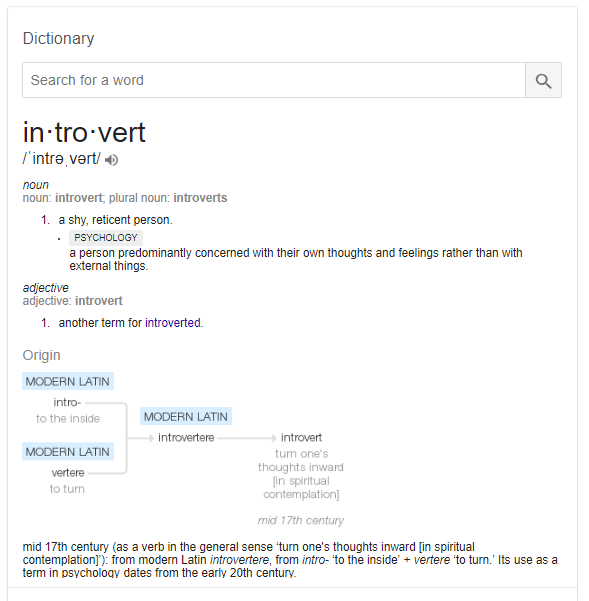
Part of the reason for this confusion is that people don’t understand what being an introvert actually means. For example, (despite numerous complaints and petitions) if you Google “introvert definition” the first thing that comes up is “a shy, reticent person.” Only if you expand the Google result to see translations, word origin, and other definitions do you finally get something a little closer to the correct result: “a person predominantly concerned with their own thoughts and feelings rather than with external things.”

Introverts Need People Too: A Closer Look At Introversion and Social Anxiety | LikeAnAnchor.com

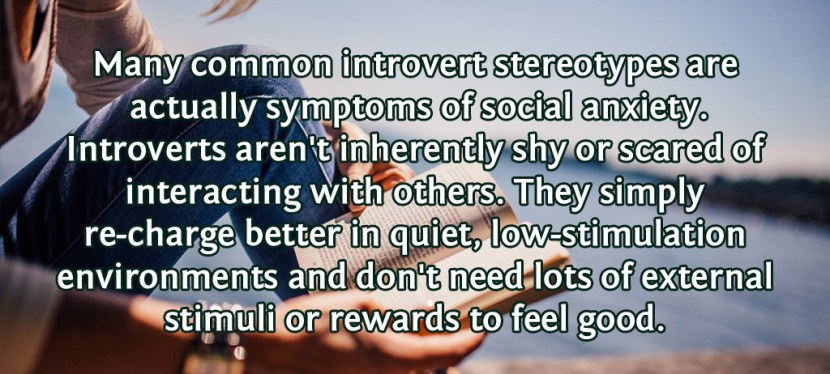
Being an introvert doesn’t make you socially awkward. It doesn’t mean you hate people. Being an introvert means that you’re born with a trait that gives you a preference for the internal world. It also means you re-charge better in quiet, low-stimulation environments (usually alone, but not always). Introverts might avoid parties, but if so they do it because they’d rather be somewhere else (like at home reading or hanging our with a small group of friends), not because they’re inherently shy or scared of interacting with others. Read more

Crash Course In Ecclesiastes

It’s always puzzled me why so many people think of Ecclesiastes as depressing. For me as a teenager, it provided a map for navigating my way out of depression. Of course, I’m not saying it’s a magic cure for mental illness, but if you’re struggling with questions about the meaning of life or frustrated with how pointless it all seems, this book can provide a great deal of hope.

The book of Ecclesiastes contains the reflections of a deep thinker who works through an existential crisis. This sort of crisis happens when an individual starts to question whether their life (or life in general) has any purpose, meaning, or value. Solomon wrestled with these questions and records his thoughts for us to learn, as he did, that true meaning and purpose can only be found in God.

Ecclesiastes is one of those books that it’s not a good idea to read isolated pieces from. That’s one way you end up thinking there are few spiritual lessons in this book or misinterpreting its message. The whole thing is interconnected, with layers of thoughts building on each other as Solomon goes back and forth asking questions and contemplating possible answers. It’s vital that we look at this piece of writing as a whole before we start to dive deep into individual passages.

Cycles of Futility …

“Vanity of vanities,” says the Preacher; “Vanity of vanities, all is vanity” (Ecc. 1:2 , unless otherwise noted, all quotes are from the WEB version). Thus the book of Ecclesiastes opens, and Solomon will repeat this phrase throughout and in the conclusion (Ecc. 12:8). He presents everything in life as vanity, or hebel (H1892) — a vapor/breath; a transitory or unsatisfactory thing. That might seem like a depressing outlook, but can you really look at the world and say he’s wrong? Do things of this life last? Do they make sense? Is this world satisfying? Not on its own.

All things are full of weariness beyond uttering. The eye is not satisfied with seeing, nor the ear filled with hearing. That which has been is that which shall be; and that which has been done is that which shall be done: and there is no new thing under the sun.

Ecclesiastes 1:8-9, WEB

With a few thousand more years of history to look back on than Solomon had, we can see the truth of these statements. Nothing really changes. We’re not advancing toward a utopia. People just keep making the same mistakes over and over again, which looks to Solomon like cycles of futility and meaninglessness. Oh, there are technology advances and improvements in our lives, but people stay the same.

… Become Cycles of Hope

Having come to this conclusion about life, Solomon tries to resolve his existential crisis by looking for some kind of meaning. He says, “I applied my heart to seek and to search out by wisdom concerning all that is done under the sky” (Ecc. 1:13). He indulged in all sorts of sensory pleasures, amassed wealth, and created created great things but it was also vanity.

Next, he tried out wisdom and folly to compare the two, and found “that wisdom excels folly as far as light excels darkness” (Ecc. 2:13). But the wise and foolish both die. They can’t keep what they worked for or guarantee what they leave behind will have any effect. At this point, Solomon “hated life” and says, “I began to cause my heart to despair concerning all the labor which I had labored” (Ecc. 2:17, 20). Even realizing that you can have wisdom, knowledge, and joy in your life if you please God seems to him like “vanity and chasing after wind” (Ecc. 2:26). But now we come to the first part of Solomon’s ruminations where he glimpses hope.

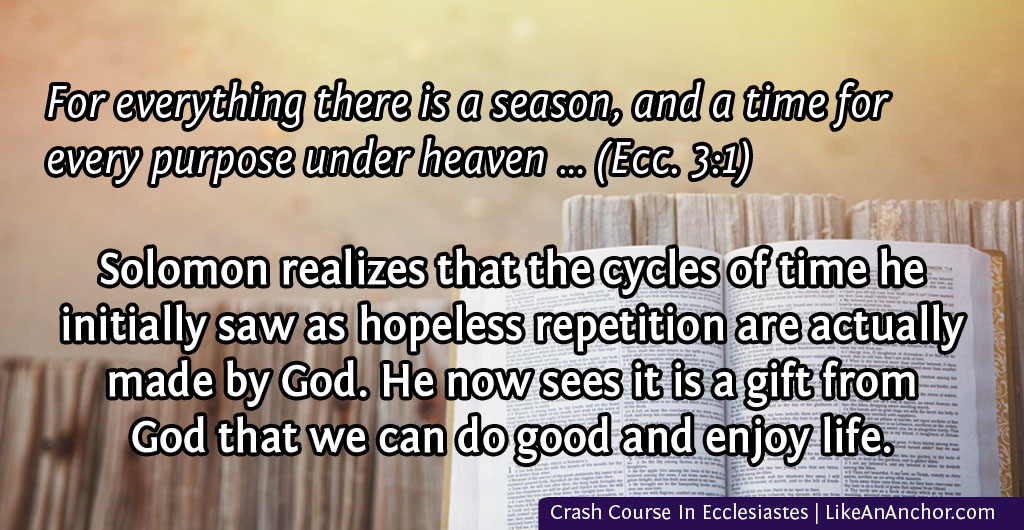
For everything there is a season, and a time for every purpose under heaven … He has made everything beautiful in its time. He has also set eternity in their hearts, yet so that man can’t find out the work that God has done from the beginning even to the end.

Ecclesiastes 3: 1, 11, WEB

Solomon realizes that God is the one who made the cycles of time. What Solomon initially saw as hopeless repetition he now recognizes as beautiful (Ecc. 3:1-11). Solomon sees that it is a gift from God that we can do good and enjoy this life. He knows that God has a plan in place and that the righteous and wicked will be judged (Ecc. 3:12-17).

But What About Death?

Existential crises aren’t that easy to resolve, though, and Solomon still has questions. He’s accepted that God has a purpose for how the world keeps on turning. He knows that this life can be seen as a gift. but what about after you die? In Ecc. 3:18-22, Solomon concludes that humans die just like animals, and who knows whether their spirits really go to different places? Maybe this life is all we have and we should just make the most of it.

But that’s not a satisfactory answer either, since not everyone gets to enjoy this life. People oppress each other, and the oppressed have no comfort. People envy each other, live lonely lives, and there’s no end to the people who keep being born and dying in this fallen world. Solomon even suggests it would be better to never be born than to live and see all the evil that fills this world (Ecc. 4:1-16).

Immediately, the conversation turns. Solomon says, “Don’t be rash with your mouth and don’t let you heart be hasty to utter anything before God” (Ecc. 5:2). Perhaps he knows that’s what he’d been doing, as his thoughts ran away with fears and questions.

Don’t allow your mouth to lead you into sin. … For in the multitude of dreams there are vanities, as well as in many words: but you must fear God.

Ecclesiastes 5:6-7, WEB

Solomon knows God has a plan and the times are in His hands — he just needs to find a way to trust Him. He desperately wants to make sense of what’s going on in his life, in the world, and in the afterlife (if there is one).

Letting Death Give Us Perspective

Even with this reminder not to jump to hasty conclusions, Solomon continues to struggle. Everything people strive for in this life still seems futile to him. Sure you can enjoy it in this life, but you can’t take it with you when you go. Then we come to another major turning point in Solomon’s thought process. Instead of seeing death as the thing which robs life of meaning, he proposes that we use death to give us perspective on life. There truly is value in a good life well-lived and there is a future worth striving for. I talked about this section of Ecclesiastes in-depth last week, so if you haven’t read it yet here’s a link: “Letting Death Give Us Perspective On Life.”

As we continue in chapter 7, Solomon counsels to avoid extremes. Even a good thing like wisdom can drive you crazy if you “make yourself overly wise” (Ecc. 7:11-2, 16). We can’t make sense of everything or know the future (7:23-25). “There is no man who has power over the spirit to contain the spirit; neither does he have power over the day of death” (Ecc. 8:8). Because this is true we need to beware of hasty judgements, offenses, and conclusions. Rather, focus on fearing God (Ecc. 7:18).

Though a sinner commits crimes a hundred times, and lives long, yet surely I know that it will be better with those who fear God, who are reverent before him. But it shall not be well with the wicked, neither shall he lengthen days like a shadow; because he doesn’t fear God.

Ecclesiastes 8:12-13, WEB

More Questions

The latter part of chapter 8 and into chapter 9 seems like a step backward. Solomon was talking about it being “better with those that fear God” but then he remembers “that there are righteous men to whom it happens according to the work of the wicked. Again, there are wicked men to whom it happens according to the work of the righteous” (Ecc. 8:14). This frustrating situation sends Solomon right back to commending mirth, then reapplying his heart to wisdom trying to figure things out (8:15-16).

He concludes that “man can’t find out” the work of God no matter how much he seeks it, nor comprehend God’s plan and thoughts even if he is wise (Ecc. 8:17-9:1). Solomon even starts to question whether there’s purpose in death or not because he’s still wrestling with the fact that the same things happen to both righteous and wicked people (9:2-6).

I think most (if not all) of us can relate to this. Just because we think we’ve figured something out doesn’t mean nothing will shake our faith. Gross injustice, friends who die too young, tragic health trials — they can all make us question the frame through which we see the world. The fact that Solomon keeps going back and forth, asking the same questions and wrestling with the answers makes him very relatable.

Life’s Absurd, Enjoy It Anyway

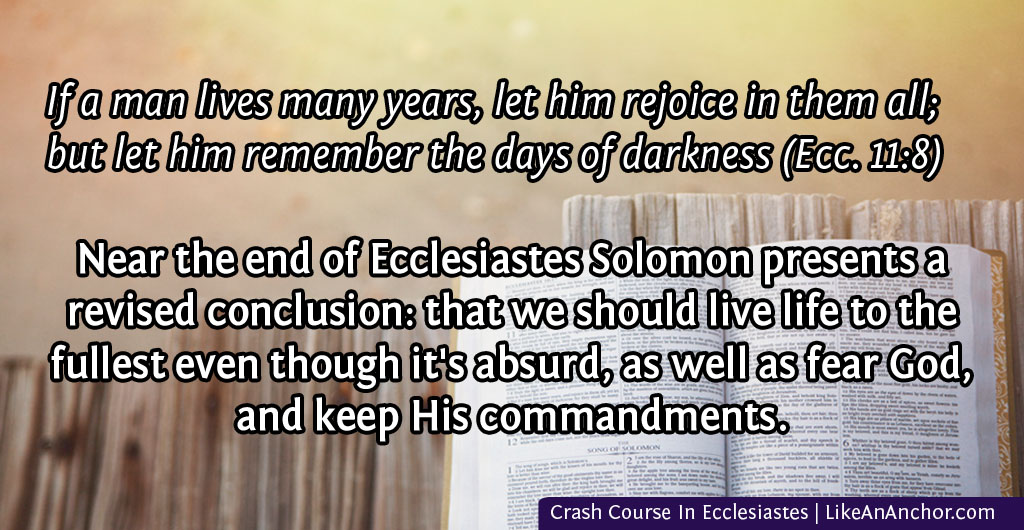
We’re approaching the end of the book now and Solomon presents a revised conclusion: that we should live life to the fullest even though it’s absurd. We can’t predict the future, we can’t control anything, and we’ll be better off if we just live well and try not to overthink things (Ecc. 9:7-12).

Of course, overthinking things is something we humans are very good at. Solomon continues comparing wisdom and folly, and continues coming up against the conclusion that wisdom is far better. Chapter 10 reads much like part of Proverbs, and it leads into the final conclusions of Ecclesiastes.

Practice wisdom. Remember “you don’t know the words of God who does all.” Don’t get distracted or complacent. Keep working and living (Ecc. 11:5-6). Balance is key — rejoice in all your years but also “remember the days of darkness” that help give perspective. Remember that “God will bring you into judgement” for all you do, so put off both sorrow and evil (Ecc. 11:8-10).  He’s now speaking most pointedly to young people, urging them to “remember your Creator” today, before life gets harder or trials come or you grow old and full of regrets (Ecc. 12:1-6).

Now Let Us Hear The Conclusion

Crash Course In Ecclesiastes | LikeAnAnchor.com
Photo credit: Pearl via Lightstock

Here at the end is where Solomon finally answers his earlier question, “Who know the spirit of man, whether it goes upward?” (Ecc. 3:21).

Remember also your Creator in the days of your youth … before the silver cord is severed, or the golden bowl is broken, or the pitcher is broken at the spring, or the wheel broken at the cistern, and the dust returns to the earth as it was, and the spirit returns to God who gave it.

Ecclesiastes 12:1, 6-7, WEB

Solomon has reached the point where he has a confident assurance that there is life after death and God will sort-out everything that doesn’t make sense now. I suspect, and Matthew Henry’s commentary agrees, that Solomon wrote this in old age, hoping that his young audience would heed his wisdom without feeling the need to themselves experiment with life as he did.

Solomon shared what he learned from wresting with questions and doubts so others wouldn’t have to. This also seems to be when he put together the book of Proverbs (Ecc. 12:9-10). As Ecclesiastes wraps up, he admonishes young people not to study too widely, for not all the information out there is good (12:11-12). Better to stick with “the words of the wise” which “have been given by one Shepherd” (Ecc. 12:11, TLV).

This is the end of the matter. All has been heard. Fear God, and keep his commandments; for this is the whole duty of man. For God will bring every work into judgment, with every hidden thing, whether it is good, or whether it is evil.

Ecclesiastes 12:13-14, WEB

It’s so nice to have such a straight-forward conclusion at the end of such a deep, complex book. Here, Solomon tells us in no uncertain terms what the point of Ecclesiastes is. From it, we’re to learn that fearing God and keeping his commandments is man’s whole duty and that God will judge all our works.
Letting Death Give Us Perspective On Life

Ecclesiastes records the reflections of a deep thinker who works through an existential crisis and concludes meaning can only be found in God. While many people find this book depressing, I think taken as a whole it offers a remarkably hopeful perspective that can actually help us work through the sort of questions that were weighing on the author (most likely Solomon’s) mind.

When I recently went back to studying Ecclesiastes, I had this grand vision that I would write a post about the entire book (similar to “Crash Course in Romans”) in less than a week and post it today. I’m currently laughing at myself for thinking that was an attainable goal. Instead, we’re just going to talk about a handful of verses in the middle of the book that have captured my attention, and save the Crash Course in Ecclesiastes for next week.

The Vanity of Everything

Like Romans, Ecclesiastes is hard to understand if you take bits and pieces out of context, so before we get to the verses that I want to focus on today we need to take a quick look at what came before.

Solomon had shown the vanity of pleasure, gaiety, and fine works, of honour, power, and royal dignity … [and] there is as much vanity in great riches (Matthew Henry’s Commentary on Ecc. 5:9-17)

He has also been questioning the meaning of life. If all the things that people pursue on earth are meaningless, then what is there for us? Several times he argues that there is “nothing better” for men than to rejoice in this physical life (Ecc. 2:24; 3:13, 22; 5:18). But that’s still not a satisfactory answer for him. He wants more, something to explain why we should keep trying and what’s the purpose in living.

For who knows what is good for man in life, all the days of his vain life which he spends like a shadow? For who can tell a man what will be after him under the sun? (Ecc. 6:12, WEB)

A Different Perspective on Death

Up until this point, there has been a, “Let us eat and drink, for tomorrow we will die” theme running through Ecclesiastes (Is. 22:12-13). It seems that in Solomon’s mind at this time, death was the point at which hope falls apart. Sure you can enjoy this life, but it’s all emptiness because you still end up dead with no guarantee that you have anything to show for it. Now, though, Solomon suggests that we can use death to give us perspective on life.

It is better to go to the house of mourning than to go to the house of feasting: for that is the end of all men, and the living should take this to heart. Sorrow is better than laughter; for by the sadness of the face the heart is made good. The heart of the wise is in the house of mourning; but the heart of fools is in the house of mirth. (Ecc. 7:2-4, WEB)

We must not forget that there is “a time to be born, and a time to die … a time to weep, and a time to laugh; a time to mourn, and a time to dance” (Ecc. 3:2, 4, WEB). There’s nothing wrong with feasting and laughter in its proper time, but staying there makes your heart foolish. Wise men keep their ends in mind. Death reminds us that we only have so much time to decide how we’re going to live our lives and what we’ll be remembered for.

Letting Death Give Us Perspective On Life | LikeAnAnchor.com
Photo credit: Rosie Fraser via Unsplash

The End Is Better

We just talked about verses 2-4 in chapter 7. Now let’s go back to verse 1:

A good name is better than fine perfume; and the day of death better than the day of one’s birth. (Ecc. 7:1, WEB)

There is much value in a good life well-lived. Solomon has already concluded that “wisdom excels folly, as far as light excels darkness” (Ecc. 2:13, WEB). Here he reinforces that a good name — that is “a name for wisdom and goodness with those that are wise and good”(MHC on Ecc. 7:1-6) — is worth more than all the pleasures, wealth, etc. that he’d found so empty.

if we have lived so as to merit a good name, the day of our death, which will put a period to our cares, and toils, and sorrows, and remove us to rest, and joy, and eternal satisfaction, is better than the day of our birth, which ushered us into a world of so much sin and trouble, vanity and vexation. We were born to uncertainty, but a good man does not die at uncertainty. (MHC on Ecc. 7:1-6).

Death is not the end of the story, and for a man who considers his death and prepares for it (as Solomon goes on to say in the next verses, which we’ve already talked about) he has the opportunity to die with “a good name.” The word for “name” here is shem (H8034), and in the Hebrew concept it’s always connected with your reputation and character.

Those who die having a good reputation and a good character are no longer subject to the evils of this present life and await their resurrection to a much better life in the future. That gives those of us left behind great hope even in the midst of sorrow (1 Thes. 4:13-14).

Backing Into The Future

Letting Death Give Us Perspective On Life | LikeAnAnchor.com
Photo credit: Ashim D’Silva via Unsplash

The idea that the day of our death is better than the day of birth can be a hard one for people to come to grips with, even given the context we just talked about. We still grieve at death even though we know (as Solomon also concludes by the end of this book) that “the spirit returns to God who gave it” and that He will raise believers up in the last day (Ecc. 12:7; John 6:40). But maybe another verse in this section of Ecclesiastes can provide further explanation.

Better is the end of a thing than its beginning. (Ecc. 7:8, WEB)

The Hebrew word for “end” is achariyth (H319). To understand achariyth, we have to understand that the Hebrew concept of time is like “the view a man has when he is rowing a boat. He sees where he has been and backs into the future” (H.W. Wolff quoted in TWOT entry 68e). That’s why this word translated “end” can also mean last/latter days, after part, future, or reward. The end of a thing is better than the beginning because you will have arrived at the future goal and can now look back on where you’ve been with a better perspective.

If you’d rather not think about death then the idea that the end is better than the beginning can be a depressing one because it forces you to confront something uncomfortable. But ignoring the idea of our lives ending is foolish. Everyone is going to die whether we think about it or not, so why not use the fact that our lives will end as motivation to make the life we have a good one?


Featured image credit: carolynabooth via Pixabay

The Difference Between Having Anxiety and Feeling Anxious

Every human being knows what it’s like to feel anxious about something, but that’s not the same thing as having anxiety. There’s a difference between normal anxiety (which is appropriate to the situation) and dealing with an anxiety disorder (which is a mental health condition).

In day-to-day life it’s actually really hard to define the line between normal worry and too much worry (as Dr. Ramani Durvasula says in “Why It’s So Crucial to Understand Anxiety Disorders“). What pushes you into problematic anxiety can vary depending on the individual. It will also vary for an individual depending on other factors in their lives. In addition, anxiety looks different for everyone who struggles with it. That means my personal examples in this article are an accurate reflection of my anxiety, but won’t be equally relatable for everyone with anxiety.

There are plenty of situations where it’s normal to feel anxious. But when anxiety starts to define your life, or keeps you from functioning normally, or generalizes to everyday situations, there’s a good chance you’re dealing with something different than normal human nervousness. Anxiety can also be a clue that something else is going on. If you think your worry might have crossed a line into too much worry, it’s a good idea to talk with a mental health professional.

Disclaimer: I’m not a counselor or therapist and this article can’t be used to diagnose anxiety or as a treatment guide. If you’re struggling with something talk with a mental health professional. They will be much more helpful than me. I also want to say that there’s nothing shameful about seeking answers or asking for help. And if you do get a diagnosis, remember it’s a starting point for treatment, not a sentence or judgement on who you are. You wouldn’t feel ashamed about finding out you have lyme disease or a heart condition, and there shouldn’t be a stigma against mental health problems either. Read more

Myers-Briggs Temperaments and Depression

Depression isn’t confined to a certain personality type, but we can use tools from the Myers-Briggs type system when trying to combat negative thought patterns. If you know what your four-letter type is, then you can easily find out what are some common stress triggers and negative thought patterns for your type that can increase risk of depression.

Myers-Briggs Temperaments and Depression| marissabaker.wordpress.com

Temperament Affects Behavior

Depression is a very complicated issue with lots of underlying causes. The Harvard Medical School points out that while people often assume depression is due to a chemical imbalance in the brain, it also has to do with our genetics, temperament, stressful experiences, past traumas, other medical conditions, and certain medications. For now, we’re going to focus on temperament.

Your view of the world and, in particular, your unacknowledged assumptions about how the world works also influence how you feel. You develop your viewpoint early on and learn to automatically fall back on it when loss, disappointment, or rejection occurs.” — Understanding Depression, a Special Health Report from Harvard Medical School

Our temperaments affect how we process the sorts of situations that often lead to depression, such as grief or a prolonged struggle. In Myers-Briggs theory, we use the four-letter types to describe the personality temperament which is built from someone’s genetic predispositions and early childhood experiences.

*** People frequently experience depressed moods that last for a short time, which is different than clinical depression. Studying ways to change patterns of negative thinking can help pull you out of depression, but for ongoing or serious depression it is no substitute for professional counseling. If depression is interfering with your daily life, and especially if you’re having suicidal thoughts, please seek professional help.***

Your “Inferior Function”

Your Myers-Briggs type describes your temperament weaknesses as well as your strengths. Every type has what we call an inferior function, which is also sometimes called the “shadow.” It is our least-developed function that we still have some conscious access to, and it’s the one that emerges when we’re stressed. Since it’s largely unused, it’s an immature and distorted way of looking at the world and can lead to unhealthy outlooks and negative thoughts, which can in turn contribute to depression.

Naomi Quenk’s book Was That Really Me? talks about stress bringing out our “hidden personality” in what she describes as an eruption of the inferior function. When we’re caught “in the grip” of our inferior functions, we are trying to deal with stress using a mental process that is unfamiliar, and it can have a profound effect on our mood.

Not every instance of stress will trigger our inferior function, and not all grip experiences are negative. Staying in your inferior function, though, increases stress levels because you’re not really using the functions that come most naturally to you. Learning about your inferior function gives you insight into typical sensitivities that might trigger a grip experience, describes signs that you are “in the grip”, and gives you tools for returning to a more balanced state of mind.

The Grip and Depression

Depression isn’t necessarily a symptom of being in the grip, but grip experiences do increase the tendency to fall into negative thought patterns. Our thought patterns directly impact our health, and “in many cases, depression can be caused by negative thinking, itself” (LiveScience.com). The tools each type can use to climb out of the grip can also help you get a handle on negative thinking.

As an example, INFJs and INFPs are two types that frequently report dealing with depression. An INFJ’s inferior function is Extroverted Sensing, and it typically shows up as “obsessive focus on external data,” “overindulgence in sensual pleasure,” and “adversarial attitude toward the outer world” (Quenk, p.198)  For INFPs, their inferior Extroverted Thinking causes “judgements of incompetence,” “aggressive criticism,” and “precipitous action” (Quenk, p.105). It’s easy to see how these will negatively influence your thoughts. If you feel like the outer world is attacking you, it changes how you think about everything around you and your own responses to external events and people. If you fall into a pattern of thinking you’re incompetent, it’s going to pull your thoughts in a negative direction.

Naomi Quenk writes that INFJs “need space and a low-pressure environment to regain their dominant” function (p.207). A change of scenery can help, and INFJs often appreciate having someone else around after a while to offer support and affirmation. Sometimes, taking time away from other people to journal about your thoughts and look at them more objectively helps redirect patterns of negativity. Talking things over with a friend or therapist also helps, though I find it works best after taking some alone time first. INFPs use similar methods for returning to equilibrium, but alone time is even more important for them and when they do talk to people, they need someone to listen more than offer guidance (Quenk, p.115).

A certain amount of alone time is critical for many introvert types, but not always so much for extroverted types. ENFJs, for example, fall into a pattern of “excessive criticism,” “convoluted logic,” and “compulsive search for truth” when in the grip. This type often benefits from exercise and a change of scenery, as well as having someone involve them in a project that captures their interest. Having a chance to talk things over with someone who takes them seriously is critical (Quenk, p. 163).

I highly recommend checking out Naomi Quenk’s book, or at least running a Google search to learn your type’s inferior function. It’s helped me quite a bit with my anxiety and in finding strategies for turning negative thoughts around, as well as with relating to other people who are struggling with different stressors in their lives.

Myers-Briggs Temperaments and Depression| marissabaker.wordpress.com

Credits for photos used in blog images: