Writing A “Husband List”

Every girl who wants to be married has dreamed about what he will be like. Many of us have written lists of the traits our ideal man will have. Over the years, we’ve also heard various views on writing husband lists. Some people say you should have a list, so you know what you’re looking for. Others say that having a list makes your focus too narrow and that you’re “limiting God.”

Writing A "Husband List"  | marissabaker.wordpress.com
bg image credit: Anonymous on Flickr

I had a nice long list when I was in my teens, then a short list of “must haves,” and now a more specific idea that’s not written down. Recently, though, a married friend encouraged me to write a new list to pray over. She had a list, and when she was in her 30s she met a man who fit every thing she’d been praying for (right down to the kind of car he drove) and married him 2 weeks after their first meeting (yes, you read that right. They’re still happily married and have two teenage kids). I know other girls who’ve been told their standards were “too high” yet found guys who matched everything on the list they were praying for, and there are also ladies like blogger Lucinda McDowell who prayed for 24 things in a husband, and God gave her 23. Writing a list doesn’t make you “too picky” — it means you have standards, and that’s a good thing.

So I started work on my new list. And I thought perhaps other girls might find it useful to read about how I decided what to include. There are articles out there offering lists of non-negotiables for you to base your list on, but even the essential qualities are going to look a bit different for everyone. For example, if you’re Christian, some form of “He’s a practicing believer” is probably at the top of your list, but what does “practicing believer” mean to you?

Just a quick note … guys can write “wife lists” too, and I suspect that much of what I talk about here might be useful for that as well. Since I’m a girl thinking about a future husband, though, that’s what I’m going to focus on for this post.

Free Writing

I’ll be honest — I actually didn’t start with this step, but I think now I should have. You want your list to reflect the things you feel like you “should want” as well as what you truly desire, and so there’s often a feeling of not being able to ask for “little thing” or mention appearance at all. But if we’re honest, things that might seem shallow at first glance are still there in the back of our minds, which means they do matter on some level. Starting with free writing gives us a chance to put those little dreams on paper without feeling bad about them.

Writing A "Husband List" | marissabaker.wordpress.comGrab a piece of paper and just start writing the first phrases and descriptions that pop into your head when you think about what kind of guy you would like to marry. Think about guys (real and fictional) you’ve had crushes on and list the things about them you found attractive. Think about guys you’ve dated and list things that you liked about them, and the opposite of the reason you broke up with him (i.e., if you’re boyfriend didn’t respect your boundaries, you might add “respects my boundaries”). Think about happily married couples you know and list things you want to see in your own marriage. Write down literally anything that you think of, no matter how unrealistic it sounds.

Now look back over your list. Circle anything that 1: doesn’t have to do with physical appearance and 2: you consider absolutely essential in a relationship. You’re looking for things that have to do with who he is as a person, like “loves God,” “good communicator,” and “we worship together.”

Next, look at the things you haven’t circled yet. Cross-out anything that you know is 1: not essential for you in a relationship (I crossed out “rich singing voice”), 2: only related to physical appearance (such as “taller than me), and/or 3: completely unrealistic. While you’re doing this, you might find that you can replace an unrealistic goal with a related realistic goal. For example, instead of “rich as Mr. Darcy” you might list, “able to provide financially for a family.” I would encourage you to pray about the things you want but know are unrealistic. Sometimes, we use unrealistic expectations to push other people away and shield ourselves from being vulnerable in relationships.

Now you have a sheet of paper with things crossed out, things circled, and a few things that are neither. For now, set this list aside.

Red, Yellow, Green

There’s a book called True Love Dates by Christian relationship counselor Debra Fileta that recommends writing three separate lists, and that’s where we’re going to start. Before you spend any more time writing down the things you want in a relationship, we’re going to write a list of things that are never okay.

“Stop” and “Slow”

The first thing you’re going to write is a Red list of traits that always mean “stop” when you notice them in a relationship. If a guy has any characteristic from your Red list, you do not pursue a relationship with him (no matter how many good traits he has). My Red list includes things like “does not believe in God/won’t respect my belief” and “refusal to communicate,” along with others like the examples Debra Fileta gives in her book:

  • Abusiveness (physical, verbal, emotional, or sexual)
  • Dangerous and uncontrolled temper or displays of aggression
  • Pattern of dishonesty or betrayal

The next step is writing a Yellow list. This is for things you’re not sure about and would need serious consideration and discussion before moving forward in a relationship. They give you pause, but don’t mean the relationship can’t work. A few on my list are “previously married” and “trouble handling money.” Here are more examples from True Love Dates:

  • Family of origin issues and problems
  • Unhealthy habits or behaviors
  • Lacks motivation, goals, and dreams

“Go” For It!

green light
credit: Raymond Brown

Now for the fun part — the Green list or “husband list” of things you want to have in your relationship. If Red means stop and Yellow means slow down and reevaluate, Green means you can feel good about going forward with a relationship. Here’s where we get to go back to the free writing exercise.

I sorted my list into four categories: “Personal Values,” “Family and Relationships,” “Makes Me Feel …” and “Personality.” The circled phrases from my free writing exercise ended up in the first three categories, and many of the phrases that were neither circled nor crossed out ended up in one of the last two categories (you might even list a couple of the ones you crossed-out if they are still important to you). I saw the “Personality” category as representing things I want, but some of which could be negotiable. Here’s a few specific items from each list, so you can see what I’m talking about without me sharing a copy of the whole thing:

  • Personal Values
    • follows God and Christ first
    • uses his gifts to serve in some way
    • demonstrates integrity, commitment, faithfulness
  • Family and Relationships
    • respects and helps set boundaries
    • wants children
    • hospitable; welcomes guests and visitors to our home
  • Makes Me Feel …
    • protected and cherished
    • listened to and understood
    • like I’m valuable and contributing to his life
  • Personality
    • slow to anger
    • good communicator
    • enjoys discussing ideas

Looking At Yourself

Now that you have your list, turn it back on yourself and ask if you have those qualities. Would the guy you’ve written about want to date, or marry, you? Some of this should match pretty easily — you wouldn’t list a guy who wants 6 kids if you didn’t want 6 kids.

Others might be harder. If you listed a man who spends time with God every day, will he want to marry you if you regularly forget to study? Or if you ask for a guy who will never cheat on you, are you prepared to be faithful to him? If you want an Ephesians 5 husband, will you be an Ephesians 5 wife?

I hope this post was helpful to you — writing the list that inspired it has certainly helped me. While we know that God knows exactly what we need without us telling Him, I think it is helpful for us to have something more to ask Him than “please give me a good husband.” You’re putting effort into pursuing a relationship by figuring out what it is you’re looking for. God bless you, my dear readers.

Delight yourself also in the Lord, and He shall give you the desires of your heart. (Ps. 37:4)
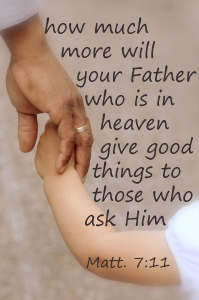
 

“Daddy, give me sixpence”

marissabaker.wordpress.comWe had evening services yesterday, so there was a whole free day to fill with activities. My plan was to find all the book stores in the area and visit each, but we ended up at two antique stores and a mall instead. There was, however, a used book store in the mall, so I have one of the bookstores here checked off my list. I was particularly glad we stopped because I finally found a copy of C.S. Lewis’s Mere Christianity in hardcover for less than Amazon.com sells the paperback.

Some time ago, I signed up for an e-newsletter through biblegateway.com that sends a C.S. Lewis quote every day. This morning, it was a quote from Mere Christianity. It’s long, but I’d like to share it with you, if you don’t mind.

As a great Christian writer (George MacDonald) pointed out, every father is pleased at the baby’s first attempt to walk: no father would be satisfied with anything less than a firm, free, manly walk in a grown-up son. In the same way, he said, “God is easy to please, but hard to satisfy.”

I think every one who has some vague belief in God, until he becomes a Christian, has the idea of an exam or of a bargain in his mind. The first result of real Christianity is to blow that idea into bits. When they find it blown into bits, some people think this means that Christianity is a failure and give up. They seem to imagine that God is very simple-minded! In fact, of course, He knows all about this. One of the very things Christianity was designed to do was to blow this idea to bits. God has been waiting for the moment at which you discover that there is no question of earning a pass mark in this exam or putting Him in your debt.

Then comes another discovery. Every faculty you have, your power of thinking or of moving your limbs from moment to moment, is given you by God. If you devoted every moment of your whole life exclusively to His service you could not give Him anything that was not in a sense His own already. So that when we talk of a man doing anything for God or giving anything to God, I will tell you what it is really like. It is like a small child going to his father and saying, “Daddy, give me sixpence to buy you a birthday present.” Of course, the father does, and he is pleased with the child’s present. It is all very nice and proper, but only an idiot would think that the father is sixpence to the good on the transaction. When a man has made these two discoveries God can really get to work. It is after this that real life begins.

I think this is a great way to look at our relationship with God as His children. There’s not a thing we can do to earn salvation on our own. The second paragraph in this quote is saying basically the same thing Paul says when he writes, “For by grace you have been saved through faith, and that not of yourselves; it is the gift of God,not of works, lest anyone should boast” (Eph. 2:8-9). Every good thing in our lives is a gift directly from God. All that is good in us is a result of His work in our lives. We bring nothing to our relationship with God but our broken selves, desperately in need of Him to make us whole.

Such a realization is important because we cannot have a relationship with God without humility, and we cannot have humility if we think we are doing God a favor by agreeing to be part of His family. God’s family will be made up of people who know they have nothing to offer God and are wild with joy that He wanted to work with them anyway.

Being Born of God

But as many as received Him, to them He gave the right to become children of God, to those who believe in His name: who were born, not of blood, nor of the will of the flesh, nor of the will of man, but of God. John 1:12-13In many ways, this is a continuation of two previous posts, but I think it will be the last on this topic (at least for a while).  As part of the adoption process that makes us younger brothers and sisters of Jesus Christ, we must go be “born again” (most translations put it).

Seeing ye have purified your souls in obeying the truth through the Spirit unto unfeigned love of the brethren, see that ye love one another with a pure heart fervently: being born again, not of corruptible seed, but of incorruptible, by the word of God, which liveth and abideth for ever. (1 Pet. 1:22-23)

In James, it is said that the Father “brought us forth by the word of truth, that we might be a kind of firstfruits of His creatures.” (1:18, NKJV). This verse, along with many verses talking about the change wrought in us by the Holy Spirit, give us an idea of what being “born again”involves.

For as many as are led by the Spirit of God, they are the sons of God (Rom. 8:14).

Becoming God’s Family

Once we receive the Holy Spirit and God and Christ start working in our lives, we begin the process of becoming part of Their family. Because we have been adopted and redeemed, we are called children of God.

Behold, what manner of love the Father hath bestowed upon us, that we should be called the sons of God: therefore the world knoweth us not, because it knew Him not. Beloved, now are we the sons of God, and it doth not yet appear what we shall be: but we know that, when He shall appear, we shall be like Him; for we shall see Him as He is (1 John 3:1-2)

Though we are considered part of God’s family now, as long as we continue in faith, there is much more promised to us in the future.

Jesus answered and said to him, “Most assuredly, I say to you, unless one is born again, he cannot see the kingdom of God. … unless one is born of water and the Spirit, he cannot enter the kingdom of God. That which is born of the flesh is flesh, and that which is born of the Spirit is spirit. Do not marvel that I said to you, ‘You must be born again.’ The wind blows where it wishes, and you hear the sound of it, but cannot tell where it comes from and where it goes. So is everyone who is born of the Spirit.”  (John 3:3, 5-8, NKJV)

Being born “of the Spirit” involves a change of heart and character that will allow us to enter the kingdom of God. It is a process that begins with Jesus Christ’s sacrifice making us fit to be adopted into Their family, and continues until our death or Christ’s return.

New Life

The word used to describe us as “born” of God is gennao (G1080). It is a general word for producing offspring, used of both begetting and bearing children. Zodhiates says it is also “spoken of God begetting in a spiritual sense which consists in regenerating, sanctifying, quickening anew, and ennobling the powers of the natural man by imparting to him a new life and a new spirit in Christ (1 John 5:1). Hence, Christians are said to be the sons of God (Rom. 8:14; Gal. 3:26; 4:6).”

Beloved, let us love one another: for love is of God; and every one that loveth is born of God, and knoweth God. He that loveth not knoweth not God; for God is love. In this was manifested the love of God toward us, because that God sent his only begotten Son into the world, that we might live through Him. Herein is love, not that we loved God, but that He loved us, and sent His Son to be the propitiation for our sins. (1 John 4:7)

This new life and new spirit that we partake of when God and Christ begin the process of making us their children transforms our lives. As we become part of God’s family, the characteristics of God will become more and more evident in our lives until we receive “an inheritance incorruptible, and undefiled, and that fadeth not away, reserved in heaven for you, who are kept by the power of God through faith unto salvation ready to be revealed in the last time. (1 Pet 1:4-5).

Our Elder Brother

Since writing about adoption last week, I’ve been pondering related aspects of becoming children of God. I described what is called “adoption” in Romans 8 and 9, Galatians 4, and Ephesians 1 as “the process by which we become God’s children.” There is much more to it, however, and I’m hoping this post will begin to explore our relationship to God and Christ as people who They want to become members of Their family. To do this, I think it is important to spend time studying our Elder Brother, Jesus Christ (see Hebrews 2:9).

Only Begotten

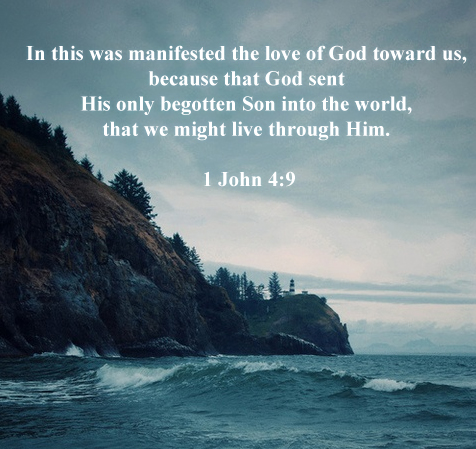
In this was manifested the love of God toward us,  because that God sent  His only begotten Son into the world,  that we might live through Him.   1 John 4:9It should be obvious that our relation to God as His children is different than the relationship Jesus has as His Son. After all, “the Word was with God, and the Word was God” before He became “flesh, and dwelt among us” (John 1:1, 14). As such, John uses a different Greek word to distinguish Jesus Christ from believers who are called children of God. The word is monogenes (G3439), meaning an only child. Zodhiates says the word appears to “serve to distinguish the Sonship of Christ to God from that spoken of other beings, i.g. Adam (Luke 3:38), angels (Job 1:6), or believers (John 1:12).”

For God so loved the world, that He gave His only begotten Son, that whosoever believeth in Him should not perish, but have everlasting life. For God sent not His Son into the world to condemn the world; but that the world through Him might be saved. He that believeth on Him is not condemned: but He that believeth not is condemned already, because He hath not believed in the name of the only begotten Son of God. (John 3:16-18)

Firstborn

Though He is described as the only begotten Son of God, Christ is not intended to be an only child. Rather, God has predestinated us “to be conformed to the image of His Son, that He might be the firstborn among many brethren” (Rom 8:29). The word for “firstborn” is prototokos (G4416), and it is used as a title of Jesus Christ in five NT passages. In all these cases, Zodhiates points out that the word can mean firstborn child, but also and identifies “Christ as the preeminent or ranking member of the group” in Romans 8, and indicates an “an inherent right [to rule] by virtue of His nature” when the word is used in Colossians 1.

In Whom we have redemption through His blood, even the forgiveness of sins: Who is the image of the invisible God, the firstborn of every creature: for by Him were all things created, that are in heaven, and that are in earth, visible and invisible, whether they be thrones, or dominions, or principalities, or powers: all things were created by Him, and for Him: and He is before all things, and by Him all things consist. And He is the head of the body, the church: Who is the Beginning, the Firstborn from the dead; that in all things He might have the preeminence. (Colossians 1:14-18)

One meaning Zodhiates does not discuss is the first one that popped into my head. I would be curious to know why it isn’t in his dictionary, simply because it seems to obvious to me and I wanted to at least read a reason for it’s exclusion.

“Firstborn” implies there are other children. If I did not have siblings, I would be an only child. Since I have a younger brother and sister, I am a firstborn. Similarly, Christ being called the “firstborn of the dead” reassures me that He is not the only one who will be resurrected, simply the first. Calling Him the “firstborn among many breathren” gives me hope that I might be counted worthy to be one of His younger siblings.

Adoption

Come out from among them,  and be ye separate, saith the Lord,  and touch not the unclean thing;  and I will receive you,  and will be a Father unto you,  and ye shall be my sons and daughters,  saith the Lord Almighty.  2 Corinthians 6:17-18About two years ago I read a booklet that claimed it is a “misunderstanding” to describe Christians as “adopted” children of God “rather than His actual begotten sons.” The bulk of the booklet was excellent and had nothing to do with this topic, but I wanted to bring this up by way of introduction. If I had not felt uncomfortable with the way this part of the booklet was phrased, I probably never would have looked into the concept of “adoption” in the New Testament.

Once I began studying it, I started to think that adoption as presented in the NT is a way of describing the process by which we become God’s children. We were once separated from God by our sins, but because of Christ’s sacrifice we have been brought into God’s family (Col. 1:21-22; 1 Jn. 3:1-2). They are calling people who were once outside Their family and making them children. Sounds like adoption to me.

Romans 8

For as many as are led by the Spirit of God, they are the sons of God. For ye have not received the spirit of bondage again to fear; but ye have received the Spirit of adoption, whereby we cry, Abba, Father. The Spirit itself beareth witness with our spirit, that we are the children of God: and if children, then heirs; heirs of God, and joint-heirs with Christ; if so be that we suffer with Him, that we may be also glorified together (Rom 8:14-17)

The word “adoption” used here comes from the Greek word huiothesia (G5206). When looking at the history of this word, there is no question that its intended meaning is adoption. Spiros Zodhiates says it is used “of the state of those whom God through Christ adopts as His sons and thus makes heirs of His covenanted salvation.” He goes on to explain that,

Paul in these passages is alluding to a Greek and Roman custom rather than a Hebrew one. Since huiothesia was a technical term in Roman law for an act that had specific legal and social effects, there is much probability that Paul had some reference to that in his use of the word. Adoption, when thus legally performed, put a man in every respect in the position of a son by birth to him who had adopted him, so that he possessed the same rights and owed the same obligations. Being a huios, a son, involves the conformity of the child that has the life of God in him to the image, purposes, and interests of God and that spiritual family into which he is born.

Several verses later in Romans 8, the same word is used again.

For we know that the whole creation groaneth and travaileth in pain together until now. And not only they, but ourselves also, which have the firstfruits of the Spirit, even we ourselves groan within ourselves, waiting for the adoption, to wit, the redemption of our body (Rom.8:22-23)

Adoption as Redemption

In Romans 8:23, “adoption” is so important to this process of becoming God’s sons that it is equated with “redemption.” This is not an isolated comparison.

Even so we, when we were children, were in bondage under the elements of the world: but when the fulness of the time was come, God sent forth His Son, made of a woman, made under the law, to redeem them that were under the law, that we might receive the adoption of sons. And because ye are sons, God hath sent forth the Spirit of His Son into your hearts, crying, Abba, Father. Wherefore thou art no more a servant, but a son; and if a son, then an heir of God through Christ (Gal. 4:3-7)

These verses tell us that Jesus Christ came with the purpose of redeeming us in order that “we might receive the adoption.” In such a context, adoption sounds like a description of the process by which God takes people who were not part of His family and makes us His children.

Blessed be the God and Father of our Lord Jesus Christ, who hath blessed us with all spiritual blessings in heavenly places in Christ: according as He hath chosen us in Him before the foundation of the world, that we should be holy and without blame before Him in love: having predestinated us unto the adoption of children by Jesus Christ to Himself, according to the good pleasure of His will, to the praise of the glory of His grace, wherein He hath made us accepted in the beloved (Eph. 1:3-6)

Adoption — being redeemed from sin and placed in God’s family — is something we were predestined to “according to the good pleasure of His will.” Another usage of huiothesia underscores the importance of this concept. In Romans 9:4, adoption is listed alongside “the glory,” “the covenants, “the giving of the law,” “the service,” and “the promises” as something which God gave to Israel (Rom. 9:1-5).

No Longer Orphans

Though Paul is the only New Testament writer to use the Greek word huiothesia in his writings, the concept of adoption is not isolated to his letters. When Jesus Christ promises in John 14:18 “I will not leave you comfortless: I will come to you,” the word “comfortless” is translated from orphanos (G3737). In the Septuagint, this same word is used in Psalm 68:5 to describe God as “A father of the fatherless.”

Zodhiates says this word is derived from “an adjective not found in the NT meaning obscure, dark, because the orphan is often little esteemed and neglected and thus forced, as it were, to wander in obscurity and darkness. Orphaned, bereved, spoken particularly of children bereaved of parents (James 1:27).” This darkness and obscurity perfectly describes the state we were in before Jesus Christ rescued us to be His adopted brothers and sisters.

From examining these verses, it seems clear that use of the word “adoption” in no way indicates we are anything less than God’s own children. Like the Roman custom Paul was likely referencing, this adoption takes someone previously not in the position of son and makes them a child in every sense of the word.

Bowtie Pasta Bake

bow ties are cool Doctor Who invented pasta
Bow-ties are cool

This is the first pasta recipe I made that my dad (a confirmed anti-pasta man) actually liked. It had a long, tumultuous history. My first attempt at making it was a disaster of soggy noodles, but there was something in the flavor that made me think it could be perfect. As a Doctor Who fan, I know that bow-tie pasta was the solution, and I was right (actually, any pasta that stays pretty firm when cooked, like penne, would have fixed [most] of the problems with this dish). Even after the pasta switch, though, I had to tweak the sauce several times before it got to it’s current state of yumminess. So, without further ado or sci-fi digressions, here’s the recipe.

Bowtie Pasta Bake

print this recipe

6 ounces dried bowtie pasta

3/4 pound boneless chicken breast, cut into bite-size pieces

1 cup sliced fresh mushrooms

1 head of broccoli, chopped

1-2 carrots, chopped

2 cloves garlic, minced

½ cup chicken broth

bow tie pasta bake ready to go in oven
Ready to sprinkle with bread crumbs and bake

1, 10 ¾-ounce can condensed cream of chicken soup

12 ounces dairy sour cream

1 teaspoon onion powder

¼ teaspoon pepper

1 slice of bread, lightly toasted and crumbled

1 tablespoon butter, melted

Coat a large skillet with olive and cook chicken until it is no longer pink. While cooking, sprinkle chicken with powdered garlic and black pepper to taste.

Cook pasta until al dente according to package directions. Drain. Rinse with cold water and drain.

Cook mushrooms, broccoli, carrots, garlic, and chicken broth in small sauce pan. Bring to boiling and immediately remove from heat. Do not drain.

Add soup, sour cream, onion powder, and pepper to large bowl. Stir in chicken, pasta, and vegetables. Spoon into a 13x9x2-inch baking dish coated with cooking spray.

bow tie pasta bake recipe
fresh from the oven delicious

Mix bread crumbs and melted butter. Sprinkle over noodles. Cover with foil. Bake in a 350°F oven for 15 minutes. Remove foil. Bake 5 minutes more or until heated through.

print this recipe