I don’t talk much about my fiction writing on this blog. In fact, I don’t even write fiction under my own name — I use the pen name Maris McKay to keep my non-fiction and fiction separate. But this blog is partly about me sharing major things going on in my life with all of you, and so I’ve decided to let you all know about something exciting that happened in the fiction-writing part of my life.
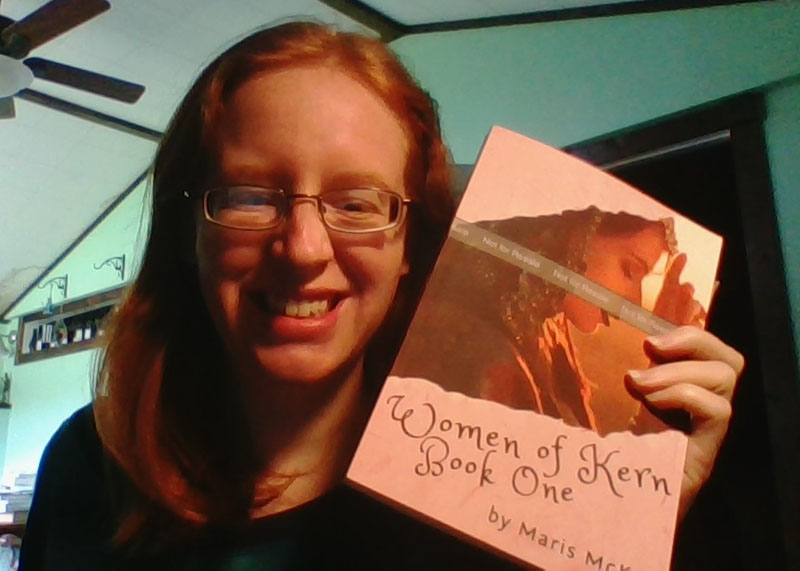
I published my first book!!!
Technically this isn’t really my first book since The INFJ Handbook and God’s Love Story have been available for quite some time now, but it’s my first fiction book and it’s the first of my books available in paperback as well as ebook. Getting the proof copy was ridiculously exciting.
What It’s About
Most of my fiction is fantasy, and this new short story collection is no exception. All the stories are set in the fantasy world of Kern, which you can learn more about on my other website (click here). Here’s the description printed on the back cover:
A negotiator who uses herself as a bargaining chip.
An adventurous spirit trapped by her culture and family.
A resistance fighter leading her captors into a trap.
A reclusive horse trainer swept into a quest for treasure.
An elderly, overlooked servant smuggling slaves out of her country.
A woman with a gift that seems like far more trouble than it’s worth.
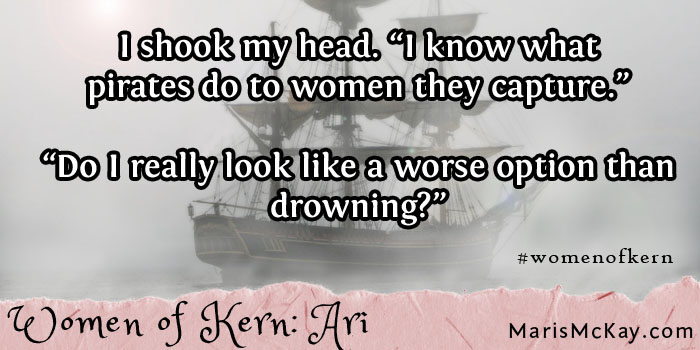
A princess whose arranged marriage puts her in the hands of pirates.
A shepherdess fighting to save her sister.
A belly-dancing assassin who fakes her targets’ deaths.
These are the women of Kern — the sort of women who in our own world are all too often ignored, overlooked, forgotten, and silenced by history. Enter their world of magic, adventure, and romance through nine short stories and novellas driven by women with the strength and courage to shape their own destinies.
FAQs
I’m anticipating a few questions about this book, so I want to answer them here (feel free to ask others in the comments):
Q: Is this Christian fiction?
A: No. It is fiction written by a Christian and certain stories have Christian themes, but it is not “Christian fiction.”
Q: Is this book clean?
A: Mostly? I’d describe it as PG-13 for violence and sex. My target audience is adults and older teens, not children.
Q: Why the pen name?
A: Several reasons:
The website “marissabaker.com” was taken.
I didn’t want people searching for this blog finding my fiction page instead, or those looking for my fiction to find articles I’d written about gardening (less of a problem now than it was a few years ago when I was writing for eHow).
Since I write such a wide variety of things (non-fiction about personality types, Christian non-fiction, and fantasy/sci-fi) I thought it would be easier to write non-fiction and fiction under separate names.
Giveaway
Update: the giveaway is now closed. If you would still like to get a copy of Women of Kern either as an ebook or in paperback, click here to visit my Amazon page.
Even if you haven’t yet seen Avengers: Infinity War you’ve probably picked up on the vibe that not everything ends happy. Well before the film’s release there were charts out detailing which characters were safe, which ones in danger, and which ones we definitely expected to die. Even my cousin, who’s outside the MCU Fandom, wanted to see it because she had to find out who lived and who died.
Warning: Mild Spoilers Follow For Avengers: Infinity War
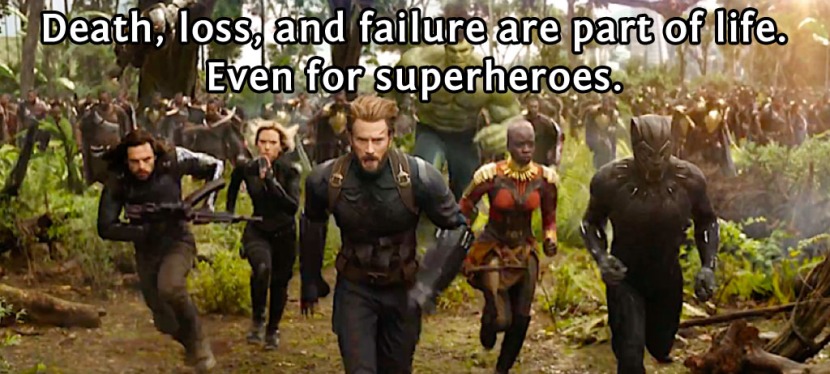
While the film has been well received overall, some are describing the deaths that do happen (and in some cases the whole movie) as pointless because we “know” pretty much how this is going to go. Coulson and Loki have already come back from death scenes in the MCU. It’s something we expect from the genre. And some of the characters that died at the end have sequel movies that are filming right now. We assume they won’t stay dead, and so might conclude that their deaths don’t matter.
It’s also been quite a shock to see earth’s and the galaxy’s mightiest heroes lose such an important battle. This isn’t the end of the story, since a sequel film is coming in May 2018, but the only one who gets a happy ending in this film is Thanos. This isn’t just the Empire scattered the rebellion and Han Solo is frozen in carbonite. This is Darth Vader got exactly what he wanted and retired to Mustafar to spend the rest of his life watching lava bubble.
Second Warning: Major Spoilers Follow For Avengers: Infinity War
I should never have stayed here. Nay, I should never have left Italy.
If my cousin Philip had not been so like Ambros perhaps I could have left. To see his face — that beloved, tormenting face — staring into my eyes once more was more than I could leave. More than I could resist when he asked me to stay. Or I should say ordered me. They were orders, though I turned a blind eye to it then because I wanted him. Or perhaps not him, but Ambros back in my life. I know not.
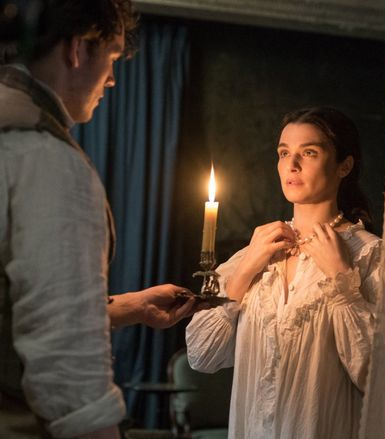
My Cousin Rachel (2017)
I’m in such fear. It was a foolish thing on both our parts, the midnight of his birthday. He knows too little of the world to realize what I gave him was nothing more than a thank you. A birthday gift that would mean more than that stupid little pearl cravat pin. And yes, I wanted it too. A younger, more devoted Ambros to worship me once again if only for a moment.
And how could I have known that he meant marriage by his comment about lacking warmth and comfort? Or that he thought I’d agreed to be his when he took me into those primroses? Or that he would get so drunk he’d announce our engagement to his godfather and poor Louise at dinner?
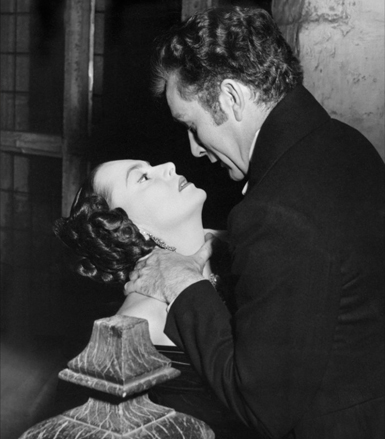
I still feel the pressure of his hands at my throat. Those big, powerful hands of a man who works on his farm every day and stands a head taller than me. Stronger than the ones Ambros once put around my neck. My cousin Philip could have snapped my neck, though he wouldn’t have had to. The slightest squeeze more and I’d not have been able to draw the thinnest breath.
My Cousin Rachel (1952)
Should I feel guilty for bringing Mary Pascoe into this house? Surely his fury won’t touch her, too. The worst he’d do is throw her out of the house. While me … I know not what he’d do were we alone now. Would he wrap his hands around my throat again and expect me to make myself his? Would he force me and afterward tell me I liked it and must marry him?
His fantasy is as complete as the paranoia that claimed Ambrose. I half-believe in his mind we’re already married. That he thinks I’m so sure to agree it’s as if I’ve done so already. That his ridiculous present of his entire fortune will surely convince me to stay.
I must get away. I have the means to do so now, though God knows it’s not why I came here. I simply wanted to see the home Ambros talked about. The symbol of what could have been before he turned on me. The idea of our marriage rather than the reality of it. The allowance my cousin Philip gave me was more than enough. More than I expected or even hoped. To have him honor the will Ambros never signed …
Did he think he’d bought me?
Will he let me leave?
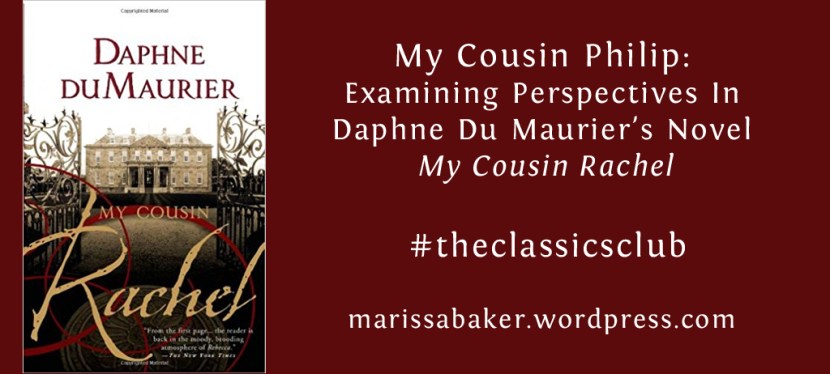
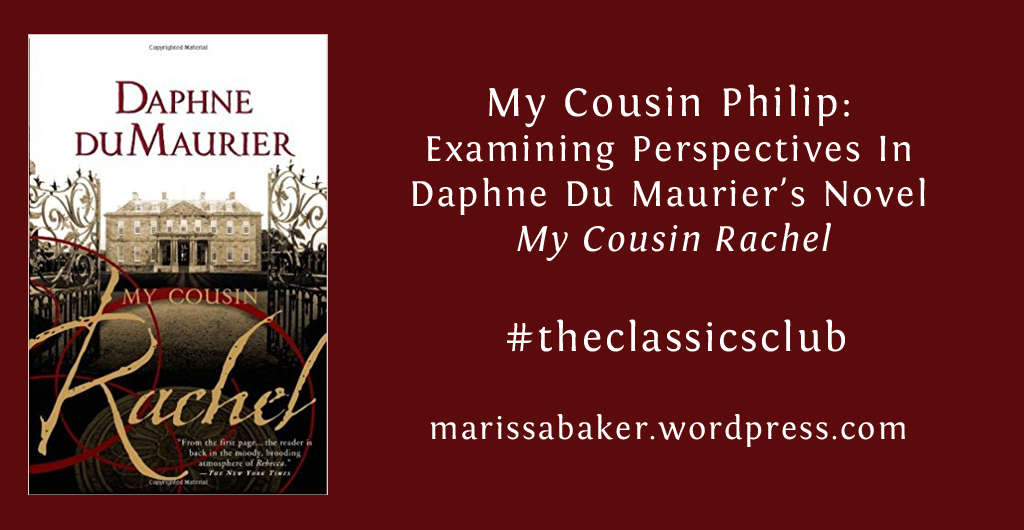
This is quite a bit different than my usual review for books I’m reading on my Classics Club Book list. But I think Daphne Du Maurier’s My Cousin Rachel (1951) is the sort of novel that invites you to look at it from different perspectives. The fact that you’re trapped inside Philip Ashley’s mind for the entire novel leaves you guessing at what the other characters are really thinking. He’s an unreliable narrator and he’s hopelessly naive, especially when it come to women, so the motives he assigns to Rachel are likely untrue. But if he’s wrong about her, then what is right? Everything we know of her is filtered through Philip. We don’t know her true motive or any of her thoughts. We can only guess, as I’m doing in my little retelling from Rachel’s point of view (which overlaps Chapter 23 of the original novel).
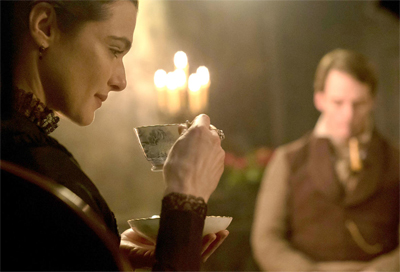
My Cousin Rachel (2017)
I watched the 2017 film adaptation of My Cousin Rachel before reading the book. I suspected I would still enjoy the book after seeing the movie, but knew if I read the book first there was a good chance I’d spend the film grumpy about how they’d adapted it. It turned out to be a very faithful adaptation, though.
*Spoiler Warning* The only major changes were made at the end. The film provides less evidence of Rachel’s alleged guilt, pointing viewers towards the idea that she was not poisoning Philip. And it also has Philip sending her to ride along a dangerous path rather than choosing not to warn her about a dangerous bridge in the garden. The film pushes you toward believing he intended her to die where the book leaves it a little more ambiguous. But then again, Philip’s the one telling the story. Of course he’d make himself look as good as possible.
Philip wants us second-guessing his cousin Rachel. But I suspect Du Maurier wants us to look at Philip just as closely. Because even though we’re getting his perspective on things and he’s certainly not putting any blame on himself, there are things about being in his mind that make me as scared of him as I think Rachel is.
My Cousin Rachel (1952)
Repeatedly, Philip says he wants to isolate Rachel from everyone but him. And that’s before he starts becoming overtly controlling. And when he puts his hands around her throat, it’s not in the heat of anger. He presents it as a calculated decision to add fear to the list of reasons she should marry him. Later, he barely contains his fury and indignation when (after he’s given her all his property and she still hasn’t married him) she states that she can and will invite whoever she likes to stay with them because the house belongs to her and she doesn’t feel safe alone with him.
So instead of just asking, “Did Rachel poison Ambros and/or Philip?” I think we need to ask whether such an act could be considered self-defense. Abuse does not justify murder, but even if Rachel killed someone she may not be the evil and/or misguided character that Philip (who describes himself as feeling a strange compassion for her once he makes up his mind about her guilt) makes her out to be. It might have been more of an act of desperation and fear than calculating malice.
But that’s assuming she’s guilty at all. And there’s no clear evidence that she is. Laburnum (the plant Philip settles on as the murder weapon) isn’t even all that poisonous. The most common symptoms are nausea and vomiting, and that’s after eating several seeds. “Higher doses can produce intense sleepiness, convulsive possibly tetanic movements, coma, slight frothing at the mouth and unequally dilated pupils. … [However] the MAFF publication ‘Poisonous Plants in Britain and their Effects on Animals and Man’, says that all stories about laburnum causing serious poisoning and death are untraceable” (The Poison Garden).
Perhaps Du Maurier believed her chosen poison really was deadly based on the rumors that have made it one of the most feared garden plants. But perhaps she did her research and knew that Philip was jumping to unjustifiable conclusions. Maybe she would have known, as Rachel surly did with her expertise in herb lore and gardening, that most gardens are home to far more reliably deadly plants (like foxglove and oleander). Perhaps Du Maurier meant for her readers to realize that a brain tumor (for Ambros) and a relapse of meningitis (for Philip) are the most logical explanations for symptoms both men attribute to “Rachel, my torment.”
There’s an argument to be made that Philip isn’t really concerned about whether or not Rachel poisoned Ambros at all. He decides her guilt based on whether or not she “conforms to his desires and whims” (from “My Cousin Rachel (2017) and Male Entitlement“). After all, he already possesses everything else that belonged to Ambros. Why not Rachel as well?
The question of whether or not Rachel poisoned Ambros consumes Philip only until their first meeting. After that he’s quite certain she’s innocent until she makes it clear she won’t marry him. All his worry about whether or not she’s guilty of murder covers the fact that his inability to deal with rejection brings out a desire to posses and control her. He and Ambros call Rachel “my torment” because she brings out the ugliest side of their natures and they blame her for their darkness rather than looking to the true culprits. Themselves.
I saw Black Panther yesterday, so naturally today’s post is a new installment in the superhero Myers-Briggs types series. I know I get pretty excited about most of the MCU films, but this one is seriously good. I love the hero characters and the principles they stand for like loyalty and peace. The acting is great, the plot’s tight, I love the music (I’m listening to the score as I type), and while it still has a superhero-movie feel it doesn’t shy away from digging into some really deep and difficult subjects.
T’Challa’s judging functions are pretty easy to pin-point: Fi/Te. But the fact that he uses Introverted Feeling and Extroverted Thinking when making decisions only tells us that he’s either a TJ or FP type. We’re going to need a little more to go on than just those two functions if we’re going to narrow-down a type for him. After Captain America: Civil War came out, most people typed T’Challa as an ISFP. However, a couple of the discussions I found online pointed out that he’s an ENTJ in the comics. I haven’t read the comics, though, so this typing is only going to focus on his film portrayal. From that, I ended up going with ISFP.
A Personal Code
Everyone has and uses both a Thinking and a Feeling mental process as part of their personality type. They’re both a “Judging” function, which means you use them to make decisions and answer “should” questions. The one you’re most comfortable with is either your driver process or co-pilot, and then its opposite is either your inferior or tertiary process. Personality Hacker uses nicknames for the Jungian cognitive functions, and I think they make it easier to talk about exactly what I mean when saying T’Challa uses Fi/Te when making decisions.
Introverted Feeling is nicknamed “Authenticity” and it’s an ISFP’s primary function. It’s an internally focused, subjective process that mostly boils down to making decisions based on what “feels right” to you. Unlike the Extroverted Feeling process, it’s not primarily worried about what other people think. Authenticity is concerned with making a decisions that lines up with one’s own personal beliefs. And that’s what we see in T’Challa.
Though T’Challa certainly cares for other people, when he makes decisions they’re in line with what he believes is right rather than what will make the majority of the people around him happy. Fi is the mental process that drives his decision at the end of the film to share Wakanda’s resources with the world (see — I told you we were going to talk spoilers). And this personal code is also why he let his father’s killer live at the end of Civil War. He discovered that killing an unarmed man for revenge wasn’t in line with his moral compass (though making sure he faces justice is). Similarly in this new film, he offered to save his cousin’s life even after the man tried to kill him and steal Wakanda.
Impersonal Logic
Extroverted Thinking, or “Effectiveness,” is a much more impersonal function than Introverted Feeling, though it’s still used for making decisions. It’s an ISFP’s fourth function — the one they’re least comfortable using.
Effectiveness users look for the most efficient answer to a question. In other words, this process makes decisions based on what’s going to work. This is why in Civil War T’Challa tells Natasha that he doesn’t approve of all the politics. It’s because a hundred people arguing in a room doesn’t seem like an effective or efficient way to actually get things done.
I also don’t think his decision to go after Bucky himself was just fueled by an emotional type of revenge. It was also a coldly logical assessment of the most efficient way to handle the problem since he knows that, as Black Panther, he can take down a super assassin. Since Te is where an ISFP goes when stressed, it makes sense that one of the times we most clearly see T’Challa using it is after his father’s murder.
Interacting With The Real World
SP types have a certain advantage in physically-demanding tasks since this mental process is so focused on real-time interaction with the outer world. While being the Black Panther certainly enhances T’Challa’s abilities as a warrior, this new film shows us that he’s quite capable without them. He displays the sort of “real-time kinetic” intelligence that Personality Hacker says characterizes types that use the Extroverted Sensing, or “Sensation,” process. On a side-note, the ritualistic combat you see in Black Panther is inspired by real-world African martial arts, which is pretty cool.
SP types thrive on being in the middle of the action. And since Sensation is their Learning/Perceiving function, this is also how they prefer to learn new information. The things they can experience and verify with their five senses are the things that seem most reliable. And they often use their skill for interacting with the real world in creative, productive ways, earning ISFPs nicknames like Artist, Composer, and Producer.
As an SP type, T’Challa isn’t content with delegating tasks and that he can do himself. He goes after his enemies personally, even when not required by tradition and ritual. And he doesn’t just want to read reports or have people come to him to say what’s going on in Wakanda. We see him visiting his people and interacting with their worlds first-hand. He’s also interactive when planing missions. For example, there’s an early scene in Black Panther where he’s watching a projection of a convoy he’s about to attack as part of a rescue mission and he picks up one of the projected trucks to move it around and get a closer look.
Possibilities and Patterns
As far as we know, T’Challa is the first Black Panther to reveal his powers to the world at large. And he’s certainly the first king of Wakanda to share their country’s secrets with the world. While there is a struggle between the part of him that believes in a vision for Wakanda’s future where they help the world and his duty as king to protect his own people above the others, the idealistic visionary side wins out.
An ISFP has Introverted Intuition as their tertiary or “10-year-old” mental process. It’s also called “Perspectives” and it functions as a pattern-recognition system. ISFPs typically have conscious access to their Perspectives function, but it’s not always reliable. T’Challa is mature enough to recognize this and does not rely on his Ni too much or make a rash decision based on it.
However, he’s also comfortable enough with Intuition to not shy away from what his friend Nakia and sister Shuri have to say about considering a future where Wakanda and its technology play a larger role in the world. And as an Ni-user myself, I find it very satisfying that Wakanda’s first outreach center will be built in the location where T’Challa’s father killed his own brother and abandoned the brother’s son to protect Wakanda’s secret. It brings the pattern together in a way that feels right.
If you enjoyed this post, check out my other MCU typings:
The Librarians is one of my favorite TV shows. What could be better than a team of bookworms saving the world from runaway magic? Sure it’s campy and can’t be taken too seriously, but isn’t that part of the appeal?
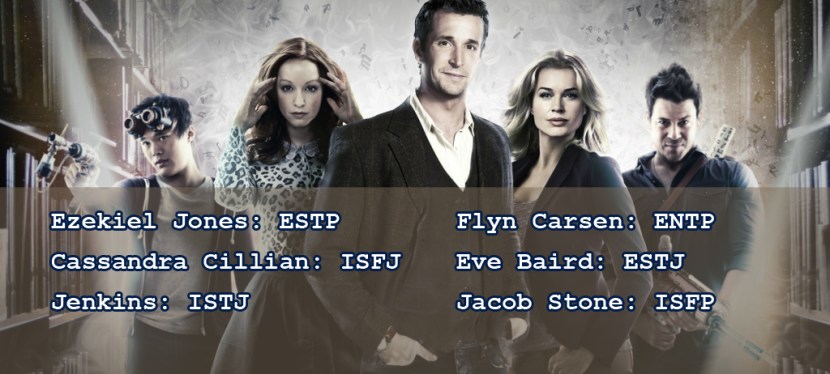
Typing fictional characters is one of my favorite things to do in blog posts. I’d started writing this one for last week, but when I realized how many of the Librarians characters are Sensing types I thought it’d be a great follow-up to my “Myths About Sensing Types” post. One of the more pervasive myths about Sensors is that they’re neither intelligent nor imaginative. Since all the main characters in this show except Flynn are Sensors, The Librarians provides a perfect example to the contrary.
Please note: I type using cognitive functions, which are the basis of Myers-Briggs theory. If you’re not familiar with this concept or want a refresher, check out this articles: The Simplest Guide To Myers-Briggs Functions Ever
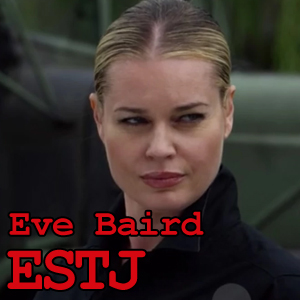
Eve Baird: ESTJ
Eve is the easiest character to type, partly because she’s such a stereotypical example of the type nicknamed “Supervisor” or “Guardian.” ESTJs are known for their blunt demeanor, no-nonsense attitudes, and ability to keep things moving forward. They also care about keeping the world running as it should be, a trait Eve devotes to keeping the Library safe and magical artifacts out of the wrong hands.
ESTJs lead with a judging function called Extroverted Thinking/Effectiveness. That means Eve’s preferred mental process involves measuring and managing impersonal criteria when making decisions. There are examples of this in literally every episode. Read more →
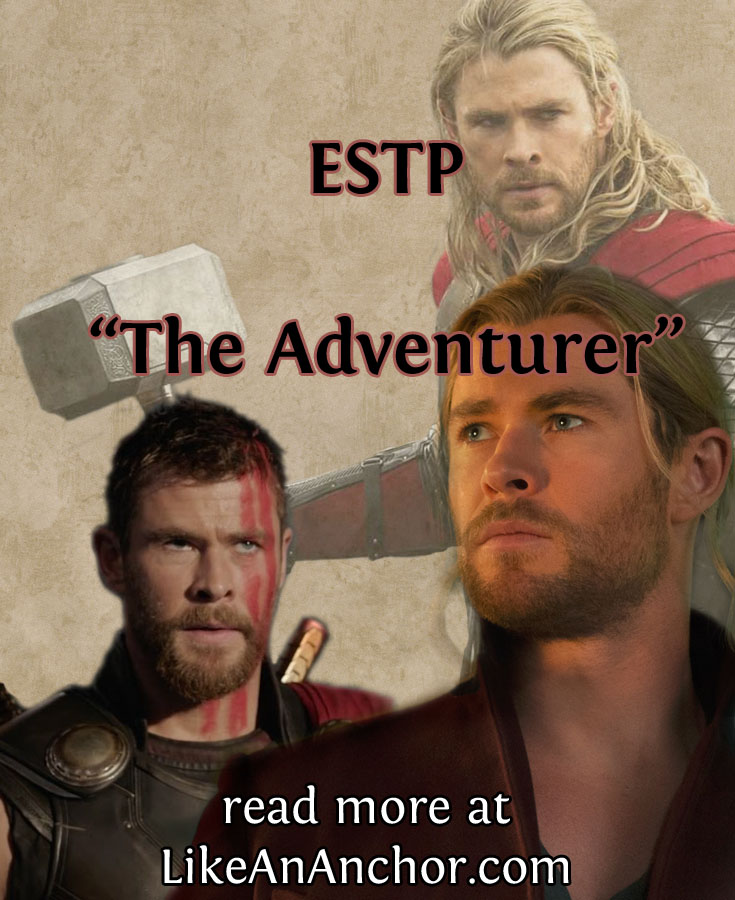
With Thor: Ragnarok now out, it seemed like a good time for another Fictional MBTI post, especially since Ragnarok is so good. Who would have thought a film about the destruction of Asgard and fall of the gods (that’s not a spoiler — it’s Norse mythology) could be so light-hearted and fun?
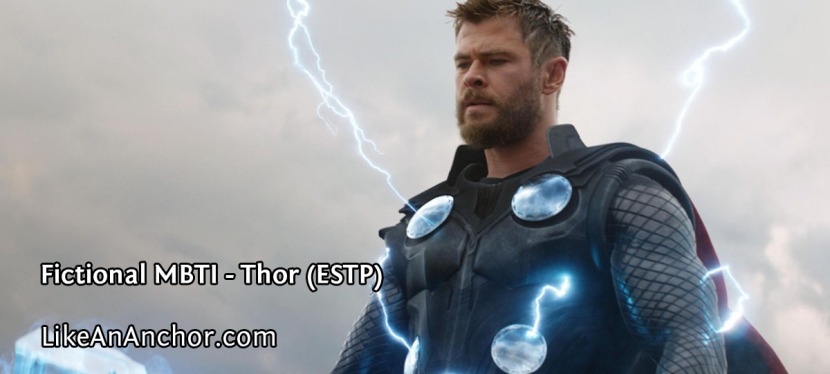
I’ve been typing Thor as an ESTP since the first film came out, which I think is pretty much the standard typing for him (please note: I’m only typing the MCU version of Thor, not his character in the comics or mythology). Still, just because there’s not much debate about his type doesn’t mean we can’t give him his own post. There are several different nicknames for this type, and for Thor I decided to go with “Adventurer” rather than the more commonly used David Keirsey nickname “Promoter.”
A Man of Action
ESTP types lead with a mental process called Extroverted Sensing (Se). Fittingly, this is the most visible aspect of Thor’s character in the films. SP types are doers. They thrive on taking action in the real world and they’re good at it. Really good. In fact, I’d venture a guess that most action heroes in fiction are SP types, especially STP types. It’s not that they can’t pause for reflection or plan ahead. It’s that they don’t really see the need since things usually work out so well for them.
ESTPs have a reputation for being thrill-seekers, and it’s not hard to see why. Their dominant Se seeks variety and physical stimulation. They like to take risks, yet they are so aware of their physical surroundings and their limits that they are probably the smartest physical risk-takers around. They have a natural awareness for what their body can or can’t do, paired with quick reflexes, and an ability to keep their wits in a crisis.” — Susan Storm, Understanding ESTP Sensing
This side of Thor’s character is at the forefront in the new film as well as his past appearances. In Ragnarok’s opening scene, he even comments that fighting against overwhelming odds without a real plan seems to always work out for him. And not only does it work out, he’s clearly enjoying himself. He thrives on challenge and risk-taking.
Thoughtlessly Charming
I’m going to skip over an ESTP’s co-pilot process for now and talk about their tertiary side. It’s tempting for any type to bypass their secondary function and spend more time in their less-developed tertiary side because that lets them stay in their preference for introversion or extroversion. For example, an ESTP’s primary and tertiary functions are both extroverted, while their secondary one is introverted.
Extroverted Feeling (Fe) isn’t all that well-developed or reliable for ESTPs. It can lead to bad decisions based on doing things that will make them look good to or fit in with the people around them (Fe is a process focused on harmony in relationships). Thor is clearly enjoying his social position in the opening scenes of the first film and I suspect that a large part of how he acts is because “reckless military leader” is the persona people expect (though I doubt he’s analyzed it that much). We also see him using his Fe to connect with people on earth as the charming gentleman Jane Foster falls in love with.
Learning After Doing
ESTPs learn best by doing. They’re not the sort to listen to lectures or spend a lot of time planing. They’d rather do something and see how it works out, then adjust future actions accordingly. Until something doesn’t work out there’s not much of a reason for them to spend time figuring out why. Which leads us to a discussion of an ESTP’s secondary function, Introverted Thinking (Ti).
Most people start to develop their secondary function in their teens, but it’s not a comfortable process for people to be in so we don’t always focus on growing it until we have to. For ESTPs, this “co-pilot” is a judging function that they use when making decisions. Ti is concerned with figuring out what makes sense, aligning to personal convictions, and impartially looking at facts. Thor starts doing this when his exile from Asgard in his first film forces him to look at the sort of decisions he’s been making and re-think his actions.
We do also get glimpses of an ESTP’s healthy thinking side in Thor’s character. People of this type can be incredibly clever and intelligent, though they’re often underestimated because so many outsiders just see their action-oriented side. An example from the first film is when he’s explaining the science behind Bifrost travel to Jane. He makes it look easy, but he’s managing to translate two completely different cultural way to framing the world (science and magic) in a way that makes perfect sense to an earth scientist. And in Ragnarok, we get a conversation between him and Bruce Banner where Thor effortlessly keeps up with and understands the scientific terminology used by a man with multiple PhDs.
Stress And The ESTP
Being cast out of Asgard in the first film, and especially learning that Mjölnir doesn’t see him as worthy anymore, pushes Thor into his least developed function. For ESTPs, that’s Introverted Intuition (Ni). When intuition is a type’s stress function, stressful situations tends to confuse their normally clear thought process and they may become angry, paranoid, or feel hopeless. It typically doesn’t take ESTPs long to bounce back, though, which helps explain why Thor’s despondency only lasts until he’s given a chance to take action and fight back.
What’s really interesting about Thor of the MCU films is that this version of his brother Loki is an INFJ type. Making Loki and Thor complete opposites in their personalities means they use the exact same mental functions in the opposite order. Thor’s weakest mental process is Loki’s strongest (INFJs lead with Ni), and vice-versa. No wonder they’re constantly butting heads and struggling to understand each other.
If you enjoyed this post, check out my other MCU typings:




 , and
, and  . Please note that these are affiliate links. This means that, at no additional cost to you, I will receive a commission if you click on the link and make a purchase.









 Like An Anchor