Grace To Build An Ark

When we think of “grace” we typically throw out definitions like “unmerited favor,” “free gift,” and “unearned salvation.” And those concepts are certainly included in the meanings of the Hebrew chen (H2580) and Greek charis (G5485). Both words translated “grace” are about good things we don’t deserve being graciously given to us by God.

But we also tend to make assumptions about God’s grace that aren’t necessarily found in scripture. For example, we assume that because the favor is unearned there aren’t any expectations laid on those who accept it. We think because the gift is free it can’t be revoked, rejected, and/or lost. We project cultural and traditional assumptions onto scripture that can cloud the meaning.

Several weeks ago, a Messianic Rabbi gave what’s probably the best message I’ve ever heard on grace (click here to listen to it). My goal in this post isn’t to share his entire message, but to narrow-in on one of the points he made that really captured my attention.click to read article, "Grace To Build An Ark" | marissabaker.wordpress.com

Saved By Grace

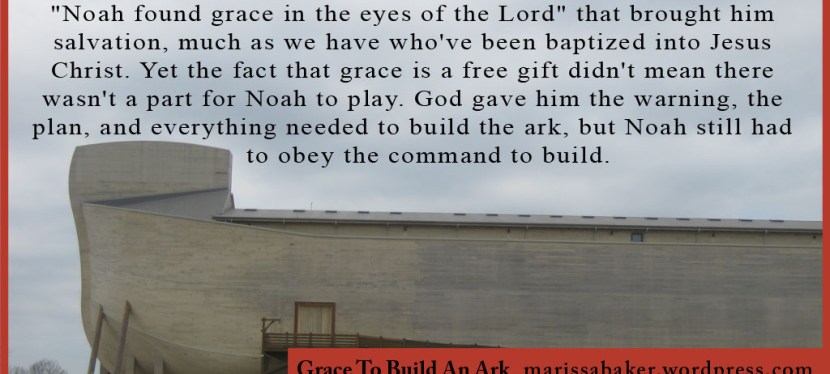
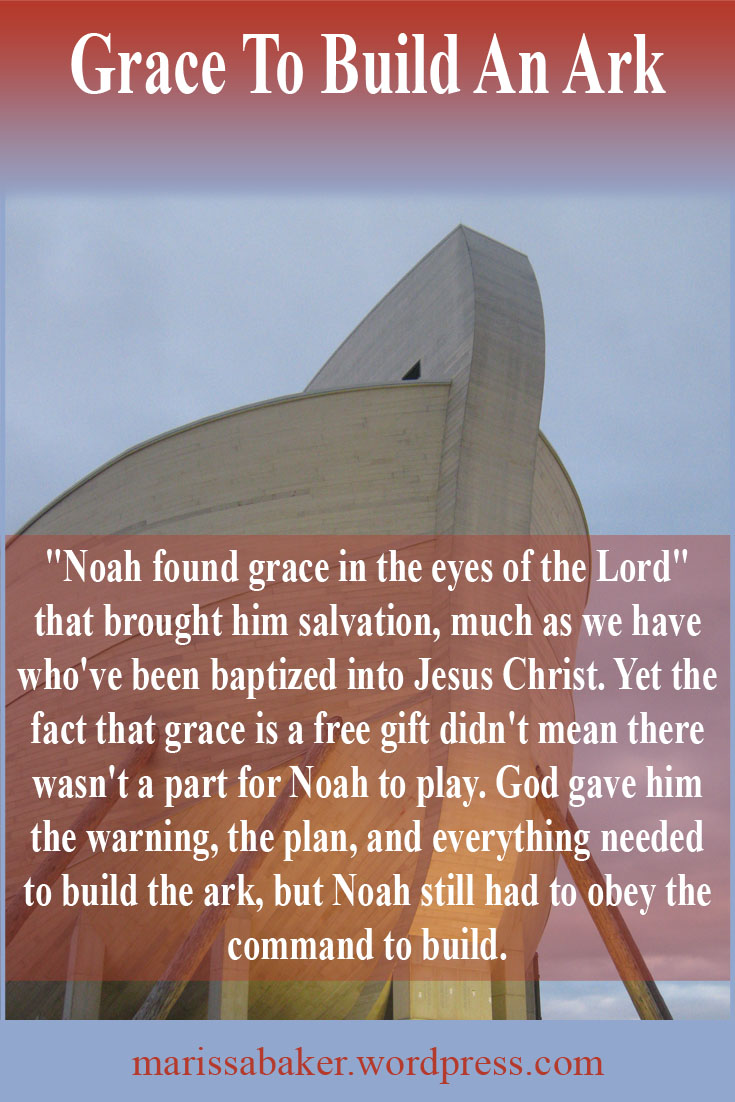
The very first time we see the word “grace” in the Bible is in reference to Noah. At this time, God looks down from heaven and sees “the wickedness of man was great in the earth, and that every intent of the thoughts of his heart was only evil continually” (Gen. 6:5). For that reason, God chose to bring judgement on the earth in the form of a flood. “But Noah found grace in the eyes of the Lord” (Gen. 6:6). Read more

But What If God Scares Me?

So you’ve heard about the love and grace of Jesus and want to learn more. Maybe you even had another Christian lead you to Jesus and accepted Him as your savior. Then you sit down intending to read the Bible from start to finish and find something you weren’t quite expecting.

Genesis starts out with creation and the fall of man, then suddenly God’s wiping the whole earth out in a flood (Gen. 6:5-8). Next He’s scattering the people of Babel for building a tower (Gen. 11:5-9) and raining fire and brimstone down on Sodom and Gomorrah (Gen 19:24-25). Why does the God you know as forgiving and accepting seem so angry? Where is God’s love and grace here, in the Old Testament?

But What If God Scares Me? Bible reading for those who don't like the God they find in the Old Testament | marissabaker.wordpress.com

Many people give up on the Bible and/or their faith because God isn’t what they expect, or they go for a version of Christianity that highlights the New Testament and ignores any verses about uncomfortable topics like judgement and sin. But authentic Christianity demands something more of its followers. Jesus said, “Many are called, but few are chosen” twice in Matthew’s gospel (Matt. 20:16; 22;14). We don’t want to be the people who receive the seed of the gospel and then wither away because we have no root (Matt. 13:5-6, 20-21).

The lives of Christians are supposed to reflect the nature of our God. If we aren’t diving deep into His word, we won’t know who He is or what He requires, and we can’t grow roots into our faith. We can’t let misconceptions about or fear of His anger and expectations scare us away from getting to know Him. Read more

Bridging The Gap

In the beginning Adam and Eve had a face-to-face relationship with God. They they sinned, creating a gap between them and their creator that was renewed each time a human broke God’s law. God was still there, but we kept moving farther and farther away.

Behold, the Lord’s hand is not shortened, that it cannot save; nor His ear heavy, that it cannot hear. But your iniquities have separated you from your God; and your sins have hidden His face from you, so that He will not hear. (Is. 59:1-2)

Throughout the time period covered by the Old Testament books, it appears few people had a relationship with God. In every case, that relationship existed because God stepped across the gap and initiated the relationship. He called Abraham, Isaac and Jacob into covenant with Him. He spoke to Moses out of the burning bush. He chose David as king over Israel. He called the prophets individually.

Today, God also has to take the first steps in any relationship we have with Him. Jesus said, “No one comes to the Father except through Me” (John 14:6) and also, “No one can come to Me unless the Father who sent Me draws him” (John 6:44). To have a relationship with Yeshua we must be called by the Father, and to know the Father we have to go through Yeshua.

Bridging the Gap | marissabaker.wordpress.com

Several months ago, there was a handout at my Messianic congregation with a “Thought Of The Week” printed on the back talking about just this topic. It started out discussing Jacob’s ladder, then human attempts to bridge the gap between God and man by building things like towers. Such attempts are futile, but

The same might be said of all our religious impulses. The stars are always beyond our reach. God is far distant. Man’s best attempts to bridge the gap fail. … If we are to ascend to God, we must ascend upon a ladder that He Himself has extended to us from above.”

We can’t do anything that will make us worthy of God’s attention. All our “religious impulses” — going to church every week, singing worship songs, preaching, or even doing works like healings — aren’t going to make Jesus let us into the kingdom (Matt. 7:22-23). The only thing we can do is respond when God extends us a way to know Him.

For all have sinned and fall short of the glory of God, being justified freely by His grace through the redemption that is in Christ Jesus, whom God set forth as a propitiation by His blood, through faith, to demonstrate His righteousness, because in His forbearance God had passed over the sins that were previously committed (Rom. 3:23-25)

Jesus is the ladder “extended to us from above” by God the Father. He “came down from heaven” (John 6:38) to pay the price for our sins and “draw all men to” Himself (John 12:32). Because we could not reach Him, he came to us.

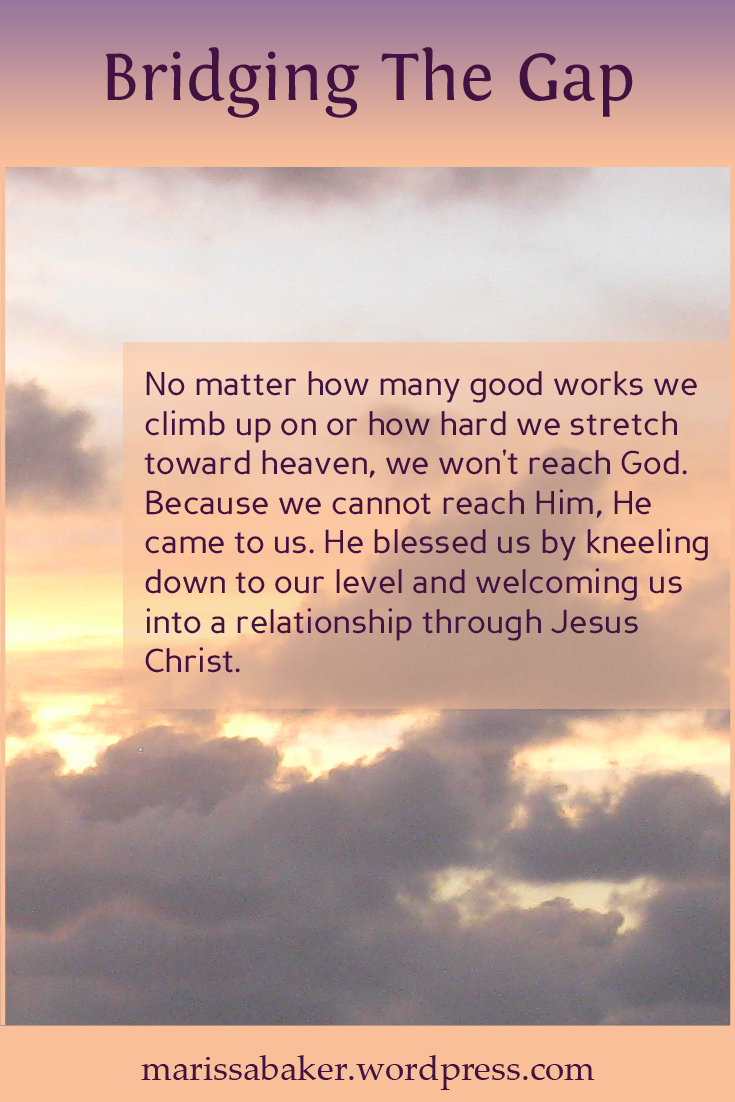
The Hebrew word for “bless” also means to kneel. No matter how many good works we climb up on or how hard we stretch toward heaven, we won’t reach God. Yet He blessed us by kneeling down to our level and welcoming us into a relationship through Jesus Christ.

 Therefore, having been justified by faith, we have peace with God through our Lord Jesus Christ, through whom also we have access by faith into this grace in which we stand, and rejoice in hope of the glory of God. (Rom. 5:1-2)

Because of what Jesus has done and is doing, we can reach God. Through Him, we “have access by one Spirit to the Father” (Eph. 2:18). We can come to Them with absolute confidence that They love us and want a relationship with us. They’ve proved that time and again throughout history by making covenants with people, building friendships with men like Abraham (Jas. 2:23), pleading with Their loved ones to come back, kneeling down to die in our place, and now living and walking with us.

Seeing then that we have a great High Priest who has passed through the heavens, Jesus the Son of God, let us hold fast our confession. For we do not have a High Priest who cannot sympathize with our weaknesses, but was in all points tempted as we are, yet without sin. Let us therefore come boldly to the throne of grace, that we may obtain mercy and find grace to help in time of need. (Heb. 4:14-16)

Jesus bridged the gap once and for all with His sacrifice that “perfected forever those who are being sanctified” (Heb. 10:14). He gave us access to God and “boldness to enter the Holiest” by making us holy (Heb. 10:19-22). “Now we are children of God” (1 John 3:2), and we can come to Him just as a child who knows their loving Father always has time to pick them up and listen to their concerns.

Weightier Matters

The scribes and Pharisees had a lot going for then. They were well-educated, well-respected, and held positions of authority in the community of believers. People thought they were important, and they were. Then this guy Jesus showed up and started condemning them for not following God correctly.

Can you imagine how this looked? Here are these men who’ve been the authority on worship tradition for years confronted by a young carpenter who just appeared out of nowhere. He didn’t even go to a good school! Worse, they know He’s right. But if they admit it, they lose their power.

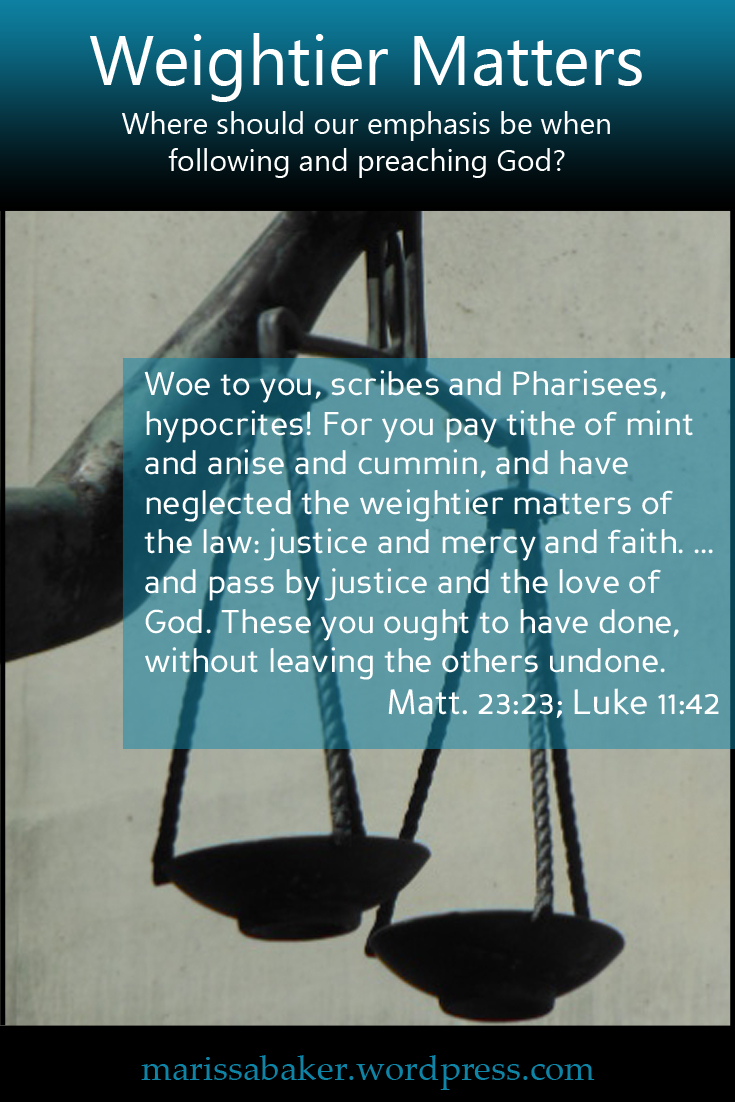
weighty_matters
photo credit: Michael Coghlan “It Hangs in the Balance,” CC BY-SA

A similar thing can happen in our churches today. When leadership is focused on maintaining church tradition, there’s a danger of developing a Pharisaical attitude. A certain amount of resistance to change is needed to keep from forsaking sound doctrine, but often church tradition isn’t rooted in the Bible at all and if that’s the case it’s fair-game for reexamination. We can also, as the Pharisees did, error in emphasizing certain doctrines to the neglect of others. Read more

Covenants of Righteousness and Mercy

This isn’t the first time a Bible study has brought tears to my eyes. Usually that happens when I’m studying God’s love, but there’s also something inspiring, humbling and wonderful about His righteousness and mercy. They’re aspects of God’s essential character, and the more I learn about who the Father and Yeshua are, the more inclined I feel to just sit here in awe.

In Matthew 5:48 Jesus said, “you shall be perfect, just as your Father in heaven is perfect.” We have a responsibility to grow toward perfection, developing God’s character inside us. If we’re going to mimic His character, we have to study and learn about who and what He is, so we can display those traits as well.
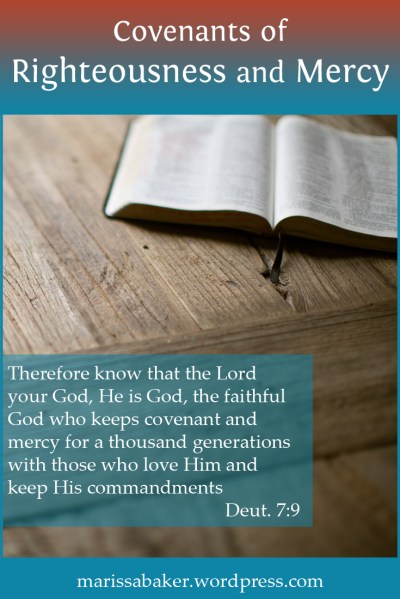
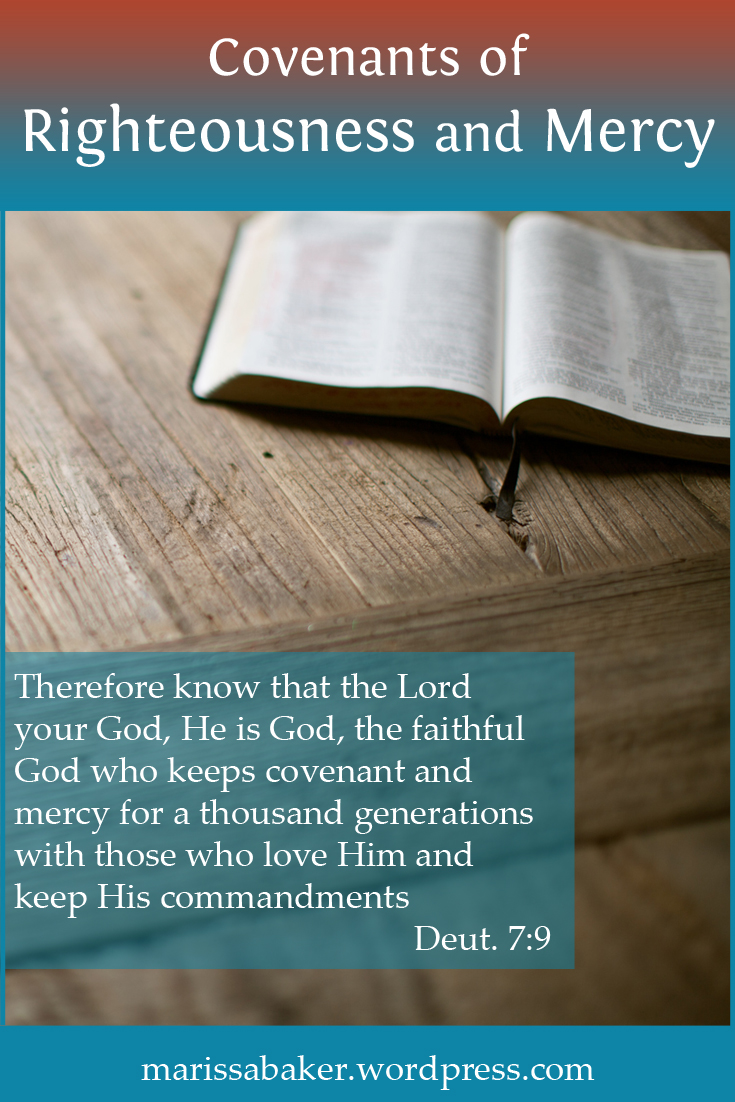
Covenants of Righteousness and Mercy | marissabaker.wordpress.com

I’ve already written many posts on this blog about “God is love” (there’s even a whole ebook free if you click here), so that’s not what we’re going to focus on today. Instead, I want to spend our time together this Sabbath focusing on two key character traits that are aspects of God’s love.

The Lord is Righteous

If you search for the phrases “the Lord is …” and “God is …” trying to find descriptions of His character, the first you come to is in Exodus.

And Pharaoh sent and called for Moses and Aaron, and said to them, “I have sinned this time. The Lord is righteous, and my people and I are wicked. (Ex. 9:27)

Even a pagan ruler on the receiving end of God’s judgement recognized that “the Lord is righteous.” In Hebrew, the word is tsaddiyq (H6662). For human beings, righteousness involves fulfilling the commands of God. It “consisted in obedience to God’s law and conformity to God’s nature” (Theological Wordbook of the Old Testament, entry 1879). Like love, righteousness isn’t just something God shows toward us — it is one of His essential character traits. We define righteousness by pointing to God’s standard.

“Behold, the days are coming,” says the Lord, “That I will raise to David a Branch of righteousness; a King shall reign and prosper, and execute judgment and righteousness in the earth. In His days Judah will be saved, and Israel will dwell safely; now this is His name by which He will be called: THE LORD OUR RIGHTEOUSNESS. (Jer. 23:5-6)
Covenants of Righteousness and Mercy | marissabaker.wordpress.comNot only is God Himself righteous, but all our righteousness is found in Him. This prophecy points to Christ’s role as the one who makes us righteous. Only by following in Yahweh Tsidkenu’s footsteps can we continue in righteousness.

As we’ve seen, God’s righteousness is closely connected to His law. It follows that as a Being of righteousness He must institute penalties for disobedience as well as rewards for obedience. Daniel recognized this in his prayer for the exiles.

As it is written in the Law of Moses, all this disaster has come upon us; yet we have not made our prayer before the Lord our God, that we might turn from our iniquities and understand Your truth. Therefore the Lord has kept the disaster in mind, and brought it upon us; for the Lord our God is righteous in all the works which He does, though we have not obeyed His voice. (Dan. 9:13-14)

It is righteous for God to let evil befall a nation that broke their covenant with Him. Covenants aren’t just about the good things both parties get out of the agreement — they also include consequences for breaking the covenant, which is what we do when we sin (Dan. 9:4-5). Because God is righteous, He keeps the entire covenant — including the part that stipulates consequences for sin.

The Lord is Mercy

Daniel also calls on another of God’s essential character traits; one that goes hand-in-hand with righteousness.

And I prayed to the Lord my God, and made confession, and said, “O Lord, great and awesome God, who keeps His covenant and mercy with those who love Him, and with those who keep His commandments, we have sinned and committed iniquity, we have done wickedly and rebelled, even by departing from Your precepts and Your judgments.

O Lord, righteousness belongs to You, but to us shame of facebecause we have sinned against You. To the Lord our God belong mercy and forgiveness, though we have rebelled against Him. (Dan. 9:4-5, 7, 9)

If God was not mercy as well as righteousness, we would be in grave straits indeed. We have all sinned, and if God righteously rewarded us for that we would all be dead (Rom. 3:23; 6:23). Yet Jesus Christ took on Himself the death penalty required by covenant. Instead of rewarding us as we deserve He offers mercy, as He did to “a blasphemer, a persecutor, and an insolent man” who became the Apostle Paul (1 Tim. 1:13).

But God, who is rich in mercy, because of His great love with which He loved us, even when we were dead in trespasses, made us alive together with Christ (by grace you have been saved) (Eph. 2:4-5)

Mercy is as much a part of God’s being as love and righteousness, and it has always been this way. Back in the Torah, Moses makes a prayer for Israel very similar to Daniel’s plea. The people have rebelled, and Moses is asking for God’s mercy to mingle with His righteousness.

And now, I pray, let the power of my Lord be great, just as You have spoken, saying, ‘The Lord is longsuffering and abundant in mercy, forgiving iniquity and transgression; but He by no means clears the guilty, visiting the iniquity of the fathers on the children to the third and fourth generation.’ Pardon the iniquity of this people, I pray, according to the greatness of Your mercy, just as You have forgiven this people, from Egypt even until now.” (Num. 14:17-19)

Covenants of Righteousness and Mercy | marissabaker.wordpress.comMoses is directly referencing God’s own description of Himself in Exodus 34:6-7. These are the character traits of “God is love” which back-up the covenant God makes with His people

In the Old Testament verses we’ve been quoting, “mercy” is translated from the Hebrew chesed (H2617). The Theological Wordbook of the Old Testament points out that this word is often connected with covenant — most likely in that God’s covenant is a result of His chesed and includes the promise of His loving kindness. As those in covenant with God, we’re expected to show mercy as well.

Blessed are the merciful, for they shall obtain mercy. (Matt. 5:7)

In Greek, “mercy” is elos (G1656). It’s different from grace, which is a special kind of gift from God that consists of removing the penalty for sin. Mercy goes along with that and takes a step farther by alleviating the miserable consequences of sin (Zodhiates Key-Word Study Bible).

Jesus has compassion and mercy on us because He sympathizes with our weakness, having experienced what it’s like to be human even though He never sinned (Heb. 4:15-16). We, too, should exercise mercy towards others. As sinners ourselves, we’re in a unique position to respond to the suffering we see in others with loving kindness rather than condemnation. We must learn to follow God’s example of mingling righteousness and mercy. We never forget or ignore the covenant laws and our commitment to righteousness, but we also remember to always act out of mercy and love.
God’s Message Through the Aaronic Blessing

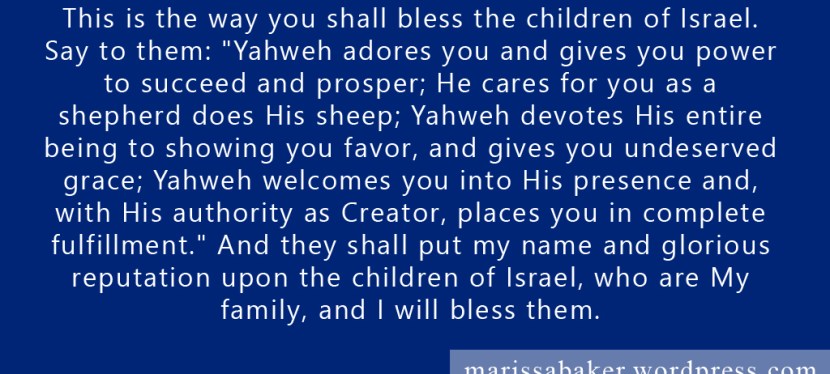
At a conference this past December, I attended an excellent seminar by a gentleman named Hal exploring the depth of the Hebrew words used in the Aaronic blessing (I want to credit him, but not sure if he’d want his full name used here, so we’ll just stick with first names). This blessing goes like this in the New King James Version: “The Lord bless you and keep you; the Lord make His face shine upon you, and be gracious to you; the Lord lift up His countenance upon you, and give you peace” (Num. 6:24-26).

God's Message Through the Aaronic Blessing | marissabaker.wordpress.com

These words are lovely in English, but I was awed by how much more incredible they are when you start digging deep into the Hebrew meanings. In this article, we’re going to take a deep-dive into the words originally used to record this blessing. These words illuminate an encouraging, hopeful message that God continues to share with us today.

Read more