Ephesians 6 is the most famous passage talking about spiritual warfare. And because I’ve been rolling the idea of doing a study series on the armor of God/spiritual warfare around in my mind for some time now, it makes sense to start there. So let’s jump right in.
Finally, my brethren, be strong in the Lord, and in the power of his might. (Eph 6:10, KJV)
Before we can start getting ready to fight a spiritual battle, we must recognize where the strength to do such a thing comes from. On our own, we couldn’t fight spiritual adversaries. We need to “be strong in the Lord” to do that. But what does being strong in Him really mean?
The word translated “be strong” is endunamoo (G1743). It comes from a combination of the word en (G1722), which is a preposition meaning in, by, or with, and dunamoo, which is a form of dunamis (1411). Dunamis means “inherent power,” such as Jesus used to perform miracles (Luke 8:46). So this word in Ephesians means to be filled with inherent, active, achieving power. And because we’re strong “in the Lord,” it’s the same kind of power He has.
I can do all things through Christ, Who empowers me. (Phil. 4:13, HBOO)
We, who have no hope of standing up against a spiritual onslaught on our own, can do “all things,” including spiritual warfare, when Jesus empowers us. That means the One who can cast out devils with a word and who saw Satan fall like lightning from heaven (Luke 10:17) isn’t just fighting on our behalf. He’s sharing His power with us so we can fight alongside Him.
OneRepublic’s song “Human” is about a man who’d fallen out of contact with God and now turns to Him when things are going badly. They “had a conversation” where the singer asks questions and pours out his frustrations. Then God “said the strangest thing.”
He said, “How does it feel to be human?
Do some of the best plans you make get ruined?
Do people curse you when flowers ain’t blooming?
How does it feel?”
He said, “How does it feel to be human?
If I could for one day I just might do it
Dance ’til the sun comes up to my music
How does it feel?”
While OneRepublic doesn’t sing “Christian music,” the band members are Christians and they know just as well as we do that God does have experience being human as Jesus Christ. But even knowing that, I think most of us can identify with the feeling in this song. We know Jesus lived as a human. But sometimes we still don’t feel like He can fully sympathize with exactly how hard it is. That it must have been easier/different for Him since He was fully God at the same time He was fully human.
Even More Than Salvation
If someone asked you why Jesus became human, most of us would say, “To save us” (or some variation on that idea). And that’s certainly accurate, for “Christ Jesus came into this world to save sinners” (1 Tim. 1:15, WEB). That is not, however, the only reason He came to this earth.
Some of the other reasons Jesus gave for Him coming into the world include preaching the gospel (Mark 1:38; Luke 4:43) and witnessing to truth (John 18:37). As we read through the gospels, it becomes clear that the work given to Jesus by the Father involved more than “just” dying in our place to cleanse us from sin. I hate saying “just” becasue salvation is such an incredible gift on its own that it should blow our minds. But Jesus wanted to do even more for us. And one of the things He wanted to do was learn how it feels to be human. Read more →
Back in the Old Testament when there was a tabernacle or temple standing, it included a room called “the most holy place” or “the holy of holies.” This was where the ark of the covenant was and a heavy veil separated it from the rest of the inner temple. It wasn’t a place that people, even the priests, could just walk into.
and Yahweh said to Moses, “Tell Aaron your brother, not to come at all times into the Most Holy Place within the veil, before the mercy seat which is on the ark; lest he die: for I will appear in the cloud on the mercy seat. (Lev. 16:2, WEB)
The only time someone could enter this most holy place was on the Day of Atonement, or Yom Kippur. Even then only the high priest could go in and only if he followed the proper rules for entering a place God had sanctified.
But why bring this up now? We don’t have a temple or a priesthood or sacrifices anymore. And many Christians will say all that Old Testament stuff belong in the past. Or does it? There actually is a temple today, for “you are a temple of God” (1 Cor. 3:16, WEB). There’s a priesthood, too, because Jesus Christ is the High Priest and He has “an unchangeable priesthood” (Heb. 7:24, KJV). We’re even included in that because we’re meant “to be a holy priesthood, to offer up spiritual sacrifices” (1 Pet. 2:5, WEB). So given these facts, what can we learn from Yom Kippur today?
Temples Defiled By Association
When I was re-reading Leviticus 16, I was surprised to notice that the high priest was told to “make atonement for the Holy Place, because of the uncleanness of the children of Israel, and because of their transgressions, even all their sins” (Lev. 16:16, 33 WEB). I knew he was to make atonement for himself and “all the assembly of Israel,” but hadn’t noticed the holy place needed atoned for as well (Lev. 16:17, 30). There was something about being in the midst of an unclean, sinful people that defiled even the part of the temple where God’s presence appeared.
Today, the church body is described as a temple of God (there’s also a temple talked about in heaven, which we’ll get to later). The Greek word used in those passages is always naos (G3485), which refers to the inner sanctuary rather than the entire temple complex (which would be hieron, G2411). We are now God’s most holy place. And like the other holy of holies, we can become defiled by choice (see 1 Cor. 3:16-17) or by the sinful world around us. Read more →
If you’re a Christian, it’s a good bet you’ve read and/or heard the Sermon on the Mount more than once. And if you’re like me, you probably think you’re pretty familiar with this straight-forward message Jesus delivered during His time here on earth. But in a sermon a few weeks back, the speaker said something that prompted me to take a deeper look.
I hadn’t thought before about what a radical message this must have seemed when first preached. Matthew even tells us people who heard Jesus were “astonished at his doctrine” (Matt. 7:28, KJV). Throughout Jesus’ words, a message is woven that tells us our human way of looking at things is wrong. Something that makes no sense to us might be exactly what God is looking for, and the things we’d consider reasonable might not be what He wants at all. This sermon is about showing us a new way of thinking and living.
Questions Of Law
Following the Beatitudes (which we talked about last week), Jesus described people who follow Him as salt and light. All the attributes listed earlier are meant to be visible in His people, showing the world good works that will cause them to “glorify your Father who is in heaven” (Mat. 5:16, WEB). Jesus then made a statement about how His teachings relate to the Old Testament Law and Prophets. People often like to take Paul out of context and say Christians today have nothing to do with the Law, but that’s not what Jesus (or Paul, for that matter) taught.
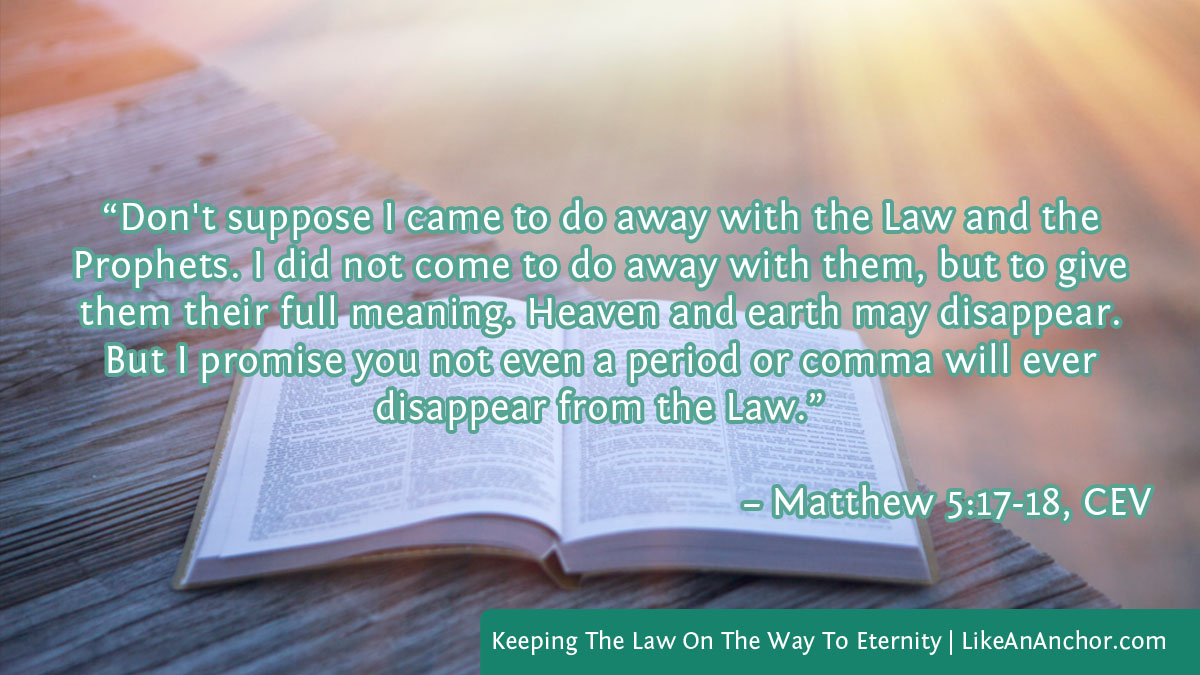
Don’t think that I came to destroy the law or the prophets. I didn’t come to destroy, but to fulfill. For most certainly, I tell you, until heaven and earth pass away, not even one smallest letter or one tiny pen stroke shall in any way pass away from the law, until all things are accomplished.
Matthew 5:17-18, WEB
The Greek word translated “fulfill” here means to fill to the fullest extent (G4137, pleroo). In other words, Christ’s coming crammed the law full of its intended meaning. Thayer’s dictionary says the word means “to cause God’s will (as made known in the law) to be obeyed as it should be and God’s promises (given through the prophets) to receive fulfillment.”
Whoever, therefore, shall break one of these least commandments, and teach others to do so, shall be called least in the Kingdom of Heaven; but whoever shall do and teach them shall be called great in the Kingdom of Heaven. For I tell you that unless your righteousness exceeds that of the scribes and Pharisees, there is no way you will enter into the Kingdom of Heaven.
Matthew 5:19-20, WEB
Clearly, Jesus still intends His followers to keep the commandments. Not only that, He tells them they have to do it better than the most legalistic religious leaders of their day. How on earth were they supposed to do that? And how are we supposed to do that today?
Image by Lamppost Collective from Lightstock
Letter v. Spirit
Jesus explains how to keep the commandments in a fulfilled manner by contrasting the way things had been done with the way He wants them done. We might think of it as the letter of the law contrasted with God’s spirit and intent behind the law. Or better yet, we can say Jesus is clarifying God’s purpose for the Law. For example:
You have heard that it was said to the ancient ones, ‘You shall not murder;’ and ‘Whoever murders will be in danger of the judgment.’ But I tell you, that everyone who is angry with his brother without a cause will be in danger of the judgment; and whoever says to his brother, ‘Raca!’ will be in danger of the council; and whoever says, ‘You fool!’ will be in danger of the fire of Gehenna.
Matthew 5:21-22, WEB
It’s not enough to obey the law that says not to kill someone. Sin starts in the heart and that’s where God looks. He cares if you get to the point where you want to murder a person, not just if you actually violate the command “thou shalt not murder.” He even cares before you get to that point; if you’re unreasonably angry with someone or despise them as an empty headed fool, that’s enough to put you under judgement.
This pattern continued as Jesus kept teaching. Lusting after someone counts as adultery in your heart (Matt. 5:27-28). Divorce shouldn’t be done nearly so often (Matt. 5:31-32). Straightforward communication is better than swearing oaths (Matt. 5:33-37). We’re not to follow the human impulse to retaliate, even though it was allowed under the law (Matt. 5:38-42). We need to love our enemies if we want to be God’s children (Matt. 5:43-48). In many ways, God expects more of New Covenant believers, not less.
Going Beyond Law-Keeping
Image by Pearl from Lightstock
Jesus’s expectations for His people go beyond the Law. The goals of living in the spirit reach higher than living by a strict code, though the spirit and letter both come from God and are connected. If we’re living in the spirit we are keeping the law on the way to becoming like God. Paul discussed this in Galatians, where he said, “walk by the Spirit, and you won’t fulfill the lust of the flesh” (Gal. 5:16, WEB).
Continuing in Galatians, Paul said, “if you are led by the Spirit, you are not under the law.” But right after saying that, he listed sinful things that spirit-led believers don’t do and says “those who practice such things will not inherit God’s Kingdom” (Gal. 5:18-21, WEB). He’s telling us that if we do things that break God’s laws, we won’t be in His kingdom even though the Law isn’t what saves us (Jesus does that).
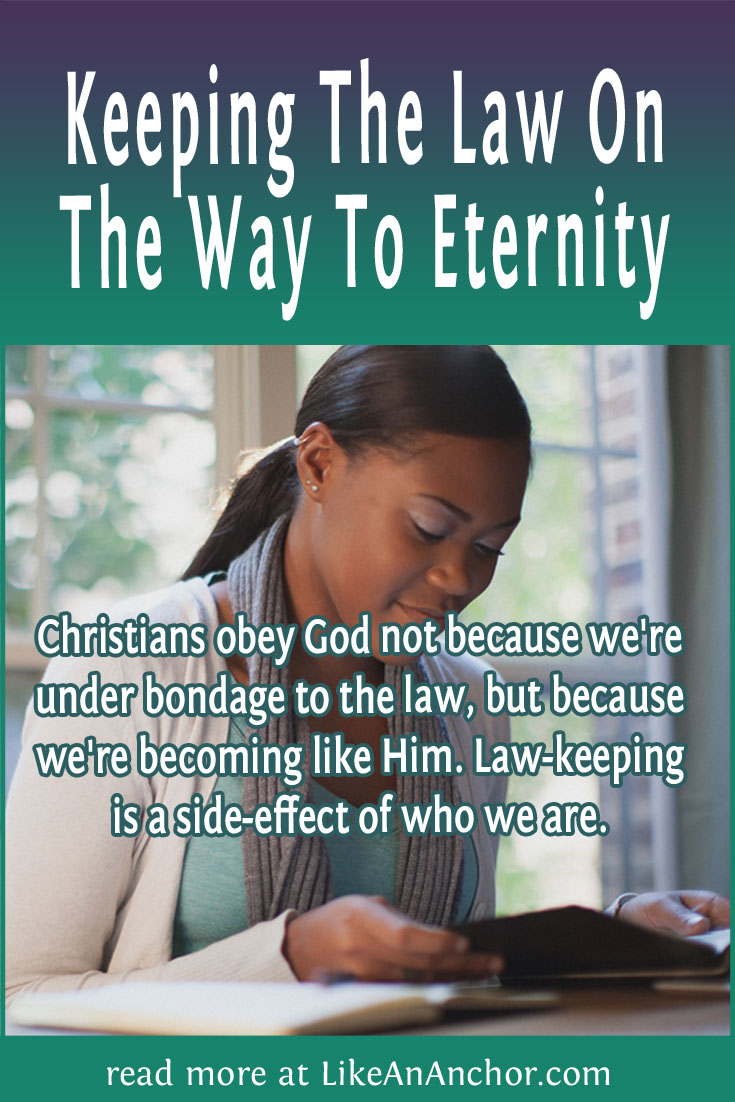
We should keep the law because we’re walking in the spirit. It’s a side-effect of becoming like God. And so Christians today obey God, but they do it because they’re becoming like and following Him, not because they’re trying to make themselves righteous by their own power. It’s something we do on the way to eternity even though it’s not the method by which we get there.
Therefore you shall be perfect, just as your Father in heaven is perfect.
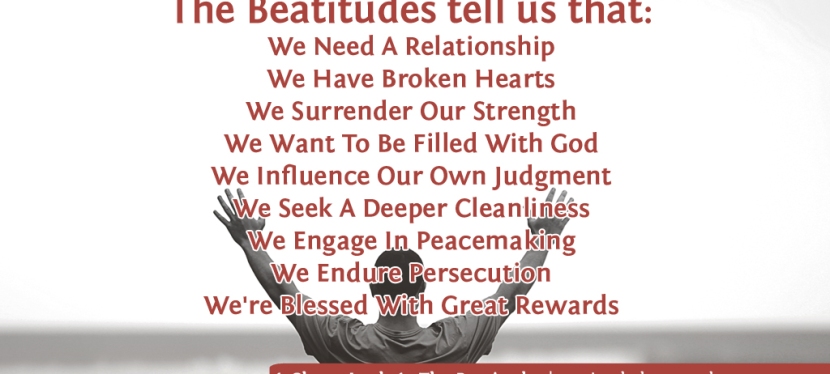
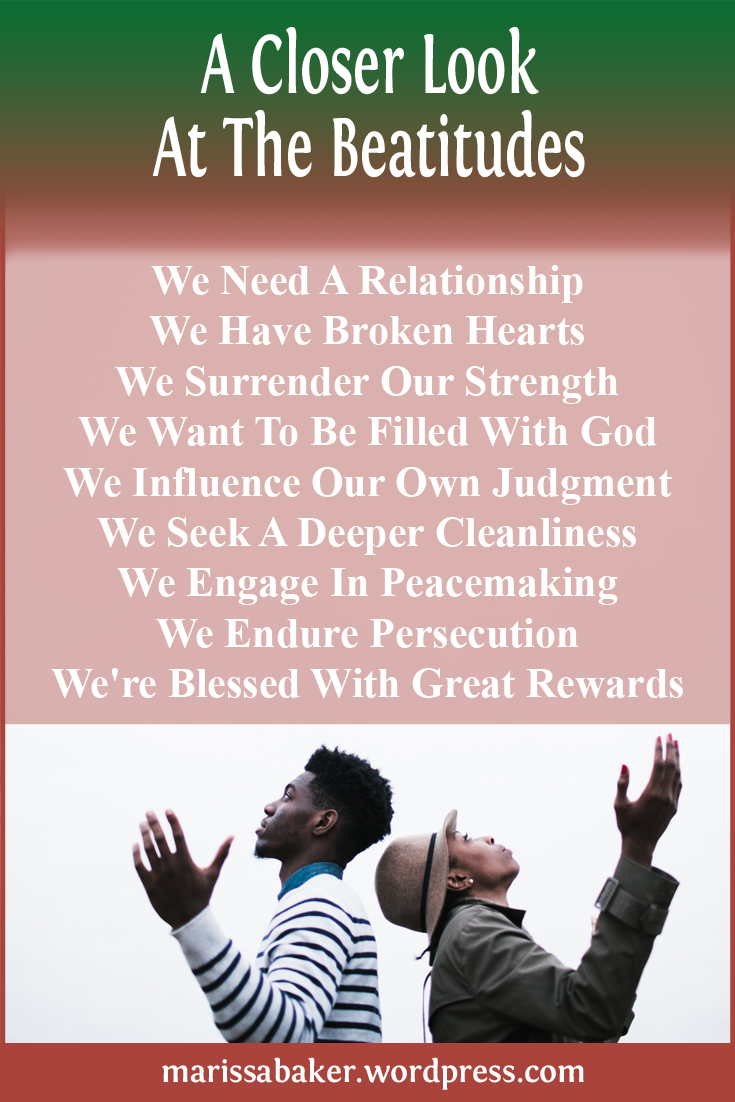
When Jesus delivered the Sermon on the Mount, He began at what we now call the Beatitudes. He says, “Blessed are” the sort of people who probably don’t feel all that blessed — those who are poor, mourning, meek, hungry and thirsty for righteousness, merciful, pure in heart, peacemakers, persecuted, and reviled. We don’t like being poor, or in grief, or humble enough to put others first, or attacked by the people around us. It’s hard work being a peacemaker, or showing mercy, or staying pure of heart, or constantly yearning to get closer to God’s righteousness.
It’s interesting that two of the beatitudes mention righteousness: “Blessed are they which do hunger and thirst after righteousness” and “Blessed are they which are persecuted for righteousness’ sake” (Matt. 5:6, 10, KJV). This word refers to “the condition acceptable to God” and/or “the doctrine concerning the way which man may attain a state of approval by God” (Thayer’s G1343, dikaiosune). It relates to our state of being and the way we live. In fact, when you think about it, all the beatitudes relate to something we do and/or become as we follow God.
Blessed are the poor in spirit: for theirs is the kingdom of heaven. (Matt. 5:3, KJV)
There’s more than one word that could be translated from Greek as “poor.” This one means “reduced to beggary” and “lacking anything” (Thayer’s G4434, ptochos). When we’re like that in our spirits, we’re really in a place to recognize how much we need a relationship with the Father and Jesus. We become the sort of person the Lord is talking about when He says, “to this man will I look, even to he who is poor and of a contrite spirit, and who trembles at my word” (Is. 66:2, WEB).
We Have Broken Hearts
Blessed are they that mourn: for they shall be comforted. (Matt. 5:4, KJV)
We all experience grief. The death of a parent, child, or dear friend. The loss of a hope held close to our hearts. The decay of a relationship. Betrayal from a friend. And even in the midst of that mourning, we’re blessed because God promises comfort (John 14:16-18; 2 Cor. 1:3-7). He can respond to our tears as powerfully as He did for David in the situation recorded in Psalm 6. Read more →
Most of us have a working definition of what life is. We can tell that a couch is non-living and that the cat sleeping on its cushions is alive without thinking about it much at all. But ask the question, “What is life?” and we have a little more trouble answering. We might fall back on a biology textbook definition and list properties of life like organization, metabolism, homeostasis, growth, and response. Or maybe we’ll go with a more philosophical approach and discuss the meaning or purpose of life. Either way, you’ll find there isn’t a single consensus on how we should define and think about life.
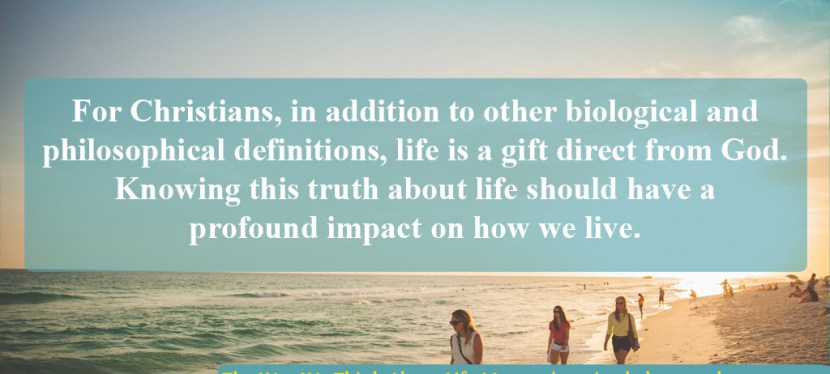
As people who believe in a creator God, Christians have another factor to consider when coming up with a definition of life. We have God as the starting point for all life, and so our definition could add a phrase such as, “Life is something given and sustained by a creator.” And more philosophically, we can talk about human life as distinct from animal or plant life because we have a chance at eternal life. Read more →





 Like An Anchor