It’s so easy to take a pseudo-Myers-Briggs® test on the internet. You can click through a quick quiz, get your result and think, “Wow, I guess that does sound like me.” A few weeks later, you might stumble across another short quiz and take it again. Maybe you get a different answer and the description still sounds like you. Now you’re wondering whether this whole Myers-Briggs thing is all it’s cracked up to be, and if it is, then why were your results different?
This is one of the reasons Myers-Briggs tests have come under fire from critics who don’t really understand how the Myers-Briggs Type Indicator (MBTI®) is supposed to work. They look at the short little quizzes with generic feel-good results, and say it’s too simple and unreliable. But if you dive into the theory behind Meyers-Briggs, and especially cognitive functions (click here for an introduction to type functions), you start to realize how helpful the MBTI can be as a tool for understanding yourself and other people.
One of the principles of Myers-Briggs theory is that people only have one type, which stays consistent throughout their lives. You grow and develop within your type, but you don’t change from an INFP to an ENFJ to an ISTP or any other combination of letters. So with that in mind, how can you find your true type with so many conflicting results floating around?
Take A Good Test
Disclaimer: some of the links in this post are affiliate links. This means that, at no additional cost to you, I will receive a commission if you click on the link and make a purchase on that website.
If you can’t take the official MBTI, there are a few decent substitutes out there on the internet. My favorite by far is Personality Hacker’s Genius Style test.* They ask for an e-mail address, but it is free. One of my favorite bloggers, Susan Storm, also recently released a test. You can click here to take that.
Similar Mind’s Jungian test is another I’ve recommended (note from May 2017: recent changes to the test questions may skew results. You might want to try HumanMetrics instead). Some people really like the test from 16Personalities, but it’s not my favorite. These tests all give you a series of questions which are designed to learn what cognitive functions you use, then give you a four-letter test result.
I’d recommend starting with the Personality Hacker test, and then taking one or both of the other tests to compare results. Try not to read the full results of one test before you take the others — you want to take each one as unbiased as you can. If they all give you the same result, that’s a pretty good indication you’ve found your personality type. If they’re different, though, it’s time to start reading.
Compare Results
Now that you have one or more personality type results, start reading descriptions of your potential personality type(s). Here are some excellent resources:
Read the descriptions for each of your type results. Even if you only got one result, it’s a good idea to look at similar types that use some of the same cognitive functions. Here are a few guidelines for which other types to look up based on your test results.
If you test as an …
Introvert, read about the type which is opposite you on the J/P scale. The J/P preference describes how we interact with the outer word through our extroverted function, so an IJ type actually leads with a perceiving process and an IP type leads with a judging process. This can affect test results.
EJ, take a look at the type opposite you on the S/N scale. The tests found that you lead with an extroverted judging/decision making process, but might not have accurately found your introverted secondary process.
EP, take a look at the type opposite you on the F/T scale. The tests found that you lead with an extroverted perceiving/learning process, but might not have accurately found your introverted secondary process.
SFJ or NFJ, read results from ENFJ, INFJ, ISFJ, and ESFJ. These types all use Extroverted Feeling, and can often be mistaken for each other. Shy ESFJs and ENFJs can be mis-typed as introverts, and outgoing ISFJs and INFJs can be mis-typed as extroverts.
NT types, read the type opposite you on the E/I preference. ENT- types, especially ENTJs, are among the most “introverted extroverts” and might mis-type.
Think About Stress
Most tests look at your primary and secondary function — the driver and co-pilot processes that lead in our personality. This makes sense, since other functions are less well developed and we don’t use them as much unless we’re stressed. When we’re trying to discover our true type is, though, how we react under stress is a good indication of which type matches us best.
No personality test result is going to be a 100% perfect match. You’re looking for the one that fits you best. You will find elements of other descriptions that sound like you, but there should be one that fits better than the others. Pay close attention to descriptions of how your type uses cognitive functions. Descriptions of INFJ and INFP types, for example, sound similar but they lead with very different mental processes.
Good luck on your journey of self discovery! There’s a plethora of resources out there that can help you, including type-based Facebook groups and forums where you can talk with people of different types to see how they think. And if there’s anything I can help with, just ask!
Disclaimer: some of the links in this post are affiliate links. This means that, at no additional cost to you, I will receive a commission if you click on the link and make a purchase on that website.
When we’re talking about someone’s personality type in the Myers-Briggs system, we usually discuss their primary and secondary functions (also called mental processes). An INFJ, for example, leads with a process called Introverted Intuition (a perceiving/learning function), which is supported with Extroverted Feeling (a judging/decision making function). An ENTP, on the other hand, leads with Extroverted Intuition, supported by Introverted Thinking. Using Personality Hacker’s car model,* we can compare our primary function to an adult driving a car, and the secondary function to a second adult navigating in the passenger seat.
Each type also has a tertiary function (the opposite of their secondary function), and an inferior function (the opposite of their primary function). These are less well developed. In the car model, our tertiary function is like a 10-year-old sitting behind the co-pilot, and the inferior function is like a 3-year-old sitting behind the driver. The two processes you use most are more visible, and they define your personality as others typically see it, but our less developed functions play a significant role as well. Today, we’ll be looking at types which use Sensing as an inferior function.
Everyday Life
ENTPs, ENFPs, INFJs, and INTJs usually rely on their dominant Intuition and then, to a lesser extent, their Thinking and Feeling functions. Inferior Sensing can, however, still show up in their everyday lives, often through hobbies and interests that don’t seem to quite fit with the more visible aspects of their personalities.
Often, dominant Intuitive types will excel in one or more particular area that requires using Sensing to notice details and interact with physical things in the world around you. This could be something like doing your own accounting, specializing in a certain kind of cooking, or maintaining a nice garden. It could also be a more active hobby like horseback riding, hiking, or team sports for the extroverts. Listening to music, attending concerts, and reading escapist literature is also popular.
Characteristics of Inferior Sensing
ENTPs and ENFPs use dominant Extroverted Intuition, which makes Introverted Sensing their inferior function. In her book Was That Really Me?* Naomi Quenk says inferior Introverted Sensing displays the following traits (I’ve put the traits of Si-dominant ISFJs and ISTJs in parenthesis):
Withdrawal and depression (Solitude and refection)
Obsessiveness (Attention to facts and details)
Focus on the body (Awareness of internal experience)
INFJs and INTJs also lead with an intuitive function. They primarily use Introverted Intuition, so that makes Extroverted Sensing their stress function. Here are the traits Quenk associates with inferior Extroverted Sensing (and their counterparts in Se-dominant types like ESTPs and ESFPs).
Obsessive focus on external data (Focus on external data)
Overindulgence in sensory pleasures (Seeking sensual/aesthetic pleasure)
Adversarial attitude toward the outer world (Delight in the outer world)
As you can see, there are similarities in how a dominant Sensing type and an inferior Sensing type use their sensing functions. In the case of ENFPs, ENTPs, INFJs, and INTJs however, sensing is poorly developed and rarely used effectively.
Stress Reactions
Though Sensing plays a role in the everyday lives of ENFPs, ENTPS, INTJs, and INFJs, it shows up most often when these types are stressed. The sort of stressors we usually think about (running out of time, feeling overwhelmed, grief, etc.) can all trigger an inferior function episode. Some extra things that intuitive types are sensitive to include someone pointing out a sensing/factual mistake, physical exhaustion, and having to keep track of lots of details at once.
Both introverted and extroverted intuitive types have have trouble with focusing on their bodies too much when stressed. Dominant Sensing types are usually comfortable in their own skins and enjoy sensory experiences like eating nice food or drinking a good wine. But stressed intuitives might develop hypochondria and blow any sort of medical concern out of proportion, or over-indulge by eating and drinking too much. They can also binge on other sensory pleasures, like obsessively gaming or watching too much TV to escape the outer world (Quenk p.197-201, 245-521).
Stressed intuitives often retreat from the world. It seems particularly hostile when we’re stressed, and all the incoming sensory data is simply too much to handle. The extroverted types will isolate themselves and fall into depression, while introverts tend to get angry, suspicious and hostile (I also know ENFPs who get angry when stressed, and INTJs who get depressed. It’s not just an Introvert/Extrovert thing).
Getting Out of Stress
Not everyone gets out of their stress reaction using the same techniques. For INFJs and INTJs, as for many introverts, “space and a low-pressure environment” are key to returning to equilibrium. Quenk also notes that “INTJs and INFJs agree that the worst thing others can do when they are in this state is to give them advice or try to fix the problem” (p. 207). When stressed, we’re not processing things logically and if you try to convince us that how we feel isn’t valid, we don’t take it well. Eventually some Introverted Intuitives want someone to talk with, especially INFJs, but not at first.
Extroverted Intuitives also need significant amounts of alone time. They really need people to “back off and avoid patronizing them.” They’re more likely than introverts to talk it out with other people, but, like the INFJs and INTJs, ENTPs and ENFPs just need someone to listen, not try to fix things. ENFPS in particular eventually want someone to validate their feelings and reassure them (Quenk p. 258).
Getting out and taking a walk or exercising is often helpful for all the types using inferior Sensing. Introverted types prefer to do this alone, while extroverts might want more company. Quenk says that extroverted types are also more likely use getting adequate sleep, eating good food, and doing something relaxing to climb out of a grip experience (p. 258), but I can say from experience that some INFJs also find that useful.
Learning From the Inferior
Integration of the inferior function into everyday life generally happens in mid-life. However, Intuitive types can start learning to use their Sensing function any time. Isabel Meyer suggested that every type exercise all four of their functions when making a decision. Your dominant Intuition is able to gather and generate possibilities, which is great for creative problem solving. When we add Sensing, instead of ignoring it, we can start to use more of an impartial, realistic approach to problem solving. It’s useful for finding out exactly what the problem is so we can use our intuition to solve it (Meyers, Gifts Differing*, 197).
Introverted Intuitives who integrate their Sensing function often find enjoyable ways of indulging their sensing side through hobbies, and become more comfortable with their outer environment and with other people (p. 209). Extroverted Intuitives who integrate their inferior Sensing give themselves permission to slow down and enjoy life. They also start to tap into their introverted side and enjoy times of quite reflection (p. 260). Both types experience less guilt as they mature. They also start to take better care of themselves, and often become self-aware enough to avoid many grip experiences (p. 210, 261)
This study all began with perusing the “lambda” section in a Greek dictionary. I came across the word logikos (G3050), which means “pertaining to reason and therefore reasonable.” You’ve probably already guessed that it’s where we got our English word “logic.” This is the word used in Romans 12:1 for “reasonable service.”
I beseech you therefore, brethren, by the mercies of God, that you present your bodies a living sacrifice, holy, acceptable to God, which is your reasonable service. And do not be conformed to this world, but be transformed by the renewing of your mind, that you may prove what is that good and acceptable and perfect will of God. (Rom. 12:1-2)
I tend to connect my faith with a feeling more than an intellectual idea. I know “intellectually” that God exists and that the Bible makes sense, but for me personally the feeling of Him being real and present and in a relationship with me seems more important. This has frustrated some of the more rational, logical people I’ve talked to. One atheist who had been raised Christian couldn’t understand why things that seem contradictory in scripture didn’t bother me even though I couldn’t explain all of them. Another person still in the church said that my “spirituality” is almost intimidating because I talk about my feelings for God so much, and that kind of faith seems alien to her. Other people attracted by reason and logic have walked away from their faith when confronted with scientific arguments for evolution or a “big bang” explanation of how the universe came into being.
One of the things I’ve run across in my studies of type psychology is that “Feeling” types are more attracted to spirituality and religion than “Thinking” types are (in this context “Feeling” and “Thinking” refer to a preference for dealing with people or data; it’s not a measure of intelligence). That “feelers” are attracted to a place that encourages group interaction and harmony, but I worry that we may have scared off some of the “thinkers” with our talk of a touchy-feeling God who just wants to love people. It is true that God wants a relationship with everyone, but it’s not true that everyone needs to relate to Him the exact same way. He means to be accessible to all the people He created.
Order and Logic
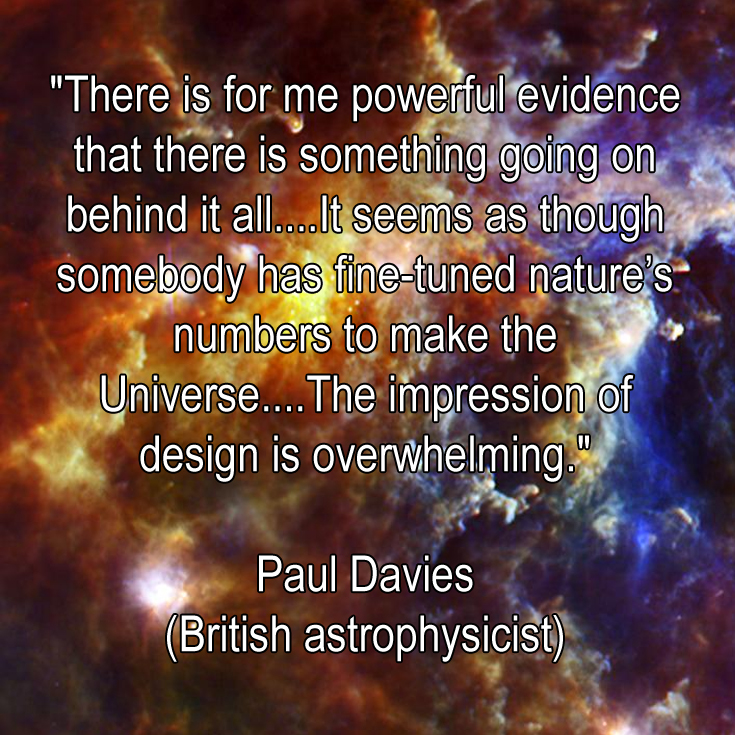
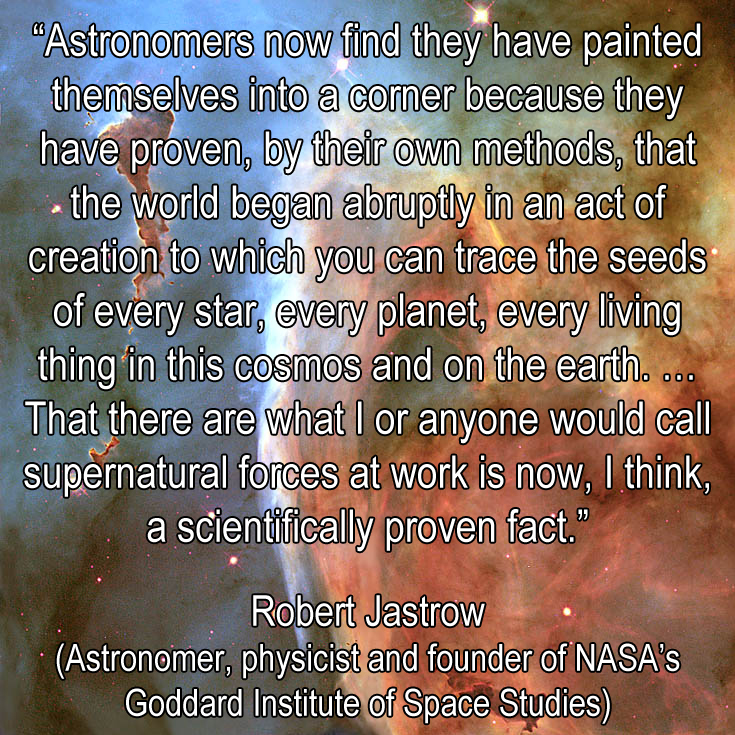
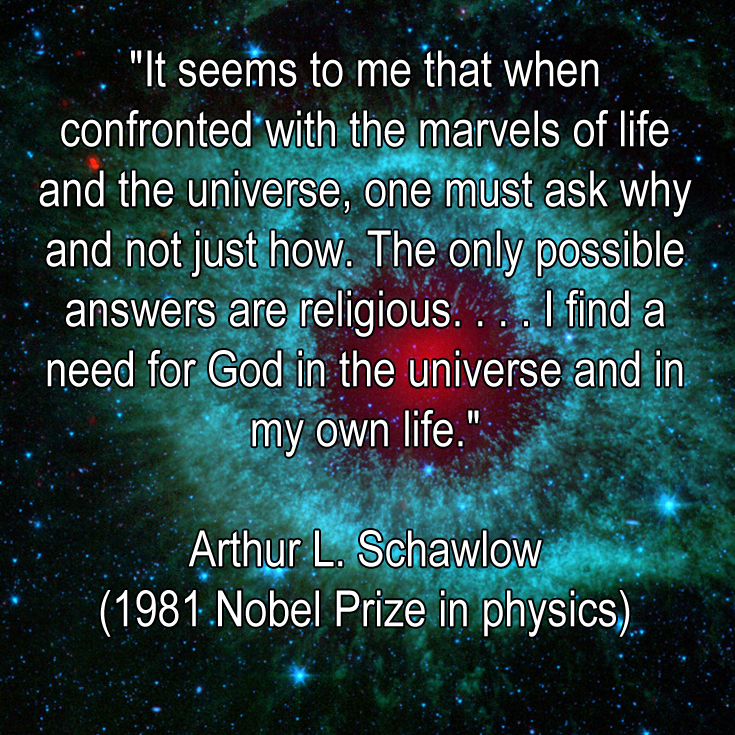
There aren’t just one or two verses that simply state “God is ordered and logical.” Rather, the entire Bible and the whole of creation is a testament to the way His mind works. We can read Genesis 1 and see the orderly step-by-step way He created the world, then look at creation and see His master-craftsman hand at work in every aspect of the universe’s design. Scientists have been doing this for years, and many come to the conclusion that God is the only explanation for how the universe is so perfectly put together.
“The more I study science, the more I believe in God.” –Albert Einstein
“There can never be any real opposition between religion and science; for the one is the complement of the other. Every serious and reflective person realizes, I think, that the religious element in his nature must be recognized and cultivated if all the powers of the human soul are to act together in perfect balance and harmony. And indeed it was not by accident that the greatest thinkers of all ages were deeply religious souls.” –Max Planck
“When confronted with the order and beauty of the universe and the strange coincidences of nature, it’s very tempting to take the leap of faith from science into religion. I am sure many physicists want to. I only wish they would admit it.” –Tony Rothman
There are a couple verses in 1 Corinthians that speak to the orderly, logical attributes of God. Paul was discussing who should speak and how meetings should be conducted in the church, and makes these statements:
God is not the author of confusion but of peace, as in all the churches of the saints. … Let all things be done decently and in order. (1 Cor. 14:33, 40)
God does not author confusion — He wants things to progress in a decent, orderly fashion. Even mildly logical, perfectionistic, or OCD people can identify with this attribute of God.
The Word of Intelligence
In the beginning was the Word, and the Word was with God, and the Word was God. He was in the beginning with God. All things were made through Him, and without Him nothing was made that was made. … And the Word became flesh and dwelt among us (John 1:1-3, 14)
In these very familiar verses, the Greek word translated “Word” is logos (G3056). It is the root word for logikos, which we’re already talked about. It means “to speak,” but it is distinct from other words that specifically refer to sound or noise (lalia, G2981) or to speaking without necessarily making sense (laleo, G2980). Logos means to express intelligence.
Logos, when it refers to discourse, is regarded as the orderly linking and knitting together in connected arrangement of words of the inward thoughts and feelings of the mind. … In the first chapter of John, Jesus Christ in His preincarnate state is called ho Logos, the Word, meaning first immaterial intelligence and then the expression of that intelligence in speech that humans could understand. (Zodhiates)
One of the most well-known names of Jesus carries with it a testament to God’s reason, intellect, and logic. It is a key role of Jesus Christ to express intelligence — to communicate the thoughts of God in a way that people can understand.
Sometimes when people come across something in relation to God that “doesn’t make sense,” they assume that there’s something wrong with the Bible. But that’s just another way of saying that we think our minds work better than the Mind of the One who designed us. It’s really rather absurd to think there’s something wrong with God because we don’t understand Him perfectly. But it’s far more unsettling for some of us to admit that the problem might be on our side.
In John 8:43, Christ was debating with some of the Jews who were following Him. They were offended and confused by some of His words, and this is what He said to them:
Why do you not understand My speech? Because you are not able to listen to My word. (John 8:43)
The word “speech” is translated from lalia — to make sounds — and “word” is from logos. Because they couldn’t grasp Christ’s intelligence speech, it was as if He was speaking nonsense (I’m indebted to Zodhiates’ Key-Word study Bible for analyzing this verse).
“For My thoughts are not your thoughts, nor are your ways My ways,” says the Lord. “For as the heavens are higher than the earth, so are My ways higher than your ways, and My thoughts than your thoughts.” (Is. 55:8-9)
Rather than assume there’s something lacking in God when we can’t understand Him and then reacting with hostility or disgust (by the end of John 8 the Jews were trying to stone Jesus), we can ask God for help in understanding. Let’s follow James’ advice:
If any of you lacks wisdom, let him ask of God, who gives to all liberally and without reproach, and it will be given to him. (James 1:5)
The Issue of Feelings
C.S. Lewis is the perfect person to bring in on this discussion. He was a very logical, rational Christian (probably an INTJ, for those of you who like Myers-Briggs). I like this description of him from The New York Times Book Reviw: “C.S. Lewis is the ideal persuader of the half-convinced, for the good man who would like to be a Christian but finds his intellect getting in the way.”
Now, the thing about Lewis is that for him, getting your intellect out of the way certainly doesn’t mean abandoning reason and just “trust your feelings” or “have faith.” On the contrary, Lewis says that our faith absolutely must have a rational basis.
Now Faith, in the sense in which I am here using the word, is the art of holding on to things your reason has once accepted, in spite of your changing moods. For moods will change, whatever view your reason takes. I know that by experience. Now that I am a Christian I do have moods in which the whole thing looks very improbable: but when I was an atheist I had moods in which Christianity looked terribly probable. This rebellion of your moods against your real self is going to come anyway. That is why Faith is such a necessary virtue: unless you teach your moods “where they get off,” you can never be either a sound Christian or even a sound atheist, but just a creature dithering to and fro, with its beliefs really dependent on the weather and the state of its digestion. (Mere Christianity; III, 11)
That’s why it’s dangerous to try and base your faith on emotions alone. Feelings for God are all well and good, but feelings can change — we might “fall out of love” or fall into a season of doubt. But we can’t afford to give up on God when we don’t feel close to Him anymore. We have to keep choosing to seek Him because we have decided He is the only way to go.
Lewis went on to say in this chapter of Mere Christianity that we need to “train the habit of faith” daily by reminding ourselves of what we believe. He says, “Neither this belief no any other will automatically remain alive in the mind. It must be fed.” And if it’s not, we’ll be one of those people who just drift away from Christianity without even coming up with a reasonable argument for God not existing.
A Logical Sacrifice
The Bible tells us to “Pray without ceasing” and “test all things; hold fast what is good” (1 Thes. 5:17, 20). It’s a succinct instruction from God to do precisely what Lewis was talking about. God wants us to constantly be seeking, questioning, learning, and asking Him to help us understand His words.
This is another reason to stay close to the Source of the Living Water that we talked about in last week’s post. We need Jesus Christ, through the Holy Spirit, involved in our lives. He is the Logos, and He is well able to shore-up our faith with reason and wisdom and good-sense.
But the Helper, the Holy Spirit, which the Father will send in My name, that one will teach you all things, and bring to your remembrance all things that I said to you. (John 14:26)
And then, having this foundation of knowing God exists, that He is more intelligent than we are , and that He sacrificed Himself for us, we can go back to Romans 12:1 and understand why it is logical for us to present ourselves in service to God. He created us, and “in Him we live and move and have our being” (Acts 17:28). He died to buy us back from sin, and we belong to Him not only as His creation, but as His to redeem (1 Cor. 6:20).
Since I just quoted Acts 17, let’s take a quick look at the apostle Paul. He was probably the most highly educated of the apostles, since he was trained as a Pharisee (Phil. 3:5). It took direct divine intervention to show Paul that Jesus is the Christ (Acts 9:1-19), but once he was convinced of this fact he turned all the energy and emotion he’d been using to persecute the church into preaching the gospel. And he did so in a manner both firmly grounded in reason and full of zeal. He preached to groups of people from every walk of life, including presenting a reasonable argument to the Athenians and quoting their own poets and thinkers (Acts 17:16-34). He wrote most of the New Testament, epistles full of deep inspired reasoning that even Peter described as “things hard to understand, which untaught and unstable people twist to their own destruction, as they do also the rest of the Scriptures” (2 Pet. 3:15-16). Paul wrote the letter which tells us it is our “reasonable service” to devote every part of ourselves to following God, which is exactly what he did.
We are all made in God’s image, but no one person or type of person is “enough” to fully reflect all of who and what God is. I’ve seen this talked about in discussions of gender — man and women embody different attributes of God. Similarly, 1 Corinthians 12 describes different spiritual gifts, and different types of people that are all necessary parts of the church. If everyone was the same, the church would be lacking essential attributes.
But now God has set the members, each one of them, in the body just as He pleased. And if they were all one member, where would the body be? But now indeed there are many members, yet one body. (1 Cor. 12:18-19)
The same, I think, can be said of personality types. Aspects of God are reflected in introverts and in extroverts, in people-oriented feeling types and in fact-oriented thinking types. And God Himself is accessible to everyone — He wants a relationship with the logical, questioning mind just as much as He wants a relationship with the more stereotypically “spiritual,” emotional people.


by Isabel Briggs Myers (book)*
by Lenore Thomson (book)*
 by Isabel Briggs Myers (book)*
 by Lenore Thomson (book)*



 Like An Anchor