Looking For Love With The MBTI

Looking For Love With The MBTI | marissabaker.wordpress.com
Dennis Skley, CC BY-ND via Flickr

People have been trying to use personality types to find their perfect romantic match since typology first became popular. In a previous posts about Myers-Briggs types and love languages, I talked about how falling in love — and staying in love — with someone is so much more complex than simply matching personality types. Sometimes when browsing personality type forums, I’ll come across posts from people asking how to find and attract a someone of a specific personality type (often it’s an ENTP asking for step-by-step instructions to win an INFJ, which I find hilarious). It’s like some of us think that if we can just find someone who is our ideal type-match, then we’ll be happy because we caught the mythical “compatibility” creature.

Disclaimer: some of the links in this post are affiliate links. This means that, at no additional cost to you, I will receive a commission if you click on the link and make a purchase on that website.

Now, I do have some personality types I find more attractive romantically than others, but it’s not always the types I’m “supposed” to like according to Myers-Briggs or Keirsey theories. Even Isabel Myers was happily married to a man who her theory said should have been incompatible. An understanding of love languages and a mutual willingness to understand and work with each other is one piece of the puzzle. Another is something I just learned this week from Personality Hacker.*

The “Genius System”

Personality Hacker was founded by Antonia Dodge and Joel Mark Witt, who use what they call the “Genius system” to divide Myers-Briggs types into four groups based on the last two letters in a person’s type. In terms of function stacks, this means they group types based on whether the type introverts or extroverts their Judging function. The groupings end up looking like this:

  • “Harmony” — Extroverted Feelers (ESFJ, ISFJ, ENFJ, INFJ)
  • “Authenticity” — Introverted Feelers (ESFP, ISFP, ENFP, INFP)
  • “Effectiveness” — Extroverted Thinkers (ESTJ, ISTJ, ENTJ, INTJ)
  • “Accuracy” — Introverted Thinkers  (ESTP, ISTP, ENTP, INTP)

According to a new article on Personality Hacker, each of these groups look for and expressed love in a unique way. Most people would tell an INFJ to look for a relationship with an ENFP or an ENTP and avoid their opposite type, ESTP. This system stays that an ENFP and and ENTP express love in completely different ways, but ENTPs and ESTPs are actually very similar in how they love. That would explain why some INFJs find ENFPs really attractive, while others prefer ESTPs or ENTPs. It’s not so much about matching two specific types, as it is about finding types who express love in a way you relate to and understand. This Genius style take on the MBTI adds an intriguing aspect to the subject of personality types in relationships. You can check out the Personality Hacker podcast on how each type says “I Love You”* for a full explanation, but here’s my brief take on what this means:

Types of Love

Harmony” types, who use Extroverted Feeling as their first or second function, feel loved when they are connected, safe, cared for, and accepted as their authentic selves. They express love in a similar way, by encouraging the people they love and keeping in touch with them. They are primarily concerned with harmonious relationships and emotional connection.

The types who use Introverted Feeling, “Authenticity” in the Genius System, highly value honesty in relationships. They feel loved when they know someone is being real with them and is supportive of their own authentic expressions. Authenticity types express love by giving people space to be themselves and being willing to work through problems in the relationship.

Effectiveness” types, those who use Extroverted Thinking, value independence in relationship. They want to know that the person who loves them is supportive of their goals and can be trusted to function on their own. They are loyal and protective towards those they love, and give them room to be themselves.

Those who use Introverted Thinking, “Accuracy” types, feel loved when they are respected. They want to know that the person who is in love with them thinks they are impressive and that the relationship makes sense. In return, they are protective, non-judgmental, and strive to bring the best version of themselves to the relationship.

Matching Types

Ultimately, typology is simply a tool we can use to understand each other. When we understand ourselves and the people around us, we have a better idea of what we’re looking for in a romantic relationship. I think that’s really the best way to apply Myers-Briggs theory to romance. We can’t just say that all INFJs’ ideal match is an ENTP — people are far more nuanced than that, even within a type. But the better we understand how we’re wired and what makes us feel loved, the more likely we’ll be able to recognize whether a potential romantic partner would be a good or a bad match for us.

This is one of the things Debra Fileta talks about in her book and blog True Love Dates. You have to know yourself before you try to get to know other people in a romantic context, otherwise you have no idea what you’re looking for in a relationship. So maybe the first thing we should do when looking at the Genius System types is find which group we fit into. If we know who we are, we’re one step closer to knowing what we want.

*indicates affiliate links
 

Ficitonal MBTI – Sherlock Holmes (INTP)

In the world of fictional typology, Sherlock Holmes is typically cited either as the perfect example of an INTP or as a notoriously difficult charter to type. Some writers say this difficulty is because the character displays aspects of several different types (including INTJ and ISTP) due to the writers’ ignorance of Myers-Briggs theory.

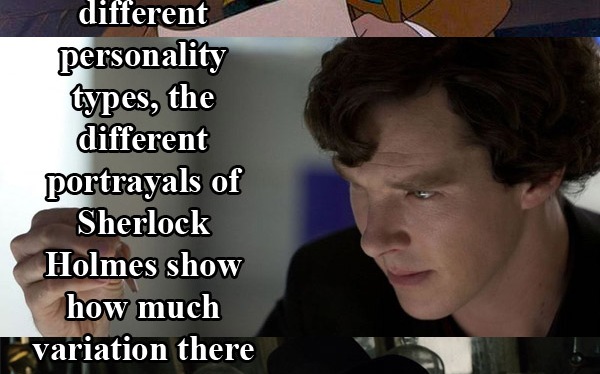
While this may be partly true, I think we can pin-down a single best-fit type for most portrayals of Sherlock Holmes in film and television (I’m not covering the original stories in this post). Rather than showing several different personality types, the different portrayals of Sherlock Holmes show how much variation there can be within a single personality type.Ficitonal MBTI - Sherlock Holmes (INTP) | marissabaker.wordpress.com

INTP Traits

The personality type that fits most film and movie portrayals of Sherlock best is INTP. The function stack for this type is this:

  1. Introverted Thinking (Ti)
  2. Extroverted Intuition (Ne)
  3. Introverted Sensing (Si)
  4. Extroverted Feeling (Fe)

This means that Sherlock first approaches the world with a judging attitude that is focused inward and relies on impersonal analysis. Ti prefers to internalize observations and work with abstract ideas. It “values facts chiefly as illustrative proofs of the idea,” and rejects things that seem irrelevant (Myers, Gifts Differing, p.78). This would explain why BBC’s Sherlock didn’t bother to remember that the earth goes around the sun. Read more

Falling In Love With Anyone

Falling In Love With Anyone | marissabaker.wordpress.com
Renee Barron, CC BY-ND, via Flickr

The study is 20 years old, but I first became aware of it last week. In two days, I saw two different articles talking about falling in love and Dr. Arthur Aron’s “The Experimental Generation of Interpersonal Closeness.” (As an interesting side-note, this Dr. Aron is married to Dr. Elaine Aron, who we’ve talked about in connection to her research on Highly Sensitive Persons [HSPs].)

Aron’s study wasn’t actually intended to explore the science of falling in love — it was designed to study closeness and included both men-women and woman-woman pairs (because the sample group, a psychology class, was 70% women). The couples who fell in love were an unintended side-effect. Mandy Len Catron’s recent article “To Fall in Love With Anyone, Do This,” which called attention back to this study, demonstrates that the principles Aron used for studying accelerated intimacy between strangers can be applied to romantic relationships.

It’s a fascinating idea, made even more fascinating when you read his published research paper (what can I say? I’m a nerd) and find out about some of his other results. Is there a difference in closeness for introverts and extroverts? Can you truly become close to someone in less than an hour? What is it that effectively increases closeness?

Introverts and Extroverts

One thing I found fascinating about this study, which wasn’t brought out in any of the other articles I read, was Dr. Aron’s observations on the role introversion and extroversion played. In Study 3, Dr. Aron had the participants take a Myers-Briggs test, then used those results to create extrovert-extrovert, extrovert-introvert, and introvert-introvert pairs. Some of the pairs were told the experiment’s goal was to get close to the person you were paired with, and the others were told the study was about “dyadic interaction” and their job was simply to work through the questions.

Extroverts reported closeness in all cases, but introverts only reported closeness when they were told that closeness was a goal. Dr. Aron says, “these data shed doubt on the view that introverts are less social because they are less skilled at getting close. Indeed, when getting close is made an explicit task, introverts became as close as extraverts.” When introverts want to get close to someone, we’re just as capable of socializing with them as extroverts.

Is It Real?

The experiment succeeded in producing a feeling of closeness between two people, but is that closeness as real as a relationship that develops over time? Of the 58 people who completed follow-up questionnaires, 57% had a least one more conversation with their study partner, 35% got together to do something, and 37% started sitting together in class. One couple got married 6 months after the study.

So are we producing real closeness? Yes and no. We think that the closeness produced in these studies is experienced as similar in many important ways to felt closeness in naturally occurring relationships that develop over time. On the other hand, it seems unlikely that the procedure produces loyalty, dependence, commitment, or other relationship aspects that might take longer to develop.
In one of Dr. Aron’s tests, he paired individuals with shared interests, and individuals who shouldn’t have gotten along well based on their different responses to a questionnaire. He also conducted tests where pairs were assigned without filling out pre-tests to determine whether or not they were compatible. In all cases, participants reported similar levels of closeness. That indicates we can rapidly feel close with just about anyone, but on the long-term this closeness might not last because other considerations (like whether or not you share important values) will eventually come up.

Small Talk’s Not Enough

One thing Aron’s research found was that small-talk doesn’t do anything to bring people closer together (which I’m sure many of us have suspected for years). Talking about things people had done, what they liked and disliked, or other people they knew did not produce closeness between the two study participants. Here are some examples of the small-talk prompts used in his study:

  • If you could invent a new flavor of ice cream, what would it be?
  • Do you like to get up early or stay up late? Is there anything funny that has resulted from this?
  • What is the last concert you saw? How many of that band’s albums do you own? Had you seen them before? Where?

In contrast, the types of questions which did draw people closer together focused on how they feel about the way they live their lives, why they think the way they do, and what helps them connect with other people. Here are a few examples, and you can read the full list of closeness-generating questions at the end of his published research paper (which I linked in the intro), or by clicking this link.

  • What would constitute a perfect day for you?
  • Is there something that you’ve dreamt of doing for a long time? Why haven’t you done it?
  • Tell your partner what you like about them: be honest this time, saying things that you might not say to someone you’ve just met.

Maybe there is a reason people devote so much time to small talk, which we introverts find so frustrating because we crave deep conversations. If we were having deep conversations with everyone, though, we’d feel very close to a lot more people. Maybe small talk protects us in a way, though it can also hinder genuine conversation.

Some Thoughts

Now that I’ve read about this research, part of me would really like to try it out and part of me thinks it sounds scary. I always thought that love is a choice, but there’s a part of me that feels like falling in love should just happen, then once you commit to the relationship you choose to keep loving each other. But Dr. Aron’s research indicates that you can choose who you become close to in the first place, and you can reach a level of closeness in less than an hour that approaches closeness you feel for people you’ve known many years. I think I’d be rather picky about who I went through these questions with, but it might be a great way to let yourself be vulnerable and open up possibilities in a relationship.


The INFJ Writer

I’m sure I read somewhere that David Keirsey originally called the INFJ personality type “The Writer” instead of “The Counselor,” but I can’t find the article now. Nevertheless, it does seem that quite a few INFJs are attracted to writing. Even if they aren’t working as writers or typing away at a novel, they probably keep a journal/diary and are often more comfortable with written communication than they are with speaking. I’m a fairly typical example of INFJs in this regard — I write a blog (obviously), keep a journal, work as a writer, prefer writing e-mails to taking on the phone, and write fiction.

Speaking of writing fiction …

Winner-2014-Web-BannerI won NaNoWriMo! I’m particularly pleased with myself for conquering the 50,000 words a day early in spite of having pneumonia in November. Anyway, back to INFJ writers.

Imaginative Fiction

There’s an INFJ profile written by Dr. A.J. Drenth (which no longer appears on his website, but you can read it here) that has this to say about INFJs:

Although INFJs are commonly drawn to music, visual arts, design, or architecture, writing may well be this type’s signature creative talent. Adept at channeling their right-brain creativity into a fluid and engaging left-brain storyline, INFJs are unmatched in their feel for and creative use of the written word.

from INFJ Doodles

This creative aspect of our writing  talent seems to be tied to an INFJ’s primary function — Introverted Intuition (Ni). Intuitive types prefer possibility to actuality, future to the present, intuition to fact, and improvement over the status quo. When intuition is introverted, as for INFJs, the focus is mostly on an internal world where our minds tinker with “ideas, perspectives, theories, visions, stories, symbols, and metaphors” (Dr. A.J. Drenth, Introverted Intuition).

Even INFJs who don’t write typically have an affinity for stories and a “rich inner life.” We tend to live in a world of possibilities, and I find that one way to keep my fantasy life anchored in reality is to turn those ideas into stories and write them down. It’s weakness/temptation for INFJs to never move their ideas from possibility to reality. With creative writing, I can set my imagination loose and tell myself there’s a practical application for it as well.

INFJs as Writers

It’s hard to type people when you don’t know them, but there are some famous writers that we can guess were INFJs. Keirsey lists Emily Bronte and Emily Dickenson as “Counselor” types. Another list of famous INFJs adds writers like Chaucer, Dante Alighieri, Fyodor Dostoevsky, and Nathaniel Hawthorne. A forum discussion suggests Madeleine L’Engle, Antoine de Saint-Exupery, Lois Lowry, Ursla LeGuin, Franz Kafka, and several others could be added to the list.

my latest novel, laid-out in Post-It notes above my bed
my latest novel, laid-out in Post-It notes above my bed, with a different color for each point-of-view character

Now, the fact that many INFJs gravitate towards writing doesn’t mean that it’s always easy for us. I’m not sure how many stories I started and abandoned before finally finishing my first novel in 2011. It was for NaNoWriMo, and I needed that deadline to keep myself writing. It’s so easy to build the story in my head, and then lose interest in writing it down once I think I know how it ends.

Though knowing the end makes me lose interest in the story, I also need some kind of outline to keep me on track. I’ve discovered sticky notes on the wall is my new favorite way to plot-out novels. They can be removed or rearranged as needed, and you don’t need to have them all there to start writing. For my NaNo novel this year, I began with only half the plot laid-out, and added more scenes as I wrote and the direction of the story became clear.

Further Reading

Why INFJs Have Trouble Writing by Lauren Sapala

The INFJ Writing Personality: Eloquent Vision by Andrea J. Wenger

Random Thanksgiving Post

Happy Thanksgiving to all my blog readers! I have much to be grateful for this year, and I’m sure many of you do as well. You can share some of your “thanksgivings” in the comments, if you like. Here’s a few of mine:

  1. I’m thankful for my family and friends. A few years ago, I didn’t know many of the friends I have now (including several of you, dear readers) and I’m so grateful to have wonderful people in my life.
  2. I’m grateful that my 16-year-old cat recovered from a serious illness so well that he now looks and acts healthier than he has in years.
  3. I’m thankful that I’m still on-track to finish NaNoWriMo even after having pneumonia.
  4. I’m grateful that people in our country still think it’s important to take a day of Thanksgiving. Though it’s just “turkey day” to some, there’s plenty of good people out there who remember why we’re spending a day giving thanks.

I found an article from 2011 collecting different quotes from American presidents about Thanksgiving. Thought I’d share a few that I liked:

Now therefore I do recommend and assign Thursday the 26th day of November next to be devoted by the People of these States to the service of that great and glorious Being, who is the beneficent Author of all the good that was, that is, or that will be — That we may then all unite in rendering unto him our sincere and humble thanks — for his kind care and protection of the People of this country previous to their becoming a Nation.” (George Washington, 1789)

“Rarely has any people enjoyed greater prosperity than we are now enjoying. For this we render heartfelt thanks to the giver of Good; and we will seek to praise Him, not by words only, but by deeds, by the way in which we do our duty to ourselves and to our fellow-men.” (Theodore Roosevelt, 1902)

“Let us ask the Divine Blessing on our decision and determination to protect our way of life against the forces of evil and slavery which seek in these days to encompass us. On the day appointed for this purpose, let us reflect at our homes or places of worship on the goodness of God and, in giving thanks, let us pray for a speedy end to strife and the establishment on earth of freedom, brotherhood, and justice for enduring time.” (Franklin D. Roosevelt, 1941)

“The blessings that are ours must be understood as the gift of a loving God Whose greatest gift is healing. Let us join then, with the psalmist of old: ‘O give thanks to the Lord, call on His name, Make known His deeds among the peoples! Sing to Him, sing praises to Him, tell of all His wonderful works! Glory in His holy name; let the hearts of those who seek the Lord rejoice!'” (Ronald Reagan, 1987)

And here’s a link to an article for all my introverted friends wondering how they’ll survive the social getting-together that happens on Thanksgiving: 9 Quick Tips to Save Your Sanity This Thanksgiving. Just remember — occasionally needing a break from your families doesn’t mean you don’t love them. It means you like them enough to give yourself the space you need so you don’t get cranky and take it out on them.

This is turning into a thoroughly random blog post, but why stop now? I tried a new recipe this Thanksgiving: Pumpkin Snickerdoodles. My sister has discovered Pinterest, so she sends me all the food she thinks looks good in the hope that I’ll make it for her. Snickerdoodles are my favorite cookie, so I decided to try this one. The addition of pumpkin adds a unique spin on the flavor that’s perfect for fall. I’ve linked to the recipe so you can try them out yourself, or at least stare at the delicious pictures.

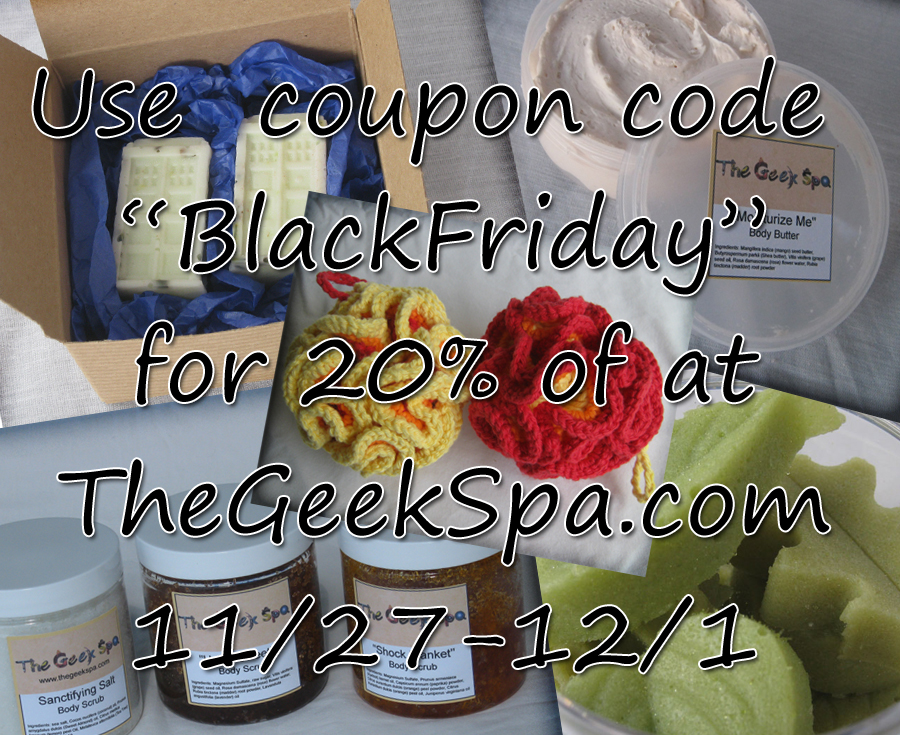
And lastly, a shameless plug for my Etsy shop. The Geek Spa is having a Black Friday sale. Use code “BlackFriday” for 20% off now through Monday.BlackFriday2014

Love Languages and MBTI Types

Myers-Briggs types have much to tell us about ourselves and other people. Our MBTI type reflects our preferences for crowded parties or small gathering, describes how we connect with other people, shows us how we naturally respond to stress, and gives us a picture of our innate strengths and weaknesses. Another thing it’s often used for is trying to predict what type of person we’ll be attracted to, and most compatible with, in a romantic sense. Unfortunately, MBTI only gives part of the picture in this regard.

Types in Love

Disclaimer: some of the links in this post are affiliate links. This means that, at no additional cost to you, I will receive a commission if you click on the link and make a purchase on that website.

Use of the MBTI for romance is subject to much debate. Isabel Myer wrote in Gifts Differing*, chapter 11, that “it seems only reasonable that the greater mutual understanding between couples with more likeness than difference should lead, on the whole, to greater mutual attraction and esteem.” This was supported by her study of 375 married couples who were most frequently “alike on three of their four preferences rather than on only two, as would be expected by chance.” However, Isabel Myer was an INFP woman happily married to an ISTJ man. According to her own personality theory, they “shouldn’t” have gotten along, especially since she thought that shared S-N preferences were the most important for predicting a couple’s happiness together and understanding of each other. Obviously type isn’t the only important ingredient for happiness.

Elizabeth and Darcy from Pride and Prejudice, an NF – NT couple

David Keirsey’s book Please Understand Me II* agrees with Myers on the importance of S-N pairings, saying that his SP Artisan types are most compatible with SJ Guardians, and that NF Idealists are most compatible with NT rationals. His ideal pairing is someone who shares your S-N preference and is your opposite in the other three preferences. For example, he would pair an INFJ with an ENTP.

Continuing with INFJs as our example, these theories have influenced many INFJ profiles online. Jennifer Soldner’s Guide To INFJ Relationships lists ENFP, ENTP, INTJ and INFJ as the best matches for an INFJ. The worst matches are ESFP, ESTP, ESTJ, and ENTJ (note that this last one contradicts Keirsey’s rule for pairing NF and NT types). For the most part, these suggestions seem logical at first, much like Isabel Myer said when theorizing that people will get along best if they are similar. It doesn’t explain, however, why one study found that INFJs were most likely to marry either INFJs or ESTPs, or why Myers herself was happy married to someone so dissimilar in terms of type. Clearly there’s something else going on here.

The “Something Else”

Even with their generalizations about which types get along most easily together, both Isabel Myers and David Keirsey admit there are other very important ingredients to a lasting romantic relationship.

Individual relationships defy generalizations, and it should be stressed that two well-adjusted people of any two temperaments can find ways of making their marriage work for them.” (Keirsey)

“Understanding, appreciation, and respect make a lifelong marriage possible and good. Similarity of type is not important, except as it leads to these three. Without them, people fall in love and out of love again; with them, a man and woman will become increasingly valuable to each other and know that they are contributing to each other’s lives.” (Myers)

The 5 Love Languages by Gary Chapman

A mutual willingness to work together and actively build-up the relationships is more important than compatible MBTI types. One aspect of this is understanding the other person and learning how to love them. Becoming familiar with their Myers-Briggs type will help tremendously, but it’s not enough by itself. You also benefit from an understanding of Love Languages.

The five love languages theory was first published in 1995 by Gary Chapman, a relationship counselor and pastor. He says every person has a “language” that they use to communicate and receive love, either Words of Affirmation, Quality Time, Receiving Gifts, Acts of Service, or Physical Touch. Everyone has one primary love language, and you might have a secondary love language as well. If someone’s partner is not speaking their love language, they will not feel loved. There’s a test on Chapman’s website if you don’t know what your love language is and want to find out.

Layering Love Languages

In theory, any MBTI type can be combined with any one of the five love languages. I’m guessing, however, that there are some love languages that are more likely for certain MBTI types. Let’s take a quick look at the characteristics for the four type groups as related to different love languages.

SP types are typically concerned with outward, concrete ways of viewing the world, and focus on the here and now. Keirsey describes their preferred role in a romantic relationship as “playmate.” I could see SP types being particularly inclined toward Receiving Gifts, Quality Time, or Physical Touch as a primary love language. These all involve doing something for or with the loved one, which would appeal strongly to SP types.

Duty-fulfilling SJ types tend to play what Keirsey described as a “helpmate” role in relationships. They are stable, traditional, and thoroughly dependable people.  SJ types might be most in tune with Acts of Service, Quality Time or Words of Affirmation as a love language. These love languages visibly or verbally confirm that a SJ’s loved ones appreciate their constant reliability.

NF types are idealistic, enjoy abstract thought, and are natural romantics. Keirsey described their role in a romantic relationship as “soulmate.” They search for deep, genuine connections. Quality Time and Words of Affirmation seem like the most likely love languages, though Physical Touch and Acts of Service are also good possibilities. The key for NF types is genuine depth in a relationship, so they are inclined towards a language that increases emotional intimacy.

The NT types are highly intellectual, and Keirsey described their relationship role as “mindmate.” They are logical, abstract, and have little tolerance for the superficial. Words of Affirmation and Quality Time seem like the most likely love languages for an NT type, but after reading two different forum topics on MBTI types and love languages (one on Typology Central and one on Personality Cafe) I learned many NTs favor Physical Touch as well. My personal theory is that NT types view Service and/or Gifts with suspicion, wondering what the other person wants from them, while the others seem more genuine.

What about you? What are your Myers-Briggs type and love language(s)? Do you see a connection between the two? Share in the comments!

*indicates affiliate links