Personality Type Myth-Busting: Is Intuition The Same As A Gut Feeling?

I often see Intuitive types describe their experience of intuition as a “gut feeling.” It’s not something we can explain — it’s just something we know. And that is a valid way to describe a lot of what we experience from using Intuition. But if that was all there was to intuition, then we’d be able to describe a lot more than 30% of the population as Intuitive types.

When people talk about intuition, they usually mean something different than what type theorists mean when they refer to Intuition as a psychological function. Google defines intuition as “the ability to understand something immediately, without the need for conscious reasoning.” We might also use the word intuitive to mean “suited by nature for a particular purpose in life,” as when we speak of intuitive athletes or creative types who “just know” how to do something.

In her book Personality Type, Lenore Thomson points out, “Most of the people to whom we apply the word intuitive in this causal way aren’t Intuitives — at least not typologically. They’re usually Sensates and Introverted P types, whose right-brain abilities the left brain can’t explain to itself” (p. 199). I’ve also noticed that some of the things that Intuitives describe as part of their intuition are actually connected with other mental processes. For example, an INFJ might say they intuitively know how to blend in with different social groups when in reality that ability is tied to their harmony-seeking Extroverted Feeling process more than to their Introverted Intuition.

So if Intuition, in the typological sense, isn’t want people usually think of when they think of intuition, what is it? Read more

7 Fictional Characters That You’ll Relate To If You’re An ISTP

What fictional characters do you relate to as an ISTP?

Just as we can describe real people using the Myers-Briggs® typology system, we can also use the system to type well-written fictional characters. Some of fiction’s most iconic and intriguing characters are ISTPs — they make particularly good action heroes — and today we’re going to talk about seven that I think real-life ISTPs will find relatable.

One great thing about looking at character personality types is that it helps us better understand people who have different types than we do. Fictional ISTPs can serve as examples for what real-life ISTPs might be like, and also show how much variation can exist between individuals with the same type.

One of the things that makes ISTPs such great fictional characters is that they pair the spatial awareness and physical skills needed to lead an action/adventure story with the clever quick-wittedness that we like to see in a hero. Tactical skills, good luck, and a dry sense of humor aren’t the only things that characterize ISTPs types, though. I love it when we see ISTP characters developed throughout several movies or in a TV series so there’s more of an opportunity to for them to grow beyond stereotypes, and that’s the case with most of the characters on this list.

Han Solo

While not every ISTP — fictional or real — is going to fall into the action hero mold, a high percentage of action heroes in fiction are ISTPs. We could probably put most of Harrison Ford’s roles on this list, but as a huge Star Wars fan I’m going to to with our favorite scruffy-looking nerf herder Han Solo. He’s also the ISTP Susan Storm chose for her post “The Greatest Movie Heroes of Every Myers-Briggs® Personality Type.” I’d like to quote part of that article:

Han Solo captures the devil-may-care, quick-thinking qualities of the ISTP. We see his Introverted Thinking (Ti) in the way keeps his rational thought processes internalized. He is constantly expanding and making improvements to the Millennium Falcon, and needs to know why he must do something before making a decision. This constant tinkering and modifying and the search to constantly know “why” are all hallmarks of Introverted Thinking types.

Han also shows an ISTPs co-pilot process (extroverted Sensing) in his ability to respond quickly to the outer world. He’s impulsive and often jumps into things without much of a plan, but he has a talent for figuring things out as he goes. Read more

Personality Type Myth-Busting: Are Extroverts Incapable of Understanding Introverts?

One of the things that really irritates me when I see certain introverts talking online is how much they seem to hate extroverts. They’ll even use that word — “I hate this thing that extroverts do” or “I hate it when extroverts are like this.” Some even have lists of all the things they hate about extroverts.

We introverts have been pushing for a while now to get recognized as “normal.” Introversion is how about 50% of the population’s brains are hardwired. It’s an inborn preference for the inner world of thoughts and ideas, which is also shaped by our unique individual experiences. So stop judging us for it, okay?

What far too many of us forget is that the exact same things are true of extroversion. For about 50% of the population, being an extrovert is perfectly normal. It’s an inborn preference for the outer world of things and people. Extroverted and introverted mental “wiring” are both perfectly normal. Both are needed, and both personality types deserve respect.

So with that clarification out of the way, let’s talk about whether or not extroverts are incapable of understanding introverts. Read more

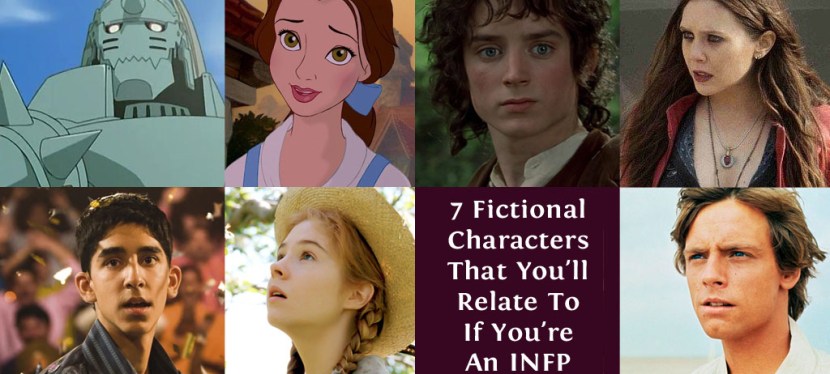
7 Fictional Characters That You’ll Relate To If You’re An INFP

What fictional characters do you relate to as an INFP?

Just as we can describe real people using the Myers-Briggs® typology system, we can also use the system to type well-written fictional characters. Some of fiction’s most iconic and intriguing characters are INFPs, and today we’re going to talk about seven of them that I think real-life INFPs will find relatable.

One great thing about looking at character personality types is that it helps us to better understand people who have different types than we do. Fictional INFPs can serve as examples for what real-life INFPs might be like, and also show how much variation can exist between individuals with the same type.

Alphonse Elric

Fullmetal Alchemist Brotherhood was the first Anime series I watched and it’s now one of my favorite TV series of all time. One of the highlights of this series (as well as the Fullmetal Alchemist series) is the character Alphonse Elric, who I’m pretty sure is either an INFP or an ISFP. Al is a sensitive, sweet young man with great strength of character. He believes deeply in doing what’s right and has a strong bond with the people he cares about, as do many real-life IFPs.

As someone who leads with Introverted Feeling (aka “Authenticity”) Al’s preferred mental process is one that’s concerned with inner harmony. As such, he makes decisions based on what feels right to him. As I’m sure many INFPs can attest, this isn’t an easy or straightforward way of figuring things out. It involves a life-long process of checking in with oneself, figuring out who you are, and finding the right way to navigate an often confusing world. Though he’s trapped in a giant suit of armor, Al is quite a young character and though the course of his story we get to see him working through a complicated process of discovering himself that I think many INFPs can relate to from their own growing-up years. Read more

How To Spot An INFJ

Adept at chameleon-like camouflage and the rarest of any type, spotting an INFJ out in the wild isn’t an easy thing to do. In fact, most people walk past INFJs without ever noticing them.

It’s kinda like in Peter S. Beagle’s The Last Unicorn, where most people who look at the unicorn just see a sad looking white horse instead of her true, magical nature. Except for the fact that no matter how odd/ethereal they might seem from overenthusiastic type descriptions online, INFJs are not in fact magical.

This post isn’t going to deep-dive into function stacks or walk you through how to identify someone’s Myers-Briggs type. You can click here to read a good article on that. Instead, we’ll be talking about characteristics that are often associated with INFJs and which you could spot in fairly casual interactions. Not every INFJ will have these traits, but if you spot several then there’s a good chance you might be talking with an INFJ or one of the similar types.

In Conversations …

If you’re in a conversation with someone you think might be INFJ, look for the following signs:

  • They listen intently, offering non-verbal and sometimes verbal feedback that lets you know they understand and are relating to you.
  • They respond in ways that let you continue directing the conversation where you want it to go.
  • Touching on a favorite topic makes their eyes light up and they get so excited to talk about it that they may even interrupt you.
  • They ask you questions and you feel like you’re really connecting, but you realize later they told you very little about themselves.
  • Argumentative conversations and debates make them visibly uncomfortable.
  • They may get flustered and have trouble organizing their thoughts if you ask them a question they don’t have a ready answer for.
  • Deep questions excite them, but they often need to think before responding.
  • Their conversations often include abstract and symbolic terms, and references that don’t quite make sense to most others around them.

Read more

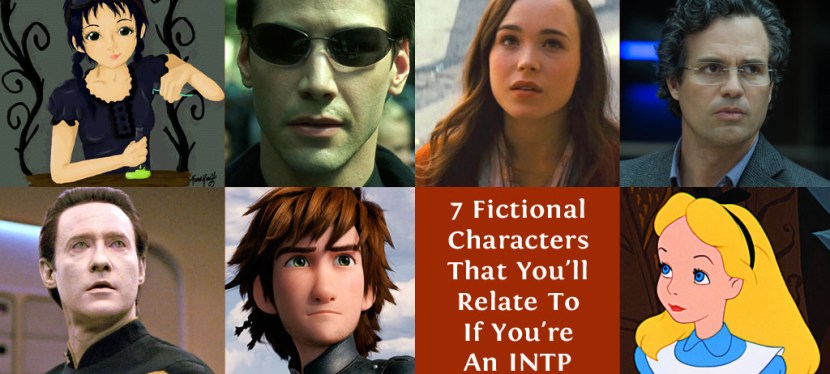
7 Fictional Characters That You’ll Relate To If You’re An INTP

What fictional characters do you relate to as an INTP?

Just as we can describe real people using the Myers-Briggs® typology system, we can also use the system to type well-written fictional characters. Some of fiction’s most iconic and intriguing characters are INTPs, and today we’re going to talk about seven of them that I think real-life INTPs will find relatable.

One great thing about looking at character personality types is that it helps us to better understand people who have different types than we do. Fictional INTPs can serve as examples for what real-life INTPs might be like, and also show how much variation can exist between individuals with the same type.

Alice

I actually typed Alice as an ENTP on my Disney Princess MBTI chart, but many people type her as an INTP. I’m fairly certain she uses Introverted Thinking and Extroverted Intuition as her two favorite functions, so both ENTPs and INTPs will probably find her a relatable character.

Extroverted Intuition is the most visible aspect of her personality. “If I had a world of my own everything would be nonsense,” seems the sort of thing a bored, curious intuitive would say as they try to explore every possibility no matter now far-fetched. As Alice goes through Wonderland, she’s constantly testing the different aspects of the world and asking questions. Read more