Happy New Year! Today is the first day of the Hebrew month Nisan (also called Abib), and the first day of the sacred year on the Hebrew calendar (Rosh Hashana starts the civil year). This means Passover is exactly 14 days away. As we draw nearer this important holy day, I wanted to shift our focus onto why Passover is so important for Christians today.
As I started thinking about reasons to keep Passover, I realized I’d either have to make this a series of posts or be much more concise than the subject deserves. Instead of a series (though there will be other Passover posts coming up), I decided to just write a brief overview of some reason to keep Passover and then invite you to join me in exploring them further. If this post inspires any of you to study Passover, I hope you’ll share your thoughts in the comments. And if you write a blog post about Passover, please share a link here so we can all read it.
Exodus chapter 12 describes the events of the first Passover in Egypt, when the children of Israel were protected from the plague that killed all Egyptian firstborn. After delivering instructions specific to that Passover, the Lord reveals that Passover celebration will continue forever among His people. Read more →
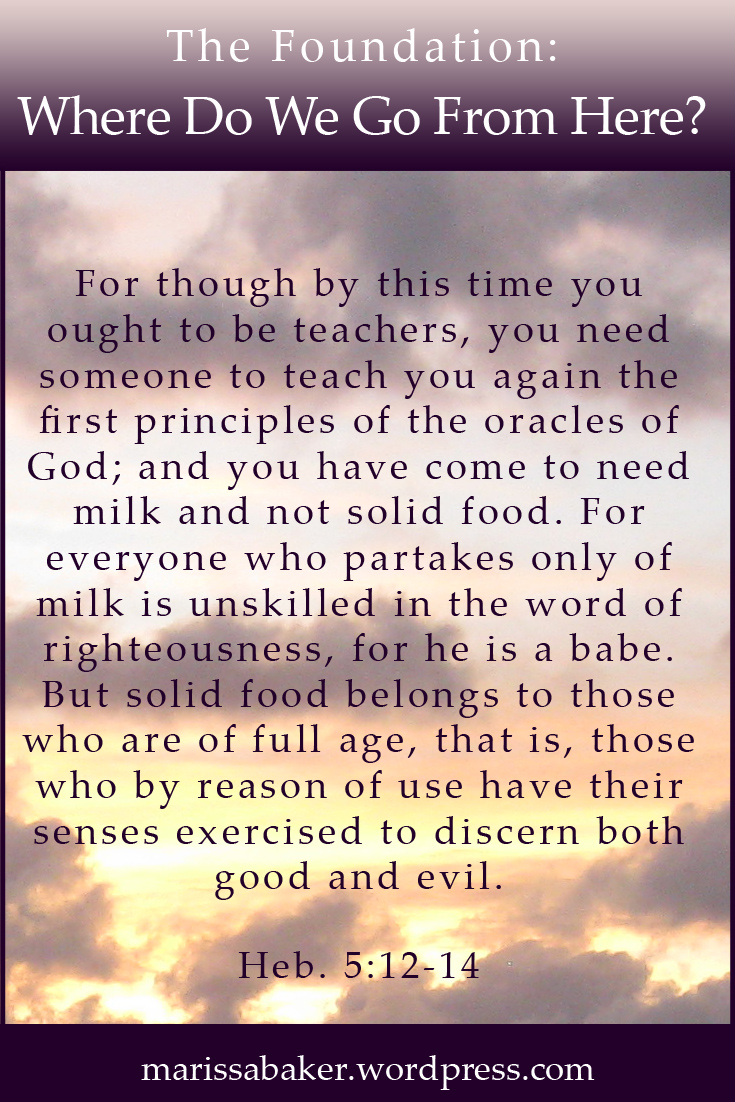
We just wrapped up a series of posts on foundational doctrines of Christianity (click here to start from the beginning). In Hebrews 6, the writer lists “repentance from dead works,” “faith toward God,” “the doctrine of baptisms, of laying on of hands, of resurrection of the dead, and of eternal judgment” as elementary principles of the doctrines of Christ.
The writer of Hebrews led-in to this list by telling his readers it was time to move forward, so it seems fitting that we now ask ourselves, “Where do we go from here?” First, though, let’s take a look at the warning that comes right after the list of doctrines. Read more →
Last week we started a study about whether or not the commands and instructions given to Biblical Israel apply to us as Christians today. I answered with a qualified “yes” — we are spiritual Israel, which is not so much separate from physical Israel as it was the next step in God’s plan for His chosen nation. Now, the question becomes, “How many of the laws given to Israel apply under the New Covenant?”
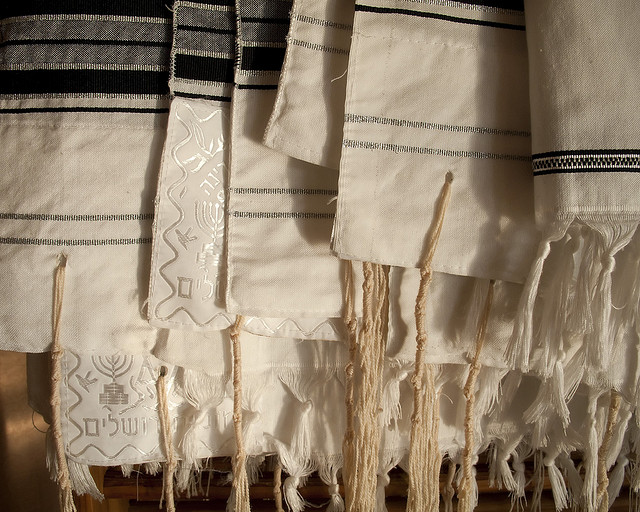
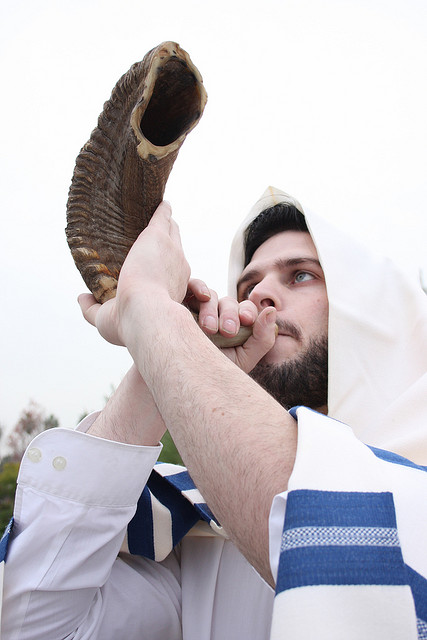
I’ve grown up believing that the Ten Commandments, including Sabbath keeping, carry over into the New Covenant, along with the Lev. 23 Holy Days and the clean and unclean meats laws. I still believe that, but now I’m starting to wonder why we keep those things and not others like the command to put tassels on our garments (Num. 15:37-41) or blow shofars on Holy Days (Ps. 81:3-4). When I ask this question, I’m usually told that not everything from the Old Covenant applies, and when I ask how they know which ones to keep they say, “It’s our tradition.” In my mind, that’s not a good enough answer, so it’s time for some Bible Study.
A New Priesthood
If you read through the laws of the Old Testament, you find quite a lot about the Levitical priesthood. Some of these are described as “a statute forever to their generations on behalf of the children of Israel” (Ex. 27:21), yet it is evident that Christ’s priesthood supersedes that system. If the switch to the New Covenant changed that, how much else was changed?
For the priesthood being changed, of necessity there is also a change of the law. (Heb. 7:12)
But now He has obtained a more excellent ministry, inasmuch as He is also Mediator of a better covenant, which was established on better promises. (Heb. 8:6)
When it talks about a change of the law, I think we often imagine quite a disconnect between the Old and New Testament. We think of change as in something old being replaced by something completely new, but I think perhaps the change is more in how God’s laws apply.
For this is the covenant that I will make with the house of Israel after those days, says the Lord: I will put My laws in their mind and write them on their hearts; and I will be their God, and they shall be My people. (Heb. 8:10)
The Old Covenant was replaced with the New (Heb. 8:13), but God’s laws were not done away with. Even before the Old Covenant was instituted at Mount Sianai, God had laws in place. We can see this in Genesis 26:5, where God says, “Abraham obeyed My voice and kept My charge, My commandments, My statutes, and My laws.” Since God is unchanging, His standards for what He expects from us do not change either.
Jesus said, “till heaven and earth pass away, one jot or one tittle will by no means pass from the law till all is fulfilled” (Matt. 5:18) In the Greek, this means “filled to the fullest extent.” The laws were brought to a spiritual plane, much as physical Israel became spiritual Israel. You still keep the physical laws, but there is a spiritual aspect as well, and we are held accountable for what goes on inside us as much as for what we actually do (Matt. 5:17-30).
Updating The Law
The laws governing the Levitical priesthood are examples of parts of the Old Covenant that have already been filled to the fullest extent by Jesus Christ. We don’t have a physical priesthood any more because He is our High Priest forever. We don’t sacrifice animals any more because Christ’s sacrifice completely fulfilled all the Old Testament commands for blood sacrifices.
For Christ has not entered the holy places made with hands, which are copies of the true, but into heaven itself, now to appear in the presence of God for us; not that He should offer Himself often, as the high priest enters the Most Holy Place every year with blood of another — He then would have had to suffer often since the foundation of the world; but now, once at the end of the ages, He has appeared to put away sin by the sacrifice of Himself. (Heb. 9:24-26)
Without a physical priesthood or temple, many of the ceremonial laws no longer apply to spiritual Israel. Though we as the New Testament church can examine and learn from them and how they foreshadowed Christ’s role as priest and sacrifice, people in the church no longer serve as priests and we no longer sacrifice animals.
Similarly, there were civil laws given to govern the nation of Israel that are not in effect now because the church is scattered through other physical nations with their own laws. Many of the civil laws had a moral aspect, though, and this is updated for us to follow under the New Covenant. Take, for example, the law that said a man and woman who commit adultery must both be put to death (Lev. 20:10). The Pharisees brought Jesus just such a case, and Jesus told them, “He who is without sin among you, let him throw a stone at her first” (John 8:7). When all her accusers left, Jesus told the woman, “Neither do I condemn you; go and sin no more” (John 8:11).
Jesus didn’t say that she hadn’t committed a sin. He said that there was room for mercy and forgiveness even of sins that had formerly incurred a physical death penalty. For judicial matters, Christians are now under the laws of the countries we live in. For moral matters, God’s laws are applied to spirit and in truth with an emphasis on mercy. Is there a guy in your church shaking up with his step-mother? We don’t stone them as was the case in ancient Israel (Lev. 20:11), but we do make it clear that behavior like this is morally wrong and won’t be tolerated in the church (1 Cor. 5:1-13). If he repents, you have to welcome him back just like God welcomes us back into relationship with Him when we repent of our sins (2 Cor. 2:3-11).
There are also aspects of the Old Testament laws that we are specifically commanded to continue observing. This includes the weekly Sabbath (Heb. 4:9) and Passover (Luke 22:19-20). We infer from these specific commands, and from the fact that Jesus and His disciples observed the other Holy Days, that all those days are still commanded observances. Even more obvious is the fact that we should be keeping the Ten Commandments, which are succinctly comprehended in the two greatest commandments.
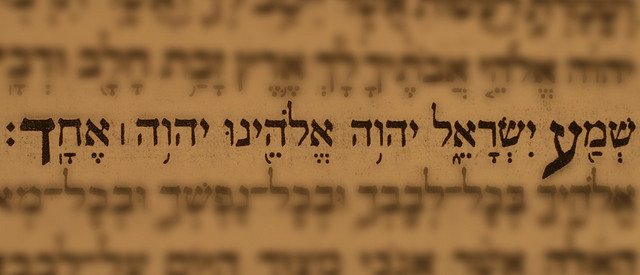
Jesus answered him, “The first of all the commandments is: ‘Hear, O Israel, the Lord our God, the Lord is one. And you shall love the Lord your God with all your heart, with all your soul, with all your mind, and with all your strength.’ This is the first commandment. And the second, like it, is this: ‘You shall love your neighbor as yourself.’ There is no other commandment greater than these.” (Mark 12:29-31)
God’s focus is on our hearts, and whether or not we choose to keep His commandments tells Him what our hearts are like. Jesus said, “If you love Me, keep My commandments” (John 14:15). The implication is that if we don’t keep His commandments, we are telling Jesus we don’t love Him. If our hearts are right, obedience to God naturally follows.
My feelings on the question, “What is applicable under the New Testament?” is that everything God didn’t specifically replace/update to a spiritual level (the priest hood, physical temples, civil laws) are probably still in effect. It’s up to us to seek out the spiritual reasons for these commands and find a way to physically keep them. There are still some I’m not sure about — like those tassels on the borders of our garments or what we’re supposed to do on New Moons — but I want to keep searching and learning. I want to worship God the way He tells me to, not the way I think sounds like a good idea.
You know that feeling when you’re having a conversation with someone and can’t think of a reply, then the perfect words come to you three days later in the shower? Something similar happened to me a couple weeks ago. I was talking with someone who doesn’t think shofars are necessary in church services, and asked what he thought of Psalm 81 that tells us to blow the shofar “for this is a statute for Israel, a law of the God of Jacob” (Ps. 81:3-4). His response was, “We’re not Israel. We’re spiritual Israel, but we’re not Israel.”
The subject rolled around in my mind for a week before I decided to write about it. Whether or not the Old Testament commands given to physical Israel apply under the New Covenant is a much broader issue than shofars. I think its an important question to answer, because if the answer is “yes” then there are quite a few things most of us Christians have been wrongly ignoring, and that’s a dangerous thing to do.
Welcomed Into Israel
In the Old Testament, Israel was God’s chosen people — the small group He decided to work with and make His own.
Now therefore, if you will indeed obey My voice and keep My covenant, then you shall be a special treasure to Me above all people; for all the earth is Mine. And you shall be to Me a kingdom of priests and a holy nation.” These are the words which you shall speak to the children of Israel. (Ex. 19:5-6)
In much the same way, the New Testament church is a fairly small group of chosen people, called into a special relationship with God.
But you are a chosen generation, a royal priesthood, a holy nation, His own special people, that you may proclaim the praises of Him who called you out of darkness into His marvelous light; who once were not a people but are now the people of God, who had not obtained mercy but now have obtained mercy. (1 Pet. 2:9-10)
At this point in the history of the church, God wasn’t exclusively working with the physical nations of Israel any more. He was calling Gentiles as well. It’s very interesting to see how this calling is described.
Therefore remember that you, once Gentiles in the flesh — who are called Uncircumcision by what is called the Circumcision made in the flesh by hands — that at that time you were without Christ, being aliens from the commonwealth of Israel and strangers from the covenants of promise, having no hope and without God in the world. But now in Christ Jesus you who once were far off have been brought near by the blood of Christ. (Eph. 2:11-13)
The process by which Jesus Christ welcomes us into His church also makes us part of Israel. In Jesus Christ, we are no longer “aliens from Israel” and “strangers from the covenants” because He “has made both one, and has broken down the middle wall of separation” between physical Israel and the Gentile nations (Eph. 2:14).
Spiritual Israel
It is evident that there are differences between spiritual Israel and physical Israel. Paul addresses this in several epistles. The Old Covenant contained in it the promise of Messiah, and the ones in Israel who recognized Jesus as that Messiah became spiritual Israel as they transitioned to the New Covenant. At that point, God opened up salvation to the non-Israelitish people as well.
that He might make known the riches of His glory on the vessels of mercy, which He had prepared beforehand for glory even us whom He called, not of the Jews only, but also of the Gentiles? As He says also in Hosea: “I will call them My people, who were not My people, and her beloved, who was not beloved.” “And it shall come to pass in the place where it was said to them, ‘You are not My people,’ there they shall be called sons of the living God.” Isaiah also cries out concerning Israel: “Though the number of the children of Israel be as the sand of the sea, the remnant will be saved.” (Rom. 9:23-27)
This “remnant” is a small part of the physical nation of Israel, and now includes Gentiles as well “according to the election of grace” (Rom. 11:5). It is what God intended all of Israel to be, and that’s what we are grafted into (Rom. 11:13-24). The rest of Israel is still “beloved for the sake of the fathers” because of the promises God made to Abraham, Isaac, and Jacob (Rom. 11:28). Now, though, “God has committed them all to disobedience, that He might have mercy on all” (Rom. 11:32). That indicates He will treat those who’ve ignored Him as if they are outside of Israel so they can eventually be welcomed in as former strangers rather than punished as children who should have known better.
So the question, “Are we Israel?” seems to have answered itself. Paul even tells us quite plainly in Galatians that we are “the Israel of God” (Gal. 6:16). We’re also told that we are under the New Covenant which was promised to Israel.
Because finding fault with them, He says: “Behold, the days are coming, says the Lord, when I will make a new covenant with the house of Israel and with the house of Judah — not according to the covenant that I made with their fathers in the day when I took them by the hand to lead them out of the land of Egypt; because they did not continue in My covenant, and I disregarded them, says the Lord. For this is the covenant that I will make with the house of Israel after those days, says the Lord: I will put My laws in their mind and write them on their hearts; and I will be their God, and they shall be My people.” (Heb. 8:8-10)
When Jesus Christ came, He didn’t bring a new religion — He came as the next step in God’s plan. “Christianity” is the name that was given because the rest of the world thought it was just a new sect of Judaism. In reality, though, this is what God intended Israel to become all along. Instead of starting with the idea, “I’m Christian, so how much of this Old Testament stuff do I have to keep?” we should start at the beginning and see how the Old Covenant relates to the New Covenant. Some things did change, and some things did not change. That sounds like a good topic for next week’s blog post.
People in the churches can’t seem to make up their minds about whether or not physical things are important. Here are a few examples that came to mind. They’re all specific to the church I grew up in, but I’m sure the basic idea can apply to other groups.
We say it’s better to have a printed Bible than just read off an electronic device because holding a physical book connects you to scripture more, but we think kissing a Torah scroll at a Messianic congregation is borderline idolatry.
We teach physical things from the Old Testament/Judaism like tassels on our garments and prayer shawls are done away with under the New Covenant, but heaven forbid a man stand up to speak without wearing a suit and tie.
We say it’s important to preach the gospel and do good works in the world, but many groups refuse to purchase or rent church buildings that we can put a sign out in front of, or to have any sort of physical presence in our communities.
What’s going on here? If the spiritual is all that matters, why do we hang on to certain physical aspects of faith? If the spiritual and physical both matter, which I believe is the case, why are we so contradictory in how we approach that truth?
What Are We?
Jesus told us, “God is Spirit, and those who worship Him must worship in spirit and truth” (John 4:24). That tells us, at least on a basic level, what God is. But what are we?
Now may the God of peace Himself sanctify you completely; and may your whole spirit, soul, and body be preserved blameless at the coming of our Lord Jesus Christ. (1 Thes 5:23)
In the Greek, the word translated “body” simply refers to our physical bodies, “soul” refers to the life-essence we have in common with animals, and “spirit” is the part of us that makes us human and which is able to communicate with God’s spirit.
The Spirit itself bears witness with our spirit that we are children of God (Rom. 8:16)
Now, in this human life, we have a natural body that contains a spirit. After Christ’s return when we are resurrected or changed, we shall be like God and have a spiritual body with a spirit. We are “sown a natural body,” and “raised a spiritual body” (1 Cor. 15:44).
The part of ourselves that is enduring is our spirits. When God “looks on the heart,” He is checking the state of our spirits. He is concerned most with the condition of the inner man. That does not, however, mean God doesn’t care about the part of us that’s physical.
Romans 7 Analysis
In Romans, Paul discusses how our spirits are related to keeping God’s law. He tells us that the law in the Old Testament was not enough by itself ot lead to eternal life. Rather, since everyone has sinned (Rom. 3:23) and the law gives knowledge of sin (Rom. 7:7), we end up dead as an indirect result of knowing the law.
But sin, taking opportunity by the commandment, produced in me all manner of evil desire. For apart from the law sin was dead. I was alive once without the law, but when the commandment came, sin revived and I died. And the commandment, which was to bring life, I found to bring death. (Rom. 7:8-10)
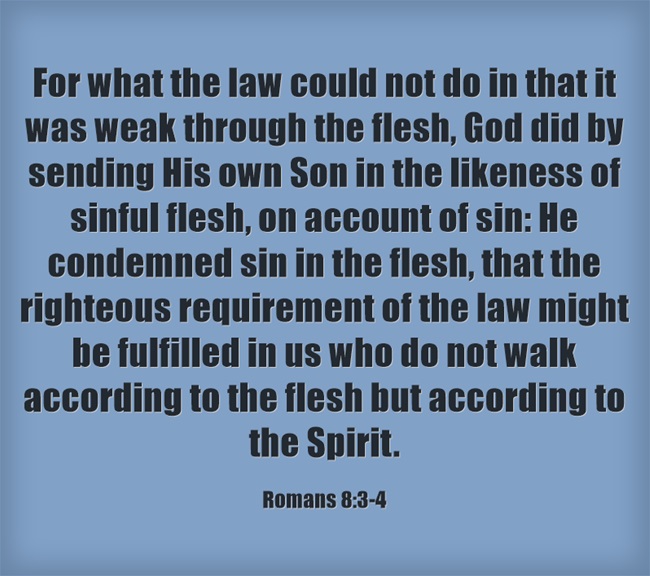
If we could keep the law perfectly, it would lead to life. But we can’t keep the law perfectly, and so we incur the death penalty for breaking God’s laws. That is how a law and commandment that is “holy and just and good” can result in our deaths (Rom. 7:12). That’s why we need Christ’s sacrifice to supply what was missing in the Old Covenant — a way for our sins to be removed and the penalty to be paid (Rom. 8:3-4).
For when we were in the flesh, the sinful passions which were aroused by the law were at work in our members to bear fruit to death. But now we have been delivered from the law, having died to what we were held by, so that we should serve in the newness of the Spirit and not in the oldness of the letter. (Rom. 7:5-6)
Serving in the spirit doesn’t mean we ignore the law, though. Even when we’ve been cleansed by Jesus and our spirits are in communication with God’s Spirit, we are still human and still capable of sin. To be righteous in the spirit, we have to obey God by rejecting sin on both a spiritual and a physical level (Rom. 6:14-23).
For we know that the law is spiritual, but I am carnal, sold under sin. For what I am doing, I do not understand. For what I will to do, that I do not practice; but what I hate, that I do. If, then, I do what I will not to do, I agree with the law that it is good. But now, it is no longer I who do it, but sin that dwells in me. (Rom. 7:14-17)
This isn’t Paul shirking responsibility for his actions. He’s telling us that, while his spirit recognizes and agrees with the law, his fleshly human nature is still slipping away from perfection. There’s a war going on between our spirits and our sinful desires.
For I delight in the law of God according to the inward man. But I see another law in my members, warring against the law of my mind, and bringing me into captivity to the law of sin which is in my members. O wretched man that I am! Who will deliver me from this body of death? I thank God—through Jesus Christ our Lord! So then, with the mind I myself serve the law of God, but with the flesh the law of sin. There is therefore now no condemnation to those who are in Christ Jesus, who do not walk according to the flesh, but according to the Spirit. For the law of the Spirit of life in Christ Jesus has made me free from the law of sin and death. (Rom. 7:22-8:2)
The only way we can win the war between our two natures is through Christ. His sacrifice removes our death penalty, His strength makes it possible for us to keep the law, and His grace covers us when we make mistakes. With His help, we can serve the law of God with our minds and spirits, and also keep the laws God gave us as a guide for how to behave as a physical being.
Some Concluding Thoughts
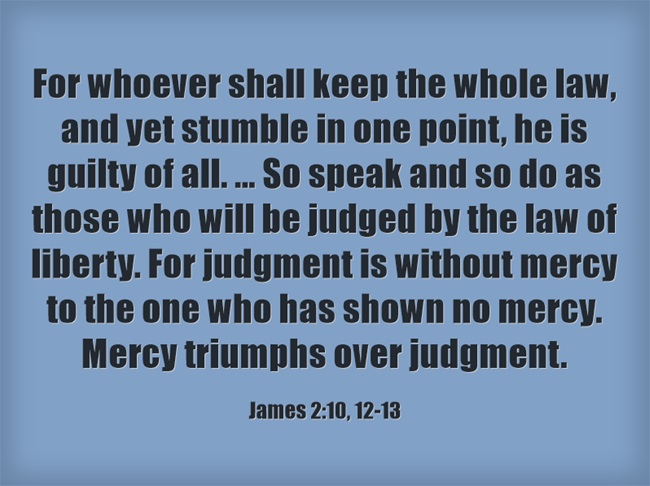
The New Covenant doesn’t take away from the laws and commandments — it adds an additional spiritual dimension (Matt. 5:17-30). What we choose to do physically is not less important now. We could say it’s actually more important, because it is indicative of the state of our hearts. We are already in trouble if we intend to sin in our minds — actually going through with it adds the sin of hurting others on top of the damage sin does to us on the inside. We will be judged by how well we keep the law, and we must take this seriously (James 2:8-13).
I don’t think we can separate the physical and the spiritual, nor should we. It is true that God is chiefly concerned with the state of our inner man, but if the inside is right then it will show on the outside. We need to support our spiritual lives with our physical selves by actively doing good and keeping the commandments. As humans, we still have physical bodies and even inside us we have human nature struggling with God’s spirit. Keeping God’s laws is a physical reminder of how important the spiritual is.
In the churches of God that I’ve grown up in, we teach that one of the reasons God still expects us to keep His annual Holy Days and weekly Sabbath is because humans tend to forget things without something to physically remind them on a regular basis. This general idea is also related to my praise and worship series, since I think that if we take physical expressions of praise out of our church services we’re refusing to involve part of who we are in our woship of God. To keep on track with God, we need something to do as well as something to think about.
I made pesto a little while ago to go with some bread. Now we’re out of bread and I’m left with almost a full batch of pesto. Whatever should I do with it all? Here’s one answer (also yet another way to use the monster heads of broccoli out in the garden).
I’m sure it would taste even better with fresh pesto but, alas, I didn’t get my herb garden planted and I have no basil. Instead, I used a recipe I pulled off the Internet some years ago for dried basil pesto. It’s not as good, but it works in a pinch. If you haven’t any other pesto you like to use, scroll down to the end for that recipe.
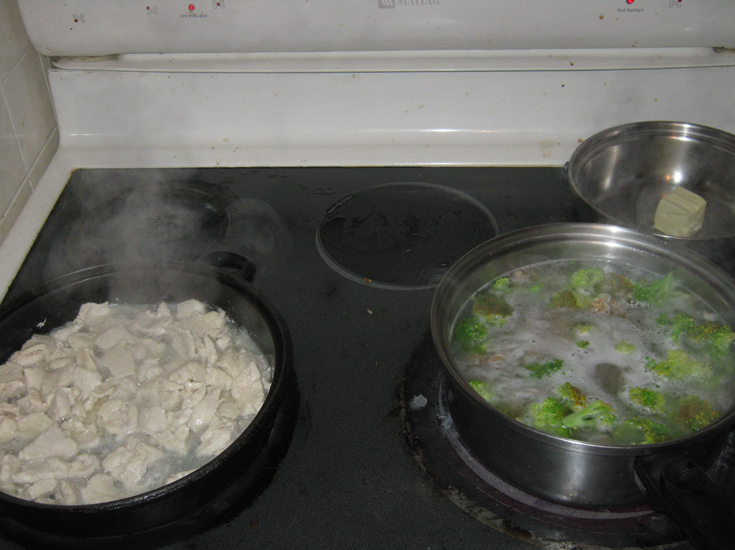
Cook pasta with broccoli until al dente according to package directions. Meanwhile, heat olive oil in skillet. Cook chicken until no pink remains.
Add cream of chicken soup, pesto, and milk to the skillet with the chicken. Bring to a boil and cook on low for 5 minutes. Add cooked pasta and heat through before serving.
Dried Basil Pesto
up close with the pesto
1/2 cup dried basil
1/4 cup walnuts
3 cloves garlic
1/2 cup Parmesan cheese
1/2 – 3/4 cups olive oil
Pulse first four ingredients in food processor until walnuts are chopped. Add olive oil and run blender for about 30 seconds. Chill until ready to use.






 Like An Anchor