In Defense of Sensing-Intuitive Friendships

I talk with quite a few people who have Intuitive type personalities and grew up feeling misunderstood. They knew they were different from other people but didn’t know why and that led to feelings of loneliness and isolation. In some cases this feeling came from a lack of people they could truly connect with. But others encountered outright rejection or bullying.

As we grew up and started learning about our personality types, the feeling of being different started to make sense. Intuitive types do see the world differently from most other people — we only make up 30% of the world’s population. The other 70% of people are Sensing types. And becasue the Intuitive/Sensing side of our personalities describes how we perceive things and learn new information, it plays a huge role in how we frame our conceptions of the world. It’s no wonder that Intuitives feel different from the majority of the people they meet.
In Defense of Sensing-Intuitive Friendships | marissabaker.wordpress.com
Photo credit: Rawpixel.com via Stocksnap

The Amazing Intuitive Connection

There’s something incredible about learning you’re not alone. That there really are other people out there who process the world in much the same way you do. People whose eyes won’t glaze over when you dive deep into theoretical discussions, who won’t panic when you suggest a new perspective on traditional ideas, and who think talking about the future framed in all of human history is a great way to spend their afternoons.

I think Intuitives need other Intuitives around. I grew up with Intuitive siblings, eventually made several Intuitive friends, and now have the Intuitive Awakening group on Facebook. For close relationships, matching on your Intuition/Sensing preference is going to make it much easier to identify with and understand the other person. And I’m pretty sure any Intuitive with Intuitive friends or family is nodding their heads while reading this. We crave the opportunity to connect with other people who will understand us and validate our way of processing the world. It’s part of being human.

Inaccurate Sensing Stereotypes

But we can take our need for Intuitive connection to an unfortunate extreme and decide that other Intuitives are the only people worth talking with. People with this mindset say that Sensing types are too superficial, too selfish, too close-minded, and too judgemental for them to really connect with (a claim that is, when you think about it, an example of the mindset they’re accusing Sensors of having). Read more
Giving Yourself Permission to Take Up Space

I’m 5 feet 6 inches tall (about 168 cm for my readers on the metric system). When I was a teenager I decided that was about 3 inches too tall for some reason ostensibly connected with Joe Hardy (yes, the fictional character. I know — I needed more real friends). That’s not the only reason I do things to make myself look smaller, but it’s one of the stranger ones. In general, though, being taller than other people simply makes me feel awkward. And even though I’ve explored that feeling before in a creative non-fiction class in college, I really wasn’t sure why.

Recently, I’ve been asked why I use body language that makes me look small. That question made me  take another look at why I’m doing what I do. I hunch my shoulders. I sit in corners of sofas. I cross my arms and legs or ankles. Or I have my hands together nervously fiddling with my fingers. Part of this is unconscious but I’m often aware of it as well. I know I make myself smaller and sometimes I do it on purpose, especially if I feel nervous or threatened. I suppose I’m saying with my body language, “Don’t notice me. Don’t hurt me.” And this sort of thing has become instinctive for me.

Giving Yourself Permission to Take Up Space | marissabaker.wordpress.com
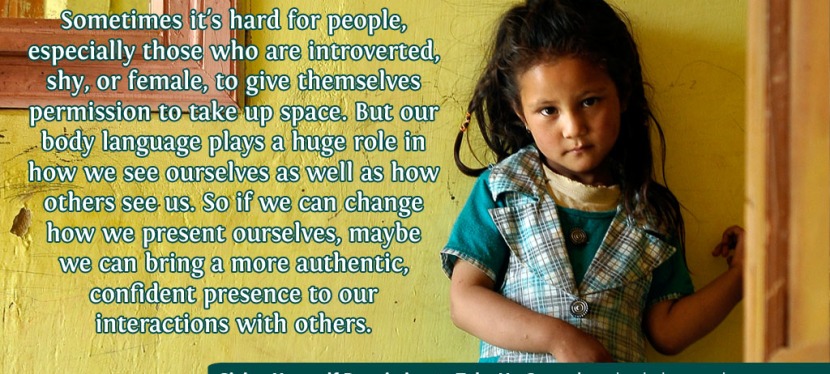
Photo credit: “Shy” by Karel Macalik, CC BY via Flickr

One of my more vivid childhood memories is of being enrolled in a summer school program and hiding under the playground equipment from the other kids. My experiences there played a large role in why my parents chose to homeschool. In some ways, that scared little girl is still part of me and hiding is still my default move. But, as someone recently reminded me, fear isn’t a good way to live your life. I feel like it’s time for a change. Read more

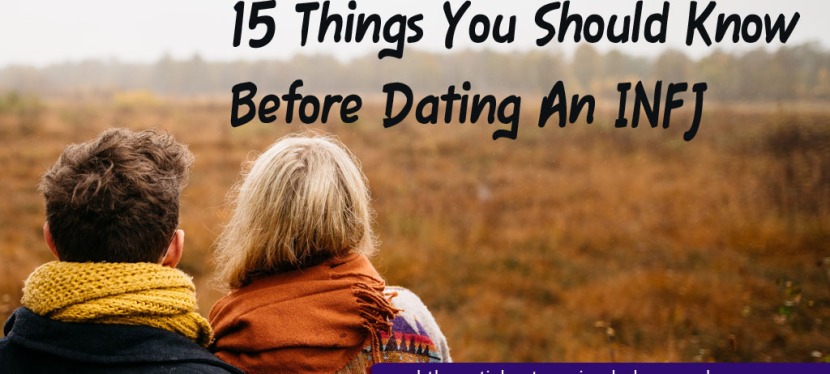
Want To Date An INFJ? Here’s 15 Things We’d Like You To Know

So you want to date an INFJ. I’m not quite sure whether to congratulate you or pat you consolingly on the shoulder. Perhaps both.

Assuming you want this relationship to go well, one of the most important things you can do is try to understand your INFJ love-interest. We’re the rarest personality type and we often feel misunderstood and alone. Showing us that’s not going to happen with you will instantly endear you to an INFJ’s heart.

And so here you are learning about the 15 things INFJs really want you to know as you begin a relationship with us. They might not all be equally true of every INFJ, but this list is the result of feedback from and discussion with nearly 20 different INFJs so you’re getting a pretty good idea of what we’d like to say to you.

Want To Date An INFJ? Here's 15 Things We'd Like You To Know | marissabaker.wordpress.com
Photo credit: Yoann Boyer via StockSnap

Even though I’m an INFJ myself and I’ve written a fairly successful book about the INFJ personality type, I still like to get feedback from other INFJs before writing a post like this. And so I want to say a big “Thank you” to everyone in the Facebook group INFJs Are Awesome who responded to my question about what they thought people should know before dating an INFJ. You guys helped make this post so much better than if it were just me typing away my thoughts in a vacuum.

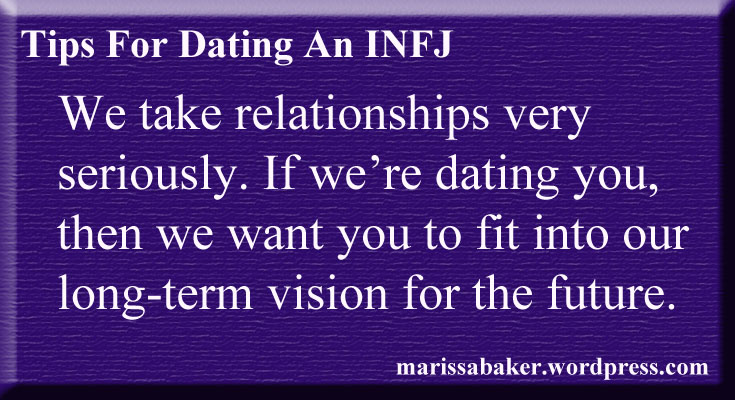
1) We take relationships very seriouslyWant To Date An INFJ? Here's 15 Things We'd Like You To Know | marissabaker.wordpress.com

While there are some INFJs who will have one-night-stands or enter casual relationships, most of us are interested in something long-term. If you’re not willing to take the relationships seriously we need to know that up-front so we can make a decision about whether or not to bother with you. Most of us know how to be alone and we’d rather stay single than settle for a relationship that just adds stress and anxiety to our lives. We also have a vision for how we want our lives to go and we’ll be going into a relationship trying to figure out how you might fit in with that vision.

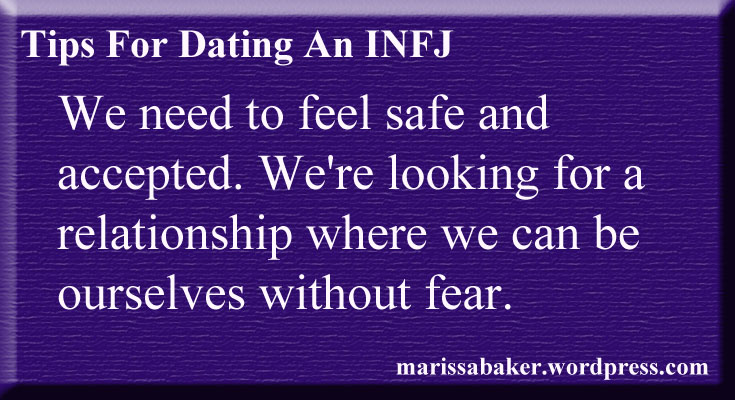
2) We need to feel safe and acceptedWant To Date An INFJ? Here's 15 Things We'd Like You To Know | marissabaker.wordpress.com

This one is huge for INFJs. If you’re not a safe person for us to be around then we either 1) won’t enter a relationship with you or 2) will be trying to get out of the relationship. We desperately need to know you won’t dismiss us. We don’t actually expect you to fully understand all our quirks, nuances, and oddities but we need to know you will accept and even love them. We need to know you’re interested in getting to know the “real” version of us and that you won’t run away when we start opening up. Similarly, we typically have strong values and we’re looking for someone who lines up with them. INFJs can be very accepting of other people’s differences, but the closer you get to us the more closely we want you to line-up with our core beliefs. Read more

Dating Your Mirror: ENFP and INFJ Relationships

Once upon a time, I told my sister, “I don’t think I’d ever date an ENFP.” Even though I’d seen lots of people describing ENFP-INFJ as a “perfect” pairing it just didn’t sound like a good fit for me. I loved having ENFP friends, but the ones I knew were either so intense they made me feel anxious, or so extroverted they wore me out, or too scattered for me to think I wouldn’t eventually get irritated with them in a closer relationship (or all of the above).

Then a few years after making this statement, I started actually getting to know one of my ENFP acquaintances. And now we’re dating (doesn’t that sound like just the sort of coincidence that would happen in a romance  story?). He does have an intense personality but I’ve done enough work overcoming my social anxiety that doesn’t scare me any more (actually, it’s rather exciting). He’s the most extroverted person I know but I’ve discovered it’s not a problem for us. And he’s not scattered or flaky (which, it turns out, is another of those unfair/too widely applied stereotypes bouncing around Myers-Briggs circles).

Now, I could spend the next 1,000+ words telling you about how wonderful my boyfriend is but that’s probably not what you clicked on this post for (if it was I’m afraid you’re going to be disappointed). Instead, we’re going to talk about why ENFPs and INFJs have a reputation in Myers-Briggs circles for getting along so well. Read more

Always Love, Never Compromise: Relating To Those Outside Your Faith

Our society idolizes tolerance. We’re “supposed” to understand the other’s point of view, support them in living however they want, and admit they’re no less “right” than we are. From a Christian’s perspective, though, today’s ideas of tolerance look more like an attack on objective morality. People who disagree with you don’t just want you to tolerate them; they want you to agree with them. And in many cases they’re not willing to extend even tolerance back to you, much less agreement.

There are two extreme reactions Christians might have when faced with a society like ours: 1) go along with society or 2) start attacking people we don’t agree with. But neither of those options is the best one. Better to ask, “Does the Bible offer any guidelines for Christians navigating such as society?” People of God have always had to interact with people outside their faith, and scripture does provide guidelines for how we can approach such relationships.Always Love, Never Compromise: Relating To Those Outside Your Faith | marissabaker.wordpress.com

Don’t Judge People

This first guideline has nothing to do with accepting the wrong things we see ungodly people doing. We can make moral decisions about another person’s actions (e.g. discern between right and wrong) and in the appropriate context tell them they’re not lining up with God’s law (e.g. preach the gospel and call for repentance). But to pronounce a sentence on someone and condemn them is not our right.

For what is it to me to judge those outside? Should you not judge those inside? But those outside God will judge. Remove the evil person from among yourselves (1 Cor. 5:12-13, LEB)

In the verses leading up to these, Paul has been talking about the need for Christians to exercise sound judgement within the church. He’s giving them a directive to put out of the church people who say they follow God yet flagrantly and unrepentantly practice sin. In contrast to that, he tells us it’s not our responsibility to do the same to people outside the church. We can’t condemn non-Christians for not acting like Christians. God’s the one who gets final say on their lives.

Read more

Walking Across Sea World

Because yesterday was Father’s Day, I want to share with you a little (true) story I wrote for the Encouraging Dads Project. Those of you who follow my Facebook page might have seen it before, but I hadn’t shared it on the blog yet.

This story goes out with a big “Thank You!” to all the dads and father figures making positive differences in their children’s lives. Even the “little things” you’re doing mean more than you realize.

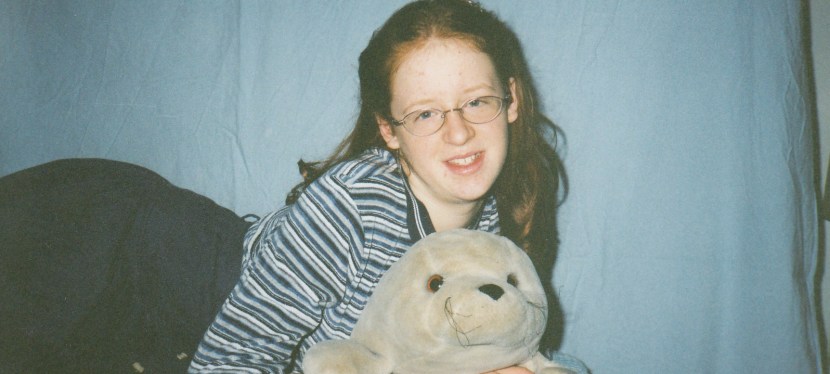
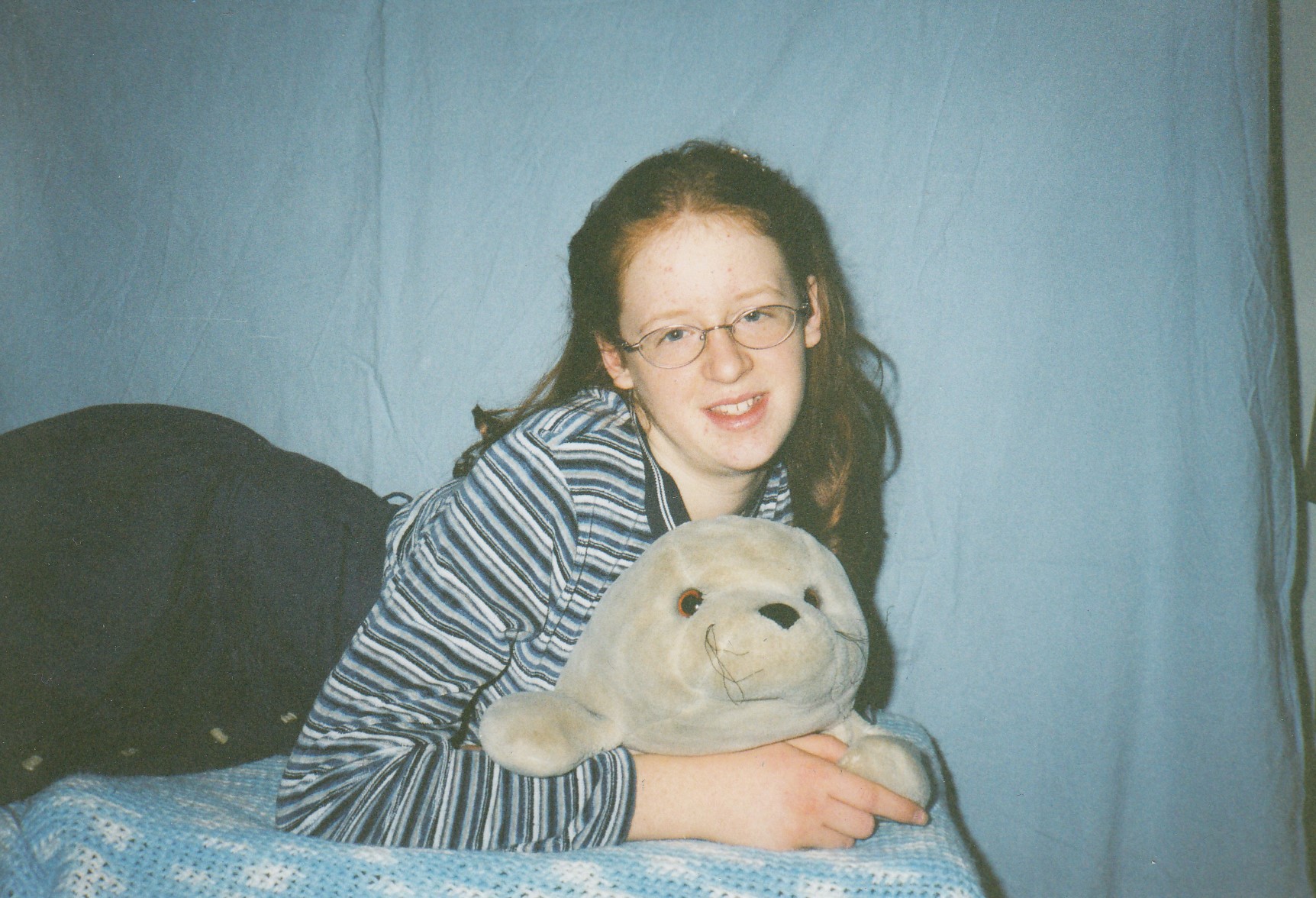
Me and Harpy in 2002

My father dislikes shopping of any kind. Gift shops are particularly pointless. We just paid how much to get in, and now they want us to buy overpriced junk just because it’s got their logo on it? I don’t think so!

I share that so you’ll understand how rare it was to have him inside a gift shop, let alone offering to buy something in it. The setting is Sea World Ohio, a well-nigh forgotten theme park along Geauga Lake near the city of Aurora. Summer sun beat down on the pavement, sending trickles of sweat down my dad’s back as he pulled two little princesses around in a red wagon. My sister and I had been treated to an orca show at Shamu Stadium, sent through a playground with a sea of ocean-colored plastic balls, and given the chance to pet stingrays. And now, we needed stuffed animals.

I’m not talking about just any stuffed animal. It was a pure white harp seal pup nearly as large as I was at 5 or 6 years old. He had big brown eyes and a friendly smile. He was perfect, except for one thing. The only one left in the gift shop had a big stain discoloring his side.

If there was one thing my father disliked more than buying overpriced promotional items, it was buying defective overpriced promotional items. But let me tell you what Daddy didn’t do. He didn’t tell me I was stupid for wanting that stuffed seal. He didn’t tell me I wasn’t worth getting the best seal Sea World had to offer. And he didn’t tell me to suck-it up and live without the seal either. Instead, he sent a message that has stuck with me my entire life.

Daddy walked to the opposite end of a 50-acre theme park to retrieve a better version of my baby seal. At the time, he probably just thought he was doing a nice, and rather inconvenient, thing for his little girl. But he was doing so much more than that. He told me I was valued. He told me that he listened when I talked about things I wanted. He told me he’d go above and beyond to make me happy. All by walking across a theme park to pick up a stuffed animal.

In the grand scheme of things, a stuffed seal isn’t the most impressive present a dad could buy for his daughter. But the love behind that gift solidified Harpy’s position as my favorite toy. He slept in my bed, went on vacations, and attended slumber parties with me for about ten years after Daddy walked across Sea World for him. Now, another 10+ years down the road he’s a bit fragile and has lost some of his fluffiness and most of his white color, but I’ll never get rid of him.

We remember the big moments with our dads because of the intangible things that go along with them. My dad gave me other gifts. But this one sticks in my memory because it was a visible reminder of the sort of things he did, and still does, every day in the many ways he took care of me and told me I was precious to him.

This article originally appeared on Encouraging Dads.com, January 2017.

Save

Save