Looking for Jesus in All the Right Places

When Jesus was 12 years old, he and His “parents went to Jerusalem … for the Feast of the Passover,” as they did every year in obedience to the instructions in God’s law (Luke 2:41-42). After the Passover and the week-long Feast of Unleavened Bread (Chag haMatzot), his parents went a whole day’s journey home before realizing Jesus wasn’t with the traveling group and they’d lost the Son of God in Jerusalem. They went back, and searched for three days before finding Him in the temple. When Mary chided Him for making them so anxious, Jesus said they should have been able to figure out where He was.

But he replied, “Why were you looking for me? Didn’t you know that I must be in my Father’s house?”

Luke 2:49, NET

I wonder how many times when we’re running around anxiously wondering, “Where’s God when I need Him?” that we’re also looking in the wrong places. The “right place” isn’t a physical location, though; there isn’t an easy-to-find landmark spot for us to start our search like the temple in Jerusalem where Mary and Joseph found Jesus. For us, the task of looking for Jesus is both much simpler (because He is available anywhere) and also in some ways more challenging (since it’s not just about going to a certain place and doing a certain thing).

Seeking the Father and Son

A more literal translation of Jesus’s words to His parents would be, “Didn’t you know that I must be about the things of my Father?” (TLV). The “verse involves an idiom that probably refers to the necessity of Jesus being involved in the instruction about God” (NET footnote), which I suspect is why the Complete Jewish Bible opts for the translation, “Why did you have to look for me? Didn’t you know that I had to be concerning myself with my Father’s affairs?” The reason that so many modern translations say, “in my Father’s house” is because “the most widely held view today takes” the idiom used here “as a reference to the temple as the Father’s house” (NET footnote).

Whichever translation we think is correct, the basic meaning is the same. Jesus could be found associated with the things God was doing in the location where people who follow God gather. Even today, it is true that if we want to connect with God that is often easiest to do when associating ourselves with other believers. That’s not the only thing that’s involved in searching for Jesus or the Father, though.

“No one can come to me unless the Father who sent me draws him, and I will raise him up at the last day.”

John 6:44, NET

Jesus replied, “I am the way, and the truth, and the life. No one comes to the Father except through me.”

John 14:6, NET

We need the Father to open our eyes and invite us into the family if we want to get to Jesus, and then it’s through Jesus that we’re given access to God the Father at a level of intimacy that people who lived before Christ came in the flesh never had and relatively few people have today. Jesus and the Father are welcoming us into their oneness (John 17) and when we faithfully follow the Son, we have a relationship with the Father as well (1 John 2:22-24). We must seek Them both together.

The Temple of God Today

Back when 12-year-old Jesus went missing, He could be found at the temple. However, “the God who made the world and everything in it, who is Lord of heaven and earth, does not live in temples made by human hands” (Acts 17:24, NET), especially now that the veil separating the holy places of God and regular people is done away through Christ (Matt. 27:50-51; Eph. 2:13-19). Now, we are the temple of God.

For we are the temple of the living God, just as God said, “I will live in them and will walk among them, and I will be their God, and they will be my people.”

2 Corinthians 6:16, NET quoting Lev.26:11-12

Do you not know that you are God’s temple and that God’s Spirit lives in you?

1 Corinthians 3:16, NET

These verses tell us two things. One: if we are called by God to be part of His church and we’ve accepted that invitation, we are part of God’s temple and His spirit lives in each of us. Two: all the believers together make up God’s temple today (“you” is plural in Greek; “temple” is singular). If we’re seeking Jesus, we need to seek Him on both an individual and a cooperative level. The Lord wants to live in the midst of His people (Zec. 2:10-13), and being able to build each other up as we seek the Lord together is one of the most important reasons for God’s people to gather as a community of faith (Heb. 10:19-25). That community could be just “two or three assembled” in the Lord’s name (Matt. 18:20), or it could be a church group of hundreds.

Invited to be with the Lord

When Jesus was here on earth, He issued invitations to come to Him, seek Him, and become His friends. They’re not the first invitations from the Lord either; Jesus was making God more widely accessible, but God has always wanted relationships. Those same invitations are still open today, echoing down through thousands of years.

Pay attention and come to me.
Listen, so you can live.
Then I will make [an eternal covenant with] you,
just like the reliable covenantal promises I made to David.

Seek the Lord while he makes himself available;
call to him while he is nearby!

Isaiah 55:3, 6, NET (with footnote translation for v. 3)
Looking for Jesus in All the Right Places | LikeAnAnchor.com
Image by Pexels from Pixabay

Most of the Lord’s instructions for seeking Him involve “how” not “where.” We’re told to seek “diligently” (Prov. 8:17), with “prayer and worship” (Jer. 29:13), and “with all your heart and soul” (Deut. 4:29; 1 Chr. 28:9). And we ought to do this persistently and repeatedly, too–ask, and keep on asking; seek, and keep on seeking; knock, and keep on knocking (Matt. 7:7-8; Luke 11:9-10). But no matter how persistent you are, you’re also going to have trouble finding Him if you’re not looking in the right places.

We learn about God primarily through His word and His spirit, so it’s important to seek Him in the pages of the Bible and ask for understanding. There’s no substitute for reading God’s words (or listening ; I know several people who learn best from audio Bibles). We also learn about Him, and how to be like Him, though interactions with other believers. We are each part of God’s temple, but we’re not the only part and if at all possible it’s vital that we stay in contact with other Christians. So the next time you feel yourself wondering, “Where is God?” try looking in His word, seeking Him in prayer, and/or talking with a fellow believer. It may feel like it takes a while before He responds, but if we seek Him the way He tells us to in the places where He says He can be found, God will not fail to let us find Him.

Featured image by Jantanee via Lightstock

The Beginning of Being Like God

As we draw closer to the Passover and continue examining ourselves (as I talked about in last week’s post) I keep thinking about how vital our understanding of God is to understanding ourselves. Paul tells us to examine, evaluate, and discern ourselves (1 Cor. 11:28-32), but in order to do that we need the help of God’s spirit, as Paul talks about earlier in 1 Corinthians. To see ourselves clearly and know what needs to change (and how to make that change), we need a wisdom that we can only get by understanding God.

Understanding, Wisdom, and Fear

I like to study 1 Corinthians at this time of year because (as I wrote about in more detail a couple years ago), this epistle references the Exodus story, Passover, and the Feast of Unleavened Bread over and over. Before Paul begins talking directly about Passover, he expands on the idea that the wisdom of God is very different than what human beings speak of as wisdom (1 Cor. 1:18-31, quoting Jer. 9:23-24). Knowing and understanding the Lord is far more important than having wealth, power, or worldly wisdom. Echoing a sentiment expressed throughout scripture, Paul tells us a proper perspective on God is where true wisdom begins.

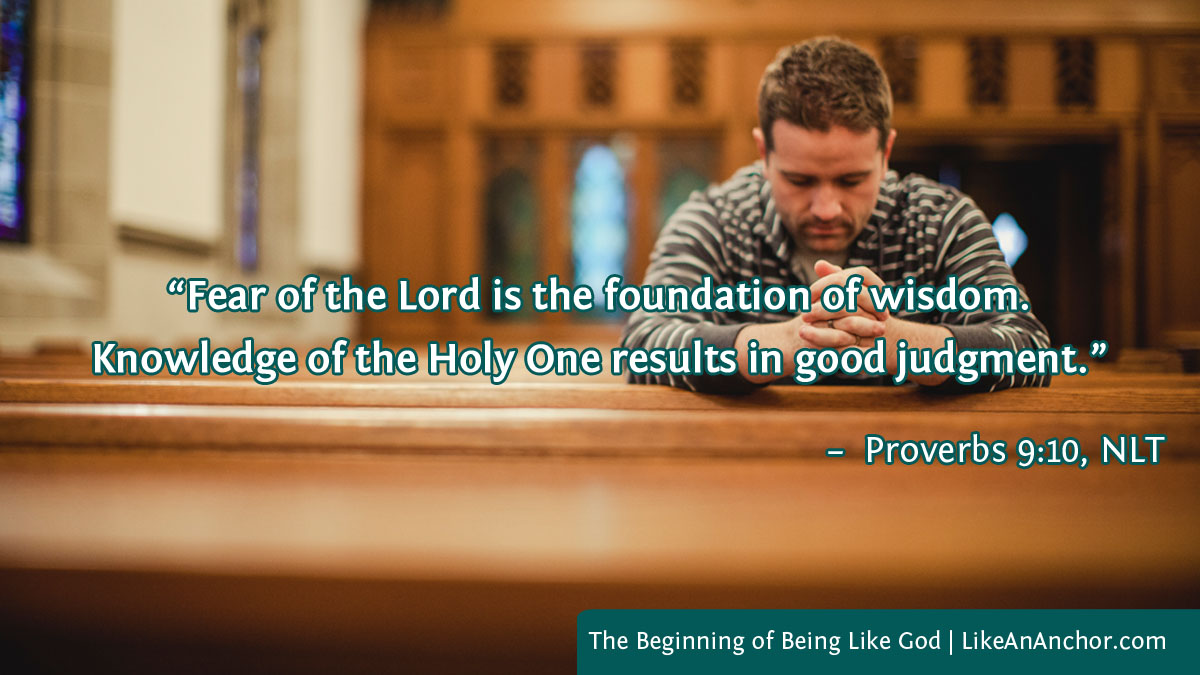
The beginning of wisdom is to fear the Lord,
and acknowledging the Holy One is understanding.

Proverbs 9:10, NET

The idea that we ought to fear a God of love seems odd to many of us, mostly because we think of fear in the sense of being terrified of something scary, dangerous, or bad. But I think the more we learn about God, the more we realize that our love for Him must also be mixed with awe, reverence, and even fear. A devotional book that I’ve been reading puts it this way:

when we approach the Holy One with casual familiarity, we do not take Him as seriously as we ought, and we do not take our sin as seriously as we ought. Fear–not of punishment but of the overwhelming greatness of God–sees Him correctly. When this fear grips us, we begin to understand the enormity of the gospel and of our God. That understanding begins to rearrange our lives. And that is what wisdom is all about.

CHRIS TIEGREEN, 365 POCKET DEVOTIONS, DAY 40

Understanding God leads to wisdom, which leads to us changing our lives. The more we know Him, the more we’ll want to be like Him, and the more clearly we’ll see what we need to keep working on in order to move closer to that goal. Wisdom begins with fearing the Lord, and change happens as we start to become wise.

Knowing God through His Spirit

After Paul explains that God’s people don’t often seem wise in the world’s eyes (and if they do, they’re not supposed to glory/boast about it), he starts to talk about “the wisdom of God hidden in a mystery.” God has decided to share with us deep, wonderful things that other people haven’t even imagined, and he has “revealed these to us by the Spirit” (1 Cor. 2:7-10, NET).

For who among men knows the things of a man except the man’s spirit within him? So too, no one knows the things of God except the Spirit of God. Now we have not received the spirit of the world, but the Spirit who is from God, so that we may know the things that are freely given to us by God. And we speak about these things, not with words taught us by human wisdom, but with those taught by the Spirit, explaining spiritual things to spiritual people. … we have the mind of Christ.

1 Corinthians 2:11-13, 16, NET

This is where we get wisdom–from God’s spirit working inside us and making our minds like Christ’s mind. The closer we draw to God the more we understand Him, and the more we understand Him the more in awe we are. And the more all of that comes together as we grow and change and learn, the more we become like God.

Wisdom Can Change Us

Real, godly wisdom is an incredible thing. Last year, I spent months studying and writing about wisdom in a series of 10 posts. We could write whole books about Godly wisdom, but a quick summary of the things God reveals about His wisdom can be found in James’s epistle.

Who is wise and understanding among you? By his good conduct he should show his works done in the gentleness that wisdom brings. … the wisdom from above is first pure, then peaceable, gentle, accommodating, full of mercy and good fruit, impartial, and not hypocritical. And the fruit that consists of righteousness is planted in peace among those who make peace.

James 3:13, 16-18, NET

A proper perspective on God is the starting place for this kind of wisdom. And much like fear is the beginning of wisdom, I think we can also say that wisdom is a beginning to being like God. Notice how much of this description of godly wisdom involves character traits we can develop and/or actions that we can take. If we want to examine ourselves, this is an excellent place to start. As we consider God’s goodness and greatness, learning more and more about who He is and how we can be like Him, we ought to meditate on the characteristics of His wisdom. Every aspect of “the wisdom from above” is a part of God; are they also a part of us?

Featured image by Pearl via Lightstock

Examining Ourselves by Examining God

Every year before Passover, Christian and Messianic Jewish believers who follow Jesus’s instruction to keep this day “in remembrance of me” also follow Paul’s instruction to examine ourselves. Before we eat the unleavened bread and drink the wine as Jesus did “on the night in which he was betrayed,” we must examine ourselves. It’s a serious matter, for “the one who eats and drinks in an unworthy way eats and drinks judgment to himself if he doesn’t discern the Lord’s body” (1 Cor. 11:23-31. WEB).

As I ponder the question of self-examination today, about 4 weeks before Passover, I’m struck by something Job says near the end of the book bearing his name. After all his trials, all the discussions with his friends, and all of God’s replies, Job says,

I had heard of you by the hearing of the ear,
but now my eye has seen you.
Therefore I despise myself,
and I repent in dust and ashes!”

Job 42:5-6, NET

It’s easy to look at ourselves and think we’re doing okay unless something comes along to shake up that self-perception. Job thought he was a righteous man. He was even right about that, as God points out when He describes Job as “a blameless and upright man” at the beginning of the story (Job 1:8, NET). But Job still had room for improvement, and the more he learned about God the more fully he realized how much he still had to learn. The better we can see God, the less impressive we are to ourselves.

Heading Toward His Perfection

It is important to regularly “put yourselves to the test to see if you are in the faith; examine yourselves!” (2 Cor. 13:5, NET). We can’t accurately evaluate ourselves, though, unless we understand the standard we’re measuring ourselves by. In other words, if we don’t have some idea of what we are supposed to be we don’t know how well we’re doing.

See what sort of love the Father has given to us: that we should be called God’s children—and indeed we are! For this reason the world does not know us: because it did not know him. Dear friends, we are God’s children now, and what we will be has not yet been revealed. We know that whenever it is revealed we will be like him, because we will see him just as he is. And everyone who has this hope focused on him purifies himself, just as Jesus is pure.

1 John 3:1-3, NET

God is calling us into His family and we are His children right now. We’re also growing and changing, becoming more and more like Him. At least, that’s what should be happening. And if we’re going to examine ourselves to see how much progress we’re making on becoming like God, we need to know what it means to be like Him. We won’t achieve perfection in this life, but we should be heading there. And if we want to know what perfection looks like, we just need to look to God for an example of how we’re supposed to be.

Glimpsing His Unsearchable Riches

I keep talking about the need to see and understand God as if that’s something we could actually do as human beings. While we are invited to know Him in an increasingly familiar way, part of knowing Him involves realizing that our minds can’t warp themselves around His fullness. His thoughts are not like our thoughts (Is. 55:8-9) and “the riches both of wisdom and the knowledge of God” are so deep we’ll never plumb them all (Rom. 11:33).

I find this an encouraging realization. We’re never going to hit a point where there’s nothing left to work on, no way to grow, or nothing more to learn. The more we follow God, the more we get to engage with Him in a dynamic, growing relationship.

But just as it is written, “Things that no eye has seen, or ear heard, or mind imagined, are the things God has prepared for those who love him.” God has revealed these to us by the Spirit. For the Spirit searches all things, even the deep things of God.

1 Corinthians 2:9-10, NET

By God’s spirit inside us, we get an increasingly clear picture of what it means to be like God. We even get to put on “the mind of Christ” (1 Cor. 2:6-16). The better we know Him, the better we understand who we are meant to be and what we are supposed to do on the way toward being that person. That’s why I say that if we want to examine ourselves, we need to “examine” God. Self-examination is vital, but that process isn’t all about us even though the word “self” is in there. It’s about becoming like God.

To Fix Ourselves or to Be Like God

Putting on God’s nature often goes against our ingrained impulses. We are so used to reacting in certain ways (like anger if someone shouts at us, or spite if we’re ill treated) that trying to fix our human nature might seem impossible. And it is if we try to do that on our own. Thankfully, we’re not on our own and we don’t have to start from scratch.

“We have two options: we can try to reform the sinful human nature, or we can ask God for His nature. The former approach has never in history proven successful. Our only remaining option is to ask God.”

Chris Tiegreen, 365 Pocket Devotions, Day 78

Trying to make ourselves like God without putting on His nature is a futile endeavor. We need a more drastic change than just trying to be good or nice people. It reminds me of a C.S. Lewis quote, where he talks about the need to transform rather than just improve. Using the sort of agricultural analogy Jesus was so fond of in His parables, Lewis says,

“If I am a field that contains nothing but grass-seed, I cannot produce wheat. Cutting the grass may keep it short: but I shall still produce grass and no wheat. If I want to produce wheat, the change must go deeper than the surface. I must be ploughed up and re-sown.”

C.S. Lewis, Mere Christianity, book IV chapter 8

Returning to the topic of self-examination, the goal of that is not to fix ourselves by our own efforts. It’s to look for evidence of Jesus Christ in us (2 Cor. 13:5). It’s to identify areas where we’re not yet like God and ask Him to change us. The focus should be on God–who He is and who He wants us to be in Him–as much (or even more) than on ourselves.

The more we learn about God and seek to know Him, the more clearly we see ourselves. When we turn away from the Lord, our minds can deceive us into thinking we’re something different than we are. But when we turn to the Lord, who can “probe into people’s minds” and “examine people’s hearts,” we can then see ourselves as He sees us (Jer. 17:5-10, NET). We may, like Job, abhor what we see and need to repent, but there are blessings that follow something like that because God responds so positively to sincere repentance. When we look at ourselves in light of God’s goodness and realize we still aren’t perfect, it leads to humility. And when we take that humble attitude to God and ask Him to share His mind and nature with us, He will respond to our self-examination by transforming us.

Featured image by Inbetween via Lightstock

Finding Treasures, New and Old, in the Pages of Scripture

Have you ever been reading a familiar part of the Bible–one of the gospels, for example–and came across something you’d never noticed before? I don’t know how many dozens of times I’ve read Matthew, and just a few weeks ago I noticed a verse that I don’t think I’ve ever thought about before. It comes right after a collection of several parables about the kingdom of heaven, and Jesus says,

“Have you understood all these things?” They replied, “Yes.” Then he said to them, “Therefore every expert in the law who has been trained for the kingdom of heaven is like the owner of a house who brings out of his treasure what is new and old.”

Matthew 13:51-52, NET

As I’ve pondered this verse over the past few weeks while studying the kingdom of God, one thing that jumps out at me is the importance Jesus puts on the old and the new. Treasuring both seems like a different recommendation than what some other scriptures teach us about how to relate to the old and the new. But Jesus also makes this sound like something we’re supposed to do. An “expert in the law” (also translated “scribe” or “Torah scholar/teacher”) who is trained (or “discipled”) for the kingdom seems like someone who has paid close attention to Jesus’s teachings and understand them. So how can we imitate this disciple-scholar’s approach to the kingdom of God?

An Old and New Commandment

Describing someone who is trained or discipled for the kingdom as bringing out old and new treasures can seem strange in light of Jesus’s other teachings. The parables of the new patch on an old garment and new wine in old wineskins make it seem like the new and old is incompatible (Luke 5:36-39). Later, Paul writes about cleaning out the old so we can be new, and of the old passing away because we are new in Christ (1 Cor. 5:7; 2 Cor 5:17). Part of figuring out this puzzle involves asking the question, “Old and new what?” because not all these passages are talking about the same old and new things. In addition to keeping that in mind, I think the key to unlocking this mystery is found in John’s writings:

Dear friends, I am not writing a new commandment to you, but an old commandment which you have had from the beginning. The old commandment is the word that you have already heard. On the other hand, I am writing a new commandment to you which is true in him and in you, because the darkness is passing away and the true light is already shining.

1 John 2:7-8, NET

Jesus did not do away with the old commandments and words of God (Matt. 5:17-20). He did, however, bring something new to add to it, including a new covenant which would supersede the old (Heb. 8-9). Part of participating in this new covenant involves us cleaning old things that are incompatible with godliness out of our lives (that’s what Paul was talking about in the Corinthians passages). It also involves properly balancing and appreciating the new and old treasures of God’s word.

Called into the New, Founded on the Old

People often think of Christianity as something new that Jesus started. The way scripture talks about it, though, “Christian” is just a new name applied to believers who were continuing to follow the teachings of the one true God and align with His unfolding plan as Jesus revealed the next steps. Our faith’s roots aren’t found in the first century C.E.–they’re found “in the beginning” when God created the heavens and the earth. Jesus coming as the Messiah was the next step in the plan God had laid out even before He laid the foundations for the earth (Matt. 25:34; Eph. 1:4; 1 Pet. 1:20).

As part of His work here on earth, Jesus revealed more fully how to worship God and invited us to “serve in the new life of the Spirit and not under the old written code” (Rom. 7:6, NET). Now, is Paul saying here that the old has no value? “Absolutely not!” Rather, he argues that “we uphold the law” when we live by faith” (Rom. 3:31; 6:15; 7:7).

For God, who said “Let light shine out of darkness,” is the one who shined in our hearts to give us the light of the glorious knowledge of God in the face of Christ.

2 Corinthians 4:6-7, NET

The work God is doing in us and the knowledge He gives us are amazing treasures. Part of this treasure of understanding involves an appreciation of the value both of the new and old things that God has given His people. Through His extraordinary power and mercy, we are called into a new thing founded on very old truths.

Finding and Keeping Kingdom Treasures

If we go back to the kingdom of heaven parables that Jesus shared before making the statement where we started this post, we find that He talked about treasure there, too.

“The kingdom of heaven is like a treasure hidden in the field, which a man found and hid. And because of his joy, he goes out and sells all that he has and buys that field.

“Again, the kingdom of heaven is like a merchant searching for fine pearls. Upon finding a pearl of great value, he went out and sold all that he had and bought it.” …

Then He said to them, “Therefore every Torah scholar discipled for the kingdom of heaven is like the master of a household who brings out of his treasure both new things and old.”

Matthew 13:44-46, 52, TLV

God’s kingdom is a treasure so precious we should be willing–and even joyful–to give up whatever is needed to get the kingdom (Matt. 10:21; Luke 18:22). And we should be collecting and treasuring things related to the kingdom, such as the “treasures of wisdom and knowledge” hidden in Jesus (Col. 2:3, see also Matt. 6:19-21). As we continue to learn and grow, let’s appreciate the rich history of our faith and our own personal experiences, as well as the new things God teaches and the glorious future He has planned.

Featured image by Oliver Eyth from Pixabay

Getting “Salty” for the Kingdom of God

Have you ever thought about the phrase “covenant of salt” or “salt of the covenant”? If you’re like me, you might not have even realized these phrases are in the Bible–I never noticed them until I heard a teaching on it a few years ago. I’ve come back to study salt again now because the grace book I talked about in last week’s post drew my attention to this verse:

Let your speech always be with grace, seasoned with salt, that you may know how you ought to answer each one.

Colossians 4:6, WEB

In Relational Grace, Brent Schmidt says that “in Greek usage,” a conversation described as “seasoned with salt” meant one that’s “enlivened with wisdom” (p. 94). He also mentions “cleansing and preservation” are associated with salt. He does not bring up the covenants of salt mentioned in the Old Testament, but Schmidt does write extensively on the covenanting aspects of grace, and that made me wonder if there might be a “covenants of salt” connection as well. And, as a larger question, what does it mean when God describes us as “salt of the earth” or when He says to “have salt in yourselves?”

Covenants of Salt

In the Torah, God instructed Israel to use salt in some very specific ways. Salt was an essential ingredient for holy incense (Ex. 30:34-35). It was also a vital part of sacrifices.

Moreover, you must season every one of your grain offerings with salt; you must not allow the salt of the covenant of your God to be missing from your grain offering—on every one of your grain offerings you must present salt.

Leviticus 2:13, NET

The phrasing here is such a strong instruction–you must include salt. And it’s repeated three times just in this one sentence! Clearly, the presence of covenant salt mattered deeply to God. The connection between salt and offerings continues throughout the Old Testament (Ezra 6:9; 7:22; Ezekiel 43:24). In addition, God described the portion of the offerings that were given to priests as “a covenant of salt” in Numbers 18:19. The NET footnote on this verse explains

Salt was used in all the offerings; its importance as a preservative made it a natural symbol for the covenant which was established by sacrifice. Even general agreements were attested by sacrifice, and the phrase “covenant of salt” speaks of such agreements as binding and irrevocable. Note the expression in Ezra 4:14, “we have been salted with the salt of the palace.”

NET study note on Num. 18:19

This last line refers to a phrase in a letter where the writers claim “we are loyal to the king,” which is translated from an Aramaic phrase that literally means “we eat the salt of the palace” (Ezra 4:14, NET). Though covenants are not mentioned explicitly in this verse, it adds another layer to our discussion because of the close connection between loyalty and salt.

In 2 Chronicles 13:5, a king of Judah challenged Israel, saying, “Don’t you realize that the Lord God of Israel has given David and his dynasty lasting dominion over Israel by a formal covenant?” or, in other words, “a covenant of salt?” (NET footnote). The covenants of salt were binding, formal, and intended to be long-lasting. They were something that God–and the people who care about Him–took very seriously.

You Are Salt

With that background, Jesus’s words “you are the salt of the earth” (Matt. 5:13) could possibly be read as “you are a sign of the covenants sprinkled throughout the earth,” or perhaps, “you are connected to the covenant and my sacrifice.” Of course, there is also the fact that “Salt was used as seasoning or fertilizer … or as a preservative” (NET footnote), and this may also be connected to Jesus’s words. Still, I think it’s safe to assume Jesus’s listeners–all of them Jews–would have been familiar with the strong covenant connection that salt had and would have assumed that was at least part of His meaning.

Adding further depth to the idea that we, as followers of Jesus, “are the salt of the earth” is the association of salt with incense. During one of the scenes in heaven that’s recounted in Revelation, “the twenty-four elders fell down before the Lamb, each one having a harp, and golden bowls full of incense, which are the prayers of the saints (Rev. 5:8). Like incense, our prayers are “seasoned with salt, pure and holy” (Ex. 30:35, WEB).

Everyone will be salted with fire [many manuscripts add “and every sacrifice will be salted with salt”]. Salt is good, but if it loses its saltiness, how can you make it salty again? Have salt in yourselves, and be at peace with each other.

Mark 9:49-50, NET (bracketed line from footnote)

If salt implies a covenant, then the instruction “have salt in yourselves and be at peace” is a covenant imperative. It doesn’t mean we ought to eat more salty foods, but rather that we’re meant to live in loyal covenant with God. It involves following “the God of peace,” who raised “our Lord Jesus” from the dead and equips us to do His will “by the blood of the eternal covenant” (Heb. 13:20-21, NET).

Speak Salty Words

Let’s go back now to the verse in Colossians that started this whole post, and read a little bit more of the context.

Conduct yourselves with wisdom toward outsiders, making the most of the opportunities. Let your speech always be gracious, seasoned with salt, so that you may know how you should answer everyone.

Colossians 4:5-6, NET

This part of Paul’s letter is talking about how we “conduct ourselves” or “walk”–“a common NT idiom for one’s lifestyle, behavior, or manner of conduct” (NET footnote). We’re to exercise wisdom when interacting with those outside the faith, use our time well, and be gracious and “seasoned with salt” in the way we speak.

In today’s world, being “salty” implies irritation or hostility. This verse is telling us to do the opposite in our dealings with others. We’re to interact with people in a grace-filled way that is seasoned with wisdom and influenced by an awareness of our covenant with God. As the salt of the earth, we’re meant to remember our covenant loyalty to God and show our faithfulness to Him as we interact with other people.

Featured image by andreas160578 from Pixabay

Drawn To God

My new favorite Bible Study tool is the New English Translation with its 60,000+ translator’s notes. As I was perusing the pages (you can get a print version or access the whole thing for free online), I noticed the translation notes on Song of Songs take up more space than the actual text. Apparently, not only is this text’s interpretation widely debated, but it is also notoriously difficult to translate. As you might know if you’ve read some of my other posts or my short book God’s Love Story, I favor the interpretation that the Song is both a celebration of human love and an allegory of Christ’s love for the church. With that in mind, here’s one of the verses with a footnote that I found intriguing:

Draw me[a] after you; let us hurry!
May the king bring me into his bedroom chambers!

[note a] The verb מָשַׁךְ (mashakh, “draw”) is a figurative expression (hypocatastasis) which draws an implied comparison between the physical acting of leading a person with the romantic action of leading a person in love. Elsewhere it is used figuratively of a master gently leading an animal with leather cords (Hos 11:4) and of a military victor leading his captives (Jer 31:3). The point of comparison might be that the woman wants to be the willing captive of the love of her beloved, that is, a willing prisoner of his love.

Song of Songs 1:4, NET

Another translation for mawshak in this verse is “Take me away with you” (NIV, WEB). There are nuances of meaning for this Hebrew word (as the NET footnote points out), but the basic one is “to draw, drag, seize” (Brown–Driver–Briggs; Theological Wordbook of the Old Testament). Here in Song, and in a few other places as well, it can be understood as “entice, allure, woo” (TWOT). In those verses, it is connected with one of the many pictures God gives us for relating to Him–as a lover alluring, wooing, and drawing His bride to Himself.

Alluring us with Love, Kindness and Grace

Hosea is one of the books that makes the analogy of God as bridegroom and husband most clearly. God instructs the prophet Hosea to marry a prostitute because ancient Israel “continually commits spiritual prostitution by turning away form the Lord” (Hos 1:2, NET). God used Hosea’s marriage and his writings to teach that, even though Israel was unfaithful, God still promised “in the future I will allure her,” and then “you will call, ‘My husband’; you will never again call me, ‘My master'” (Hos. 2:14, 16, NET).

Later in Hosea, God talks about how He “drew” (mawshak) Israel out of Egypt “with leather cords” (NET), “with cords of a man” (KJV), or “cords of human kindness” (NIV). Though the NET presents a compelling case for the “leather” translation, I favor “human kindness” because it connects more strongly to the overall theme of God wooing His people that is found so often in Hosea. It would also echo the language God uses in Jeremiah 31:3.

Yahweh appeared of old to me, saying, “Yes, I have loved you with an everlasting love. Therefore I have drawn you with loving kindness.”

Jeremiah 31:3, WEB

Alternate translations for this passage include “That is why I have continued to be faithful to you” (NET), “That is why I have drawn you to myself through my unfailing kindness” (NET footnote), and “This is why in my grace I draw you to me” (CJB). God’s drawing of us to Himself is prompted by His everlasting love, and it is done with faithfulness and kindness.

Longing for God to Satisfy Us

The time Jeremiah speaks of when God draws His people to Him is followed by a time “when watchmen will call out … ‘Come! Let us go to Zion to worship the Lord our God!’” (31:6, NET). Those who claim the Lord as their God are eager to be drawn, rescued, and gathered by Him (Jer. 31:7-9). Their response here is much like the Beloved in Song of Songs–take me away! draw me after you!–and like that of David in this psalm.

How precious is your loving kindness, God!
The children of men take refuge under the shadow of your wings.
They shall be abundantly satisfied with the abundance of your house.
You will make them drink of the river of your pleasures.
For with you is the spring of life.
In your light we will see light.
Oh continue (mawshak) your loving kindness to those who know you,
your righteousness to the upright in heart.

Psalm 36:7-10, WEB

We can find all we need to satisfy us in the great One who loves us, the Lord our God. We can call on Him to draw us closer, and He will faithfully respond to our longing for Him.

Featured Image by Jackson David from Pixabay