The God of Logic

This study all began with perusing the “lambda” section in a Greek dictionary. I came across the word logikos (G3050), which means “pertaining to reason and therefore reasonable.” You’ve probably already guessed that it’s where we got our English word “logic.” This is the word used in Romans 12:1 for “reasonable service.”

I beseech you therefore, brethren, by the mercies of God, that you present your bodies a living sacrifice, holy, acceptable to God, which is your reasonable service. And do not be conformed to this world, but be transformed by the renewing of your mind, that you may prove what is that good and acceptable and perfect will of God. (Rom. 12:1-2)
The God of Logic | marissabaker.wordpress.com
image credit: nasa.gov “Stellar Nursery in the Rosette Nebula”

I tend to connect my faith with a feeling more than an intellectual idea. I know “intellectually” that God exists and that the Bible makes sense, but for me personally the feeling of Him being real and present and in a relationship with me seems more important. This has frustrated some of the more rational, logical people I’ve talked to. One atheist who had been raised Christian couldn’t understand why things that seem contradictory in scripture didn’t bother me even though I couldn’t explain all of them. Another person still in the church said that my “spirituality” is almost intimidating because I talk about my feelings for God so much, and that kind of faith seems alien to her. Other people attracted by reason and logic have walked away from their faith when confronted with scientific arguments for evolution or a “big bang” explanation of how the universe came into being.

One of the things I’ve run across in my studies of type psychology is that “Feeling” types are more attracted to spirituality and religion than “Thinking” types are (in this context “Feeling” and “Thinking” refer to a preference for dealing with people or data; it’s not a measure of intelligence). That “feelers” are attracted to a place that encourages group interaction and harmony, but I worry that we may have scared off some of the “thinkers” with our talk of a touchy-feeling God who just wants to love people. It is true that God wants a relationship with everyone, but it’s not true that everyone needs to relate to Him the exact same way. He means to be accessible to all the people He created.

Order and Logic

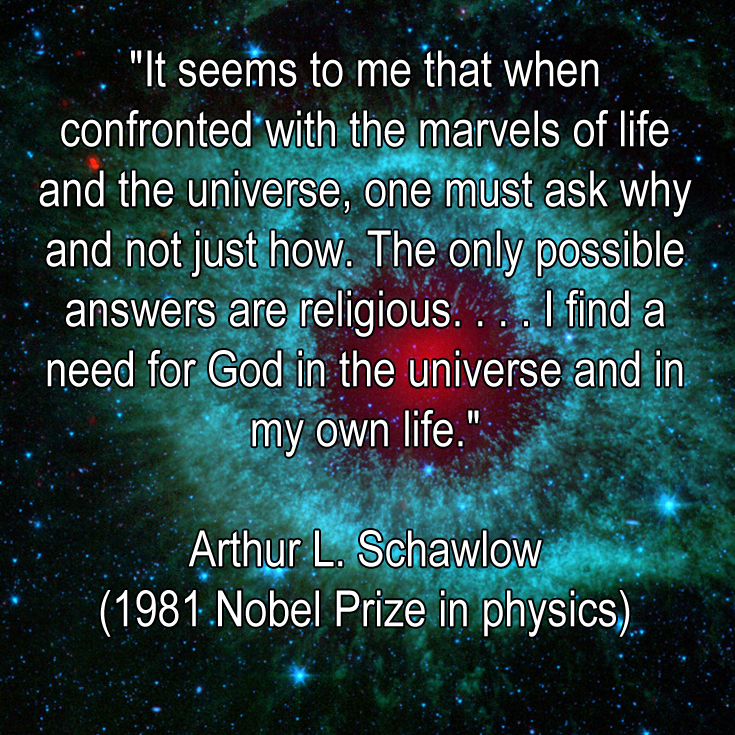
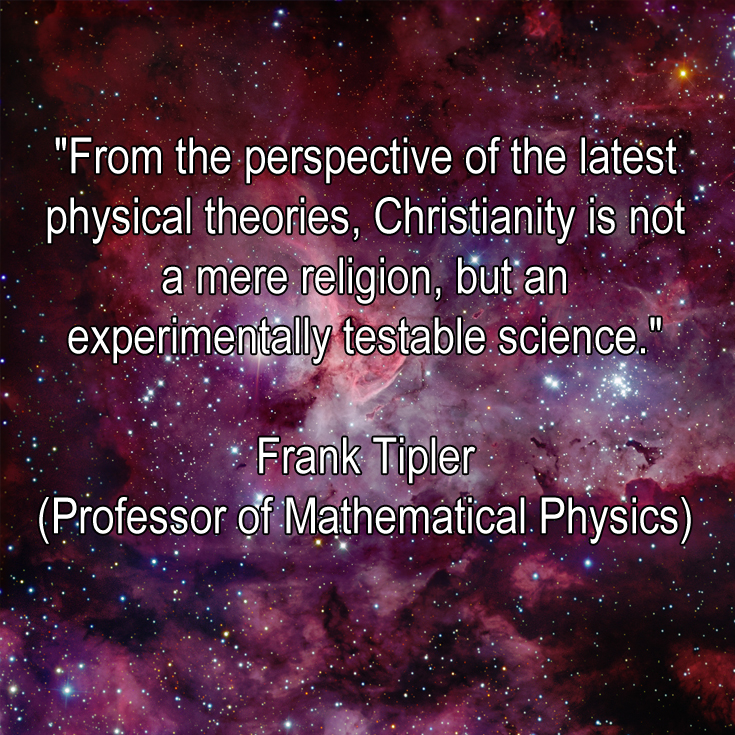
There aren’t just one or two verses that simply state “God is ordered and logical.” Rather, the entire Bible and the whole of creation is a testament to the way His mind works. We can read Genesis 1 and see the orderly step-by-step way He created the world, then look at creation and see His master-craftsman hand at work in every aspect of the universe’s design. Scientists have been doing this for years, and many come to the conclusion that God is the only explanation for how the universe is so perfectly put together.

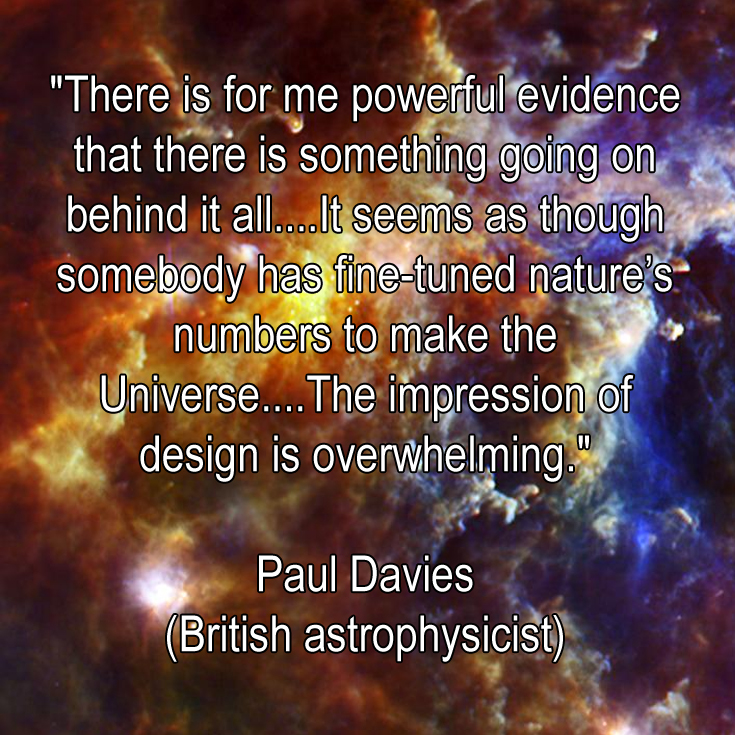
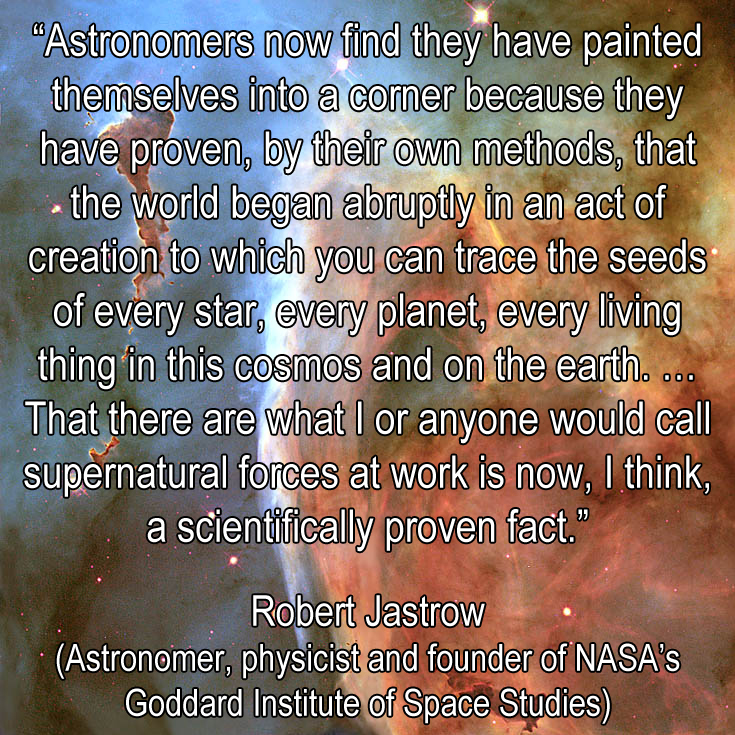
“The more I study science, the more I believe in God.” –Albert Einstein

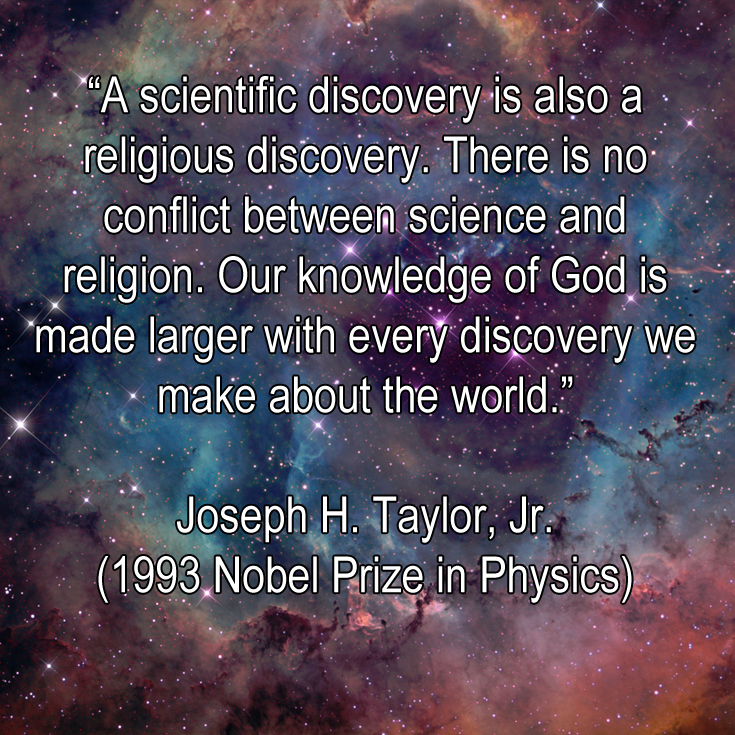
“There can never be any real opposition between religion and science; for the one is the complement of the other. Every serious and reflective person realizes, I think, that the religious element in his nature must be recognized and cultivated if all the powers of the human soul are to act together in perfect balance and harmony. And indeed it was not by accident that the greatest thinkers of all ages were deeply religious souls.” –Max Planck

“When confronted with the order and beauty of the universe and the strange coincidences of nature, it’s very tempting to take the leap of faith from science into religion. I am sure many physicists want to. I only wish they would admit it.” –Tony Rothman
The God of Logic | marissabaker.wordpress.com
image credit: nasa.gov “The Carina Nebula”

These quotes were taken from two articles: Quotes from Scientists Regarding Design of the Universe  and Quotes about God to consider…if you think science leads to atheism (please see these sites for full citations and more quotes).

There are a couple verses in 1 Corinthians that speak to the orderly, logical attributes of God. Paul was discussing who should speak and how meetings should be conducted in the church, and makes these statements:

God is not the author of confusion but of peace, as in all the churches of the saints. … Let all things be done decently and in order. (1 Cor. 14:33, 40)

God does not author confusion — He wants things to progress in a decent, orderly fashion. Even mildly logical, perfectionistic, or OCD people can identify with this attribute of God.

The Word of Intelligence

In the beginning was the Word, and the Word was with God, and the Word was God. He was in the beginning with God. All things were made through Him, and without Him nothing was made that was made. … And the Word became flesh and dwelt among us (John 1:1-3, 14)

In these very familiar verses, the Greek word translated “Word” is logos (G3056). It is the root word for logikos, which we’re already talked about. It means “to speak,” but it is distinct from other words that specifically refer to sound or noise (lalia, G2981) or to speaking without necessarily making sense (laleo, G2980). Logos means to express intelligence.

Logos, when it refers to discourse, is regarded as the orderly linking and knitting together in connected arrangement of words of the inward thoughts and feelings of the mind. … In the first chapter of John, Jesus Christ in His preincarnate state is called ho Logos, the Word, meaning first immaterial intelligence and then the expression of that intelligence in speech that humans could understand. (Zodhiates)

One of the most well-known names of Jesus carries with it a testament to God’s reason, intellect, and logic. It is a key role of Jesus Christ to express intelligence — to communicate the thoughts of God in a way that people can understand.
The God of Logic | marissabaker.wordpress.com
image credit: nasa.gov “Dust and the Helix Nebula”

Sometimes when people come across something in relation to God that “doesn’t make sense,” they assume that there’s something wrong with the Bible. But that’s just another way of saying that we think our minds work better than the Mind of the One who designed us. It’s really rather absurd to think there’s something wrong with God because we don’t understand Him perfectly. But it’s far more unsettling for some of us to admit that the problem might be on our side.

In John 8:43, Christ was debating with some of the Jews who were following Him. They were offended and confused by some of His words, and this is what He said to them:

Why do you not understand My speech? Because you are not able to listen to My word. (John 8:43)

The word “speech” is translated from lalia — to make sounds — and “word” is from logos. Because they couldn’t grasp Christ’s intelligence speech, it was as if He was speaking nonsense (I’m indebted to Zodhiates’ Key-Word study Bible for analyzing this verse).

“For My thoughts are not your thoughts, nor are your ways My ways,” says the Lord. “For as the heavens are higher than the earth, so are My ways higher than your ways, and My thoughts than your thoughts.” (Is. 55:8-9)

Rather than assume there’s something lacking in God when we can’t understand Him and then reacting with hostility or disgust (by the end of John 8 the Jews were trying to stone Jesus), we can ask God for help in understanding. Let’s follow James’ advice:

If any of you lacks wisdom, let him ask of God, who gives to all liberally and without reproach, and it will be given to him. (James 1:5)

The Issue of Feelings

C.S. Lewis is the perfect person to bring in on this discussion. He was a very logical, rational Christian (probably an INTJ, for those of you who like Myers-Briggs). I like this description of him from The New York Times Book Reviw: “C.S. Lewis is the ideal persuader of the half-convinced, for the good man who would like to be a Christian but finds his intellect getting in the way.”
The God of Logic | marissabaker.wordpress.com
image credit: nasa.gov “The Great Carina Nebula”

Now, the thing about Lewis is that for him, getting your intellect out of the way certainly doesn’t mean abandoning reason and just “trust your feelings” or “have faith.” On the contrary, Lewis says that our faith absolutely must have a rational basis.

Now Faith, in the sense in which I am here using the word, is the art of holding on to things your reason has once accepted, in spite of your changing moods. For moods will change, whatever view your reason takes. I know that by experience. Now that I am a Christian I do have moods in which the whole thing looks very improbable: but when I was an atheist I had moods in which Christianity looked terribly probable. This rebellion of your moods against your real self is going to come anyway. That is why Faith is such a necessary virtue: unless you teach your moods “where they get off,” you can never be either a sound Christian or even a sound atheist, but just a creature dithering to and fro, with its beliefs really dependent on the weather and the state of its digestion. (Mere Christianity; III, 11)

That’s why it’s dangerous to try and base your faith on emotions alone. Feelings for God are all well and good, but feelings can change — we might “fall out of love” or fall into a season of doubt. But we can’t afford to give up on God when we don’t feel close to Him anymore. We have to keep choosing to seek Him because we have decided He is the only way to go.

Lewis went on to say in this chapter of Mere Christianity that we need to “train the habit of faith” daily by reminding ourselves of what we believe. He says, “Neither this belief no any other will automatically remain alive in the mind. It must be fed.” And if it’s not, we’ll be one of those people who just drift away from Christianity without even coming up with a reasonable argument for God not existing.

A Logical Sacrifice

The Bible tells us to “Pray without ceasing” and “test all things; hold fast what is good” (1 Thes. 5:17, 20). It’s a succinct instruction from God to do precisely what Lewis was talking about. God wants us to constantly be seeking, questioning, learning, and asking Him to help us understand His words.

This is another reason to stay close to the Source of the Living Water that we talked about in last week’s post. We need Jesus Christ, through the Holy Spirit, involved in our lives. He is the Logos, and He is well able to shore-up our faith with reason and wisdom and good-sense.

But the Helper, the Holy Spirit, which the Father will send in My name, that one will teach you all things, and bring to your remembrance all things that I said to you. (John 14:26)

And then, having this foundation of knowing God exists, that He is more intelligent than we are , and that He sacrificed Himself for us, we can go back to Romans 12:1 and understand why it is logical for us to present ourselves in service to God. He created us, and “in Him we live and move and have our being” (Acts 17:28). He died to buy us back from sin, and we belong to Him not only as His creation, but as His to redeem (1 Cor. 6:20).
The God of Logic | marissabaker.wordpress.com
image credit: nasa.gov “The Rosette Nebula”

Since I just quoted Acts 17, let’s take a quick look at the apostle Paul. He was probably the most highly educated of the apostles, since he was trained as a Pharisee (Phil. 3:5). It took direct divine intervention to show Paul that Jesus is the Christ (Acts 9:1-19), but once he was convinced of this fact he turned all the energy and emotion he’d been using to persecute the church into preaching the gospel. And he did so in a manner both firmly grounded in reason and full of zeal. He preached to groups of people from every walk of life, including presenting a reasonable argument to the Athenians and quoting their own poets and thinkers (Acts 17:16-34). He wrote most of the New Testament, epistles full of deep inspired reasoning that even Peter described as “things hard to understand, which untaught and unstable people twist to their own destruction, as they do also the rest of the Scriptures” (2 Pet. 3:15-16). Paul wrote the letter which tells us it is our “reasonable service” to devote every part of ourselves to following God, which is exactly what he did.

We are all made in God’s image, but no one person or type of person is “enough” to fully reflect all of who and what God is. I’ve seen this talked about in discussions of gender — man and women embody different attributes of God. Similarly, 1 Corinthians 12 describes different spiritual gifts, and different types of people that are all necessary parts of the church. If everyone was the same, the church would be lacking essential attributes.

 But now God has set the members, each one of them, in the body just as He pleased. And if they were all one member, where would the body be? But now indeed there are many members, yet one body. (1 Cor. 12:18-19)

The same, I think, can be said of personality types. Aspects of God are reflected in introverts and in extroverts, in people-oriented feeling types and in fact-oriented thinking types. And God Himself is accessible to everyone — He wants a relationship with the logical, questioning mind just as much as He wants a relationship with the more stereotypically “spiritual,” emotional people.

To learn more about how different personality types relate to faith, click here to read a series of posts on Intuitive-types and Christianity and contribute to the ongoing conversation.

The Easiest No-Knead Bread

Easy No-Knead Bread | marissabaker.wordpress.comMy new favorite bread recipe comes from alexandracooks.com. Be sure to click over there and visit her recipe, since she has lots of tips for making this turn out just-right, as well as several variations that I haven’t tried working with yet. What I’m posting today focuses on making one peasant loaf and one faux focaccia loaf.

This bread is incredible easy to make, but you do have to plan ahead. I need about three hours between the time you start the bread to the time when you can eat it.

Announcement: I’m planning some changes to this blog to focus on providing more useful resources for my readers. My posts on type psychology have been the ones people consistently comment on as being the most helpful, so I want to focus on that while continuing to write my Christian articles and introducing homeschooling resources for teaching high-school English. With all these changes, I’m most likely going to be phasing-out these weekly recipe posts or moving them to a different blogging platform (unless you all REALLY want me to keep them, in which case they’ll probably be less frequent).

Easy No-Knead Bread

2 cups lukewarm water (110–120° F)

1 tablespoon sugar

2 teaspoons active-dry yeast

4 cups flour (3 cups all-purpose, 1 cup whole wheat)

2 teaspoons salt

room temperature butter, about 1 tablespoon

1 Tablespoon olive oil

1/8 teaspoon Italian seasoning

1/4 teaspoon parsley

1 clove garlic, diced

coarse sea salt

Dissolve the sugar into the water in a small mixing bowl or glass measuring cup. Sprinkle the yeast over top, then let it stand for about 10 to 15 minutes until the mixture is foamy.

Meanwhile, in a large bowl, whisk together the flour and salt. Once the yeast mixture is foamy, stir it up. Mix the yeast mixture into the flour until it forms a soft dough.

Easy No-Knead Bread | marissabaker.wordpress.com
before rising

Cover the bowl with a tea towel run under hot water and rung out so it is slightly damp. Set it aside in a warm spot to rise for about one-and-a-half hours.

Easy No-Knead Bread | marissabaker.wordpress.com
after rising

Grease one oven-safe bowl or a medium casserole dish and one 9-inch by 9-inch baking dish. Use 1/2 tablespoon of butter for each. Using two forks, punch down the dough and scrape it from the sides of the bowl, turning the dough over on itself. Using the two forks, pull the dough apart into the equal portions and then scoop one into each baking dish.

Easy No-Knead Bread | marissabaker.wordpress.com
dividing the dough

The peasant loaf, the one in the bowl or casserole dish, is now done. For the faux focaccia, mix 1 Tablespoon olive oil, 1/8 teaspoon Italian seasoning, 1/4 teaspoon parsley, and 1 clove diced garlic. Spread the dough out with your fingers to fit the shape of the pan, then dip your fingers in the olive oil mixture and press the top of the dough to make dimples in the surface. Spread the remainder of the olive oil mixture on top of the bread, and then sprinkle the top with coarse sea salt.

Easy No-Knead Bread | marissabaker.wordpress.com
right before the second rising

Preheat the oven to 425ºF. Let the dough rise for about 20 to 30 minutes, then bake for 12 minutes. Reduce the heat to 375ºF and bake for another 10 to 15 minutes. Remove from the oven and turn the loaves onto cooling racks.

Easy No-Knead Bread | marissabaker.wordpress.com
cooling

Brush the top of the peasant loaf with butter. Let the loaves cool for about 10 minutes before cutting.

Easy No-Knead Bread | marissabaker.wordpress.com
aren’t they lovely?


Robin Hood Meeteth the Lord of Time

I knew I would love the latest Doctor Who episode, “The Robots of Sherwood.” I’ve been curious about it since the first set photo of Clara in a Medieval dress was released, and giddy with anticipation when the title let me know it had something to do with Robin Hood. I can’t remember not being fascinated by Robin Hood. The first time I met him was in the animated Disney film, which my Mom says we brought home from the library so often that the librarians teased her, “Aren’t you ever going to buy that movie?” I vaguely recall finding a copy of Howard Pyle’s “The Merry Adventures of Robin Hood” in a little back corner of the library, then buying my own copy and wearing it out (quite literally — the cover fell off).

“There’s no such thing as Robin Hood”

“The Robots of Sherwood” begins with Clara making a request I can easily identify with: take me to meet Robin Hood. The Doctor obliges by setting course for 1190-ish, though he maintains that Robin Hood is merely a legend even after the TARDIS is shot by the famous bowman. The episode progresses in a lighthearted story that covers classic elements of both Doctor Who and Robbin Hood, and culminates with a conversation between the Doctor and Robin about how history lost sight of Robin the man and turned him into stories, much like the stories Clara tells Robin about the Doctor.

Doctor: “I’m not a hero.”

Robin: “Neither am I. But if we both keep pretending to be, perhaps others will be heroes in our name. Perhaps, we will both be stories.”

Are They Heroes?

As a child-fan of Robin Hood, I saw him as an heroic figure — the good in a good-verses-evil conflict. But even the versions of the legends specifically written for children have a complicated definition of morality. Robin Hood steals and kills people (typically in defending himself or others) to fight against a government which commits worse crimes. But does he really have the right to take justice into his own hands when his country’s law dictates that justice belongs to appointed authority figures and his God says, “Vengeance is mine, I will repay”? (Robin is presented as Catholic in most legends.) I want to root for him and justify his every action, but I can’t always do that.

Errol Flynn (who the Doctor has apparently fenced with) as Robin Hood

It’s much the same with the Doctor. He flies around the universe saving people, but there’s often a lot of things that go wrong. As a show, Doctor Who has a surprisingly high casualty rate. In the tenth episode of “new-Who,” the 9th Doctor joyfully shouts, “Everybody lives, Rose! Just this once — everybody lives!” And as far as I can remember, it really was “just this once” that everyone makes it to the end credits alive. And the Doctor has a thoroughly dark side which complicates defining him as a hero (if you need convincing, here’s an article discussing the Doctor’s 13 Darkest Moments).

So, are they heroes? Depends on your definition.

A hero is someone who has given his or her life to something bigger than oneself. — Joseph Campbell

A hero is an ordinary individual who finds the strength to persevere and endure in spite of overwhelming obstacles. — Christopher Reeve

A hero is no braver than an ordinary man, but he is braver five minutes longer. — Ralph Waldo Emerson

These sound like rather good descriptions of the Doctor and Robin Hood. I couldn’t find the quote (even with Google’s help!), but I read once that heroes are simply people who’ve been observed doing what good men do as a matter of course. There’s some question of whether or not the Doctor qualifies as a “good man,” but he has been seen doing good and heroic things. As for Robin, all but the earliest legends present him as someone who does more good than harm. Even if they’re not “heroes,” they want to be.

The “Real” Robin Hood

Robin Hood by Louis Rhead

Speaking of the earliest legends, I’m going to digress for a moment and talk about my one peeve with how this episode portrays Robin Hood. I’ve done no little research into the history of the Robin Hood legends, and know that the earliest tales set him during the reign of Edward III (1327-1377), not during the time of King Richard and Prince John. The earliest version of his character that we can track down presents him as a “famous cutthroat” and “forest outlaw” who was both intriguingly mysterious and alarmingly unknowable (Stephen Knight; Robin Hood: A Mythic Biography).

Now, for Doctor Who’s version we could say that the Robin legends took on a sinister aspect in the 100-some years following Clara and the Doctor’s meeting with the “real” Robin, before shifting back to something closer to “reality” in the 1590s, when stories of Robin Hood as a displaced earl begin showing up. But it would have been much more in keeping with the records we have of Robin Hood legends, to present Robin Hood in Doctor Who as a clever, outlawed yeoman. Someone could have at least done enough research to know that the legend of Robin Hood splitting his opponent’s arrows at an archery tournament didn’t show up at all until the 1820 publication of Sir Walter Scott’s Ivanhoe (though it did make for a humorous scene with the Doctor).

Perhaps Mark Gatiss, who wrote this episode, agrees with his version of Robin Hood that,  “History is a burden; stories can make us fly.” And I’m inclined to cut him some slack, in terms of how “authentic” Robin Hood has to be for Doctor Who. Most viewers just want to see the typical aspects of Robin Hood — the fight on a bridge between Robin Hood and a stranger, the archery competition for a golden arrow, the battle between Robin and the Sheriff of Nottingham — with the familiar Earl of Locksley back-story. At this point, trying to bring Robin back to something the Doctor and Clara might actually have discovered in history would have been more confusing than anything else. Gatiss made up for ignoring the oldest Robin Hood source material by including references to multiple version of Robin Hood in film, an almost-quote from Shakespeare, and several nods to both classic and new-Who. All-in-all, it was a thoroughly enjoyable, though fairly typical, episode of Doctor Who.

Rooted In The Lord

After finishing last week’s Bible study, I opened my Bible at random and found myself in Jeremiah 17. Usually when I’m in this section of scripture it’s to quote verse 5 — “Cursed is the man who trusts in man” — or verses 9 and 10 — “The heart is deceitful above all things, and desperately wicked.” But this time a different verse caught my eye.

Nestled in between these warnings against trusting in ourselves or other people is a lovely picture of what it looks like to trust in God.

Blessed is the man who trusts in the Lord, and whose hope is the Lord. For he shall be like a tree planted by the waters, which spreads out its roots by the river, and will not fear when heat comes; but its leaf will be green, and will not be anxious in the year of drought, nor will cease from yielding fruit. (Jer. 17:7-8)

This word translated “blessed” is baruch, the same word I wrote about in connection with the phrase “Baruch Hashem” — “bless the name [of the Lord].” In this context, it means to receive a blessing from God. The nature of this blessing is explained in verse 8, but first there are two prerequisites.

Trust and Hope

The verses we’re talking about start out by saying, “Blessed is the man who trusts in the Lord.” The Psalms also have quite a lot to say about this idea —  both the necessity of trusting in God and the fact that He doesn’t disappoint those who do trust in Him.

Those who trust in the Lord are like Mount Zion, which cannot be moved, but abides forever. As the mountains surround Jerusalem, so the Lord surrounds His people from this time forth and forever. (Ps. 125:1-2)

This verse uses the example of Jerusalem to show how God protects His people. But Jerusalem has been a war-zone off-and-on for hundreds of years — what sort of protection is this?

God does not promise to shield us from every harm. We are in a battle, and “we do not wrestle against flesh and blood, but against principalities, against powers, against the rulers of the darkness of this age, against spiritual hosts of wickedness in the heavenly places.” Trusting in God doesn’t mean we won’t have to battle. It means we have a hope of winning the battle using His strength and His armor (Eph. 6:10-18).

Speaking of hope, the next part of the verse in Jeremiah reads, “and whose hope is the Lord” (Jer. 17:7). Hope is an integral part of being a Christian. It’s listed with faith and love in 1 Corinthians 13:13. It’s connected with Christ’s indweling presence in Colossians 1:27. Hebrews 6:18-19 calls our hope “an anchor of the soul, both sure and steadfast.”

For we were saved in this hope, but hope that is seen is not hope; for why does one still hope for what he sees? But if we hope for what we do not see, we eagerly wait for it with perseverance. (Rom. 8:24-25)

Hope’s even a part of our salvation process, described here in Romans much the same way faith is described in Hebrews 11:1. “Hope” in the Greek is elpis, (G1680), and it means “desire of some good will with expectation of attaining it.” That definition brings us right back to the idea of trust. We trust in God because we believe and have hope that He will be with us, and our sure expectation of that hope increases our trust.

Planted by the Water

Even before getting to a more thorough description of this person who is blessed by God, the words “trust” and “hope” are already giving us an idea of someone being firmly attached to God. They imply a focus on God, and an act of clinging fast to Him. Fittingly, the next phrase is, “he shall be like a tree planted by the waters.”

First, note that this person is “planted,” not growing there naturally or by chance. All of us who hope and trust in God have been personally selected by Him and purposefully “planted” into His family beside “the waters.” This isn’t physical water we’re talking about, any more than it’s a literal tree. This is what Jesus described as “living water” (John 4:10).

Jesus answered and said to her, “Whoever drinks of this water will thirst again, but whoever drinks of the water that I shall give him will never thirst. But the water that I shall give him will become in him a fountain of water springing up into everlasting life.” (John 4:13-14)

God is the source of the living, life-giving water that we need to flourish where He has planted us. If we forsake “the fountain of living waters,” we end up in a state opposite that of blessedness (Jer. 2:13). But if we stay close to Him, we will grow and thrive.

For I will pour water on him who is thirsty, and floods on the dry ground; I will pour My Spirit on your descendants, and My blessing on your offspring; they will spring up among the grass like willows by the watercourses. (Is. 44:3-4)

Willow trees have strong, fast-growing root systems that love water. When planted by a water source, the roots grow so quickly and densely that they actually help hold the banks of a stream or pond in place. That’s how firmly we must be attached to the source of Living Water. That’s also the next thing mentioned in Jeremiah, as the blessed person is compared to a tree that “spreads out its roots by the river” (Jer. 17:8).

As you therefore have received Christ Jesus the Lord, so walk in Him,  rooted and built up in Him and established in the faith, as you have been taught, abounding in it with thanksgiving. (Col. 2:6-7)

When Heat Comes

This tree, firmly rooted by the Living Water, is next described as having no “fear when heat comes, but its leaf will be green.” When I think of “heat” in the Bible, my mind usually goes to the idea of fiery trials. We’re going through a refining process that involves heating us up and seeing how we react so bad things can be purged away and we can become pure.

Now if anyone builds on this foundation with gold, silver, precious stones, wood, hay, straw, each one’s work will become clear; for the Day will declare it, because it will be revealed by fire; and the fire will test each one’s work, of what sort it is. (1 Cor. 3:12-13)

Walking through metaphorical fire is an inescapable aspect of being Christian (1 Pet. 4:12-13). If we’re firmly founded — or rooted — on Jesus Christ, though, passing through fire is not disastrous for us. In fact, it can draw us closer to Him and refine us to be more like He is. He doesn’t just abandon us “when heat comes.” He says, “Fear not, for I have redeemed you … when you walk through the fire, you shall not be burned, nor shall the flame scorch you” (Is. 43:1, 2). Like the bush God spoke to Moses in, we can be in the midst of fire and still be green and flourishing because the Lord is in us (Ex. 3:2).

Yielding Fruit

The phrase “will not be anxious in the year of drought” had me a bit puzzled (Jer. 17:8). Drought means a lack of water, which in this analogy we’ve been describing as the Holy Spirit poured out through Jesus Christ. So, does the mention of “drought” mean that something is going to happen that makes God’s Spirit generally unavailable, but will not affect those who are already firmly rooted in God?

“Behold, the days are coming,” says the Lord God, “That I will send a famine on the land, not a famine of bread, nor a thirst for water, but of hearing the words of the Lord. They shall wander from sea to sea, and from north to east; they shall run to and fro, seeking the word of the Lord, but shall not find it. “In that day the fair virgins and strong young men shall faint from thirst.” (Amos 8:11-13)

This is the first scripture that finally came to mind for this idea of drought. In the United States, we’re used to living in a country where we can pick up a Bible in most stores, search translations and commentary online, and find a plethora of Christian churches to visit. But that hasn’t been the norm for most of history, or most of the world, and it might not stay that way here. And even if the words are available, they won’t make any sense unless God gives His Spirit of understanding. That’s why we need to seize every chance we have to draw closer to God, and be tapped into the source of Living Water.

The Lord will guide you continually, and satisfy your soul in drought, and strengthen your bones; you shall be like a watered garden, and like a spring of water, whose waters do not fail. (Is. 58:11)

And when this happens, we can not only be unworried by drought, but also not “cease from yielding fruit” (Jer. 17:7-8). Being fruitful is the subject of the opening verses in John 15. Here, Jesus describes Himself as “the true vine,” and tells us the only way to bear fruit is to be connected to Him.

I am the true vine, and My Father is the vinedresser. Every branch in Me that does not bear fruit He takes away; and every branch that bears fruit He prunes, that it may bear more fruit …

Abide in Me, and I in you. As the branch cannot bear fruit of itself, unless it abides in the vine, neither can you, unless you abide in Me. “I am the vine, you are the branches. He who abides in Me, and I in him, bears much fruit; for without Me you can do nothing. …

By this My Father is glorified, that you bear much fruit; so you will be My disciples. (John 15:1-2, 4-5, 7)

If we’re securely attached to Christ, our lives will yield fruit that reflects that relationship. We’ll be demonstrating the fruits of the Spirit (Gal. 5:22-23), and walking “in all goodness, righteousness, and truth” (Eph. 5:9). And then not only will we be blessed, but we’ll be a blessing to others. Not only will we have access to living water, but rivers of God’s Spirit will flow out from us as well (John 7:37-38). Blessings from God affect us wondrously, but they don’t stop with us — they’re designed to overflow us and spill out to bless others, and show that we are indeed Christ’s disciples.


Snickerdoodle Blondies

Snickerdoodle Blondies | marissabaker.wordpress.comI tried a couple recipes for snickerdoodle bars or blondies before finding this one from Six Sisters Stuff. It’s so good! I still prefer the actual snickerdoodle cookies, but this is a very tasty bar form that takes much less time to make since the dough doesn’t need chilled and you bake the whole thing at once.

Snickerdoodle Blondies

Snickerdoodle Blondies | marissabaker.wordpress.com1 cup butter, room temperature

2 cups packed brown sugar

2 eggs

1 Tablespoon vanilla

2 2/3 cups flour

2 tsp baking powder

Topping

2 Tablespoon white sugar

2 teaspoon ground cinnamon

Combine the butter, brown sugar, eggs, and vanilla in a large bowl by hand or with an electric mixer. Stir in dry ingredients.

Snickerdoodle Blondies | marissabaker.wordpress.comSpread batter in a greased 13×9-inch baking pan. In a small bowl, mix the cinnamon topping ingredients, then sprinkle over the top of the batter.

Bake at 350°F for 25-30 minutes or until top springs back when pressed.

Snickerdoodle Blondies | marissabaker.wordpress.com

The Missing Disney Princesses

UPDATE 12/19/2016: Hello, all. I’ve heard your comments, re-watched films, and re-typed some princesses (and added Moana!). Click here to check out my brand-new updated Disney Princesses MBTI Chart.

You may have seen those images with a Myers-Briggs chart that matches up an MBTI type for each character in a series or film. I did one for Lord of the Rings, the Star Wars one was quite popular for a while, and I’ve seen others for Hunger Games and Downton Abbey, to name just a few. Another you might have seen features Disney princesses.

The problem with these types of charts is it assumes there’s an example of each of the 16 types available. Unfortunately, they’re not always so evenly represented (I had this problem trying to type people in Lord of the Rings — there’s an unusually high number of introverts). Since there’s only 13 “official” Disney princess (if you count Elsa and Anna, who haven’t been officially crowned yet), that makes it rather difficult to come up with 16 types. On top of that, there also seems to be certain personality types which make “better” princesses than others, so there is some overlap. All together, the 13 official princesses represent 11 different personality types:

An MBTI chart for Disney's official princesses. I’ll give descriptions of each type in a moment, along with a bit on why I think they fit each princess. But first, 13 princesses really isn’t that many — they couldn’t have filled out the chart even if there wasn’t any overlap. So let’s add a few of the “unofficial” princesses: Jane, Kida, Giselle, Megara, Nala, and Esmerelda. We’ve now added six more characters, but only filled in two more MBTI types.

An MBTI chart for Disney's official and unofficial princesses.

The “missing” princesses can be explained by the fact that the NF and NT types are less common in real life. The lack of ESTJs (with the possible exceptions of Jane and Kida) is explainable by Isabel Myer’s observation that it is “the most traditionally ‘masculine’ type.” But one of the reasons Disney has been pressured to introduce more racially diverse Princesses is that little girls should be able to see people like them represented in the stories they enjoy. But what about the little INTJ and INTP girls, who see very few positive portrayals of their personality type, especially as female characters? (I asked my INTJ sister if she could think of any female characters who she identifies with as a similar personality and the only one she could come up with was  Dr. Temperance Brennan from Bones.)

Looking back at the chart of just the 13 official princesses, most of the missing personality types are thinkers: ESTJ, ENTJ, INTJ, and INTP. You could say that’s because most women are feeling types, but that’s a bit like saying most books are paperback instead of hardcover. There are more feeling-type women, but there are certainly plenty of thinking-type women as well. The only official Disney princesses who are thinking types right now are Jasmine, Mulan, Merida, and Tiana. The next Disney movie will feature their first Polynesian princess, Moana, and I think I would be awesome if she was also their first “official” princess who was an ESTJ, ENTJ, INTJ, or INTP. Or an ENFJ, since they’ve been left out, too.

Type Explanations for The Princesses

Disclaimer: typing fictional characters is a great way to stir-up disagreements, and it’s very rare that people agree on a typing. The types I’ve gone with for each character reflect my personal feelings, supported by reading other people’s thoughts on websites like personalitycafe.com and this excellent blog post. Please feel free to disagree, and let me know in the comments how you’d type these princesses 🙂

SJ types

The personality group that David Keirsey refereed to as “Guardians” is the best represented in this grouping of Disney characters. It’s really not surprising — they make good heroes and about 40 to 45 percent of the population falls into this group. SJ types are hardworking people who enjoy helping others and want to “do their duty.”

ESTJs are take-charge people who are practical, well-grounded, loyal and organized. They enjoy new experiences that appeal to their senses, such as meeting new people and traveling to a new place. They often ignore their intuition and base most of their decision on past experience. None of the official princesses fit this type, but Jane Porter from Tarzan and Kida from Atlantis might be ESTJs (honestly, I’m not sure, but I’m not sure where else to put them either).

The ISTJ is a very responsible type, and they are extremely hardworking. They value decisiveness and logic, with little time for make-believe or patience with other people’s oversights. Practical and fact-oriented, they are honest and dependable. Tiana from The Princess and the Frog is an ISTJ.

ESFJs are warm, friendly, and people-oriented. They value loyalty, friendship, and harmony. They are typically practical people with well-defined ideas that they aren’t afraid to share. Anna from Frozen is a very good example of this type, particularly in showing the strongly social side of ESFJs and their tendency to trust people quickly. Snow White is another example, and we could also add the “unofficial” princess Giselle, since she was patterned after Snow White’s personality.

ISFJs are as hardworking as ISTJs, but more interested in people than than in facts. They are very considerate, loyal, and will put up with quite a bit of abuse before provoking a conflict. ISFJs aren’t likely to express their inner ideas and feelings except with close friends. Cinderella is a good example of this type.

SP types

Keirsey called the SP types “Artisans,” because they work well with solid objects — whether it’s a weapon or a paintbrush. This group of personality types focuses on the now, and tends to be both fun-loving and realistic. 30 to 35 percent of the population fits in this group.

ESTPs like to take action — they don’t enjoy sitting around and waiting for something to happen. They are realistic, adaptable, and enjoy physical activities. In the case of Merida from Brave, this includes horseback riding and archery. They hate feeling confined, and are impatient with theories or ideas that they can’t see practical application for.

ISTP types are good with tasks that involve some kind of physical skill, and they like to take the time to think before acting so they can complete tasks in them most efficient way. They might seem aloof from other people, but do care about equality and fairness for groups and individuals. Mulan is an example of this type, and so is the “unofficial” princess Megara from Hercules.

ESFPs are friendly and focused on other people. They like observing as well as interacting with others, and have a powerful sense of curiosity. Material possessions interest them, and they often have some kind of a collection that they find ascetically pleasing. They hate structure and confinement as much as ESTPs. Ariel from The Little Mermaid is an excellent example of this type.

The ISFP type likes to work with people and meet their needs, but is generally quiet and reserved. Isabel Myer says they often “have a special love of nature and a sympathy for animals.” Like other SP types, they work well with their hands and are in tune with external sensory details (including things like music). Aurora from Sleeping Beauty is hard to type since she has so little screen-time, but she seems like an ISFP to me.

NF types

Types who rely on Intuition are more rare than Sensing types. The NF types who Keirsey called “Idealists” make up only 15 to 20 percent of the population. They are romantic, intuitive, spiritual, and seek good. Though their rarity in Disney is reflected by rarity in reality, it’s really surprising that this type isn’t more prevalent in fairy tale stories, especially since most NF types (though certainly not all) are women.

ENFJs are very social and have excellent people stills. They have a gift for expressing themselves and can influence other people (usually they have a very strong aversion to hurting others, but they have the potential to be manipulative). Typically honest and imaginative, they may hide their opinions in order to avoid disagreements and maintain harmony. None of the Disney princesses are ENFJs.

We finally got an INFJ Disney princess when Frozen was released last year (and I’ve already written about Elsa as an INFJ). This is the rarest personality type. INFJs are focused on their inner worlds of possibility and rely heavily on their intuition. They care deeply about other people, and avoid conflict as much as possible even if it means hiding their true self.

ENFPs are creative, imaginative, and artistic. They are easily excited by new ideas, but only follow through on pursuing the most important goals. Possibility excites them, and they love interacting with people and sharing their dreams and ideas. Rapunzel, sometimes typed as an ENFJ, is more typical of the ENFP type.

INFPs value internal harmony and have deep feelings that are rarely expressed to other people. They often seem like outsiders in their society and are more concerned with their inner moral code than with external expectations. Even so, they interact well with other people and are very loyal. Belle from Beauty and the Beast and Pocahontas are both examples of this type.

NT types

“Rationals,” as Keirsey described the NT types, are the rarest group — only 5 to 10 percent of the population. They are skeptical, analytical, and independent. Their rarity helps explain why there aren’t more Disney princesses in this category, along with the fact that most (though certainly not all) NT types are men.

ENTJs are problem-solvers who like to lead. They are curious about new possibilities, and enjoy theoretical problem solving as well as coming up with practical solutions for current problems. They are very forceful and decisive. None of the human princesses fit this type. Nala from The Lion King acts very much like an ENTJ, though, especially as an adult who leaves her pride to go off and find a solution to the problem of Scar.

The INTJ personality type is almost as rare as INFJs, and female INTJs are the rarest gender-type combination. They are often cast as villains in fiction, which is a shame because they make such wonderful scientists and detectives (like Basil of Bakerstreet from The Great Mouse Detective, to use Disney as an example [Update: after re-watching this film, I now type Basil as an INTP. Click here to read why]). INTJs are innovative, clever, and very organized. If something isn’t logically challenging, it rarely holds their interest.

ENTPs tend to be independent and a bit impersonal. They are more concerned with their projects and plans than with how those plans will affect other people. They don’t like routine, preferring new experiences that challenge their quick minds. ENTPs are versatile, clever, and enthusiastic about understanding their worlds. Jasmine and the “unofficial” princess Esmeralda are examples of this type.

INTPs are described by Isabel Myer as “the most intellectually profound of all the types.” They are curious, logical, easily bored, and focus on creating theory regardless of whether or not it has practical application. They often have trouble relating to people because they see little value in feelings and find it hard to explain their ideas in a way that makes sense non-experts. None of the Disney princesses fit this type.

Click to learn more about my upcoming INFJ e-book and contribute your story. Everyone whose stories are used in the book will receive a free copy once it is finished.

Save

Save