Muffins!

Cinnamon-sugar topping makes these apple muffins irresistible

I love breads and pastries. Usually I’m able to resist the allure of the baking section when I’m in a store, but when the last two apples in a bag start to get too soft to want to eat as a snack, there really is no other option than to convert them into muffins.

This recipe is from Better Homes and Gardens Homemade Bread Cook Book (1973). It can easily be altered for other fruits. For instance, you can use blueberries instead of apples, add 1/2 teaspoon lemon juice, and leave off the topping to have a lovely blueberry muffin recipe.

Apple Muffins

Print This Recipe

1 cup white, unbleached flour

¾ cups whole wheat flour

¼ cup sugar

2½ teaspoons baking powder

¾ teaspoon salt

½ teaspoon cinnamon

1 well-beaten egg

¾ cup milk

1/3 cup cooking oil

1 cup peeled and chopped apple

topping

2 tablespoons sugar

½ teaspoon cinnamon

Stir thoroughly the dry (first six) ingredients; make well in center.

apple muffins
muffins cooling

Blend egg, milk, oil, and apples in a small bowl. Add all at once to dry mixture. Stir until just moistened.

Line muffin pans with baking papers and fill ¾ full. Sprinkle with topping.

Bake at 400°F for 12-18 minutes, or until toothpick inserted near center comes out clean.

Print This Recipe

Anxious For Nothing

There is something that I find comforting about realizing how well God knows us.

O LORD, Thou hast searched me, and known me. Thou knowest my downsitting and mine uprising, Thou understandest my thought afar off. Thou compassest my path and my lying down, and art acquainted with all my ways. For there is not a word in my tongue, but, lo, O LORD, Thou knowest it altogether. (Ps. 139:1-4)

If I take the wings of the morning, and dwell in the uttermost parts of the sea; Even there shall thy hand lead me, and thy right hand shall hold me.  Psa 139:9-10This is my favorite Psalm. Not only does it have one of the most fantastically poetic phrases in the Bible — “If I take the wings of the morning, and dwell in the uttermost parts of the sea” — it is also the prayer of a man who is in awe of his God and takes comfort in the close relationship they share. David put his complete trust in God, and shared all his worries, troubles, and fears with full confidence that God would hear and respond.

I cried unto the LORD with my voice; with my voice unto the LORD did I make my supplication. I poured out my complaint before Him; I shewed before Him my trouble. When my spirit was overwhelmed within me, then Thou knewest my path. (Ps. 142:1-3)

Throughout the Psalms, we can see examples of David bringing his anxiety before God, much as Peter admonishes us to do when he writes, “Humble yourselves therefore under the mighty hand of God, that He may exalt you in due time: casting all your care upon Him; for He careth for you” (1 Pet. 5:6-7). It is certainly not easy to let go of our worries, but that is what we are expected to do.

In the sermon on the mount, Jesus spends a large portion of chapter 6 admonishing His followers against earthly anxiety. He says to “lay up for yourselves treasures in heaven” instead of on earth and “take no thought for your life” (6:20, 25). Paul says much the same thing in Philippians:

Be careful for nothing; but in every thing by prayer and supplication with thanksgiving let your requests be made known unto God. And the peace of God, which passeth all understanding, shall keep your hearts and minds through Christ Jesus. (Php. 4:6-7)

The word translated “careful” is G3309 merimnao (μεριμνάω). Zodhiates says it means, “To care, be anxious, troubled, to take thought.” When we pray to God and draw near to Him, we do not have to be anxious about anything. Now, I can write this just fine, but I’ll be the first person to admit I’m not very good at letting go of my anxiety. I worry about my family and friends, being in groups of people,  my 15-year-old cat, how people will respond to my writings, and my future (which encompasses a whole sub-group of worries we won’t get into right now). I spend an inordinate amount time worrying, and usually things aren’t nearly as bad as I feared. In short, I am anxious about things that turn out to be nothing to worry about.

Just think how much time and energy we could save if we really believed that God will make “all things work together for good to them that love God, to them who are the called according to His purpose” (Rom. 8:28). This doesn’t mean we’ll never worry at all. But it should mean that we can let go of our anxieties more quickly and “let the peace of God rule in your hearts” (Col. 3:15).

Fairy Tales

I love fairy tales. When I was little, my exposure to fairy tales was mostly through Disney films (my favorite is Beauty and the Beast, just in case anyone is wondering). I started seriously reading fairy tales just a few years ago, when my favorite English professor loaned me a collection of Celtic Fairy Tales. Since then, I’ve read all the Brothers Grimm tales, many of Andersen’s fairy tales, more Celtic folklore, and collections of French fairy tales including Perrault’s writings.

I’ve been reading some of C.S. Lewis’s essays collected in the book “Of Other Worlds.” I’ve enjoyed reading his fiction (Narnia and the Space Trilogy), as well as Mere Christianity, so it was nice to get insight into his mind and writing process. For the blogt I wrote to post on my writing website tomorrow (yes, I write under a pen name), I turned to one of these essays for inspiration. I liked writing it so much, that I decided to post it here as well.

C.S. Lewis on Children’s Writings

By tracking down a quote on Pinterest, I came across C.S. Lewis’s essay “On Three Ways of Writing For Children” (full text online here). Though I don’t write specifically for children, I like to think that my fantasy novels would appeal to (and be appropriate for) some young people. After all, I can’t be the only child who was reading Jules Verne by age 10 and searching for other stories of the fantastic.

The essay becomes most interesting to me when Lewis addresses the question of what kinds of stories are worth reading as children. Since he wrote children’s fantasy — not because he set out to write for children, but “because a children’s story is [sometimes] the best art-form for something you have to say” — he spends much of the essay defending fairy tales.

If I have allowed the fantastic type of children’s story to run away with this discussion, that is because it is the kind I know and love best, not because I wish to condemn any other. But the patrons of the other kinds very frequently want to condemn it. About once every hundred years some wiseacre gets up and tries to banish the fairy tale. Perhaps I had better say a few words in its defence, as reading for children.

Just as when Lewis was writing (in 1952), modern parents have been banning classic fairy tales. Hansel and Gretle and Little Red Riding Hood are not read because they are “too scary,” but there are other reasons as well. More than 50% of parents wouldn’t “read their kids Cinderella because the heroine spends her days doing housework. Many felt that this theme of female domesticity didn’t send a good message.” The politically incorrect word “dwarves” disqualifies Snow White from polite society. Rapunzel’s kidnapping and imprisonment is “too dark” a theme (actually, it is darker than they think– in the Grimms version she’s not actually kidnapped. Her father gives her to a witch to save his own life).

Whether or not to read fairy tales (and which ones to read) to children is a choice that will vary from parent to parent and also depends on the child. There are plenty of fairy tales I wouldn’t read to a very young or sensitive child (like The Little Mermaid, where she is in agony the entire time she has legs and dies at the end). But on the whole, I tend to agree with Lewis when he said,

Since it is so likely that they will meet cruel enemies, let them at least have heard of brave knights and heroic courage. Otherwise you are making their destiny not brighter but darker. Nor do most of us find that violence and bloodshed, in a story, produce any haunting dread in the minds of children. As far as that goes, I side impenitently with the human race against the modern reformer. Let there be wicked kings and beheadings, battles and dungeons, giants and dragons, and let villains be soundly killed at the end the book. Nothing will persuade me that this causes an ordinary child any kind or degree of fear beyond what it wants, and needs, to feel. …

It would be nice if no little boy in bed, hearing, or thinking he hears, a sound, were ever at all frightened. But if he is going to be frightened, I think it better that he should think of giants and dragons than merely of burglars. And I think St George, or any bright champion in armour, is a better comfort than the idea of the police.

As a child who was deeply afraid of things that go bump in the night, I can wholeheartedly support Lewis’s claim that a “bright champion in armour” is a far better comforter than the police. And if my mind had not been filled with fairy tales, fantasy, and knights in shining armor I would never have dreamed up Jamen and Karielle or Bryant and Aelis (who now live in my in-progress and finished novels) or invented Ves’endlara.

Which fairy tales would you read, or not read to children? As an adult, do you enjoy reading fairy tales?

Daddy’s Chocolate Chip Cookies

First, I feel like I should explain something about the last post not having a title. I didn’t catch it until it was posted to Facebook, and by that time my subscribers had already received an e-mail with a cryptic number in the subject line. If you, like my mother, reread the article obsessively trying to figure out what that number meant, I apologize.

a plate of chocolate chip cookies

My dad had two requests for Father’s Day: deviled eggs and chocolate chip cookies. There are certain people I associate with different foods — my mother with Caramel Apple Coffee Cake, snickerdoodles with a friend, sugar cookies and Grandpa — and chocolate chip cookies will always make me think of my daddy. It is such a wonderful ego boost to be baking these cookies and have him come through the kitchen and tell me how amazing they smell and what a wonderful daughter I am. I suppose baking chocolate chip cookies is one of my ways of telling him what a wonderful father he is.

Real Chocolate Chip Cookies

Print This Recipe

1 cup butter, softened

¾ cups sugar

¾ cups brown sugar

1 teaspoon vanilla

2 large eggs

1 teaspoon baking soda

½ teaspoon salt

2 ¼ cups flour (I use 1 cup whole wheat and the rest white, unbleached)

6-8 ounces chocolate chips.

In a large bowl combine butter sugar, brown sugar, and vanilla. stir until creamy. Beat in eggs, one at a time.

Add baking soda and salt, then stir. Gradually add flours. Mix well before stirring in chocolate chips.

Drop by rounded spoonfuls of dough onto ungreased cookie sheets. Bake at 375°F for 7-9 minutes, or until the edges are just starting to turn golden brown.

Print This Recipe

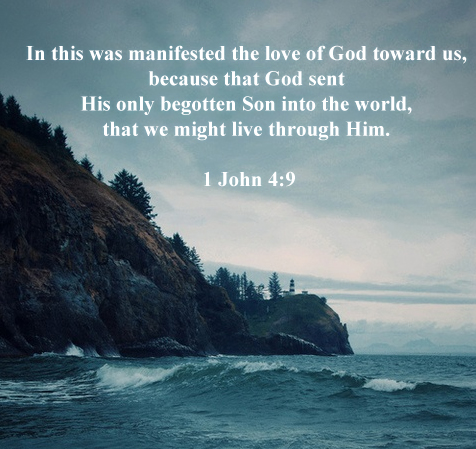
Jeremiah 29:11-13

These verses from Jeremiah are some of my favorite encouraging passages in the Bible.

For I know the thoughts that I think toward you, saith the LORD, thoughts of peace, and not of evil, to give you an expected end. Then shall ye call upon Me, and ye shall go and pray unto Me, and I will hearken unto you. And ye shall seek Me, and find Me, when ye shall search for Me with all your heart. (Jer 29:11-13)

I don’t usually quote the NIV, but I do like the way it phrases verse eleven: “‘For I know the plans I have for you,’ declares the Lord, ‘plans to prosper you and not to harm you, plans to give you hope and a future.'” Even when we’re not sure what our own plans are for the future, we are assured that God has good things in store for us. He wants to see us succeed.

Since I graduated from college last year, my life hasn’t been going exactly like I planed. I’d intended to apply to several different grad schools and be back in school this fall, but for some reason I decided not to. Or rather, I didn’t decide exactly what to do and so nothing really got done.

I couldn’t (and still can’t) decide if I want to commit the next six years or so to an English Lit PhD program, try to get  a 3-4 year MFA in Creative Writing, or finally pursue my interest in type psychology. I’m not going to commit to or spend money on a program until I know which one I want. If I want any of them …

The other reason I find these verses in Jeremiah so encouraging are because of the promise that God will be there when we call on Him. He doesn’t hide from people who long for a relationship with Him.

For I will set mine eyes upon them for good, and I will bring them again to this land: and I will build them, and not pull them down; and I will plant them, and not pluck them up. And I will give them an heart to know Me, that I am the LORD: and they shall be My people, and I will be their God: for they shall return unto Me with their whole heart. (Jer. 24:6-7)

When we give our hearts to God, He promises that He will help us even — especially — when we don’t know what to do on our own. All-knowing, all-powerful, He is the ultimate source of strength and encouragement. And we can rest assured that He will make “all things work together for good to them that love God, to them who are the called according to His purpose” (Rom. 8:28).

Jeremiah 29:11

Zucchini Bread

zucchini bread This recipe comes from an old cookbook of my mother’s. It’s been used so much that the front and back covers are missing and the page for zucchini bread is so stained it’s getting hard to read. I’m not sure if it’s because of the original recipe or just the slight adjustment’s we’ve made, but I’ve never seen or tasted zucchini bread quite like this. It’s dark and moist and has a really nice texture.

I made these loaves to take for after-church snacks, but we accidentally left the plate at home. It’s not going to be too much of a hardship to eat them all by ourselves though, and it does freeze pretty well if we need to pop some of it in the freezer.

Zucchini Bread

3 eggs

2 cups brown sugar

1 cup oil

2 tsp. vanilla

2 ½ cups flour (I use 1 cup whole wheat, 1 ½  cup all-purpose)

2 tsp. baking soda

½ tsp. baking powder

¼ tsp salt

3 tsp. cinnamon

2 cups grated, raw zucchini, no seeds (frozen or fresh works equally well)

1 cup chopped walnuts

Zucchini Bread

Beat or whisk the first four ingredients in a medium bowl. Add dry ingredients and mix with a silicon spatula or wooden spoon. Mix in nuts and zucchini.

Pour batter into 2 greased loaf pans. Bake at 350°F for 50-60 minutes or until toothpick inserted near the center comes out clean.