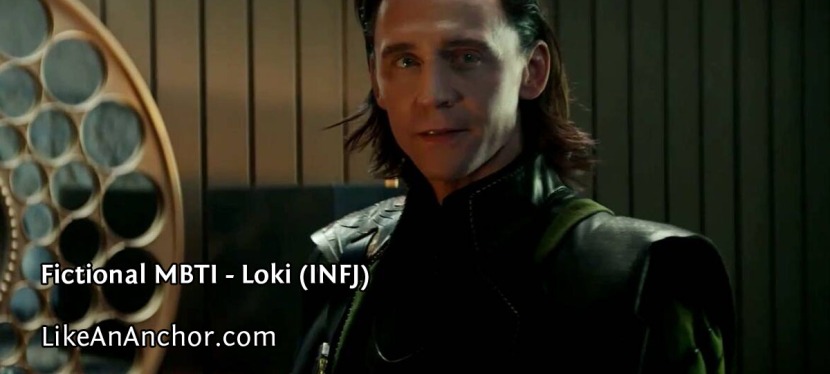
Fictional MBTI – Loki (INFJ)

My first Fictional MBTI post was about Loki, and though it wasn’t the most complete or polished post it quickly became the most active in terms of comments. Even now, over a year and a half later, people are still posting new insights and observations on Loki’s character. And when the latest comments are more in-depth than the original post, it’s time for an update.

Quick note: my typing for Loki is wholly based on the Marvel Cinematic Universe, not on the comics or on Norse mythology. Loki is a controversial figure to type (as those 40 commends on the last post can attest), and his instability further complicates things. Also, I suspect Tom Hiddleston is an NF type, which would color his depiction of Loki.

INFJ Overview

The letters “INFJ” stand for Introvert, iNtuitive, Feeling and Judging. This means INFJs lead with a function called Introverted Intuition (called “Perspectives” in the Personality Hacker system). Introverted Intuition is a perceiving function that takes in and processes information, and is particularly interested in things that can’t be directly experienced. Intuition is great at pattern recognition and extrapolating future possibilities, and I’ve never seen anyone argue Loki is not an Intuitive.

In INFJs, Introverted Intuition is supported by the decision-making function Extroverted Feeling (or “Harmony”). Types that use Extroverted Feeling are extremely good at reading people, and many INFJs say they can literally feel other peoples emotions. Typically, this results in a type that will avoid conflict at any cost because they don’t want to hurt people and because interpersonal tension hurts them as much as it does anyone else (contrary to popular belief, INFJs can be quite selfish). Loki has been avoiding conflict for most of his life — we just see him when he reaches the snapping point. You can see Loki’s Feeling side when he’s manipulating people (this comes easily for types that understand emotions and motivations), when he’s interacting with his mother, and in several scenes with Thor.
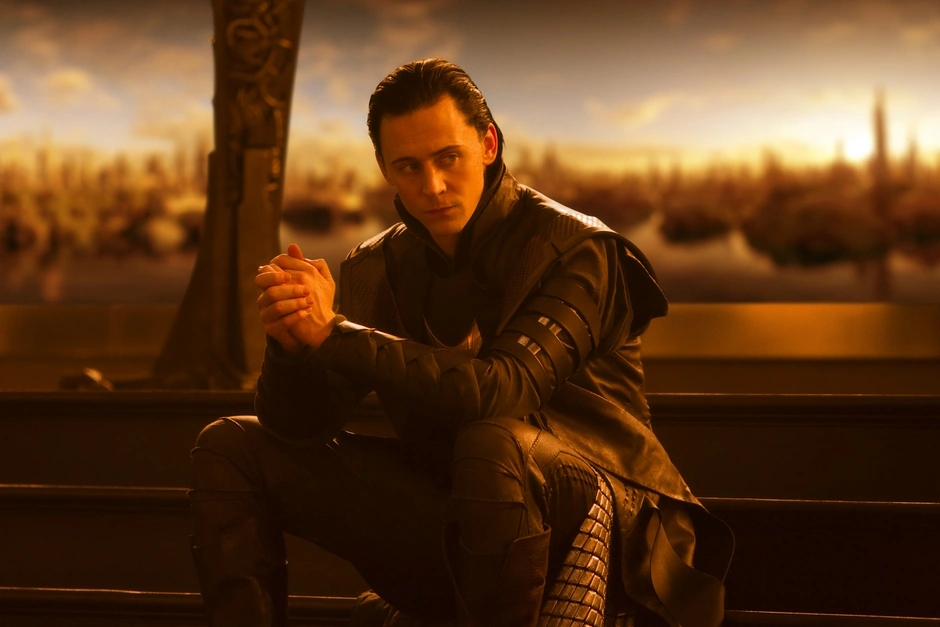
Fictional MBTI - Loki (INFJ) | marissabaker.wordpress.com

Speaking of manipulation, it is here that we see Loki fit David Keirsey’s description of INFJs as “The Counselor.” Loki gets power by counseling other people in ways that prompt them to play into his plans. His counsel sends Thor to Jotunheim, cripples Thor with guilt and strands him on earth, subverts The Avengers for a while, directs Malekith’s Kursed lieutenant, sets-up the circumstances allowing him to fake his death, and encourages Thor at the end of Dark World to feel comfortable moving to earth. Loki is frequently typed as an ENTP or ENTJ because of his more theatrical, trickster side and his portrayal in the comics (just for reference, Magneto is an example of an ENTJ villain), but I think in the films that’s a show Loki puts on when it suits him. At his core, he’s much more subtle and would rather control from behind the scenes to a certain extent and use people as puppets instead of leading out in the open.

INFJs who are stressed can effectively “turn-off” their compassion for a while and move to their inferior thinking function, and it’s not pretty when that happens. Introverted Thinking (or “Accuracy”) is an INFJ’s tertiary function, and provides a logical core that can make impersonal decisions. It’s still a subjective function, and is concerned about what makes sense to the individual, rather than with making sense to anyone else. If Loki can explain his actions to himself, he doesn’t feel the need to explain them to anyone else. That’s how INFJs think when they reach a point where they don’t care anymore (though even then there’s still a deep, central part of themselves that desperately wants human connection and affirmation).

Extroverted Sensing (or “Sensation”) is an INFJ’s inferior function. It’s the one we use least effectively, but also the one we end up spending the most time in when we’re stressed. This is where Loki lives for most of the movies.

Loki’s Childhood

Everything Loki does as an adult is informed by his childhood, which we have very little information about. From the first Thor film, we see that Odin told Thor and Loki, “Only one of you can ascend to the throne. But both of you were born to be kings!” Loki was pushed toward learning to rule, but then he was told he could never fill that role no matter how hard he tried. From Thor: The Dark World we know Freya was the one who trained him in magic, which is a much more INFJ-type weapon, but that still didn’t give him the approval he desperately craved from his father Odin.

Fictional MBTI - Loki (INFJ) | marissabaker.wordpress.com

Normally as a maturing INFJ, you develop your primary function Introverted Intuition first, become comfortable with your secondary Extroverted Feeling function as you become a teenager, start using tertiary Introverted Thinking in your late 20s or early 30s, then maybe you start exploring inferior Extroverted Sensing in midlife. All those functions are there the whole time, but you don’t develop them equally and in the case of Extroverted Sensing you might only notice it when you’re stressed. You never use your inferior, or even your tertiary function, as effectively as your primary and secondary functions.

Now, imagine you’re a young INFJ boy growing up with an ESTP brother (this is Thor’s type – click here to read about him). ESTPs use the same functions, but in the exact opposite order. So you see your brother being praised for exercising Extroverted Sensing, supported by Introverted Thinking. You probably hear, “Why aren’t you more like Thor?” all the time. Loki has been living with his stress function held up as a paragon. On top of that, he’s a Feeling boy who probably identifies with his mother more than the men in a world that prizes more traditionally masculine traits. Loki knows he isn’t what his father hopes for in a son, but INFJs are good at imitating other types and he tries to make Odin proud. This goes on for years, until Loki learns that the person he’s been trying to be his entire life isn’t good enough because no matter what he does, Odin “could never have a frost giant sitting on the throne of Asgard.”

In The Grip

If Loki is an INFJ, then the only times he really has a chance to use his dominant functions are when he’s using his Intuitive grasp of abstract concepts to dream-up complex plots and solutions to problems and wield magic, and when he’s using Extroverted Feeling to manipulate people. Otherwise, he spends his time first trying to win Odin’s approval by being like Thor, then lashing out at the people who hurt him while trying to discover who he is now that he’s no longer Odin’s son. That, on top of the huge amounts of stress he’s under in the films, means INFJ Loki spends most of this time in the grip of his inferior Extroverted Sensing function.

One of the questions asked by a commenter on the previous Loki post was this: “can you see yourselves (as INFJs presumably) carrying on a constant fight with everyone around you for the majority of your existence? And all so you can continue your life as their master and ruler?” While I couldn’t say “yes” to this exactly how it is phrased, I can say that as an INFJ, I will fight for the right to be my authentic self, especially if I feel like I’ve been stifled. I will turn into someone people don’t expect when I reach the end of my rope, and if I’m stressed and feeling out of control I don’t shy away from conflict like INFJs typically do. My goal isn’t to continue life as “master and ruler,” but I desperately need to restore order to my world and if that means taking control, then that’s what I want to do.

Fictional MBTI - Loki (INFJ) | marissabaker.wordpress.com

The Avengers is probably the film where Loki seems least like an INFJ, but this is also the film where he’s dealing with the most stress. The last thing he heard before falling into the destroyed Bifrost was Odin voicing disappointment in him, then he is captured and presumably tortured by Thanos.

“Loki disappears through that wormhole of space and time, when the Bifrost is destroyed, and he kind of goes through the Seventh Circle of Hell. And he’s on his own. He’s on his own in the dark corners of the universe, and the journey he goes on is pretty horrible. It’s like getting lost in the rainforest or something. You’re going to come out the other side a bit mangled on the outside, and on the inside.” — quote from an interview with Tom Hiddleston

Naomi Quenk’s book Was That Really Me? includes information about what she calls “lengthy episodes in the grip.” Usually, we experience our inferior function for short periods of time when we’re stressed. If you spend months or years working out of this function, though, bad things happen. For INFJs, she says it looks like this:

Obsessiveness about details in the form of micromanaging others both at work and at home may cause great distress to other people in these environments. “Irrational” accusations by INFJ can alienate others, causing them to avoid the person or attempt to remove him or her from a position of authority. Family members of an INFJ in a chronic grip state may be unable to find ways to sidestep the ready anger and criticism expressed by their loved one. Co-workers are likely to be similarly at a loss. …

Chronic grip behaviour may lead the individual and others to believe that fierce anger, excessive control of others and the immediate world, and distrust that approaches paranoia are a part of the natural makeup of the INFJ, and that the person has always been that way. Since the process of becoming chronically in the grip is often gradual, even people who have known the person in a non-stressed state are likely not to notice what, in retrospect, will be recognized as a radical alteration of personality. The person will appear to be a rather exaggerated, poorly developed, and distorted version of an Extraverted Sensing type. (Quenk, Was That Really Me? page 202)

Interestingly, the latest comment on my previous Loki post states, “Loki pre-snap seems quiet and very introverted, but afterwards seems to become a twisted version of Thor: self-centered, narcissistic, showy, entitled to power at the expense of others, and merciless in conquest.” This is pretty much exactly what Quenk says of INFJs looking like a “distorted version of an Extraverted Sensing type,” which is what Thor is as an ESTP.

When you take into consideration his background and the fact that he’s operating out of his inferior function for most of the films, the objections against typing the MCU’s Loki as an INFJ don’t carry nearly as much weight. Loki doesn’t look like a stereotypical INFJ, but he does act like an INFJ who’s been stressed to the breaking point.


If you enjoyed this post, check out my other MCU typings:
Bucky Barns – ESTP

Scott Lang -ISFP

Steve Rodgers – ISFJ

T’Challa – ISFP

Thor – ESTP

Tony Stark – ENTP

Save

Save

Save

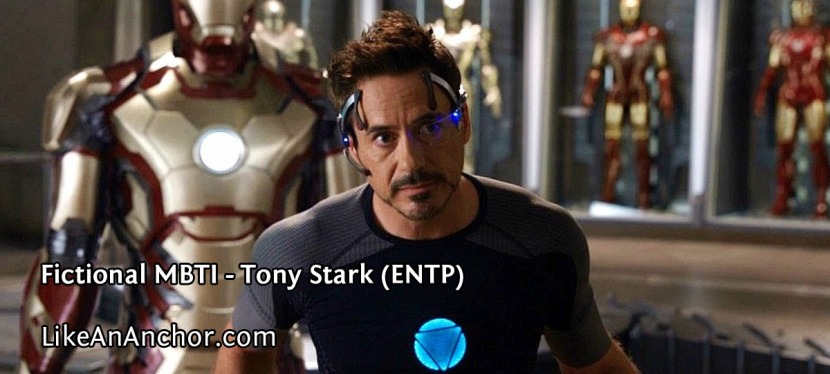
Fictional MBTI – Tony Stark (ENTP)

As many of you know, I’m a big fan of using fictional characters to illustrate how Myers-Briggs® types work. I’ve written about Captain America as an ISFJ and about Loki’s more controversial personality (which I identify as INFJ), so I thought we’d continue with that series by talking about one of the most beloved and recognizable characters from the Marvel Cinematic Universe.

I’ve seen Iron Man from the comics typed as an ENTJ or ESTP, but most people agree that in the Tony Stark portrayed by Robert Downey Jr. in Marvel’s Cinematic Universe is an ENTP. David Keirsey called this type “The Inventor.” While I often think Keirsey’s type descriptions are too stereotypical, it does fit Tony Stark.

It is so natural for ENTPs to practice devising ingenious gadgets and mechanisms that they start doing it even as young children. And these Inventors get such a kick out of it that they really never stop exercising their inventive talent, though in the workplace they will turn their technological ingenuity to many kinds of systems, social as well as physical and mechanical.

David Keirsey

The Personality Hacker video that you can watch if you click this link is a pretty good overview for the type. ENTPs lead with a process called Extroverted Intuition (“Exploration” in Personality Hacker’s system). It’s supported by Introverted Thinking (also called “Accuracy”). Their tertiary function is Extroverted Feeling (“Harmony”), and their least developed function is Introverted Sensing (“Memory”). We can see this in Tony Stark’s character throughout the MCU movies.

Exploration/Accuracy

Tony just became an expert on thermonuclear astrophysics. No big deal.

I really love Personality Hacker’s nicknames for the cognitive functions. Antonia Dodge writes that the reason they chose “Exploration” as the name for Extroverted Intuition was because “the best pattern recognition system for the outer world is to mess with everything that can be messed with, and to explore, explore, explore.” Types who use Extroverted Intuition easily bounce from one idea to the next, often out-loud, as they sort through and experiment with different possibilities. This doesn’t mean they can’t focus. They just need to find something that captures their attention. Once they have something to focus on, it can consume them (at least until they understand it well enough to lose interest and move on to the next challenge).

This is where their secondary function, Introverted Thinking, comes in. An ENTP’s Intuition is focused outward gathering information and sorting through data. When they need to think deeply about something, their inward-focused decision-making process comes into play. For ENTPs, this process is concerned with “Accuracy.” Antonia Dodge says the ultimate goal of a type using Accuracy is “information purified from incongruities, inconsistencies and biases which produce clean concepts and an understanding of how things work.”

ENTP Characteristics

Dr. A. J. Drenth in his profile of an ENTP and  Isabel Meyer in her book Gifts Differing both mention several defining characteristics of the ENTP personality type. Let’s look at a few.

  • “Despite their tendency toward restlessness and distractibility, ENTPs can focus when partaking in stimulating discussions or activities” (Drenth). Just witness how focused Tony can be when speaking with Bruce Banner (discussions) or while alone in his private workshop (activities).
  • “ENTPs may not always seem to ‘have a point,’ quickly bouncing from one idea to the next” (Drenth). Tony’s conversation with the other Avengers on the hellicarrier after they catch Loki lasts less than two minuets and the conversation bounces around like this:
    • Begins explanation of Loki’s plan
    • Takes a verbal jab at Thor
    • Continues explanation of portals
    • Notices and comments on the man playing Galaga
    • Questions the design of Fury’s command center
    • More on Loki’s plan, while planting a decryption program
    • Explains his new expertise in thermonuclear physics
    • Introduces himself to Bruce Banner and admires his scientific work and Hulk side
  • “They are more apt to consider how others may affect their projects than how their projects may affect others” (Meyer). Extroverted Feeling — the function ENTPs use to connect with people, is third on their function stack. They use it rather well to read people and manipulate them (Isabel Meyer says, “They enjoy from the cradle a remarkable ability to get what they want”), but people are not the first thing on their priority list. Even in Age of Ultron, where Tony creates Ultron to try and avoid a future where he causes his friend’s deaths, his first focus is on the project, not on how others will react.
  •  “ENTPs scoff at what they see as unnecessary or overly rigid rules, regulations, or procedures” (Drenth). This is the source of much of Tony’s conflict with S.H.I.E.L.D and with Steve Rodgers (interestingly, ISFJs and ENTPs are exact opposites in their function stacks, and can easily act as stressors for one another).
  • When stressed, Naomi Quenk says ENTPs’ inferior function shows up in the form of “withdrawal and depression,” “obsessiveness” and “focus on the body” (i.e. “exaggerated concern about physical ‘symptoms'” of a real or imagined disease). Just watch Iron Man 3.

If you enjoyed this post, check out my other MCU typings:

Bucky Barns – ESTP

Loki – INFJ

Scott Lang -ISFP

Steve Rodgers – ISFJ

T’Challa – ISFP

Thor – ESTP

Save

Save

Save

Save

Save

Ficitonal MBTI – Sherlock Holmes (INTP)

In the world of fictional typology, Sherlock Holmes is typically cited either as the perfect example of an INTP or as a notoriously difficult charter to type. Some writers say this difficulty is because the character displays aspects of several different types (including INTJ and ISTP) due to the writers’ ignorance of Myers-Briggs theory.

While this may be partly true, I think we can pin-down a single best-fit type for most portrayals of Sherlock Holmes in film and television (I’m not covering the original stories in this post). Rather than showing several different personality types, the different portrayals of Sherlock Holmes show how much variation there can be within a single personality type.Ficitonal MBTI - Sherlock Holmes (INTP) | marissabaker.wordpress.com

INTP Traits

The personality type that fits most film and movie portrayals of Sherlock best is INTP. The function stack for this type is this:

  1. Introverted Thinking (Ti)
  2. Extroverted Intuition (Ne)
  3. Introverted Sensing (Si)
  4. Extroverted Feeling (Fe)

This means that Sherlock first approaches the world with a judging attitude that is focused inward and relies on impersonal analysis. Ti prefers to internalize observations and work with abstract ideas. It “values facts chiefly as illustrative proofs of the idea,” and rejects things that seem irrelevant (Myers, Gifts Differing, p.78). This would explain why BBC’s Sherlock didn’t bother to remember that the earth goes around the sun. Read more

Robin Hood Meeteth the Lord of Time

I knew I would love the latest Doctor Who episode, “The Robots of Sherwood.” I’ve been curious about it since the first set photo of Clara in a Medieval dress was released, and giddy with anticipation when the title let me know it had something to do with Robin Hood. I can’t remember not being fascinated by Robin Hood. The first time I met him was in the animated Disney film, which my Mom says we brought home from the library so often that the librarians teased her, “Aren’t you ever going to buy that movie?” I vaguely recall finding a copy of Howard Pyle’s “The Merry Adventures of Robin Hood” in a little back corner of the library, then buying my own copy and wearing it out (quite literally — the cover fell off).

“There’s no such thing as Robin Hood”

“The Robots of Sherwood” begins with Clara making a request I can easily identify with: take me to meet Robin Hood. The Doctor obliges by setting course for 1190-ish, though he maintains that Robin Hood is merely a legend even after the TARDIS is shot by the famous bowman. The episode progresses in a lighthearted story that covers classic elements of both Doctor Who and Robbin Hood, and culminates with a conversation between the Doctor and Robin about how history lost sight of Robin the man and turned him into stories, much like the stories Clara tells Robin about the Doctor.

Doctor: “I’m not a hero.”

Robin: “Neither am I. But if we both keep pretending to be, perhaps others will be heroes in our name. Perhaps, we will both be stories.”

Are They Heroes?

As a child-fan of Robin Hood, I saw him as an heroic figure — the good in a good-verses-evil conflict. But even the versions of the legends specifically written for children have a complicated definition of morality. Robin Hood steals and kills people (typically in defending himself or others) to fight against a government which commits worse crimes. But does he really have the right to take justice into his own hands when his country’s law dictates that justice belongs to appointed authority figures and his God says, “Vengeance is mine, I will repay”? (Robin is presented as Catholic in most legends.) I want to root for him and justify his every action, but I can’t always do that.

Errol Flynn (who the Doctor has apparently fenced with) as Robin Hood

It’s much the same with the Doctor. He flies around the universe saving people, but there’s often a lot of things that go wrong. As a show, Doctor Who has a surprisingly high casualty rate. In the tenth episode of “new-Who,” the 9th Doctor joyfully shouts, “Everybody lives, Rose! Just this once — everybody lives!” And as far as I can remember, it really was “just this once” that everyone makes it to the end credits alive. And the Doctor has a thoroughly dark side which complicates defining him as a hero (if you need convincing, here’s an article discussing the Doctor’s 13 Darkest Moments).

So, are they heroes? Depends on your definition.

A hero is someone who has given his or her life to something bigger than oneself. — Joseph Campbell

A hero is an ordinary individual who finds the strength to persevere and endure in spite of overwhelming obstacles. — Christopher Reeve

A hero is no braver than an ordinary man, but he is braver five minutes longer. — Ralph Waldo Emerson

These sound like rather good descriptions of the Doctor and Robin Hood. I couldn’t find the quote (even with Google’s help!), but I read once that heroes are simply people who’ve been observed doing what good men do as a matter of course. There’s some question of whether or not the Doctor qualifies as a “good man,” but he has been seen doing good and heroic things. As for Robin, all but the earliest legends present him as someone who does more good than harm. Even if they’re not “heroes,” they want to be.

The “Real” Robin Hood

Robin Hood by Louis Rhead

Speaking of the earliest legends, I’m going to digress for a moment and talk about my one peeve with how this episode portrays Robin Hood. I’ve done no little research into the history of the Robin Hood legends, and know that the earliest tales set him during the reign of Edward III (1327-1377), not during the time of King Richard and Prince John. The earliest version of his character that we can track down presents him as a “famous cutthroat” and “forest outlaw” who was both intriguingly mysterious and alarmingly unknowable (Stephen Knight; Robin Hood: A Mythic Biography).

Now, for Doctor Who’s version we could say that the Robin legends took on a sinister aspect in the 100-some years following Clara and the Doctor’s meeting with the “real” Robin, before shifting back to something closer to “reality” in the 1590s, when stories of Robin Hood as a displaced earl begin showing up. But it would have been much more in keeping with the records we have of Robin Hood legends, to present Robin Hood in Doctor Who as a clever, outlawed yeoman. Someone could have at least done enough research to know that the legend of Robin Hood splitting his opponent’s arrows at an archery tournament didn’t show up at all until the 1820 publication of Sir Walter Scott’s Ivanhoe (though it did make for a humorous scene with the Doctor).

Perhaps Mark Gatiss, who wrote this episode, agrees with his version of Robin Hood that,  “History is a burden; stories can make us fly.” And I’m inclined to cut him some slack, in terms of how “authentic” Robin Hood has to be for Doctor Who. Most viewers just want to see the typical aspects of Robin Hood — the fight on a bridge between Robin Hood and a stranger, the archery competition for a golden arrow, the battle between Robin and the Sheriff of Nottingham — with the familiar Earl of Locksley back-story. At this point, trying to bring Robin back to something the Doctor and Clara might actually have discovered in history would have been more confusing than anything else. Gatiss made up for ignoring the oldest Robin Hood source material by including references to multiple version of Robin Hood in film, an almost-quote from Shakespeare, and several nods to both classic and new-Who. All-in-all, it was a thoroughly enjoyable, though fairly typical, episode of Doctor Who.

Thoughts On The New Doctor

I started watching Doctor Who a few years after “new Who” started, beginning with Eccleston and continuing on in order. I liked Nine, but fell in love with Ten. Even though I was still catching up at that point, knew it was coming, and had Matt Smith episodes that I could watch, I went into mourning for a month after he regenerated and refused to watch any of Eleven’s episodes. But I finally did, and I liked him almost instantly.

And then just a few years later he left. By that time I’d caught up with all the episodes, so there wasn’t the assurance of knowing who’d replace him. It was, in many ways, more traumatic than David Tennant leaving because on top of losing a Doctor I loved, I didn’t know who might replace him. It could have been anyone — a woman, an American (the Horror!), a non-Whovian …

… and then it was Peter Capaldi, and I stopped freaking out. That’s when some of my friends started freaking out, though — he’s too old and too grumpy and shouldn’t be trusted with our favorite character. But I had a good feeling about him for some reason.

SPOILER WARNING

I think I was right. It takes a while the first episode after the Doctor regenerates for him to settle into a personality, and he flitted through a few of the old ones before we got a good sense of who he’ll be now (including asking for a very long scarf and screaming “Geronimo”). Still, I think I’m going to like the Doctor this way. And I have very, very high hopes for the upcoming “Robot of Sherwood” episode (I’m a bit obsessed with Robin Hood legends. Actually Medieval things in general).

There’s plenty of in-depth reviews already, so I’ll just touch on a couple things I though were of note …

Steampunk title sequence! Last time they changed the title and music I was upset, but this time I liked it. I suppose the gears are actually supposed to make me think of time and watches rather than steampunk, but who cares — it was cool. Like bow ties.

The cameo appearance of Matt Smith might not have been surprising for some people, but it was for me. And it was splendid. Clara needed it, and I think some of Matt’s fans probably did, too. *cue sobbing*

“Girl In The Fireplace” is my favorite episode, so I loved the parallels here. Well, “loved” in the sense that I liked how it reminded me of this episode even though robots harvesting human beings for spare parts is bloody creepy.

Clara was splendid. There have been rumors floating around that Jenna Coleman will be leaving in the Christmas episode, and I really hope that’s not true. I’ve liked her as a companion, and I like her even more after seeing her stand up to Madam Vastra and try to convince The Doctor that she’s not an egomaniac by shouting “Nothing is more important than my egomania!”

One of my favorite scenes is where the Doctor is talking with a homeless man (didn’t catch his name, but planetclaire.org says it’s Barney) about his new face.

The Doctor: Why this one? Why did I choose this face? It’s like I’m trying to tell myself something. Like I’m trying to make a point. But what is so important that I can’t just tell myself what I’m thinking? I’m not just being rhetorical here. You can join in.
Barney: I don’t like it.
The Doctor: What?
Barney: Your face.
The Doctor: Well I don’t like it either. I mean it’s alright up to the eyebrows. Then it just goes haywire. Look at the eyebrows! These are attack eyebrows. You could take bottle caps off with these.
Barney: They are mighty eyebrows indeed sir.
The Doctor: They’re cross. They’re crosser than the rest of my face. They’re independently cross! They probably want to cede from the rest of my face and set up their own independent state of eyebrows. That’s Scot, I am Scottish and I’ve gone Scottish.
Barney: Yes you are. You are definitely Scot sir. I hear it in your voice.

Love the bit of Scottish attitude that’s showing up along with his new accent, and I particularly like the more reflective side we’re glimpsing in this Doctor as he puzzles over why he chose this face — what message his past selves are trying to send him. On the same subject, there’s a particularly heart-tugging line of dialogue at the end where he tells Clara, “You can’t see me, can you? You look at me and you can’t see. Do you have any idea what that’s like? I’m not on the phone, I’m right here. Standing in front of you. Please just… just see me.”

We see you, Mr. Capaldi. And you look like The Doctor. Not my Doctor perhaps, but certainly a Doctor we can learn to love.

HSPs, Violence, and Guardians of the Galaxy

Honestly I have no idea what to write about for today’s post. Guardians of the Galaxy, which I recently watched? The book I just read about HSPs? How much I hate the head cold that kept me from attending a friend’s wedding?

Let’s go with a combo of the first two. My sister talked our whole family into going with her to see Guardians of the Galaxy yesterday. After being … less than impressed with the trailers, I found that I actually enjoyed the film for the most part. I’d thought it would be the characters or humor or plot that I didn’t enjoy, but that that wasn’t what bothered me.

It was the violence. You expect a certain level of violence in a Marvel superhero film. But at least in The Avengers they were trying to minimize casualties and none of the main characters enjoys killing. The Guardians (spoiler warning) do save an entire planet, but there’s a lot of collateral damage in a mining colony that no one seems concerned about, and Rocket Raccoon, Drax, and Groot are all seen laughing or grinning while killing people. The deaths are played for audience laughs too, like when Groot grows a tree limb through about 5 bad guys and batters them around inside a spaceships corridor to kill them and their companions. I think Peter Quinn and I were the only ones in the theater not laughing.

Sensitive to violence

If you take Elaine Aron’s self-test for High Sensitivity, one of the questions is “True or False: I make a point to avoid violent movies and TV shows.”

When I first took the test, I answered “false.” I wouldn’t watch things with what I considered excessive violence, but I would watch the occasional Criminal Minds episode and I had seen too many R-rated movies to count on one hand (but just barely, and most in a film class at college). Even so, during our yearly re-watching of The Lord of the Rings, I’d leave the room for most of the Battle of Helm’s Deep and if I was watching Henry V on my own I hit the skip button for Agincourt.

Now I think I’d answer “true,” mostly because I’m becoming more aware of how violence affects me and I’ve stopped trying to pretend that it doesn’t. I had to stop watching Criminal Minds because the nightmares got too bad (and even after I quit, they came back after reading Kristin Cashore’s Bitterblue). I wish I hadn’t seen X-Men: Days of Future Past in theaters because the battle scenes were so dark and raw. I’d still see it, but I’d have enjoyed it more on a smaller screen since I’m much more interested in character development than in impressive battle sequences. And now more recently, I find myself troubled by Guardians of the Galaxy.

Please tell me I’m not the only one who flinches when a character gets stabbed, punched, kicked, shot or otherwise maimed? That there’s other people who think even superhero movies could do with fewer explosions, mayhem, and destruction?

I suppose one solution would be to give up watching moves, but I’ll still go see Avengers: Age of Ultron for the same reason I let my sister talk me into seeing Guardians of the Galaxy. Marvel films are addictive. And hopefully in this one, there won’t be so much casual violence.