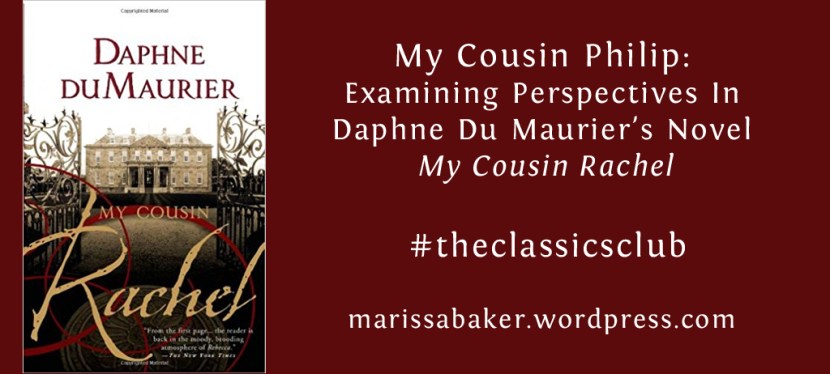
My Cousin Philip: Examining Perspectives In Daphne Du Maurier’s Novel My Cousin Rachel

I should never have stayed here. Nay, I should never have left Italy.

If my cousin Philip had not been so like Ambros perhaps I could have left. To see his face — that beloved, tormenting face — staring into my eyes once more was more than I could leave. More than I could resist when he asked me to stay. Or I should say ordered me. They were orders, though I turned a blind eye to it then because I wanted him. Or perhaps not him, but Ambros back in my life. I know not.
My Cousin Philip: Examining Perspectives In Daphne Du Maurier's Novel My Cousin Rachel | marissabaker.wordpress.com
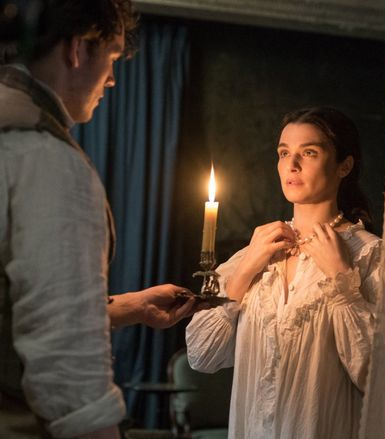
My Cousin Rachel (2017)

I’m in such fear. It was a foolish thing on both our parts, the midnight of his birthday. He knows too little of the world to realize what I gave him was nothing more than a thank you. A birthday gift that would mean more than that stupid little pearl cravat pin. And yes, I wanted it too. A younger, more devoted Ambros to worship me once again if only for a moment.

And how could I have known that he meant marriage by his comment about lacking warmth and comfort? Or that he thought I’d agreed to be his when he took me into those primroses? Or that he would get so drunk he’d announce our engagement to his godfather and poor Louise at dinner?

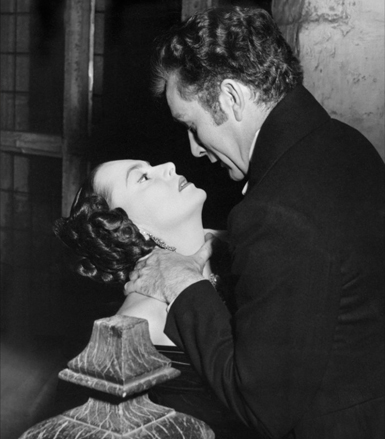
I still feel the pressure of his hands at my throat. Those big, powerful hands of a man who works on his farm every day and stands a head taller than me. Stronger than the ones Ambros once put around my neck. My cousin Philip could have snapped my neck, though he wouldn’t have had to. The slightest squeeze more and I’d not have been able to draw the thinnest breath.
My Cousin Philip: Examining Perspectives In Daphne Du Maurier's Novel My Cousin Rachel | marissabaker.wordpress.com
My Cousin Rachel (1952)

Should I feel guilty for bringing Mary Pascoe into this house? Surely his fury won’t touch her, too. The worst he’d do is throw her out of the house. While me … I know not what he’d do were we alone now. Would he wrap his hands around my throat again and expect me to make myself his? Would he force me and afterward tell me I liked it and must marry him?

His fantasy is as complete as the paranoia that claimed Ambrose. I half-believe in his mind we’re already married. That he thinks I’m so sure to agree it’s as if I’ve done so already. That his ridiculous present of his entire fortune will surely convince me to stay.

I must get away. I have the means to do so now, though God knows it’s not why I came here. I simply wanted to see the home Ambros talked about. The symbol of what could have been before he turned on me. The idea of our marriage rather than the reality of it. The allowance my cousin Philip gave me was more than enough. More than I expected or even hoped. To have him honor the will Ambros never signed …

Did he think he’d bought me?

Will he let me leave?


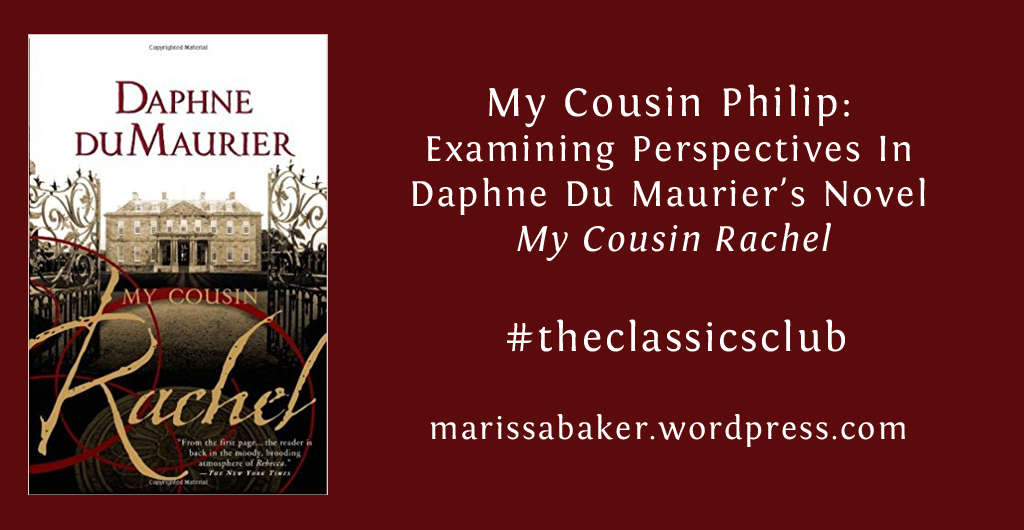
This is quite a bit different than my usual review for books I’m reading on my Classics Club Book list. But I think Daphne Du Maurier’s My Cousin Rachel (1951) is the sort of novel that invites you to look at it from different perspectives. The fact that you’re trapped inside Philip Ashley’s mind for the entire novel leaves you guessing at what the other characters are really thinking. He’s an unreliable narrator and he’s hopelessly naive, especially when it come to women, so the motives he assigns to Rachel are likely untrue. But if he’s wrong about her, then what is right? Everything we know of her is filtered through Philip. We don’t know her true motive or any of her thoughts. We can only guess, as I’m doing in my little retelling from Rachel’s point of view (which overlaps Chapter 23 of the original novel).
My Cousin Philip: Examining Perspectives In Daphne Du Maurier's Novel My Cousin Rachel | marissabaker.wordpress.com
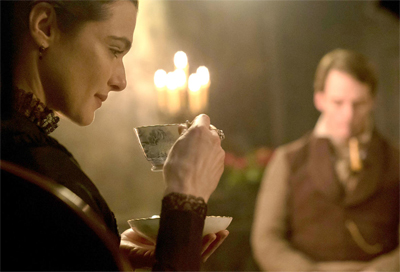
My Cousin Rachel (2017)

I watched the 2017 film adaptation of My Cousin Rachel before reading the book. I suspected I would still enjoy the book after seeing the movie, but knew if I read the book first there was a good chance I’d spend the film grumpy about how they’d adapted it. It turned out to be a very faithful adaptation, though.

*Spoiler Warning* The only major changes were made at the end. The film provides less evidence of Rachel’s alleged guilt, pointing viewers towards the idea that she was not poisoning Philip. And it also has Philip sending her to ride along a dangerous path rather than choosing not to warn her about a dangerous bridge in the garden. The film pushes you toward believing he intended her to die where the book leaves it a little more ambiguous. But then again, Philip’s the one telling the story. Of course he’d make himself look as good as possible.

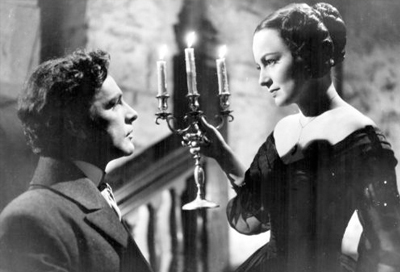
Philip wants us second-guessing his cousin Rachel. But I suspect Du Maurier wants us to look at Philip just as closely. Because even though we’re getting his perspective on things and he’s certainly not putting any blame on himself, there are things about being in his mind that make me as scared of him as I think Rachel is.
My Cousin Philip: Examining Perspectives In Daphne Du Maurier's Novel My Cousin Rachel | marissabaker.wordpress.com
My Cousin Rachel (1952)

Repeatedly, Philip says he wants to isolate Rachel from everyone but him. And that’s before he starts becoming overtly controlling. And when he puts his hands around her throat, it’s not in the heat of anger. He presents it as a calculated decision to add fear to the list of reasons she should marry him. Later, he barely contains his fury and indignation when (after he’s given her all his property and she still hasn’t married him) she states that she can and will invite whoever she likes to stay with them because the house belongs to her and she doesn’t feel safe alone with him.

So instead of just asking, “Did Rachel poison Ambros and/or Philip?” I think we need to ask whether such an act could be considered self-defense. Abuse does not justify murder, but even if Rachel killed someone she may not be the evil and/or misguided character that Philip (who describes himself as feeling a strange compassion for her once he makes up his mind about her guilt) makes her out to be. It might have been more of an act of desperation and fear than calculating malice.

But that’s assuming she’s guilty at all. And there’s no clear evidence that she is. Laburnum (the plant Philip settles on as the murder weapon) isn’t even all that poisonous. The most common symptoms are nausea and vomiting, and that’s after eating several seeds. “Higher doses can produce intense sleepiness, convulsive possibly tetanic movements, coma, slight frothing at the mouth and unequally dilated pupils. … [However] the MAFF publication ‘Poisonous Plants in Britain and their Effects on Animals and Man’, says that all stories about laburnum causing serious poisoning and death are untraceable” (The Poison Garden).

My Cousin Philip: Examining Perspectives In Daphne Du Maurier's Novel My Cousin Rachel | marissabaker.wordpress.com
“Laburnum” by Neil Turner

Perhaps Du Maurier believed her chosen poison really was deadly based on the rumors that have made it one of the most feared garden plants. But perhaps she did her research and knew that Philip was jumping to unjustifiable conclusions. Maybe she would have known, as Rachel surly did with her expertise in herb lore and gardening, that most gardens are home to far more reliably deadly plants (like foxglove and oleander). Perhaps Du Maurier meant for her readers to realize that a brain tumor (for Ambros) and a relapse of meningitis (for Philip) are the most logical explanations for symptoms both men attribute to “Rachel, my torment.”

There’s an argument to be made that Philip isn’t really concerned about whether or not Rachel poisoned Ambros at all. He decides her guilt based on whether or not she “conforms to his desires and whims” (from “My Cousin Rachel (2017) and Male Entitlement“). After all, he already possesses everything else that belonged to Ambros. Why not Rachel as well?

The question of whether or not Rachel poisoned Ambros consumes Philip only until their first meeting. After that he’s quite certain she’s innocent until she makes it clear she won’t marry him. All his worry about whether or not she’s guilty of murder covers the fact that his inability to deal with rejection brings out a desire to posses and control her. He and Ambros call Rachel “my torment” because she brings out the ugliest side of their natures and they blame her for their darkness rather than looking to the true culprits. Themselves.My Cousin Philip: Examining Perspectives In Daphne Du Maurier's Novel My Cousin Rachel | marissabaker.wordpress.com
Click here to get a reading copy of My Cousin Rachel, and here for the movie. Please note that these are affiliate links. This means that, at no additional cost to you, I will receive a commission if you click on the link and make a purchase.
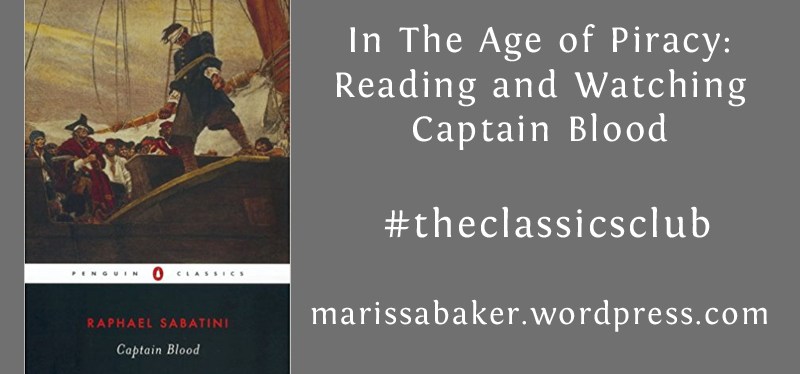
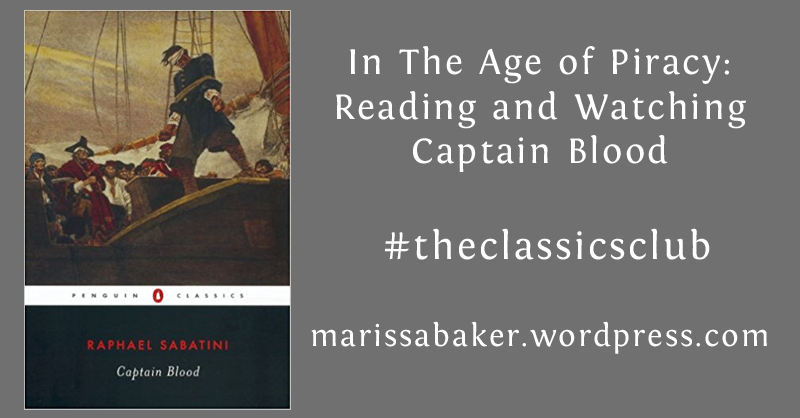
In The Age of Piracy: Reading and Watching Captain Blood

As I’ve mentioned once or twice before, I have something of an obsession with tall ships. This is probably a result of my love for stories set during the Age of Sail. One such story is Captain Blood by Rafael Sabatini, first published in 1922.

This book wasn’t on my original Classics Club list. I’d already read it and hadn’t intended a reread, especially after being disappointed by Sabatini’s Bardelys the Magnificent. But I ended up with a digital copy on my phone a year or so ago and started reading it while in a waiting room. So of course I had to finish it — one simply doesn’t abandon an adventure novel in the middle of the story.In The Age of Piracy: Reading and Watching Captain Blood | marissabaker.wordpress.com

I’m (once again) in the midst of a pirate obsession, for which we can thank the recent release of Daughter of the Siren Queen (sequel to my 2nd favorite novel of 2017, Daughter of the Pirate King). So I started reading a book on the history of pirates in reality and fiction, which prompted me to watch the 1935 version of Captain Blood. And that brings me to my decision to write a post for the classic novel.

But first, a brief digression about the film, which is really quite impressive. $1 million went into its production (to put this in perspective, online estimates tell me that $1 in 1935 has the same buying power as $17-18 today). It launched Errol Flynn’s and Olivia de Havilland’s careers and made an overall profit of $1.5 million. And it was scandalously realistic for a 1930s audience. In fact, a screenwriter named Robert Lord wrote to the producer, Hal Wallis, asking “Why do you have so much flogging, torturing, and physical cruelty in Captain Blood? … Women and children will be warned to stay away from the picture — and rightly so” (quoted in Under The Black Flag by David Cordingly, p.174). Read more

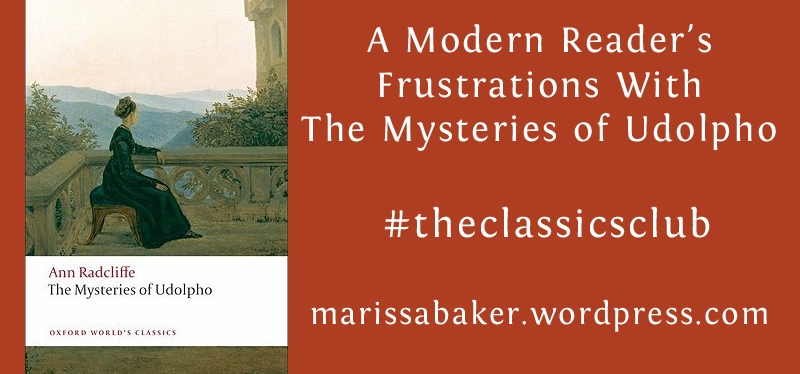
A Modern Reader’s Frustrations With The Mysteries of Udolpho

I’d been excited to read Ann Radcliffe’s The Mysteries of Udolpho (1794) since I first came up with my Classics Club Book List a few years ago. I haven’t read much Gothic fiction, but when I do I tend to enjoy it. And I knew this was one of the main inspirations for Jane Austen’s Gothic satire, Northanger Abbey (and you know how much I love Austen), so of course I was intrigued. Strangely, what surprised me most about Radcliffe’s most famous “classic work of Gothic fiction” is how much of it isn’t very Gothic at all.

The book is 223 years old, but still … spoiler warning.

The Mysteries of Udolpho opens with a pastoral travelog detailing the main character, Emily St. Aubert, and her father’s journey through picturesque Italy. There are a couple scenes with a harrowing flavor in the first of four volumes, but not many. Even after Emily’s father dies and she goes to live with her aunt in volume 2 there’s very little about the novel that feels “Gothic.” The setting isn’t gloomy, decaying, or haunted. There aren’t any supernatural elements. And there are only a few hints at a larger mystery. The heroine is a damsel and she’s in a bit of distress, but not much yet. The only hallmark of Gothic fiction that you see from start to finish in this novel is a focus on intense emotions (you know, the sort that inspire fainting fits and romantic swoons).

A Modern Reader's Frustrations With The Mysteries of Udolpho | marissabaker.wordpress.com
Emily is a master of fainting. Graphic from “How to tell you’re reading a Gothic novel

The novel becomes recognizably Gothic only after we arrive at the Castle Udolpho on page 226 (out of 672 in the edition I read). And now, suddenly, it’s very Gothic. We have a creepy house that becomes almost a character in its own right. We have mysterious rooms, whispered histories of possible murder, unbridled villains (who still manage not to physically harm the heroine), secret passageways, dead bodies, and rumors of ghosts.

This was my favorite part of the novel because it’s what I’d been expecting. But it doesn’t last even half the book, since Emily escapes on page 451 and has no further contact with the villain, Montoni, who conveniently dies off-page before making any further trouble. It’s also a hallmark of Radcliffe’s writings that she leaves nothing with a supernatural hint unexplained, so before the story ends all the ghosts, murders, and mysteries are explained in such a mundane or outlandish fashion that it robs the story of a spine-tingling emotional pay-off.

For example, in the Blake Veil incident Emily lifts a curtain and swoons because what she saw behind it was so dreadful. That happens shortly after arriving at Udopho, but it isn’t until the end of the novel that readers learn she thought she saw the body of a murdered woman. Emily is left under that illusion. For us, Radcliffe explained that it was actually a wax figure molded to resemble a decaying corpse that a previous owner of Udolpho was assigned to look at every day as penance to remind him of his mortality. He put it in his will that all future owners of Udolpho should do the same or forfeit a good chunk of their land to the church, but they just hung a curtain over it ans locked the room. Mystery solved! (though honestly the idea that Montoni left a murder victim in the room would have been less fantastic).

A Modern Reader's Frustrations With The Mysteries of Udolpho | marissabaker.wordpress.com
Illustration from The Mysteries of Udolpho
(1806 edition)

I haven’t mentioned the romance yet because honestly there isn’t much to tell. Valancourt is a character throughout most of the novel but he doesn’t really do much. He befriends Emily and her father then spends most of his time after the father’s death moping around Emily’s home hoping she’ll step into the garden so he can declare his passionate love for her. While she’s in Udolpho he’s in Paris ruining his reputation. And when she returns, they get so tangled in miscommunication that they almost don’t get married. I found the romance incredibly frustrating because they were always so emotional that they wouldn’t just talk with each other.

In case it’s not clear by now, I didn’t really like this book. If you want to give Radcliffe a try I’d recommend The Romance of the Forest (which I read in college for my research project). It’s much shorter and, in my opinion, a more enjoyable read. So why was The Mysteries of Udolpho a best-seller in it’s day and now Radcliffe’s most famous work?

Perhaps the answer lies in an observation made in the introduction to my Oxford World’s Classic’s edition. This intro points out that while Radcliffe rationalizes the supernatural in the outside world of her novel, she “presents the mind itself as a kind of supernatural entity.” It is the characters’ perceptions of what is going on in the world around them that adds a magical, mysterious flavor to the story. Radcliffe gave the novel’s first readers “a fantasy about the mind itself” being haunted.

For modern readers this idea isn’t anything new. We live in a post-Freud world where we’re accustomed to thinking of our minds as having layers that we don’t fully understand and reading stories that explore how a character’s psyche unravels under stress. But for Radcliffe’s readers it was a new kind of thrilling, escapist reading even when the plot was a mess. The way she accomplished this psychological character exploration isn’t what we’re used to today and it feels sloppy to me an I suspect other modern readers. I usually find 18th and 19th century literature very accessible, but in this case I just couldn’t connect with the story.A Modern Reader's Frustrations With The Mysteries of Udolpho | marissabaker.wordpress.com

Click here to get a copy of The Mysteries of Udolpho. Please note that this is an affiliate link. This means that, at no additional cost to you, I will receive a commission if you click on the link and make a purchase.
What Are The Books That Have Influenced You The Most?

One of my Facebook friends shared a post about the ten books that have most influenced his life, which I thought was a great idea. But it took me two weeks to figure out which books I wanted to write about and by the time I hit 500+ words I thought, why not just make it a blog post? So if you are reading this and care to share your most influential books consider yourself “tagged.” I’d love to see what books have had the biggest impact on your lives either in the comments or on your own blog (there’s an article topic you don’t have to come up with on your own!). The original list was 10 but I ended up with 8, so post however many you like.What Are The Books That Have Influenced You The Most? | marissabaker.wordpress.com

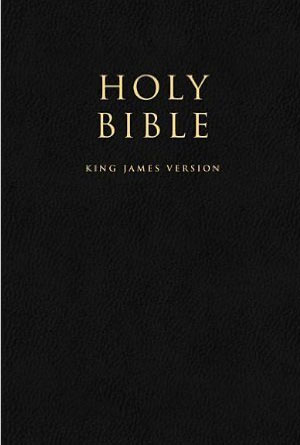
The Bible

What Are The Books That Have Influenced You The Most? | marissabaker.wordpress.comA rather obvious first choice for a Christian blogger, but this book definitely deserves the top spot when talking about books that influenced my life. It’s still influencing everything I do and I fall more in love with this book and it’s Author every time I read it. It’s the greatest love story every told, the best handbook you’ll ever find for life, and an incredible source of hope and purpose. Since more than 50% of this blog is devoted to talking about this book I’ll stop now. You know I could (and have!) keep going on about it for several books worth of text.

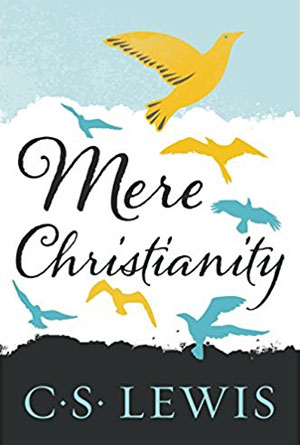
Mere Christianity by C.S. Lewis

What Are The Books That Have Influenced You The Most? | marissabaker.wordpress.comI could have put several books by C.S. Lewis on this list, but this is the first of his non-fiction I read and it’s the one that’s been most influential (with Screwtape Letters a close second). I just love the way he writes about his faith. Not only is he firmly grounded in scripture, but he’s also a persuasive speaker to those who don’t already put their faith in the Bible. In the words of Anthony Burgess, “C.S. Lewis is the ideal persuader for the half convinced, for the good man who would like to be a Christian but finds his intellect getting in the way.”

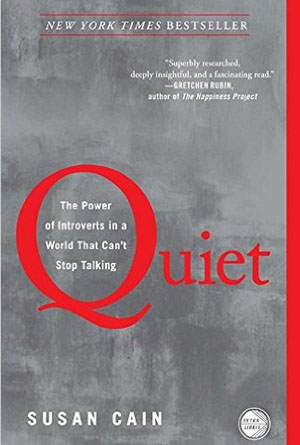
Quiet: The Power of Introverts In a World That Can’t Stop Talking by Susan Cain

What Are The Books That Have Influenced You The Most? | marissabaker.wordpress.comI started researching my personality after starting college and realizing I was even more different from “normal” people than I’d previously thought. This is one of the first books I read on the subject and it literally changed my life. Like many introverts, particularly INFJs, I always felt there was something off about the fact that I couldn’t seem to socialize the way so many other people did. This book pointed out how introvert brains are wired differently and that there are strengths in that personality. In other words, it shows that we’re not broken extroverts and introversion isn’t something to “fix.” Read more

A Visit To Middlemarch

My main goal before the end of 2016 was to finish George Elliot’s Middlemarch. I’d resolved to read at least one huge book from my Classics Club book list each year and this was my second after Frances Burney’s The Wanderer. Alas, I didn’t finish until January 1st, but we’ll still say it was close enough to count as part of the #ccwomensclassics event.

Though I’m an avid reader of British classic literature this is only the second George Elliot book I’ve read. I’ll admit I wasn’t a huge fan at first. I felt like the story spent far too much time on trivial details while skipping over scenes I would have expected more focus on (like weddings). But even when I was tempted to skim some sections I realized I would loose the plot thread if I missed even a few paragraphs and by the last 100 pages I felt everything coming together. It’s a much tighter story than I’d first given it credit for.click to read article, "A Visit To Middlemarch" | marissabaker.wordpress.com

Middlemarch chronicles the lives of a quite a large cast of characters, but Dorothea Brooks and Tertius Lydgate are the main characters. Interestingly, they are not love interests for each other. Rather, their stories parallel each other and intertwine in unexpected ways that you really don’t start to appreciate until close to the end.

Thematically, Middlemarch explores the nuances of marriage (among other things. It is, after all, 800 pages long). This aspect of the novel brings to mind the Tolstoy quote from Anna Karenina that “every unhappy family is unhappy in its own way.”

The main characters’ marriages happen for various reasons and become unhappy in different ways. Dorothea’s was made because she wanted to marry, and support, a man whose mind she could admire. Her husband wasn’t actively trying to deceive her, but he wasn’t at all the person she expected and turned out to be far more small-minded than she. Lydgate married because he fell in love with Rosamund, who married him because she expected him to rise socially. When he didn’t become her mental image of who he should be, she stopped loving him and Lydgate discovered he was trapped trying to make her happy while struggling to not completely abandon his dreams.

There are also three happy marriages made in this novel. And that gets us to the first part of Tolstoy’s quote: “Happy families are all alike.” Middlemarch’s happy marriages have one thing in common — they start from a place of honesty. The man and woman have known each other for years, neither is trying to deceive the other, and their expectations of their spouse are (at least mostly) realistic. It’s kind of sweet to see how the two marriages that take place near the end of the story develop throughout the novel. The two unhappy marriages are made quickly and soon deteriorate, but the ones that we see grow and develop over several years end up thriving.

After reading the first 700 pages or so with a fairly low level of engagement, those last hundred pages made me not want to put the book down. My two month investment with this book (I started it at the beginning of November and took a couple breaks to read shorter books like Heartless) was more than paid-off with the conclusion. This might seem weird to say for a book that’s 145 years old, but I don’t want to say too much more and spoil it for you. Sufficient to say everything really does go together and there’s a satisfying ending in store if you keep going through all 800 pages.


Click here to get a copy of Middlemarch. Please note that this is an affiliate link. This means that, at no additional cost to you, I will receive a commission if you click on the link and make a purchase.
Meeting Marissa Meyer

Meeting Marissa Meyer | marissabaker.wordpress.com
blame my phone for the blurry photo

I went to my first author talk and book signing yesterday! It was so enjoyable. Can’t believe I haven’t tried something like this before, considering how much of a book nerd I am (of course, many of my favorite authors died 100+ years ago, so that might explain something …).

She talked for a while about her new book, Heartless, and invited six people up for a talent show styled after a Mad Hatter’s tea party scene in the book. I didn’t even think of volunteering (as you’ve likely guessed) since standing up in front of people terrifies me, but I really liked how she led the mini talent show. Even with the volunteers drawing random talents to show the crowd (things like spontaneously coming up with a character description or singing an operatic version of I’m A Little Tea Pot), Marissa kept things encouraging and light enough to dispel any anxiety her volunteers had. That’s the sort of talent you notice and appreciate in people when you’re a bit socially anxious yourself.

It’s always fascinating to hear other writers talk about how they create characters and what their writing process looks like. The question-and-answer part of her talk was fun and informative — definitely the part of her presentation that I enjoyed most.

Marissa signed all my Lunar Chronicles books (which are fantastic. You simply must  read them if you enjoy fairy tales and/or science fiction), including personalizing Cinder. And the ticket to the author talk included a copy of Heartless, which she also signed. I really, really want to read Heartless right now but I don’t dare start it until I finish writing my NaNoWriMo novel. I know it will be too distracting. And so I’m off to finish my work writing so I can get on to my novel writing so I can start Heartless as soon as possible. Have a lovely day, dear readers.

Meeting Marissa Meyer | marissabaker.wordpress.com