“A Reluctant Bride” Book Review

Several years ago, while I was in college, I stopped reading Christian fiction. The more I learned about writing and literature, the less impressed I was with the inspirational market. I felt the books were poorly written and too preachy. I don’t like shoe-horned themes or author agendas shoved in my face even when the author and I share a faith.

Then a few years ago, I gave it another chance after a review of Francine Rivers’ book Redeeming Love* caught my eye. That book was so good it convinced me to give the Christian fiction market another try. And I’m glad I did, or I wouldn’t be writing about the book that’s the subject of today’s post.

  • please note that links in this post marked with an * are affiliate links, which means that at no additional cost to you, I’ll receive a small commission if you click on the link and make a purchase.

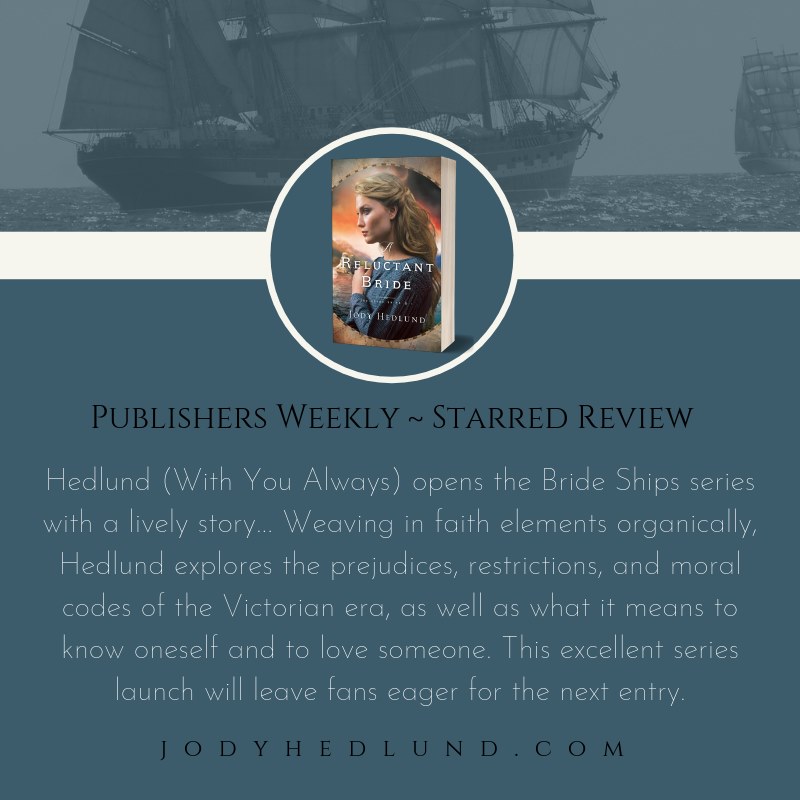
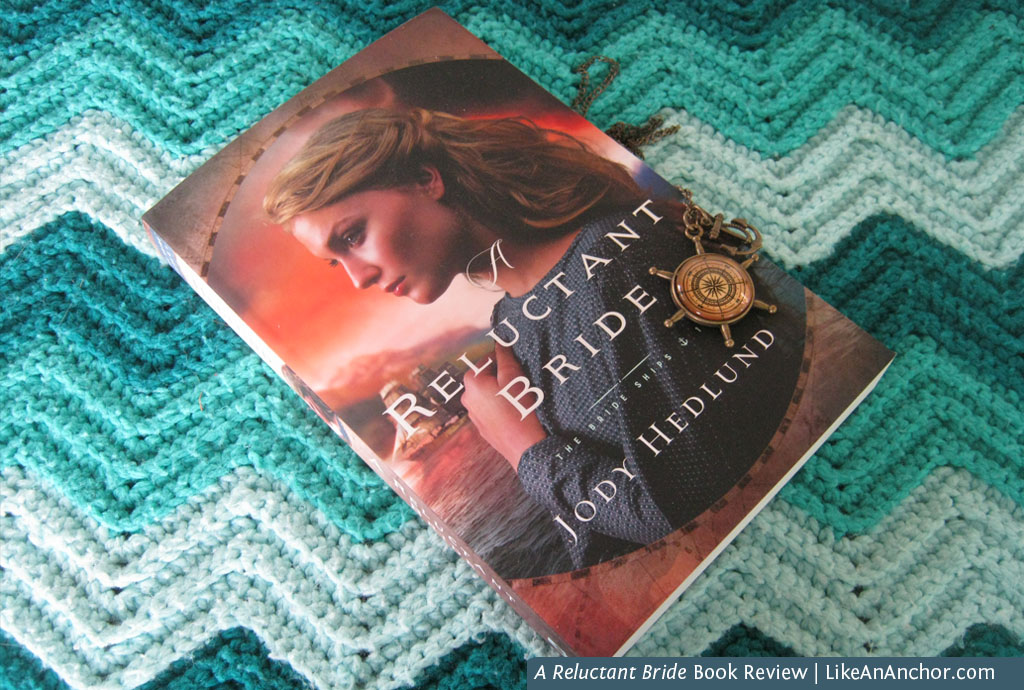
Jody Hedlund’s A Reluctant Bride kicks off her new Bride Ships series series with a heartwarming slow-burn romance. This historical fiction novel, set in the Victorian era, follows the story of Mercy Wilkins. Mercy — a compassionate, selfless young woman who grew up in one of the poorest areas of London — follows her sister’s advice to immigrate to Vancouver with a group promising jobs. It’s only after she’s on board the ship that she learns the women sailing with the Columbia Mission Society will be offered jobs only temporarily. This is a bride ship, and those traveling on-board will be expected to marry once they arrive — something Mercy has no intention of ever doing.

As one would expect from this type of story, there’s a man on board this ship with the potential to change Mercy’s mind. Lord Joseph Colville is heir to one of the noble families of England. Since the death of his parents and brother, he’s been delegating his political and social responsibilities to his aunt and focusing on his passion for medicine. He’s the doctor aboard the bride ship and fully intends to continue traveling for a few more years before settling down. But when Mercy becomes his assistant, they both start thinking that maybe marriage wouldn’t be so bad. Unfortunately, he’s supposed to marry someone from his station and she’s supposed to marry one of the men waiting in British Columbia.

I’ll not spoil anything about the ending for you, since I hope some of you will decide to read this for yourselves. But I will say I loved the characters. The faith elements weave through the story naturally and the plot kept me turning pages eager to see how events played out.

I always appreciate when historical fiction engages with the characters’ time period in a believable fashion. Lord Colville’s choice to work as a doctor and romance a poor working-class girl is an unusual one. However, it’s handled in a way that seems fairly realistic — including the reactions of people around them and Joseph’s and Mercy’s own recognition of the challenges they face. Parts of their romance remind me of Jane Austen’s Pride and Prejudice,* which is one of my favorite books.

I’d never had the chance to read and promote a book pre-release before, so I was very excited when Jody Hedlund opened up applications to her Reader Room group, and even more excited when I became part of the release crew for A Reluctant Bride. I love her YA medieval romance series,* and I wasn’t surprised to enjoy this book as well.

A Reluctant Bride will be out on June 4th. You can click these links to order it and to learn more about Jody Hedlund’s work. (A note for those  who, like me, enjoy print books: you won’t be disappointed with this one. The cover is absolutely beautiful, the paperback feels amazing, and pictures can’t do it justice.)

"A Reluctant Bride" Book Review | LikeAnAnchor.com

I’d like to hear from INFJ men for The INFJ Handbook second edition

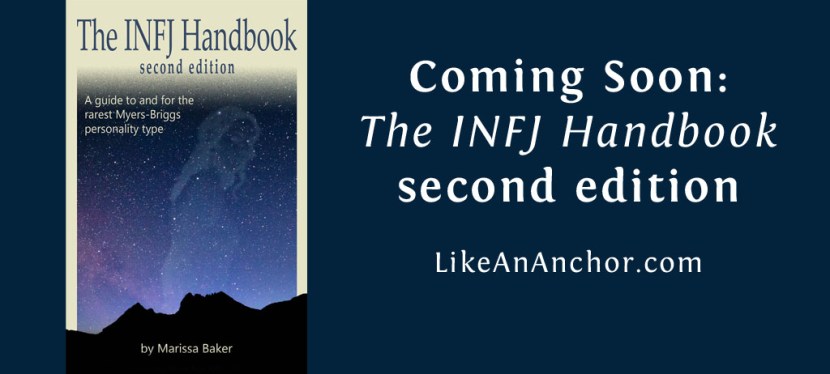
I’m so excited to announce that I’m releasing a second edition of The INFJ Handbook this summer. This will be an updated and expanded edition with lots of new information. Plus, I’ll be able to offer this in a print version as well as an ebook for all of you who’ve contacted me and asked where you could buy a physical copy.

In the first edition of The INFJ Handbook, I asked several INFJs to share their perspectives on having an INFJ personality type. Since all my contributors for the first edition were women, I’d like to get some INFJ men to share their perspectives for the second edition.

Update: Now closed to further responses. Thank you so much to everyone who contacted me to share their answers to these questions! I’ll be updating everyone soon with a release date for the book.

If you identify as a man and an INFJ personality type, I’d love to hear from you. Here’s a list of questions that I’m curious to get your perspective on:

  • How do you experience Intuition? What happens when you try to explain your intuitions to others?
  • Even though INFJ’s use Feeling more comfortably, we also have a Thinking side to our personalities. What does it look like for you to use your Thinking side in a healthy way? (for example: playing strategy games, analyzing your favorite topic, etc)
  • What stresses you out so much that you start acting unlike your normal self?
  • What do you consider the biggest strengths and weaknesses of your personality type?
  • Are there any struggles you face that you believe are unique to INFJ men?
  • Are there any personal growth tips you’d like to share with other INFJs?
  • What do you wish other people knew about INFJs?

You can answer as many or as few of these questions as you want. If there’s something else you’d like to share that isn’t covered in these questions, please feel free to add that as well.

If you’d like to contribute to this second edition of The INFJ Handbook, you can leave a comment under this post or click here to email me. Thank you so much! I’m really looking forward to reading what you have to share 🙂

Little Nudges From The Holy Spirit

The Holy Spirit is the power of God in our lives. As the part of God that gets inside us and transforms us, this Spirit is essential to our walk of faith. But I don’t think we spend enough time letting these truths really sink in (I know I haven’t).

While reading Dr. Juli Slattery’s book Rethinking Sexuality, I’ve been surprised by how many lessons in this book are applicable to the whole of our Christian walk. Pages 116-117 in particular struck me as some of the deepest Christian writings I’ve ever read. In this passage, Dr. Slattery says that embracing the truth that “the Holy Spirit is the power of God in our lives” radically changes how we try to follow God.

It really should be an obvious concept. But far too often, I think many of us ask God for help with living His way of life and yet don’t recognize how that help shows up. We ask to be filled with power, but don’t always know how to use it or even recognize it’s there. And to further complicate matters, we keep trying to do things on our own instead of truly relying on God working in us.

Little Nudges From The Holy Spirit | LikeAnAnchor.com
Photo credit: Mar Dais via Pixabay

Working Inside-Out

“The ability to live the Christian life is impossible outside of the work of the Holy Spirit. Jesus knew this when He told His disciples, ‘Be glad I’m going away because the Holy Spirit is coming!’ His words mean that we are more equipped to live the Christian life by the power of the Holy Spirit than we would be if we could follow Jesus around everywhere.” (Rethinking Sexuality, p. 116)

I’m sure Jesus’ disciples were confused when He said, “It is to your advantage that I go away, for if I don’t go away the Counselor won’t come to you” (John 16:7, WEB). And I think if given the choice, most of us would rather be able to see Jesus and talk with Him face-to-face than have things like they are now. But Jesus would never lie to us, so it must be true that there’s an advantage to knowing Him and the Father through the Holy Spirit that we wouldn’t have if Jesus had stayed here on earth. Read more

7 Fictional Characters That You’ll Relate To If You’re An ISTP

What fictional characters do you relate to as an ISTP?

Just as we can describe real people using the Myers-Briggs® typology system, we can also use the system to type well-written fictional characters. Some of fiction’s most iconic and intriguing characters are ISTPs — they make particularly good action heroes — and today we’re going to talk about seven that I think real-life ISTPs will find relatable.

One great thing about looking at character personality types is that it helps us better understand people who have different types than we do. Fictional ISTPs can serve as examples for what real-life ISTPs might be like, and also show how much variation can exist between individuals with the same type.

One of the things that makes ISTPs such great fictional characters is that they pair the spatial awareness and physical skills needed to lead an action/adventure story with the clever quick-wittedness that we like to see in a hero. Tactical skills, good luck, and a dry sense of humor aren’t the only things that characterize ISTPs types, though. I love it when we see ISTP characters developed throughout several movies or in a TV series so there’s more of an opportunity to for them to grow beyond stereotypes, and that’s the case with most of the characters on this list.

Han Solo

While not every ISTP — fictional or real — is going to fall into the action hero mold, a high percentage of action heroes in fiction are ISTPs. We could probably put most of Harrison Ford’s roles on this list, but as a huge Star Wars fan I’m going to to with our favorite scruffy-looking nerf herder Han Solo. He’s also the ISTP Susan Storm chose for her post “The Greatest Movie Heroes of Every Myers-Briggs® Personality Type.” I’d like to quote part of that article:

Han Solo captures the devil-may-care, quick-thinking qualities of the ISTP. We see his Introverted Thinking (Ti) in the way keeps his rational thought processes internalized. He is constantly expanding and making improvements to the Millennium Falcon, and needs to know why he must do something before making a decision. This constant tinkering and modifying and the search to constantly know “why” are all hallmarks of Introverted Thinking types.

Han also shows an ISTPs co-pilot process (extroverted Sensing) in his ability to respond quickly to the outer world. He’s impulsive and often jumps into things without much of a plan, but he has a talent for figuring things out as he goes. Read more

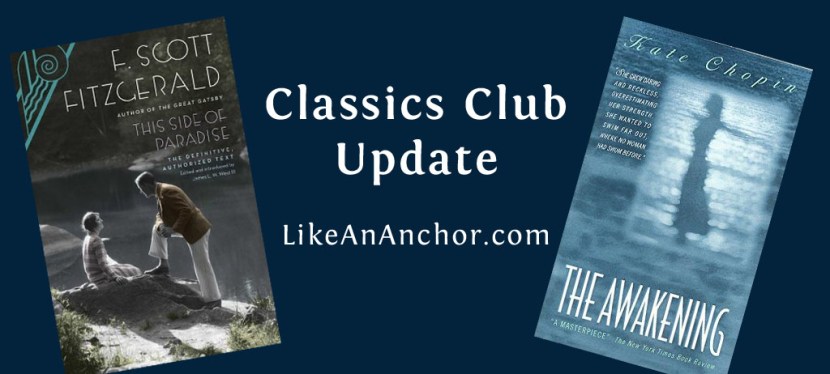
The Awakening and This Side of Paradise

I’ve been trying to get caught-up on my reading for my Classics Club book list that I started almost 5 years ago. This also involves blogging about the books I’m reading in the hope that we can spread our love for classic literature all over the internet. Interestingly, the last two books I read have some similar themes and it made sense to group them together. Which is good, since book reviews aren’t the main focus of this blog.

This Side Of Paradise

This Side of Paradise was F. Scott Fitsgerald’s debut novel (published in 1920). Its publication famously helped Fitzgerald gain Zelda Sayre’s hand in marriage because he was convinced he could win her back if he became a published novelist. It must have worked, since they married just 8 days after the novel’s first printing. The initial print run of 3,000 copies sold out in three days. Read more

7 Fictional Characters That You’ll Relate To If You’re An INFP

What fictional characters do you relate to as an INFP?

Just as we can describe real people using the Myers-Briggs® typology system, we can also use the system to type well-written fictional characters. Some of fiction’s most iconic and intriguing characters are INFPs, and today we’re going to talk about seven of them that I think real-life INFPs will find relatable.

One great thing about looking at character personality types is that it helps us to better understand people who have different types than we do. Fictional INFPs can serve as examples for what real-life INFPs might be like, and also show how much variation can exist between individuals with the same type.

Alphonse Elric

Fullmetal Alchemist Brotherhood was the first Anime series I watched and it’s now one of my favorite TV series of all time. One of the highlights of this series (as well as the Fullmetal Alchemist series) is the character Alphonse Elric, who I’m pretty sure is either an INFP or an ISFP. Al is a sensitive, sweet young man with great strength of character. He believes deeply in doing what’s right and has a strong bond with the people he cares about, as do many real-life IFPs.

As someone who leads with Introverted Feeling (aka “Authenticity”) Al’s preferred mental process is one that’s concerned with inner harmony. As such, he makes decisions based on what feels right to him. As I’m sure many INFPs can attest, this isn’t an easy or straightforward way of figuring things out. It involves a life-long process of checking in with oneself, figuring out who you are, and finding the right way to navigate an often confusing world. Though he’s trapped in a giant suit of armor, Al is quite a young character and though the course of his story we get to see him working through a complicated process of discovering himself that I think many INFPs can relate to from their own growing-up years. Read more