The more I study the Bible, its historic context, and the languages it was originally written in, the more I realize that native English speakers are not well equipped to wrap our minds around Hebrew. I’ve been writing quite a bit about this recently as I look at specific topics like “Waiting in Hope” and “Putting ‘Spare the Rod’ In Context.”
I’ve heard a lot of people, especially those who love the KJV Bible translation, express that they want as close as possible to a 1-to-1 translation of the Bible. They think it’s most accurate if there’s a Hebrew or Greek word directly translated to an English word without anything taken away or added in the number of words. I lean that way with most of my translation preferences, too, but I’m starting to think that while that might be a fairly good way to translate Greek, it’s not all that helpful for Hebrew.
Painting With Words
If you don’t count proper names, Biblical Hebrew has about 7,000 distinct words. Modern Hebrew has about 33,000 words, which is a much expanded vocabulary pool but still significantly smaller than English. Webster’s dictionary currently includes about 470,000 entries for English words and some estimates place the number of English words close to 1 million. That doesn’t mean that Hebrew is a more limited language, though. One of the things that it means is there are a lot of Hebrew words where one word represents concepts that English splits up into multiple words (e.g. “wait” and “hope” are distinct in English, but they’re both valid translations of a single Hebrew word).
Hebrew is full of desert browns and burnt umbers of a nomadic, earthy people who trekked through parched deserts and slung stones at their enemies. Overall its palette only contains a small set of colors … Because of its small vocabulary, each word has a broader possible meaning.
The Hebrew of the Bible … expresses truth by splashing on rich colors with a thick brush, like Van Gogh. … even though the details are quite rough, you mentally fill them in, inferring them from the context. Your mind is used to doing this – figuring out meaning from context. Even when you communicate in English, you rely on common experience to fill in the gaps. You sketch out a scene with a few word-strokes, and let people figure out the rest. Hebrew simply relies on this much more than we do.
I really like Lois Tverberg’s comparison of languages to painting styles. Hebrew uses broader brush strokes and a more limited color pallet while English uses a fine-tipped brush, different colors, and more colors. No English translation will ever be perfect because Hebrew and English are so different; that’s one reason it’s helpful to look at multiple translations when studying. It’s also helpful to learn at least a few important Hebrew words even if you can’t devote the time needed to learn the whole language.
Image by Matt Vasquez from Lightstock
An AI-Assisted Case Study on Exodus 20:7
As I’ve been pondering this topic again recently, I keep mulling over a specific question: If there isn’t a 1-to-1 correlation for most Hebrew-to-English translations, would it be helpful to think of key Hebrew words as multiple English words. For example, in English we have “You shall not take the name of the Lord your God in vain” for Exodus 20:7 (NET). But would it be more accurate to say “You shall not take/carry/use the name/reputation of Yahweh your Elohim in [a] vain/empty/worthless [way]”?
I thought I was on the right track, but I wasn’t sure who to ask about it. I don’t have access to a Biblical Hebrew scholar that I’m aware of, or the time to devote years to really learning the language. Then I remembered I’d been reading about and listening to podcasts on Artificial Intelligence (AI) recently, and one of the things people agree it’s a good tool for is research (some saying it’s a better search engine than Google now). I had been in the “I’m a real writer; I don’t use AI!” camp but the more I read about it, the more I’m convinced of two things: 1) ignoring it won’t make AI go away, and 2) there are some situations where it can be a helpful tool. In this particular case, an AI model can process vast amounts of information on Biblical Hebrew in a matter of seconds that would take me months or even years to work through.
Now, there is something we need to keep in mind as we look at the AI response. AI models like ChatGPT (the one that I used) can “hallucinate,” or make up information. That’s why I asked it about Exodus 20:7 and Proverbs 29:15. These are two verses that I’ve already studied quite a bit, so I’d be more likely to recognize if there was something wrong with the AI response. The AI response matched everything I’ve found in my own studies, so I’m reasonably confident that the additional information it provided is also accurate. Here is the link to my full chat if you want to check it out for yourself, and here are some highlights from the AI response:
Biblical Hebrew is a compact, context-dependent language with far fewer words than English. A single Hebrew word often holds multiple layers of meaning, depending on context, syntax, and cultural backdrop. English, by contrast, tends to slice meanings more finely, distributing them across many distinct words. So, when translating Hebrew to English, it’s not just about replacing words — it’s about reconstructing meaning.
This is why your suggestion — to think of Hebrew words as mapping onto multiple English possibilities — is both linguistically sound and theologically wise.
Image by Pearl from Lightstock
After unpacking my specific example, the AI model suggested two possible expanded translations of Exodus 20:7.
A Fuller Rendering: “You shall not lift up or invoke the name/reputation of Yahweh your Elohim in a false, empty, or worthless manner.” …
This approach does not clutter the meaning — it actually recovers the ethical and relational weight of the command. It’s not just about speech. It’s about how we represent God’s character in our lives, words, oaths, and actions.
I was honestly surprised that ChatGPT gave me such a nuanced, thorough response to my question. It was eerily similar to talking with a knowledgeable, personable professor or scholar who genuinely takes pleasure in helping other people broaden their understanding. It didn’t really tell me something brand new, but it was nice to get confirmation that I’m on the right track as I try to wrap my head around Biblical Hebrew. I hope it gave you some food for thought too.
I want to start out today’s post with a verse that comes from King David’s advice to his son Solomon. One of the first things he said before passing on the kingship was, “You be strong therefore, and show yourself a man; and keep the instruction of Yahweh your God, to walk in his ways, to keep his statutes, his commandments, his ordinances, and his testimonies, according to that which is written in the law of Moses, that you may prosper in all that you do, and wherever you turn yourself” (1 Kings 2:2-3, WEB). Did you notice how many words David uses to refer to God’s instructions? He talks about statutes, commands, ordinances, testimonies, and law.
This isn’t the only place where multiple Hebrew words are used to describe God’s instructions, but I picked it because it includes most of them all in one verse. Another example comes from Nehemiah, where it talks about God giving ancient Israel “right ordinances and true laws, good statutes and commandments” (Neh. 9:13, WEB). For some time now, I’ve wondered why all those different words are used and what distinctions there are between them. I figured now is as good a time as any to actually study it.
Starting with A Dictionary
I decided to start by going to my favorite Hebrew dictionary, the Theological Wordbook of the Old Testament. I looked up the words used in those verses from 1 Kings and Nehemiah, as well as the Hebrew words for “word” and “charge” since they’re often used alongside them in other verses. The TWOT organizes words by root words and derivatives, so we’ll start with the roots and branch out from there to the derivatives used in the specific verses.
“word.” Root dabar, “to speak” (TWOT 399). The word dabar shows up in the Hebrew Bible more than 2500 times, and in the KJV translators used about 30 different English words for the noun (H1697) and 85 for the verb (H1696). Clearly, it’s not a simple word to translate. However, all “have some sense of thought processes, of communication, or of subjects or means of communication” (TWOT 399).For our purposes today, dabar can refer to words God speaks; it is, for example, used of the Ten Commandments as “words of the covenant” (Ex. 34:28. WEB).
“statutes.” Root haqaq, “primary meaning of cutting or engraving in stone,” though it also means “enacting a decree” or law (TWOT 728). The masculine noun form choqor hoq (H2706) appears in Nehemiah, and means “statue, custom, law, decree” and is frequently paired with the word for “keep,” stressing the importance of obeying God’s statutes (TWOT 728a). The feminine noun form chuqqahor huqqa (H2708) is used in 1 Kings, and is similar to the choq form, but is also used to talk about “perpetual statutes” such as the ordinances for holy days (TWOT 728b).
“law.” Root yara, “throw, cast, shoot” or “teach” (TWOT 910). The word for “law” is the derivative torah (H8451).Torah can be translated “law,” “instruction,” or “teaching” (TWOT 910d). Broadly, it means teaching in the sense of wise instruction (often directly from God). It also refers more specifically to God’s instructions, “statutes, ordinances, precepts, commandments, and testimonies” as well as His moral law which predates the giving of the law code as part of the covenant (TWOT 910d). In time, torah came to refer to the first five books of the Bible as well as God’s law.
“testimonies.” Root ud,to return, repent, or do over again, with various derivatives related to witnessing and testimony (TWOT 1576). The derivative eduth (H5715) is the one we’re looking at today. It specifically means “a warning testimony” (TWOT 1576f). Can be used as a synonym for law (as in Psalm 19 and 119) since “The law of God is his testimony because it is his own affirmation relative to his very person and purpose” and it is also “a warning sign to man” (TWOT 1576f). `
“commands.” Root sawa, “command” as a verb (TWOT 1887). The noun form for “commandments” is miswa or mitsvah(H4687). This word can refer to terms in a contract or instructions from a teacher, but most often it’s used for “the particular conditions of the covenant” God makes with humanity (TWOT 1887b). This is, for example, a word used of the Ten Commandments (Ex. 24:12).
“charge.” Root shamar, “keep, guard, observe, give heed” (TWOT 2414). The derivative mishmeret(H4931) doesn’t appear in any of the verses we’ve looked at so far, but it will in a few we’ll read next. It refers to something we keep as an obligation or something we do as a service (TWOT 2414g).
“ordinances” or “judgements.” Root shapat, to judge or “exercise the process of government” (TWOT 2443). We’ve looked at this word and its derivativemishpat (H4941) before. It’s a nuanced word, with “at least thirteen related, but distinct aspects” centered on the concept of justice (TWOT 2443c). For example, mishpat can mean “a case or litigation,” the judge’s ruling on that case, “an ordinance of law,” and/or justice as “rightness rooted in God’s character.”
As we can see in these brief word studies, there are some differences between the words although they mean similar things. A judgement, for example, is not exactly the same thing as a commandment. Most of the words used to talk about God’s instructions (statutes, testimonies, commands, etc.) fall under the umbrella of “law” or torah. You can tease out nuances between the words, like 119 Ministries does in their article, “Commandments, Statutes, Ordinances, and Judgments…What’s the Difference?” However, when they come from God, all these things are very similar in terms of how we’re expected to respond to them.
Of these words as a group, the TWOT writers say, “hoq occurs in sequence with other words for law: debarim (words), tora (law), mishpat (judgement), edut (testimony), and miswa (commandment). These words are used almost indiscriminately” and though some have tried to separate them into groups, such as using hoq and mishpat for two different categories of laws, “efforts to distinguish clearly between their connotations have not been entirely successful” (TWOT 728a). As GotQuestions.org says, the main point is “obedience to all that the Lord commands,” regardless of the word being used.
Image by Matt Vasquez from Lightstock
How These Words are Used
The words we looked at in the previous section occur hundreds, or in some cases thousands, of time in the Hebrew Bible. Clearly, we won’t be able to look at all those examples. We can, though, start looking at some of the verses that use more than one of these words together and see how they’re used and what we can learn about the response God expects from His people.
Yahweh appeared to him, and said, … “In your offspring all the nations of the earth will be blessed,because Abraham obeyed my voice, and kept my requirements (mishmereth), my commandments (mitsvah), my statutes (chuqqah), and my laws (torah).”
Genesis 26:2, 4-5, WEB
One of the things that often confuses people is the link between God’s law and the Old Covenant. Christians agree that we’re not under the Old Covenant–it has been replaced by a New Covenant based on better promises and ratified in Jesus Christ–but many Christians disagree on the role the law plays today. Some think that when the Old Covenant went away, the law went with it. But that’s not what Jesus or Paul taught and, as we see here in this verse about Abraham, God’s requirements, commandments, statutes, and laws pre-date the Old Covenant at Mount Sinai. You can see evidence of this elsewhere as well, such as God commanding Noah to “take seven pairs of every clean animal” on the ark but only one pair of unclean animals (Gen. 7:2, WEB). Clean and unclean meat laws are an example of God’s laws pre-dating the Sinai covenant by hundreds of years.
Now, Israel, listen to the statutes (choq) and to the ordinances (mishpat) which I teach you, to do them; that you may live, and go in and possess the land which Yahweh, the God of your fathers, gives you. You shall not add to the word (dabar) which I command you, neither shall you take away from it, that you may keep the commandments (mitsvah) of Yahweh your God which I command you. …Behold, I have taught you statutes (choq) and ordinances (mishpat), even as Yahweh my God commanded me, that you should do so in the middle of the land where you go in to possess it. Keep (shamar) therefore and do them; for this is your wisdom and your understanding in the sight of the peoples who shall hear all these statutes (choq) and say, “Surely this great nation is a wise and understanding people.” For what great nation is there that has a god so near to them as Yahweh our God is whenever we call on him? What great nation is there that has statutes (choq) and ordinances (mishpat) so righteous as all this law (torah) which I set before you today?
Deuteronomy 4:1-2, 5-8, WEB
The laws that God gave His people taught them how to follow Him and set themselves apart as His special people. We can still learn from them today because we’re also God’s people, though our context is not the same as that of ancient Israel. Some laws don’t apply to us directly (e.g. most of us don’t have to worry about what to do if your bull gores someone to death [Ex. 21:28-36]) but we can still learn wisdom from the principles behind the laws (e.g. God’s view on restitution and responsibility). Some laws still apply directly today, such as the Ten Commandments, which teach us more about how to fulfill the law in love (Rom. 13:8-10; Gal. 5:14).
Image by Pearl from Lightstock
Psalm 119
If you want to know how a godly person interacted with the Lord’s words, statutes, ordinances, testimonies, charge, judgements, and law, then read Psalm 119. This is the longest psalm in the Bible and the whole thing is a meditation on God’s law and the psalmist’s relationship with those instructions.
Blessed are those whose ways are blameless, who walk according to Yahweh’s law. Blessed are those who keep his statutes, who seek him with their whole heart. Yes, they do nothing wrong. They walk in his ways. You have commanded your precepts, that we should fully obey them. Oh that my ways were steadfast to obey your statutes! Then I wouldn’t be disappointed, when I consider all of your commandments. I will give thanks to you with uprightness of heart, when I learn your righteous judgments.
Psalm 119:1-7, WEB
Psalm 119 begins with this beautiful passage that puts me in mind of Romans 7-8. The Psalmist loves God’s law so much, but also recognizes that his ways are not steadfast enough to obey all God’s statutes. Similarly, Paul says “the law is holy, and the commandment is holy, righteous, and good” (Rom. 7:12, NET) but because he couldn’t obey it fully he needed Jesus’s sacrifice to set him free from the law. Now, he could serve God “in the new life of the Spirit and not under the old written code” (Rom 7:6, NET) while fulfilling “the righteous requirement of the law” by walking “according to the Spirit” instead of according to the flesh (Rom. 8:4, NET).
Like Paul and this psalmist, we can find delight in God’s law and learn from His instructions while also realizing we can’t perfectly obey God or justify ourselves. We need Jesus mediating forgiveness and making us right with God so we can serve Him in the spirit (which, in many ways, means taking the law to a higher, better level).
Do good to your servant. I will live and I will obey your word. Open my eyes, that I may see wondrous things out of your law. … My soul is consumed with longing for your ordinances at all times. … Indeed your statutes are my delight, and my counselors. … Let me understand the teaching of your precepts! Then I will meditate on your wondrous works. … I have chosen the way of truth. I have set your ordinances before me. I cling to your statutes, Yahweh. Don’t let me be disappointed. I run in the path of your commandments, for you have set my heart free.
Psalm 119:17-18, 20, 24, 27, 30-32 WEB
Have you ever thought about God’s instructions like this? I think a lot of times, we feel confused or frustrated when we read God’s laws, trying to figure them out. But the psalmist models a different approach. He asks God to teach him to understand the law, finds delight in the wonderous things of God’s law, and obeys because the Lord has set his heart free. There’s great comfort in knowing that God places guards around our lives to keep us safe and help us know how to follow Him with all our hearts, minds, and souls.
Yahweh, your word is settled in heaven forever. Your faithfulness is to all generations. You have established the earth, and it remains. Your laws remain to this day, for all things serve you. … How I love your law! It is my meditation all day.
Psalm 119:89-91, 97, WEB
I love the consistency and reliability of God. I don’t have to worry about Him changing His mind about His relationship with me or with His people as a whole. I don’t have to worry that He’ll say one thing a couple thousand years ago and then contradict Himself tomorrow. His plan of salvation, the way Jesus delivers us, and how we show our love by obeying Him doesn’t alter on a whim. We can count on Him not to break his New Covenant with us or to change the terms of relationship.
God’s law, word, statutes, ordinances, judgements, charges, and commands are good and they are good for us. We might not be able to figure out exactly what the differences are between those words or sort God’s instructions into neat categories, but that’s not the point of them. They’re a revelation of God’s character, guides for relating to Him and living in a way that honors Him, and a source of wisdom as we learn how to be more like Him.
“Walk” is an often used analogy for the Christian life. We talk about walking with Jesus and sing about walking in the light. Sometimes it becomes a sort of cute religious-speak phrase, using “walk of faith” as a metaphor for living as a Christian. But it’s also a description of a serious commitment. Two can’t walk together unless they’ve met and agreed to the walk (Amos 3:3). Walking in the Christian way means meeting and getting to know God, then agreeing to faithfully, absolutely follow the words and example of Jesus.
Closely related to walking is the notion of having a way of life. There’s a right way and many wrong ways to live, and those two options are described in the Bible as different “ways” (i.e. paths) where we can walk. This concept is so important that Christianity was called the Way throughout much of Acts (Acts 9:2; 16:17; 18:25-26; 19:9, 23; 22:4; 24:14, 22).
Two Ways to Walk
Early in His ministry, Jesus talked about these two ways in His sermon on the Mount. As He offered reconciliation and relationship with God to humanity, He also laid out what God expects from people who want those things. We need to actively seek Him and choose to walk in His ways.
Enter through the narrow gate, because the gate is wide and the way is spacious that leads to destruction, and there are many who enter through it. How narrow is the gate and difficult the way that leads to life, and there are few who find it!
Matt. 7:13-14, NET
This passage puts me in mind of one from Isaiah that counsels readers to “Seek the Lord while he makes himself available” (Is. 55:6, NET). There’s a sense of urgency here, urging us not to get distracted but to focus on seeking God now. Thankfully for us, He does a lot to make Himself accessible. Unfortunately, many people don’t find the way of life; they walked right by it even when Jesus was walking among them personally.
Jesus said to him, “I am the way, the truth, and the life. No one comes to the Father, except through me. If you have known me, you will know my Father too. And from now on you do know him and have seen him.”
Philip said, “Lord, show us the Father, and we will be content.”
Jesus replied, “Have I been with you for so long, and you have not known me, Philip? The person who has seen me has seen the Father! How can you say, ‘Show us the Father’? Do you not believe that I am in the Father, and the Father is in me?”
John 14:6-10, WEB
This conversation took place a few years after the sermon we just quoted, at His last Passover with His disciples. Here, Jesus got more specific about how to find the Way. He’s the one true Way to a relationship with the Father, and therefore to eternal life (John 17:3, see also Heb. 10:19-21). It’s not a complicated idea, but even so “there are few who find” the narrow way to life. Even the disciples like Philip took a long time to understand how this worked.
The ones who do find the Way and start down that path to eternal life begin a walk with Jesus that’s meant to be life-long. As John says, “he who says he remains in him ought himself also to walk just like he walked” (1 John 2:6, WEB). We want to be like the people Jesus talks about in the letter to Sardis who “didn’t defile their garments” and “will walk with me in white, for they are worthy” (Rev. 3:4, WEB). Jesus empowers us to walk with Him and in Him, as God has done with people throughout human history who respond to His call.
“I will strengthen them in Yahweh; and they will walk up and down in his name,” says Yahweh.
Zechariah 10:12, WEB
For we are the temple of the living God, just as God said, “I will live in them and will walk among them, and I will be their God, and they will be my people.”
2 Corinthians 6:16, NET, referencing Lev. 26:12; and Ezk. 37:27
God wants to walk with us. He wants a relationship as we live our lives according to His ways. This is something He’s always wanted to have with His people, and accomplishing the reconciliation that makes such a walk possible is one reason Jesus came and died for our sins. We’re made holy so that we can walk with God, in the name of God.
So far, we’ve spoken in general terms about walking with God. We know this means walking in His ways and walking with Jesus. This gives us a pattern to follow–our walk imitates the way Jesus walked. The Bible also gives more specific instructions for how to walk which can help us understand exactly what walking like Jesus means in our day-to-day lives.
In light
Walking in the light is the type of walk that shows up most often in scripture. Psalm 119:105 praises the Lord saying, “Your word is a lamp to my feet, and a light for my path” (WEB). Isaiah calls for people to “come, and let’s walk in the light of Yahweh” (Is. 2:5, WEB). He also prophesied Jesus coming as a Light to the world (Is. 9:2); a title Jesus connected with our ability to walk in the light rather than in darkness (John 8:12; 11:9-10; 12:35). Similarly, Paul instructs us to “Walk as children of light” because the Lord has called us out of darkness (Eph. 5:8, WEB). God’s word is a light to show us the right way to walk. He Himself is also Light, and that’s supposed to show up in how we walk as well.
If we say we have fellowship with him and yet keep on walking in the darkness, we are lying and not practicing the truth. But if we walk in the light as he himself is in the light, we have fellowship with one another and the blood of Jesus his Son cleanses us from all sin.
1 John 1:6-7, NET
In integrity
Closely related to walking in the Light is the notion of walking with integrity. In this section, I’ve also included passages that tell us to walk with uprightness and to walk in the Lord’s commands since those ideas are so connected. Psalms and Proverbs highlight this idea more than any other section of the Bible (Ps. 101:2, 6; 119:35; Prov. 4:14; 8:20; 14:2; 19:1; 28:6, 18, 26). Walking with a mindfulness of the Lord’s commands and a commitment to doing the best we can to follow Jesus’s perfect example of blameless integrity is key to our ongoing Christian walk.
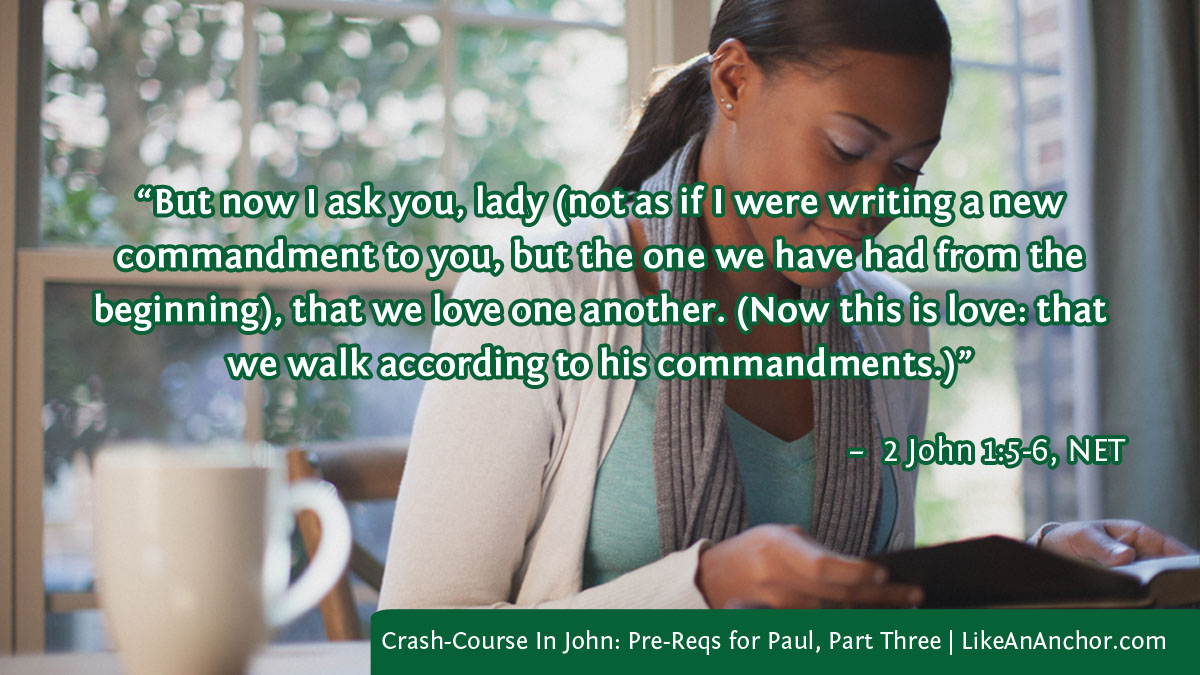
(Now this is love: that we walk according to his commandments.) This is the commandment, just as you have heard from the beginning; thus you should walk in it.
2 John 1:6, NET
In the spirit
For New Testament believers, walking in the Light and following the commands of God with integrity also involves walking in the spirit. We’re to keep the law not with a rote, outward sort of obedience but with obedience that comes out of a heart changed by the Spirit of God working in us. It’s a fulfilment of prophecies where the Lord said, “I will put my Spirit within you, and cause you to walk in my statutes” (Ezk. 36:26-27, WEB). Now, those who belong to Jesus walk in the Spirit (2 Cor. 12:17-18; Gal. 5:16-17, 24-25).
There is therefore now no condemnation to those who are in Christ Jesus, who don’t walk according to the flesh, but according to the Spirit. For the law of the Spirit of life in Christ Jesus made me free from the law of sin and of death. For what the law couldn’t do, in that it was weak through the flesh, God did, sending his own Son in the likeness of sinful flesh and for sin, he condemned sin in the flesh; that the ordinance of the law might be fulfilled in us, who walk not after the flesh, but after the Spirit.
Rom. 8:1-4, WEB
In love
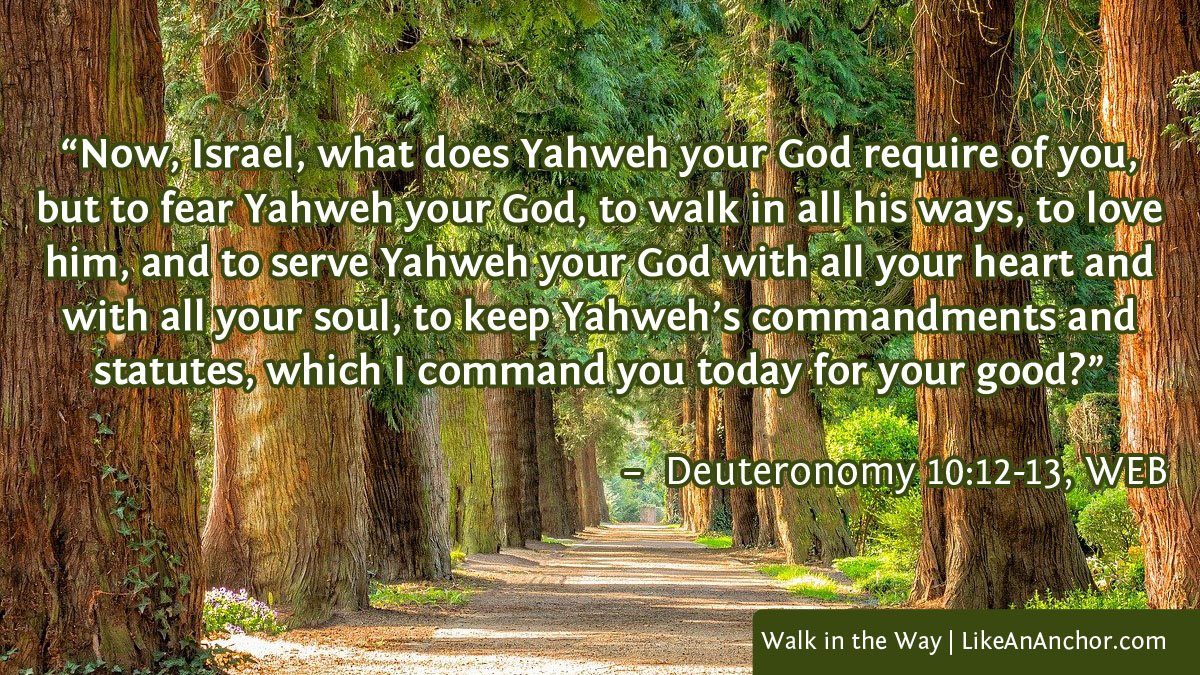
As we walk in the Light and in the Spirit, keeping God’s word with integrity, His character traits become more and more a part of us. One of those most important character traits is love (1 John 4:8, 16), and so it’s not surprising to find that love is the most excellent way to walk (1 Cor. 12:31-13:13). It involves walking according to His commandments (Deut. 10:12-13; 2 John 1:6) and it’s preeminent among other instructions such as putting on compassion, kindness, and humility (Col. 3:12-17).
Be therefore imitators of God, as beloved children. Walk in love, even as Christ also loved us and gave himself up for us, an offering and a sacrifice to God for a sweet-smelling fragrance.
There’s one final thing I want to mention about walking with God. When we’re walking in God’s ways, it affects not only the way we live our lives but also the way we experience life. There’s power, security, and peace that comes along with walking in the ways of the Lord even if we’re “walking” through physical dangers (Ps. 138:7; Is. 40:31).
Even though I walk through the valley of the shadow of death, I will fear no evil, for you are with me. Your rod and your staff, they comfort me.
Psalm 23:4, WEB
When you pass through the waters, I will be with you, and through the rivers, they will not overflow you. When you walk through the fire, you will not be burned, and flame will not scorch you.
Isaiah 43:2, WEB
When we’re walking with God, we can walk without fear no matter what’s going on in the world around us. We can walk knowing that He is traveling alongside us. We can walk with strength to face whatever comes, as well as wisdom, integrity, love, and light. Walking in the Way of God benefits us in incredible ways that reach beyond this life we’re living right now.
One of the things I often struggle with in settings like work and school is how much of my faith to share. I’m not an evangelist sort of person, and trying to convert people who don’t know Jesus yet is never something I’ve felt a strong calling to do. I’m much more comfortable–and feel I’m using my gifts far more effectively–when working with an audience of people who already have some kind of Christian framework for how they view the world. I also want to be respectful of other people’s time, personal beliefs, and conversational boundaries. Yet at the same time, I’m not ashamed of my faith and I want to live it out boldly the way I see heroes of faith doing in the Bible. At the very least, I want to let others see that faith is a central part of my life.
This struggle is one I think many Christians today can identify with, particularly as pressure to keep your beliefs to yourself increases. Many Christians in the Western world aren’t facing overt, clear, and violent persecution the way our brethren are in other parts of the world; we’re facing a more subtle, seemingly less dangerous pressure to not talk about Jesus in public, or say “God bless you,” or mention anything which may offend those who believe differently. Yet when we look at the examples of people in the New Testament, we see the apostles and other disciples risking ostracization from their communities as well as death, beatings, and imprisonment rather than be quiet about the gospel. At the same time, though, we’re also told to be wise about how we navigate the world around us. How do we balance all that? And what scriptures might help us figure out the answer?
Loving and Obeying
As we approach this question, I think we need to start from the position of seeking, “What does God ask of me?” and “How can I love Him more fully?” Beginning this sort of studying by wondering how low-profile we can be while still meeting the bare minimum requirements for Christianity would mean prioritizing what the world thinks of us over our relationship with God. We certainly don’t want that, so let’s start our search for answers by putting our relationship with God first.
As I wrote about more extensively last year in a post called “Do I Love God Enough To Obey Him?“, it’s impossible to overstate how important it is for us to know and be known by God. Love is a central part of that relationship–both God’s love for us and our love for God and for the people around us. The Apostle John’s writings make it clear that this love must involve obeying Jesus and the Father. Our relationship with God should change the way we live, and the form that change takes can be described as obedience to God’s commandments on a spiritual level. We’re to love God’s law and become righteous in the same way that He is righteous.
Obedience is not our means to righteousness; it is the clearest expression of our devotion to Jesus. … If we truly love Him, as we say we do, what He says will matter to us profoundly. We will not follow the acceptable parts of His teachings and ignore the objectionable parts. We will not approach our relationship with Him as though we are trying to get by with the bare minimum behavioral changes. We will devour His teachings, turning them over in our hearts, meditating on their application, and living them as clearly as we can.
With that background, the question of how to live out our faith in this world becomes secondary to the question of how we ought to live our lives in close alignment with God. It is as a result of our relationship with God that we have “good works” which we can let shine as a light before all people (Matt. 5:14-16; Phil. 2:15; 4:5; 1 Pet 2:12). We’re supposed to be fully-engaged in living for God, and if that is truly our focus it will be obvious to the people around us. We should want others to notice that there’s something different about us so they will realize God deserves all the glory and praise for whatever is good about us.
Wise, Harmless, and Bold
When looking at scriptures that talk about how to share your faith, there are a few key points that stand out to me. The first is how many times the New Testament talks about boldness when preaching. That description is used over and over in the book of Acts, where the disciples kept talking about Jesus even though they faced threats of imprisonment, beatings, excommunication, and even death for sharing the gospel (Acts 4:29, 31; 9:27; 14:3; 18:26; 19:8; 28:31). Paul also writes about speaking boldly. He encourages others to be bold and asks for prayers that he might speak with boldness (2 Cor. 3:12; Eph. 6:19-20; Phil. 1:14, 20; 1 Thes. 2:2; 1 Tim. 3:13). We should not let fear hold us back from talking about Jesus but being bold isn’t always easy; even Paul wanted the support of prayers so that he could keep preaching the gospel.
Behold, I send you out as sheep among wolves. Therefore be wise as serpents and harmless as doves. But beware of men, for they will deliver you up to councils, and in their synagogues they will scourge you. Yes, and you will be brought before governors and kings for my sake, for a testimony to them and to the nations. But when they deliver you up, don’t be anxious how or what you will say, for it will be given you in that hour what you will say. For it is not you who speak, but the Spirit of your Father who speaks in you.
Matthew 10:16-20, WEB
While we are supposed to be bold and courageous, not worrying about the possibility that we’ll face resistance or prosecution for our faith, we’re also supposed to be wise. Part of that is knowing when to speak and when not to speak. Peter says we should always be ready to give an answer if someone asks us about our faith (1 Pet. 3:15), but that doesn’t mean always speaking up when you haven’t been asked. The world is not a safe place. That fact should never terrify us, especially since we know God is on our side, but it should make us exercise wisdom. A wise person thinks before they speak. They seek God’s help in figuring out when to “hold their peace” and when silence is not an appropriate option (Est. 7:3-4; Prov. 11:12; Is. 62:1; Acts 11:18). As we seek to live rightly and shine Jesus’s light clearly, we also ought to be “wise serpents” and “innocent doves” who are careful to do no harm.
I know that conclusion doesn’t really give a clear answer to the questions we started with about how much you should talk about your faith as society increasingly pressures Christians to stay quiet about their beliefs. Still, I think Bible studies like this one help us keep our priorities clear. It’s easy to get caught up in the day-to-day-level worries about how people might respond to us or whether or not we said the right thing in a conversation. We ought to take a more big-picture approach, seeking first to honor God and letting all the other things fall into place around that central relationship.
The final general epistle is the shortest section of scripture we’ll look at in this blog series. Jude only wrote one letter that we have in our Bibles, and it’s just 25 verses long. That will leave us with enough space in this post for a wrap-up looking at common themes in all the letters that we’ve been studying over the past month.
Before we dive into Jude, here are links to the posts on James’s, Peter’s, and John’s letters. As I mentioned in those posts, there’s evidence that when the books of the New Testament were first put together the order had these letters between Acts and Romans (click here to learn more). This meant that if you read straight-through the New Testament, you’d read the general epistles before getting to Paul’s letters. The general epistles give us a foundation for understanding the connections between Jesus’s teachings, the Old Testament, and our lives as New Covenant believers, all of which is essential for properly interpreting Paul’s more complicated teachings. We can think of the general epistles as a kind of pre-requisite course for understanding Paul.
The identity of Jude is as debated as that of James (see that first post for more detail), and people went back-and-forth for centuries on whether or not to include his letter in canon. Now, though, it is “generally received over the whole Christian world” (Clarke’s Commentary). This letter’s theme is similar to 2 Peter and, as we’ll see later in this post, it also connects to themes that all the general epistles share. Taken as a whole, the general epistles by all four writers connect the New Testament back to the Old Testament, warn about dangers from outside persecutions and from evil men working within the churches, offer hope and encouragement, and tell their readers to do good and keep the commandments of God.
Jude addresses his letter “to those who are called, wrapped in the love of God the Father and kept for Jesus Christ” (Jude 1:1, all scriptures from NET). Like most other general epistle writers, he has a broad audience that includes all Christian believers. He said he’d planned to write “about our common salvation,” but even though that topic is exciting he felt compelled to write about something else. He wrote “to encourage you to contend earnestly for the faith that was once for all entrusted to the saints” (1:3). The NET footnote on this verse says, “The verb ἐπαγωνίζομαι (epagōnizomai) is an intensive form of ἀγωνίζομαι (agōnizomai). As such, the notion of struggling, fighting, contending, etc. is heightened.” When Jude talks about us contending for our faith, he means we need to fight and struggle for it with focus and determination.
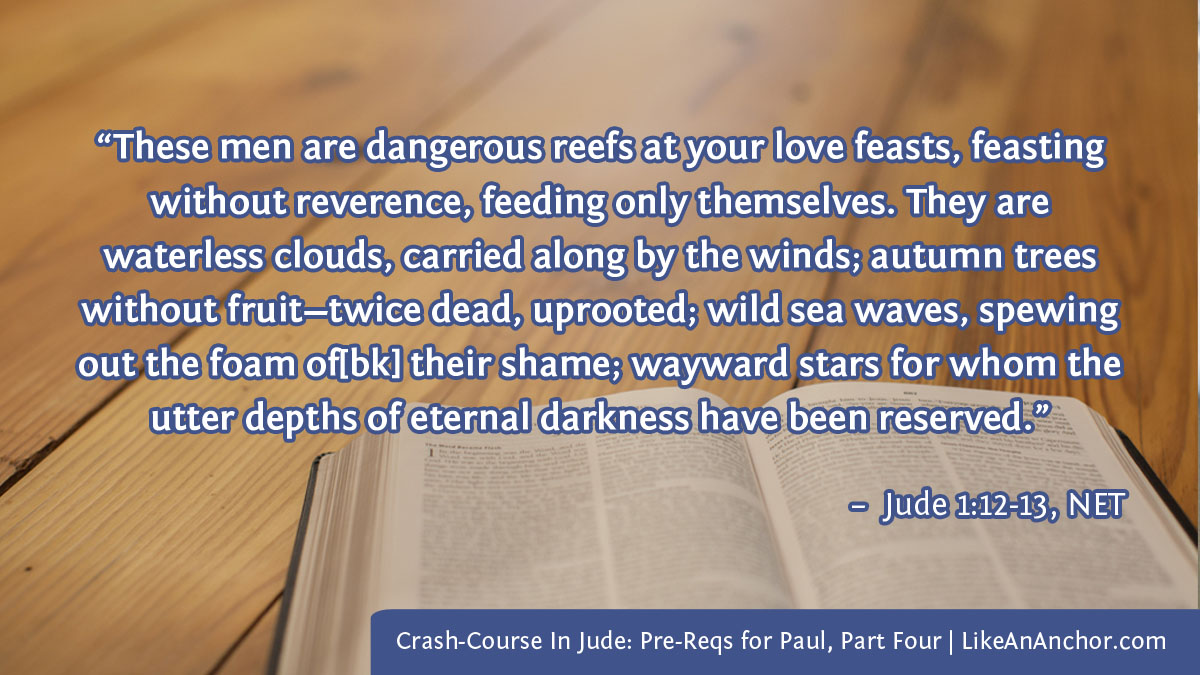
In this letter, Jude focuses his warnings and encouragement to fight on a specific problem: “ungodly men who have turned the grace of our God into a license for evil and who deny our only Master and Lord, Jesus Christ” (1:4). He further describes them as people who “as a result of their dreams, defile the flesh, reject authority, and insult the glorious ones” (1:8). They are murderous, blasphemous, rebellious, spiritually dead, double-minded, unstable, and a danger to everyone they encounter (1:10-13). They’re “grumblers and fault-finders who go wherever their desires lead them, and they give bombastic speeches, enchanting folks for their own gain” (1:16). Jude elaborates on the dangers these people pose and the evil they’re practicing throughout most of this letter. By the end, there’s no danger that we could see those who try to undermine the church as anything other than a serious threat.
These warnings about those who’ve “secretly slipped in” to the churches are placed alongside reminders from Jude that people who do such wicked things won’t get away with them. He bids his readers remember “that Jesus, having saved the people out of the land of Egypt, later destroyed those who did not believe” and references a couple other Old Testament examples as well (1:5-7). This verse is one of several in the New Testament that explicitly identifies Jesus as the member of the God family who worked directly with Israel. With this short phrase, Jude reminds us that God is the same yesterday, today, and forever and that He still values justice and judgement as well as mercy (Jude 1:14-15).
Jude doesn’t just focus on scathing indictments of those seeking to undermine the church while pretending to be faithful believers. He also warns us about how to recognize those people and gives us guidelines for how we ought to respond. As part of this, he references a scene that we don’t get anywhere else in the Bible.
Jude tells his readers, “But even when Michael the archangel was arguing with the devil and debating with him concerning Moses’ body, he did not dare to bring a slanderous judgment, but said, ‘May the Lord rebuke you!'” (1:9). This story serves two roles in Jude’s epistle. First, it shows that those who dare slander spiritual beings, even the wicked ones, have no idea what they’re messing with. Even angels don’t go up against the devil directly; they call on the Lord to rebuke him. Secondly, the story gives us hints for how we ought to respond when faced with wickedness. We, too, can call on the Lord to handle the matter of wicked beings, be they human or otherwise. That’s the safest and wisest thing to do. This is a good illustration to keep in mind when reading things Paul would later elaborate on, including the fact that we’re involved in spiritual warfare and that vengeance belongs to God, not us (Rom. 12:17-20; 2 Cor. 10:1-6; Eph. 6:10-20).
Finally, Jude ends his epistle with encouraging remarks. He’s confident that those he’s writing to are not part of the problem he’s describing. Rather, they’re part of the solution as they continue to build up their faith, pray in the Spirit, stay in God’s love, and practice mercy.
But you, dear friends—recall the predictions foretold by the apostles of our Lord Jesus Christ. For they said to you, “At the end of time there will come scoffers, propelled by their own ungodly desires.” These people are divisive, worldly, devoid of the Spirit. But you, dear friends, by building yourselves up in your most holy faith, by praying in the Holy Spirit, maintain yourselves in the love of God, while anticipating the mercy of our Lord Jesus Christ that brings eternal life. And have mercy on those who waver; save others by snatching them out of the fire; have mercy on others, coupled with a fear of God, hating even the clothes stained by the flesh.
Now to the one who is able to keep you from falling, and to cause you to stand, rejoicing, without blemish before his glorious presence, to the only God our Savior through Jesus Christ our Lord, be glory, majesty, power, and authority, before all time, and now, and for all eternity. Amen.
Jude 1:17-25, NET
Common Themes in the General Epistles
As mentioned in the introduction, the general epistles all connect the Old and New Testaments, warn about dangers coming from inside and sometimes outside the church, offer hope and encouragement, and remind us to do good and keep the commandments of God. I won’t spend too much time on these shared points, but I want to make a few comments and share scriptures that show this overlap.
OT Connections
All the writers of the general epistles were very familiar with the writings we now call the Old Testament, and frequently reference the law and the prophets. Their insistence that Jesus did not do away with these writings and that we do well to read them today are a great foundation for understanding how Paul talks about the law operating on a spiritual level for New Covenant believers.
These four writers do not shy away from the fact that those who follow Jesus Christ will face opposition and trials. Most of them also talk about the possibility that theses trails will come from other people who are (ostensibly, at least) part of the church fellowship. These are warnings to help ensure that we don’t get caught off-guard by threats to our faith or discouraged when trials come.
It would be terribly depressing if all the general epistles focused on warnings and trials without offering hope and encouragement. All four of these writers encourage their readers to be ready, to hope in God, and to keep living faithfully. They also speak about the help God offers us, the certainty that He hears our prayers, and the wonderful future He has prepared for us. We are precious to God and He’s fully invested in us.
Finally, all four writers of the general epistles tell us that there’s something we’re expected to do. We need to love God and keep His commandments. That’s what shows our faith is real rather than just a surface-level thing that we talk about without actually practicing.
For the last two weeks, we’ve been studying the general epistles. Here are links to the posts on James’s and Peter’s letters. As I mentioned in those posts, there’s evidence that when the books of the New Testament were first put together the order had James, Peter, John, and Jude’s letters between Acts and Romans (click here to learn more). This meant that if you read straight-through the New Testament, you’d read the general (also called “catholic”) epistles before getting to Paul’s letters. That reading order makes sense, since the letters that James, Peter, John, and Jude write are phrased in simpler language than Paul’s writings. The general epistles also give us a foundation for understanding the connections between Jesus’s teachings, the Old Testament, and our lives as New Covenant believers. You can think of the general epistles as a kind of pre-requisite course to help us with understanding Paul’s writings, similar to how you’d need to take intro to composition courses before specializing in teaching writing.
In today’s post, we’re going to focus on John’s three epistles. The first of these epistles begins without addressing a specific group, though from the context of the letter it’s clear he’s speaking to Christians–those who whom the gospel was preached and who chose to believe it. James’s letter addressed those of Israelite descent who believed in Jesus, Peter’s letters addressed Jewish and Gentile believers, and now John’s letter is written to everyone. The purpose he gives for writing this letter is “so that our joy may be complete” (or “your joy” depending on the Greek manuscript you use) (1 John 1:4, all quotes from NET).The mention of joy comes at the beginning of all three of his letters, and frames the encouraging and weighty subjects he’ll be covering.
Walk in the Light
The strongest theme throughout John’s three epistles is love. Here is where we learn “God is love,” and are reminded over and over that because God loves us we must love one another. Though John brings up other topics as well, he ties them all back to this core message. God is love, and because we’ve received God’s love we are duty-bound to respond to God and to other people in certain ways.
We’ll return to love before the end of this post, but that word actually doesn’t show up in John’s first letter until the second chapter. Originally, of course, there wouldn’t have been chapters dividing up the text of this letter, but that fact does make me curious about what things John felt it was important to talk about before diving into the main theme of his letter.
Now this is the gospel message we have heard from him and announce to you: God is light, and in him there is no darkness at all. If we say we have fellowship with him and yet keep on walking in the darkness, we are lying and not practicing the truth. But if we walk in the light as he himself is in the light, we have fellowship with one another and the blood of Jesus his Son cleanses us from all sin. If we say we do not bear the guilt of sin, we are deceiving ourselves and the truth is not in us. But if we confess our sins, he is faithful and righteous, forgiving us our sins and cleansing us from all unrighteousness. If we say we have not sinned, we make him a liar and his word is not in us.
1 John 1:5-10, NET
This recap of the gospel is what John starts his letter with. “God is light” is something that he wants to establish for his readers before sharing that “God is love.” If he just started off with “God is love,” then perhaps his readers might make the mistake that so many modern people have of assuming that because God is love, His love doesn’t come with any expectations placed on us. We who’ve received God’s love and who’ve been cleansed from our sins by Jesus’s sacrifice must walk in the light as well as live in God’s love. In short, we must “walk just as Jesus walked” (1 John 2:6).
John’s instruction to walk in God’s light is not a new commandment (1 John 2:7). It echoes all the commands from the Old Testament that could be summed-up as “love your neighbor as yourself” (Rom. 13:9-10; James 2:8). On the other hand, John also describes this as “a new commandment” because the darkness of old has now passed away and we have a far clearer picture of the true light shining through Jesus Christ (1 John 2:8). As Jesus said, he came to fill the “law and the prophets” to their fullest extent. Doing that magnifies what obedience looks like now as we follow the spirit of God’s commands. With that background, John moves into talking about love.
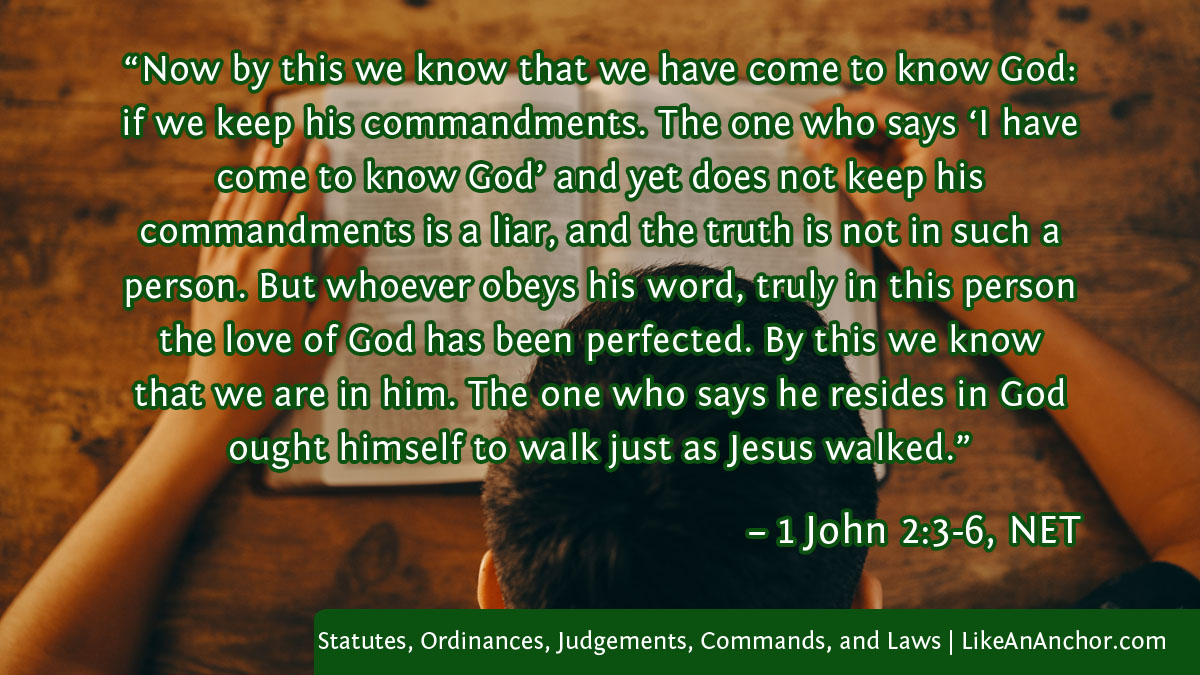
The one who says “I have come to know God” and yet does not keep his commandments is a liar, and the truth is not in such a person. But whoever obeys his word, truly in this person the love of God has been perfected. …
The one who says he is in the light but still hates his fellow Christian is still in the darkness. The one who loves his fellow Christian resides in the light, and there is no cause for stumbling in him.
1 John 2:4-5, 9-10, NET
Image by Pearl from LightStock
Be Warry of Dangers
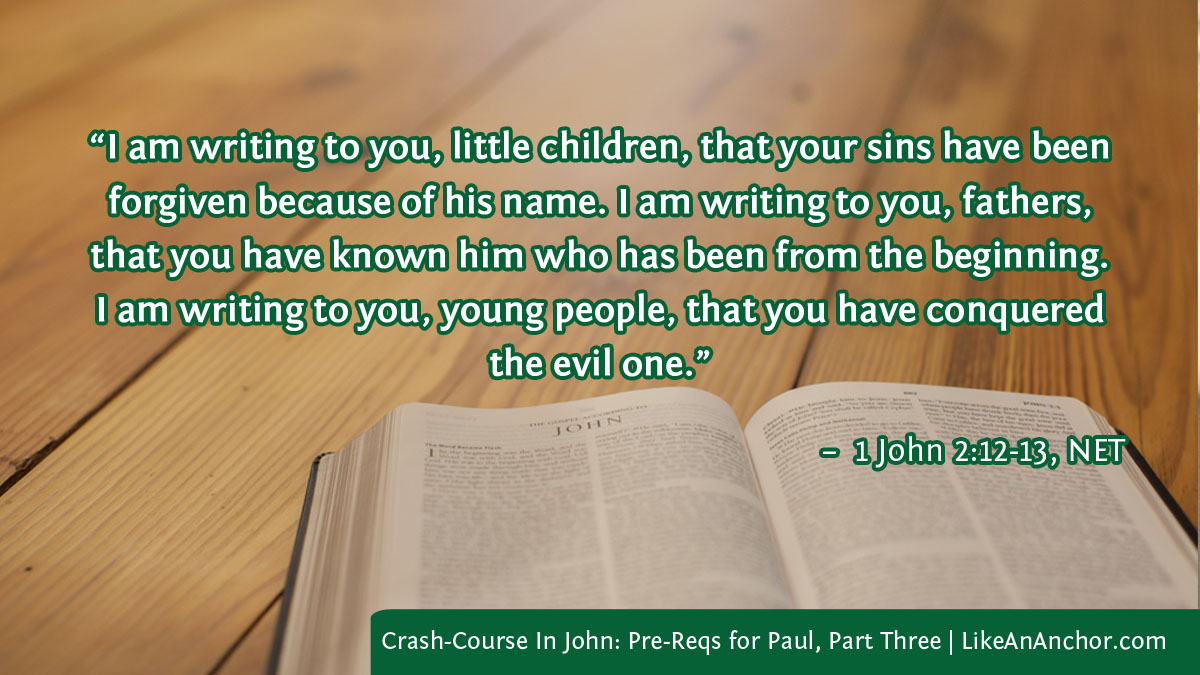
John’s not writing about the contrast between people who are in God’s love and light and the people who are living a lie in order to scare us. Indeed, he has some very reassuring things to say to his readers (1 John 2:12-14). He’s writing to them, and to us, because we’ve been forgiven, we know God, and we are already overcoming the evil one. But John also knows that Christians face many challenges, and it’s easy to slip away if we don’t have reminders for how to follow God. So he writes to us about the wonderful life that God offers. He reminds us of all the wonderful things that await us as people who God calls His very own children. He also talks about the fact that if we have that hope inside us, we will work to purify ourselves just as God is pure (1 John 3:1-3). Alongside all this talk of love and light, John highlights the need to keep God’s commandments and stay faithful to Him in spite of the dangers we face.
Over and over again in these letters and in the gospel he wrote, John links love with commandment keeping. Alongside that, John highlights the importance of living according to the truth. This idea goes along with walking in the light, keeping God’s commandments, and practicing righteousness. In both of his two shorter letters, John says that he rejoices to learn that his children (apparently referring to those he taught this faith to) are living in the truth (2 John 1:4; 3 John 1:4). Living and walking in the truth ought to be our intention as well, but there are many things that try to work against that goal.
Many dangers face God’s people, and a lot of them are spiritual. One example that John talks about is people who are “antichrist.” Though there is a figure known as “the antichrist” coming in the end times, Johan says we’re currently in “the last hour” and that “many antichrists” have already appeared. These are often people who were once part of the Christian body, but have now left and who deny both the Father and the Son (1 John 2:18-19, 22-26). Much like Peter did in his second epistle, John warns that the most dangerous antichrists are those who are working from inside the church to subvert people into denying the Father and/or the Son. For that reason, we need to “test the spirits to determine if they are from God, because many false prophets have gone out into the world” (1 John 4:1-6; see also 2 John 1:7-11).
Even though John is very reassuring to his readers and continually reminds them of things like “we have eternal life” (1 John 5:12-13), he also does not soften the strength of his warnings. In the second letter, he even says, “Watch out, so that you do not lose the things we have worked for, but receive a full reward. Everyone who goes on ahead and does not remain in the teaching of Christ does not have God. The one who remains in this teaching has both the Father and the Son” (2 John 1:7-8). John wants us to take these warnings seriously and let them inspire us to remain in holiness. Whether or not we choose light, love, and commandment keeping is a choice that has eternal consequences.
Image by Anggie from LightStock
Love Always
It’s in the context of all these reminders, reassurances, and warnings that John highlights the vital importance of love. In these three letters, “love” is translated from agape or its root word agapao. This is a selfless, benevolent love that always seeks the good of the one who is loved. Agape is often described as “godly love,” although other words, like philos are also used of God’s love in the New Testament. As we read through John’s letters, we’re warned not to “love the world or the things in the world,” but rather to focus our love on God as we practice the things which are in accordance with His will (1 John 2:15-17).
John tells us, “Everyone who does not practice righteousness—the one who does not love his fellow Christian—is not of God” (1 John 3:10). From that, we can infer that practicing righteousness involves loving our brethren. Indeed, John goes on to say, “We know that we have crossed over from death to life because we love our fellow Christians” (1 John 3:14). It’s worthwhile at this point to go and read all of chapters 3 and 4 because that section of the letter goes into so much depth on this particular topic. Because of God’s love for us–which results in us being redeemed by Jesus’s sacrifice and being called the Father’s children–“we also ought to love one another “(1 John 4:11). If we don’t genuinely love each other, we can’t even say that we love God. Unless our love includes other believers, we have no concept of what God’s love truly means. And our love must also include keeping God’s commandments (2 John 1:5-6).
Image by HarveyMade from Lightstock
As John wraps up his letter, he looks back on everything discussed so far and says this:
We know that everyone fathered by God does not sin, but God protects the one he has fathered, and the evil one cannot touch him. We know that we are from God, and the whole world lies in the power of the evil one. And we know that the Son of God has come and has given us insight to know him who is true, and we are in him who is true, in his Son Jesus Christ. This one is the true God and eternal life. Little children, guard yourselves from idols.
1 John 5:18-21, NET
I find John’s writings some of the most poetic and inspiring of the New Testament. His emphasis on God’s light and love is beautiful, and I love the way he talks about God welcoming us into His light and His family. In a compassionate, empathetic way, John also writes about the need for Christians to live and walk in a certain way. We’re not to be fearful, worried that God will cut us off and cast us away if we slip-up, but we must at the same time commit to practicing righteousness instead of sin. God has given us everything we need for salvation. He loves us and He wants us as part of His family. We just need to be on guard to make sure we don’t let those good things slip away from us through neglect or rejection. We know the truth of what’s going on in this world and behind the scenes, including that the world lies under the power of the evil one. With that in mind, we can be vigilant in order to guard against putting any idols before God or falling prey to the influences of those who are antichrist.
–
Featured image by Lamppost Collective from Lightstock

![Image of a man studying the Bible overlaid with text from Ex. 20:7, AMP version: “You shall not take the name of the Lord your God in vain [that is, irreverently, in false affirmations or in ways that impugn the character of God]; for the Lord will not hold guiltless nor leave unpunished the one who takes His name in vain [disregarding its
reverence and its power]."](https://likeananchor.com/wp-content/uploads/2025/07/bibilical-hebrew-1.jpg)














 Like An Anchor