Let’s Talk About How Our Personalities Develop

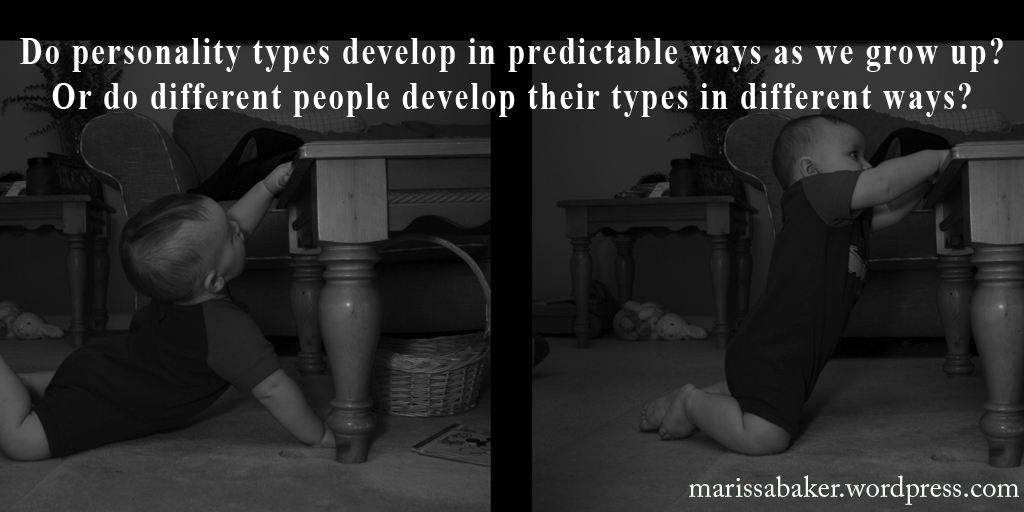
Traditionally, Myers-Briggs theorists have taught that people develop their primary function first, followed by their secondary function up until their 20s, then their tertiary function in their 30s and 40s, and sometimes they’ll go on to start using their inferior function later in life. It’s a neat, orderly formula. Too neat for my tastes. (If you felt lost when I started talking about functions, click here to read a post explaining that aspect of Myers-Briggs personality types.)

When you start talking about type development in more depth, though, Myers-Briggs experts will add that environment and an individual’s commitment to personal growth does influence when our functions develop and how well we learn to use them. They’ll also talk about life-long type development and offer tips for dealing with your less developed functions before the age you’re “supposed” to develop them. And I’ve also talked with people who feel like they developed their tertiary before their secondary function, or had to go back later in life and become comfortable with their dominant function because they’d been suppressing it. Clearly, there’s more going on than a neat developmental progression from one function to another.
click to read article, "Let's Talk About How Our Personalities Develop" | marissabaker.wordpress.com
photo credit: “Learning To Walk” by Tela Chhe, CC BY via Flickr

Personality Hacker proposes a different look at how we develop functions, or “mental processes.” I’ve not seen them directly address the question of type development from childhood on, but they do see our secondary function as our growth position. We’re most comfortable using our dominant function and (baring some kind of trauma) it’s typically also the one you’ve spent the most time developing. This function is either introverted (i.e. focused on our inner world) or extroverted (i.e. focused on the outer world). Your secondary function is focused in the other direction — if you’re a dominant introvert, your secondary mental process it extroverted (and vice versa). But your tertiary function matches your primary one in terms of introvert-extrovert, so it can be more comfortable (though not as healthy) for us to spend time in that one rather than cultivate our secondary function.

What About Culture and Family?

I think our early experiences and upbringing have quite a bit to do with which mental processes we develop and when. For example, an introverted child leads with an inward-focused mental process. How their society and family treats their introversion will have a huge impact on their development. They might develop their extroverted side more quickly as a defense mechanism for fitting into an extroverted world. On the other hand, the same thing (developing their secondary extroverted function early) could also happen if given support for their introverted development as well as encouragement to stretch themselves in the outer world.

Alternately, our hypothetical introvert might reject the push to be more extroverted and end up developing their tertiary process more quickly than their secondary process. That could be a reaction against the external push to be something they’re not, or in response to a particular subculture that values their introverted traits. If no one’s telling you to cultivate a less comfortable aspect of your personality, then why bother?

The same can hold true for extroverts. Many cultures, including the United States, have historically held extroverted traits up as more desirable. If you’re constantly being admired for your outgoing personality, social skills, and ability to navigate the outer world, why focus on developing your un-cool introvert side in high school? Or maybe you’re an extrovert growing up in a family of introverts who constantly ask you to give them alone time or be quiet, and you suppress your dominant function’s development until you’re older. I’ve seen both happen.
click to read article, "Let's Talk About How Our Personalities Develop" | marissabaker.wordpress.com
photo credit: “Learning …” by Eric Fleming, CC BY via Flickr

There are other factors in play as well. An ExTJ guy would typically find encouragement for his dominant function, where a woman with the same personality type could face criticism for not “acting like a girl.” An ExFJ girl would fit more easily into what society expects from young women, while a guy with the same type might be told to “man up.”

Messy, Beautiful Variations In Type

Personally, I feel I developed my dominant function first (as an INFJ, that’s Introverted Intuition/Ni), stunted my own secondary function’s growth by being incredibly shy (Extroverted Feeling/Fe), ended up using my tertiary function trying to make sense of things (Introverted Thinking/Ti), and was completely blind to my inferior function (Extroverted Sensing/Se). That described me pretty much until age 19 or 20. At that point, I’d been in college for about a year and started working to overcome my shyness. That finally gave my secondary Fe a chance to develop into a healthy version of that function. At the same time, I started using Ni in a healthier way, too, while still occasionally tapping into Ti. As I started learning more about my personality type, I’ve also started trying to develop my Se (though I’ll admit it’s with little success so far). But since I’m not even 30 yet, I “shouldn’t” be consciously using either my tertiary or inferior function yet.

I’m certainly not trying to argue that Myers-Briggs gets everything (or even most things) wrong about type development. The MBTI is a fantastic tool for describing how people’s mind’s work, how we typically learn information, and the ways we interact with our worlds. And the typical type development model has lots of truth in it, including the fact that our primary and secondary functions are the ones we develop most fully. It’s just that there’s more influencing the nuances of type development than how old we are.

These variations are one reason why no two people who share a personality type will be exactly the same. We all have different circumstances that shape our type development, different levels of comfort with our type’s functions, and different ways of expressing how our minds work. If you feel like you didn’t follow the standard model of type development, don’t worry — you haven’t missed out on your chance to grow and there isn’t anything wrong with you. Our personality types aren’t boxes we fit in neatly or hoops of development we jump through. They’re a way of describing how your mind works and a tool we can use to accelerate personal growth, including developing all facets of our personality type more fully.
Save

Save

Save

Save

Maybe The Telephone Isn’t An Enemy

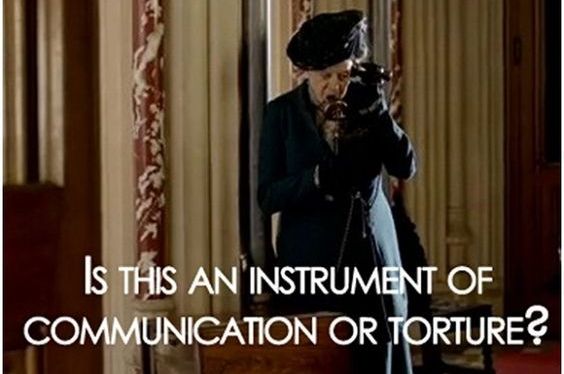
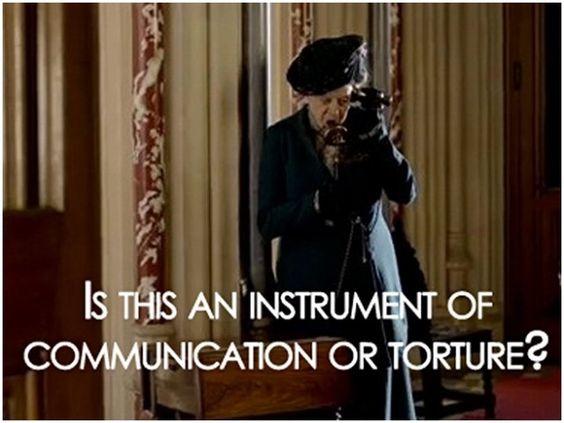
Some of you might think that title is strange, but my fellow introverts will understand. The hours of mental preparation that go into making a two minute phone call. The sense of dread when the phone rings and you aren’t ready to talk with someone. The pressure of sounding engaged and alert while thinking fast enough to avoid awkward silences. Most of us view the telephone in much the same way the Dowager Countess of Grantham does.

some thoughts for introverts. Click to read article, "Maybe The Telephone Isn't An Enemy" | marissabaker.wordpress.comBut I had a truly enjoyable phone conversation with a friend this weekend, and I realized this wasn’t an isolated incident. When he asked for my number my first instinct was panic, then I realized there wasn’t any reason to. I talk with my sister on the phone for hours almost every day. I chat with my dance team when we’re coordinating practice times. I enjoy the unexpected call from my cousin or a select group of friends. Chatting on the phone really isn’t all that scary.

Now, in the interest of full disclosure, I am in many ways a stereotypical introvert in regards to the telephone. We don’t have caller ID on the landline and the calls are rarely for me, so I refuse to answer when it rings unless I recognize the voice and want to talk with them now. My cell phone is set so it doesn’t even ring unless the number is in my contacts list and, in general, I much prefer written communication. There are times, however, when telephones are a preferable method of communication. Read more

Myers-Briggs: Fad or Science?

Friends who know I blog about Myers Briggs types sometimes send me links to people critiquing the MBTI and ask what I think. The arguments in videos like “Why the Myers-Briggs test is totally meaningless” and articles such as “Goodbye to MBTI, the Fad That Won’t Die” tend to follow a similar pattern and hit the same points:

  • Kathryn Brigs and Isabel Briggs Myers had no formal training.
  • The test doesn’t allow for complex personalities or that someone can be a little bit of an extrovert and a little bit of an introvert at the same time.
  • Similarly, the judging-perceiving, thinking-feeling, and sensing-intuition “scales” don’t allow for people who use both.
  • About 50% of people who take the test twice within 5 weeks get different results.
  • Test fails to predict success in various jobs and doesn’t provide meaningful data.
  • The test remains popular because it only gives positive results. These results are vague and hard to argue with, much like astrology and pseudoscience.

Disclaimer: some of the links in this post are affiliate links. This means that, at no additional cost to you, I will receive a commission if you click on the link and make a purchase on that website.

Setting aside the first arguments for now, I think these points are a good criticism of some of the free tests going around which make people pick just between the four letter groups. None of this, however, takes into account the science behind Myers-Briggs. In fact, if the critics would bother reading Isabel Myers’ book Gifts Differing,* they would find most of their points have nothing to do with actual Myers-Briggs theory.Myers-Briggs: Fad or Science? | marissabaker.wordpress.com

The Truth About Extroverts and Introverts

The video I linked above correctly states that Jung’s theory allowed for people who didn’t fit neatly into a single category. But then they say Kathryn Briggs and Isabel Myers “took Jung’s types but slightly altered the terminology and changed it so every single person was assigned only one possibility or another. You couldn’t be a little bit of an extrovert or a little bit of an introvert.”

In fact, this a complete misrepresentation of Myers-Briggs theory. Read more

Finding Your Real Myers-Briggs® Type

It’s so easy to take a pseudo-Myers-Briggs® test on the internet. You can click through a quick quiz, get your result and think, “Wow, I guess that does sound like me.” A few weeks later, you might stumble across another short quiz and take it again. Maybe you get a different answer and the description still sounds like you. Now you’re wondering whether this whole Myers-Briggs thing is all it’s cracked up to be, and if it is, then why were your results different?

This is one of the reasons Myers-Briggs tests have come under fire from critics who don’t really understand how the Myers-Briggs Type Indicator (MBTI®) is supposed to work. They look at the short little quizzes with generic feel-good results, and say it’s too simple and unreliable. But if you dive into the theory behind Meyers-Briggs, and especially cognitive functions (click here for an introduction to type functions), you start to realize how helpful the MBTI can be as a tool for understanding yourself and other people.

One of the principles of Myers-Briggs theory is that people only have one type, which stays consistent throughout their lives. You grow and develop within your type, but you don’t change from an INFP to an ENFJ to an ISTP or any other combination of letters. So with that in mind, how can you find your true type with so many conflicting results floating around?Finding Your Real Myers-Briggs® Type | LikeAnAnchor.com

Take A Good Test

Disclaimer: some of the links in this post are affiliate links. This means that, at no additional cost to you, I will receive a commission if you click on the link and make a purchase on that website.

If you can’t take the official MBTI, there are a few decent substitutes out there on the internet. My favorite by far is Personality Hacker’s Genius Style test.* They ask for an e-mail address, but it is free. One of my favorite bloggers, Susan Storm, also recently released a test. You can click here to take that.

Similar Mind’s Jungian test is another I’ve recommended (note from May 2017: recent changes to the test questions may skew results. You might want to try HumanMetrics instead). Some people really like the test from 16Personalities, but it’s not my favorite. These tests all give you a series of questions which are designed to learn what cognitive functions you use, then give you a four-letter test result.

I’d recommend starting with the Personality Hacker test, and then taking one or both of the other tests to compare results. Try not to read the full results of one test before you take the others — you want to take each one as unbiased as you can. If they all give you the same result, that’s a pretty good indication you’ve found your personality type. If they’re different, though, it’s time to start reading.

Compare Results

Now that you have one or more personality type results, start reading descriptions of your potential personality type(s). Here are some excellent resources:

Read the descriptions for each of your type results. Even if you only got one result, it’s a good idea to look at similar types that use some of the same cognitive functions. Here are a few guidelines for which other types to look up based on your test results.

If you test as an …

  • Introvert, read about the type which is opposite you on the J/P scale. The J/P preference describes how we interact with the outer word through our extroverted function, so an IJ type actually leads with a perceiving process and an IP type leads with a judging process. This can affect test results.
  • EJ, take a look at the type opposite you on the S/N scale. The tests found that you lead with an extroverted judging/decision making process, but might not have accurately found your introverted secondary process.
  • EP, take a look at the type opposite you on the F/T scale. The tests found that you lead with an extroverted perceiving/learning process, but might not have accurately found your introverted secondary process.
  • SFJ or NFJ, read results from ENFJ, INFJ, ISFJ, and ESFJ. These types all use Extroverted Feeling, and can often be mistaken for each other. Shy ESFJs and ENFJs can be mis-typed as introverts, and outgoing ISFJs and INFJs can be mis-typed as extroverts.
  • NT types, read the type opposite you on the E/I preference. ENT- types, especially ENTJs, are among the most “introverted extroverts” and might mis-type.

Think About Stress

Most tests look at your primary and secondary function — the driver and co-pilot processes that lead in our personality. This makes sense, since other functions are less well developed and we don’t use them as much unless we’re stressed. When we’re trying  to discover our true type is, though, how we react under stress is a good indication of which type matches us best.

Good type descriptions will also talk about the inferior function. An excellent book on this topic is Was That Really Me? How Everyday Stress Brings Out Our Hidden Personality* by Naomi Quenk.

Keep In Mind …

No personality test result is going to be a 100% perfect match. You’re looking for the one that fits you best. You will find elements of other descriptions that sound like you, but there should be one that fits better than the others. Pay close attention to descriptions of how your type uses cognitive functions. Descriptions of INFJ and INFP types, for example, sound similar but they lead with very different mental processes.

Good luck on your journey of self discovery! There’s a plethora of resources out there that can help you, including type-based Facebook groups and forums where you can talk with people of different types to see how they think. And if there’s anything I can help with, just ask!

*indicates affiliate links

Featured image credit: StockSnap via Pixabayy

Save

One For The Extroverts

Extroverts are Just As Amazing As Introverts | marissabaker.wordpress.com
credit

This is a great time to be an introvert. We see articles and books popping up all over the place defining introversion, listings wonderful qualities of introverts, and making sure the extroverts know that introverts are just as good (and dare we imply, better?) than them. Introverts Unite (separately)! Introvert Power!

But I wonder when reading some of these articles if we’ve done the extroverts a disservice. Are we introverts in danger of taking our quest for recognition as extroverts’ equals to the extreme of thinking we’re “better than them”? If people could ever be balanced in a quest for equality, it should be those who study type theory. The very fact that introversion and extroversion is hard-wired into our brains should tell us that not everyone thinks the same, and that’s okay.

So with that in mind, here’s a post for the extroverts. You’re awesome, too. Most of the introverts posts like this are addressed to extroverts with the goal of debunking myths surrounding introversion, so we’ll try and do something similar for assumptions we have about extroverts.

1. Extroverts are Intelligent and Sensitive

Let’s get two things straight right from the get-go: introverts don’t have a monopoly on intelligence or sensitivity. Extroverts can be intelligent (and introverts can be unintelligent). Extroverts can be sensitive (and introverts can be insensitive). In fact, the Sensory Processing Sensitivity trait is independent of introversion and 30% of the people who qualify as Highly Sensitive are extroverts. At least two of my extroverted friends are HSPs, and even the ones that aren’t are way more in-tune with their own and other people’s feelings than most introverts give them credit for.

2. “Extrovert” Doesn’t Equal “Social”

Extroverts are Just As Amazing As Introverts marissabaker.wordpress.com
credit

Introverts tend to think of extroverts as the people who crave the society of others, and who have an annoying habit of trying to drag introverts out of their shells. But extrovert doesn’t necessarily mean someone who is always social. It means someone who is oriented to the the outer world of people, places, and/or things. They are more likely to recharge among other people than alone, but not always. This is especially true of the more “introverted extroverts” like ENFJs and ENTJs. As one article puts it, ““Extrovert” is not Latin for “has Red Bull flowing through veins.””

3. Extroverts Can Be Shy

Often, the extroverts who tell introverts that we can “recover” from our introversion think this because they were shy as kids and assume “introvert” is the same thing they experienced when they were shy. Shyness is not the same  as introversion, and it isn’t an uniquely introvert phenomena. Extroverts can also suffer from shyness and social anxiety. It might actually be harder for them, because at least as a shy introvert you are oriented to living inside your head, whereas an extrovert who is shy wants to be around people but is also terrified of them at the same time.

4. Extroverts Get Things Done

Extroverts are Just As Amazing As Introverts marissabaker.wordpress.com
credit

I recently saw someone ask what the world would look like if introverts were in charge. Most of the responses (all from introverts) were along the lines of “peaceful,” “harmonious,” and “quiet.” The first thing I thought? Nothing would ever get done. We’d be so busy trying to avoid conflict that the world would fall apart. As a society, we need extrovert’s energy to connect people, force conflict resolutions, advocate for change, and step-up as leaders. Can introverts do that? sure. But many extroverts thrive in those roles and find that it comes naturally to them.

5. Extroverts Do Think

This should be obvious, but even for those of us who know deep-thinking extroverts there can still be an assumption that most extroverts just word-vomit whatever pops into their heads and dash through life acting instead of thinking. Granted many extroverts do love to talk and sometimes words get out that haven’t gone through a filter yet, but that doesn’t mean they don’t think deeply about things. If you’ve spent any one-on-one time at all with an extrovert, it quickly becomes obvious that they aren’t all shallow. Most of my closest friends are extroverts, and I’ve learned to value their insights and thoughts on a wide range of subjects.

If you’re an extrovert, what is it that you wish people understood about you? If you’re an introvert, what do you love about the extroverts in your life?

Introduction To Cognitive Functions: The Decision-Making Processes

Introduction To Cognitive Functions: The Decision-Making Processes | marissabaker.wordpress.com
image credits: Bailey Weaver, CC BY
Roberto Faccenda, CC BY-SA

If you’ve been hanging around Myers-Briggs enthusiasts for a while, you’ve probably heard about the Jungian cognitive functions. They are key to understanding Myers-Briggs theory, but they can also be very confusing. Basically, the four letters in a Myers-Briggs type tells you what type of mental processes you use most effectively in making judgements and decisions (Thinking or Feeling) and perceiving the world (Intuition or Sensing). It also tells you whether you are more oriented to the outer world or inner world (Extrovert or Introvert).

Everyone has and uses four functions (out of a possible eight). Your primary function is the one you’re most comfortable with and use most effectively. It’s supported by your secondary function, which acts as a sort of co-pilot. The third and fourth functions are less well developed, and while we have access to them they are not used as effectively. You can look up your type’s cognitive functions on several websites, including PersonalityJunkie.

Last week’s post focused on the four perceiving/learning functions, so this week we’ll cover the judging or decision-making functions. Everyone has an introverted or extroverted form of Thinking or Feeling in their function stack. We use one or the other most effectively when making decisions and thinking about what the world “should” be like. Most Myers-Briggs enthusiasts still refer to these functions by their full names or abbreviations, but I think the Personality Hacker labels are easier to use when first learning about cognitive functions so I’ll include those as well.

Thinking

Thinking types prefer to make decisions using an impersonal, logical approach. They value truth more than tact, prize accuracy, and want to make fair decisions.

Accuracy/Introverted Thinking (Ti)

Accuracy is mostly concerned with whether or not data, ideas, and observations make sense to the individual. Types with this function are less concerned with drawing conclusions from data, and more concerned with creating theories, questions, and insights that line up with their internal fact-checking system. Types who use Accuracy rely more on their own power of observation and thoughts on a given subject than on outside sources when making decisions.

This is the perceiving process used most effectively by ISTPs, INTPs, ESTPs, and ENTPs. The introverts use it as their primary function, the extroverts use it as a co-pilot to support their dominant learning function.

Effectiveness/Extroverted Thinking (Te)

As an outward-focused Thinking function, Effectiveness relies on facts and data gathered from outside sources when making decisions. These types want to experiment to find out what works and what doesn’t, and how they can be most efficient. It’s a practical function focused on finding solutions, discovering and classifying facts, and setting goals.

This is the perceiving process used most effectively by ESTJs, ENTJs, ISTJs, and INTJs. The extroverts use it as their primary functions, the introverts use it as a co-pilot to support their dominant function.

Feeling

Feeling types prefer to make decisions based on their personal values and how the decisions will affect other people. They want to maintain interpersonal harmony, and may soften truth in an effort to be tactful.

Authenticity/Introverted Feeling (Fi)

As an Introverted Feeling function, Authenticity wants to understand the self. These types make decisions based on what feels right, as influenced by abstract ideals. It is a focused, deep sort of way to experience emotion that many Authenticity types find hard to express to other people.

This is the perceiving process used most effectively by ISFPs, INFPs, ESFPs, and ENFPs. The introverts use it as their primary function, the extroverts use it as a co-pilot to support their dominant function.

Harmony/Extroverted Feeling (Fe)

When feeling is turned outward, Harmony focuses on getting everyone else’s needs met when making decisions. These types adapt themselves to given situations trying to fit in, and value the ideals and customs of their community. Harmony seeks true peace and understanding between people, and is adept at sharing feelings to create sympathy.

This is the perceiving process used most effectively by ESFJs, ENFJs, ISFJs, and INFJs. The extroverts use it as their primary functions, the introverts use it as a co-pilot to support their dominant function.