What Are The Books That Have Influenced You The Most?

One of my Facebook friends shared a post about the ten books that have most influenced his life, which I thought was a great idea. But it took me two weeks to figure out which books I wanted to write about and by the time I hit 500+ words I thought, why not just make it a blog post? So if you are reading this and care to share your most influential books consider yourself “tagged.” I’d love to see what books have had the biggest impact on your lives either in the comments or on your own blog (there’s an article topic you don’t have to come up with on your own!). The original list was 10 but I ended up with 8, so post however many you like.What Are The Books That Have Influenced You The Most? | marissabaker.wordpress.com

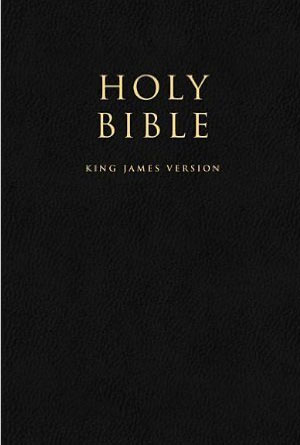
The Bible

What Are The Books That Have Influenced You The Most? | marissabaker.wordpress.comA rather obvious first choice for a Christian blogger, but this book definitely deserves the top spot when talking about books that influenced my life. It’s still influencing everything I do and I fall more in love with this book and it’s Author every time I read it. It’s the greatest love story every told, the best handbook you’ll ever find for life, and an incredible source of hope and purpose. Since more than 50% of this blog is devoted to talking about this book I’ll stop now. You know I could (and have!) keep going on about it for several books worth of text.

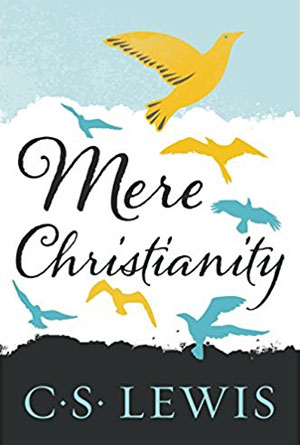
Mere Christianity by C.S. Lewis

What Are The Books That Have Influenced You The Most? | marissabaker.wordpress.comI could have put several books by C.S. Lewis on this list, but this is the first of his non-fiction I read and it’s the one that’s been most influential (with Screwtape Letters a close second). I just love the way he writes about his faith. Not only is he firmly grounded in scripture, but he’s also a persuasive speaker to those who don’t already put their faith in the Bible. In the words of Anthony Burgess, “C.S. Lewis is the ideal persuader for the half convinced, for the good man who would like to be a Christian but finds his intellect getting in the way.”

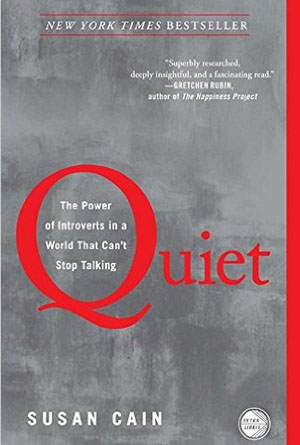
Quiet: The Power of Introverts In a World That Can’t Stop Talking by Susan Cain

What Are The Books That Have Influenced You The Most? | marissabaker.wordpress.comI started researching my personality after starting college and realizing I was even more different from “normal” people than I’d previously thought. This is one of the first books I read on the subject and it literally changed my life. Like many introverts, particularly INFJs, I always felt there was something off about the fact that I couldn’t seem to socialize the way so many other people did. This book pointed out how introvert brains are wired differently and that there are strengths in that personality. In other words, it shows that we’re not broken extroverts and introversion isn’t something to “fix.” Read more

Let’s Get Real About Fantasy

Daydreaming is often considered a childish activity. So it might come as a surprise that studies indicate at least 96% of adults engage in daydreams and/or fantasizing on a daily basis. These daydreams typically last for just a few minutes while the mind wanders, but they can also be more involved, frequent, and lengthy. And getting caught up in daydreams is not, as previously thought, as sign of tending toward mental illness.

According to an article in the Dartmouth Undergraduate Journal of Science, we’re learning that daydreaming is “a normal part of our cognitive processes.” In fact, it’s pretty normal to “spend one-third to one-half of our waking hours daydreaming, although that amount can vary significantly from person to person.” I was honestly pretty surprised to learn this. I mean, I know I do that, but I wasn’t expecting such a large percentage of the population to also daydream so much.

But while reading different articles about daydreams, I realized something else. They’re talking about people’s minds drifting into fantasies about their real lives. For example, it’s considered healthy for someone approaching a job interview to daydream about getting the job or for someone in a high-stress job to spend time fantasizing about how all their conversations for the upcoming day could go well. Other studies asked people to daydream about taking vacations or their childhood home. These daydreams are about things that could happen or have happened. I have those types of daydreams, too, but that’s not what most of mine are.

Let's Get Real About Fantasy | marissabaker.wordpress.com
this picture is part of a psychological self-portrait I made in a college art class

Extreme Fantasizers

While studying hypnotic suggestibility in 1981, psychologists Theodore X. Barber and Sheryl Wilson discovered that the 27 women they identified “as extremely good hypnotic subjects … all had a fantasy life so intense that it seemed ‘as real as real.'”‘ After more research, people in this group are now described as having a “fantasy prone personality” (FPP). On the more extreme side, where fantasies start to take over reality, it’s called “maladaptive daydreaming” (click here to read an interview with a maladaptive daydreamer).

According to researchers, about 4 percent of people spend half or more of their waking hours absorbed in reverie. The fantasies are not mere fleeting daydreams but something of a cross between a dream and a movie, where an elaborate scenario unfolds once a theme is set. (from a New York Times article)

Reading about this group is where I start to recognize myself. Read more

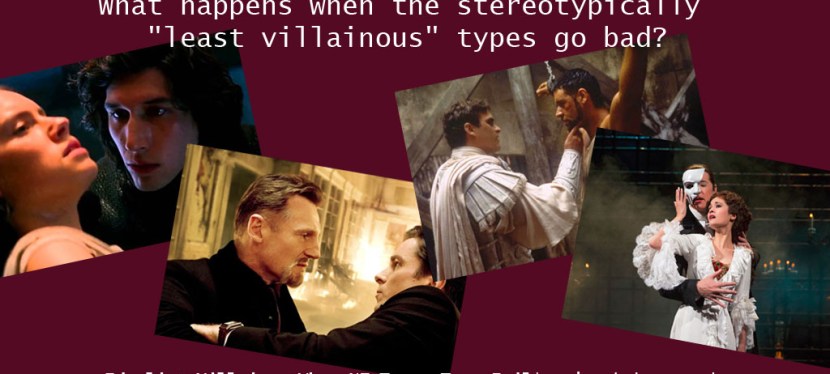
Idealist Villains: When NF Types Turn Evil

A few weeks ago I observed something curious in one of the personality type groups I frequent on Facebook. One member started a discussion about what kind of villain different personality types would be and there were a few types they didn’t even list. Their assumption was that most Feeling types wouldn’t become villains and especially not NF or FP types.

Rather than bask in the knowledge that we’re the lest villainous type a surprisingly high number of NFs jumped into the comments to defend our ability to turn evil. Most of their comments went something like this: “Well, I wouldn’t personally be a villain, but I could be because *insert reasons.* And on top of that, *insert fictional or real name* is a villain of my type.” I laughed at the number of INFJs who reminded people that Hitler was an INFJ while at the same time reassuring people they don’t feel Hitler-ish tendencies themselves.Idealist Villains: When NF Types Turn Evil | marissabaker.wordpress.com

Who Gets To Be The Villain?

I dare say when most people think about villains, they think of a detached mastermind. There’s a ridiculously high percentage of NT type villains (and correspondingly few NT heroes; it’s even harder to find heroic INTJs in fiction than it is to find NF villains). In real life, of course, people of any personality type can lean more towards the best version or the worst version of their type. No one personality type is inherently “better” than any other. However, society does stereotype certain characteristics associated with types as better or worse.

Prioritizing other’s safety over your own, a characteristic most commonly associated with FJ types, is often seen as a heroic trait. Hence, we see characters like Captain America with an ISFJ personality type. But what if you have an ISFJ character who decides only a certain group of people (or even just one person) is more valuable and it’s their duty to protect them? Suddenly the heroic trait doesn’t seem so safe any more. Especially when you consider the prime example of a villainous ISFJ is Norman Bates from Psycho. Read more

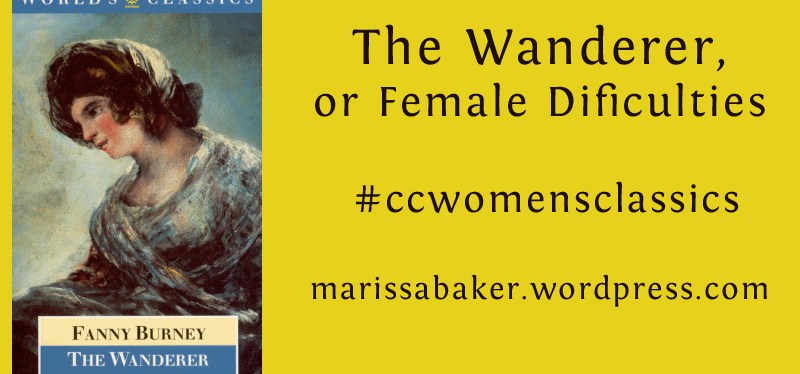
Female Difficulties

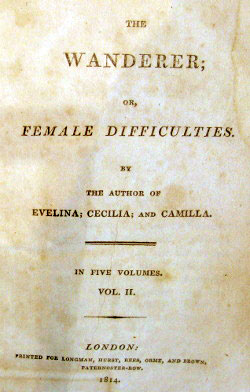
The Wanderer; or, Female Difficulties #ccwomensclassics post | marissabaker.wordpress.comMy title for this post is the subtitle for Frances Burney’s final novel, The Wanderer. It was one of the first books I put down when compiling my Classics Club Book List, and I’m reading it this year for the Women’s Classic Literature Event. Finishing this book means I’ve now read all Burney’s major fiction works (that is a grand total of 3,133 pages of text, so it’s a pretty big deal). I am Reader, hear me roar.

Note: spoilers follow for this 202 year old book.

The Wanderer, or Female Difficulties is the tale of a penniless emigree from revolutionary France trying to earn her living in England while guarding her own secrets. Combining the best elements of the gothic and historical novels, this newly appreciated work is an extraordinary piece of Romantic fiction. Burney’s tough comedy offers a satiric view of complacent middle-class insularity that echoes Godwin and Wollstonecraft’s attacks on the English social structure. The problems of the new feminism and of the old anti-feminism are explored in the relationship between the heroine and her English patroness and rival, the Wollstonecraftian Elinor Joddrel, and the racism inherent within both the French and British empires is exposed when the emigree disguises herself as a black woman. (Goodreads summary)

This is probably the Burney novel that I found most frustrating. Evelina, her first novel, is the easiest to read, though it still engages with the darker side of 18th century romance. Her next two, Cecelia and Camilla, are more difficult (especially if you’re expecting an Austen-style romance). The heroines are persecuted relentlessly, in grave danger several times, and the heroes fail to live up to the name.  The Wanderer takes these themes a step further. Instead of giving her characters ineffective guardians, Burney doesn’t leave the Wanderer, who goes by the name “Ellis” for much of the book, anyone to turn to at all. Instead of revealing the plight of a young woman having difficulty navigating the marriage market, Burney shows the struggles of a woman completely alone without name or resources to protect and support her.

The Wanderer; or, Female Difficulties #ccwomensclassics post | marissabaker.wordpress.comThe Wanderer is a scathing rebuke of society on many different levels. Burney takes full advantage of her lengthy text to discuss the French Revolution, snobbery in the upper classes, gender inequalities, racial stereotypes, modern suspicion of an afterlife, suicide, social perceptions and stereotypes, abusive/coercive relationships, and duty to family (just to name the ones that come to mind within a minute). The amount of ground she covers is really quite impressive. Even more impressive is that she manages to show both sides of most issues. Sometimes you can easily tell where Burney stands, but not always. For several of the ideas discussed, it seems she just wants readers to open their eyes and see that things aren’t always black and white.

What frustrated me when reading The Wanderer wasn’t the issues being discussed or even so much the drawn-out plot line. It was Ellis’ character. The narrative stays with Ellis but maintains a distance that makes it very difficult to sympathize or identify with her. For the better part of the book, we don’t know any more than the other characters about who she is and what her motivations are. We rarely even know what she’s thinking. What’s worse, we seldom hear her say anything. There are a few scenes where Ellis speaks clearly and decisively, but mostly she stands mute. She is silent while other characters misconstrue her motivations, put words into her mouth, accuse her unjustly, and even propose romantic connections. A few words pass her lips, but mostly she stands in acute emotional agony hoping the other characters will understand her inarticulate protests. Even Mr. Harleigh, the heroic figure in this story, becomes so frustrated by this that there are times he is almost violent in his insistence that she give him a straight answer.

Silencing the main character frustrated me, but it also draws attention to the difficulties Burney is discussing. It might be tempting to read the subtitle “Female Difficulties” simply as a critique of the challenges women faced in 18th century society. We could say that it is the other characters who make life difficult for Ellis because society is set-up to be suspicious of a woman alone and to limit her options. But it goes even deeper than that. The type of femininity ingrained the naturally elegant and lady-like Ellis make her situation even more difficult. She is one of her own worst enemies because of her limiting view of her own role as a woman. It’s not seemly for a lady to perform in public, so she refuses to give a concert until she’s shamed into it by a need to pay her debts. It’s not ladylike to accept pecuniary aid from a man, so she becomes entangled in a host of embarrassing situations trying to return gifts that were made anonymously to spare her delicacy. It’s a shame for a woman to run away from her husband, so she conceals the fact that she was forced into a marriage that’s barely recognizable under the law even when it means leading on another man who’s falling in love with her.

Like today, 18th Century culture was struggling with ideas surrounding gender definitions, roles, and expectations. Burney recognized that the problems regarding inequalities between men and women weren’t just external, but also ingrained in prevailing ideas about what constitutes masculinity and femininity. I argued when writing my undergrad thesis about her other novels that Burney countered the gender crisis of her day by advocating for a return to Biblical gender ideals where men and women are recognized as having unique strengths and roles yet also viewed as equally important. In this book, published 18 years after Camilla, there’s little evidence of that hope. Burney seems more cynical about society’s ability to change and points out problems without offering a way to fix things. It’s up to us, the readers, to try and find a solution or to live with the consequences of inaction.wanderer

Click here to get a copy of The Wanderer. Please note that this is an affiliate link. This means that, at no additional cost to you, I will receive a commission if you click on the link and make a purchase.

Save

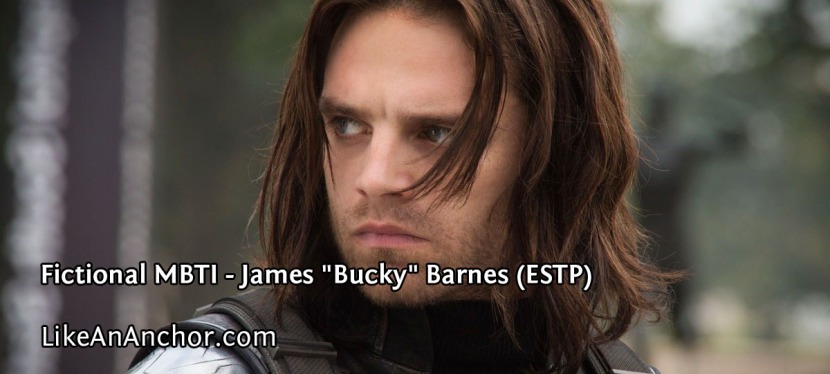
Fictional MBTI – James “Bucky” Barnes (ESTP)

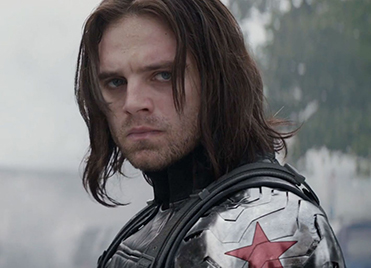
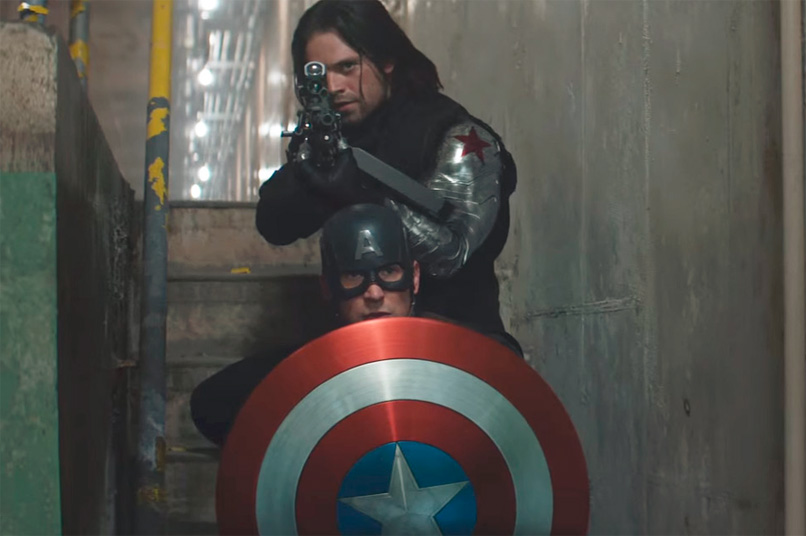
It always intrigues me how certain characters attract so much investment from viewers. Browsing Pinterest lately, it seems like Bucky is the new Loki — the Marvel fandom’s dark, mistreated character who just needs a hug because we love him soooooo much. In Bucky’s case, the reasons why we find his character compelling aren’t too hard to find. He’s a good man who was forced to do terrible things and is now constantly fighting a battle to be himself. Sebastian Stan’s portrayal allows audiences to glimpse Bucky’s human side under the soldier persona he wears and the assassin role he’s forced to adopt, and audiences are drawn in by a realistic, sensitive portrayal of a compelling character.

Most people type James “Bucky” Buchanan Barnes as an ESTP, and I’m inclined to agree with them. Operating under the assumption that MBTI type doesn’t change, when we see him as Bucky in Captain America: First Avenger he’s a healthy, stable version of his MBTI type. The version of Bucky we see later in Captain America: The Winter Soldier is a severely stressed and traumatized man of the same MBTI type. Bucky in Captain America: Civil War is still dealing with the fall-out of all he went through, but he’s more recognizable as an ESTP.

Typing Bucky Barnes

We only get about 13 minutes of footage with Bucky in the first Captain America film, but those scenes reveal a character in line with type descriptions of ESTPs as people characterized by decisive action, contagious energy, and enjoyment of being in the moment. They are “thrillseekers who are at their best when putting out fires, whether literal or metaphorical. … They assess situations quickly and move adeptly to respond to immediate problems with practical solutions” (Truity.com description). David Keirsey writes that ESTPs (whom he nick-names Promoters) “live with a theatrical flourish which makes even the most routine events seem exciting. … Promoters demand new activities and new challenges. Bold and daring at heart, and ever-optimistic that things will go their way, Promoters will take tremendous risks to get what they want, and seem exhilarated by walking close to the edge of disaster.” Other nicknames for ESTPs include “problem solver” and “realist.”

ESTPs lead with a mental process called Extroverted Sensing, or “Sensation.” This process “can get into the action in the moment. Think of it as ‘real-time kinetic’” (from Personality Hacker). It’s a fun-loving function that delights in sensory experiences, such as Bucky spending his last night in New York dancing with girls he probably doesn’t care whether or not he ever sees again. On that same night, he and Steve are talking about Steve’s inability to enlist and he says, “I don’t see what the problem is. You’re about to be the last eligible man in New York.” He’s trying to make Steve feel better with joking and doesn’t really ‘get’ the duty-fulfilling and self-sacrificing aspect of Steve’s character. It’s not a deeply ingrained aspect of his personality type (like it is for ISFJ Steve), though in practice he still does his duty and sacrifices himself because he’s a loyal friend and a good man.

We also see Bucky demonstrate sensory skills in more serious situations. Even post-experimentation and groggy when escaping Redscull’s prison, Bucky could walk across that metal girder with coordination, balance, and no hints of fear other than a healthy caution. As a Howling Commando, we see him as a sniper (which requires skills that come naturally to SP types) and making split-second sensory decisions with ease in the final train fight.

ESTP types support their Sensation function secondary with Introverted Thinking (or “Accuracy”) and then tertiary Extroverted Feeling (or “Harmony”). These mental processes describe how ESTPs, like Bucky, make decisions. First he’s using impersonal criteria to evaluate information and make decisions that are motivated by his own understanding of how the world works. Extroverted Feeling gives ESTPs an insight into other people that they stereotypicaly use to be charming and get people to do what they want. When he tries to ask Peggy to dance, he’s clearly not used to being ignored in favor of his friend (or any other guy). ESTPs are not primarily an emotional sort of people, though. In an early scene, Bucky had just had an argument with his best friend and turns that emotionally invested side of himself ‘off’ to take the girls dancing and enjoy himself.

The Winter Soldier

Once Hydra turns Bucky into the Winter Soldier, it’s difficult to use any scenes to get a clear picture of his personality type. In Captain America: The Winter Soldier we see a few glimpses of the real Bucky trying to get out, but not really anything to help with typing him. In Civil War, however, his own mind is starting to reassert itself and we can talk about his personality type in that film.

When ESTPs are stressed, one of the most common things they experience is internal confusion. They feel out of control, forget details, and become paranoid. Their inferior, or 3-year-old, function is Introverted Intuition (also called “Perspectives”). It’s a mental process that speculates on things that cannot be known, which is great for creativity and insight if you’re using it as a driver process but not so good if it’s an underdeveloped function that comes out when you’re stressed. Most ESTPs snap out of what Naomi Quenk calls a “Grip experience” (where stress causes your inferior function to assert itself) fairly quickly, but “Chronic grip behavior can lead the individual and others to believe that he or she is typically negative, pessimistic, and worried about both the present and the future” (Was That Really Me? p.180). Add to that all the torture and brainwashing used to turn Bucky into the Winter Soldier, and you have the Bucky who’s fighting alongside Cap in Civil War.

Here, we see a man who is not only fighting physical battles (and with extraordinary skill now that super-soldier enhancements have been added to his natural sensory abilities), but who is also fighting a mental battle. As extroverts, ESTPs tend to focus more on the external. Bucky’s experiences have turned him inward, making him more serious and forcing him to develop his Introverted Thinking side. Though type theory holds that your base personality doesn’t change, Bucky is in many ways a different person than the one we see in The First Avenger. He’s burdened with the weight of what he’s done and his friend Steve is now his only real connection with another human being.

In some ways, Bucky’s joking remark from the first Captain America movie “I’m turning into you” has come true. He’s become much more introspective and aware of the weight of his actions. Yet he’s also still thoroughly himself. We have a scene where he and Cap are reminiscing about fun times they had and a girl Bucky tried to impress, and he’s really Bucky against instead of the Winter Soldier. The fun-loving young ESTP is still in there, just buried deeply under the weight of all he’s been though.

In The First Avenger, we see Bucky fighting to protect his best friend and giving his life for his country. Now in Civil War, he trusts his best friend to help him through and gives up his freedom by going into cryostasis so he’s can’t be used to hurt others. Bucky’s decision to enter cryostasis at the end of the movie is also an intensely individualistic move that’s characteristic of SP types. If he can’t guarantee he can control himself, then at least he can make sure no one else can take control of him either.

bucky

If you enjoyed this post, check out my other MCU typings:

Loki – INFJ

Scott Lang -ISFP

Steve Rogers – ISFJ

T’Challa – ISFP

Thor – ESTP

Tony Stark – ENTP

SaveSave

Save

Save

Books That Tell Truth Through Lies

As I was going through blog posts in my inbox yesterday,  I noticed two of my fellow bloggers were writing about reading recommendations and lists. Juni Desireé was posting about the top 10 books on her reading list for this year, and Socratic MBTI offered three quick recommendations for “enriching” books to read. In the past, I’ve shared a couple lists of my own, including my favorite fantasy books, but that was way back in 2013 (I’ve been blogging that long!?!). Sounds like it’s time for another recommended books post! Fiction That Tells The Truth
Books That Tell A Truth Through Lies | marissabaker.wordpress.com

I’m taking the title of this post from one of my favorite ideas — that even though “fiction” is defined as imaginary or untrue it is, in fact, a vehicle for telling the truth.

“That’s what fiction is for. It’s for getting at the truth when the truth isn’t sufficient for the truth.” ― Tim O’Brien

“Fiction reveals truth that reality obscures.” ― Ralph Waldo Emerson

“Fiction is the lie through which we tell the truth.” ― Albert Camus

“A fiction writer weaves a fabric of lies in hopes of revealing deeper human truths.” ― Wally Lamb

That’s my favorite kind of fiction. Any good story can teach you something true about yourself or other people, but truly great stories are going to get at a “deeper human truth” than is often isn’t possible in any other form. Child-labor laws would have passed in Britain without Dickens, but would it have happened as quickly if people hadn’t read Oliver Twist? Would the phrase “Catch-22” have entered our vocabulary if Joseph Heller wrote an essay instead of a novel?

Many books exist to share truths or make us think about something we’d otherwise overlook. One of the more famous is 1984 by George Orwell, which I’ve never actually finished reading (I know, I know — I’ll go hide in the corner now). Many others teach us truths seemingly by accident while telling a story. Here are just a few examples :

*note: there will be spoilers for all these books.

The Lord of the Rings
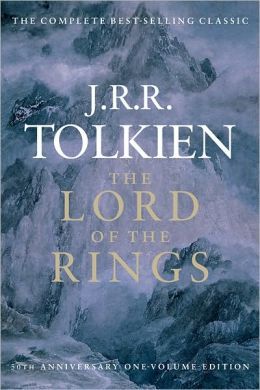
Tolkien insisted his The Lord of the Rings trilogy was not allegorical or inspired by his personal life, but I think we can at least say that his faith (Catholic) and his history (serving in both World Wars) influenced his writings. It’s a classic battle of good verses evil that set the stage for every epic fantasy adventure written since.

Just in case you’ve escaped reading or watching LOTR, the formerly-vanquished dark lord Sauron has come back into power in Middle Earth and is attempting to regain control of a magic ring that will let him subdue all lands and people under his power.  Though there are great warriors involved in the fight, the final victory hinges on two little hobbits from the middle of nowhere who hiked a very, very long way to destroy the ring.

By taking us outside of our own world, Tolkien shares universal truths about what makes a real friendship, the sacrifices required to do the right thing, and the importance of resisting evil even when it seems hopeless. One of the truths that hits me the hardest when reading or watching Lord of the Rings is how helpless we are to resist evil on our own. Frodo was incredibly strong on an emotional and psychological level and he carried the ring longer than any other character could have, but he still couldn’t make it up to Mount Doom by himself. Sam carried him the rest of the way and Frodo still wouldn’t have destroyed the ring if Gollum hadn’t fought him for it and carried it into the fires when he fell. Even heroes are susceptible to evil’s pull and they can’t overcome alone.

Mockingjay

I’ve read the whole Hunger Games book series and just watched Mockingjay Part II this past weekend. Suzanne Collins grew up learning about military history from her father — a Vietnam veteran and history professor. She didn’t go the history professor route herself, though, instead majoring in theater and telecommunications, then earning a master’s degree in dramatic writing.

The Hunger Games, Catching Fire, and Mockingjay all take a good, hard look at what the article linked above describes as “necessary and unnecessary wars.” They quote Collins saying, “If we introduce kids to these ideas earlier, we could get a dialogue about war going earlier and possibly it would lead to more solutions.” In this case, the writer approached her storytelling hoping to convey truths about and get a dialogue started on ideas relate to war.

My mother, brother and I were talking yesterday about how Mockingjay is a story that sticks with you. It’s not something you can just read/watch and move on from. This is largely owing to what is probably Collins’ least popular authorial choice — killing Finnick Odair. In the book I actually read right over his death the first time and then had to go back and figure out what happens to him. His death isn’t the driving force in a major plot point (like Prim’s death) and he doesn’t have a dying scene all of his own (like Rue does in the first book). He just dies senselessly and tragically while the action moves on without him. And that’s the point. In real life, death doesn’t always make sense or serve a specific purpose.

Ender’s Game

This book could have so easily been nothing more than a story about a futuristic society that trains children to kill aliens. But Ender’s Game was written by Orson Scott Card (one of my all-time favorite writers) and there’s much more to it than that. The real story isn’t about the alien threat — it’s about human nature.

Ender’s Game wrestles with the question of how far it’s “okay” to go when you’re at war, and it does so from the perspective of a child who’s been immersed in a militaristic system for the bulk of his formative years. Just in case the military training isn’t enough to make him comfortable with genocide, though, he’s taught the entire thing is a game — that none of the aliens will actually die if he wins.

As the story unwinds, we’re forced to confront ideas that can spill over into our own world. How violent can games become before they start affecting reality? When, if ever, are large-scale preemptive strikes an acceptable form of self-defense? What is an adult’s responsibility toward children?

Somewhat less obvious is the question of an individual’s responsibility within society. Ender was raised from a young age to think of the Buggers (this name was changed to Formics in later Enderverse writings) as enemies you must destroy at all costs. He should have been thoroughly brainwashed into believing this, and yet learning he’d succeeded in wiping out his enemy in real life rather than just in-game nearly destroyed him. He devoted the rest of his life to making others understand the Hive Queen’s perspective and trying to set things right by bringing back the Formics species. Perhaps that’s the real take-away truth from Ender’s Game — there are at least two sides (and often more) to every story and it’s not always easy to see who’s right.

Your Turn: What are some of the truths you’ve discovered in and through fiction?