
God Knows Your Heart, But Do You Know His?

The key to having intimacy with the Lord is to understand his kindness. That’s a statement the Rabbi at a Messianic congregation said in a two-part message called “The Mystery of Kindness” and “The Mystery of Chesed,” and I’ve been thinking about it quite a bit lately.

Chesed is a Hebrew word for goodness, mercy, kindness, and faithfulness. It’s often translated “loving kindness” when used of God, and it’s one of the key attributes of His character. He is “Yahweh, a merciful and gracious God, slow to anger, and abundant in loving kindness and truth” (Ex. 34:6, WEB).

This sort of kindness is something God wants to be known for because it’s a core part of His being. As Christians, we’re supposed to develop His character in us as we “put on Christ” (Rom. 13:14; Gal. 3:27). In order to become like Him, we need to understand who He truly is and that includes an understanding of His chesed.

The Ways God Knows Us

God knows our hearts even better than we know ourselves. He has “searched me and known me.” He knows when I sit down and when I stand up. He knows all my thoughts, my ways, and my words (Ps. 139:1-4). And He knows all of you that way as well because He searches the depths of our hearts.

The heart is deceitful above all things, and it is exceedingly corrupt: who can know it? I, Yahweh, search the mind, I try the heart, even to give every man according to his ways, according to the fruit of his doings. (Jer. 17:9-10, WEB)

God can see and understand us thoroughly all the time. He knows everyone on earth that way. But there are some people that He also knows in a closer, more personal way. He calls those people His friends. If we want to be friends of God a change is required in our hearts. We have to become like God to know God.

God Knows Your Heart, But Do You Know His? | LikeAnAnchor.com
Photo credit: sathish_artisanz via Pixabay

David’s Heart of Chesed

The Lord described King David as “a man after my heart, who will do all my will” (Acts 13:22, WEB). He’s one of the examples given in scripture for us to look to and learn how to have a heart like God’s heart. One of the ways that David’s God-like heart showed up was in his kindness.

David sent messengers to the men of Jabesh Gilead, and said to them, “Blessed are you by Yahweh, that you have shown this kindness to your lord, even to Saul, and have buried him. Now may Yahweh show loving kindness and truth to you. I also will reward you for this kindness, because you have done this thing. (2 Sam. 5-6, WEB)

Even though Saul persecuted David, David still respected his position as king and mourned when Saul died. And instead of punishing those who honored Saul with a proper burial, the new king commended them for their kindness and showed kindness to them in return. He didn’t stop there either.

David said, “Is there yet any who is left of Saul’s house, that I may show him kindness for Jonathan’s sake?” (2 Sam. 9:1, WEB)

After locating Jonathan’s son Mephibosheth, David had him brought to the palace.

David said to him, “Don’t be afraid of him; for I will surely show you kindness for Jonathan your father’s sake, and will restore to you all the land of Saul your father. You will eat bread at my table continually.” (2 Sam. 9:7, WEB)

The Lord’s Kindness

David showed this sort of kindness — chesed — because he’d learned it first-hand from God. He’s the one who wrote, “loving kindness shall follow me all the days of my life,” which we talked about a couple weeks ago. Since it was such a big part of David’s faith, Yahweh’s loving kindness is a frequent theme in his psalms.

All the paths of Yahweh are loving kindness and truth to such as keep his covenant and his testimonies. (Ps. 25:10, WEB)

But I will sing of your strength. Yes, I will sing aloud of your loving kindness in the morning. For you have been my high tower, a refuge in the day of my distress. (Ps. 59:16, WEB)

Because your loving kindness is better than life, my lips shall praise you. (Ps. 63:3, WEB)

Yahweh is merciful and gracious, slow to anger, and abundant in loving kindness. (Ps. 103:8, WEB)

The Lord even showed kindness to David after he committed adultery and murder (2 Sam. 11:1-12:13; Ps. 51:1). The Law demanded a death penalty for both those sins, but in this case the Lawgiver decided to show kindness the same way He would in the future as Jesus Christ. The Lord knew that David, as a man after God’s own heart, would repent and change if given the opportunity. David got to taste the Lord’s gracious kindness even before Messiah came to earth (Ps. 34:8; 1 Pet. 2:3-4).

A Change In Our Hearts

God Knows Your Heart, But Do You Know His? | LikeAnAnchor.com
Photo credit: sathish_artisanz via Pixabay

David’s son Solomon also recognized the importance of chesed. He wrote, “The merciful man does good to his own soul” and, “He who follows after righteousness and kindness finds life, righteousness, and honor” (Prov. 11:17; 21:2, WEB). Not only does being kind mean we’ll be good to others, but it is also good for us as well.

Don’t let kindness and truth forsake you. Bind them around your neck. Write them on the tablet of your heart. So you will find favor, and good understanding in the sight of God and man. (Prov. 3:3-4, WEB)

We need to have kindness written in our hearts to make our hearts like God’s. This happens when the Spirit of God dwells in us.

But the fruit of the Spirit is love, joy, peace, patience, kindness, goodness, faith, gentleness, and self-control. Against such things there is no law. Those who belong to Christ have crucified the flesh with its passions and lusts. If we live by the Spirit, let’s also walk by the Spirit. (Gal. 5:22-25, WEB)

God reveals Himself through His spirit (1 Cor. 2:6-16). That’s how He shares His heart and mind with us, and transforms our hearts and minds to be like His. Our “fleshiness” can get in the way of this if we’d let it, but we don’t have to. Walking in the spirit is a choice that God, in His kindness, empowers us to make. We can know Him intimately and learn His kindness just as David did.

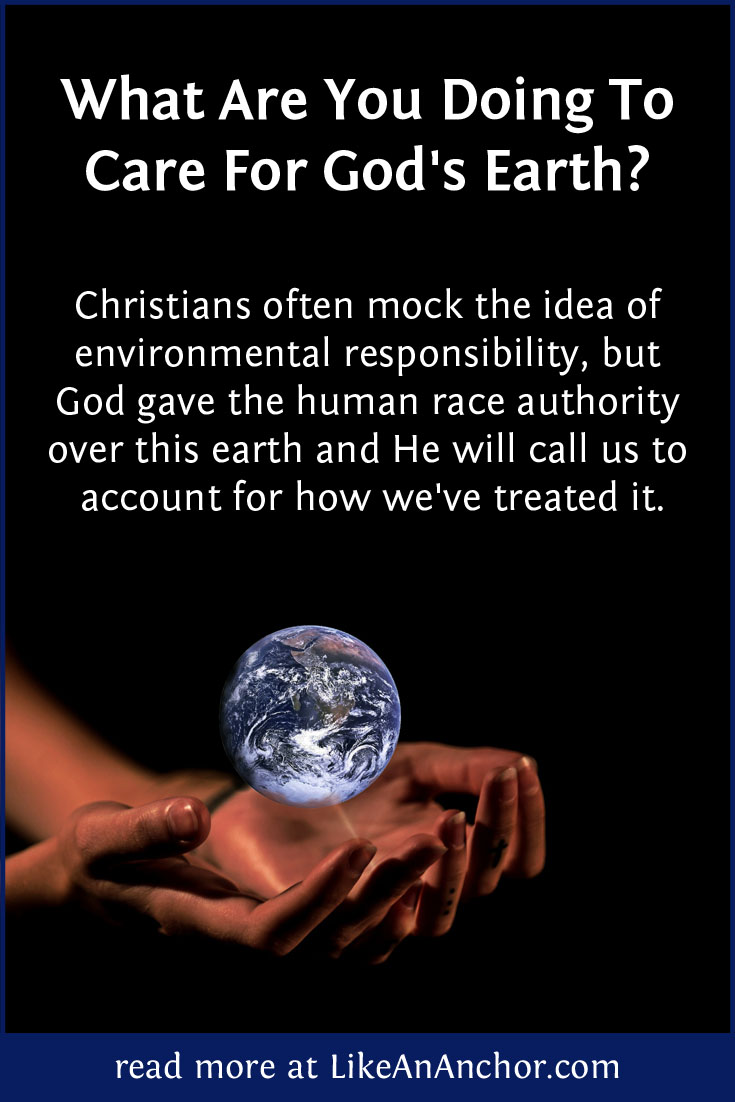
Why Aren’t There More Christian Environmentalists?

I’m getting so tired of Christians mocking the idea of climate change on the basis that God is in control and it’s arrogant to think that we can affect His world. Some of the people most vocally against any efforts to care for our planet are the ones who believe it is a gift from a benevolent creator!

I suppose part of the reason for this is political. In the United States, we’ve turned environmental concerns into a partisan issue and since most Christians are Right-leaning they certainly can’t support any idea associated with the Left. Personally, I find this whole thing ridiculous. Not only should our planet’s health concern everyone, but as Christians we’re not supposed to get so involved in worldly affairs that we can only listen to one side of an issue like this. Rather, we’re called to be citizens of a heavenly country with priorities that transcend political parties.

Why Aren't There More Christian Environmentalists? | LikeAnAnchor.com
Photo credit: cocoparisienne via Pixabay

Another reason for the argument that we can do whatever we want to the earth has to do with God’s words in Genesis. “God said to them [Adam and Eve], ‘Be fruitful, multiply, fill the earth, and subdue it. Have dominion over the fish of the sea, over the birds of the sky, and over every living thing that moves on the earth’” (Gen. 1:28, WEB). The word “subdue” comes from the Hebrew kabash (H3533) and it means to subject, conquer, keep under, and bring into bondage.

But there’s also something else that God told man about how to deal with the earth. “Yahweh God took the man, and put him into the garden of Eden to cultivate and keep it” (Gen. 2:15, WEB). The word translated  “cultivate” (abad H5647) refers to working and serving. The word for “keep” is shamar (H8104), and it’s about guarding something you have charge over. It’s what you do when something is precious and requires careful attention. For example, it’s the word used when Israel is told to keep God’s covenant and sabbaths (Ex. 19:5; 31:13-14) and when God is described as keeping/preserving His people (Ps. 37:28; 89:28).

I’m pretty sure that if we were keeping the earth in this sense we wouldn’t be filling it with trash or spewing toxic chemicals all over it.

The Principle of Stewardship

You might argue that we weren’t explicitly told to “keep” the whole earth — that this instruction only applied to Adam and Eve’s responsibilities in the Garden of Eden. So let’s go back to that word “subdue.” I don’t think it’s unreasonable to say that once you subdue something what you do with it is your responsibility. And the Bible is pretty clear about how we’re supposed to care for the things we’re responsible for.

He who is faithful in a very little is faithful also in much. He who is dishonest in a very little is also dishonest in much. If therefore you have not been faithful in the unrighteous mammon, who will commit to your trust the true riches? If you have not been faithful in that which is another’s, who will give you that which is your own? (Luke 16:10-12, WEB)

The earth will be here for as long as God needs/wants it to be. But the condition that it’s in until He decides to bring this world to a close with the return of Jesus Christ is, at least to a certain extent, our responsibility. We’ve been given this earth to look after, but it does not belong to us. “The earth is Yahweh’s, with its fullness; the world, and those who dwell therein” (Ps. 24:1, WEB). He care about how we take care of it because our attitude toward caring for things on this earth (including the earth itself) tells Him something about our character. It tells us whether or not He can trust us with eternal life.

Getting Started

We can’t do much to improve the health of the planet on our own. Many environmental problems are related to things outside our control. But the fact that other people, companies, or countries aren’t acting as responsible stewards of the planet doesn’t let us off the hook for our individual contributions. Using less plastic, foregoing toxic chemicals, and choosing products that can be reused instead of thrown away are choices we each have the power make.

I’ve been using Pinterest to collect tips, products, and articles related to living in a more environmentally responsible way. You can check that out here if you’re looking for ideas on how to get started on your own quest to be a better steward of God’s world.

Mercies That Don’t Run Out

How many times can God forgive you? I think sometimes we might feel there’s a limit, or that God gets tired of “dealing with” us. We might even think that someday He could just give up on us if we can’t get ourselves straightened out fast enough. But what does the Bible say?

It is because of Yahweh’s loving kindnesses that we are not consumed, because his compassion doesn’t fail. They are new every morning; great is your faithfulness. Yahweh is my portion, says my soul; therefore will I hope in him. (Lam. 3:22-24, WEB)

This doesn’t mean God winks at sin or thinks it’s not a big deal. “The compensation due sin is death,” and without His mercies we would be finished (Rom. 6:23, LEB). But the mercies don’t run out. Each morning we have a chance to walk with Him, repenting of past wrongs, letting Him work in our lives to make us like Him, and trusting in his loving kindness, compassion, and faithfulness to lead us into a hopeful future.

God Doesn’t Remove His Mercies

Our sins can separate us from God if we refuse to  turn from them (Is. 59:2). When we choose to do things in a way that doesn’t line up with God’s way of life, we’re walking away from him. It’s unfaithful, like a wife cheating on her husband. But, unlike many human spouses who’ve been cheated on, God keeps asking us to come back. Read more

Surely Goodness and Kindness Will Follow Me

“The Lord is my shepherd; I shall not want” begins one of the most famous passages in scripture. For many, Psalm 23 is their favorite part of the Bible. The whole thing is absolutely beautiful, but today I just want to focus on a phrase at the end.

Surely goodness and mercy shall follow me all the days of my life: and I will dwell in the house of the Lord for ever. (Ps. 23:6, KJV)

The Hebrew word translated “mercy” here is often translated “loving kindness” in more modern versions of the Bible. And this isn’t the only place where God’s loving, kind mercies are linked with His inherent goodness.

O Give Thanks For Who God Is

The link between goodness and kindness is mentioned again and again in songs of praise. Ten times in the Bible we’re told to praise and thank Yahweh “for he is good, for his loving kindness endures forever” (1 Chr. 16:34; 2 Chr. 5:13; 7:3; Ezr. 3:11; Ps. 106:1; 107:1; 118:1, 29; 136:1; Jer. 33:11).

Goodness and loving kindness are an essential part of God’s nature and character. Yahweh (to use His proper name) “is good. His loving kindness endures forever, his faithfulness to all generations” (Ps. 105:5, WEB). This isn’t something that’s ever going to change. We can count on Yahweh — both the Father and the Son — being good, lovingly kind, and faithful forever and ever. And when we walk with them, we’ll get to experience Their goodness and kindness directly. Read more

Am I Using God’s Truth To Hurt Others Or To Help Them?

Last week we talked about the fact that speaking the truth in today’s culture can offend people. That’s something we were warned about in scripture — the world will hate us like they hated Jesus and preaching the cross is “foolishness to those who are perishing” (John 15:18-22; 1 Cor. 1:18).

But what about in the church? God’s intention is that there be peace and unity in His church, but we’ve all experienced times when that’s not the case. People in the church fight and bicker. They offend each other. They split church groups. And most would tell you that they’re speaking the truth and the other person is the one at fault.

We always have a responsibility to follow God faithfully and to speak about His truth. And we must always try to do that in a way that points people toward Him instead of pushing them away. However, we won’t always be able to present the gospel in a way that appeals to the world. Jesus preached truth perfectly and people still turned away (John 6:64-67). Within the church, though, we should be able to talk about the truth without hurting each other. So how do we do that?

You’re Not Here For You

Near the middle of his letter to the Ephesians, Paul addresses the question of how the people in God’s church should relate to one another. He talks about different roles Christ set up in the church (apostles, prophets, evangelists, shepherds, and teachers) and why (“for the perfection of the saints, to the work of serving, to the building up of the body of Christ”). The goal in all this is to “attain to the unity of the faith and of the knowledge of the Son of God.” We’re not to be immature Christians any more, easily swayed by new doctrines or tricky, wicked men (Eph. 4:11-14). Read more

The Fear of Causing Offense

How did offending someone suddenly become a cardinal sin? People today think they have a right to never be offended, and when they do get offended they also feel offended that you dared offend them.

Google defines offended as “resentful or annoyed, typically as a result of a perceived insult.” When you offend someone, you cause them “to feel upset, annoyed, or resentful.” Offense is “annoyance or resentment brought about by a perceived insult or disregard for oneself or one’s standards or principles.”

Just a little bit of thought on this subject should make it obvious that offenses can happen any time people disagree, which actually happens quite a bit. Our standards, principles, and ideas are not identical and when that’s the case it’s easy to perceive an insult. Plus, even when we don’t disagree, miscommunication can cause resentment and annoyance. It’s impossible to live in a society of humans without being offended, which naturally leads to a question of why certain people’s “right” to not be offended should make it okay for them to offend others.

But what does this have to do with Christians? Surely this is more of a social-political debate for people like Jordan Peterson and Cathy Newman. Isn’t our job as Christians to just love people in an inoffensive way? I’m actually going to argue that it is not.

Is It Sinful To Cause Offense?

There’s a passage in the gospels that, when you read it in the King James version, seems to support the idea that causing offense is a sinful thing to do. In Matthew’s gospel it reads like this:

But whoso shall offend one of these little ones which believe in me, it were better for him that a millstone were hanged about his neck, and that he were drowned in the depth of the sea. Woe unto the world because of offences! for it must needs be that offences come; but woe to that man by whom the offence cometh! (Matt. 18:6-7, KJV)

This isn’t the best translation, though, at least for modern times. The Greek word has little to do with an annoyance or resentment caused by insult. Instead, it matches a definition for offense which is fast passing out of use in English — “a breach of a law or rule; an illegal act.”

When Jesus says woe to those who cause offense, He’s speaking of those who cause others to offend against God. Read more