Gentleness as a Fruit

What do you picture when you hear the words “gentleness” or “meekness”? If you’re like most English speakers, you probably don’t think of controlled anger, strength of character, or calm acceptance of God’s will. But those are connotations of the Greek word used in the New Testament that English translators chose to translate as gentleness or meekness (or occasionally humility, though usually that’s a different word).

A couple weeks ago, I realized I’d never finished my 30-Day Scripture Writing series on the fruit of the spirit. There were three left: peace, faith, and today we’re wrapping up with gentleness. You can find the 30-day scripture writing list at the end of this blog post if you’d like to continue studying this topic.

Putting Gentleness in Ancient Context

I’ve written about the Greek word translated “gentleness” or “meekness” before. I find it fascinating that in English, we associate those traits with weakness but in Greek it’s associated with strength of character. Spiros Zodhiates says that praotetos primarily means “an inward grace of the soul, calmness toward God in particular. It is the acceptance of God’s dealings with us considering them as good in that they enhance the closeness of our relationship with Him” (The Complete WordStudy Dictionary: New Testament, entry 4236). In the sense that the meaning is linked to our relationship with God, it is similar to the Hebrew word most often translated “gentle” or “meek.” Anav (H6035) means humble, often as a result of affliction, but also proper humility when recognizing “absolute dependence on God” (Theological Wordbook of the Old Testament, entry 1652a).

Returning to the Greek word praotetos, there’s another difference between it and the English connotations for gentleness or meekness. It is not something passive, but rather “the activity of the blessedness that exists in one’s heart from being actively angry at evil” (Zodhiates). The idea of anger and gentleness being conveyed in the same word seems contradictory, but we see Jesus called meek and responding with anger to wicked things (Matt. 11:29; Mark 3:5; John 2:13-17; 2 Cor. 10:1). As with other godly character traits, we can model our expressions of meekness/gentleness on Jesus’s behavior.

It can also be helpful at times to remember that the Greek language used in the New Testament was used by other people as well. It’s not just a Biblical language, and we can look to other writings to get a sense for how people in the larger world of the time used words. Aristotle said that “praotes is that virtue that stands between two extremes, the orgilotes (n.f.), uncontrolled and unjustified anger … and aorgistia (n.f.), not becoming angry at all no matter what takes place around you” (Zodhiates, entry 4236 [n.f. stands for ‘not found’ in scripture]). That’s very different than how we think of meekness and gentleness today, but it’s in line with how the Biblical writers would have used the word.

For this study, we’ll be looking at New Testament verses that use the word praotes (G4236) as well as the root word praos (G4235) and the synonyms praus (G4239) and prautes (G4240). These words appear a total of 16 times in the New Testament. There are also a few other words that could be translated meek or gentle (e.g. epios [G2261] and epieikes [G1933]) but since we’re focusing on gentleness as a fruit of the spirit, we’ll stick with the praotes words for now since that’s what’s used in Galatians 5.

Image of five Bibles on a table with people's hands tracing over the words, overlaid with text from Col. 3:12, NET version: "Therefore, as the elect of God, holy and dearly loved, clothe yourselves with a heart of mercy, kindness, humility, gentleness, and patience"
Image by Inbetween from Lightstock

Instructions to be Gentle

If you read the New Testament start to finish, the first time you’ll encounter the word for gentleness or meekness is in the Beatitudes. Here, Jesus said, “Blessed are the meek, for they will inherit the earth” (Matt. 5:5, NET). It echoes a verse from Psalms: “the humble shall inherit the land, and shall delight themselves in the abundance of peace” (Ps. 37:11, WEB). A phrase like “inherit the land” in the Old Testament typically meant you’d have an inheritance in the promised land among God’s (Old) Covenant people. Now in the New Covenant, the humble/meek/gentle are promised an even greater inheritance. In the Beatitudes, Jesus is likely looking forward to the New Heaven and New Earth promised to all His faithful followers after His second coming (Is. 65:17; 2 Pet. 3:10-14; Rev. 21:1-3).

But you, man of God, flee these things, and follow after righteousness, godliness, faith, love, perseverance, and gentleness. Fight the good fight of faith. Take hold of the eternal life to which you were called, and you confessed the good confession in the sight of many witnesses.

1 Timothy 6:11-12, WEB

We talked last week about how faith is an active, participatory sort of thing. Here, Paul told Timothy that “fighting the good fight of faith” and taking “hold of the eternal life to which you were called” involves cultivating gentleness in your life (among other things). It’s a very important aspect of our character as godly people. In addition to general admonitions like this to cultivate gentleness in our lives, we’re also specifically instructed to use gentleness in our dealings with other people.

I, therefore, the prisoner for the Lord, urge you to live worthily of the calling with which you have been called, with all humility and gentleness, with patience, putting up with one another in love, making every effort to keep the unity of the Spirit in the bond of peace.

Ephesians 4:1-3, NET

Therefore, as the elect of God, holy and dearly loved, clothe yourselves with a heart of mercy, kindness, humility, gentleness, and patience, bearing with one another and forgiving one another, if someone happens to have a complaint against anyone else. Just as the Lord has forgiven you, so you also forgive others.

Colossians 3:12-13, NET

I think these two passages about “putting up with one another” and “bearing with one another” pair well. Humans aren’t always easy to get along with, but regardless of that we need to be patient, humble, merciful, kind, and gentle in our dealings with everyone. That’s particularly true of those in the church (though we’re to live peaceably with everyone as much as we can), where we should be working to build unity and peace within the body of Christ.

Using Gentleness to Correct

One of the things we need to be careful about as Christians is that we do not judge other people (specifically in the sense of condemning them). At the same time, we need to be able to discern between right and wrong and correct a fellow Christian if need be. That can be a very slippery slope, with a lot of correction sliding too far into judging/condemning. Gentleness is key to appropriately using correction within the church, and the word appears several times in connection to this topic.

Brothers and sisters, if a person is discovered in some sin, you who are spiritual restore such a person in a spirit of gentleness. Pay close attention to yourselves, so that you are not tempted too.

Galatians 6:1, NET

It’s not loving to let fellow believers go on sinning and damaging their relationship with God (Is. 59:2). But we’re admonished to restore them with gentleness and “pay close attention to yourselves” to make sure you’re not sinning as well (Matt. 7:1-5). This is what the Corinthian church should have done rather than being proud of tolerating sin within their congregation (1 Cor. 4:6-5:13). It got so bad there that Paul seemed uncertain if he’d need a “rod of discipline” to correct them or if he could do it with “love and a spirit of gentleness” (1 Cor. 4:21, NET). As a rule, though, correction within the church ought to be done with gentleness. Paul gives that instruction both to church members and to leaders like Timothy.

But reject foolish and ignorant controversies, because you know they breed infighting. And the Lord’s slave must not engage in heated disputes but be kind toward all, an apt teacher, patient, correcting opponents with gentleness. Perhaps God will grant them repentance and then knowledge of the truth and they will come to their senses and escape the devil’s trap where they are held captive to do his will.

2 Timothy 2:23-26, NET

The goal of proper, gentle correction is restoration. We should never want to condemn people, but to see them repent and “come to their senses.” That is, after all, God’s perspective and we’re supposed to become like Him (1 Tim. 2:1-4; 2 Pet. 3:9). It brings us back to the idea of balance that’s inherent in gentleness/meekness (praotetos). This character trait is angry at evil, yet doesn’t lose control. It takes action, yet always trusts and submits to God’s will. When we correct in this way, we’re kind and guide toward restored relationship rather than trying to condemn or prove ourselves right.

As part of the fruit produced by God’s spirit inside us, gentleness should be a product of our lives. As we follow Jesus and live in relationship with Him and the Father, we should become more and more like them and display their character traits and perspectives in our lives. Gentleness is one important aspect of that.


Featured image by HeVoLi from Pixabay

The Heart of Jesus for Reconciliation

What was Jesus’ reason for coming to earth and preaching the Good News of the gospel? What are the core desires of His heart when He looks at human beings? How can we become more like Him in how we preach and what we desire?

I’ve been thinking about these questions, and others, a lot this week. Part of it’s prompted by some messages I heard last Sabbath and part by recent events. There is a lot of strife and division in today’s world. We fight and bicker and separate ourselves by classes, genders, races, and churches. Such division is not what God desires. In fact, I don’t think it is going too far to say that such things break His heart.

God is grieved deeply by human sinfulness and suffering. He’s also deeply motivated to change things for the better, which means we should be motivated to work toward a better future as well. This truth carries with it a great deal of hope and purpose for us both in this life and in the future. And it’s all connected to the reasons Jesus came to this earth and the core desires of God’s heart.

Why Jesus Came

Jesus Christ is our example. He is the Word made flesh; God who became man. We’re supposed to mimic Him and to tell other people about Him and why He came to this earth. In order to do that, we need to understand these things for ourselves. There’s no better place to start than with what Jesus Himself said about why He came to this earth.

  • To preach. “He said to them, ‘Let’s go elsewhere into the next towns, that I may preach there also, because I came out for this reason.’” (Mark 1:38, all quotes from WEB translation)
  • To call sinners to repentance. “Jesus answered them, ‘Those who are healthy have no need for a physician, but those who are sick do. I have not come to call the righteous, but sinners to repentance.’” (Luke 5:31-32)
  • To give abundant life. “The thief only comes to steal, kill, and destroy. I came that they may have life, and may have it abundantly.” (John 10:10)
  • To die as a sacrifice in our place. “Now my soul is troubled. What shall I say? ‘Father, save me from this time?’ But I came to this time for this cause.” (John 12:27)
  • As a light for those in darkness. “I have come as a light into the world, that whoever believes in me may not remain in the darkness.” (John 12:46)
  • To testify to the truth. “Jesus answered, ‘You say that I am a king. For this reason I have been born, and for this reason I have come into the world, that I should testify to the truth. Everyone who is of the truth listens to my voice.'” (John 18:37)

Read more

The Fruit Of Gentleness

Meekness, gentleness, and mildness get a bad rap in today’s society. People tend to think of them as synonyms for being weak or boring. A door mat. But those three words I opened with are all possible translations of the Greek word praotes (G4236), which is listed as part of the fruit of the spirit in Galatians 5:22-23.

The spirit of God is not weak or boring. It is full of power, and it is also “love, joy, peace, patience, kindness, goodness, faith, gentleness, and self-control.” Indeed, though we may not think of these traits as “powerful,” we cannot display them all unless we’re empowered by God. It takes a great deal of inner strength, commitment, and willingness to be transformed by God to live-out the fruit of His spirit, including gentleness.

The Meekness of Christ

In his second letter to the Corinthians, Paul opened one of his lines of thought with the words, “I Paul, myself, entreat you by the humility and gentleness of Christ” (2 Cor. 10:1, WEB). The traits of gentleness, humility, and meekness that the world spurns are key to understanding Jesus Christ’s character. Read more

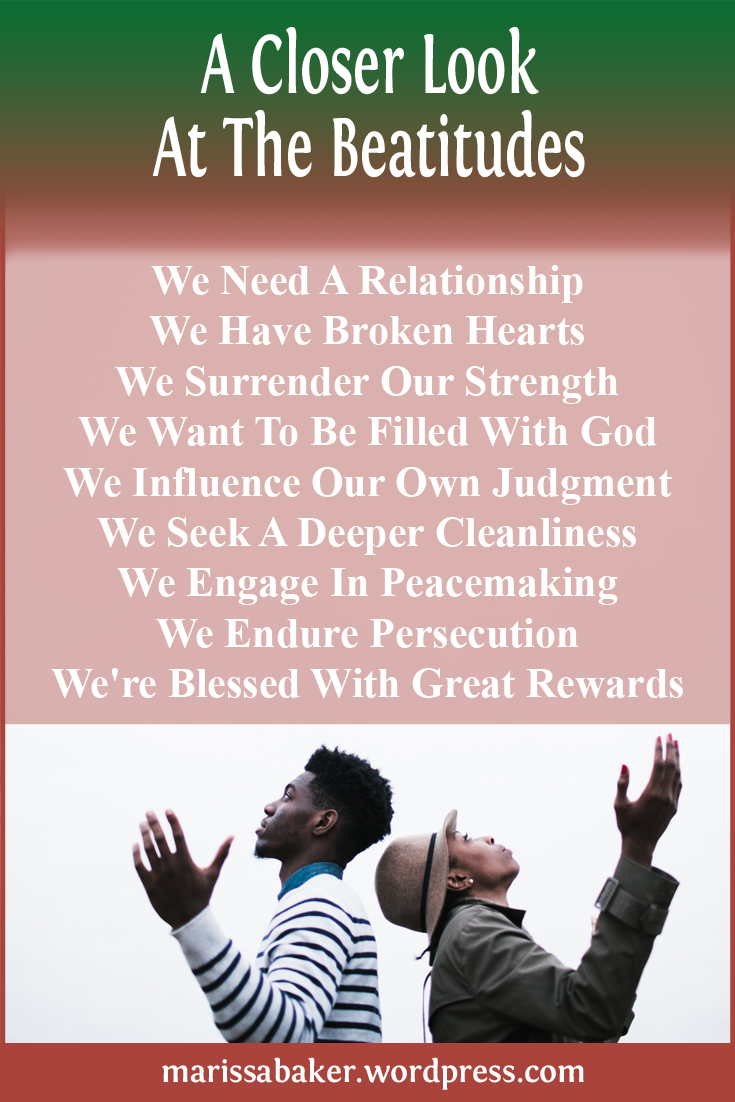
A Closer Look At The Beatitudes

When Jesus delivered the Sermon on the Mount, He began at what we now call the Beatitudes. He says, “Blessed are” the sort of people who probably don’t feel all that blessed — those who are poor, mourning, meek, hungry and thirsty for righteousness, merciful, pure in heart, peacemakers, persecuted, and reviled. We don’t like being poor, or in grief, or humble enough to put others first, or attacked by the people around us. It’s hard work being a peacemaker, or showing mercy, or staying pure of heart, or constantly yearning to get closer to God’s righteousness.

It’s interesting that two of the beatitudes mention righteousness: “Blessed are they which do hunger and thirst after righteousness” and “Blessed are they which are persecuted for righteousness’ sake” (Matt. 5:6, 10, KJV). This word refers to “the condition acceptable to God” and/or “the doctrine concerning the way which man may attain a state of approval by God” (Thayer’s G1343, dikaiosune). It relates to our state of being and the way we live. In fact, when you think about it, all the beatitudes relate to something we do and/or become as we follow God.

A Closer Look At The Beatitudes | marissabaker.wordpress.com
Photo credit: Temi Coker via Lightstock

We Need A Relationship

Blessed are the poor in spirit: for theirs is the kingdom of heaven. (Matt. 5:3, KJV)

There’s more than one word that could be translated from Greek as “poor.” This one means “reduced to beggary” and “lacking anything” (Thayer’s G4434, ptochos). When we’re like that in our spirits, we’re really in a place to recognize how much we need a relationship with the Father and Jesus. We become the sort of person the Lord is talking about when He says, “to this man will I look, even to he who is poor and of a contrite spirit, and who trembles at my word” (Is. 66:2, WEB).

We Have Broken Hearts

Blessed are they that mourn: for they shall be comforted. (Matt. 5:4, KJV)

We all experience grief. The death of a parent, child, or dear friend. The loss of a hope held close to our hearts. The decay of a relationship. Betrayal from a friend. And even in the midst of that mourning, we’re blessed because God promises comfort (John 14:16-18; 2 Cor. 1:3-7). He can respond to our tears as powerfully as He did for David in the situation recorded in Psalm 6. Read more

Best Way To Humility

What comes to mind when you think of humility before God? Do you think about abasing yourself? thinking of yourself less? or thinking less of yourself?

The problem with these approaches to humility is that they’re still focused on the self. To truly become humble, we have to shift our focus to God. Instead of wondering, “How can I think of myself less?” we should ask, “How can I think of God more?”

During the Feast of Tabernacles this year, a message given at our Feast site contained this gem of wisdom: “Elevating God is the best way to develop a spirit of humility and meekness.” Instead of focusing on abasing self, we focus on exalting God.

Best Way To Humility | marissabaker.wordpress.com
photo credit: Lightstock, Temi Coker

Joy In Exalting Him

The Psalms are a perfect place to begin studying God’s exaltation. David — the man after God’s own heart — penned many of the psalms. In his words of praise, we see an attitude of humility inspired by an awe of the Creator.

I will bless the Lord at all times; His praise shall continually be in my mouth. My soul shall make its boast in the Lord; the humble shall hear of it and be glad. Oh, magnify the Lord with me, and let us exalt His name together. (Ps. 34:1-3)

Gladness probably isn’t the first word we’d associate with humility, and yet that’s what David does. Exalting God fills the humble with joy, and it also increases their humility.

But I am poor and sorrowful; let Your salvation, O God, set me up on high. I will praise the name of God with a song, and will magnify Him with thanksgiving. This also shall please the Lord better than an ox or bull, which has horns and hooves. The humble shall see this and be glad; and you who seek God, your hearts shall live. For the Lord hears the poor, and does not despise His prisoners. (Ps. 69:29-33)

This carries over in the the New Testament as well, which we can see in Jesus’ first recorded sermon. He says the “poor in spirit” have “the kingdom of heaven” and that the meek “shall inherit the earth” (Matt. 5:3, 5). Then near the end of the Beatitudes, He tells people to “Rejoice and be exceedingly glad” when they are “persecuted for righteousness’ sake” (Matt. 12, 10). I suspect that’s impossible without an attitude of compete submission to God and a desire to find your joy in and glorify Him.

Pointing To God

John the Baptist is an excellent example of humility that exalts God. He consistently identified himself simply as a tool, a messenger whose sole purpose was to point others to Messiah. Every time someone asked about John, he pointed them to Jesus instead.

John answered them, saying, “I baptize with water, but there stands One among you whom you do not know. It is He who, coming after me, is preferred before me, whose sandal strap I am not worthy to loose.” (John 1:26-27)

Later, after Jesus’ ministry began, John had to deal with people who seemed worried that Jesus was undercutting John’s fame (John. 3:22-26). Once again, John handled this by stepping out of the way and finding joy in his Lord’s exaltation.

You yourselves bear me witness, that I said, ‘I am not the Christ,’ but, ‘I have been sent before Him.’ He who has the bride is the bridegroom; but the friend of the bridegroom, who stands and hears him, rejoices greatly because of the bridegroom’s voice. Therefore this joy of mine is fulfilled. He must increase, but I must decrease. (Jn. 3:28-30)

Jesus Himself did much the same thing while here on the earth. He “humbled Himself and became obedient to the point of death” as an example to us (Phil 2:8). He consistently honored his Father, and did not glorfy Himself.

I can of Myself do nothing. As I hear, I judge; and My judgment is righteous, because I do not seek My own will but the will of the Father who sent Me. (John 5:30)

Jesus answered, “If I honor Myself, My honor is nothing. It is My Father who honors Me, of whom you say that He is your God. (John 8:54)

Jesus Christ — God in the flesh — was humble and meek (Matt. 11:29; 2 Cor. 10:1). We who are flawed, imperfect sinners have far more reason for humility. As those rescued from sin and brought from death into life, we have even more cause to exalt our Savior and God.

Best Way To Humility | marissabaker.wordpress.com
I took this photo at the Feast

A Share In Glory

Humility is an essential quality in the family of God. Our Messiah modeled it, the people of faith all had it, and we must develop it to receive a reward.

Likewise you younger people, submit yourselves to your elders. Yes, all of you be submissive to one another, and be clothed with humility, for “God resists the proud, but gives grace to the humble.” Therefore humble yourselves under the mighty hand of God, that He may exalt you in due time,  casting all your care upon Him, for He cares for you. (1 Pet. 5:5-7)

Our humility and meekness will be rewarded. There’s an element of ironic humor in the fact that the people who refuse to humble themselves will lose the glory they seek in this life, while those who submit to God and don’t care about themselves will be exalted.

 But he who is greatest among you shall be your servant. And whoever exalts himself will be humbled, and he who humbles himself will be exalted. (Matt. 23:11-12)

This is the pattern Christ modeled for us — submit to God’s will, be humble, and He will exalt you (Phil 2:8-9). One of the most incredible things about Christ’s exaltation is His desire to share His glory with us. In His John 17 prayer, He talks about giving His disciples “the glory which You [Father] gave Me,” and prays that in the future His followers “may be with Me where I am, that they may behold My glory” (John 17:22, 24).

Glorifying Jesus and exalting our Father can only lead to our good. It’s the best path to humility, it gives a proper view of God, and it multiplies our joy.

Shy, Frumpy Doormats

The subject of Godly femininity has fascinated me for a number of years. It’s well nigh impossible to be a woman in the church without reaching the point where you’re comparing yourself to Proverbs 31, and if we’re honest we rarely (if ever) feel we measure up to that standard. The picture of a virtuous woman is not meant to discourage us, but that can still be how we feel.

Similarly, reading  New Testament verses addressed to women can make us feel like it’s impossible to be a godly woman, or even make us angry that God’s idea of femininity has so few elements of feminism. It is not always easy to hear, much less heed, admonitions for women to have “a meek and quiet spirit” (1Pet. 3:4, KJV), submit to their husbands (Eph. 5:22), and wear “modest apparel, with shamefacedness and sobriety” (2 Tim 2:9).

Meekly Modest

"Shy, Frumpy Doormats" marissabaker.wordpress.com. Blog post about Godly FemininityMany of the words used to define Godly femininity in the Bible have come under attack in modern times. When we hear “submission,” we think doormat. When we hear “modest,” we think frumpy. When we hear “gentle and quiet,” we think shy. Often, this type of reaction shows a misunderstanding of God’s intention for feminine conduct. As discussed in “Redefining Meekness,” our current definitions fall considerably short of the Biblical standard. The Greek words translated meekness carry the idea of strength of character that balances our emotions, expresses anger properly, behaves with gentleness, and helps establish our relationship with God.

The subject of modesty has been thoroughly covered (perhaps “done to death” would be a better phrase) by many other writers. So all I’m going to say about it is, check out Olivia Howard’s Fresh Modesty blog for proof that you can dress modestly and attractively.  And honestly, even if modest does sometimes look “frumpy,” would we rather be looked down on for being too covered than for dressing slutty?

Content With Quiet

In Western culture, gentle meekness and silence are seen as negative qualities. They may be okay in principle, but in practice it holds you back from reaching your full potential (whatever that means). It is generally the loudest person in the room who gets the most attention, and we often assume that is an ideal we should strive for.

"Shy, Frumpy Doormats" marissabaker.wordpress.com. Blog post about Godly FemininityI’ve touched on this subject before, when writing about introversion. Both shyness and introversion are generally considered “bad” traits (though that is starting to change in regards to introverts). In Susan Caine’s words, “Shyness is the fear of negative judgment, and introversion is a preference for quiet, minimally stimulating environments.” They are not the same, but share quietness as a trait. Many people assume this quietness is a sign of weakness.

 Also, shyness implies submissiveness. And in a competitive culture that reveres alpha dogs, one-downsmanship is probably the most damning trait of all.

Yet this is where the shy and the introverted, for all their differences, have in common something profound. Neither type is perceived by society as alpha, and this gives both types the vision to see how alpha status is overrated, and how our reverence for it blinds us to things that are good and smart and wise.

Forget Society

All too often, we hear people twisting Godly traits beyond recognition to make them seem less appealing. We also see traits that God hates exalted by society. I have a hard time finding balance between these two extremes. I struggle with shyness, but I can also speak before I think and wish I had exercised the virtue of silence. I intend to dress with modesty, but sometimes settle for frumpy or wear something a bit tighter than usual because I know guys will notice. I seem to go from walk-all-over-me peacefulness to stereotypical red-head temper with nothing in between.

We can’t let ourselves pick and choose qualities we admire (I like this trait from the Bible, but I like this idea from feminism) to make a “self” that we feel comfortable with. Christ calls us to get outside our comfort zone and follow Him, not matter what outside pressures say. In many cases, our challenge as Christian women is to move past the negative reactions society has to Godly traits and follow His teaching in spite of what the world says. God doesn’t ask us to be shy, frumpy doormats, but neither does he want us to hold on to worldly ideals that conflict with His way of life. He wants daughters clothed with strength and dignity who submit their lives to Him and know when to keep silent and when to speak.