Fictional MBTI – Scott Lang (ISFP)

With Captain America: Civil War coming out in just seven weeks, I thought I’d add a post on Scott Lang to my collection of fictional MBTI types. It’s also a pretty good excuse to buy and re-watch Ant-Man.

If you do a quick Google search to see how others on the interwebs are typing Scott Lang, you’ll mostly find ESTP, with a few ISTP, ISFP and one INTP guesses thrown in. One thing all these types have in common is that they’re extroverting their Perceiving process, so that’s where we’re going to start (the P/J preference in an MBTI type refers to how we interact with the outer world).

Sensing vs. Intuition

The S/N preference describes our perceiving function, which is the mental process we use to learn new information. Isabel Meyers wrote that Sensing types “depend on their five senses for perception.” They want to see, touch, and test the information they’re taking in. Subjective or indirect information is less trustworthy, and less interesting, than their own direct experiences. Intuitives, on the other hand, “are comparatively uninterested in sensory reports of things as they are” (Gifts Differing, 57). Intuition is an innovative process that resembles advanced pattern recognition (in Personality Hacker’s words) and focuses on exploring possibilities.

Types that have a “P” in their four-letter name extrovert this mental process. Personality Hacker describes Extroverted Sensing (Se) as a “real-time kinetic” function that’s very in-tune with verifiable details of the outer world. Types with Se high in their function stack are typically very comfortable in their bodies and have a natural talent working with their hands.

Extroverted Intuition (Ne) is the function that ENTP Iron Man leads with. It’s very much about exploring the outer world and trying things just to see what will happen. It actively searches for patterns that haven’t been found and understood yet.
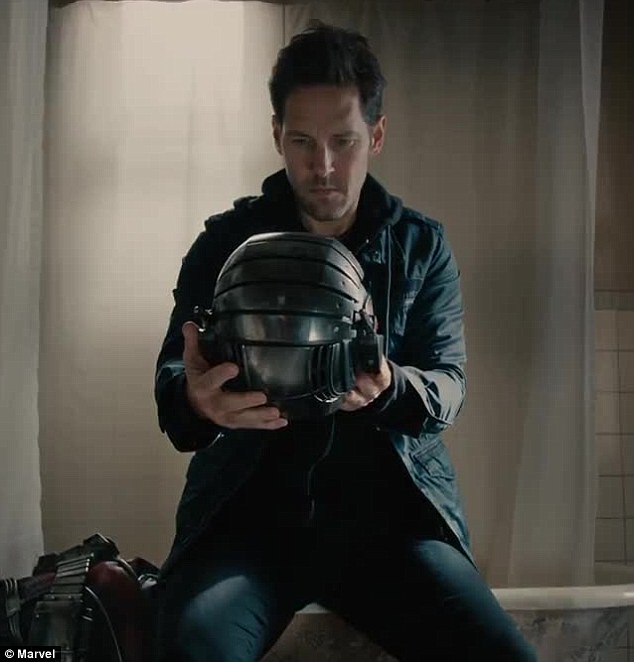
Looking at Scott Lang in Ant-Man (we’re not covering the comics here, just the film), I don’t really see much evidence of him using Intuition. He’ll still have intuition in his function stack (Introverted Intuition is the opposite of Se, so in an SP type that will be either his tertiary or inferior function) but it’s not what he leads with. Just a few examples:

  • Se types are typically very good working with their hands and coordinating their bodies. Scott possesses the skills to burgle houses (quite impressively) even before having the suit. He is also trained as an electrical engineer and we see him doing skilled hands-on work throughout the film.
  • When Scott encounters a challenging safe to crack, he doesn’t explore possibilities or try different things. He relies on what he knows will work from past experience and quickly implements it to bypass the fingerprint scanner and freeze the door. He also doesn’t forget any Sensing details (blows up air mattress for the door to land on, hangs comforter in the door to catch the flying hardware).
  • The “Whose pajamas are these?” question would be irrelevant to Ne, but it’s a detail Se would notice.
  • Scott learns to control the suit and fight fairly quickly by testing it out actively. It become natural to him and he’s soon effortlessly coordinating sensory details (like timing his jump off the servers at Pym Tech to coincide with bringing Antony into position to catch him).

Feeling vs. Thinking

The F/T preference describes how we make decisions about our behavior and what we think the world should look like. Feeling types typically prioritize how a decision lines up with their values and those of society. Feeling is concerned with the emotional impact of a decision. Thinking, on the other hand, “is essentially impersonal” (Gifts Differing, 65). This process seeks objective truth that doesn’t depend on the perspectives of other people

For “P” types, the judging process is internally focused. Introverted Feeling (Fi) types tend to check-in with the emotional impact of a decision by looking inward. They want to “determine what feels the most in alignment with oneself” (Personality Hacker). For them, decisions have to “feel right” and authentic.

Introverted Thinking (Ti) also checks in with the inner reality, but doesn’t focus on authentic feeling. Instead, it prizes things that “make sense.” Whether or not Ti types can objectively explain a decision, it has to line-up with the theory they’ve formulated about how the world works. They are interested in facts, but “chiefly as illustrative proofs” of their ideas (Gifts Differing, 78).

This one was harder for me to pin-down in Scott. The difference between Fi and Ti confuses me, but a couple articles from Personality Junkie helped clear things up (click to read “Introverted Feeling (Fi) vs. Introverted Thinking (Ti)” and “The Laws of P-Types: Fi & Ti Laws“). Prelude Character Analysis’ ISFP vs. ISTP article was also useful.

  • Scott’s infamous VistaCorp burglary was based on what he felt was right, not on logic. There’s an interesting interview on YouTube where Scott talks about this incident. He says he’s tired of having his “name dragged through the mud” by media who don’t recognize why he did what he did. He’s willing to pay the price for his choices, but he wants the world to respond according to his internal value system and recognize VistaCorp was morally culpable.
  • In the film itself, Scott is very careful about how he’s defined. He insists he’s a cat-burglar because “robbery involves threat” and he detests violence. This is not just about specificity and getting facts right — it’s about how he’s seen by others in society and how he feels about himself.
  • When Scott talks about how he sees himself and his subjective view of the world, he defines himself in relation to the kind of man his daughter wants him to be. This is also why he chooses to help Hank Pym. It isn’t about logic — it’s about a “chance to earn that look in your daughter’s eyes, to become the hero that she already thinks you are.”
  • Scott is certainly not suspicious of emotions or hesitant to share and talk about feelings, unlike the typical ISTP (such as Black Widow and Hawkeye, who I’ll eventually write posts about). He’s not very well in-tune with how others will respond, though (unlike an Extroverted Feeling type, such as ISFJ Steve Rogers). For example, when Pym and his daughter are reconciling Scott expresses his appreciation of their feelings, but in doing so ruins the moment.

Extrovert vs. Introvert

The question now becomes what order Scott uses these functions in. Does he lead with his Extroverted Sensing process (ESFP) or with his Introverted Feeling process (ISFP)? There are very few scenes where we see Scott seeking out people so he can re-charge or where he seems focused on the outer world. His internal ides, cares, and identity are what’s important. Those are all marks of an Introvert. For a character whose entire motivation is based on doing what lines up with his internal locus of control, it makes sense for that introverted decision-making function to take center stage. This makes his ISFP function stack:

  • Primary: Introverted Feeling
  • Secondary: Extroverted Sensing
  • Tertiary: Introverted Intuition
  • Inferior: Extroverted Thinking

You can learn a lot about people by how they respond under stress, and in Scott we do see a stress-reaction consistent with Inferior Thinking rather than Inferior Intuition (as would be the case for an ESFP). When stressed out, he doesn’t lose control over sensory details or withdraw and get angry. Instead, he starts asking questions and trying to get back on familiar footing (“Who are you, who is she, what the hell is going on here, and can I go back to jail now?”). Stressed Feeling types also tend to act rather than shut-down, which is what Scott does whenever there are obstacles to his plan or when something traumatic happens (like Antony’s death).

One reason people might not like an ISFP typing for Scott is that this type is consistently stereotyped as too “artsy” to go into a field like engineering or implement logical plans. Yet, Dr. A. J. Drenth notes that SFP types “may find themselves curiously drawn to Investigative subjects like math, science, computer science, engineering, etc.” though it’s not necessarily a good fit for their type. They can do it, like Scott, but they may struggle to fit into the system, become frustrated, and even act out in some way (though not necessarily as illegally as Scott did). You can also find personal accounts from ISFPs who work as chemists, geologists, computer programmers, doctors, and engineers. Personality type describes how someone’s mind works — it doesn’t limit what they can and cannot do with those mental processes.


If you enjoyed this post, check out my other MCU typings:

Bucky Barns – ESTP

Loki – INFJ

Steve Rodgers – ISFJ

T’Challa – ISFP

Thor – ESTP

Tony Stark – ENTP

Save

Conversations That Didn’t Happen

I’m staring out the backseat window watching unplanted fields roll by while having a conversation. It’s going pretty well — we’re exchanging ideas, sharing authentic feelings, clarifying anything that was unclear earlier — in short, it’s the kind of meaningful conversation I crave with people I care about. Only one problem: it’s all happening in my head and the guy I’m talking with has no clue we just had this conversation.

From talking with other INFJs and writing my INFJ Handbook, I know thinking through past and potential conversations is something my personality type does. We tend to favor the world inside our own heads and spend plenty of time there. We’re also interested in people, though, so it makes sense that many of our inner thoughts are about how others might respond to us and what they might think about our ideas.

Conversations That Didn't Happen | marissabaker.wordpress.com
Photo Credits: “Daydreaming” by Lóránt Szabó and “Conversation” by Sharon Mollerus

But living inside your head isn’t just an INFJ thing — a preference for the inner world is one of the main ways we define introversion. With that in mind, I asked a group of introverts on Facebook if they related to this and got some interesting responses from several different personality types. I also mentioned that sometimes I forget which conversations I’ve actually had with people and which ones only took place in my head and that resonated with some but, everyone. Here’s a few of the comments I got (used with permission):

  • “That doesn’t sound like something limited to certain personality types, other than introversion itself. I find myself doing it from time to time. I don’t usually think about others’ feelings or intuit what they are thinking, but the conversations always play out in my head way more than they ever do in real life” (anonymous ISTJ)
  • “Yes, I do! It’s getting harder and harder to distinguish which is the “real” conversation. I know too well how you feel … I don’t think it’s limited to any particular personality type” (anonymous)
  • “Yep, all the time. It’s the really confrontational ones that will get me though. I get really angry at scenarios I have dreamed up in my head” (Charis Tippets Branson, INFJ)
  • “90% of the conversations I have are in my head” (anonymous)
  • “I do that. Though I remember if I’ve actually had those conversations because the imaginary ones were full of remarks I’d never actually say” (Mary Menard)
  • “I do this regularly. It’s especially helpful if it’s a hard conversation that needs to happen. The problem is that I have it all figured out and sometimes forget I didn’t actually have the conversation. Last week I told my husband, ‘So, do I really have to call and talk to her or could I just pray and ask God to tell her for me?’ He said I need to call. 😐 I wrote down what to cover or I get into listening mode and have no idea what I was planning to say” (anonymous INFJ)

Read more

Myers-Briggs: Fad or Science?

Friends who know I blog about Myers Briggs types sometimes send me links to people critiquing the MBTI and ask what I think. The arguments in videos like “Why the Myers-Briggs test is totally meaningless” and articles such as “Goodbye to MBTI, the Fad That Won’t Die” tend to follow a similar pattern and hit the same points:

  • Kathryn Brigs and Isabel Briggs Myers had no formal training.
  • The test doesn’t allow for complex personalities or that someone can be a little bit of an extrovert and a little bit of an introvert at the same time.
  • Similarly, the judging-perceiving, thinking-feeling, and sensing-intuition “scales” don’t allow for people who use both.
  • About 50% of people who take the test twice within 5 weeks get different results.
  • Test fails to predict success in various jobs and doesn’t provide meaningful data.
  • The test remains popular because it only gives positive results. These results are vague and hard to argue with, much like astrology and pseudoscience.

Disclaimer: some of the links in this post are affiliate links. This means that, at no additional cost to you, I will receive a commission if you click on the link and make a purchase on that website.

Setting aside the first arguments for now, I think these points are a good criticism of some of the free tests going around which make people pick just between the four letter groups. None of this, however, takes into account the science behind Myers-Briggs. In fact, if the critics would bother reading Isabel Myers’ book Gifts Differing,* they would find most of their points have nothing to do with actual Myers-Briggs theory.Myers-Briggs: Fad or Science? | marissabaker.wordpress.com

The Truth About Extroverts and Introverts

The video I linked above correctly states that Jung’s theory allowed for people who didn’t fit neatly into a single category. But then they say Kathryn Briggs and Isabel Myers “took Jung’s types but slightly altered the terminology and changed it so every single person was assigned only one possibility or another. You couldn’t be a little bit of an extrovert or a little bit of an introvert.”

In fact, this a complete misrepresentation of Myers-Briggs theory. Read more

INFJ Overthinking -­ When Our Beautiful Mind Turns Against Us

This is a guest post by John Lindholm, a writer for the Introvert Spring INFJ forum.

INFJs like to look in. Sometimes this habit works against us. Our mind is a busy freeway of thoughts that steer our car off the happy highway. Certain circumstances are particularly disorienting. Our mind twists, turns, and reverses these situations so much that they no longer match up to reality. Here are a few you might recognize:

Small Talk, Big Mistake

INFJ Overthinking -­ When Our Beautiful Mind Turns Against Us, guest post by John Lindholm | marissabaker.wordpress.com
photo credit: “Thinking RFID” Jacob Bøtter

It is no secret that introverts would rather eat a brick sideways than engage in small talk. But I’ve only been offered that choice twice in my life, so the chit chat is unavoidable even to the ghosty­ist INFJ.

It’s even worse when we think our conversation partner is more successful, better looking, or more interesting than we are. When this happens, the chatter milk can sour in an instant.

It starts with rotten self-­talk like, “why am I such a loser compared to him?” Or, “why can’t I just relax and talk like she can?” Or even, “why do I suck at life?” Then the pulverized mind of the INFJ has to throw a few words together to continue the conversation. Not good.

One time, I ran into somebody I hadn’t seen for well over a year. He started with, “I haven’t seen you for a while, so I just wanted to say hi.”

I volleyed, “Yeah, so how have you been?” Not a bad start, but the meter on my coherence tank plummeted as the palaver continued.

When he tried to end things with, “Ok so, I just wanted to say hi,” I again replied, “Yeah, so how have you been?”

Realizing I had repeated myself, I answered my own question. “Good, good, yes right?” It was ridiculous, so I excused myself and retreated to the restroom.

It Will Be All Better When…

For the INFJ, successes that should be celebrated and lead to happiness and further growth can actually lead to frustration, sadness, and even depression. This has a lot to do with “I’ll start my diet on Monday” self­-promising. We tell ourselves,

“Once I get through this social-­event­-stuffed weekend, everything will be perfect.”

“As soon as school ends, I’ll get back to writing my book.”

“I’ll be so happy after I lose these ten pounds.”

This kind of thinking ensures that we’re never where we are. We’re not here, we’re in our head. We’re so busy thinking about what would make us happy that we miss out on the present moment. Since no amount of achievement will evict us from our brain, we’re better off focusing on how to make our head a happier place.

There’s Only One Side: Mine

We INFJs will brood, contemplate, deliberate and ruminate the DNA right out of an idea. Other folks might have an opinion, a passing notion, or even a half­-baked solution. But if they don’t agree with us, they’re wrong.

Or so we think.

We’re awesome at dissecting an issue, but have a hard time accepting opposing points of view. It’s hard for us to trust that others have as much going on between the ears as we do (they probably don’t, but that’s beside the point).

And heaven forbid that people want to speak about a problem without also brainstorming for a solution. I mean, what’s the point in highlighting a fault if we don’t want to fix it, right?

Your Turn…

I’d like to hear from the rest of you INFJs, and from those who love them. What other ways do INFJs overthink or misunderstand social situations? Please share below.

Author Bio: John Lindholm is a middle school math teacher and a writer for the Introvert Spring INFJ Forum (which you are welcome to join). He enjoys writing fiction as well as articles and other pieces about introversion. Check him out at InwardFacingWriters.com.


If you’d like to know more about the INFJ personality type, check out my book The INFJ Handbook. I just updated it with a ton of new information and resources. You can purchase it in ebook or paperback by clicking this link.

Befriending Your Inferior Function

Befriending Your Inferior Function | marissabaker.wordpress.com
photo credit: “i was just thinking…” by Scarleth Marie

Disclaimer: some of the links in this post are affiliate links. This means that, at no additional cost to you, I will receive a commission if you click on the link and make a purchase on that website.

Ah, the infamous inferior function — the way Myers-Briggs theory explains why you don’t always act like “yourself.” If we’re using Personality Hacker’s car model* to illustrate Myers-Briggs types, the inferior function is like a 3-year-old sitting behind the driver. It’s the least-developed function in a person’s stack, but it plays a significant role, especially when we’re stressed. Since we don’t use this mental process effectively, we often try to ignore it or bury it deep and dismiss times when it shows up as being “out of character.”

That side of our personality is not, however, easy to ignore. Continuing with the car analogy, if you’ve ever driven with a 3-year-old you know they’re only quiet when they fall asleep for a little while. Even when they’re happy and chatting they can be distracting. When they’re upset, it’s almost impossible to focus on anything else.

When the 3-year-old mental process in the backseat of your mind is throwing a temper tantrum, it’s hard to see the inferior function as anything useful. Often, I feel more like I’m “dealing with” my inferior Extroverted Sensing than learning from it or profiting by it. But as annoying at it can seem at times, it’s still one of the four mental processes that you have most access too. Even if it’s only 3-years-old, it’s still better developed then one of the four mental processes that’s completely outside your function stack. Instead of treating it as the enemy, maybe it’s time to embrace it as an immature, but lovable, friend.

Meeting Your 3-year-old

First, introductions. You’ve been ignoring this side of yourself most of your life, so if you’re going to make friends with it you have to first learn more about how your mind works. If you don’t know your personality type yet, I recommend Personality Hackers’ test as the most reliable I’ve found online. If you already know your type, you can learn more about your inferior function here:

You can also look up your inferior function by Googling “Extroverted Thinking” or “Introverted Sensing” or whichever function is lowest on your type’s function stack. Most articles you find that way will be talking about a healthy, mature form of that function as seen in types that use it as their primary or secondary mental process. Remember when reading these articles that it will show up differently for your type, since it’s not well developed.

For example, ENTPs and ENFPs use Extroverted Intuition as their primary, or driver, process. It’s an innovative, idea-generating mental function that’s constantly looking for new possibilities and patterns. They’re not only comfortable with exploring new ideas — they crave and thrive on it. When this function is sitting in the inferior position, it’s still exploring possibilities, but in a less-mature way. For ISFJs and ISTJs, their Extroverted Intuition shows up in generating worst-case-scenarios when stressed, and a near-constant worry about “what if?”

Making Friends

You might be frustrated that your inferior function can’t work as effectively in your mind as it does for people who use that mental process more readily. I’m an INFJ, which means Extroverted Sensing is my inferior function. People who use Extroverted Sensing effectively have “real-time kinetic” skills and respond quickly to things happening in the outer world. I’m so oblivious to the outer world that I run into doors on an almost daily basis. Even keeping track of my own hands and feet can be hard — once I wondered why my ankle hurt, and looked down to discover blood dripping from a cut I couldn’t remember happening.

Things like that can be really frustrating. But if we’re trying to befriend and cultivate our less-developed mental process, it’s better to start out accepting it how it is than hating how our minds naturally work. In fact, many of us could already be using our inferior function and not realizing it. An ENFJ who works with computers is using their inferior Thinking side at work. An ISTP with who cultivates close friendships in their local church is tapping into their inferior Feeling side.

You might start out exploring your inferior function through hobbies. When you’re reading about your inferior function, take note of what sort of skills and hobbies are usually enjoyed by types who use that function effectively . In my case, I’ve always enjoyed gardening and cooking, which are two endeavors that use Sensing skills. I’ve also started consciously cultivating awareness of the world around me through my yoga practice.

Growing and Learning

I’ve found that just knowing about your inferior function is a personal growth step. You finally have an explanation for why you react to stress the way you do, and why sometimes you have a “Was That Really Me?“* moment (which is the title of an excellent book by Naomi Quenk on inferior functions). Once you start understanding why your mind works the way it does, you can start learning how to use your natural stills more effectively.

Naomi Quenk’s book includes a section on how each of the types changes as they learn to use their inferior function.  I also touch on this at the end of each post in my “Learning From Your Stress Function” series. Here are those links again:

Type theorists often call becoming comfortable with your 3-year-old mental process ‘incorporating your inferior function.” This should make you a more well-rounded, balanced individual who’s comfortable in their own skin and it better able to exercise forgiveness/acceptance toward self (and others) in areas where we’re naturally not as strong. As an added bonus, you’ll also start to strengthen that under-used part of your mind, making it less likely to trip-you up (at least in theory).

Your turn: What sort of hobbies do you enjoy, or skills do you have, that are not typical of your personality type? do you consciously use your inferior function?

*indicates affiliate links

Thoughts on Kylo Ren, the Force, and Evil ENFJs

Note: an updated post about Kylo Ren’s Myers-Briggs type can be found on my Star Wars Personalities blog

I saw The Force Awakens on opening night and then again the following Sunday, and was just blown away by how amazing it was. The new characters were a particularly bright spot in this shining film. I loved all the new main characters, but I was surprised to find Kylo Ren the most compelling. I have several thoughts on his powers and his story, but we’ll save those until after the spoiler warning.

Last week in my Star Wars Myers-Briggs chart I did something I wasn’t expecting — I typed Kylo Ren as an ENFJ. Many MBTI fans will argue that NF types don’t make good villains — that they’re too in-touch with other people to hurt them. Even with Hitler as a real-life example of an INFJ bad guy, they still argue that NFs are hard-wired to act for what they believe is the “good” of humanity.Thoughts on Kylo Ren, the Force, and Evil ENFJs | marissabaker.wordpress.com

Spoiler Warning

this post contains Major Spoilers for The Force Awakens, and for other books and films in the Star Wars universe

Read more