How Do I Know If I’m an INTJ or an INTP?

After learning about Myers-Briggs® types and taking a few tests, one question you might have is how to tell which of two similar types you are. Taking multiple online tests often gives you several different results, so that’s one way this question can come up. Or maybe you started reading about the types and realized more than one sounds like you.

If you’re trying to decide whether you’re more of an INTJ or an INTP type, I hope this article helps. Just looking at the letters in these two types, we might think the only difference between them is that one’s a perceiving type and one is a judging type. This is only party true. When we dive deeper into the cognitive functions each Myers-Briggs® type uses, it become easier to see the differences and similarities between these two types’ mental processes more clearly.

If you’re not familiar with cognitive functions, click here to read “The Simplest Guide to Myers-Briggs® Functions Ever.” INTJs and INTPs might look similar at first, but they use completely different functions, as shown in this graphic:How Do I Know If I'm an INTJ or an INTP? | LikeAnAnchor.com

The way these cognitive functions work together makes INTPs and INTJs similar in some ways and very different in others. They might seem near-identical times but their underlying thought patters and motivations don’t look nearly as much alike as you might think. Read more

How Do I Know If I’m an INFJ or an INFP?

One question you might have after learning about Myers-Briggs® types and taking a few tests is how to tell which of two similar types you are. Maybe the online tests you took gave you a couple different results. Or maybe you started reading about the types and discovered more than one that sounds a lot like you.

If you’re trying to decide whether you’re more of an INFJ or an INFP type, I hope this article will help. Just looking at the letters in these personality types, we might think the only difference between them is that one is a perceiving type and one is a judging type. This is only party true. When we dive deeper into the cognitive functions that describe the mental processes each Myers-Briggs® type uses, it become easier to see the differences and similarities between these two types more clearly.

If you’re not familiar with cognitive functions, click here to read “The Simplest Guide to Myers-Briggs® Functions Ever.” INFJs and INFPs might look similar at first, but they use completely different functions, as shown in this graphic:How Do I Know If I'm an INFJ or an INFP? | LikeAnAnchor.com

The way these cognitive functions work together makes INFPs and INFJs similar in some ways and very different in others. They might seem near-identical times but their underlying thought patters and motivations don’t look nearly as much alike as you might think. Read more
5 Things We Can Learn about INTJs and ENTJs from Fictional Villains

One of the most common stereotypes around Myers-Briggs® types as they relate to the world of fiction is that most villains are NT types. Not all of course (I even have a whole post about the comparatively rare NF-type villains), but it does seem that an unusually large percentage of bad guys in fiction have an NT personality type. Specifically, we see the INTJ “Mastermind” filling the ranks of villains probably more often than any other type. ENTJs might come close, but they’re less often stereotyped as the villain. Maybe they just have better PR teams.

Magneto, Voldemort, Moriarty, Hannibal Lechter, Tywin Lannister, Emperor Palpatine, Rumplestiltskin, The Master, Saruman, Light Yagami, Lex Luthor, Scar, Maleficent, Jaffar — they’re all iconic villains from fiction who are typically typed as INTJs or ENTJs. When taken to a villainous extreme, these clever, calculating personality types can be absolutely terrifying. I even included one villain on each of my lists 7 Fictional Characters You’ll Relate To If You’re An INTJ and 7 Fictional Characters You’ll Relate To If You’re An ENTJ because they villainous versions of these types are such an integral part of fiction.

Casting these types as villains makes for some of the most calculating, clever, and creepy antagonists in fiction. But what (if anything) does it tell us about real-life INTJs and ENTJs? Are they secretly as evil as their fictional counterparts? Or do we stereotype these personalities as “evil” because we simply don’t understand them?

Every person has the potential to use their talents and gifts for good or evil; to choose the light or the dark. This holds true for INTJs and ENTJs, and we do them a great disservice if we assume they’re evil or treat them as the villain without getting to know them as they truly are.

There some great posts out there (like this one from Introvert, Dear) combating the whole “INTJs are villains” thing. Today, though, I want to take some of those villainous stereotypes and see if we can use them to learn something about the real-life INTJs and ENTJs in our lives. Read more

How Do I Know If I’m an INTJ or an ENTJ?

When someone’s looking for their Myers-Briggs® type I usually suggest they take several different tests and compare results. But what happens when you get different results, say, INTJ in one test and ENTJ on another? Or maybe you take the tests a couple months apart and get different answers, or start reading about the different types and discover more than one that sounds a lot like you.

If you’re trying to decide whether you’re an INTJ or an ENTJ, I hope this article will help. Just looking at the names of these personality types, we might think the only difference is that one is more extroverted than the other. That’s only party true, though. When we dive deeper into the cognitive functions that describe the mental processes each Myers-Briggs® type uses, it gets easier to see the differences and similarities between these two types more clearly.

If you’re not familiar with cognitive functions, click here to read “The Simplest Guide to Myers-Briggs® Functions Ever.” INTJ and ENTJs both use the same cognitive functions. They just use them in a different order of preference, as shown in this graphic:How Do I Know If I'm an INTJ or an ENTJ? | LikeAnAnchor.com

The way these cognitive functions work together makes ENTJs and INTJs very different in certain ways and very similar in others. Thankfully for those wanting to figure out which of these two types they are, several key differences in how INTJs and ENTJs learn information and approach the world make it possible for us to tell these types apart. Read more

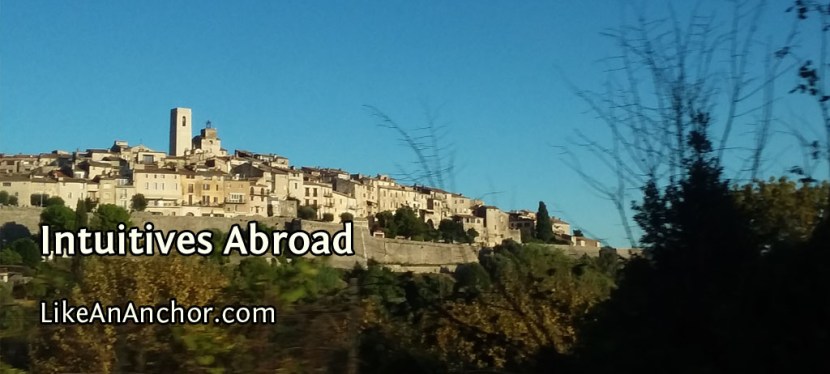
Intuitives Abroad

I’ve safely returned from my trip to France, though not without a few complications. Flying with a nasty headcold scores a 0 out of 10 and I would not recommend it. Thankfully my brother and sister were healthy and navigated the airports for me so I could just follow them around in a congestion-induced stupor and focus on breathing.

That was only a shadow over the last couple days of trip, though. Most of the experience was fantastic. Before this, I’d never been any farther outside the United States than the Canadian side of Niagara Falls. Then all the sudden I’m getting on a plane in Detroit, waking up the next morning in Paris, and walking down streets older than the country I live in. We had one day in Paris, then flew to Nice and took a bus to Saint-Raphaël. We were there on the Mediterranean coast for about a week, during which we also visited Saint Paul de Vance (pictured in the featured image for this post), Monaco, and Cannes.

Visiting Paris with Mark Twain

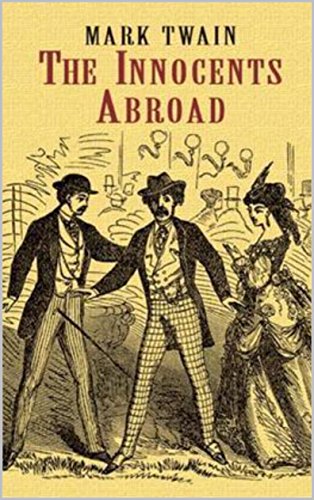
I took this trip with my siblings, so our little group consisted of an INFJ, INTJ, and ENFJ (hence the title of this post, which I’ve been planing on using for a while now and am still endlessly pleased with). I started reading Mark Twain’s Innocents Abroad while on the trip, mostly because I wanted to nod to it in a blog post title once we got home. I love the books by Twain that I’ve read, but even though this was the one that sold best during his lifetime I hadn’t read it before.

It’s interesting to read Twain’s record of his visit to Paris in 1867 with our own visit 152 years later. Our experience with French food was similar, with unfamiliar dishes accompanied by “wine with every course, of course, being in France.” Like Twain, on visiting Notre Dame “we recognized the brown old Gothic pile in a moment” even with the recent fire damage making it impossible for us to go inside. We also visited the Louvre like Twain and his companions, though we seem to have been more impressed by “its miles of paintings by the old maters” than he was. Read more

How Do I Know If I’m an INFJ or an ENFJ?

One of the questions that often comes up after someone learns about Myers-Briggs® types is how to tell which of two similar types they are. Maybe you took a few different online tests and they gave you a couple different results. Or maybe you started reading about the types and discovered more than one that sounds a lot like you.

If you’re trying to decide whether you’re more of an INFJ or an ENFJ type, I hope this article will help. Just looking at the names of these personality types, we might think that the only difference between them is that one is more extroverted than the other. This is only party true. When we dive deeper into the cognitive functions that describe the mental processes each Myers-Briggs® type uses, it become easier to see the differences and similarities between these two types more clearly.

If you’re not familiar with cognitive functions, click here to read “The Simplest Guide to Myers-Briggs® Functions Ever.” INFJ and ENFJs both use the same cognitive functions. They just use them in a different order of preference, as shown in this graphic:How Do I Know If I'm an INFJ or an ENFJ? | LikeAnAnchor.com

The way these cognitive functions work together makes ENFJs and INFJs very different in certain ways and very similar in others. The two types can often find lots of common ground and make great friends. But there are also several key differences in how they learn information and approach the world that makes it possible for us to tell these two types apart. Read more